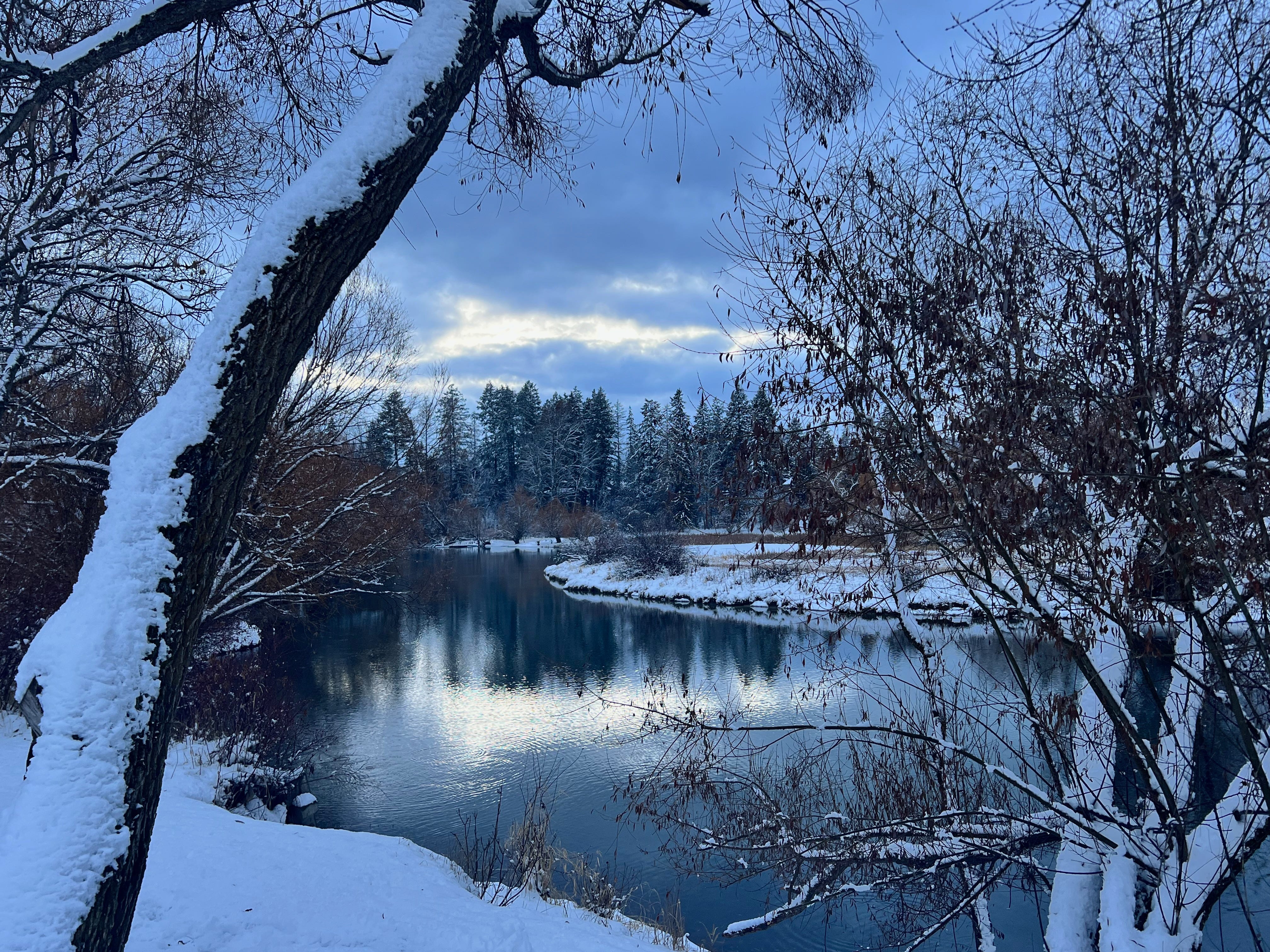
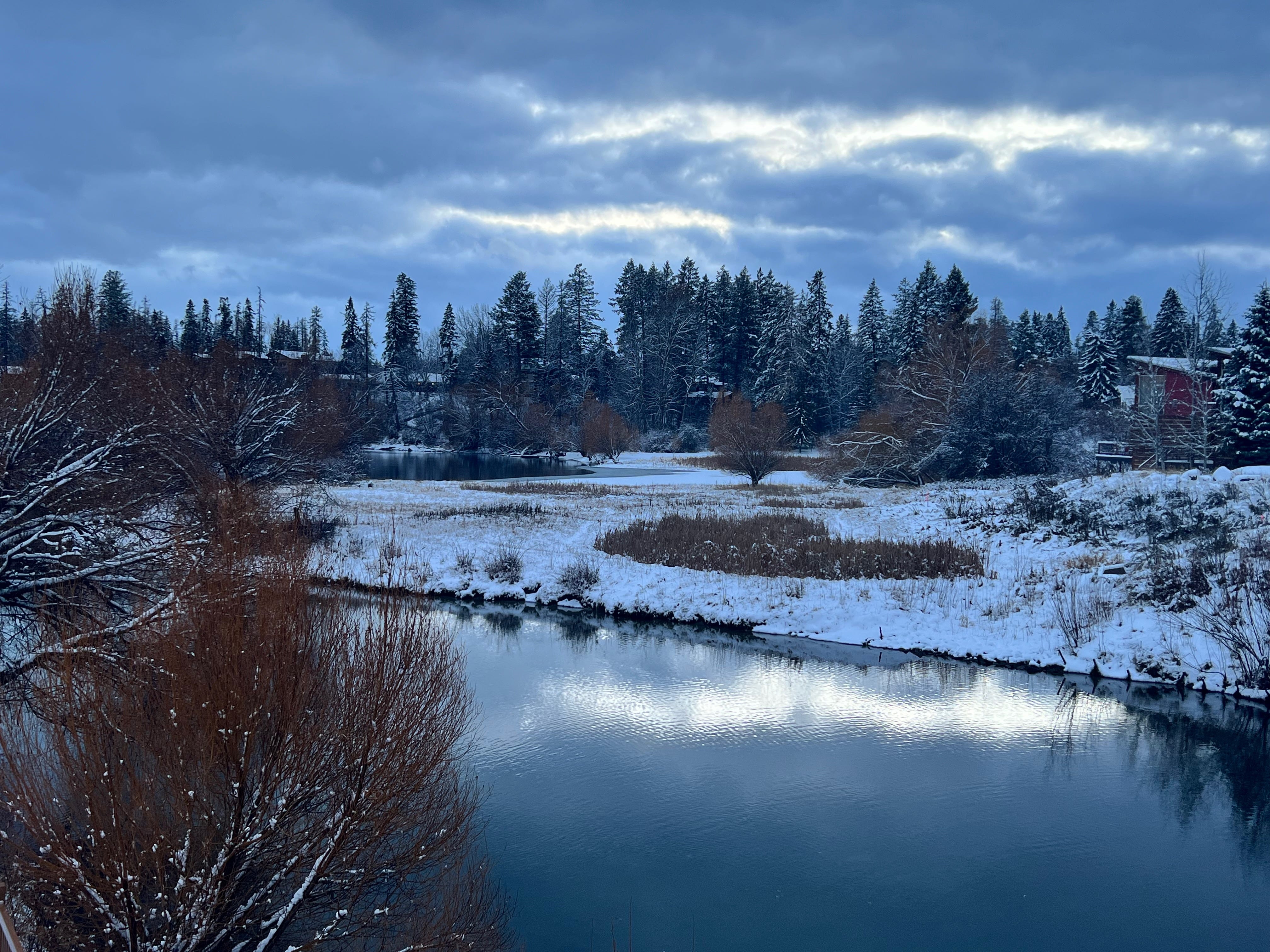
Repair: of rivers and relationships

To new subscribers—welcome to On the Commons! To those of you who’ve been around a while, welcome back!

I recently wrote an essay for Psyche/Aeon’s “one thing that changed me” series that’s probably the most personal thing I’ve ever published. If you came here from that essay, I’m very glad to see you here. This newsletter is generally not the space for that kind of personal essay, but I hope you’ll give it a try and explore what it means to be part of a commons—including our relationships with one another.
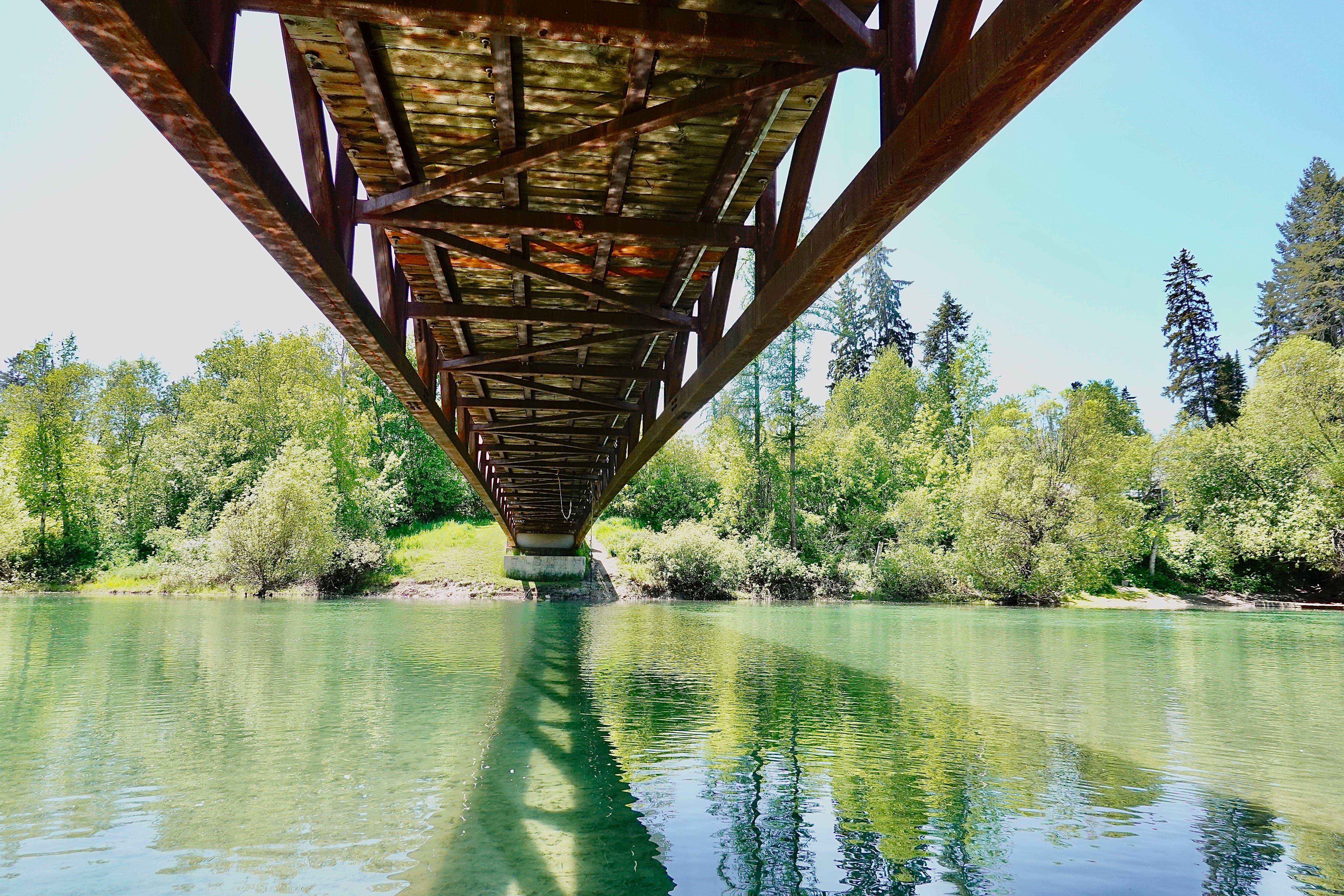
From the steps under the footbridge. People have also installed rope swings below the bridge’s jumping-off point. This bridge, this river, the way people relate to it with joy — to me it’s the epitome of the commons.

“Ma’am, watch this.”

Two teenage boys stopped me on the footbridge, right where they’d been jumping into the river. One of them was about to attempt a backflip off the railing, and the other was betting it would turn into a belly flop.

I stopped, and thought briefly of my father’s childhood stories—growing up in Leningrad (now called St. Petersburg) in the Soviet Union, he and his friends jumping (illegally) from a bridge into the Neva, near the Peter & Paul Fortress. Living under a dictator, a life structured around fear, rigid rules, almost nonexistent interpersonal trust, and waiting in hours-long lines for bread. And still, laughing, challenging one another, unwilling to resist the lure of the water.
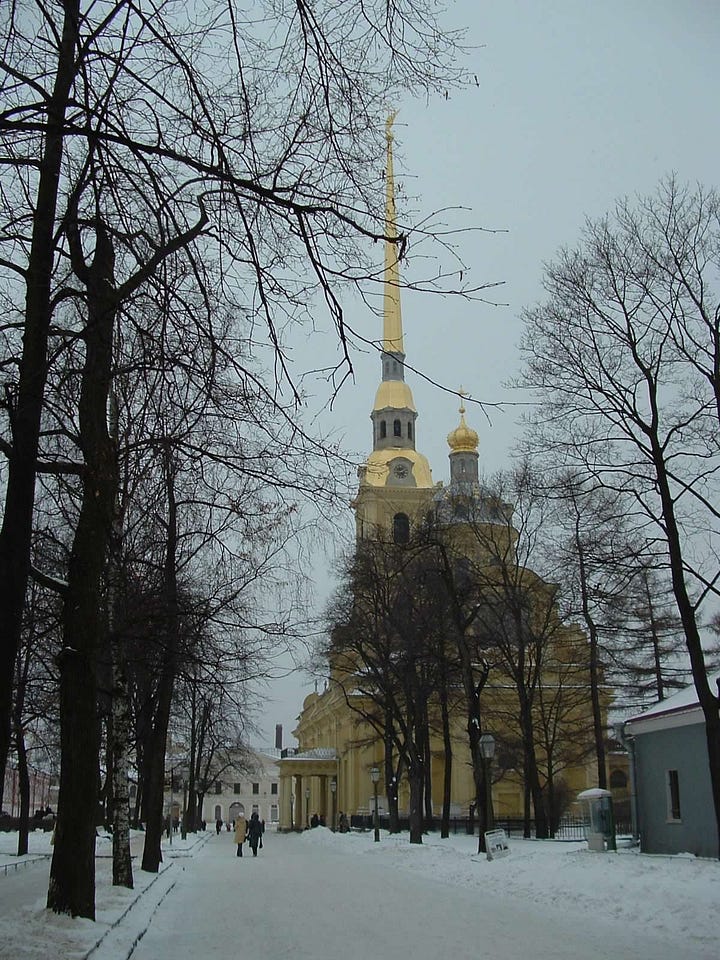
The cathedral at St. Petersburg’s Peter & Paul Fortress; my father and his friends on the banks of the Neva.

The boy jumped, did not belly flop. “That was actually pretty cool,” I agreed with the other kid, and went on my way.

I’d been sitting at the other end of the footbridge for a while, on new stone steps that the city had just had put in to make access to the river at that spot easier, and to repair the worrying degree of erosion from years of people walking up and down the slope. Although there are easier access points and several public docks all along the river, the ends of the footbridge see heavy use, people drawn down to the water with dogs, with kids, with themselves.

But it was a steep slope and slippery from time-ground dirt eroding away from the bank. In ten years I’ve gone down to the water at that spot maybe two or three times. In the week since the steps were finished, I’ve been down them, walking into the water, sitting on the lowest steps doing nothing, almost every day. The steps didn’t change how I relate to the river—I visit it at plenty of other points that have gentler slopes and docks to sit on—but they did transform my relationship to it at that particular point. I feel invited now to sit with the water, drawn to greet it. From what I’ve seen, a lot of other people do, too.

When I was a teenager—over thirty years ago now; I’ll be fifty in less than a year—this river was not one people swam in. My younger sister says she used to go in, but it wasn’t common. It was so polluted, so contaminated from nearly a century of pollution leeching from the rail yard’s containment ponds, that in decades past it used to catch fire.

In 2009 a years-long Superfund cleanup began on the river, which runs wide and slow right through our town from its outlet at the lake, eventually down to Flathead Lake, all the water collected in this basin eventually funneling out to the massive Columbia River watershed. Superfund, for those outside the U.S., is a designation implying a degree of pollution that might take decades, more likely centuries, to repair.

The first time I visited the new steps was with a friend who was in charge of that Superfund cleanup. Like many of my friends, her work —cleaning up oil spills in rivers for the railways—is far more interesting and important than mine.

To remedy the extensive contamination, the river was drained completely. Blocked at its outlet from the lake and the water removed. I’ve seen pictures but hadn’t moved back home by then. It’s hard to wrap my head around the enormity of the project.
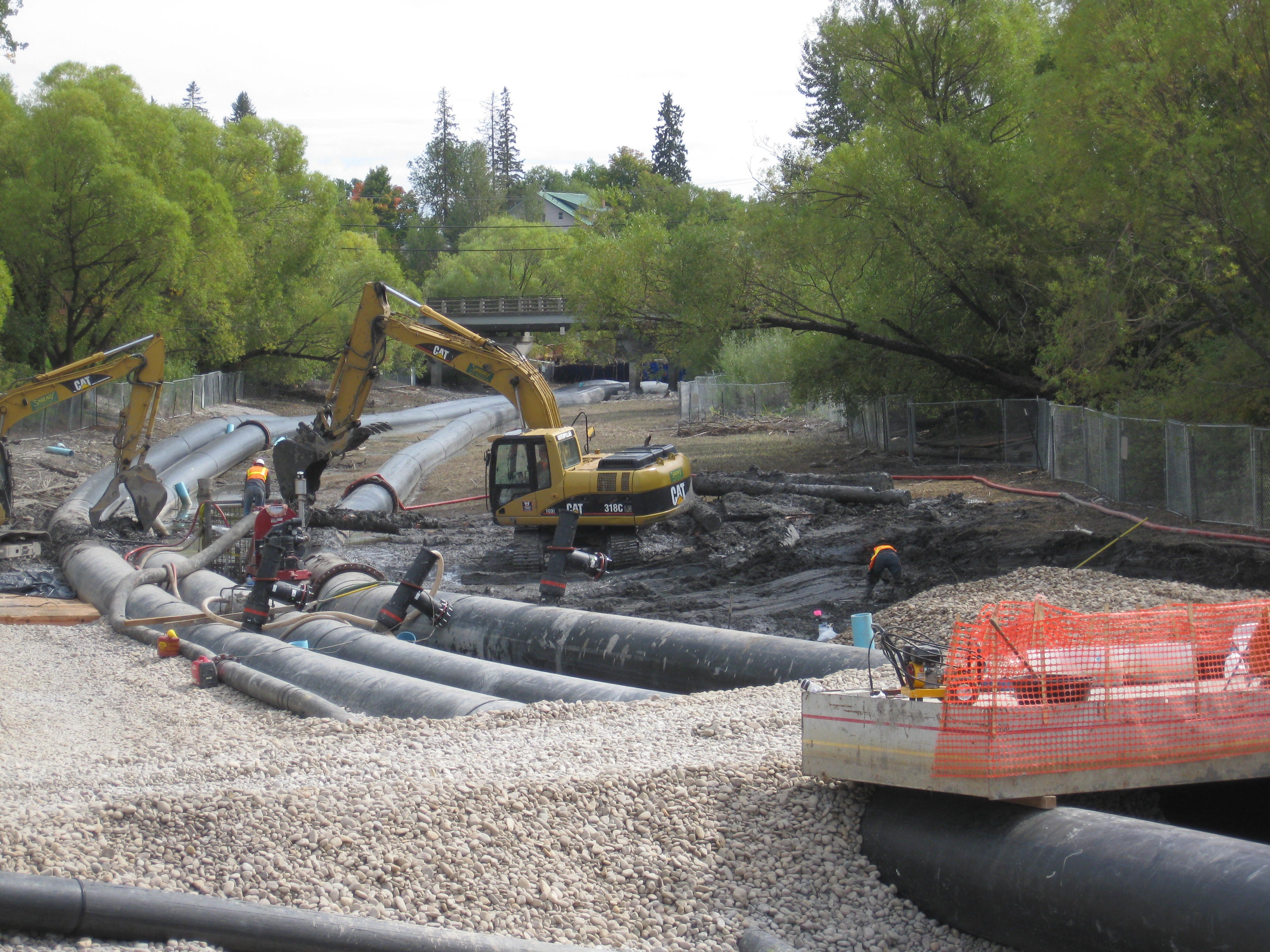
Location of this river cleanup photo is approximately from where the same footbridge is located, dated 2010.

In late 2014, the year after the initial cleanup completed (there have been small leakages and spills since then; the rail yard area remains a Superfund site and the river will likely always be at risk), a several-mile stretch of the river was designated non-motorized. Now, as soon as winter begins to loosen, the water is popular for paddleboarding, kayaking, swimming, jumping off the footbridge at that one spot where the water’s deep enough to do it safely for most of the summer, and now, with the new steps down to the water, for those of us who simply want to sit by it, let it welcome our feet and our thoughts. An invitation to rest.

The river will never be the same as it was before the rail yard was built and contamination started to seep into the water, at least not for generations beyond count. Not everything can be fixed. But that doesn’t mean it’s impossible to repair.
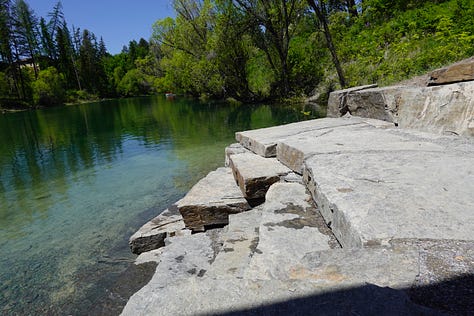
The new steps, like someone’s opened a door wide into a world that was always there. (This slope was too steep to make wheelchair-friendly, but other public access points along the river are more accessible.)

Recently, the novelist and physician Abraham Verghese came to give a talk at our local community college. The region I live in is not, to put it mildly, a place where people of that stature and renown come to speak. We might never get to listen to someone like him again in person, but the hospital sponsored the talk (a friend quipped, I’m sure rightly, that it was probably cheaper than doing what they needed to be doing, hiring more nurses), and it was close to sold out.

Verghese was a generous and thoughtful speaker, full of compassion and insight. Before answering questions from the audience—packed with people who worked at the local hospital or their relatives, including some of the friends I’d gone with—talked about his childhood in Ethiopia and the books that shaped who he became as a writer as well as a doctor.

And then he spoke about being a doctor serving HIV/AIDS patients in Tennessee in the early 1980s, when HIV was terrifying and unknown—it hadn’t even been labeled human immunodeficiency virus (HIV) yet—and had no treatment.

It was at that time, he said, when he began to understand that, for all the medical profession’s fixation on curing illnesses, there is an equal or perhaps even greater need to understand what “healing” means. There was no cure for his HIV patients at the time. The end was known and usually not far off and involved a great deal of suffering. But that didn’t mean he couldn’t work with healing, for them and their families.

I’ve been thinking about that ever since—curing versus healing, along with Verghese’s calm, generous presence with this tired audience tucked into an often huffy, even angry, and stunning little corner of Montana.

I think it’s what I want to say when I talk so often in this space about compassion and caregiving, whether it’s in our interpersonal, private relationships, or with the world at large. Why the ethos of “burn it all down” makes me chafe, knowing as I do—and most of us should—that when worlds fall apart, those who suffer most are those who are already suffering most, those who always have suffered most.

Dismantling structures of oppression and violence requires building and repairing alongside collapse, lest we simply allow the same harms to grow in the ruins. Not easy. Still necessary.

It made me think of Chloe Hope’s work—as an end-of-life doula and carer of baby birds at a wildlife sanctuary—and her writing at Death & Birds. What is at the core of life in the end but death, and the compassion and care that is its cosmic twin? But also of Sarah C Swett’s regular journeys with milkweed and mending on The Gussett, which fascinate me, as if her foraging, spinning, and weaving represent a life I was meant to live, the ways that nature can be literally woven into our lives if we learn how, and allow her to do her work.

Heal. Mend. Repair. So many words we have to acknowledge damage, and what we might attempt to soothe the harms that linger.


As a handful of people here already know, I’m in the midst of a marriage dissolution that is almost finding its way to an ending, which of course for both me and my spouse will be another beginning. It’s been a slow, painstaking process focused on prioritizing our two teenage kids, and repairing of friendship and a different kind of partnership after 26 years of marriage. It surprises me with a shock of gratitude on a regular basis that we’re able to do this with a focus on mending, rather than rending one another apart. (That’s probably the last thing I’ll ever say on this subject except that it’s amazing to be able to make a legally binding commitment essentially as a child that requires a career in accounting and a PhD in psychology to undo.)

To be surrounded in life with people who heal, whether rivers or relations, animals or animosities, is a kind of magic. I’ve learned the hard way that not all those who speak with reverence of the importance of relationships think it’s equally important to live by it, and am all the more grateful for people who live true to those expressed values.

The first time I sat on the new river steps by myself, one warm evening after a busy day, there were no other people nearby. I allowed myself a tiny proprietary twinge because, although I recently gave up my seat on the town’s Board of Parks, I was there for the years of planning and permitting of these steps and it felt good to know I’d been a tiny part of something built for the good of the public, a miniscule contribution to repairing our local commons.

A yellow warbler sang from a willow tree draped over the water a little upstream. The particular psithurism that comes from a breeze catching on the branches of lodgepole pines and larches drifted from the opposite bank.

I wish I could bottle that sound for people, or record it effectively. It fills me with a feeling that change is coming. It always has, ever since childhood. There is something about the way the needles of those trees shatter the air, maybe, that gives it a different sense than wind among aspen leaves, or old oaks. Something . . . impending.

Sometimes—or in times like our own, often—it feels like forces of destruction, greed, hate, and even evil are insurmountable. That nothing good can be saved, nothing can be repaired.

But my town, my wider region, is full of people doing their utmost to repair the commons. People dedicated to affordable housing efforts, to the seemingly neverending struggle for a county-wide bike and pedestrian trail system, to building places for homeless people to rest and feeding the hungry, to cleaning up rivers and lakes and restoring wildlife habitat, to helping refugees find homes and settle into this winter-shaped, sometimes strange place.

There are so many people everywhere working to fix the wounds of the world, knowing that pain and scars will remain.

The river that I’m now spending a lot more time in has a long way to go in repair. Though it’s designated endangered bull trout habitat, there are almost no fish in it except for a few bottom feeders. I like watching them; they’re a reminder of how far the water has come from the damage inflicted on her slow current.

Not all can be cured. Maybe nothing can. But the potential for healing is infinite.
Wander, Lost

Welcome! For those new here, On the Commons explores the deep roots and ongoing consequences of private property and commodification—from the Doctrine of Discovery to ancient enclosures of the commons, and more—along with love for this world and being human in the middle of systems that often make such “being” difficult.

Book update: Apologies for the continued “wow it’s been many months since I intended to have this chapter out” delay. I have taken apart Chapter 1 of No Trespassing for the fourth time, but this time because, when I was describing my difficulties with it to a friend, she gave a piece of advice that showed me what I’d been missing. It’s finally coming together as it was meant to.

New podcast interview: “Land, democracy, identity” with UK-based Future Natures.The path from writing about walking to private property and ownership, how they each intertwine and conflict with freedom and senses of identity, and how craving for land relationship can drive both love and extremism . This has been one of my favorite podcast listens over the past couple years, and the larger projects of Future Natures have become a go-to resource.

5% of this quarter’s On the Commons revenue will be given to the Flathead Warming Center, the only low-barrier houseless shelter in my general region.

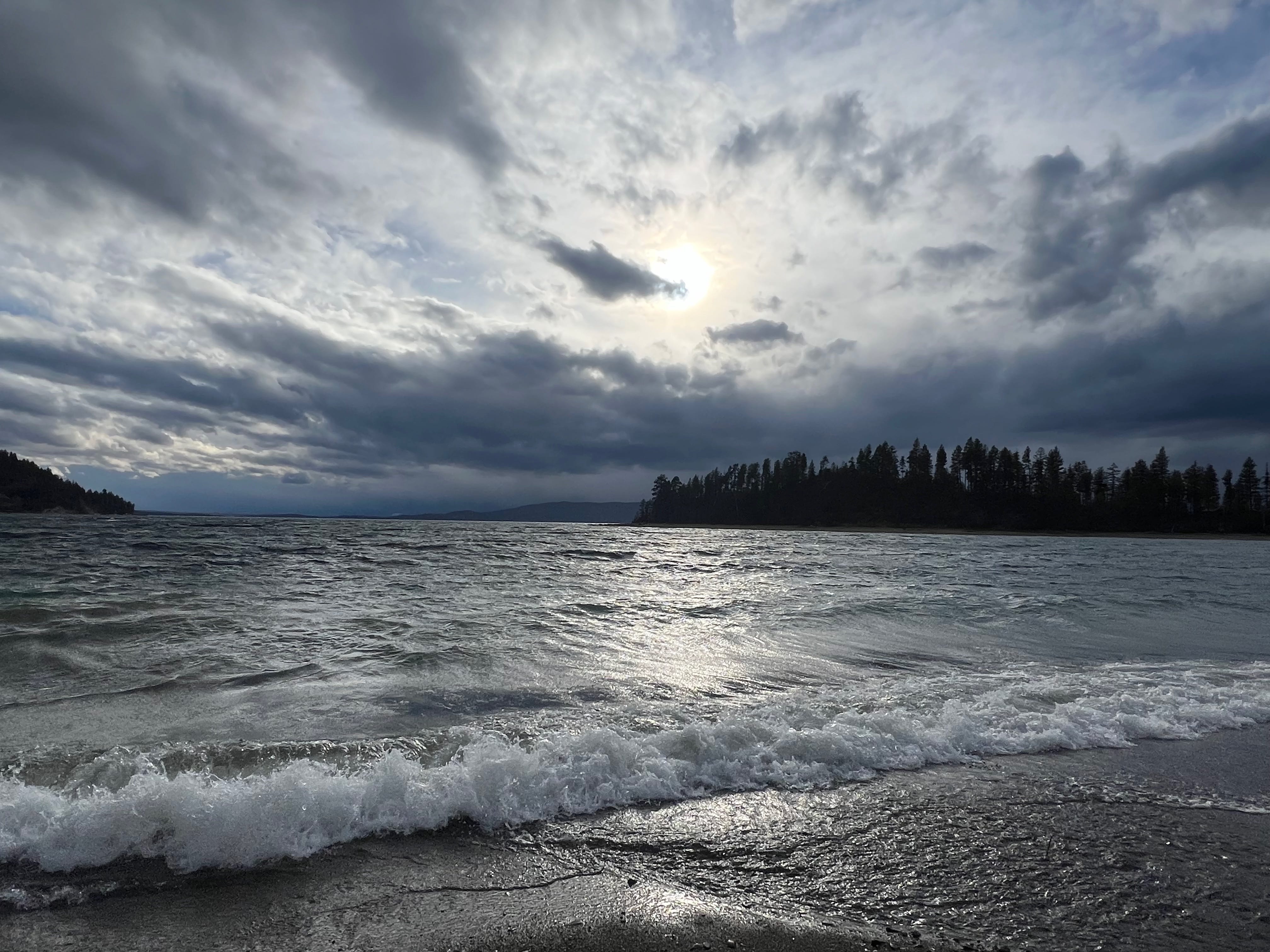
There’s a place I’ve been taking my family camping for nearly ten years. It’s a campground around an hour’s drive from where I live, on the far side of a reservoir whose waters hold some fond decades-old memories of lingering with boyfriends, along with a couple regrettable memories involving fire and the irresponsibility of teenagers. (The fact that nobody was hurt aside from lost eyebrows was sheer luck.)

To get to this campground, we have to drive to the far end of the reservoir and then thirty miles along a gravel forest service road. It’s a place where every summer my and my friends’ kids stuff themselves with huckleberries and spend hours in the water and nobody can access text messages or online games, much less email. For four days or so I wake up hours before everyone else and sit with coffee and the calls of Swainson’s thrushes as Sun makes his slow way up from behind mountains so tall and close they almost feel looming (isn’t that a great word? looming), but in a comforting way, like a protective uncle.

The surrounding forest backs against the Great Bear Wilderness to the east, with Glacier National Park a little ways north. When I’m there, I manually direct my brain to these facts because for some reason I’ve never been able to understand, I feel very turned around for the days I’m there, as if I don’t know where I am in the world. It’s not uncommon for me to get lost, especially when in a city and nearly always when driving somewhere for the first time, but in non-city areas I usually have a pretty good sense of place, if not direction. It’s one of the things that makes maps so delightful, being able to trace a finger along terrain or position and feel the embodied reality of one’s own self within that represented space, feel the feet tingle in the knowing of here I am. I have a hard time feeling that sense at this campground.

For years I’ve wondered if my place-confusion there might have something to do with being on a huge reservoir. When we’re on the water, paddleboarding or kayaking or just swimming, there’s an eeriness that is unrelated to my phobia of deep waterThis is a drowned river, is what comes to mind as I try to ignore the growing conviction that deep-water monsters are going to pull me under.

A drowned river. It sounds nonsensical. It’s all water. But rivers have spirit and shape and purposes of their own, all of which is smothered when a dam is built to stop their flow and extract their energy. 

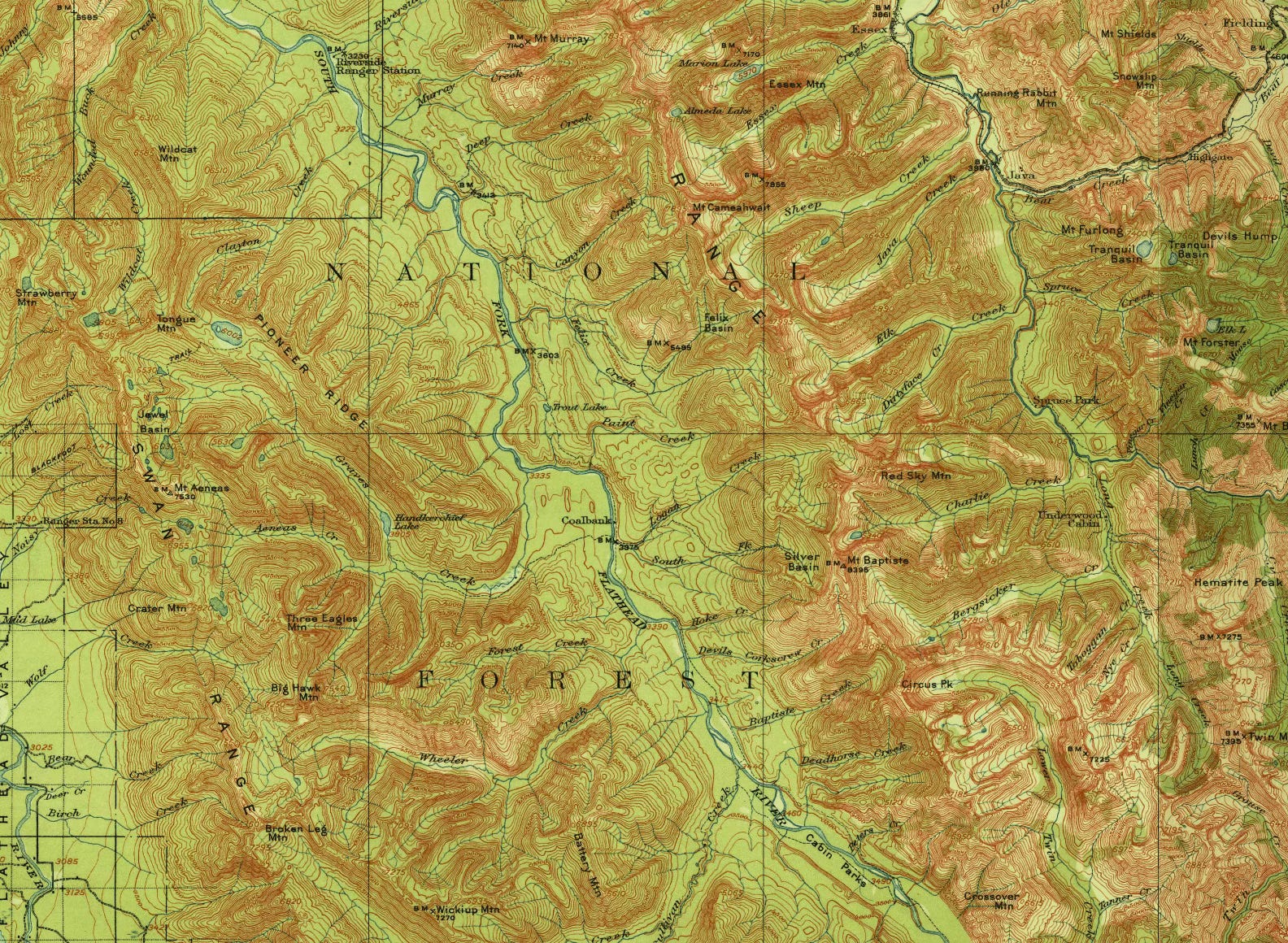
A friend reminded me recently that I’d been meaning to look for old maps of this area from before the dam was completed in 1953, to see where the river, the South Fork of the Flathead, flowed when she was free. So earlier this week on our way north on a day of sleet, snow, and fierce wind, my younger kid and I stopped in at the forest service’s ranger station, where there turned out to be no old maps or any idea where I might find them. But it was a slow day and someone’s interest was sparked enough to spend time poking into CalTopo online for historical maps until she found what I’d been looking for. 

And there she was, the South Fork, undulating through a narrow valley as mountains spilled streams and creeks into her, receiving snowmelt and rainfall as she headed down to Flathead Lake. Next to her, the modern reservoir looks less like an expansive lake we play on every summer, less like a monumental feat of engineering, and more like many technological outputs of modern humans: a little grandiose. And temporary. The reservoir is fun—and of course it’s still water, with its own voice and energy—but it doesn’t have quite the same sense of wholeness, the this-lifeness, of the river. I look at that old map and feel oddly relieved. Like I finally know where I stand.

On the left, the modern landscape of Hungry Horse Reservoir. On the right, the South Fork of the Flathead River before it was dammed.

During the Q&A session after a recent online presentation, someone asked me about the chapter titles in my book A Walking Life—nine iterations of “Stumble,” “Lurch,” “Stride,” and so on. I don’t think anyone’s ever asked me that before, and it took me a minute to remember that I had originally used similar section headings—variations on “walk” and ideas related to it—for the first essay I ever wrote on walking, years ago, for the small literary journal Lunch Ticket, titled “Wander, Lost.”

It was in that essay that I first linked freedom of movement with freedom of thought. It was also, as far as I can remember, the first time I thought of both as, tangentially, related to the movement and constraint of rivers.

“As our freedom to walk becomes ever more constrained, as air quality and housing developments and busy roads force us to spend more time in our homes and cars, we might lose even the words of movement that reflect every land-tethered animal’s most basic motion. Ramblemeanderroveroamwanderdeviatedigress—will they slip into disuse, become arcane ideas? As we forget that they ever applied to our physical bodies, to our ability to get from here to there or from here to nowhere in particular, will our minds lose the ability to do the same? What happens to our ideas and bodies when neither can wander aimlessly, get stuck in the mud, backtrack, reconsider, keep moving until we find ourselves in a place beyond our knowledge? . . .

. . . like a river that’s been straightened and reinforced with concrete, exploding every now and then in an anger of floodwaters but never again allowed to meander. My mind has begun to feel the same.”

I think constantly about the relationship between freedom of movement and freedom of the mind. I have an unpublished essay on the subject lurking in my files that might or might not ever see the light of day, structured around the movie WALL-E, which I’ve watched about twenty times, and it came to mind again recently when reading Thomas Pluck’s novel Vyx Starts the Mythpocalypse, as Vyx’s parents are taken by the government’s Ice Men who then stalk their path as they travel the land in search of safety, running into awakened mythological beings along the way. Control of thought—including the freedom to live as our true selves—and control of movement go hand in hand. 

“Wander, Lost” also provided the seeds for the sections of A Walking Life about my father’s life in the Soviet Union and the ways in which interpersonal and public trust can make or break a society, especially when it comes to government suppression of speech and protest, and how personal relationships are weaponized in its enforcement. 

Trust is, like the freedom to wander, an invisible force whose degradation can make visible the erosion of liberties to those who had always thought themselves free. What one once might have thought endless and inviolable is revealed to be that which can be taken, and lost. Kind of how degradation of a river ecosystem can’t help but be reflected in the health of every single life touched by its waters.


I’ll probably never get to meet the river buried under the reservoir we camp at. Hungry Horse Dam is one of the largest in the country, and seen as essential in a network of electricity-generating hydropower dams along the Columbia River watershed. But there’s something about seeing a map of where she was, the free river, that might help orient me next time I’m up there. 

At the very least, when the kids race down to the little peninsula where they watch the sunset, I can remember that while the placidity of the water is a human-made artifice, the beauty remains wild and free, and something of the river reaches up to meet that evening glow, to say the river is not gone—her stillness won’t be forever. It might be generations in the future, but she will one day find her familiar curves, playgrounds, and resting spots again, running her way through the mountains as she was meant to. Free to roam. 

If we’re lucky, someday our freedom to wander, too, will be un-lost. 

To walk a prayer to the world

Imagine yourself in a cabin, curled up on a beaten couch in the corner of the small room shared by a couple of bunk beds, a table, a counter and stove, and you. It’s night out, and an almost-full Moon was rising in the south when you went out earlier, a boreal owl barely audible from the woods.

The propane-fueled fireplace is warm but doesn’t give off quite enough light to read by. But you sink into the pages anyway, take them slowly because you’re in that kind of mood. You watched a whole flock of bluebirds for an hour earlier, and as you drove up to the cabin, a bald eagle flew overhead. There are no people nearby. You are fed and tired and ready for bed; to slip into it via firelit poetry feels perfect.

As you turn the pages, something happens, a quiet internal earthquake. It’s not one particular poem or line or turn of phrase, but the accumulated effect of their weight: quiet and light, like snowflakes, carrying that same balance of power and delicate beauty. The poems each strip away a layer of something, you’re not even sure what, and by the end of it you look up at the flames slightly irritating in their gas-powered sameness and think, That’s where I’ve been hiding


A few hours earlier, I’d been standing by the side of the road watching bluebirds. I have never seen so many bluebirds in one place. At most I see one or two of them a year, their impossible bright colors a flash of delight. There were at least ten, maybe fifteen, flying among last year’s grasses, barely pausing on the dry branches waving in the wind. I truly could not believe my eyes. At the far end of the field, a couple of elk romped together among their herd, and snow-clung mountain peaks stopped up the horizon like a postcard for Montana.

My feet ached to wander into that field, wiggle toes into the soil that could draw so many bluebirds. 

My friend 

Amanda B. Hinton and I were talking recently about the ease I feel when letting my feet rest in running water, the concept another friend had proposed of feeling “grounded in flow.” Maybe, Amanda wondered to me, you pray through your feet. That idea tasted like a fresh wild huckleberry on a hot hike when I’ve run out of water, reminding me of something 

Chris La Tray has often quoted from Eddie Benton-Banai, that “to live an Anishinaabe life is to live one where every footstep is a prayer” and the fact I sometimes forget, that I’ve spent years now devoting my professional and personal life to walking this world and relating to it as deeply as possible. The more I do it, the more I want to do it.

Which is how I ended up writing about ownership, private property, and the commons in the first place. Because too many places I yearn to walk, like that field of bluebirds and elk, are inaccessible not due to terrain or danger, but to the simple fiction of ownership.

It’s a friendly No Trespassing sign, the orange almost cheerful, the font relatively friendly, and no hint of being shot at—far too common in Montana—for crossing the barrier, but it’s a barrier nevertheless.

In his book Enlivenment, the German philosopher Andreas Weber writes of the enclosures of the commons throughout Europe as not just a denial of physical sustenance and survival, but of a spiritual severing. Enclosures and the rise of the market economy 

“not only governed the allocation of land, but also redistributed the spaces of our consciousness. In reality, the forced separation between that which gave life (the biosphere) and those who were gifted by life (the commoners) was an act of violence on the part of the landlord, who excluded members of the ecosystem from their rightful positions and thereby damaged these participants, the ecosystem itself, and the unifying experience of self-organizing coherence.”

Commons, Weber had written earlier, is a system in which there are no users or resources, “but only diverse participants in a fertile system, which they treat in accordance with a higher goal: that it continue to give life.”

When the land was no longer commoned, when it was stolen for the purposes of private ownership, it could also no longer be related to. People were denied access to that most fundamental yearning, to relate to the land we live with. Their minds were bent, by force—the number of bloody rebellions against enclosures of the commons might be surprising to those who assume private property came about naturally—to see themselves as separate from nature, disconnected from land and a living world, and able to survive only by working for someone else—the genesis, commons scholar Peter Linebaugh has said, “of the j-o-b.”

We know how well all of that has turned out.

Dismantling the story behind private land ownership, and exposing the lack of foundation for laws defending it, is necessary to finding a way out of it. But so is restoring a shared relationship with all of life. I wanted to walk that field because I am alive and the field is alive and the bluebirds were so beautiful I wanted to cry and it means something to know that, and to know it’s true and right to feel that way, even if the No Trespassing signs stop me acting on it.


The book I read that first night at the cabin (for those who’ve been around a while, this is the same cabin I stayed at about a year ago where the heat didn’t work and I turned around on a hike after coming across a fresh grizzly bear track) was by someone I was fortunate to meet recently, poet, essayist, and woodworker Charles Finn. He’d generously given me a copy of each of his books: Wild Delicate Seconds, a book of short essays, and On a Benediction of Wind, a collaboration between Finn’s poetry and the black and white photography of Barbara Michelman. 

It’s tempting to spend the rest of this space quoting numerous lines that I keep going back to, like

“Above the geese the soft colors of the afternoon deepen into a tremendous wound and a gibbous moon is birthed, shadows crawling over the snow to dissolve into the river”

from Wild Delicate Seconds, but like most reading for pleasure and insight, how anyone receives those passages will be personal to them. There’s a quiet reverence for the world that invites rather than demands the reader’s attention, both to the writing and to the lives it honors. I read On a Benediction of Wind all in one sitting that first night, which I don’t think I’ve ever done with a book of poetry, and at the end I closed it and stared at the fire and went out to visit with Moon and felt, for the first time in a long time, a steadied feeling of being at home—in the world, and in myself.

The next day I chose a trailhead at random and walked barefoot for two miles on dry pine needles along a waterlogged trail, the nearby river free to stretch herself over the ground. I spent hours by the lake after gasping into its snowmelt cold, watching the waterfall far across the valley, crashing snow from its mountains’ embrace through a ravine and brushing into my dripping hair snowmelt and sunshine, a wolf’s nose nudging a track, a wolverine’s strand of fur, the promise of berries still sleeping, and the call of the loon diving under spring’s early waves.

“Conspires,” from  On a Benediction of Wind

Sometimes it’s a fight to feel alive

From Yellow Bay State Park, Flathead Lake, Montana

I desperately want quiet. That kind of quiet you get in the midst of a forest where even the pervasive whine of traffic is too distant to penetrate. I’ve spent all week wanting nothing but quiet, as I attended meetings and bought fidgets for someone’s birthday and cooked dinner and did dishes and woke up so, so early and hugged the quiet, candlelit hours to myself like an infant who’s finally drifting off to sleep.

In those hours, the need for quiet crashes in. Sometimes—often—the online world is so noisy that I feel like I need ear plugs. Mind plugs? Even without social media, the nudges for attention from online fracture my thoughts and focus and capabilities. I told someone once that being online reminded me of parenting toddlers, with every minute broken by some version of “mom, MOM, Mom.”

I grew up without television service, without even a telephone in the house until I was almost ten. I didn’t have a regular email address until my late twenties (one of my brothers-in-law worked at Google at the time, which is why I’ve had the same email address since Gmail was in beta—20 years now) and staved off switching to a smartphone for nearly a decade after they were released to feast on people’s time and attention. And yet here I am, 47 years old, with one kid nudging adulthood, metaphorically whimpering in a dark corner to get some mental space away from my devices and the needs of online.

Not everyone has these problems. I keep having this conversation with people, who often recommend turning off notifications—I did that in 2017 and never turned them back on; it’s been years since I allowed anything but texts and phone calls to nudge me—and don’t always seem to understand that the addictive design of these devices is all too effective for some of us. It doesn’t matter how many apps we delete.

I spent too much money purchasing a dumb phone last month, the only one I could find that works only in grayscale and doesn’t accommodate any apps. As I’m slowly weaning myself off of turning on my smartphone (the camera is still an issue), I remind myself of what my mornings were like when I didn’t feel its tug. For years I’ve turned my phone completely off at night, as I do the WiFi on my laptop, so that I can get up in the early hours and do all the little things that make me feel whole and connected without staring into the face of that bright screen first, but I can still feel its presence stalking me around the house.

It’s more than the smartphone. Online communication and interaction manages to completely drain me on a regular basis. This was one of those weeks, where I couldn’t get offline because that’s where my work is and increasingly felt like I was at a loud party full of flashing lights, bad music, terrible drinks, feeling desperately tired and thirsty because the water fountain was broken, but I wasn’t allowed to leave.

Next week I have three nights alone at my favorite forest service cabin, offline and away from electricity, and all I can think about is not how much work I might or might not get done, but an almost desperate need to sit by the river and not think or do anything. To watch the long, slow shifts of light at sunrise and sunset. To spend the middle of the night awake hour staring at the stars and Moon if She’s visible. 

I have all sorts of strategies to manage my relationship with digital technology, put in place years ago for my sanity, creativity, and, as I’ve written about before, because my humanity is more important to me than finding conventional writing success, and I don’t like the human I am when interacting with social media. 

None of those strategies are really enough, or maybe recently I’ve been feeling the press of it all more. I had a wonderful, long conversation earlier this week with a good friend and colleague about this particular platform, and ended up realizing how much more difficult I find to use ever since Notes was rolled out and the social media-ness of it has increased. That doesn’t mean I’m leaving it (I tried setting something up elsewhere a couple months ago but simply don’t have the technical expertise), but figuring out how to open a tab on my browser and look at it, even to read other newsletters I like, without feeling instantly disheartened and drained, has been difficult. I’m bolstered by writers like Amanda B. Hinton writing about which newsletters she reads for nourishment, and all the tremendously good writing and research and interesting ideas I’ve seen, and even friends I’ve made, that I never would have without this platform existing. There are ways to be in this particular space without feeling like it’s taking more than it’s giving. At least, I hope there is. I just need to figure out my own balance.

But it’s also important, I think, to keep in mind that no technology is value-neutral. How it’s created, built, deployed, used, and discarded matters. I saw a comment elsewhere recently that said we’ll learn to live with and benefit from digital technology “just like we learned to live with and benefit from cars” and I refrained from answering that comment only because at this point it makes me very tired. I wrote a whole book about what we’ve lost to cars and car-centric infrastructure, how much damage we live with because of cars and the loss of walkability. It’s a very good book, and I think an important one. 

Funnily enough, when I sat down with my notebook to draft this, my intention was to mention my fractured attention and communication overload, and not write much at all but to share some photos of recent activities that keep me feeling alive and engaged with the world as I want to be in the world

In a way, that’s the crux of humans’ evolving relationship with technology—all technology, but digital in particular. In what ways can we manage to function with what’s demanded of us—and I use those words intentionally, because some people might succeed and even thrive in relationship with technologies, but there are always vast consequences unseen or unacknowledged or unimportant to people who benefit from them; most of life is simply trying to survive it—while being alive? Completely alive. Aware, conscious, attentive.

Every time I go to one of these cabins for days offline, or spend time in the wilderness, or go for a long walk along the river after school drop-off and before checking email, or spend wonderful, attentive time with a friend or few, it’s a fight not just for my own life, but for all of life. 

Aside from sharing research and ideas on private property, ownership, and the commons, I guess that’s what I’m trying to do here: share with you a love of life. The hilarious turkeys I can hear outside right now, and the very noisy magpie staring at me through the window, the way sunset last night melted its way through rumples of gray and blue-silver clouds, how the Milky Way has been visible the last three nights. The way the air doesn’t yet quite smell of spring and I’m holding on a little longer to my favorite season of cold and dark, the hours we’ve spent together in quiet aliveness. So maybe I’ll just be quiet for a bit and share some of that.


My brother-in-law and I recently took a wildlife tracking course together through Swan Valley Connections. As we approached the meeting spot, we slowed down for the awesome sight of a juvenile bald eagle feeding on a deer right by the side of the road. No photos of that (we were driving and he flew off), but we got to watch some bald eagle shenanigans for a few minutes before meeting up to go track wolves, mountain lions, mink, muskrat, and a ridiculous number of squirrel feeding sites (mounds of shredded pine cones), which I was so entertained by I neglected to take photos.

That same day, one of my college roommates, who happens to be one of my favorite people in the world and whom I haven’t seen or even talked with in about eight years, came to town with her boyfriend for a week, so I took some time off to drive them down to the Bison Range and around the entirety of Flathead Lake, which is gorgeous at all angles.

Doing things like these keeps me in touch with how I want to be spending my time. Not as an aspirational goal or some kind of self-improvement resolution, but because that’s what makes me feel alive. And isn’t that what life wants of us, really? To live with this world like we care about it.

Moon halo

We are marvelous

Graffiti Pier, Philadelphia, Pennsylvania


Several people have asked how No Trespassing, this book I’m writing, is coming along. It is, it’s coming along, I promise! Many months later than I’d planned, but given that I have a job (for those who don’t know, I work as a copy editor for K-12 textbook publishers) and am the primary caregiver in my household, I should have planned more flexibly. I thought tinkering out this first chapter on land ownership would be straightforward, since it’s what I’ve researched most, but that might be part of the problem. It keeps sprawling, with always another book to read, on top dealing with of a number of personal situations over the last couple months. You know, weeks of scrambling around some half-emergency but also doesn’t everyone want to know just a little more about how much John Locke tailored his philosophy to justify colonial land theft? 

I can research forever, it’s a problem. 

I’m finally feeling like it’s taken form enough to get back in touch with my generous beta readers about their timelines and availability. The second chapter, on water, was written for my original book proposal, so it should take far less time to get in shape (famous last words). Thank you for your patience and interest in this work! I think it’s important, and I’m grateful that you do, too.

A couple of weeks ago I met someone I’ve revered for years: Lucy, named Dink’inesh in Amharic, meaning “you are marvelous.” Dink’inesh is of the species Australopithecus afarensis, one of Homo sapiens’ many hominin ancestors, and lived approximately 3.2 million years ago. Paleoanthropologist Jerry DeSilva, whom I interviewed about bipedalism for A Walking Life and who invited me to Dartmouth College to talk with students recently, showed me around his lab and there she was—a replica; Lucy herself is safely in Ethiopia, her home—resting on a foam bed sculpted to fit her bones. 

It’s hard to describe how thrilling this kind of meeting is for me. I wrote about the feeling in A Walking Life, when Nick Ashton at the British Museum handed me a cast of fossilized footprints found on the Norfolk coast and estimated to be between 800,000 and 900,000 years old; it’s the depth of time that gets me, that immense geological knowing of planetary life. 

Thrill is the best word I can think of to describe these encounters. A shiver down the spine, the sense of being in the presence of wonder and mystery, life that puts every one of my own existential worries into the context of time so vast that it’s a miracle we’re even aware of our own existence.


On that same trip, I got to meet up and walk with several people whose conversation and company put those same existential worries into a different kind of context, the one brought by reminders of our interconnections and relationships. The contexts that make human life beautiful and worthwhile for me and remind me what I learned while researching A Walking Life: most people want the best for others. Sometimes it can feel like that “most” barely scrapes 50% of humanity, but it’s there nevertheless. I’ve learned it over and over, probably because I’ve had to learn it over and over. It’s too easy for me to believe the opposite.

I got to meet, in person for the first time ever, two women I’ve been in a writing group with for well over a decade. We were meeting over Google Hangouts once a month long before online gatherings became the norm! To be able to hug them both, walk through Mount Auburn cemetery in Cambridge, Massachusetts, while we talked, and share food and more hugs, meant more to me than I realized it would. These people have been special to me through half of my writing life and almost my entire parenting life, and I’m grateful, even, for all the hard times we’ve shared together.

Before I met with Jerry DeSilva and his students, field biologist Bryan Pfeiffer, who writes the excellent nature-focused newsletter Chasing Nature, went farther out of his way than he should have so that we could go for a walk together on part of the Appalachian Trail and into an ice-covered hemlock forest, looking for mosses and lichens and talking about writing, books, the trials and tribulations of digital media platforms, and what I could use to take better pictures of Moon if I give up my smartphone (something I’m thinking about). I’ve learned so much about birds, dragonflies, buds, and photography from Bryan’s writing, it’d be hard to describe it all, but it doesn’t come close to hanging out in person for a few hours.

From there I had a fly-through visit with an old friend from graduate school, and then took a bus and then a train to Philadelphia, where JJ Tiziou let me stay at his place so I could participate in his Walk Around Philadelphia, which is in its third year. I was really looking forward to this walk because I love that kind of thing but even more so because writers Thomas Pluck and Chad O live in the region and had told me they signed up for it. 

I wrote a whole book about walking, I might have mentioned a few times, and I wholeheartedly believe in its gifts for us as individuals, for our communities, for nature and our sense of belonging in this world. But I feel like I’m always relearning those same lessons. I was looking forward to talking with Chad about his 

Scientific Animism work, and meeting Tom and telling him how much I enjoyed his posts about the New Jersey Pine Barrens, and his thriller The Boy from County Hell, which I’d read on the plane (as I said to him, I don’t usually read thrillers because I don’t handle violence well, but I fell for the characters immediately and it made a welcome break from forcing myself through chapters of Ellen Meiksins Wood’s The Origin of Capitalism), and when we were all gathered at the meeting spot I met reader Caroline (hi!), who’d come up from Washington, D.C., and whose work in Kazakhstan I still want to know more about.

It was in walking with these people and having these conversations that I remembered all the things I believe about walking, that it connects us to one another and to ourselves, that it reminds us that we’re animals evolved on a living planet, that it makes our interactions richer, that it brings us face to face with a world that our species has been co-evolving with even before Lucy and her people lived what I’m certain were loving, fraught, rich lives on the land that is now called Ethiopia. 

Tom has a great post on his newsletter about this walk, which has more and better photos—including a selfie of the two of us—and Chad found me an almost completely faded “No Trespassing” sign that I’d overlooked while wondering if I should crawl through a hole in the fencing. 

When A Walking Life was being published, I told the marketing people that I’d wanted to write a book for the “everywalker.” I was tired of reading about philosophers and writers wandering through pristine woods and up remote mountain peaks. This is our world, I’ve said. We have the right to walk it, in all its glory and grit.

Being reminded of these realities matters to me. These connections and relationships matter to me. All of it: walking with old friends I’d never met in person, walking with a friend and colleague in a gorgeous frozen forest, walking with new friends and acquaintances along the sometimes ragged-looking borders of a city beloved (hopefully) by a million and a half people. 


I carried Lucy with me that day, walking the border of Philadelphia. In his descriptions of the walk, JJ asks participants to consider borders and boundaries, including within ourselves. Where are our own mental and physical limitations? How do we negotiate decisions, like which half-formed path to take in a woods unknown to any of us, or when to stop at the end of the day?

After miles of walking through woods and on concrete, my left knee let me know how much it disapproved of all this motion. The group tried unsuccessfully to find a place for a cold drink and possibly hot food; Tom and I lingered back, talking and, in my case, wondering when I could give my knee a rest. 

When paleoanthropologist Donald Johanson first found Lucy in 1974, he found her left knee crushed beyond repair, destroying a key piece of evidence about her bipedalism.* But her spine, pelvis, and foot bones, along with other evidence from nearby fossils of her species, confirm that she walked upright on two legs. If I remember correctly what Jerry DeSilva has told me, signs in her vertebra also point to the possibility that she lived with pain.

Lucy tells us a tremendous amount about how we came to be what we are. One of the reasons I find the presence of her kind of deep time so thrilling is that these details of evolution tell us just as much about who we are, if we let them. Lucy likely experienced pain, just like I did walking miles around Philadelphia. Did she ever ask her group to slow down, take a break, as I perhaps should have?

Walking with a group, especially when I’m tired or hungry or need a bathroom or am in pain, reminds me of something else I learned when researching walking: the hominin fossil record has many examples of people with various disabilities, whether from injury or birth, being valued and fully equal members of their communities. The weight of scientific evidence points to the reality that we evolved to be interdependent, and to care for one another—a reality innate to our development, not an offshoot of it. The more recent proposition that humans evolved to be individualistic and competitive is contradicted by millions of years of hominin history.

I was more than happy to come back home, catch up on sleep (and a backlog of laundry, homework, and decaying food in the fridge), go for a walk with a couple of close friends and another longer walk by myself, and coddle my aggrieved knee. But getting out and meeting people, slowing down and walking with them instead of corresponding over texts and emails, brought me back to what this is all about, the writing, the walking, the living, the multi-dimensional relating, the negotiating of physical and emotional needs: it’s about one another, and how we manage to live, and walk, together.

We exist. It’s a miracle. Time is vast, our lives are brief. Remember: you are marvelous.

*There is a particular angle the knee develops in upright walking, called a bicondylar angle, a tilt in the femur caused by downward pressure as babies start to walk. Jerry DeSilva wrote about these details, and his work with Lucy and many other hominin fossils, in his excellent book First Steps: How Upright Walking Made Us Human


This sky! Philly, you beauty.

This counts

The chickadees have been singing again and it’s time to order seed potatoes and onion starts. The year has barely had time to rub sleep from her eyes, and the frozen peaches are not even dented by my hunger for their winter warmth, and I feel like I just got the potatoes stored away in the paper bags and moderate temperature that seems to have—mostly—succeeded in keeping them edible through the winter.

How can it already be time to think of choosing carrot and lettuce seeds, of where to plant beets and how to make more room for green beans, of the soil’s stirrings and the young yawns of growing things in my garden? It might be months, still, before I can visit the sweetgrass and turn the soil, but it is time, already, in the midst of this winter, to be planning for the next.

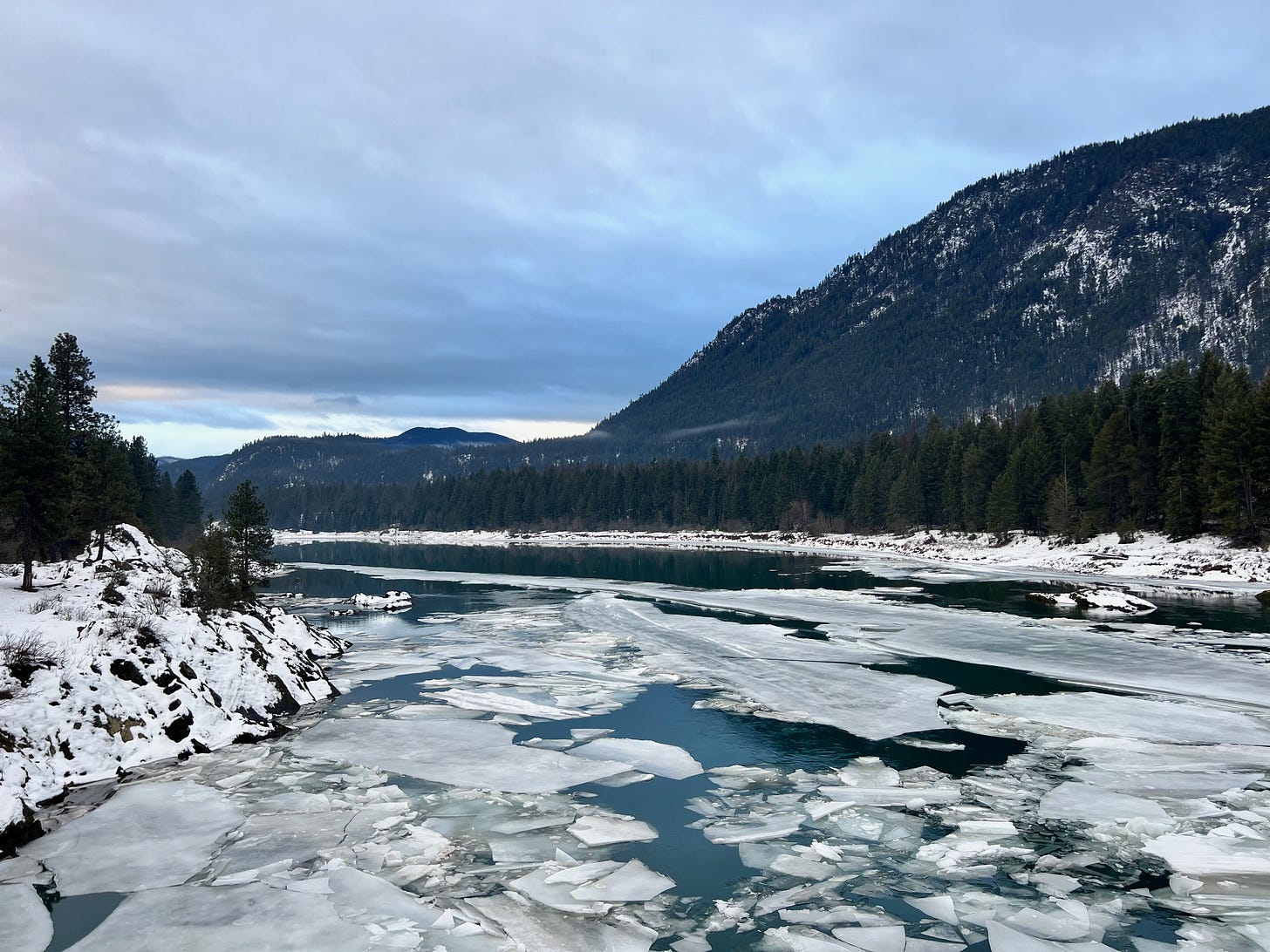
I was away most of last week committed to what I’lll broadly call parental duties, long hours of chaperoning, most of which took place in the confines of a hotel my kid and I rarely left. By the time the commitment was done, my body felt stunned from lack of movement. I spent two hours on Monday walking through town and along the river trails, relieved at the sight of water, the freedom to wander, the flurry of chickadee-company, and the surprise of what might be a new construction along the riverbank.

The drive home had been painstakingly slow, through hours of fog that seems to mark most of this winter’s personality. I hadn’t seen Moon at all for what feels like weeks until three nights ago, moonglow through the fog, Her bright self mostly hidden from the skies I live under until the dark, dreamy hours of this morning.

I watched Her there for an hour, remembering what moonfall feels like and ignoring my usual routines. A few hours later, on our way to school, She was cast slight pink in the pre-dawn sunlight that crept out from behind the mountains. 

Who else, I wondered, might be watching that alpenglow wrap itself around Moon?


Why put all those words and observations on a page, why share them with you? What is this human urge to story? To shape the narratives we see around us, to call attention to beauty and comprehend grief? Why write? 

I’ve seen this question lobbed about since I was old enough to understand the concept of philosophy, if not philosophy itself. What is the compulsion to create? Why do we care so much? 

I don’t have any better answers than anyone else. All I know is that I become a grumpy, unpleasant person when I don’t write. It’s a compulsion. It’s joyous and beautiful, to be lost in a narrative, but it’s also demanding and ruthless. Writing left me once for a few months, just flat walked out the door. I had thought that if that ever happened, if I couldn’t create, I would feel bereft. I thought I wouldn’t know myself. But what I felt was free. I kept thinking of all the things I could do with my life now that I weren’t driven to shape them into narrative of some kind.

Writing came back after about three months of that release, as if wandering through the door after an argument: “I just went for a walk. Needed some air.” And there we were again, back in a lifelong need to story, to do whatever it is that happens between my interaction with the world I exist in and the way my mind—or whatever it is—decides those experiences and thoughts should sound, feel, taste.

Writing is very, very weird. 

The novelist Elif Shafak wrote recently of a 16-year-old girl in Afghanistan who loved to read, who dreamed of libraries and pizza and of meeting Shafak herself after reading one of her novels, and who was killed by a suicide bomber. 

“I am tired of being attacked and stigmatised and labelled by fanatics and zealots and ultranationalists only because I am a writer,” wrote Shafak.

“But when I feel so down and despondent, I think of Marzia and I think of every other aspiring novelist and aspiring poet in the world who were never given even half the chances that were provided to me throughout my life: books, bicycle, pizza, electricity . . . I will never belittle any of these. 

I have no doubt that Marzia would have become an amazing storyteller if only she had been encouraged and if only her life had not been brutally taken away from her. I feel like all of us in the writing community owe something deep and precious to all the Marzias on this planet. We owe them a sincere commitment to literature.”

Writing is weird but it’s also necessary and it exists far beyond any arbitrary measures of success and failure. I’ve written before of my stepmother’s great-aunt, the Russian poet Marina Tsvetaeva, and her life that knew little but hardship and brutal loss, and how throughout it she wrote poetry so meaningful and beloved that to this day there are museums dedicated to her all across the country.

At the end of my life, all I can ask for is that I’ve done the best work possible and used whatever skills and talents I’m fortunate enough to have to create something of beauty and meaning. Maybe one book, one essay, one single line, might reach the one person who really needs it.

“It is as simple and as powerful as that,” wrote Shafak. 

“The love of books and libraries and the joy of reading. This is all we need. This is why we keep on writing.”

There’s something more, too: that delight and spark that Marzia knew reading and writing held for her, the world-opening potential of stories that I remember feeling at her age. 

I think many of us write because we can’t help it, because it’s a jealous lover or a hunger that can’t be sated or whatever metaphor works for you. When that leaves us, even if it’s only for a while, we still have what’s left: we write for one another. And what a gift that is. Stories can break empires; they can tell our hearts we’re not alone. They make us laugh. They make us grateful to be alive.


It’s been foggy and somewhat rainy for days and days, but today the cold was biting again. I didn’t dress warmly enough and my fingers were numb by the time I dropped off my kid at school. 

As I was turning away from the building, blowing on my hands, I saw a cluster of ten-year-olds, their pom-pom hats wobbling as they turned, ignoring the school bell to send frosty breath up toward a bald eagle soaring low overhead. 

The crossing guard watched, and me, too, and we smiled at each other, and I held close the gratitude I always feel at the sight, at watching children hold their breath because they see a bald eagle and they know. You pause for such birds. The soul bows. And I hold the knowledge I wish these kids never to have, that my gratitude is weighted with the knowledge that bald eagles were almost extinct when I was growing up.

High on the mountainsides just outside of town, the first light of dawn brushed the snow, the same light that was coaxing alpenglow from Moon. A flurry of snow rose in the light, over three thousand feet above me, and I wondered which of those sunshot flakes will be the first to meet spring’s young strawberries.

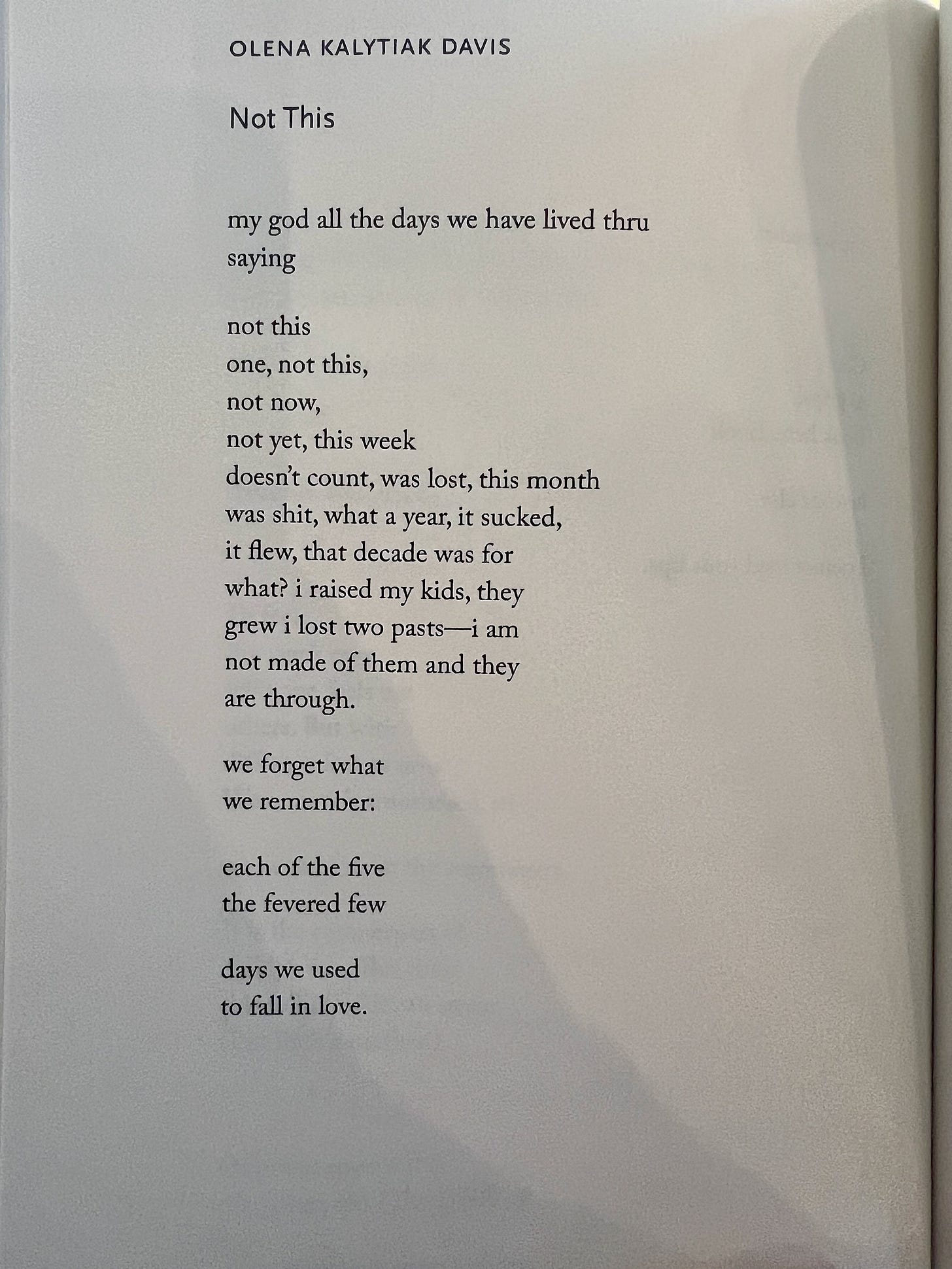
I received a surprise care package this week from a friend who knew I’d been going through some difficult personal things recently. Among tea and a kind note were two books of poetry. This poem, titled “Not This,” by Olena Kalytiak Davis, appears in one of them, The World Has Need of You: Poems for Connection, and I keep rereading it, finding something new to catch my thoughts each time.

For the love of winter

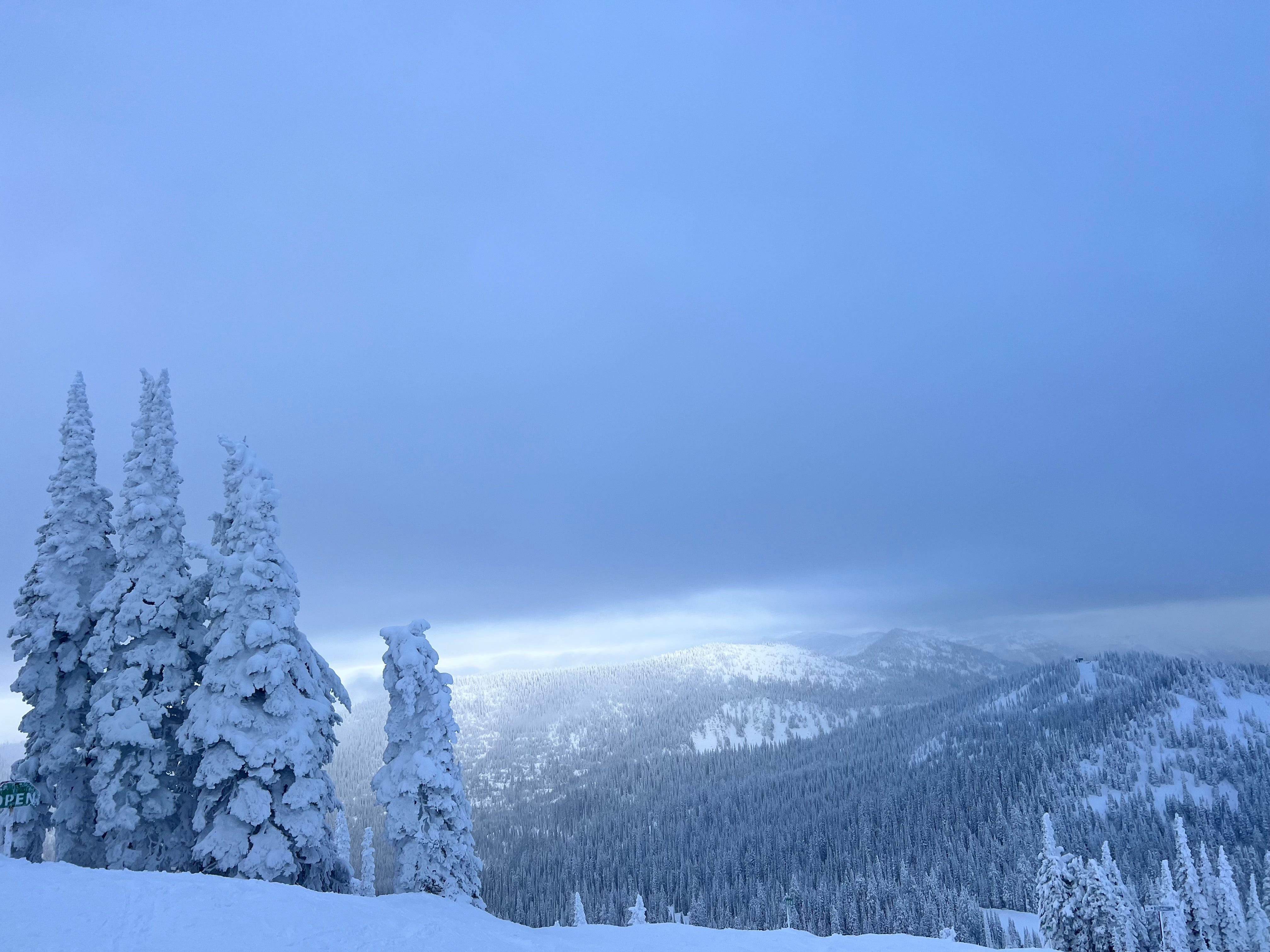
These snowghosts! I like to think of them watching over the winter-quiet ranges all the way to Glacier National Park (the peaks of which you can see from here on a clear day) and beyond.

Winter is my most joyful time. It came late this year. We didn’t get significant snow and it was barely what I’d call cold until a little over a week ago, when usually we’d have feet of snow by December, or at least mid-December. 

Winter is being driven out of much of our lives. Being aware of the shift in temperatures and the decreasing snow packs and number of snow days breaks my heart; trying to pretend it’s reversible at this point would break my brain. Maybe we find our sharpest, brightest shards of humanity in loving most fiercely what we know will be lost.

Last Sunday I shortened my usual early-morning routines involving coffee, greeting the morning air and sky and ground, writing by candlelight, and some other rituals, and threw my ski gear into the car to meet my sister and father up on the downhill ski hill just outside of town. It had been dumping snow for over twenty-four hours after weeks of winter being just out of reach and, while everywhere was still gray and foggy, my spirits were soaring. The Ramones’ “I Wanna Be Sedated” blasted too-loud in the car as I joined the line crawling uphill to chase a powder day.

By the time I’d finished making coffee, my phone had already gone off with texts from friends with ideas for the day. “Anyone want to join for a ski around Loon Lake?” “Snowshoeing in Glacier?” “Good day for a bonfire! We’re going to hike up the forest service road and roast brats.”

Not everyone where I live is a winter-lover. By March, many minor exchanges are guaranteed to have a complaint about wishing the snow would stop, or the inversion layers would lift and Sun make an appearance. But aside from difficulties that many have with the near-perpetual gray skies, which can bring on an undeniable depression (not for me but for many people), I’m fortunate to feel surrounded by people who, like me, seem to come alive in winter.

I love the cold and snow of these months, and mourn their passing even while delighting in spring. The long, dark nights are like a blanket to wrap up in. The overcast skies for weeks on end don’t bother me much, though I do find a surge of energy overtakes me that one day in February when Sun comes out, and the three nights I’ve seen Moon in the past month—I’m looking at Her right now!—have brought me pure, intense joy. The beauties of winter, which Freya Rohn portrayed lovingly in poems and photo-poems in The Ariadne Archive, work their fractal way through my imagination and attention like so much flower-frost on an old window. The magic of winter is unparalleled, from the fox tracks my niece and I part-followed on our route to school last week, to the sun halos that burst out every few years on the ski mountain.

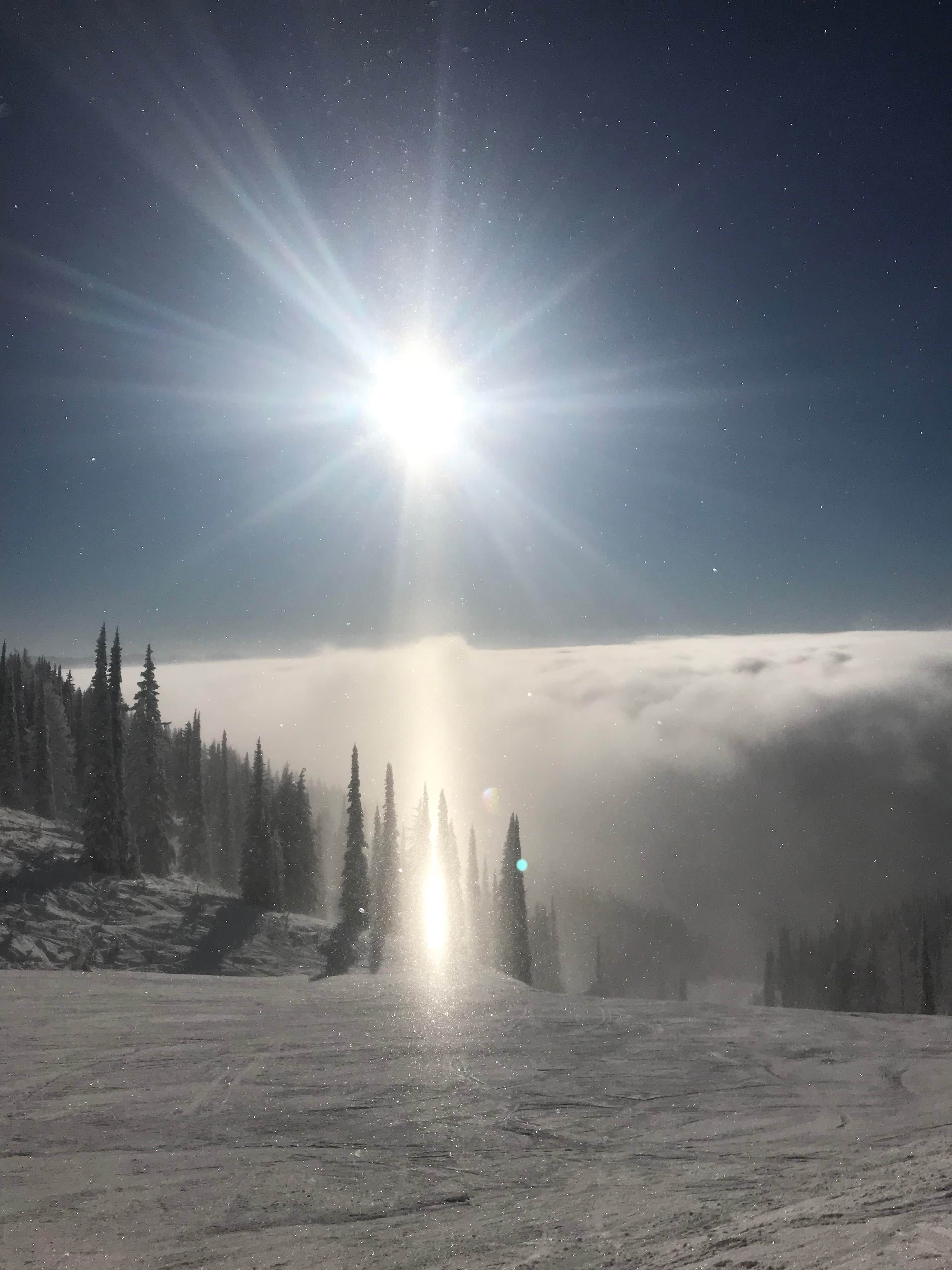
Sun halo and sun dogs, from 2021

Nothing makes me believe more in something more about our existence than Nature herself, Earth herself, Moon, Sun, trees, rivers, ice rime on a ponderosa pine, coming across a snow-covered bear den or snowshoe hare tracks when out hunting, a glorious sundog following me all day around a ski mountain—all of it, themselves. No matter where we originated in this world, there have always been forces and delights and entities to remind us that what we call creation or life is always in the process of becoming, and astonishing us. To feel humble before it all, and love for it all, might be our greatest calling.

This weekend has been bitterly, unbelievably cold. I’ve experienced this kind of cold before but not often. Thursday and Friday nights were around -58°F (-50°C) with wind chill, and it was very windy. Saturday morning dawned with -31°F (-35°C) even without the wind, but there was no wind, and with Sun making a rare appearance it was one of the more beautiful days I’d seen in a while.

Frostbite is a real issue, as is hypothermia. So are cabin fever and depression. I take all of it seriously. After spending Friday mostly crawling out of my mind with near-claustrophobic irritability from staying inside, on Saturday I dragged a heavily bundled and face-wrapped kid out for a walk, and then spent an hour by myself sliding around the neighborhood on cross-country skis a friend had lent me for a couple of weeks.

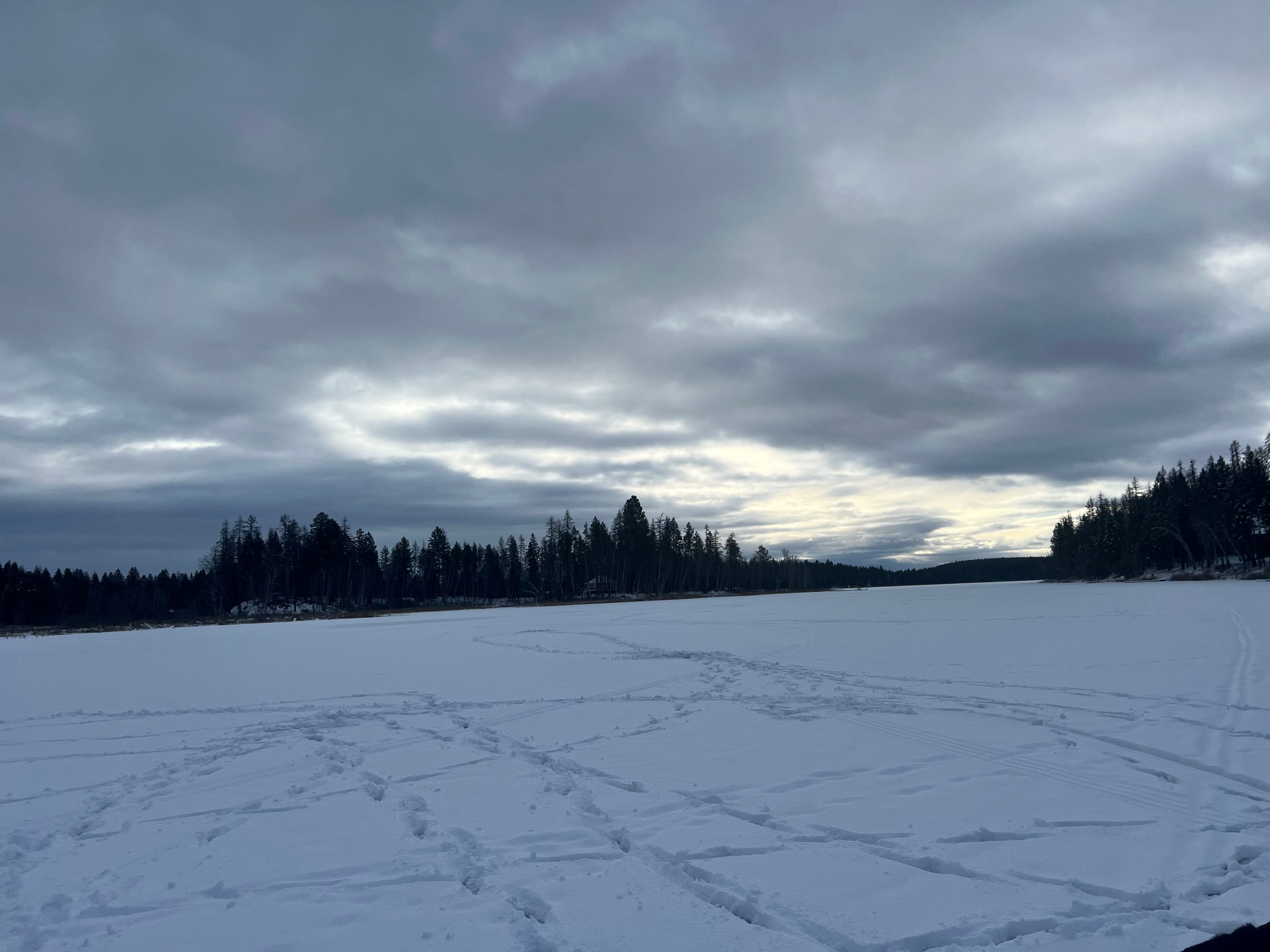
This friend and I had gone cross-country skiing on a nearby lake before the cold front came in. Her dog romping free across the ice and snow, we sh-slshed among silent woods under a rumpled silver sky for a little over an hour, sometimes talking, sometimes just skiing. I haven’t felt that good in a long time, like I was convalescing from a severe illness and was rediscovering what it was like to move my body through the world.

I’ve been meaning to get back into cross-country skiing since moving back to Montana nearly ten years ago, but with kids and work and life in general, haven’t managed much of it. Luckily, most of my close friends are avid cross-country skiers and started getting me out last year. Skiing is one of my favorite things to do, whether downhill or cross-country, but the environmental impact of downhill skiing, which I started doing at the age of two and enjoy more than almost any other activity, has been weighing on me for years. From energy consumption to broken wildlife habitat to the economic inequalities that tend to explode in ski resort towns like mine, it’s a lifelong pleasure whose real-life impacts are impossible to ignore. Even most ski wax contains endocrine-disrupting PFAS chemicals.

Cross-country skiing brings similar joys without nearly the impact (not to mention cost), and is something people have been doing without chairlifts and heavy-duty boots for centuries. Some of my favorite scenes from Sigrid Unset’s trilogy of novels Kristin Lavransdatter, set in 14th-century Norway, involve Kristin strapping on a pair of skis and heading off into the woods alone. 

There are bigger changes to make than giving up downhill skiing, but I’m looking forward to shifting more of that time toward those quieter snow-graced days. For however many years we continue to have snow to treasure, I hope to spend more days sliding quietly across land and water untouched by grooming machines.

Silent lake-skiing under a rumpled sky

Who knows how many true winters my part of the world has. All I know is that I’ll welcome every one of them, every hour toward Solstice added to beloved darkness and starry nights, visible or not, every flake of snow that makes it from the clouds to land on laden spruce trees, every story told in an animal’s tracks, every footstep or glide of skis, every frosty breath and peek of Moon from overcast skies, every ice crystal refracting light to result in a sun halo, every single moment of creation that persists in living and creating despite the worst that humanity tries to throw at it. Every bit of it that reminds me I am an evolved animal capable of living joyously on a planet very much alive, and that I intend to do so.

The starlight of integrity

When I was 19, I watched my father walk into a meeting room with the Chechen mafia. 

My father has run a small coffee roasting business in Moscow, Russia, since 1992—or ran it for 30 years, until Putin invaded Ukraine and also made it illegal for U.S. citizens to have any part in managing a Russian business. Those three decades have had so many wild and surreal stories that I could probably make narrative out of nothing but “running a coffee roasting business in Russia” for the rest of my life. I was there at the beginning, watching my parents and their co-venturists from Montana Coffee Traders rent a building aside the mud-grooved roads behind the Komsomol’skaya train station, where wild dogs roamed and people were always trying to bum papirossi off of me—tiny, harsh cigarettes. I didn’t smoke.

In 1995, I had just finished my first year of college, where I also worked as a barista at a small coffee shop and roaster in St. Paul, Minnesota. The business in Russia was building its first coffee carts: small, mobile espresso stands that they would place in supermarkets around the city. I was there to train some of the employees on how to make lattes, cappuccinos, stiff Americanos—not stiff enough, at first, for all the new customers annoyed that the flavored sugar syrups were non-alcoholic.

The Soviet Union had collapsed shortly after we left the country in 1991, bringing down the Iron Curtain that had kept my father in exile for 17 years and opening up the country to free-market enterprises like this coffee roastery. Oligarchs started claiming the massive profits from state-run enterprises like oil fields and steel factories almost immediately, and the mafia moved in on small businesses shortly thereafter. There was no way to do business in Moscow without dealing with a mafia until years later, when the police figured out their own corruption and bribery mechanisms and took over the mafia’s role.

In the years between when he had to meet regularly with Igor from the Chechen mafia, and when the Moscow police had his phone tapped, my father said something to me that I’ve never forgotten: “How do you do anything as a person of integrity in a corrupt system like this?”

My father’s company has managed to remain solvent throughout decades of social and economic upheaval. It’s stayed small, and still employs many of the people who started there, a small raft of security and honest work in a country where both are scarce. He is also a person of integrity and honesty, whose ethics have been pushed and challenged throughout every single one of those years, into choices that have no right or wrong answers, only a hopeful contemplation of what does the most good.


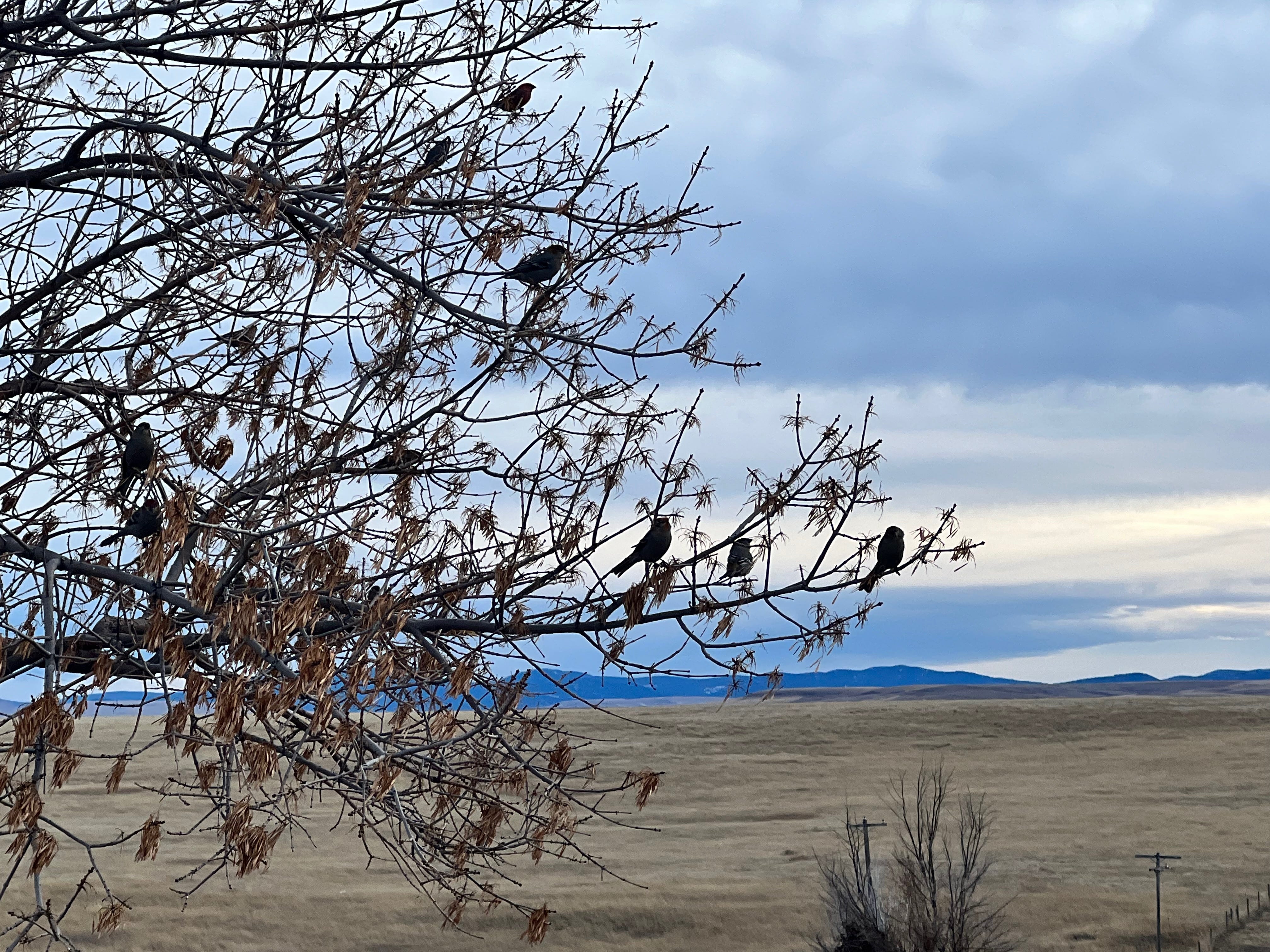
A flock of what I think were Bohemian waxwings kept me company the entire two hours I spent wandering the Old Highland Cemetery outside of Great Falls.

Last week, after a research trip to meet with the archivist at the historical museum in Great Falls, Montana, I joined my family and some friends at a hot springs for solstice. In both Great Falls and at the hot springs, Moon showed up and I can’t tell you how relieved I was to see Her. Especially driving through the mountains toward Great Falls and the prairie and farmland of eastern Montana, out of the low gray skies that are a near-constant in the winter where I live. I hadn’t seen Her, or the stars, in well over a week. I stopped the car at several points to stand in Her light, a moonlight waterfall. Moonfall. 

There was something other-worldly about it, by which I mean this-worldly. The this-world that too much of most of our daily lives washes out and hides from us. The this-world I soak in when I go to forest service cabins or my stepdad’s cabin, far from any electricity, especially electric lighting, where the stars can show their brilliant, miraculous selves. 

I was re-watching The Hobbit the other night, and remembered all the nights, so many nights, I’ve spent in my life under unfiltered starlight, alone or with family or friends. I’ve always thrilled to the elves’ love of starlight in those stories, which I think was described more fully in The Silmarillion but which Tauriel’s lines in the movie bring to life so beautifully:

“All light is sacred to the Eldar. But what elves love best is the light of the stars.”

“I’ve always thought it was a cold light, remote and far away,” said Kili.

“It is memory,” Tauriel responded. “Precious and pure. Like your promise. 

I have walked there sometimes, beyond the forest and up into the night. I have seen the world fall away, and the white light forever fill the air.”

I have seen the world fall away. That is what happens when I’m out there those nights, walking out or simply looking up when sleep leaves for a time to linger in starlight; and at dawn and twilight when the sun rises and sets as if he has all the time in the world—which he does, far more than this world itself has—and the times I’ve seen Moon come up from behind the mountains, as if She were gathering all of existence in Her light. A world that feels whole, one you can wander without fences or property lines, borders or walls, greed or war.

From the hot springs, I drove my younger kid to the Bison Range instead of going straight home. It’s just far enough from where I live that I hadn’t taken them yet, though I knew they’d love the place. We saw bald eagles on the drive in and out—four in total, very active; it’s always awesome, in the older sense of the word, to see them that close—a cluster of buffalo on a distant hill below the low fog line, and a kestrel taking off from a fence post in front of us.

My kid asked a lot of questions about the land and the bison, questions I couldn’t answer without entangling myself in inadequate language. They know about invasion and theft, and the museum at the Bison Range did a much better job than I could ever hope to of describing the history of that specific land, the buffalo herd, and the Confederated Salish & Kootenai Tribes’ relationship with all of it. 

Trying to tell these histories without using the word “own” is difficult, though it’s made easier with someone who already understands the sheer wrongness of ownership, as my kids both do—instinctively, somehow, on their own, having arrived at that belief. Maybe they got it from living in a place where “No Trespassing” and “Private Property” signs are ubiquitous and it’s hard to understand why you can’t just walk where your feet and mind wish to go. Or maybe this is an understanding that is innate to most people, and we have to be taught to think differently. To say, “The federal government used to own the Bison Range and then gave it back to the CSKT” makes absolutely no sense, especially without including the rest of the story, the original theft of all that land, all this land, and more. How can you give back, much less own, what was never rightfully yours in the first place?

The wrongness of it can’t be told enough, or in enough ways, and one of my biggest struggles with the work I’m doing here is finding effective ways to explain, for people who don’t already get it, that wrongness—of ownership itself, and more specifically what it means to take land that all rely on for sustenance and survival, and turn it into private property, into capital. It’s like a rift in reality that many people can perceive but far too many can’t, and I don’t know that we can make much progress in the world until they do.

There’s a display at the museum that shows the effects of the Dawes Act of 1887, also known as the General Allotment Act, which forced reservation land into individual private ownership and demanded that any reservation land not subsequently owned by individual Native Americans be open to white settlement. The display shows the erosion of land by mostly white settler private property claims more clearly than anything I’ve ever read. It’s startling every time I look at it, even though I know that history, and even without considering the travesty of justice that “reservations” are to begin with. 

There is no owning here, no gentle waves of agricultural settlement that are ubiquitous in U.S. history stories. There is only taking. Like everywhere else in the world where “landed property” is a legally protected value. There is only theft, violence, and the power to defend it. Visiting the Bison Range is a reminder of this, and of what all this land could be again. A world made whole.

Sunrise over the frozen river last March from near the cabin I stay at most often.


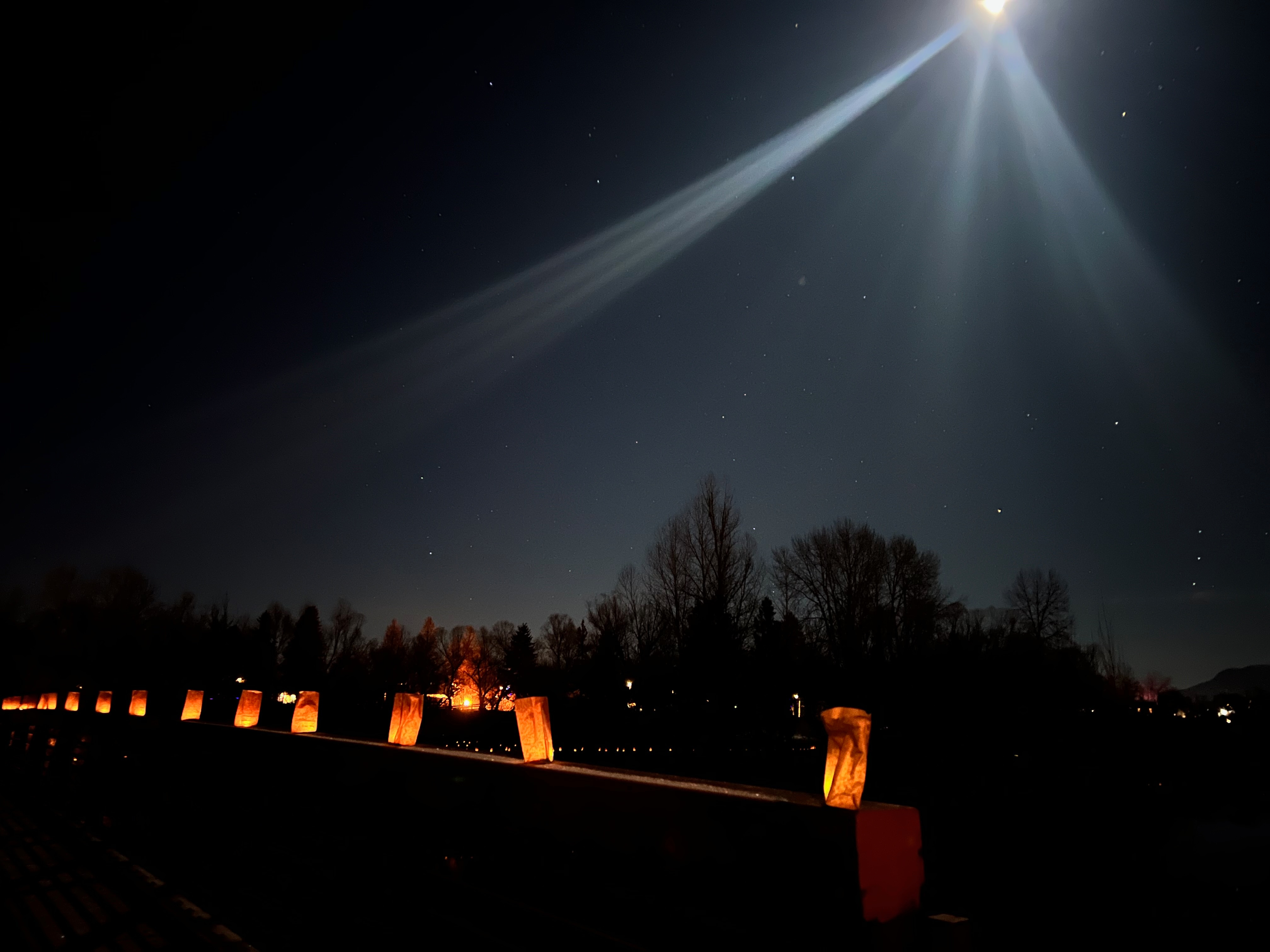
Every year there is a Luminaria near where I live, down by the footbridge that rests over the river. It was begun in honor of people I care for deeply and all the others who care for them, and one another, here. It’s about the only part of the Christmas season I enjoy, and I’ve been grateful every year since I moved back that it’s there, keeping connected all the people who comprise the heart of this community, a place and people that most visitors never see. 

This year I had heard a rumor that it might be the Luminaria’s last because event permitting has become difficult. After saying hello to whole bunches of my favorite people, faces I couldn’t recognize in the dark but whose friendly gaits and voices were familiar, I handed my kid my phone to take photos of the candlelight glittering off the water and settled in for conversation with the person who’d started this tradition, asking him about the permitting issue.

Considering what has been happening in Substack-world regarding monetized publications by Nazis, this person’s explanation felt almost ironic: in late 2016 and early 2017, my town was terrorized through an online neo-Nazi hate campaign, with people in the Jewish community specifically targeted for death threats, including months of personal phone calls and emails. I don’t really want to go into it more specifically again. I wrote some about it and its effects on me here (trigger warning for anti-Semitism), but, as is the case with her response this week to Substack’s Nazi issueAnne Helen Petersen’s reporting on what happened, from when she was still at BuzzFeed, remains the best I’ve seen.

The reason that getting a permit for the Luminaria is difficult now is because the city revamped its block party and event permitting process in the wake of the threatened neo-Nazi march at that time. The march never occurred but the threat is ever-present.

Though I was appointed to the Board of Parks late last year, I don’t yet know all the details of how these permits work—we spend a surprising amount of time trying to figure out how to mitigate damage to Depot Park’s grass from the annual Oktoberfest—but am personally very interested in making sure we can keep the Luminaria going.

These gatherings are important. Maybe you have a similar tradition where you are, or one around Solstice, or harvest festivals, or religious or spiritual or ancient practices I know nothing about. Or maybe they exist near you and you’re not aware of them. These traditions create what’s called culture. They bring people into relationship with one another, and into relationship with this-world. The land and water, animals and moonlight. 

Like walking, traditions and rituals remind us that we are animals evolved in relationship with this planet, with the life and light that co-create existence.

I was thinking the other morning about my father’s struggles with how to maintain integrity in a corrupt and unjust system, and the struggles that all of us face at one point or another with our ethics, morals, and values, and I remembered something Tyson Yunkaporta, author of Sand Talk, said in an interview once:

“We’re at the beginning of a thousand-year cleanup. What generations to come will need most is good stories, and good cognition.”

Good stories and good cognition. I think about that a lot now, and something 

Swarnali Mukherjee wrote recently in an essay about the colonial history of tea in India:

“Are we all also not fireflies, sending coded signals across the continuum of space and time by beaming our light into the quantum of gift we leave behind in our pursuit to build a better world, in pursuit of finding others who can decode the signals, who can see our light?”

Good stories and good cognition are like fireflies, or the lights of the Luminaria, sending signals of understanding and solidarity across the night, their seasonality hinge points as this planet, this-world, makes its annual circumambulation of the sun, whose light makes all of our lives possible. 

Not every question has an absolute answer. But we can each of us try to be a firefly, a candle’s small flame, sending our solidarity across space and time. Or at least I can try, try my best to be a light—starlight brought by memory.

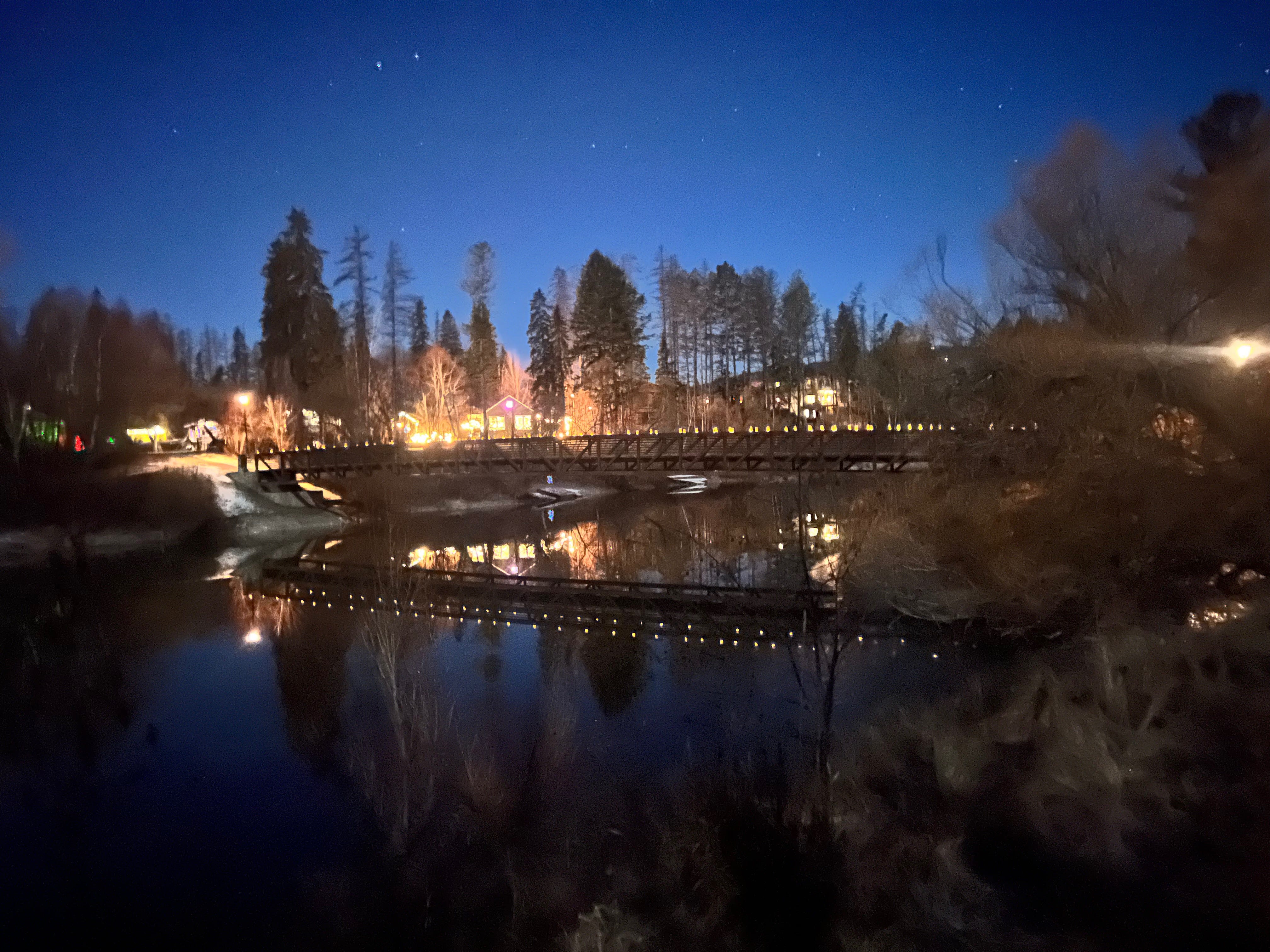
My kid took this photo, of the footbridge with its Luminaria lights and their reflection in the river, starlight above. I was very impressed!

Competence Lost


Competence Lost

9 a.m.

            The tires slipped, eager for the ditch that hugged this steep, curvy section of road. I twiddled the steering wheel, resisted tapping the brake pedal. The car made its way to the flat without heading for either the languid, half-frozen river or the snow-crusted cornfield, and my hand shook as I finally shifted down to first.

            “Mommy, mommy, mommy?” The o’s drawn out long, nearing a whine, ma-AWmy. My son watched the snowfall from the back seat.

            “Can you sing ‘Twinkle, Twinkle’ for me, honey?” The shakiness had migrated to my voice. We reached the end of our road, pitched at an inconvenient incline where it met the hill of the highway. The stop sign was irrelevant. There was no way I was stopping, not until I pulled up in front of our garage. The bald tires of the station wagon protested every time I steered them anywhere but straight, the road so slippery that brakes had become a danger.

            It hadn’t looked that bad from the house, when I’d decided to run out for coffee before the snowstorm started in earnest. If the car slid off the road, I’d never be able to explain that idiotic decision to my husband, safe in Toronto on a business trip.

            “Twinkle, twinkle, little star,” my son sang. The car waggled its rear end along the highway, eeking as slowly as possible. A plow, its blade raised, passed us going the other direction and the driver shook his head at me.

            A journey that should have taken fifteen minutes lasted an hour; we never stopped for coffee. I didn’t dare. My heart thumped in time with attempts to move ever slower; I threw silent apologies at the red light in town where I turned right without pausing. When we got home, I wanted nothing more than to drink something warm and alcoholic, and to curl up in bed, reliving the number of times the car should have slid off the road. But there was my three-year-old son, eager to play, and the five-months-along fetus inside me, not allowed booze.

            By afternoon the shakiness had begun to disappear, but it refused to leave completely. Growing up in Montana, I’d spun our rusted-out Suburban around empty parking lots to get the feel of driving on ice. I’d rocked and dug countless cars out of snowdrifts. I’d driven through blizzards so thick that daylight had no effect on visibility. Now I was living in upstate New York, where the difference lay not in the texture of the snow but in the advent of motherhood. Doubt had crept in and stayed, invited during that drive by the constant worry of landing in the ditch and injuring the child in the back seat. The snowstorm felt like a live thing, come to haunt me, to lay its cold fingers on my child and strip away my sense of self.

7 p.m.

            The snow came down in thick, fat flakes all day long. My son and I built towers with his blocks, ate scrambled eggs, read Goodnight Moon ten times or maybe twenty. I measured the snow line rising against the deck door and wondered if whisky was healthier for the fetus than stress. I finally put my son to bed and drank a hot cup of chamomile tea before bundling up to wrestle with the snowblower. I’d come to hate chamomile tea during my second pregnancy, but with a little honey it was better than plain hot water.

            By the time I got the snowblower started and forded the drift outside the garage, the night was already pitch, the darkness made eerie by continuing heavy snowfall. It piled two feet high and was cemented at the bottom with six inches of freezing rain and sleet that had fallen the day before. It usually took me two hours to clear our five-hundred-foot-long driveway, which cut to our house built in a former cornfield. I could barely see the driveway markers in the snowblower’s headlight, and there was nothing I wanted to be doing less right then than wrangling the gas-guzzling machine with its spinning blades down the driveway—nothing, that is, until twenty feet from the door, the blower sheared a pin. Our route to the outside world was closed off.

            When I came back inside, the emotional moorings that had been weakening all day finally broke loose. The lights flickered and flickered again, responding to the outages in the main transformer a few miles away, and I started crying, picturing myself trying to keep my son warm before a fading fire while outside the snow kept falling. Dramatic scenarios that would never come to pass but I couldn’t stop impaling myself on. I sat on the couch wrapped in three blankets, checking the power company’s website every few minutes and crying harder every time the lights wavered.

            Buried somewhere in my squishy body and unskilled self are the genes of more resourceful ancestors. Growing up, I learned to embroider using my great-grandmother’s thread, pickled cucumbers in another’s massive crock-pot. When I started learning to ride a horse, I inherited a great-aunt’s saddle. It once seemed to me that if I were to time travel and land at my ancestors’ dugout on the Montana prairie, I’d have no problem contributing something to daily life, being useful. I’d haul water and hew wood, cheerfully clear a trail through snowdrifts to the barn.

            I no longer think that self exists. Maybe I’d just freak out, and sit by the fireside rocking my babies, waiting for the loneliness and wind to drive me insane.

            After the snowblower gave out, I sat inside staring at the gathering whiteness of the yard and surrounding field, steeped in panic, fighting the bone-tiredness that had possessed me my entire second pregnancy. I wanted to reach back to my ancestors and shake them. Where are my lessons, my skills? Why didn’t you leave anything for me? What happens when the apocalyptic post-oil climate-change future finally heads our way? If it all falls apart, how do I keep my children alive?

            Those ancestors of mine didn’t leave much record of themselves. Some photos. A solid barn in eastern Montana that is still intact and in use over a hundred years later. No diaries, no precious letters. Sometimes I browse through the sparse journal excerpts of other women from that time period, looking for the winters, the loneliness, the lost babies. Those who mythologize the earlier histories of those lands both erase the violence inherent in every family with a personal history like mine, and romanticize what life would have been like for them. But there was no romance. There was just life, and hard work. A lot of loneliness, a lot of scraping for survival, frozen cattle, locust-riddled wheat crops, sickened children.

            These days, city-dwellers and land-seekers looking for a bit of space, a bit of privacy, air to breathe, are searching, often without realizing it, for what those romanticized histories seem to promise. But we haven’t cut the umbilical cord to modern conveniences and the security they offer: electricity (meaning light and warmth), roads (meaning both escape and connection), and supply lines (meaning food and fuel).

            All of which, as demonstrated by the storm that stripped away my self-respect, are easily made inaccessible. The storm left in its wake collapsed barns—four of them within a few miles of us, each standing for a hundred years or more, finally sighing to the ground under the weight of that thirty-six hours of wet, constant snow. It left truck engines blown out, and several communities aching for electricity for nearly a week. At times like these our plump houses set on their own, away from other people, planted in former cornfields, take on an unnerving aspect. They come to represent the past rather than the future.

            Overnight three feet of snow, a little more, made the car sitting in front of the garage pointless. What I needed to traverse those five hundred feet were snowshoes and I didn’t own any. In fact, right then, I owned little that was useful. The weather was oppressive, there was no shaking it. The storm’s repeated excitement of panic and worry, its irritation as the snow continued to fall in thick, quiet flakes, was torturous. It seemed almost intentional.

            Instinct is to gather oneself in, to fold one’s children into one’s arms and bow one’s head over them. Hoping the storm—whatever storm—will pass over us without notice. Despite my grandmother’s pickle crock and an ability to chop firewood, my upbringing was mostly books and escapism and stories and emotional survival. Nobody ever taught me to do anything truly useful except bake snickerdoodles. Everything else is self-taught and it’s not enough, never enough. To be more, to do more, to grab competence by the tail and swallow it, maybe raw, maybe dripping with blood, that’s what we need to survive what might come, or what we might lose. To tell the elements we see them, and respect them, and are not afraid.

10 p.m.

            Before I curled up in bed, I turned the heat way up. Just in case. In case it all fell apart and the residual heat was all we had. I filled up pots of water. In case our option was to die of thirst or freeze to death from trying to eat snow. I mapped out a route to drag my son by sled to a friend’s house a couple miles away. In case the driveway wasn’t clear until spring.

            All of which, given the facts, were just plain silly. Even if the driveway stayed blocked, there was no thought of starving, or freezing. Not this time. The fridge was plump with produce, the pantry wedged tight with rice, pasta, beans, and oatmeal, and there was half a deer chopped up and packaged sitting in the deep-freeze. If the electricity went out, it was cold enough in the garage to keep most food, and I didn’t need electricity to light our propane-fueled stove. The basement was stocked with enough canned peaches, tomatoes, jam, and salsa to last a month. And the woodpile outside would have kept us warm enough for a solid week, at which point there was plenty of pre-broken hand-me-down furniture to put under the ax. If I could find the ax and remember how to use it.

            But I’d become like an old wheat rancher, rigid in my beliefs, with obsolete fears. That night reminded me that I was tethered not only to the fierce, energetic child sleeping upstairs, but to the incubating little person in the womb who did and did not yet exist. A woman at night, pregnant, is reminded constantly by the discomfort of rearranged organs, by the aches in her back, by the pesky insomnia when sleep is needed most, that her body has been pressed into service.  

11 p.m.

            Just before I turned off the bedroom light, I opened the blinds. There, lining the driveway parallel to ours, were our neighbor’s big, bright lampposts. I’d been making fun of them for the last two years. Like many of the locals, our neighbors moved out there from New Jersey saying they liked “living in the country,” and immediately turned it into a close approximation of suburbia. They dug a pond, put in a phallic fountain, stripped down their field to achieve a four-acre lawn, and then planted iron lampposts all down the driveway leading up to their spotlit house. It was the lamps I found most irritating. “Drowning out the stars,” I said. “So obnoxious.”

            That night, I opened the blinds so I could see them as I fell asleep, their electric filaments burning in the snowstorm. Before daybreak, I woke up several times and searched immediately for the lights leading to the road like they were a signal from the rest of the world. Were they still burning? Were we still here? Had it all fallen apart? But there they were, an anchor to the civilization I never learned to live without.

            Twinkle, twinkle.

Co-imagine the future

We had fresh snowfall recently, which was sadly washed out by rain for the next several days, but before it went I took a long walk around town to soak it all in. Look at that light! The photo brings out the blues, but in person it was more shades of gray with blue tint, and this light is precisely why gray is my favorite color. The clouds, the river, the flat light on the snow, the rocks in the riverbank. The way a splash of indirect sunlight gives all of it depth.

It’s hard to believe this river was a Superfund site not that long ago, that its waters were siphoned off and temporarily drained to allow a massive cleanup from a century of contamination from the rail yard. A friend of mine says that when her parents were growing up, the river used to catch fire.

I spend a lot of time thinking about that kind of contamination, what property rights allow and what they steal from the rest of life. But just as often, the beauty of this river snags me, pulls me to pause and sit alongside, dangle my feet in her gentle current. When there’s yet another leak from the rail yard that requires quick containment and a warning to people to stay clear of that area, it’s a reminder of how precious it all is, how easily these gifts are used up and discarded. Yet with a change in perception and a clarification of what we value, it’s just as easy to respect and care for them. The more people I listen to, the more it’s clear how many yearn for a reality that reflects those values. They just want to know how to get there.

For the next few weeks, I’m going to be republishing some older essays. There are many more people subscribing than when I started this newsletter over three years ago, and I wanted to share revised and updated essays that directly speak to what this whole project is about: ownership, private property, the commons, and the book I’m working on. These essays will go out as emails and comments won’t be enabled, but you’re always welcome to email me. I’ll try to continue adding an audio version to each post.

So far I’ve chosen essays from 2020 and 2021 on the East India Company and the dangers of corporate monopoly combined with state military power, the Doctrine of Discovery, an essay on loneliness that feels somehow timely again, and one on dirt, soil, and commodification. Anyone who’s been reading a while, if there’s one that stuck in your mind, feel free to make a recommendation. 

I’m going to start with an essay that was in the winter 2014 issue of the small literary journal The Jabberwock Review. It’s never been published online. It’s a personal essay about a snowstorm in 2010 that brought home my own dependence on fossil fuels and roads, and was probably what got me started thinking about both car-dependence, and therefore walking, and private property. 

Last week I attended a webinar recommended by subscriber Chad, who writes the newsletter Scientific Animism. It was given by designer David Dylan Thomas and was titled “No, Seriously, F*ck Engagement: Building a More Human Web.” It was billed as being for designers, which I am not, but it was really about capitalism, the insanity and injustices of the systems we live under and the stories that perpetuate them, and what people can do within their own work to forward a more humane world. It was uplifting, challenging, refreshing, and left me with more tangible optimism than I’ve had since attending the Reclaiming the Commons conference last summer. 

Thomas ended with some advice about identifying our own values as well as identifying and challenging our assumptions—which reminded me of what one of my mentors told me over a long phone call after I got my first book contract: identify your biggest assumption (about walking in my case) and push at it from every direction you can think of. 

Thomas went one step further from that, and I want to leave you for now with his words, one of the more solid pieces of advice I’ve heard in a long time:

“Co-imagine the future with the people hurt by the present.”

I imagine each of us walks with that idea very differently. What do those words mean in your own life?

May you and the weather find peace with each other, wherever you are.

This light!