The North Fork of the Flathead River, northwest Montana.
A few days ago, I was sitting by this river, near a U.S. Forest Service cabin where I went recently for a sorely needed offline, off-grid, off-network recalibration. It’s been too long since I sat in the woods by myself for a few days.
Late October, the larch trees have yellowed, turning mountainsides bright and the woods full of unexpected sunshine even on gloomy days. Larch in autumn is a spirit-lifter, an anti-demon spell, a joyous shaft of light when the world is shifting dark.
It snowed the first night I was at the cabin. I trekked down to the river carrying my coffee the next morning before sunrise, happy despite knowing that in my rush to pack water, food, sleeping bag, and books, I’d grabbed a coat too thin and decided against snow boots—a mistake and I knew it, as the hole in the sole of the thin canvas shoes I’ve been intending to replace reminded me.
Ravens flew down the river and high above the trees, more than I usually see at this place. I could hear more further off in the woods and wondered what was keeping them so social. I wondered that for the next three days and never got an answer. They sounded not anxious exactly, but somewhat like me getting my stuff ready to stay in the woods and my kid packed up to stay at their dad’s: busy, harried, organized but frazzled.
The river at that spot is wide, its rapids gentle but the rushing tumble of water strong enough to be heard a long way off.
I watched some rapids tumbling around opposite bank from where I sat, the burble and leap over hidden rocks tricking my mind into thinking they looked like two otters playing in the water.
Wait, I thought. Those are two otters playing in the water.
I recently spent several days pitting, pureeing, and dehydrating a vast amount of plums picked from a friend’s trees—trees so heavy with fruit that after an hour of filling my bucket, the branches looked untouched. My friend had already picked and dehydrated his own many batches of fruit leather from his other trees, which ripen earlier, but I’d been too busy with the rest-of-life, the crises and plans and bureaucracies and commitments that translate into too little time in the garden and out foraging.
But this one bucket made it into my home, my fingers purpled dry by the slicing and pitting and feeding to the blender—a many bladed monster that, as I texted to the friend I’m renting a furnished house from, looks like something from a horror movie.
In the kitchen now is enough fruit leather and dried apples—from another friend’s August generosity—to see my kid and me through the winter if we’re not too greedy.
How does one get that way? Too greedy. Or perhaps the question is, how does a human, or a whole society of humans, lose perspective on what is enough?
From fruit to food
I recently finished Caroline Dodds Pennock’s book On Savage Shores: How Indigenous Americans Discovered Europe, and in it Pennock described briefly the value of cacao beans in Mesoamerica in the late 1400s and early 1500s, which were a form of wealth: a turkey egg or avocado could cost three beans, a small rabbit thirty.
Only the very wealthy could feast with gourds of cacao to drink; when resource-hungry European people came, claimed, and took, they took so much that even just reading about it felt like watching land being actively drained of life: gold, emeralds, brazilwood, cacao, people.
And yet, as many Indigenous people of the time noted after having spent time in the “noble” houses of Seville and Lisbon, no matter how much wealth was siphoned from their homelands, it did nothing to change the circumstances of ordinary European peoples. The poverty of the majority of people’s lives was often remarked on, especially when contrasted with the opulence of royalty and their hangers-on.
How much is enough?
What breaks a belief in kinship and reciprocity—how does one lose the knowledge that it is mutual care, not taking more for ourselves, that gives the best assurance of security?
I’d like to have a functional health care system that doesn’t bankrupt people, and to not worry about food and housing, but beyond a certain point can’t imagine an amount of money that would replace the kinds of relationships woven among people, and between humans and ecosystems, inherent in nature sharing gifts so wealthy that even multiple families can’t use them all—like my friends’ plum and apple trees, or the potatoes and strawberries I grow, or the wild huckleberries throughout the nearby mountains—and in people sharing them with one another.
Maybe “enough” is forever undefinable, guided only by that clear thread of relationship and reciprocity, of what keeps life life-ing.
There were in fact two otters in the river. I watched them for a long time, absolutely filled with delight. They tumbled and rolled upstream, all along the far shore, their sleek bodies and tiny whiskered heads popping out of the water every few seconds, their slim tails flying up to dive back down.
I wanted to step into my real skin, like a Selkie, and swim across the freezing water to join them. I wanted to not feel the frozen ground so acutely through my thin-soled shoes, to be indifferent to the bite of chill wind through my inadequate coat. I wanted to dance a song to Moon that night and to know each Raven by name, and to soar with the Bald Eagle who circled over the river downstream, toward the new-snowed mountains.
I wanted these minutes to be my entire life. I was, in fact, greedy for them to last forever.
Lower Two Medicine Lake, Blackfeet Nation, Montana, host of the 2025 black/death metal music festival Fire in the Mountains
Some years ago when I still lived I upstate New York, I began working at a sawmill. I had two very small children at the time, and had never intended nor desired to be a full-time stay-at-home mom, not to mention be one and working at the same time (due to the full-time stay-at-home mom reality, most of my work happened in the middle of the night, a capacity I no longer have). But I was doing exactly that, and rapidly dying inside because staying at home with children all day is not, to put it mildly, my calling in life.
One of my kids went to part-time preschool twice a week at a nature museum, which also offered adult classes like beekeeping and wild foraging, both of which I took—out of curiosity but also to stay sane—along with rustic woodworking, an activity I’d never imagined myself doing. I am the kind of person who can’t be trusted with a table saw or even, frankly, a spirit level. The rustic woodworking artist who taught the class introduced me to New York Heartwoods, a micro-mill run by a woman (coincidentally, also from Montana) who’d bought a Wood-Mizer LT40 and specialized in milling wood from downed and diseased trees on public and private land.
Working at the sawmill a couple days a week—interning, really, since I was there to learn and wasn’t being paid—helped keep me from going completely numb, from depression and dissociation from life, and it got me into research on embodied learning, but I was also intrigued by the mill’s mission: the owner only worked with fallen or scavenged trees. The point of the mill was to introduce circularity within the wood milling system, which fit right in with efforts I’d been making toward supporting local food systems and fending off long-term despair over single-use plastics.
We worked with a lot of city Ash trees felled by emerald ash borer, and Cedar that had been cleared from farm fields. I spent one entire day planing Cedar planks for someone who’d rescued them, already milled, from her family’s farm and was making an art installation out of them.
Rescued Cedar planks, before planing down to their gorgeous hearts
Another time we spent most of a cold, snowy day dragging out enormous old beams from a fallen barn, taking them back to the mill to be sawn into boards that would be lightly sanded and used to make shelves.
Reclaiming beams from a fallen barn. That’s me in the blue coat and black hat, sometime right before or after I punctured my leg with a 100-year-old nail and went to get a tetanus shot. Photo credit: New York Heartwoods.
The mill’s shady, forested yard was full of beauties, every one of them cared for, whether already milled and kiln-dried or not. I don’t ever plan on moving away from Montana, whose forests are full of soft-wooded Pine and Fir, Aspen and Spruce, but do sometimes miss working with hardwood.
One day, we were milling reclaimed beams from an old barn for a client. Old barn beams are a pain because they’re often full of nails—long, heavy, rusted nails that are hard to spot. We ruined a few blades as hidden nails made it through and wrecked the metal, and finally gave up. That barn beam went back to its owner, or maybe to a scrap pile, joining the piles of beautiful wood resting around the property, testimony to one woman’s commitment to making sure their lives continued.
Barn beams can be a nemesis, too
It only occurred to me later to wonder why we hadn’t taken the time to look for and remove the nails ahead of time, why we sacrificed several saw blades and in the end the beam itself rather than take the time to remove as many nails as we could find and make the wood workable again. It obviously would have been a waste of time, but then again, the entire endeavor could be classified a waste of time, if all we use for measurement are the standards of capital and efficiency.
A couple months ago I succumbed to the urge to crawl through all the essays and posts in this newsletter, starting from the very first essay in late summer 2020, about Marcus Aurelius and my own cognitive disconnects around the U.S. invasion of Iraq, when my older sister was still in the military.
I ended up deleting almost 200 out of nearly 300 essays and posts. Some were from before Substack launched its Twitter-like Notes platform, and were brief photo + quote + sentence or two “walking compositions,” a practice I’d migrated over from my deleted Instagram. Many posts I thought were pointless, and others need more revision work. The ones I kept, I’m slowly revising and recording audio for, since I only started doing audio versions in late 2023 (I’ve made my way through nearly 20, starting from the beginning).
This was actually a super fun process. I played around with my work, scrawling all over posterboard with Sharpie markers, in a way I haven’t in years.
Many of the posts and essays I deleted, I saved in offline Word documents, collecting them by theme. By far, the largest of these collections is one I’ve labeled “Abundance and Commodification,” with over 40 pages of text. Some of what I’ve rewritten here about my time working at a sawmill are lines scavenged from that document.
Out of all the writing I do on the commons, the complementary topics of abundance and commodification—of food and seeds in particular, but of everything in general, including labor, creativity, and ideas—overwhelms the amount I have written about land ownership, which surprised me because I feel like I never shut up about land ownership, and repeat myself to a tiresome degree.
Something about rereading all of those words and stories, and collecting together the ones that I felt needed more editing, or perhaps shaping into a larger, more cohesive project, reminded me of my faith in storytelling, how deeply I believe in its power, and in the world’s need for it. For more stories, stories with heart and truth, as many as possible from as many different perspectives as possible, especially from voices, people, and places who’ve been heard the least. Every iteration, not for the purpose of telling anyone else how to feel or what to think, but sharing the unique experience of what it is to live one’s own individual life. The joy, the pain, the traumas, the grief, the love, the visions and losses and hope.
I don’t think we can ever have enough ways to help ourselves feel what it’s like to live in someone else’s experience.
Yet it often feels like the world is awash in stories. Good stories, important stories. Stories we need to hear and stories we need to tell. Fantastic fiction that opens up possibilities for imagining different ways of living; investigative reporting that unfolds the truth of the world. I have been floored by the work of brilliant documentary filmmakers, by novelists who are bona fide geniuses, many of them personal friends.
And what changes?
It is very easy for the path opened up by that question to lead to despair. I’ve been there myself more than once—I’m there myself more than once on any given day, and I don’t think it’s solely a genetic half-Russian Jewish fatalism. It’s looking at the world, and humans, as clear-eyed as possible. It’s seeing people I believed in and trusted coopt genuine need and good causes for their own benefit; it’s seeing the hard work of millions crash against the walls of capital and power.
But down that path is also possibility. My father used to say, and still does, that the biggest problem in the world is lack of imagination. He meant a capacity to place ourselves in other people’s lives and experiences, a capacity for empathy. It’s both true and bigger than that.
Every story shared is a chip in the systems and structures that seem unbreakable and insurmountable. Most of the time we don’t see what’s changed until long after the fact. Real life isn’t a Hollywood apocalypse movie with sudden shocks to the system and people screaming for the walls. We’ll never know what cracks it all open. But those stories, that work, looking at life slant and seeing what can change, that’s how the light gets in.
After taking my first rustic woodworking class, I couldn’t get enough of working with the diversity of hardwoods that grow and fall in the U.S.’s northeast. I learned about the different high-end uses of varieties of Maple, and how bad Black Locust smells—there is no other way to say it but that Black Locust smells like ass—but also how useful it is. Black Locust is so hard that it can be used in decking. It’s like cement board.
I learned how bacteria and fungi cause spalting and how beautiful its black lines are lacing through decaying stumps or sawn boards. In midwinter, the mill’s owner sent me on a day-long chainsaw safety course, where, after several hours of learning to care for chainsaws and safety equipment and looking at photos of people who’d had horrifying accidents, I stood in knee-deep snow and cut down a Pin Oak. I decided I never wanted to use a chainsaw again because I am clumsy and it was terrifying.
The entire project of New York Heartwoods was at core anti-capital. It was inefficient, time-consuming, space-consuming. Slow. Laborious.
It was an enormous amount of work simply to find markets for the wood products, much less retrieve the trees and logs and mill and kiln-dry and shape and sand it all. That entire day one employee and I spent planing someone’s recovered stack of Cedar planks? The client probably could have bought something similar from IKEA for far less money than that day’s labor cost. Even though I was working at that sawmill for free, nobody else was.
But that’s the point. The work was slow and laborious. And smelled heavenly. I could eat my winter-cold sandwich on a stump of spalted Sugar Maple and smell the melt-snow damp of coming spring. I could peek into the kiln and its stacks of Ash boards. I could do work, and feel alive while doing it.
What does efficiency in our lives get us? The question sits like an invisible monster in the center of capitalism: if “the economy” isn’t there to serve human and ecological well-being, what is the point?
If working with wood by hand gave me and others pleasure and satisfaction, and gave clients connection to their ecosystem and its cycles, why not engage in that kind of work? And why are we prevented from doing that work simply because it doesn’t provide enough income to feed our families?
It’s the reason I recommend reading Wengrow and Graeber’s book The Dawn of Everything as a balm for despair. Or at least listening to interviews about it, or reading summaries. Whatever works. It’s an enormous book and what’s important is the message behind it: there have been countless ways of forming human societies over the past several thousand years. Just because our current industrialized culture feels like some kind of inevitable endpoint doesn’t mean it’s true. Those endlessly varied histories remind us what might be at the core of true freedom.
It also gives an opening into that question, “What changes?” Well, a lot can change. We never know how, not completely. Working toward change for the better doesn’t guarantee success, nor does it guarantee lack of pushback, but without stories we don’t even know how to imagine something different.
I heard someone recently—one of the tarot readers I follow on YouTube—talk about leaning into fear with curiosity. Despair, too, I suppose. That’s where we can find self-empowerment, and perhaps an entirely different way of perceiving both problems and possibilities.
Like in K-Pop Demon Hunters: perhaps a failure to seal the Golden Honmoon isn’t a failure at all. Maybe it’s a way to discover something more powerful and more honest, with a capacity to connect us all.
Me making a bowl out of discarded Maple and an axle grinder in the workshop of Dan Mack, rustic woodworking artist, where I found something akin to hope, by working with my hands at one of the lowest points of my life.
To new subscribers—welcome to On the Commons! To those of you who’ve been around a while, welcome back!
I recently wrote an essay for Psyche/Aeon’s “one thing that changed me” series that’s probably the most personal thing I’ve ever published. If you came here from that essay, I’m very glad to see you here. This newsletter is generally not the space for that kind of personal essay, but I hope you’ll give it a try and explore what it means to be part of a commons—including our relationships with one another.
From the steps under the footbridge. People have also installed rope swings below the bridge’s jumping-off point. This bridge, this river, the way people relate to it with joy — to me it’s the epitome of the commons.
“Ma’am, watch this.”
Two teenage boys stopped me on the footbridge, right where they’d been jumping into the river. One of them was about to attempt a backflip off the railing, and the other was betting it would turn into a belly flop.
I stopped, and thought briefly of my father’s childhood stories—growing up in Leningrad (now called St. Petersburg) in the Soviet Union, he and his friends jumping (illegally) from a bridge into the Neva, near the Peter & Paul Fortress. Living under a dictator, a life structured around fear, rigid rules, almost nonexistent interpersonal trust, and waiting in hours-long lines for bread. And still, laughing, challenging one another, unwilling to resist the lure of the water.
The cathedral at St. Petersburg’s Peter & Paul Fortress; my father and his friends on the banks of the Neva.
The boy jumped, did not belly flop. “That was actually pretty cool,” I agreed with the other kid, and went on my way.
I’d been sitting at the other end of the footbridge for a while, on new stone steps that the city had just had put in to make access to the river at that spot easier, and to repair the worrying degree of erosion from years of people walking up and down the slope. Although there are easier access points and several public docks all along the river, the ends of the footbridge see heavy use, people drawn down to the water with dogs, with kids, with themselves.
But it was a steep slope and slippery from time-ground dirt eroding away from the bank. In ten years I’ve gone down to the water at that spot maybe two or three times. In the week since the steps were finished, I’ve been down them, walking into the water, sitting on the lowest steps doing nothing, almost every day. The steps didn’t change how I relate to the river—I visit it at plenty of other points that have gentler slopes and docks to sit on—but they did transform my relationship to it at that particular point. I feel invited now to sit with the water, drawn to greet it. From what I’ve seen, a lot of other people do, too.
When I was a teenager—over thirty years ago now; I’ll be fifty in less than a year—this river was not one people swam in. My younger sister says she used to go in, but it wasn’t common. It was so polluted, so contaminated from nearly a century of pollution leeching from the rail yard’s containment ponds, that in decades past it used to catch fire.
In 2009 a years-long Superfund cleanup began on the river, which runs wide and slow right through our town from its outlet at the lake, eventually down to Flathead Lake, all the water collected in this basin eventually funneling out to the massive Columbia River watershed. Superfund, for those outside the U.S., is a designation implying a degree of pollution that might take decades, more likely centuries, to repair.
The first time I visited the new steps was with a friend who was in charge of that Superfund cleanup. Like many of my friends, her work —cleaning up oil spills in rivers for the railways—is far more interesting and important than mine.
To remedy the extensive contamination, the river was drained completely. Blocked at its outlet from the lake and the water removed. I’ve seen pictures but hadn’t moved back home by then. It’s hard to wrap my head around the enormity of the project.
Location of this river cleanup photo is approximately from where the same footbridge is located, dated 2010.
In late 2014, the year after the initial cleanup completed (there have been small leakages and spills since then; the rail yard area remains a Superfund site and the river will likely always be at risk), a several-mile stretch of the river was designated non-motorized. Now, as soon as winter begins to loosen, the water is popular for paddleboarding, kayaking, swimming, jumping off the footbridge at that one spot where the water’s deep enough to do it safely for most of the summer, and now, with the new steps down to the water, for those of us who simply want to sit by it, let it welcome our feet and our thoughts. An invitation to rest.
The river will never be the same as it was before the rail yard was built and contamination started to seep into the water, at least not for generations beyond count. Not everything can be fixed. But that doesn’t mean it’s impossible to repair.
The new steps, like someone’s opened a door wide into a world that was always there. (This slope was too steep to make wheelchair-friendly, but other public access points along the river are more accessible.)
Recently, the novelist and physician Abraham Verghese came to give a talk at our local community college. The region I live in is not, to put it mildly, a place where people of that stature and renown come to speak. We might never get to listen to someone like him again in person, but the hospital sponsored the talk (a friend quipped, I’m sure rightly, that it was probably cheaper than doing what they needed to be doing, hiring more nurses), and it was close to sold out.
Verghese was a generous and thoughtful speaker, full of compassion and insight. Before answering questions from the audience—packed with people who worked at the local hospital or their relatives, including some of the friends I’d gone with—talked about his childhood in Ethiopia and the books that shaped who he became as a writer as well as a doctor.
And then he spoke about being a doctor serving HIV/AIDS patients in Tennessee in the early 1980s, when HIV was terrifying and unknown—it hadn’t even been labeled human immunodeficiency virus (HIV) yet—and had no treatment.
It was at that time, he said, when he began to understand that, for all the medical profession’s fixation on curing illnesses, there is an equal or perhaps even greater need to understand what “healing” means. There was no cure for his HIV patients at the time. The end was known and usually not far off and involved a great deal of suffering. But that didn’t mean he couldn’t work with healing, for them and their families.
I’ve been thinking about that ever since—curing versus healing, along with Verghese’s calm, generous presence with this tired audience tucked into an often huffy, even angry, and stunning little corner of Montana.
I think it’s what I want to say when I talk so often in this space about compassion and caregiving, whether it’s in our interpersonal, private relationships, or with the world at large. Why the ethos of “burn it all down” makes me chafe, knowing as I do—and most of us should—that when worlds fall apart, those who suffer most are those who are already suffering most, those who always have suffered most.
Dismantling structures of oppression and violence requires building and repairing alongside collapse, lest we simply allow the same harms to grow in the ruins. Not easy. Still necessary.
It made me think of Chloe Hope’s work—as an end-of-life doula and carer of baby birds at a wildlife sanctuary—and her writing at Death & Birds. What is at the core of life in the end but death, and the compassion and care that is its cosmic twin? But also of Sarah C Swett’s regular journeys with milkweed and mending on The Gussett, which fascinate me, as if her foraging, spinning, and weaving represent a life I was meant to live, the ways that nature can be literally woven into our lives if we learn how, and allow her to do her work.
Heal. Mend. Repair. So many words we have to acknowledge damage, and what we might attempt to soothe the harms that linger.
As a handful of people here already know, I’m in the midst of a marriage dissolution that is almost finding its way to an ending, which of course for both me and my spouse will be another beginning. It’s been a slow, painstaking process focused on prioritizing our two teenage kids, and repairing of friendship and a different kind of partnership after 26 years of marriage. It surprises me with a shock of gratitude on a regular basis that we’re able to do this with a focus on mending, rather than rending one another apart. (That’s probably the last thing I’ll ever say on this subject except that it’s amazing to be able to make a legally binding commitment essentially as a child that requires a career in accounting and a PhD in psychology to undo.)
To be surrounded in life with people who heal, whether rivers or relations, animals or animosities, is a kind of magic. I’ve learned the hard way that not all those who speak with reverence of the importance of relationships think it’s equally important to live by it, and am all the more grateful for people who live true to those expressed values.
The first time I sat on the new river steps by myself, one warm evening after a busy day, there were no other people nearby. I allowed myself a tiny proprietary twinge because, although I recently gave up my seat on the town’s Board of Parks, I was there for the years of planning and permitting of these steps and it felt good to know I’d been a tiny part of something built for the good of the public, a miniscule contribution to repairing our local commons.
A yellow warbler sang from a willow tree draped over the water a little upstream. The particular psithurism that comes from a breeze catching on the branches of lodgepole pines and larches drifted from the opposite bank.
I wish I could bottle that sound for people, or record it effectively. It fills me with a feeling that change is coming. It always has, ever since childhood. There is something about the way the needles of those trees shatter the air, maybe, that gives it a different sense than wind among aspen leaves, or old oaks. Something . . . impending.
Sometimes—or in times like our own, often—it feels like forces of destruction, greed, hate, and even evil are insurmountable. That nothing good can be saved, nothing can be repaired.
But my town, my wider region, is full of people doing their utmost to repair the commons. People dedicated to affordable housing efforts, to the seemingly neverending struggle for a county-wide bike and pedestrian trail system, to building places for homeless people to rest and feeding the hungry, to cleaning up rivers and lakes and restoring wildlife habitat, to helping refugees find homes and settle into this winter-shaped, sometimes strange place.
There are so many people everywhere working to fix the wounds of the world, knowing that pain and scars will remain.
The river that I’m now spending a lot more time in has a long way to go in repair. Though it’s designated endangered bull trout habitat, there are almost no fish in it except for a few bottom feeders. I like watching them; they’re a reminder of how far the water has come from the damage inflicted on her slow current.
Not all can be cured. Maybe nothing can. But the potential for healing is infinite.
My mother sent me a birthday card years ago that I have put above my desk everywhere I’ve lived since. On the front is a reproduction of a painting by Deborah DeWit Marchant, dated 1994: a woman, brown-haired and pale-skinned like me, is sitting in a booth at a diner, next to a window. On the table in front of her are an empty plate with what looks like the remains of pie, a glass of water, a cup of coffee, and an open book. Her left hand rests against her face and she is reading. The street looks wet with recent rain. The woman’s hair is even braided back, as mine almost always is.
The painting is titled “The Artisans Cafe.” There’s a sense of peace in it I’ve always loved, a sense of allowance—this woman can sit there getting lost in a book, no other demands on her attention for at least a little while.
Reproduction of “The Artisans Cafe,” Deborah DeWit Marchant
For years I’ve looked at that picture with both longing and an internal struggle. It speaks to me of the kind of permission to rest that too few people in this life, including me, feel they can allow themselves. I’ve been caring for others since I was four years old, when my younger sister was born, and when I look at that picture I see a moment for myself when everyone is fed and occupied, all the dishes are done, and the floor swept, the laundry folded and put away, the endless tasks of housekeeping and people-caring soothed and calmed and, for the moment, finished. Complete. It’s a moment that never comes.
Maybe it’s the pie plate that gets me. This woman has eaten, and has time to enjoy her book, and her coffee while it’s hot, and doesn’t even have to wash the plate. What a luxury.
I long for the moment in that picture nearly every day. It takes a lot of mental effort to give it to myself once in a while, breathe into the moment, any moment, even while the laundry remains overflowing and last night’s frying pan is waiting to be scrubbed and the peas need picking and the strawberries weeded and forms filled out and the bank account stressed over . . .
In the original draft of this, I followed that line with a list of all the things I’m behind on, everything that keeps piling up, but those details aren’t important. Each of you has your own list, your own burdens and worries and piles of laundry.
None of it will ever be caught up on permanently, much as I long for that moment, and in the midst of it all is my own work, which has been intensive for a while and will be for a few months more. An essay for this newsletter about the conflation of wealth and power that I keep needing to cut down (really, there’s no need to quote every book on this subject I’ve ever read but it’s hard, and do you really want to know exactly how Aristotle advised overthrowing oligarchy? yes, probably), essays for non-Substack outlets, and a lot of editing. A lot of editing.
Over the past six months I’ve been helping my friend Kathleen McLaughlin, longtime journalist and author of the fantastic book Blood Money, with a new anthology of essays by Montana writers she’s putting together for University of Oklahoma Press. It’s been a project she’s been shepherding for over two years and it’s finally taking “holy crap this is real” shape. I have an essay in it, but far more interesting to me is that I’ve been working with over twenty writers copy editing and helping develop their essays about Montana. In over twenty years of copy editing, which I mostly do for K-12 textbook publishers, it’s one of the most satisfying and challenging projects I’ve ever worked on.
It’s interesting being immersed in this editing just at the moment when what is marketed as artificial intelligence—but LLMs, or large language models, are not in fact anything of the sort, not yet—is being pushed as capable of taking over work like mine and I wonder, between rounds of essay edits, if I should take up the manager of the local tire shop on his persistent job offers. That job comes with health insurance and in America that’s far more precious than gold.
There are many levels to the speed of this technology’s adoption that are worrisome but out of my control, from people’s willingness to believe it truly is revolutionary simply because they’re told it is, to a complete bypassing of the reality that most of these systems are built entirely on stolen labor and stolen work—my book is among thousands used to train the LLMs with neither compensation nor my permission—and deployed not to improve people’s lives but to further bloat tech companies’ profits, to the deep, disturbing willingness to withdraw the possibility of creative work (much less income for it) from human beings who sorely need it.
A subscriber here once recommended this post to me, by science fiction and fantasy author Catherynne M. Valente, about artificial intelligence and creativity, that I’ve hung onto, while watching people who, for various reasons, justify the use of a product built on stolen labor and being used to replace the creative work not just of writing, but of editing:
“It can and will get ugly. But oh my god, people won’t stop writing or creating or performing, and they won’t stop coding, either, not the ones who love it and are passionate about it, certainly not because AOL Instant Essayist can, too. That shit is compulsive. From hands on a cave wall to these words on this screen, we cannot stop trying to express ourselves, and if one thing about our dumbfuck monkey dance on this call of salt will never change, it’s that. The unending plaintive scream of people trying to connect, to be heard, to be seen, to be known, to take what is inside us and make it manifest on the outside. . . .
Take away art and we’re going to art harder just to spite you.”
It’s also a really funny essay (while managing to be both slightly depressing in its realism and also empowering in its “fuck you we’re going to be human anyway” manifesto), so I’m going to quote another paragraph just because:
“This is not the optimistic part of the essay. Sorry. This the god dammit we spent literally all of science fiction telling you not to do this can you actually not for once part of the essay. Oh you’re definitely doing it anyway? And shoving me in my locker afterward? Perfect.”
For those who’ve never done it, this might be hard to believe, but editing is at least as creative as writing is. It is art. There is something almost indescribable about helping a writer tell their story or find how to say what they want to say in the best way possible, and in the way that is truest to who they are. It’s psychology and architecture, sociology and tailoring. It’s working with live wires of human storytelling all the damn time.
A writer I used to be friends with once told me that he thought my work as a copy editor simply involved “fixing commas and stuff.” I laughed, but was surprised at his assumption, since I figured he had to have worked with copy editors on his own writing once in a while. I do fix commas, true, but it’s a very small part of my job, which is far more about communication and storyweaving than it is about grammatical rules—which I know well enough to, frankly, not care. At least, not unless I’m being paid to. I’ll never correct your typos, unless you want to pay my hourly rate.
Copy editing is, for me and the copy editors I’m friends with, the people I respect, something far more in-depth. Something vibrant. It’s working with language at the level where it lives, before it gets pinned down in a dictionary like a butterfly specimen on a corkboard.
This really came home to me working on this recent project. So many writers, each with their own voice, style, strengths, and stories to tell. Editing is never just working with words or narrative; it’s approaching that narrative as an animal whom you have to get to know before touching. That animal could be affectionate, happy, traumatized, wild. Anything. The animal is alive and individual, their own self. That’s the point.
It’s working with who the writer of that narrative is, and the readers they want to reach. Sometimes, sadly to me, that means accepting when a writer is allergic to revision and balks at editorial feedback, meaning I only do the bare minimum. Frustrating, especially when there’s talent and potential, but I can’t force people to do their own stories credit. I just accept that they don’t want to know their work any more deeply than they want to know themselves and move on.
Other times, it’s the delight of working with someone who’s never published before and is eager to learn how to bring the best out of their own story in their own voice; or the delight of working with longtime, professional writers who feel the same. There are copy editors who will dictate to writers how to shape their story, but it makes me happy not to be one of them. It’s more fun.
This anthology project has eaten up an enormous amount of my time and energy over the past six or so months. It’s reminded me why I almost never teach or lead workshops: giving feedback in the way I do comes from the same creative place my writing does. I give of myself to other people’s work the same as I give of myself to my own writing, or to my kids, and I have to be careful with that. A couple of times I told Kathleen I had to take a break because my creative well was empty, and since she was of course doing even more work on the project than I was, she understood.
But it’s been far more of a gift to me. In the midst of a lot of personal and global turmoil, it has been a sheer pleasure to challenge myself, to be part of something I think is valuable and important, and to work intensively with such a large and varied group of writers, to be reminded that each one of them is an absolutely unique human being. As we all are.
It’s been both creatively fulfilling and soothing to my humanity—with each exchange and round of edits with each writer, with email conversations that veered into moments of shared experience and running jokes in their essays’ comments, I was reminded that there are no seething, personality-free masses of humanity, only people each with their immediate and intergenerational traumas, their struggles, hopes, memories, and battle-scarred heart.
Yesterday morning I woke up to the sound of a sandhill crane passing by, making me think of a few weeks ago when I heard my first of the spring as I waited in line at the tire shop before dawn to get my winter tires switched over and wondered if my ten-year-old car with 200,000 miles on it can handle another decade.
And earlier this week I came back from a self-guided Montana history trip with my younger kid (who’s been homeschooling this academic year) to meet the lilacs at home just beginning to open, and the two resident hummingbirds back in the caragana bushes. The tobacco plants and tomato starts thriving under the grow light my brother-in-law gave me, and the onion sets accusing me silently of neglect while the sweetgrass is thriving.
That night I stayed up to watch the full Moon rise in the southeast, an eerie green-blue glow through the night’s slight fog, the western sky still darkening from Sun who sets far too late this time of year for my taste, lover as I am of the cold and dark of winter.
It was, I’ve heard, a full Moon in Scorpio, a Moon for letting go, a release of what no longer works in our lives. I’ve got plenty of that, I thought, and hoped the murky moonlight would help some of it dissipate.
I have a new editing project starting just as this other one is finishing. It’s a book by someone I’ve worked with before on her audiobook, which I’ve often recommended, about algorithms and bias. She’s a roboticist who worked for NASA on the Mars Rover and is one of the smartest people I’ve ever had the good fortune to know in this life. My creative editor self is excited to immerse in that work.
Her book? It’s about the promises, pitfalls, and prejudices of artificial intelligence, by someone who knows these technologies better than almost anyone else—and, unlike many of us who criticize them, loves them while being clear-eyed about their flaws and risks.
Talking about this project with her brought me back to Ursula Franklin’s book The Real World of Technology, based on her talk in the 1980s that was recommended to me ages ago by a subscriber here and has become one of my touchstones since then.
“While we should not forget that these prescriptive technologies are often exceedingly effective and efficient, they come with an enormous social mortgage. The mortgage means that we live in a culture of compliance, that we are ever more conditioned to accept orthodoxy as normal, and to accept that there is only one way of doing ‘it.’”
Enormous social mortgage. What of our future freedoms and choices do we give up with every unquestioned technology adoption? Who else’s choices and freedoms do we strip in the process without their consent?
In times of darkness as well as times of rapid change, having clarity can feel almost impossible. It’s one of the reasons that I wrote before last year’s U.S. presidential election that one factor many people were missing was keeping the right to protest at all, to fight back, something that is currently—and unsurprisingly—quickly being criminalized. What kinds of choices can you make when the rights you thought were foundational, at least in theory, are being broken up and carted away?
There are at least as many answers to this question as there are human beings alive at any given moment. My own is to look at my Russian-Jewish grandparents and the kinds of choices they made living under the authoritarian dictator Joseph Stalin.
But it’s valid to look also, I think, to that unique human gift of creativity. The messy, tangled, most often unproductive and unprofitable, process that has been somehow fundamental to the history of our entire species, across the planet and over hundreds of thousands of years. One of the answers to how one remains free is—thank you, Catherynne M. Valente—to art harder.
Until all the children in the world live without fear of hunger, violence, oppression, or abuse and every border is marked only by a tree, a greeting, and a bit of cultural orientation, claims of technological progress are, for the most part, mirages obscuring accumulation of wealth and profit. (I’m not talking about developments like vaccines. Vaccines are great, as are many other technologies. But technological “progress” is not the unmitigated good it’s assumed to be—see the entire century of building a car-centric world and the attendant pollution, severed communities, and human health consequences.) They might be developments most of us have no control over, but we can choose to keep our humanity as intact as possible.
I see no reason to give up writing or editing, even when so many believe the marketing hype that says LLMs can do those tasks just as well. I don’t, frankly, care whether they can or not. I care that people believing it’s true will probably eviscerate my ability to make a living doing something I love, but that won’t stop me from doing it. Storytelling, as I’ve written before, is for me paired with walking—a fundamental human experience, core to who we are as a species. I don’t intend on giving that up, even if I need to get a job at the tire shop to pay the rent and feed my kids. It’s not a bad job and the people there are nice.
Editing and writing are, for me, represented by that old birthday card above my desk. Every word considered or line scratched out in my notebook, every minute sitting with a writer’s essay and trying to sink into what it is they’re truly trying to say, and to whom, is a moment of rest, clarity, and the ineffable spark of insight. It’s life, interwoven with the hummingbird outside my window and the river that runs through town and the heartaches and losses and beauty of human experience. It’s connection to whatever it is that holds it all together—holds us, all, together.
It is my chance to live in the Artisans Cafe whenever and however I can.
My kid and I stopped in Missoula on our way home from the history trip, took a wander along the big-shouldered ponderosa pines of Maclay Flats and were rewarded with fresh beaver chew. Every moment of our lives is a struggle between contributing to technology’s social mortgage, which we can’t always escape, and . . . this.
Over half a lifetime ago, I was walking with some friends along the harbor road of Ephesus, once an embattled, storied, and thriving city of Ionia (and then Greece and then Rome and various lesser-known empires in between and after), and now an archaeological ruin in Turkey with just enough intact or restored architecture to hold our then-20-year-old selves in awe.
The harbor road, we were told, had once ended at the sea, which was now miles away after thousands of years of change and silt. We walked along the broad, flat stones and one of my friends said, “3,000 years ago, people were walking this same road, flirting with each other. Can you picture them?”
I’ve been picturing them ever since—people, just like you and me, full of hopes and heartaches, their particles sifted amongst the harbor’s silt for thousands of years, even their names forgotten for generations beyond anyone’s count. Someone worried over their child’s illness, another holding back tears at the cruelty of a former lover.
I’ve been working on an essay about the unholy marriage of power and wealth. I keep stalling on finishing it because every day brings another example that leaves me wondering: isn’t it obvious now? How wealth buys power and they feed off of each other? To write about Alexei Navalny’s long and eventually ill-fated battle against oligarchs and corruption in modern Russia, or the sacrifice of 18th-century Poland by prosperous nobles who cared mostly for their own comfort and position, or countless other instances of the ruin brought by unchecked wealth and its hold over unchecked power, feels . . . well, yes, obvious.
I could write for years about the compounded injustices and cumulative wealth inequality engendered by private land ownership alone—and in fact have been writing about it for years—but to find something different to say about it when the results are playing out not just in the daily news cycle, but almost the hourly, feels a bit like trying to hang onto a soap bubble.
While I try to find ways to keep that soap bubble intact—describing its shimmers and form without popping it into nonexistence—I’m going to republish a revised version of a related essay on wealth and entitlement (the psychological kind) in a few days.
Over the last couple weeks, as I kept asking myself how to bring some more foundational purpose to that essay on power and wealth, I took a break and started some vegetable seeds for this year’s garden.
I don’t usually start seeds. I don’t have a greenhouse, my kitchen isn’t generally warm enough even for fermenting sauerkraut, and it’s usually so overcast in winter here that there’s barely enough sunlight to keep a spider plant alive. But my brother-in-law gave me an old grow light to try to keep a medicinal tobacco plant growing over the winter (it did! it’s small but still living! the aphids love it) so I thought I might as well try to get a start on the garden, since where I am in Montana we don’t get enough warm summer days most years to coax a tomato plant from seed outside, much less pumpkins or melons.
Sorting through my box of seeds turned out to be one of the most hope-generating things I’ve done in a long time. I don’t know why. I wasn’t thinking about “well, life goes on” or “no matter what, people still need to eat.” It was the seeds themselves, like they were wrapping little tendrils of magic light around my fingers as I tried to figure out what I’d need to buy and what I had too much of. They took me completely out of myself and the most recent text threads of news from family and friends. Life. No narration or clever turns of phrase, just a few moments of life, of feeling alive and part of it all.
It felt really good.
Some days later, I was driving toward home and a truck with the U.S. Forest Service logo stamped on the side—not an uncommon sight where I live, among well over a million acres of wilderness and non-wilderness land overseen by the USFS—turned through an intersection in front of me and I started crying.
Among the insanity of what’s going in the U.S.’s ongoing hostile corporate takeover of a government, the professions and lives wrecked and overturned, and uncertainty and fear of Forest Service and many other employees, the goal of selling off and profiting from public lands is clear. It was an aim in 2017 and remains one. It’s why I wrote an op-ed in the Los Angeles Times about the commons and the kind of freedom held in public lands in 2019.
All land “owned,” public or private, has in fact been stolen, and it can be stolen over and over and over again. As I wrote shortly before the 2024 U.S. presidential election of my relatives in Russia, “Nobody in my family takes democratic freedoms for granted, but perhaps it takes living under dictatorship or oppression to realize that even the right to fight for something better can be stripped away.”
Which is just as true of nature, of the more-than-human world, of clean water and freedom to roam, of foraging for huckleberries and sleeping by wild rivers, as it is of the right to protest and to vote. This week I am going once again to my favorite Forest Service cabin, and wonder now if it might be for the last time, if I might never again be able to walk into the freezing waters of one of the only free-flowing and minimally polluted rivers on this continent, might never again listen to the packrats thumping around at night.
The day after I cried at the sight of a Forest Service truck, for all my friends and acquaintances who had lost their jobs or were worried about losing them, for the lands and waters that gift us so much, I gave a talk to an audience largely composed of public lands and wilderness advocates.
The talk was half about walking and evolutionary biology, and half about the commons, the stark injustice of privately owned land, and the vital role that public lands play in ensuring freedom. (It was recorded; I’ll post a link to the recording when it’s available.)
It felt right to give that talk, to say what I thought needed saying, but it also felt like a bit of mustering before a battle, when few besides those in the room knew what was to come, or how to prepare for it.
The residents of Ephesus lived and died, planted seeds and fought for what they loved, for over a thousand years. The city was ruled by tyrants and overtaken by emperors eager for land, spoils, and subjects, including Alexander the Great and later, at various periods, as part of the Ottoman Empire.
They are forgotten, almost every single one of those people. Every seed they planted, every hand that worked a chink into the Library of Celsus or wrapped a cloth around a newborn baby. Every bit of laughter echoing along the harbor road, every flirtatious side-glance and jealous narrowing of the eyes. “History” wants to leave us only with Mithridates, king of Pontus, not the 80,000 Roman citizens throughout Asia he ordered murdered. It wants us to to credit the emperor Titus with building the Colosseum, not the tens of thousands of Jewish slaves who were forced to do the actual work.
Most people who have ever lived are forgotten.
So will I be forgotten, and almost every single one of us. But how we treat one another, and the stands we take against injustice, and for a better world, still matter.
The past few nights I’ve watched the thinnest slivers of Moon low, and on subsequent nights higher, in the western sky, and thought about where my particles will be, what soil I’ll have been fortunate enough to fertilize, in a few thousand years when other eyes are watching that same Moon, Venus low and bright nearby, perhaps kept awake by a lover’s betrayal, a child’s worrisome cough, next month’s bills, or the battle of eons against the power of tyrants whose wealth has made them seem unstoppable.
History might be written around the names of those who destroy, and take credit for others’ labor, but it is lived, lost, and sometimes won by the rest of us. Those who plant seeds of all kinds, who nurture and care. In truth, history is never fully won or lost. It is a living record, the concerns and tasks that wend through our days, the neverending struggles for justice and against oppression. History is lived. It is life. It starts over again every time we plant something new.
When I went to Turkey in 1997, I had a cheap little travel camera and only found out after the pictures were developed that I’d grabbed black and white film instead of color. Below is Ephesus: the Library of Celsus, a stone carving detail, and the harbor road from a vantage up in the ampitheater.
Early morning after nearly 36 hours of rain at North Birch Creek in the Bob Marshall Wilderness near the Badger-Two Medicine, trail crew camp, August 2023 (my tent is the green one)
The following is a reprint of my essay “Trespassing,” published in the Air volume of Elementals, a new anthology from the Center for Humans & Nature.
It was late September, and the aspen trees were just beginning to yellow. They grew thick on the hillside, a broad grove giving way to small meadows that sloped upward, transitioning after less than a mile to heavy stands of spruce and pine. The group I was with rambled along an old logging road just south of the eastern side of Glacier National Park while a biologist among us talked about the ecotone we were walking through: a mingling of prairie and forest that stretched all down along the Rocky Mountain Front, the eastern-facing slope of the Rockies, where the mountains spill onto the prairie. A light wind blew constantly.
As we left the aspens and walked into evergreens, the wind became a whispering—psithurism, a sound that’s like a rustle and a shush at the same time. That sound characterized almost my entire Montana childhood, but I never consciously noticed it until a few years ago, shortly after moving back to my hometown. One day, a few months into my return, I was walking home through town and stopped to listen to the wind blowing through a stand of tall lodgepole pines bordering the path. That sound, I thought, remembering its company in the Rockies on many a family hike that I had dragged my feet on as a child, and later on treks as a teenager with friends. That sound is home.
***
The place along the Rocky Mountain Front I was hiking that late September day is a two-hour drive east from the valley where I grew up. In another region, it might not be considered anywhere near my home. But this is the American West: expanses are vast, yet their very vastness and sparse human population are part of the intimate familiarity that welcomes those of us who live here. Montana is often called a “small town with very long streets.” The psychological network of what I think of as my homeland encompasses the Rocky Mountain Front. For a white settler like me, a fifth-generation descendant of Montana homesteaders, the question of homeland and belonging is constantly shifting. But there is one constant: wherever my feet happen to be, my heart has always longed to be right here, among the cold mountains and prairie grasses.
Hiking along the prairie-forest ecotone, every aspect of the air felt like home—the smell of pine, the sound of wind in the evergreens, the way the sun was almost warm enough but the air kept me chilled. That same air had wound itself eastward from the valley I live in through a pass in the Rockies and unfurled here, to race down the foothills and speed its way across the prairie and farmland to the little agricultural town of barely two hundred people where my mother is from.
Although I never lived in my mother’s hometown, or even on the kind of spread-out farmland she knows so well, the air of her childhood landscape calls to me almost as insistently as that of the stream-saturated peaks I was raised in: I can smell it now, sitting at my desk on the other side of the Rockies in a mountain valley with its different kind of big sky. I love the way virga strolls across the miles of prairie and farmland like it’s got all the time in the world, how I can watch it for hours, how my skin tightens slightly at the drop in temperature, and how I can still smell the ozone of rain’s promise, with its dust-tang, months later in the back of my nose. I can’t understand why that air also smells like home to me, why I can look at those houses surrounded by thousands of acres of wheat and feel in my gut what it is to be a child growing up with your eyes on that far horizon, nothing between you and the rainstorm but the air and wind who make constant companions. Companions who can issue either invitation or warning, for those who listen closely enough.
There is one stark difference between these places, a difference that I too often take for granted and that most people might not notice: where I live, I’m not far from access to millions of acres of designated wilderness and national forest areas and a national park, places where my feet are as free to roam as the air itself. However, when I go out to eastern Montana, my mother’s home ground, everywhere I turn is blocked by fences. You can drive for hours and see little else but weather-beaten houses huddled together on the prairie, their siding bitten with winter and the fierce, scorching sun of August. These vast counties, where you can drive past more visible wheat silos than homes and only the occasional hawk or pronghorn, are squared out and fenced off with countless miles of forbidding barbed wire.
My body can’t pass through these fences without permission, but the air has no such limitations. It’s a freedom that has an underacknowledged impact: No Trespassing signs are ubiquitous in America (in Montana, Trespassers Will Be Shot is a threat I always take seriously), yet at the same time, air pollution trespasses into our bodies every moment of the day. When I walk around my hometown, it’s impossible not to breathe in vehicle exhaust, especially on days when an inversion layer holds it close to the ground. Out where my mother’s from, on those expanses that feel like they host some of the cleanest, most unadulterated air on the planet, on any given visit I might see a crop-dusting plane emptying loads of pesticide or herbicide over the fields and still smell the strange, metallic tang in the back of my nose the next morning.
Trespass can be turned back on us. With bodies and lungs and circulatory systems porous to the air, neither humans nor the rest of life have much defense against the kinds of airborne attacks that other people have unleashed upon us. And I don’t use the word attacks lightly. Air pollution from vehicle traffic can decrease children’s lung capacity by 20 percent and significantly affect cognition in their growing brains; recently, it has been found that carbon pollution from car exhaust crosses the placental barrier and affects fetal development and even ovarian egg production in women. Living near a landfill raises a person’s risk of lung cancer due to the hydrogen sulfide that’s released from decaying trash. Fully 95 percent of the world’s human population lives with levels of air pollution considered unsafe. Air pollution is one of the leading causes of premature death worldwide.
Without clean air, humans are denied an inherent right to health and flourishing. If billionaires’ dreams of colonizing Mars were ever to be realized, the first mission, the second mission, the millionth mission, the missions for generations far beyond our imaginations would be to secure water and breathable air. Air is so vital that a common right to it was recognized in legal code as far back as the Roman Empire. “The following things are by natural law common [to] all—the air, running water, the sea and consequently the sea-shore,” declared the Institutes of Justinian in 535 CE.1 In 1972, after decades of relentless air and water pollution, aided by political corruption paid for by the powerful men of industry known as the Copper Kings, Montana’s legislature passed a new state constitution that guaranteed a “clean and healthful environment” as an inalienable right, including the right to clean air.
Air is a shared commons: it’s an entity we all rely on for survival, and it moves freely across the world. The air I breathe that smells of dry pine needles and early snow was somewhere else a few hours ago, a few days ago, a few weeks ago. Maybe it was bringing some other hikers the smell of their own woods, or picking up sulfur dioxide, nitrous oxides, and soot from a coal-fired power plant, whose particulates are now seeping into my lungs, unasked for and unwanted on a cool September day. We all depend on and all share the air, and yet the ability to pollute it is treated as a private property right. Legal systems around the world make air the recipient of industrial waste; in turn, that means that all of us are, too. Air knows no international boundaries, and neither does the pollution it carries.
When I think of trespass, what first comes to mind is the Lord’s Prayer, which I recited with my parents and sisters Sunday after Sunday in Episcopal and Lutheran churches, and often around the dinner table, throughout my childhood. The lines “And forgive us our trespasses, as we forgive those who trespass against us” refer not to who crosses whose property lines but to committing sins that the deity has forbidden. The word trespass occurs many times in the New Testament. In some translations it’s replaced with sin or debt.
Trespass, in other words, is a transgression. In the case of pollution, trespass is far more invasive than simply breaking through a property line. If I sneak through my neighbor’s yard to get to the public nature preserve on the other side, I might annoy him, but there’s no actual harm done. If my neighbor burns a pile of tires in that same yard and I don’t go near it, his waste will trespass into my family’s bodies just the same, pouring itself into my children’s lungs with the law’s consent. The polluted air has trespassed into us, but it wasn’t by choice. The first crime of trespass was against air itself. When air has been violated, it is forced to violate in turn.
***
I was hiking along the Rocky Mountain Front in late September 2022 with a group working to stop oil leases in what is known as the Badger-Two Medicine. It’s an area bordered by Glacier National Park to the north, the Bob Marshall and Great Bear Wildernesses to the west and south, and the Blackfeet Reservation to the east. The Badger-Two Med is sacred to the Blackfeet Nation. Under laws written and enforced by the federal government, it’s legally part of the US National Forest Service, but it was carved off of Blackfeet land in 1895, along with the eastern part of Glacier Park, in yet another land seizure accomplished with a deceptive treaty signed under duress, one in a long history of betrayals.
I hadn’t been to the Badger-Two Med before, although I’d been following the oil lease situation—which has been ongoing for nearly forty years—since before moving back to Montana. This was the first time I’d managed to visit it, on a hike sponsored by the Glacier-Two Medicine Alliance, which was founded in the 1980s to fight oil leases granted in the area by the Reagan administration. Most of the leases have been successfully canceled over the years, but in late September 2022, one oil company had just won a court appeal to keep its lease.2
Emerging from the aspen groves and into pines and spruce, my group walked a path that ran parallel to a buried natural gas pipeline; the organizers pointed out where a road to the remaining proposed site of the oil well would be built if the lease were upheld. A few miles further in, we would see a hillside already scarred by preparatory clearing.
It’s hard to imagine a place that feels more like the white European settler’s idea of pristine wilderness. Pristine wilderness and its ideals of unchanging purity have never really existed, of course, but perhaps places like this offer something better: I felt whole on that hillside. The air’s movement and scent felt like a welcome. And even though I know that there is no clean air, really, anywhere in the world—everything from dioxins to Chernobyl radiation has been found in polar ice, carried by the air and dropped even on places where few humans have ever stepped—I felt an extra surge of resentment at the thought of the trespass that would come not just from the physical invasion of an oil well but from the particulate matter, carbon monoxide, nitrous oxide, and volatile organic compounds that have been found in the air around and downwind of oil-drilling operations. At what the air would be forced to carry through no choice of its own.
***
As we walked to the top of a hillside where we could see out toward the plains of eastern Montana, the air shifted from a gentle breeze to a wind traveling east—stiff, but not quite the hard-blowing kind that is almost a constant presence on the wheat and cattle ranches that cover what’s known as the Golden Triangle, the wheat farming region my mother grew up in.
The wind blew the smells of encroaching autumn in my face, dried grasses underfoot and fecund soil under bear-claw-scarred aspen trees. The tiny bit of late-September chill reminded me that snow would be coming soon. There is nothing that smells more alive to me than that air. It feels conscious: the warm pine in summer, the tang of ice in winter, traveling down from these mountains to kick prairie and dirt-road dust in the faces of children growing up in the same tiny town my mother had over seventy years before. The heart that has always insisted on calling this place home, even during the twenty years I lived elsewhere, tells me, quietly, that this air I love in all its moods and seasons is conscious. It has a life of its own and a right to live it unviolated.
The crime of trespass goes both ways—what happens when we require the very source of life to carry sickness instead? Is this not a violation of the gods of life, of home, and of air’s own right to exist?
Acquiescence to the abuse and neglect of air is a trespass against humanity—against all of life, even against the air itself, for its own sake. Every living being has a common right to air that not only allows us to live the healthiest lives we can but also smells like pine and snowmelt, desert dust and prairie flowers, swamp grasses and moss. Air that feels like home.
Almost a year later, in September 2023 just before this went to print, that lease—the last in the Badger-Two Medicine—was bought out and was in the process of finally being retired.
New writing! Elementals, a new anthology from the Center for Humans & Nature, is out now: “The Elementals series asks: What can the vital forces of Earth, Air, Water, and Fire teach us about being human in a more-than-human world?”
I have an essay titled “Trespassing” in Air, alongside stellar writers like Báyò Akómoláfé, Ross Gay, and Roy Scranton. Other volumes include writing from Robin Wall Kimmerer, Andreas Weber, Tyson Yunkaporta, Sophie Strand, Joy Harjo, and many more. As with their previous series Kinship, this anthology brings healing and guidance to a world sorely in need of both.
This essay, on the legal question of where ownership originates, and the perspective gained by thinking in geological time, was originally published November 11, 2022.
One mid-morning on a bitterly cold November day, I was sitting at a table with my younger sister, her two little girls, and my younger kid. We were staying at a rented Forest Service cabin in Montana’s North Fork valley, no internet or electricity or running water, having recently cleaned up from breakfast and playing an interminable game of Unstable Unicorns.
I glanced up from my hand with the two “Neigh” cards I kept forgetting to use, when I lost control of words and patted my kid on the arm enthusiastically several times before managing to say, “There’s a fox on the porch!”
My kid had been hoping to see a fox in person for ages and thought I was joking, but no. She was right there looking at us through the window. I’ve seen a number of foxes around our town, but my kid somehow always misses out.
We all put our cards down and padded from window to window as the fox tracked around the cabin, watching her until she disappeared back into the woods.
One of the most famous and pivotal property law cases in U.S. history, the 1805 case Pierson v. Post, involves the hunting of a fox. The legalities of that particular case have staying power for a reason. They hinge on the question of what grants ownership: labor or possession? Was it Post, who was hunting the fox, or Pierson, who actually killed it, who owned the animal in the end? New York State Supreme Court reversed a lower-court decision in Post’s favor and granted ownership to Pierson. The written decision reached back through centuries of legal thinking, drawing even from the Byzantine emperor Justinian I.
Law students—and people like me who study too much about this stuff—can get hung up for ages arguing about the ownership philosophies of William Blackstone and John Locke and whether it was the labor of the hunt, or the person who had physical possession in the end, that determined ownership. Labor and possession being two keystones of property law.
Yet rarely is it asked: What about the fox herself?
How can ownership really be debated or discussed without considering whether every entity has rights in and of themselves? To exist, to wander freely, to sniff around a porch for food humans might have neglected to store. To decide they don’t want to hang out and watch those said humans play Unstable Unicorns.
The five of us were staying at this cabin in my usual run-away-from-election-news routine. I have an unfortunate emotional reaction to elections. I’m sure it’s not uncommon, but it’s exhausting and also completely useless to be refreshing news every few seconds, tracking outcomes to events that I have zero control over. A few years ago I started renting cold, electricity-free, mouse- and packrat-loved cabins far away from internet service over election days. It’s something I hope I can keep doing as long as Montana, where I live, still has early absentee voting widely available. Which might not be long.
When we drove up to the cabin, my sister said, “Are you fucking kidding me?” in response to the stunning view, and I said, “When do they light the beacon fires?” because it really did look like the beacon-lighting scene in the movie version of Lord of the Rings. This is from two people who live barely an hour’s drive away and grew up here. You’d think we’d be used to the beauty. You’d be wrong.
But I don’t just engage in this ritual so that I can get away from it all and admire the view. I persist in it because I want to spend that day reminding myself of why I care. I’m not interested in politics because I’m into politics. I’m interested, and emotionally invested, because I care about this world we all share, these ecological and social and spiritual commons. Going away to a silent river valley, spending all night feeding the wood stove every hour because it’s well below freezing, watching Sun rise over the mountains, being surprised by a fox—these things remind me why I volunteer in my community, why I encourage people to attend school board and city council meetings now and then, why keeping places like the North Fork free from too much human development is important, why the political bent of my home county breaks my heart all the time, and has done since I was a teenager.
It also reminds me that my heartbreak isn’t even a noticeable microbe in the span of geological time.
A few years ago we visited Zion National Park in Utah, another place of surreal beauty. I stopped on a trail to observe the facing cliff for a while, so tall it felt unreal. All that orange- and red-tinted rock, and somewhere deep down in the face, a single, narrow band of black. How much time did that band represent in the hundreds of feet of stone surrounding it? A thousand years? Ten thousand? Everything that happened in a span of time far beyond humans’ ability to grasp, pressed into that one bit of different-colored rock, a tiny note for future observers to see: Something happened here. For millennia. And yet in the vastness of geological time it barely left a mark.
Several hours after the fox left us, alpenglow from the sunset hit the snow-covered peaks of Glacier National Park (pictured below), looking deceptively like a sunrise, and barely forty-five minutes later full Moon rose behind them (pictured at the top of this post), covering the entire valley with the kind of unfiltered indigo sky-light I sometimes forget exists, and we all stood in our pajamas and watched it, our breath spilling out into the frozen air.
I thought about the fox’s visit, and Pierson v. Post and the question of property, and how long ago it was that some humans decided to claim ownership over others—water, women, wildlife, and seeds; our relationship with those contain the ancient genesis of ownership, I continue to believe—and then create justifications for such claims through centuries of philosophical, religious, and legal argument.
What could change if we inverted that relationship? If we started from an assumption that all beings own themselves, that every being has agency and choice?
Our lives are so short. The events that shake our worlds so brief, against the timespan of stone. No matter what is forgotten of these times—eventually, everything will be, and everything for hundreds and thousands of years on either side of us, even foxes and Unstable Unicorns—it still matters how we care for one another. How we practice kindness, how we love, how we watch Moon rise and whom we share it with.
The joys and the pains are not everything, but they are not nothing.
In the comments on the original essay, Charlotte Hand Greeson shared a link to law professor Ann Tweedy’s then-recently published poem from the point of view of the fox, “Pierson v. Post’s Unheard Voice.” You can download the full poem from that link—it’s beautiful—but here’s a taste:
“I learned since that the man on the horse and the man on foot quarreled
about the right to kill me, had a third person decide. . . .

. . . Students still study the story
but give me not a moment of their time. I am the invisible focal point. . . .

. . . You are right to think that, alive, no one could own me.
That’s the only true part of your story.”
Sunset’s alpenglow on the peaks of Glacier National Park
Imagine yourself in a cabin, curled up on a beaten couch in the corner of the small room shared by a couple of bunk beds, a table, a counter and stove, and you. It’s night out, and an almost-full Moon was rising in the south when you went out earlier, a boreal owl barely audible from the woods.
The propane-fueled fireplace is warm but doesn’t give off quite enough light to read by. But you sink into the pages anyway, take them slowly because you’re in that kind of mood. You watched a whole flock of bluebirds for an hour earlier, and as you drove up to the cabin, a bald eagle flew overhead. There are no people nearby. You are fed and tired and ready for bed; to slip into it via firelit poetry feels perfect.
As you turn the pages, something happens, a quiet internal earthquake. It’s not one particular poem or line or turn of phrase, but the accumulated effect of their weight: quiet and light, like snowflakes, carrying that same balance of power and delicate beauty. The poems each strip away a layer of something, you’re not even sure what, and by the end of it you look up at the flames slightly irritating in their gas-powered sameness and think, That’s where I’ve been hiding.
A few hours earlier, I’d been standing by the side of the road watching bluebirds. I have never seen so many bluebirds in one place. At most I see one or two of them a year, their impossible bright colors a flash of delight. There were at least ten, maybe fifteen, flying among last year’s grasses, barely pausing on the dry branches waving in the wind. I truly could not believe my eyes. At the far end of the field, a couple of elk romped together among their herd, and snow-clung mountain peaks stopped up the horizon like a postcard for Montana.
My feet ached to wander into that field, wiggle toes into the soil that could draw so many bluebirds.
My friend
Amanda B. Hinton and I were talking recently about the ease I feel when letting my feet rest in running water, the concept another friend had proposed of feeling “grounded in flow.” Maybe, Amanda wondered to me, you pray through your feet. That idea tasted like a fresh wild huckleberry on a hot hike when I’ve run out of water, reminding me of something
Which is how I ended up writing about ownership, private property, and the commons in the first place. Because too many places I yearn to walk, like that field of bluebirds and elk, are inaccessible not due to terrain or danger, but to the simple fiction of ownership.
It’s a friendly No Trespassing sign, the orange almost cheerful, the font relatively friendly, and no hint of being shot at—far too common in Montana—for crossing the barrier, but it’s a barrier nevertheless.
In his book Enlivenment, the German philosopher Andreas Weber writes of the enclosures of the commons throughout Europe as not just a denial of physical sustenance and survival, but of a spiritual severing. Enclosures and the rise of the market economy
“not only governed the allocation of land, but also redistributed the spaces of our consciousness. In reality, the forced separation between that which gave life (the biosphere) and those who were gifted by life (the commoners) was an act of violence on the part of the landlord, who excluded members of the ecosystem from their rightful positions and thereby damaged these participants, the ecosystem itself, and the unifying experience of self-organizing coherence.”
Commons, Weber had written earlier, is a system in which there are no users or resources, “but only diverse participants in a fertile system, which they treat in accordance with a higher goal: that it continue to give life.”
When the land was no longer commoned, when it was stolen for the purposes of private ownership, it could also no longer be related to. People were denied access to that most fundamental yearning, to relate to the land we live with. Their minds were bent, by force—the number of bloody rebellions against enclosures of the commons might be surprising to those who assume private property came about naturally—to see themselves as separate from nature, disconnected from land and a living world, and able to survive only by working for someone else—the genesis, commons scholar Peter Linebaugh has said, “of the j-o-b.”
We know how well all of that has turned out.
Dismantling the story behind private land ownership, and exposing the lack of foundation for laws defending it, is necessary to finding a way out of it. But so is restoring a shared relationship with all of life. I wanted to walk that field because I am alive and the field is alive and the bluebirds were so beautiful I wanted to cry and it means something to know that, and to know it’s true and right to feel that way, even if the No Trespassing signs stop me acting on it.
The book I read that first night at the cabin (for those who’ve been around a while, this is the same cabin I stayed at about a year ago where the heat didn’t work and I turned around on a hike after coming across a fresh grizzly bear track) was by someone I was fortunate to meet recently, poet, essayist, and woodworker Charles Finn. He’d generously given me a copy of each of his books: Wild Delicate Seconds, a book of short essays, and On a Benediction of Wind, a collaboration between Finn’s poetry and the black and white photography of Barbara Michelman.
It’s tempting to spend the rest of this space quoting numerous lines that I keep going back to, like
“Above the geese the soft colors of the afternoon deepen into a tremendous wound and a gibbous moon is birthed, shadows crawling over the snow to dissolve into the river”
from Wild Delicate Seconds, but like most reading for pleasure and insight, how anyone receives those passages will be personal to them. There’s a quiet reverence for the world that invites rather than demands the reader’s attention, both to the writing and to the lives it honors. I read On a Benediction of Wind all in one sitting that first night, which I don’t think I’ve ever done with a book of poetry, and at the end I closed it and stared at the fire and went out to visit with Moon and felt, for the first time in a long time, a steadied feeling of being at home—in the world, and in myself.
The next day I chose a trailhead at random and walked barefoot for two miles on dry pine needles along a waterlogged trail, the nearby river free to stretch herself over the ground. I spent hours by the lake after gasping into its snowmelt cold, watching the waterfall far across the valley, crashing snow from its mountains’ embrace through a ravine and brushing into my dripping hair snowmelt and sunshine, a wolf’s nose nudging a track, a wolverine’s strand of fur, the promise of berries still sleeping, and the call of the loon diving under spring’s early waves.
On the Commons explores the deep roots and ongoing consequences of private property, commodification—from the Doctrine of Discovery to ancient enclosures of the commons, and more—along with love for this world and being human in the middle of systems that often make such “being” difficult.
Alpenglow-lit clouds at sunset, above the western peaks of Glacier National Park.
Last August I wrote about my time on a volunteer trail crew in the Bob Marshall Wilderness here in northwest Montana, about the river we camped next to and the trail we worked along, what it means to serve land and try to build a relationship with both river and Earth, and how, when I’m in areas where I have no phone or internet access, time itself becomes fluid.
“To sit on a charred log eating trail mix and hearing nothing but air in the foliage-less trees and a persistent woodpecker somewhere out of sight. To watch the light shift along those mountainsides. To spot snowberries and poke at the masses of Oregon grape, and to watch a river that slips through the valley like time itself.
Or it might be that time is slipping through us like the river. That’s what being out there does for me: it turns time into water.”
I felt that again last week, during my three nights at a U.S. Forest Service cabin I like to stay at by myself a couple times a year. This cabin is near the North Fork of the Flathead River, and ever since I started staying there a few years ago, I’ve found myself spending less and less time working and much more time hanging out with the river.
This trip, I intentionally brought very little work with me: Chapter 1 of No Trespassing, which I’m sorry to say I’m unsatisfied with, a couple of books to read, a raw essay draft I’ve been sitting on for over a year, and some half-baked ideas.
I touched almost none of it until the day I had to leave, and was okay with that. Instead, I devoted chunks of the afternoons to sitting by a fire, and otherwise spent hours by the river. A couple of hours before and after sunrise, coffee in hand, another hour in the evening to catch the alpenglow, and at least a couple hours in the middle of each day, when the sun was just hot enough to keep me from going hypothermic after (probably stupidly but I can’t help it) dipping in the freezing water.
A boulder under my head, I lay there listening to the water and an occasional robin, blinking at a dusky daytime crescent Moon in the northeast and Sun at a complementary angle, both high in the sky. Sometimes Canada geese flew over. Sometimes a thought passed through my head that I could, or should, go back inside the cabin and do a little work. I told the thought to gently carry itself off downstream.
To be completely at peace with that spot, occasionally asking the river a question, makes me wonder if it’s something of what place-time and space-time feel like if we could ever fully shake off imposed structures of time, deadlines, progress, and profit enough to find these moments of simply being. I feel like I got a hint of it there during those hours by the river, what it might be like to be wholly alive in a world that itself also feels whole, and there was—and is—nothing I want more than to stay within that awareness.
For a few hours last week I was able to fully release anxieties about being productive, getting work done, earning a living. Bundled up against the temperatures near freezing, lying on a bed of river rocks, listening to water flow—it was like a recuperation regimen for the mind. It didn’t feel lazy. It felt necessary.
In their book The Prehistory of Private Property, authors Karl Widerquist and Grant S. McCall repeatedly go back to the main difference that they see in a private property society versus one where private ownership of, say, land, much less water and food, is unknown: freedom to leave. That is, if you want to walk away from your people, or your place, can you do so and still support yourself? Can you walk away and find or make food, shelter, and clothing? In non-private property societies, the freedom to walk away and still live just fine is the norm. In private property societies, it’s almost nonexistent. You have to work to make rent. Land-rent, you might call it. Someone else owns the land, and you have to pay to live on it.
The extent to which this reality runs counter to most of our existence, even if we’re just counting the few hundred thousand years that Homo sapiens have been here and not the millions of years of hominin evolution before that, is mind-bending. There have been territories and civilizations and controlling empires for thousands of years all over the world, but for most of our species’ existence, most humans had some kind of freedom to live on, with, and from land without needing to pay someone else for the privilege of existing. Until relatively recently.
We can’t all spend our time as we would wish not just because capitalism allows a few humans to hoard an increasing amount of money and power, but because the planet’s dominant societies force land to be privately owned, and make access to food and clean water something we have to pay for. Priscilla Stuckeywrote a beautiful and very informative piece about the bizarre concept of land ownership recently:
“It’s a strange idea if you think about it, the idea that we can own land. Because land is not like, say, a shirt or a table or other objects we own. Land is something else altogether. Land provides the material that makes the shirt. Land grows the trees that make the table. Land brings forth everything—all our food, all plants and animals, all the forests and creeks. And us! Land has brought us forth too!
So it’s absurd to think that we could ‘own’ land.”
Around a year ago, I wrote about this same cabin, and explorations of time and attention, and how much I truly like working, how I could spend hours losing myself every single day in writing and research, and even copy editing work.
“I like other kinds of work, too, like chopping wood and digging in the garden and pulling knapweed and spending whole days hunting in the freezing rain, or hiking miles to spend a couple hours picking berries and then processing whatever I’ve brought home or gathered from the garden, thinking about what’s needed to get my family through the winter and early spring.
I do those things because I enjoy them and can make the time for them, but the reality is that as long as a few people at the top of the capital pyramid keep sucking up the richness of the world, including human labor and time and ingenuity as well as land and what are called ‘resources,’ none of those activities will ever amount to much more than hobbies, even for me.”
Add to that the question of land access. We have to pay to live on land, and at the same time people with far more money and resources can buy and cut off access to the lands where berries, roots, animals, free-flowing water, and trees exist. Can you walk away and survive has become, for me, a key question of freedom. In a world where you have to pay rent for your footsteps, freedom isn’t possible.
During these times when I run away from the online world and my domestic obligations, I’ve become accustomed to waking up in the middle of the night and spending some time with the stars. They were at their brightest this last week. Nights so clear it was like I was breathing a poem of air, and, with Moon setting earlier, the starscape hovered low, rich and full, our galaxy’s path clearly visible and the sky so transformed I wondered if, if every human could see the sky like this every night, smothered in starlight, we could all remember what it is like to walk among a living spirit world.
I met up with a friend a few months ago who has been through significant trauma, and now runs trauma workshops and mindfulness training. We were talking about grounding, and I told her I’d realized recently that when I feel out of whack and need grounding, the only thing that works is to put my bare feet in running water, no matter what the weather. “So you find grounding in flow,” she said.
I love that. Flow is where I ground myself, and it’s this river that has taught me that lesson most often. We should all have access to food, shelter, air, water, and medicines, but we need this, too: the freedom to find what brings us closest to home, to our selves.
I take gifts to the river when I go, and to the creek that lies hidden behind the cabin. No matter what I bring them, or how much of my coffee I share in the mornings, it never feels like enough for what I walk away with. All those hours by the river being reminded: you are alive, with all that could possibly entail if we had both the courage and freedom to embrace it, draw it into ourselves and walk out into the flow of existence we live in, remembering that time, and this water, are one and the same.
From Yellow Bay State Park, Flathead Lake, Montana
I desperately want quiet. That kind of quiet you get in the midst of a forest where even the pervasive whine of traffic is too distant to penetrate. I’ve spent all week wanting nothing but quiet, as I attended meetings and bought fidgets for someone’s birthday and cooked dinner and did dishes and woke up so, so early and hugged the quiet, candlelit hours to myself like an infant who’s finally drifting off to sleep.
In those hours, the need for quiet crashes in. Sometimes—often—the online world is so noisy that I feel like I need ear plugs. Mind plugs? Even without social media, the nudges for attention from online fracture my thoughts and focus and capabilities. I told someone once that being online reminded me of parenting toddlers, with every minute broken by some version of “mom, MOM, Mom.”
I grew up without television service, without even a telephone in the house until I was almost ten. I didn’t have a regular email address until my late twenties (one of my brothers-in-law worked at Google at the time, which is why I’ve had the same email address since Gmail was in beta—20 years now) and staved off switching to a smartphone for nearly a decade after they were released to feast on people’s time and attention. And yet here I am, 47 years old, with one kid nudging adulthood, metaphorically whimpering in a dark corner to get some mental space away from my devices and the needs of online.
Not everyone has these problems. I keep having this conversation with people, who often recommend turning off notifications—I did that in 2017 and never turned them back on; it’s been years since I allowed anything but texts and phone calls to nudge me—and don’t always seem to understand that the addictive design of these devices is all too effective for some of us. It doesn’t matter how many apps we delete.
I spent too much money purchasing a dumb phone last month, the only one I could find that works only in grayscale and doesn’t accommodate any apps. As I’m slowly weaning myself off of turning on my smartphone (the camera is still an issue), I remind myself of what my mornings were like when I didn’t feel its tug. For years I’ve turned my phone completely off at night, as I do the WiFi on my laptop, so that I can get up in the early hours and do all the little things that make me feel whole and connected without staring into the face of that bright screen first, but I can still feel its presence stalking me around the house.
It’s more than the smartphone. Online communication and interaction manages to completely drain me on a regular basis. This was one of those weeks, where I couldn’t get offline because that’s where my work is and increasingly felt like I was at a loud party full of flashing lights, bad music, terrible drinks, feeling desperately tired and thirsty because the water fountain was broken, but I wasn’t allowed to leave.
Next week I have three nights alone at my favorite forest service cabin, offline and away from electricity, and all I can think about is not how much work I might or might not get done, but an almost desperate need to sit by the river and not think or do anything. To watch the long, slow shifts of light at sunrise and sunset. To spend the middle of the night awake hour staring at the stars and Moon if She’s visible.
I have all sorts of strategies to manage my relationship with digital technology, put in place years ago for my sanity, creativity, and, as I’ve written about before, because my humanity is more important to me than finding conventional writing success, and I don’t like the human I am when interacting with social media.
None of those strategies are really enough, or maybe recently I’ve been feeling the press of it all more. I had a wonderful, long conversation earlier this week with a good friend and colleague about this particular platform, and ended up realizing how much more difficult I find to use ever since Notes was rolled out and the social media-ness of it has increased. That doesn’t mean I’m leaving it (I tried setting something up elsewhere a couple months ago but simply don’t have the technical expertise), but figuring out how to open a tab on my browser and look at it, even to read other newsletters I like, without feeling instantly disheartened and drained, has been difficult. I’m bolstered by writers like Amanda B. Hinton writing about which newsletters she reads for nourishment, and all the tremendously good writing and research and interesting ideas I’ve seen, and even friends I’ve made, that I never would have without this platform existing. There are ways to be in this particular space without feeling like it’s taking more than it’s giving. At least, I hope there is. I just need to figure out my own balance.
But it’s also important, I think, to keep in mind that no technology is value-neutral. How it’s created, built, deployed, used, and discarded matters. I saw a comment elsewhere recently that said we’ll learn to live with and benefit from digital technology “just like we learned to live with and benefit from cars” and I refrained from answering that comment only because at this point it makes me very tired. I wrote a whole book about what we’ve lost to cars and car-centric infrastructure, how much damage we live with because of cars and the loss of walkability. It’s a very good book, and I think an important one.
Funnily enough, when I sat down with my notebook to draft this, my intention was to mention my fractured attention and communication overload, and not write much at all but to share some photos of recent activities that keep me feeling alive and engaged with the world as I want to be in the world.
In a way, that’s the crux of humans’ evolving relationship with technology—all technology, but digital in particular. In what ways can we manage to function with what’s demanded of us—and I use those words intentionally, because some people might succeed and even thrive in relationship with technologies, but there are always vast consequences unseen or unacknowledged or unimportant to people who benefit from them; most of life is simply trying to survive it—while being alive? Completely alive. Aware, conscious, attentive.
Every time I go to one of these cabins for days offline, or spend time in the wilderness, or go for a long walk along the river after school drop-off and before checking email, or spend wonderful, attentive time with a friend or few, it’s a fight not just for my own life, but for all of life.
Aside from sharing research and ideas on private property, ownership, and the commons, I guess that’s what I’m trying to do here: share with you a love of life. The hilarious turkeys I can hear outside right now, and the very noisy magpie staring at me through the window, the way sunset last night melted its way through rumples of gray and blue-silver clouds, how the Milky Way has been visible the last three nights. The way the air doesn’t yet quite smell of spring and I’m holding on a little longer to my favorite season of cold and dark, the hours we’ve spent together in quiet aliveness. So maybe I’ll just be quiet for a bit and share some of that.
My brother-in-law and I recently took a wildlife tracking course together through Swan Valley Connections. As we approached the meeting spot, we slowed down for the awesome sight of a juvenile bald eagle feeding on a deer right by the side of the road. No photos of that (we were driving and he flew off), but we got to watch some bald eagle shenanigans for a few minutes before meeting up to go track wolves, mountain lions, mink, muskrat, and a ridiculous number of squirrel feeding sites (mounds of shredded pine cones), which I was so entertained by I neglected to take photos.
That same day, one of my college roommates, who happens to be one of my favorite people in the world and whom I haven’t seen or even talked with in about eight years, came to town with her boyfriend for a week, so I took some time off to drive them down to the Bison Range and around the entirety of Flathead Lake, which is gorgeous at all angles.
Doing things like these keeps me in touch with how I want to be spending my time. Not as an aspirational goal or some kind of self-improvement resolution, but because that’s what makes me feel alive. And isn’t that what life wants of us, really? To live with this world like we care about it.
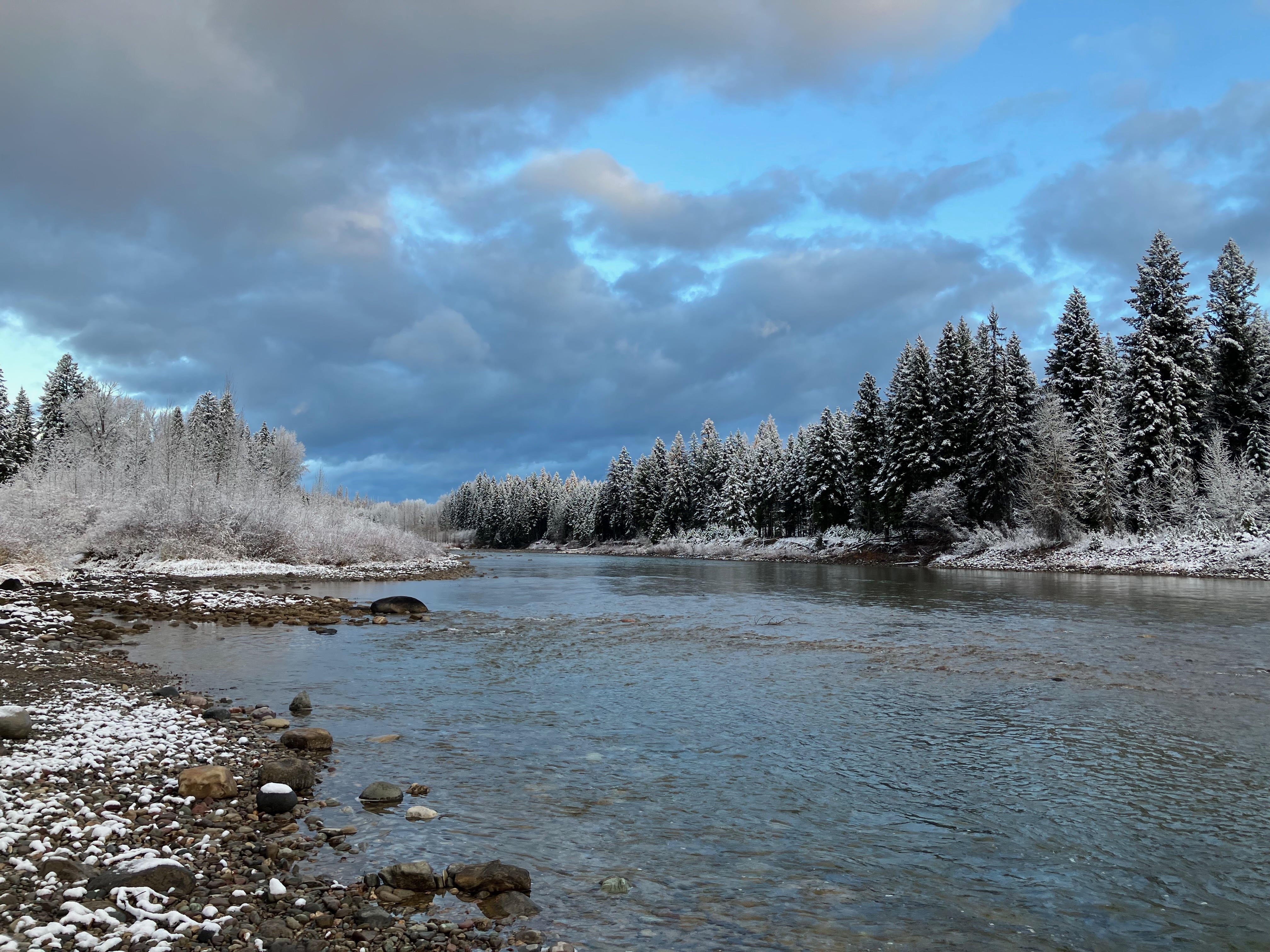
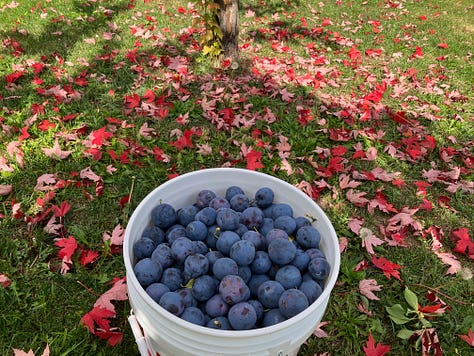
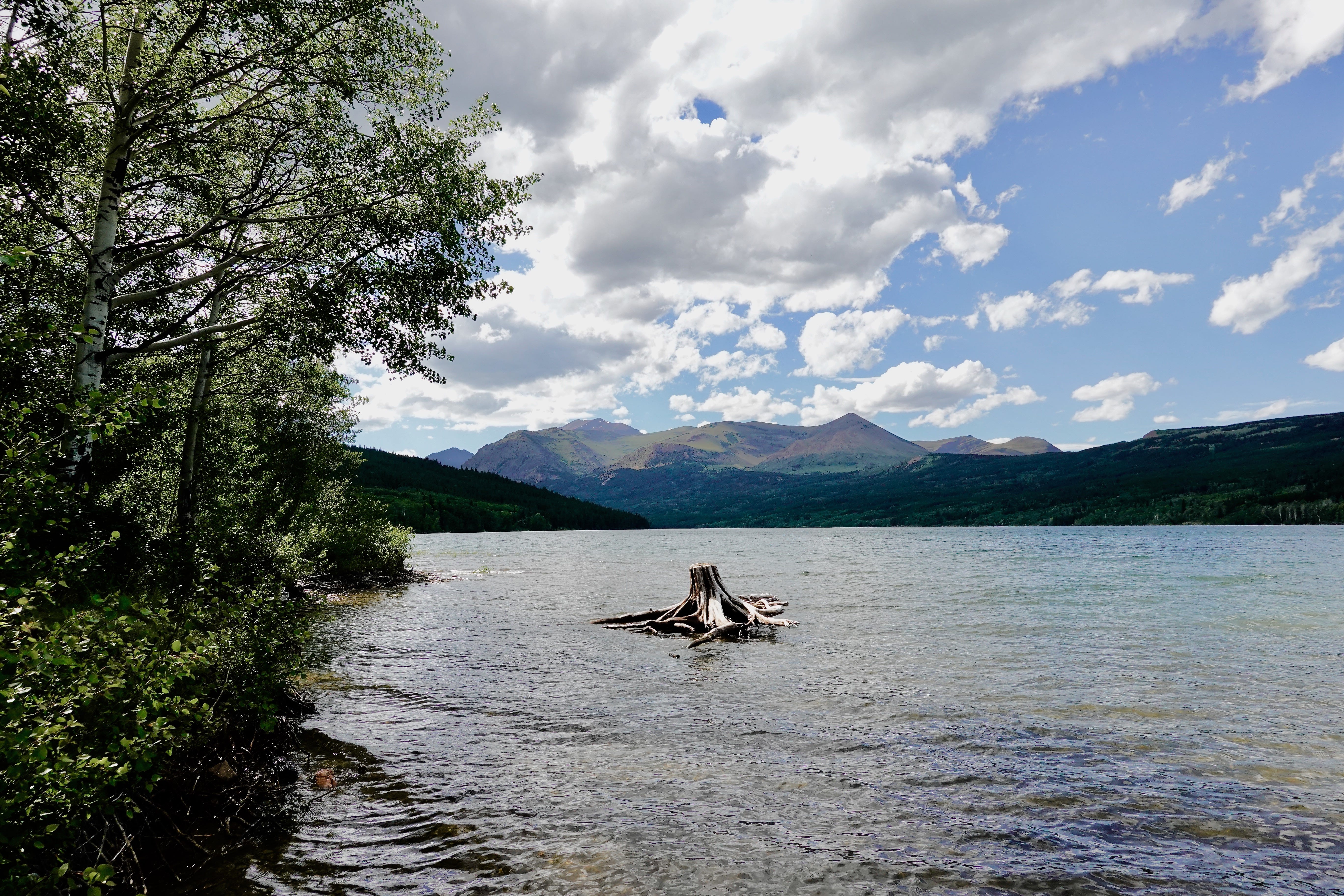
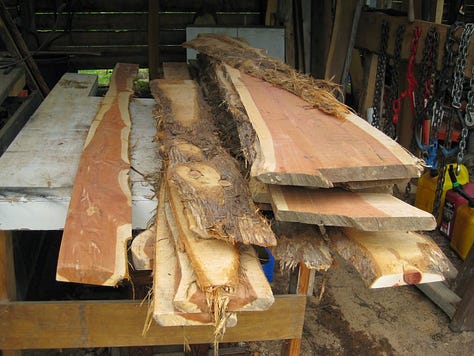
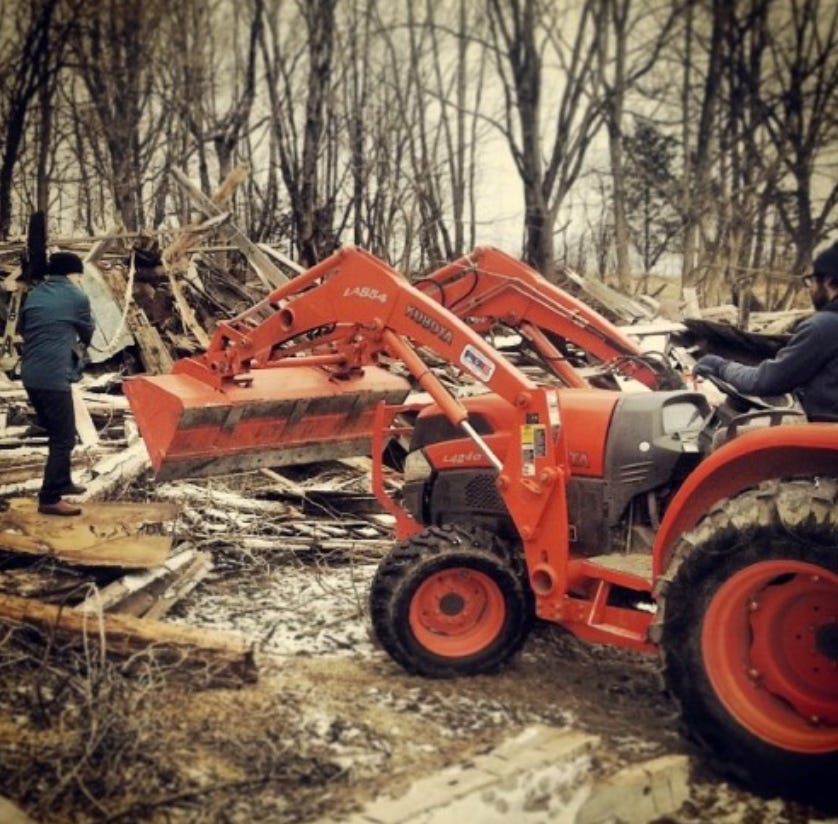
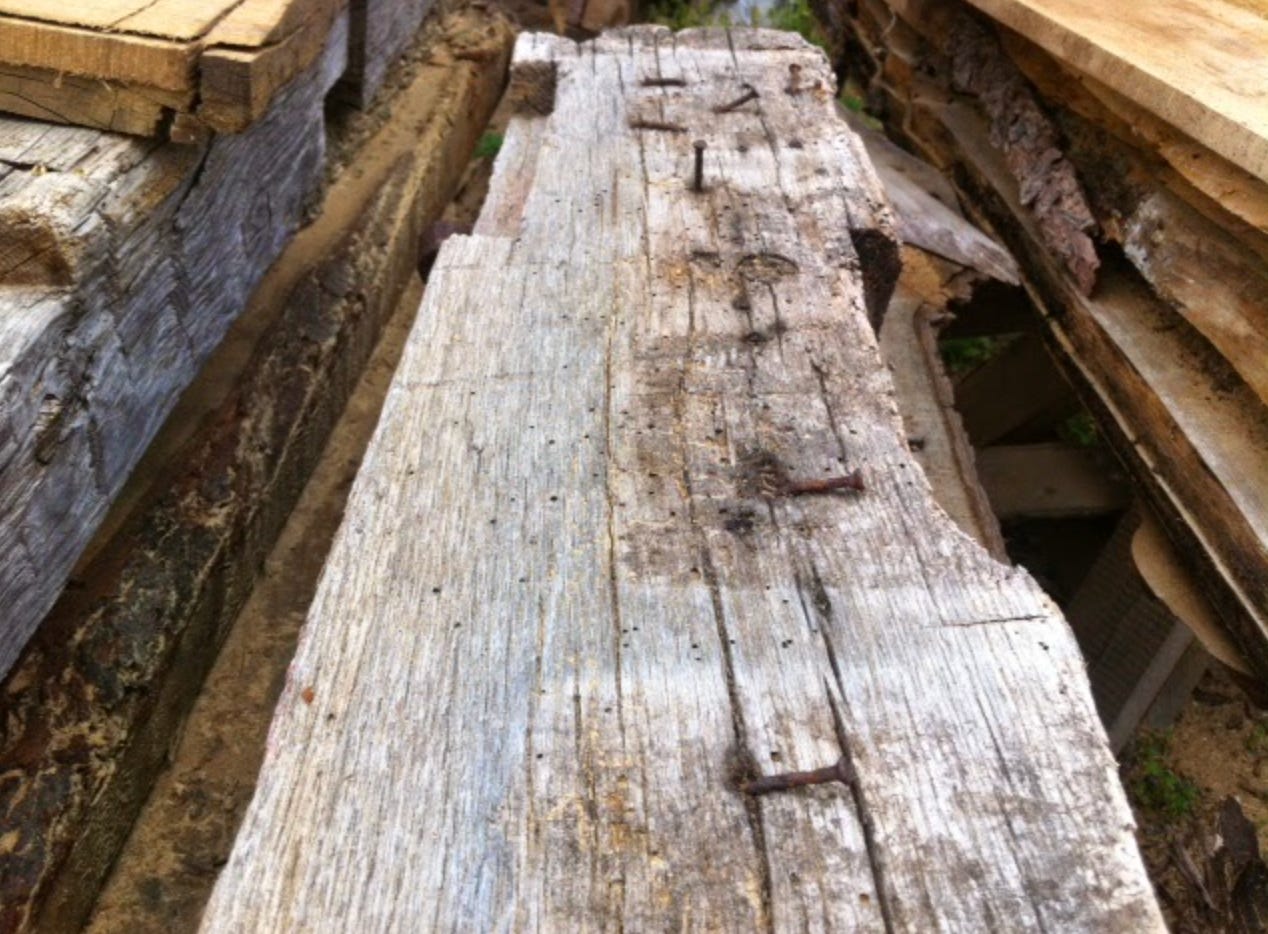
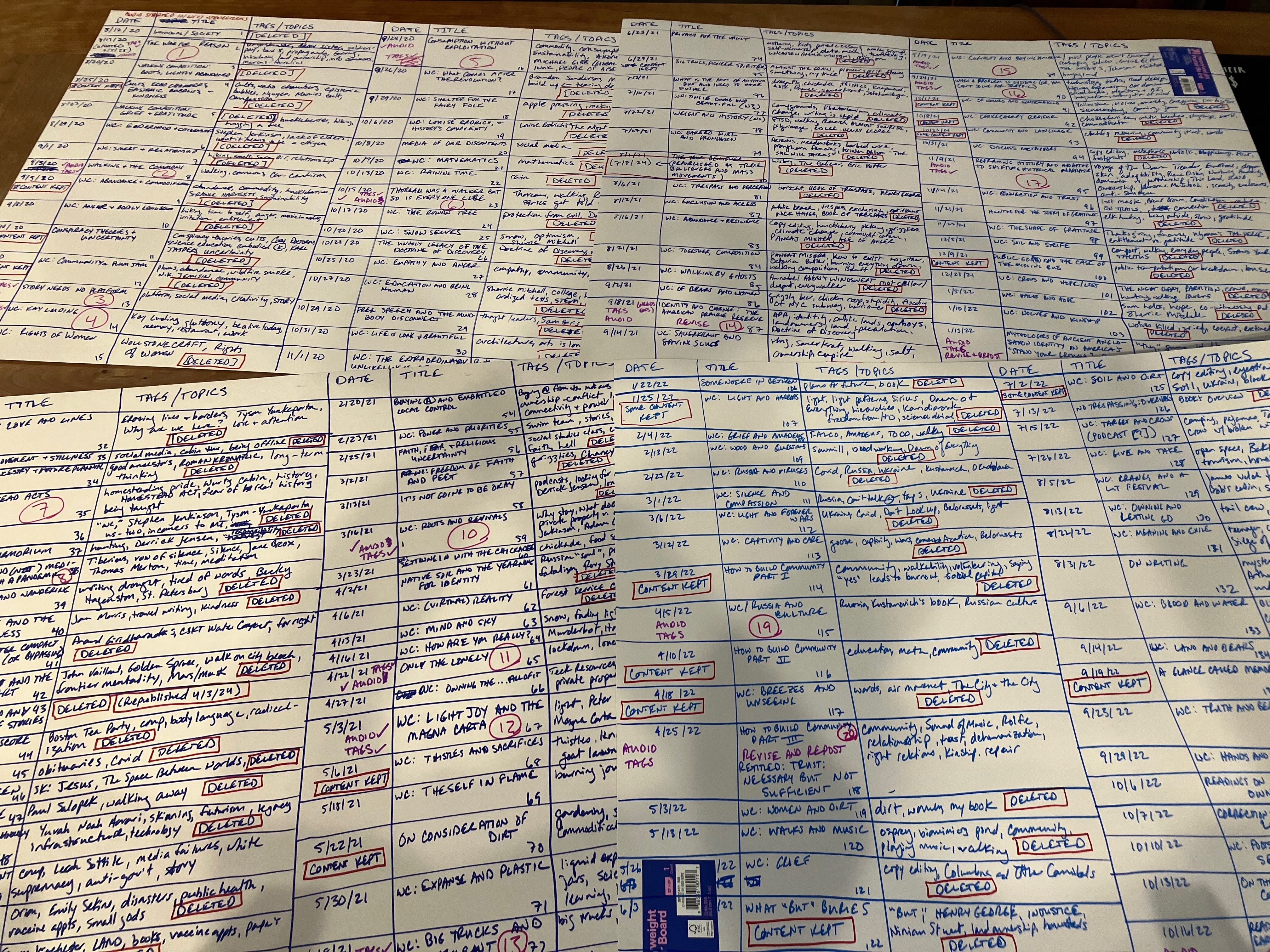
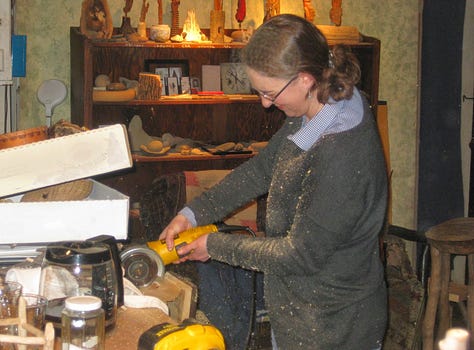
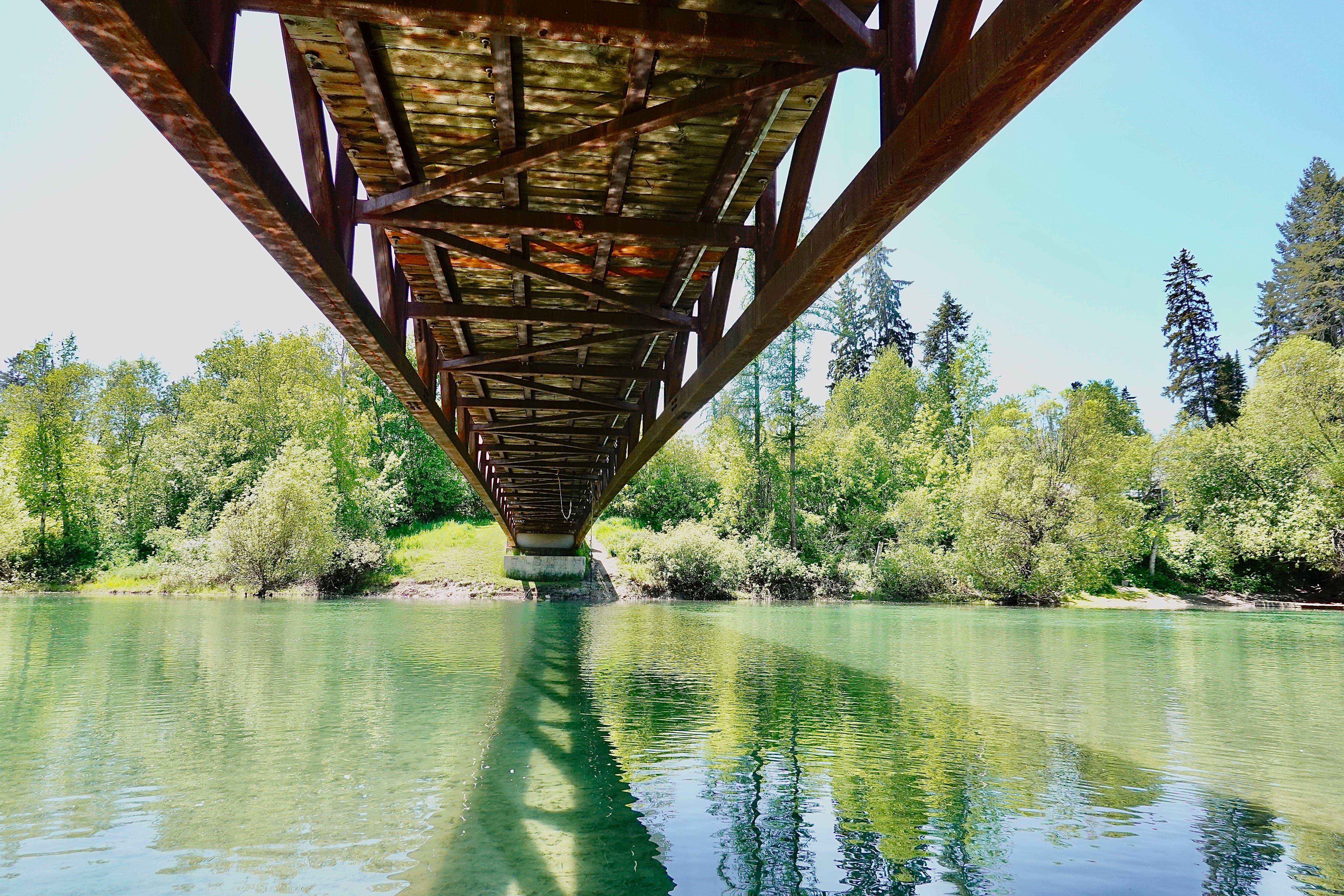
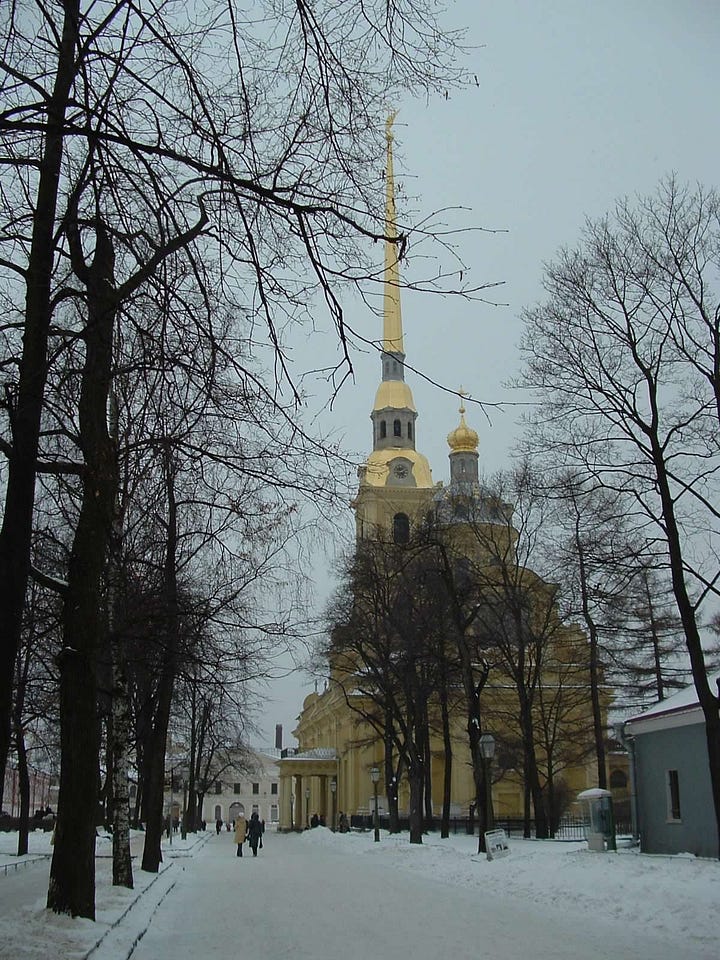
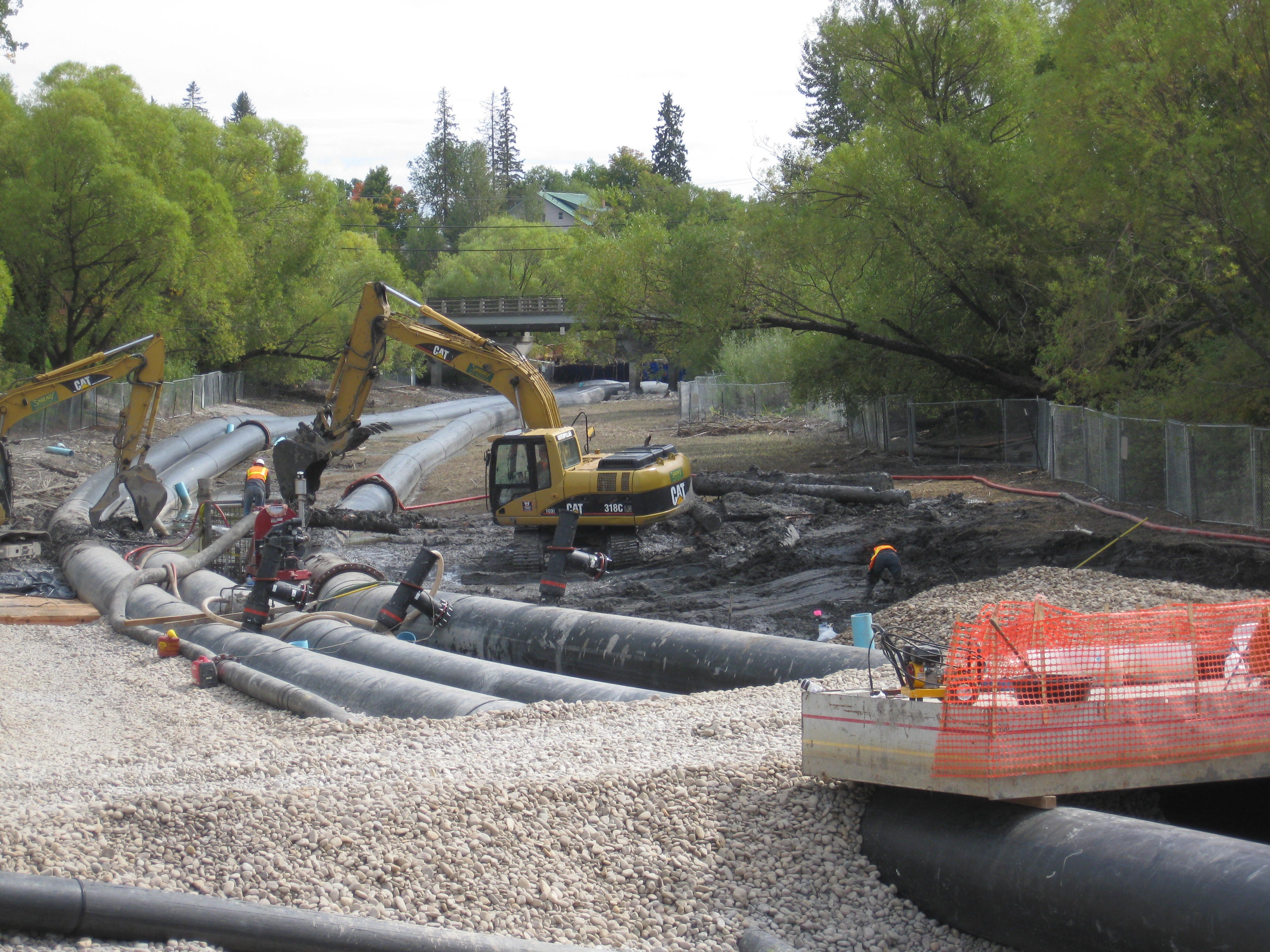
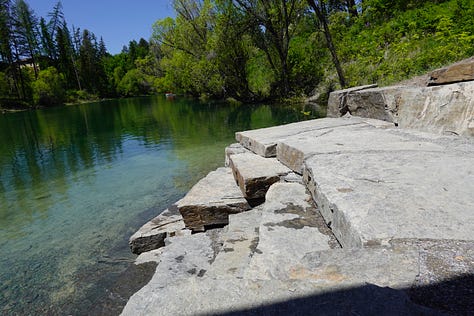
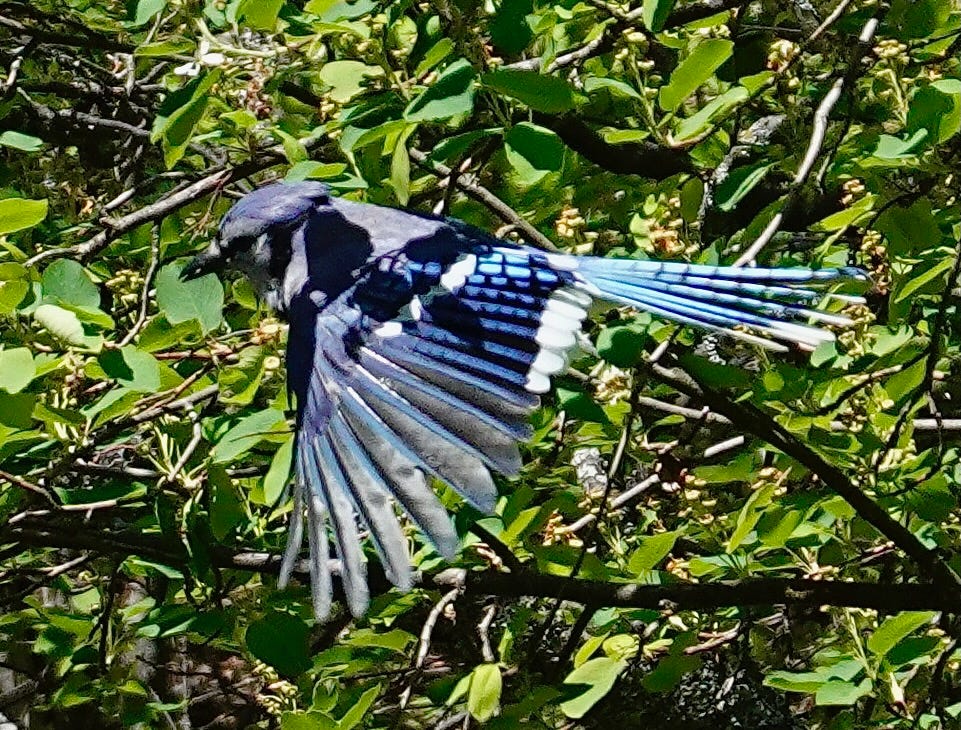
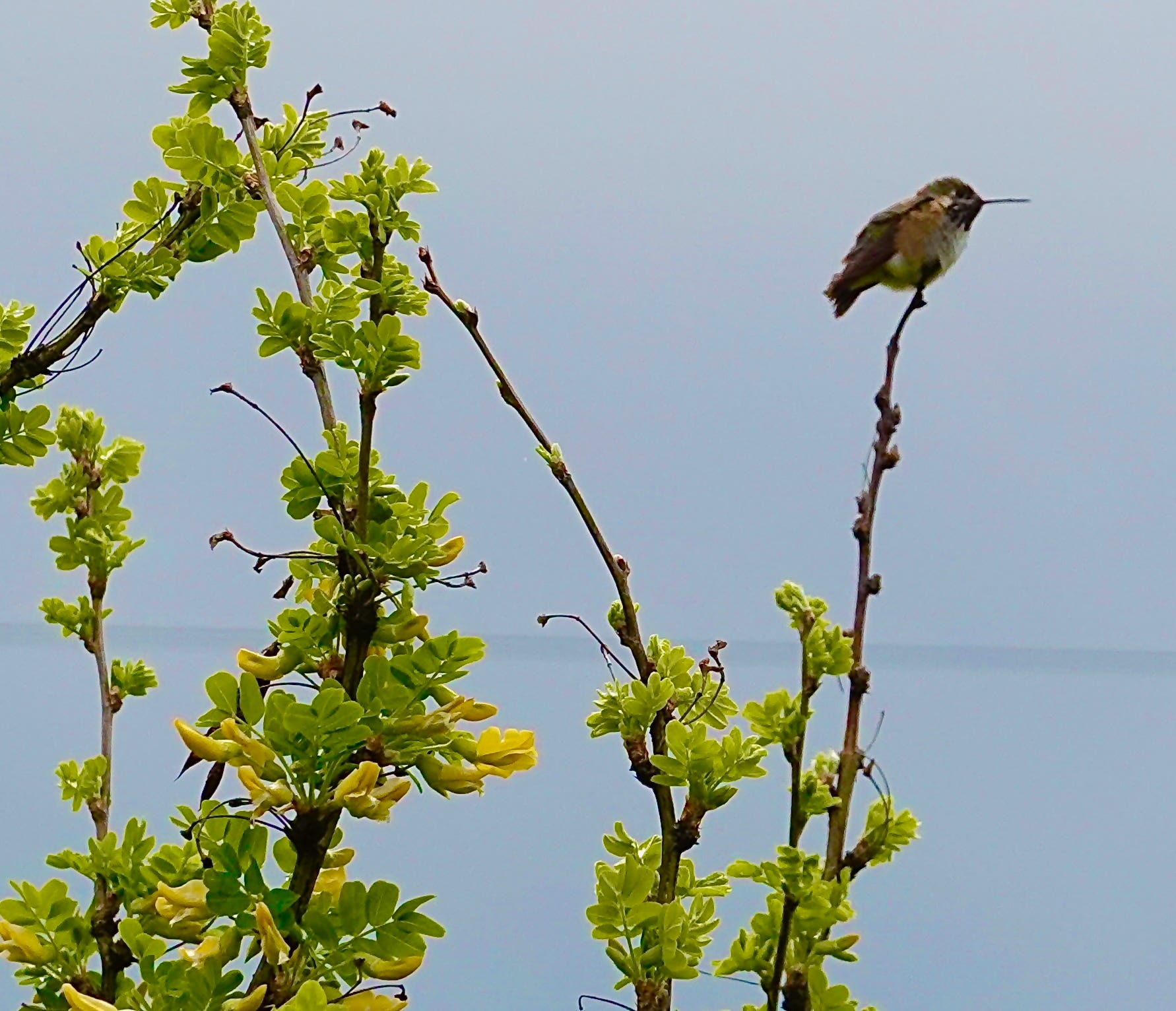
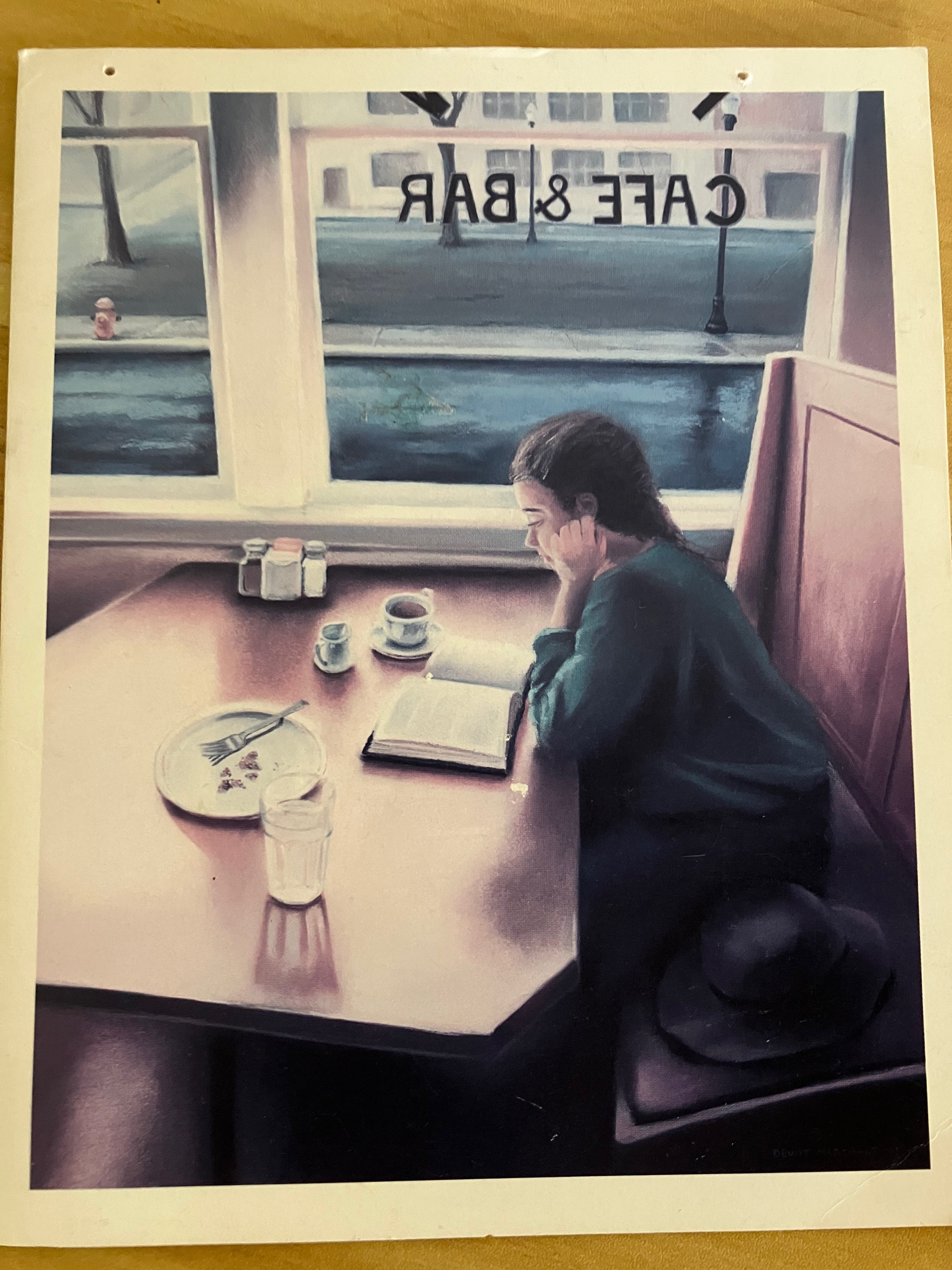
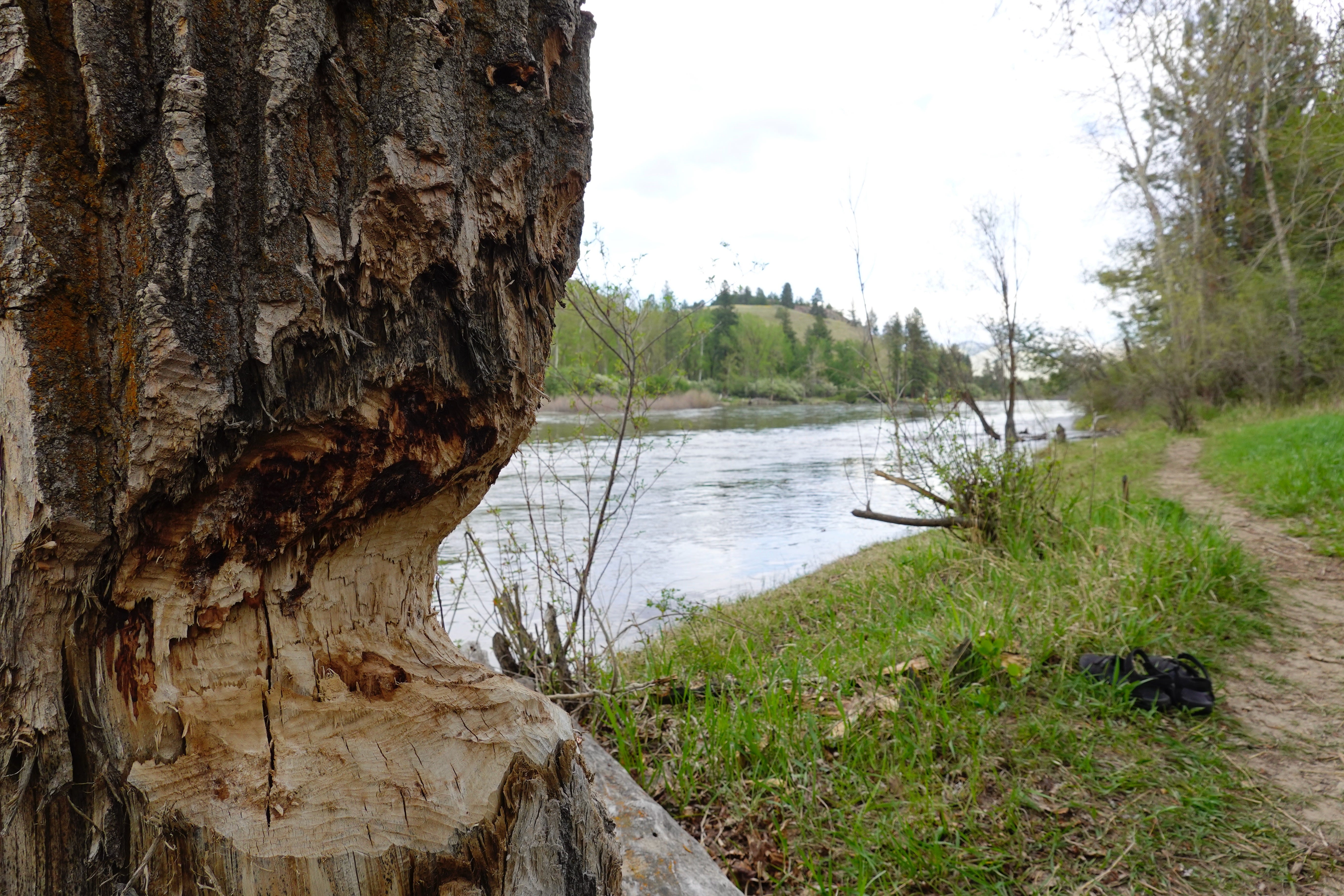
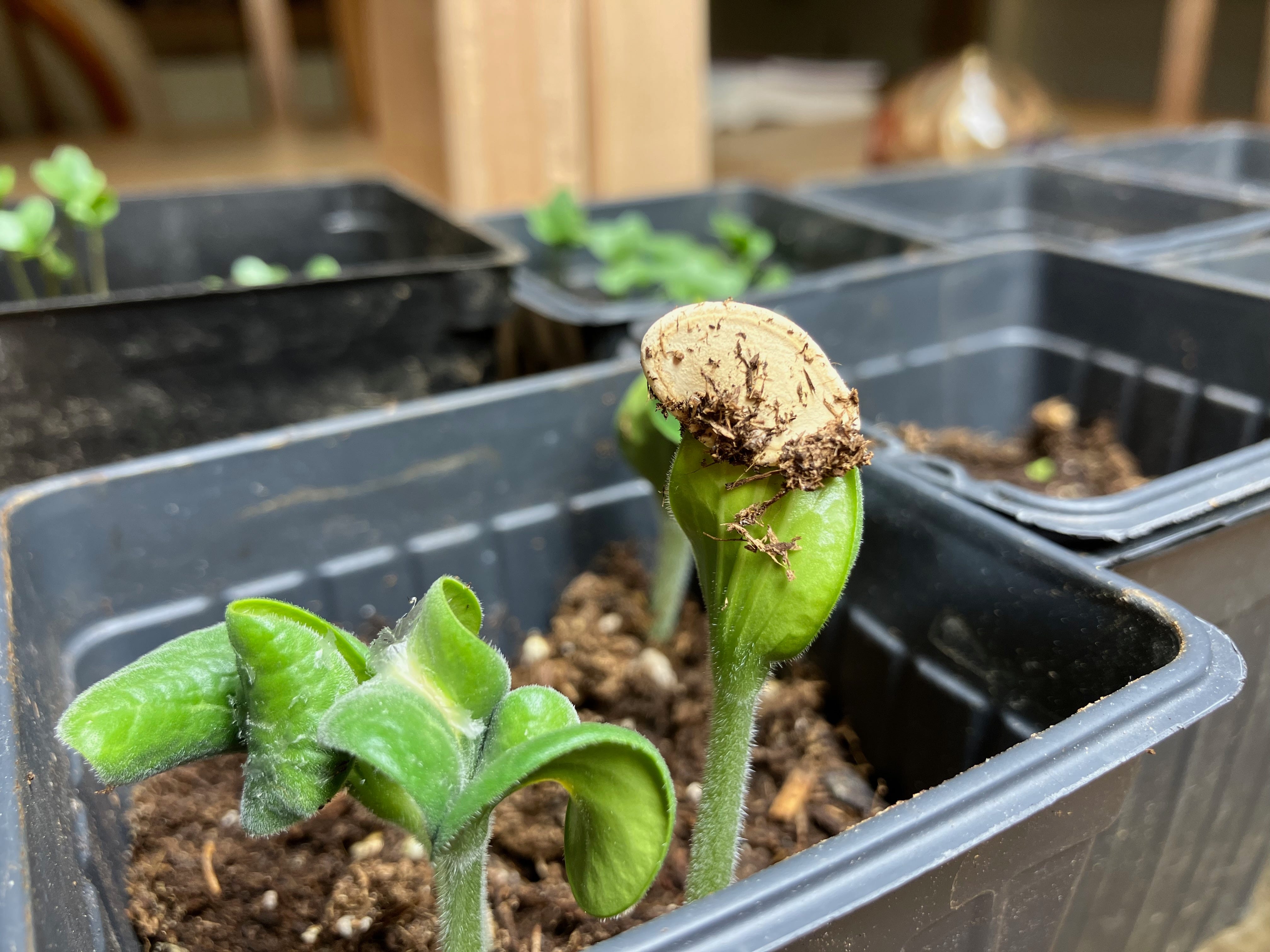
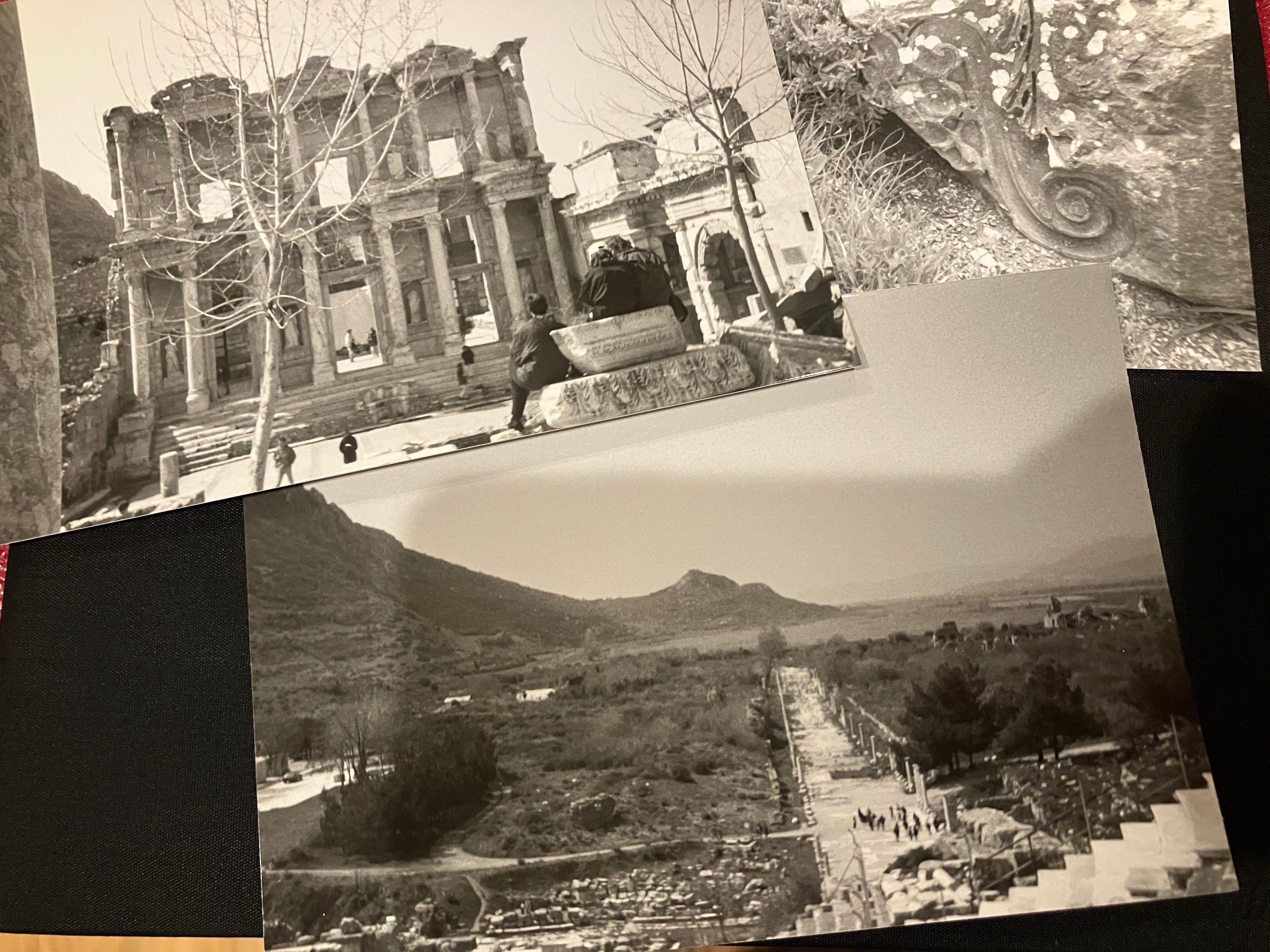
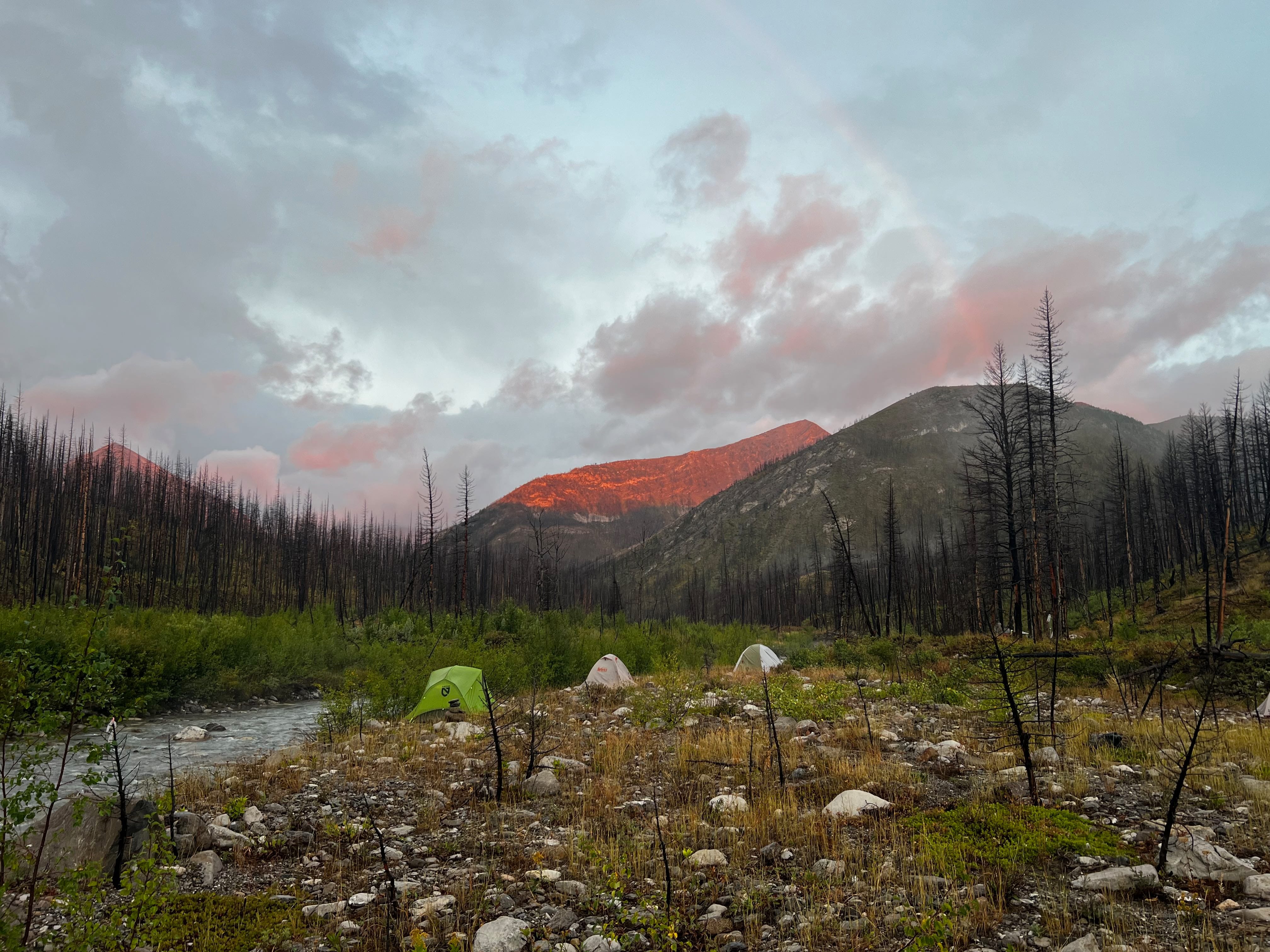
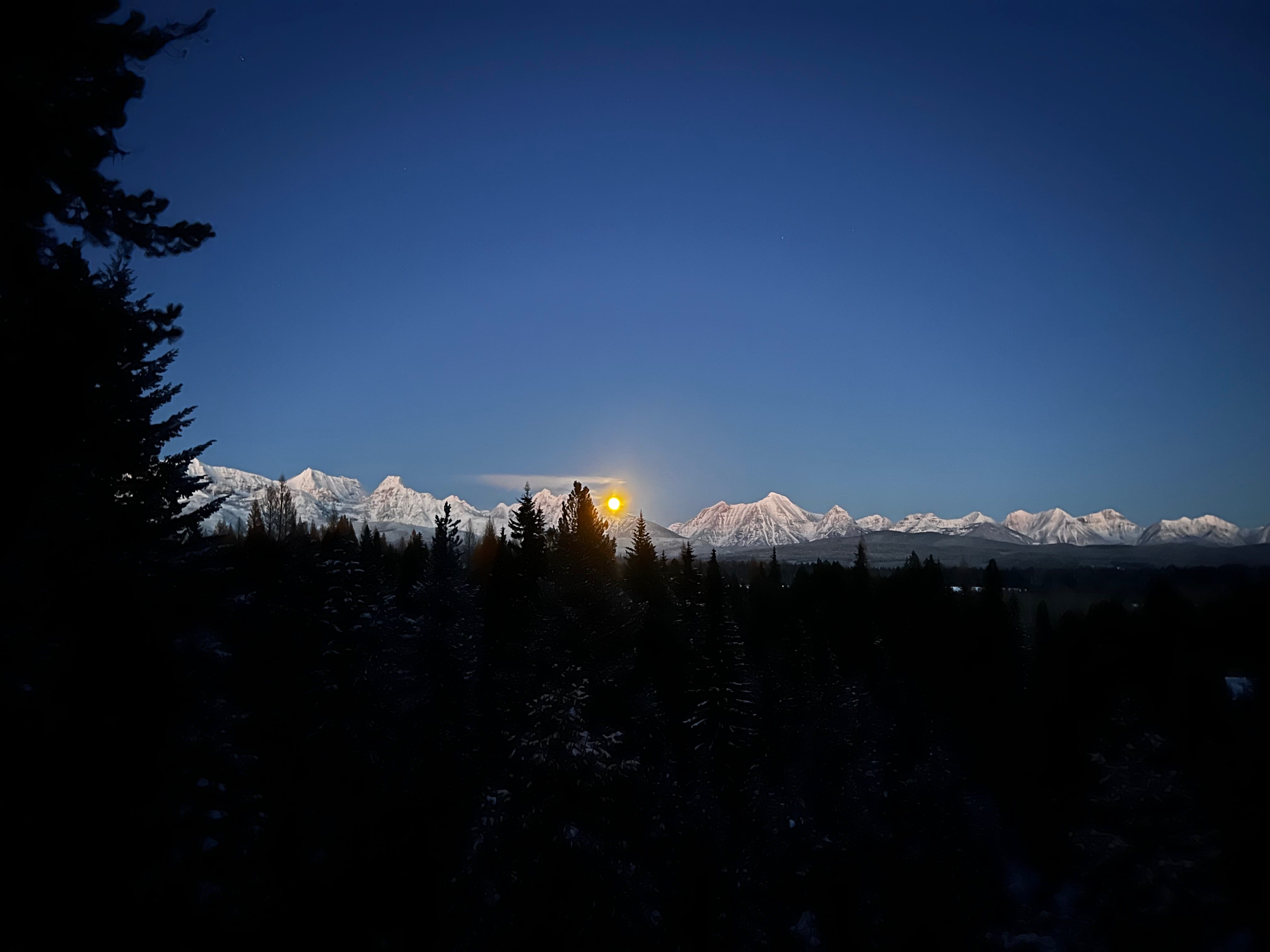
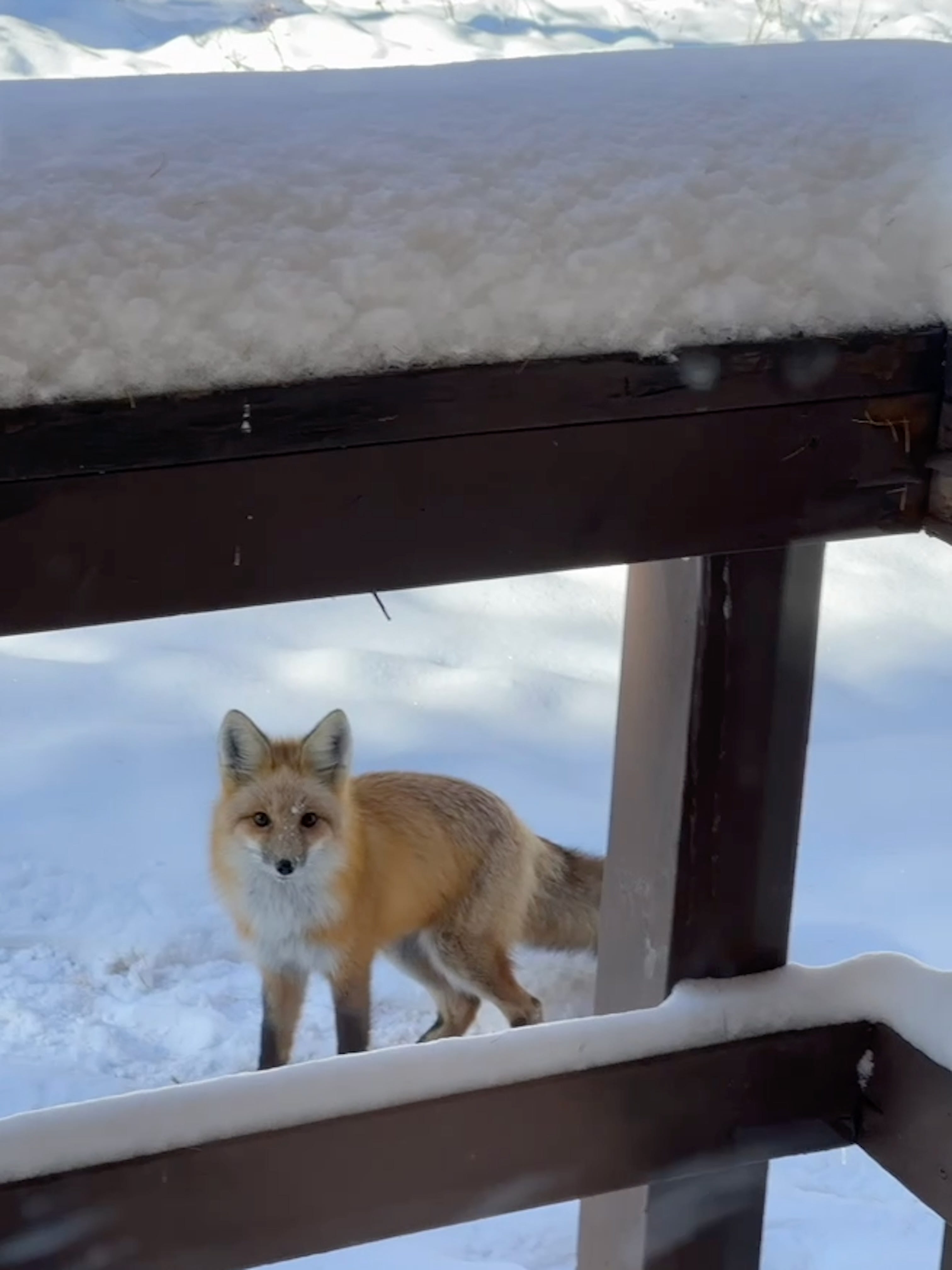
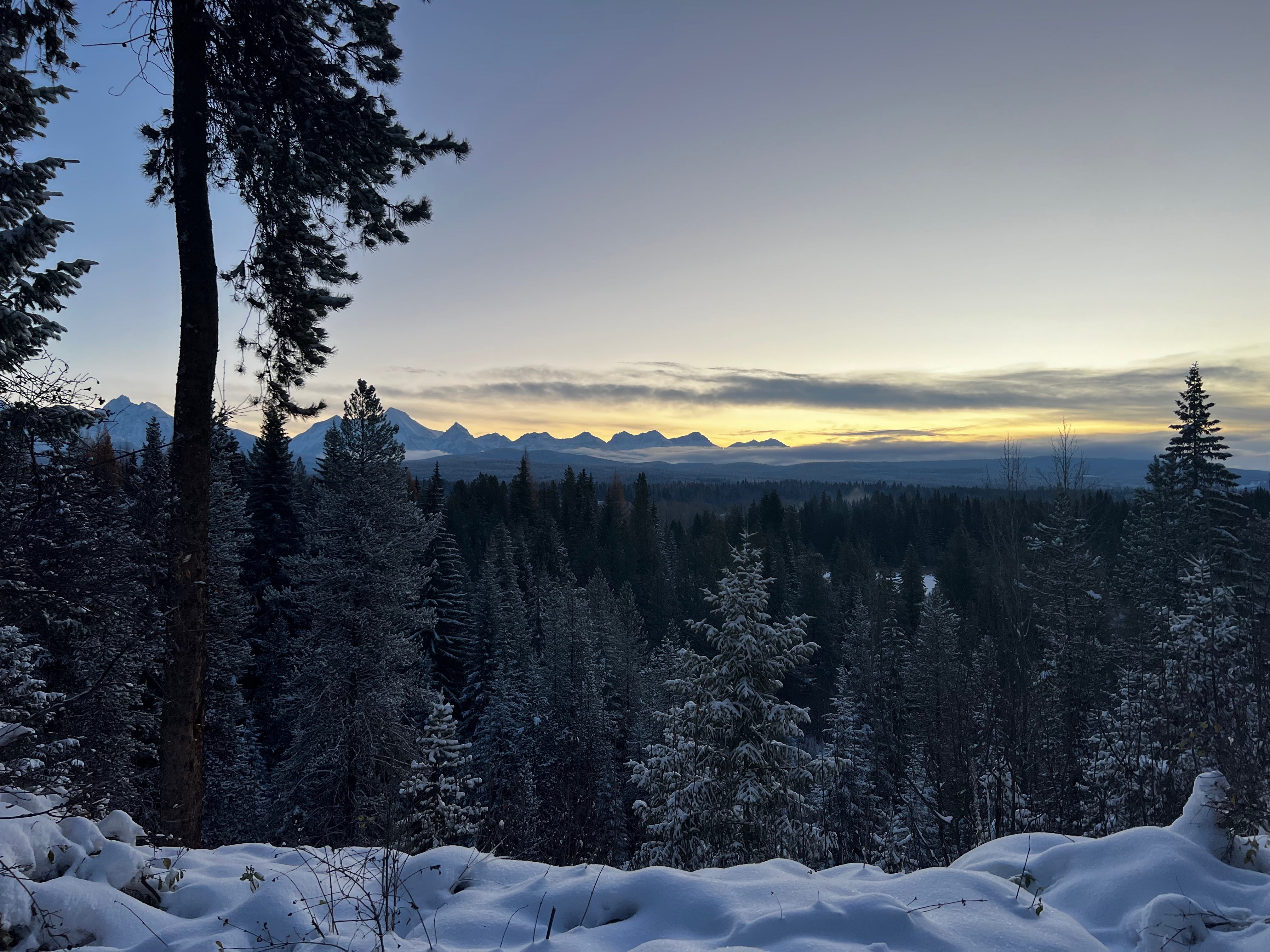
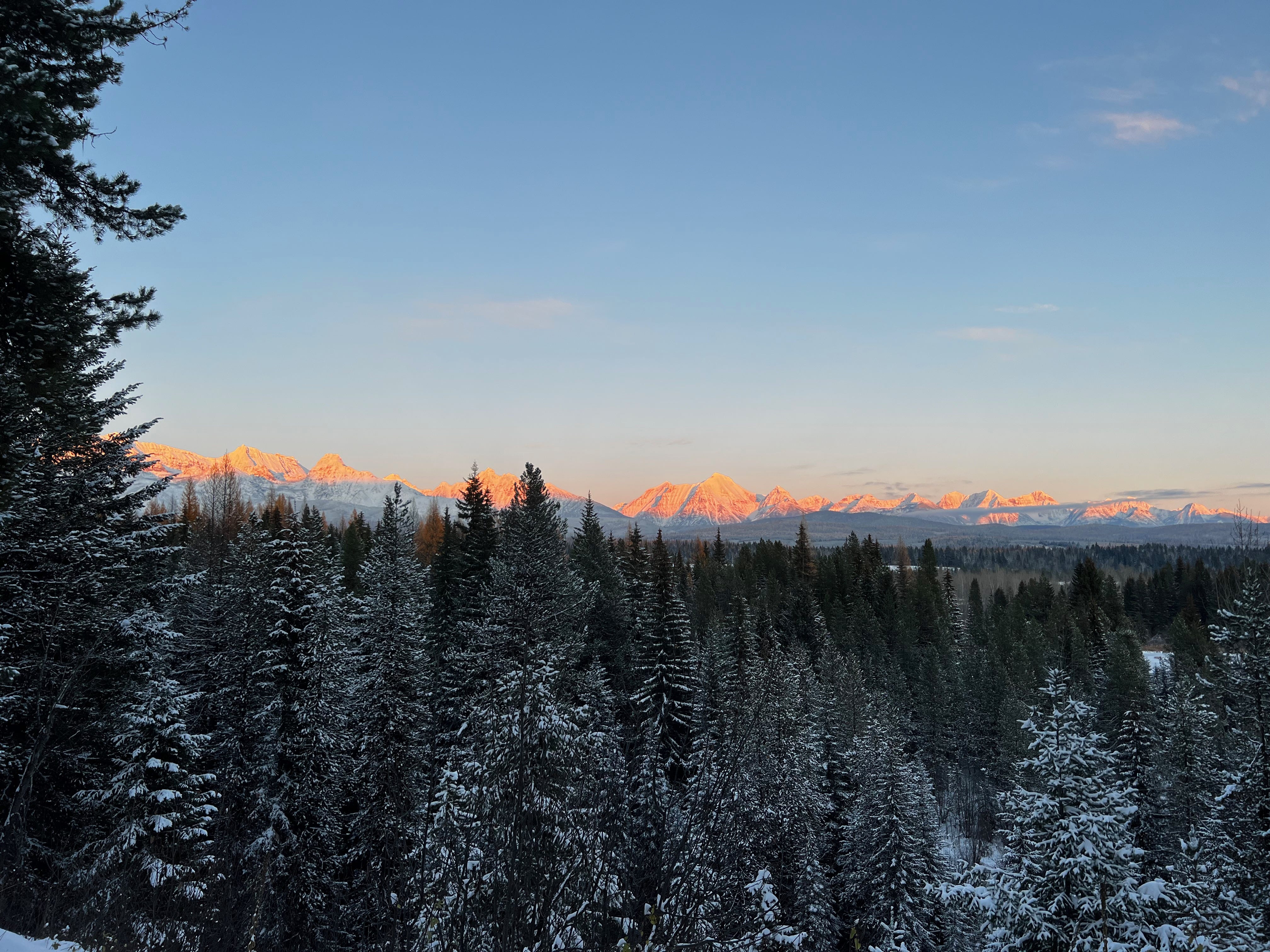


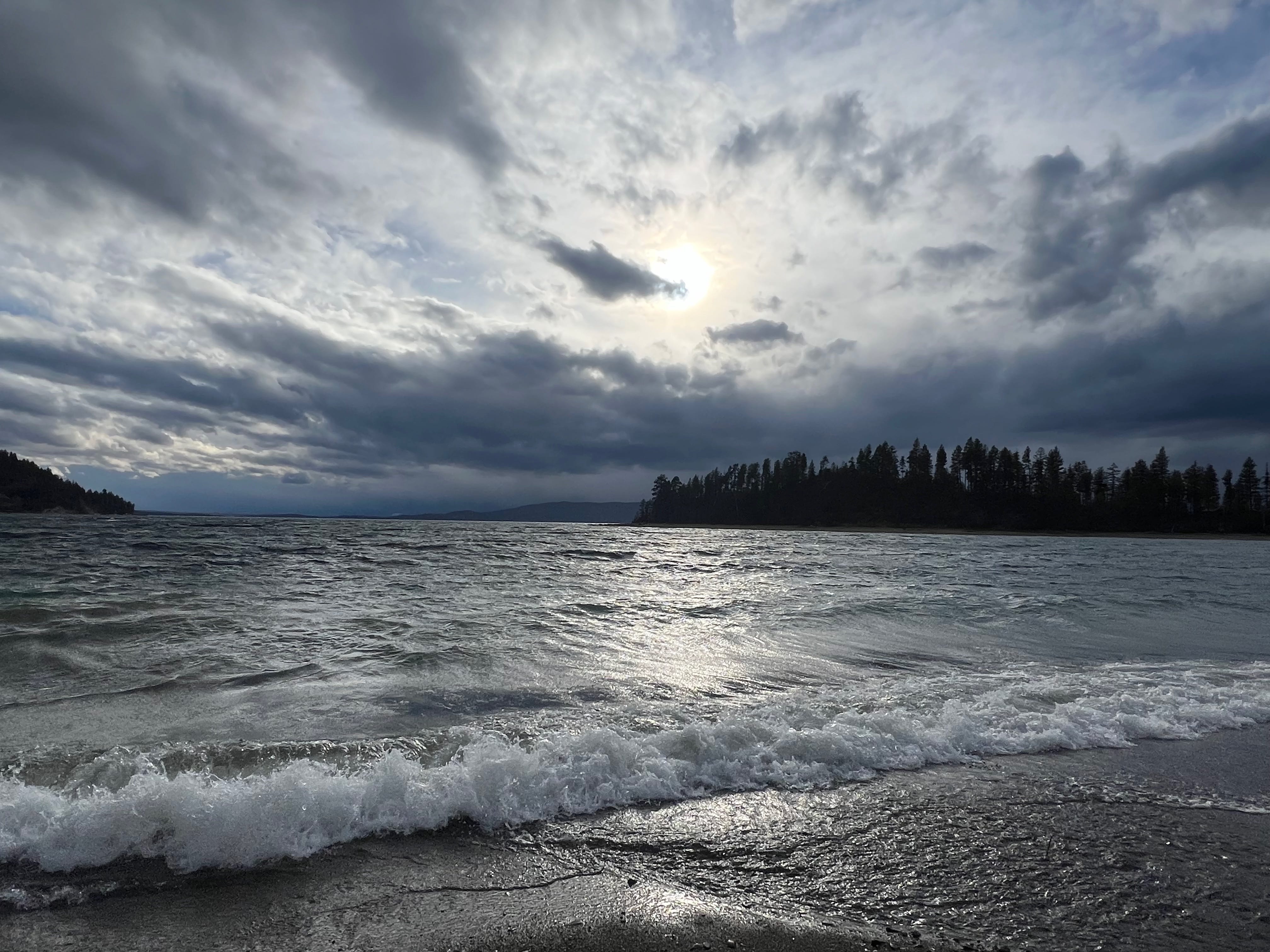

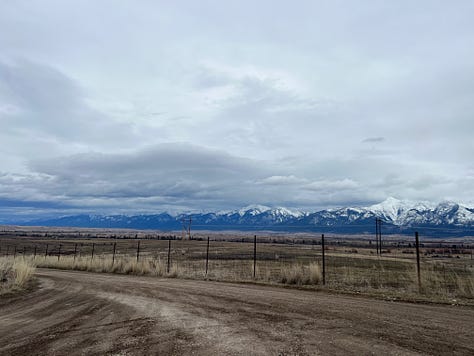

 Antonia Malchik