Media of Our Discontents

All technology is a social dilemma
Instagram, which I deleted last month, was my last remaining social media account. I deleted Facebook about 3 1/2 years ago and Twitter a year after that. I won’t go into the many downsides of social media because it’s been well-covered elsewhere—the data mining, the extremism- and conspiracy-favoring algorithms, the increases in teen suicide and depression, the sheer amount of time we waste scrolling and refreshing—but I will say that through several years now of paying more attention to myself as a mind-body in the world, I’ve become acutely aware of how spending time on these platforms affects my mood and emotions (not for the better) while tricking me into thinking I’m doing something, participating in the world.

It’s this last that feels so devious and destructive. Billions of humans are on social media every day, having their emotions and opinions and beliefs manipulated by algorithms that were created with the sole goal of keeping our attention, so it’s not accurate to say that the online world is not the real world. The issue is in believing it’s the whole world, that what we see and engage with online is all of what is true about the world. That how we feel and act as we keep engaging encompasses all of what’s true about us as complex embodied beings.

Social media’s manipulation of our emotions and perception isn’t new—advertising has been selling us stories about reality forever—but it’s far more pervasive and influential than before, and the effects are so woven into our social fabric that individual changes are unlikely to make much of a difference, though doing them for our own well-being is still beneficial. (Think of it as akin to food: You can’t fix our broken agricultural systems by eschewing high-fructose corn syrup and eating more organic kale, but you’re still choosing to support a system that would be more beneficial for everyone, while keeping yourself healthier in the process. Just pay attention to the Farm Bill next time it’s up in Congress, too, if you’re in the U.S.)

I’ve been following the work of the Center for Humane Technology since it was founded a few years ago and have not yet missed an episode of their podcast Your Undivided Attention; they’ve recently come out with a documentary about social media called The Social Dilemma (only showing on Netflix) that sums up much of their work and why it’s so important. It’s being covered all over the place so I’m sure you’ve already heard of it, if not watched it. I don’t feel like it really got the scope of the problems that CHT has been talking about for years, but it’s a necessary and sobering introduction if you’re new to this issue.

The movie tries to end on optimism but didn’t leave me very hopeful. When I look at the past century of building car-centric infrastructure and how it’s landed us with fractured communities, air pollution, climate change, habitat destruction, and a host of human health consequences (including nearly 40,000 people dying in car crashes every year in the U.S. alone, over 6,000 of them pedestrians), it seems blindingly obvious that we are heading down a similar path with social media and digital technology.

The early 1900s didn’t see a society eager to turn their downtowns into car-only zones and their landscapes into highway corridors. They fought the intrusion of cars and particularly the deaths they caused. But they lost that battle, and car companies rewrote history to make it sound like the reality we have is the one we chose.

Car companies and highway engineers didn’t foresee the consequences of what they were building on health, society, and the planet. The didn’t intend for their products to ruin communities and human health. But that’s the point. Silicon Valley insiders assuring us that they can fix the problems they didn’t foresee by creating smarter algorithms is hardly encouraging. If you couldn’t foresee the consequences of the tech you were developing, it’s your judgment that needs help, not your interface.

CHT’s founder, former Google engineer and one-time head ethicist for the company Tristan Harris, has pointed out repeatedly that social media succeeds by hijacking our lower-order limbic system; it doesn’t need to aspire to overcoming our higher-order thinking. We have no idea what that will do to us and our societies in the long run. The situation right now isn’t good, but it could get far worse. And there’s little you can do to control it except advocate for federal, even global, policy changes and tweak your own use of digital tech—if that’s even possible. I can’t count the number of people I know who’ve said they hate how social media makes them feel and would love to give it up except that it’s required for their job.

My suggestion is to start by paying attention to how your body feels when you’re engaging online. Faster heartbeat, shorter breaths, craving for sugar, surges of anger crawling up your arms? Walk away for a minute and ask yourself who is benefiting when you feel that way. Someone is, but it’s certainly not you.

Deleting my social media doesn’t really do much. I still live in a world that is being shaped by it. But it allows me to keep myself anchored in the parts of reality that are still larger and more consequential than the internet. No matter how pervasive Facebook is, it’ll never be as large a reality as the air we breathe. At least, I hope not.

By extension, I hope I can use that grounding to help others stay anchored, and to find more people who are doing the same. We have no idea where this is all going to go. We’re going to need one another.

—-

A lot of related stuff to read or listen to:

  • Dr. Ayanna Howard is a roboticist and former NASA engineer (she designed parts of the Mars rover!) whose audio book about AI and bias Sex, Race, and Robots just came out on Audible. (Caveat: I worked as a developmental editor/book doctor with Dr. Howard on this project.) It’s an eye-opening look by a robotics insider at how bias is built into AI, and how we’ll never even notice because we so easily assume that a computer is always objective. (It’s programmed by humans with their own unexamined prejudices and decades of biased data, so . . . no.)

  • You can’t get a better critique of the weaknesses in The Social Dilemma documentary than this piece at Librarian Shipwreck (who is totally right about the bicycles and I also can’t believe those comments made it through the movie’s editing process): “You know how you could have known that technologies often have unforeseen consequences? Study the history of technology. You know how you could have known that new media technologies have jarring political implications? Read some scholarship from media studies.”

  • If you haven’t read Douglass Rushkoff’s book Team Human yet, it might be time to get on board.

  • (You can also read my book A Walking Life, which covers, among many other things, the problems created by a century of building car-centric infrastructure and how we’re setting ourselves up for similar problems by letting the tech industry shape our digital future.)

  • The Center for Humane Technology’s podcast Your Undivided Attention, in particular these episodes: Social media’s design relationship with addictive gambling (that’s episode 1 and the interview continues in episode 2); a former CIA operative’s experience working as an elections watchdog for Facebook and seeing its monumental failures (and how little the company cares about either democracy or bias); the global crisis in trust; how online conspiracies and threats lead to real-life violence.

  • The promises and pitfalls of emotional AI, from MIT Technology Review’s podcast In Machines We Trust.

  • Looking for safety in total information and getting the surveillance state instead: will we regret it? By Thomas A. Bass in The American Scholar.

  • A fascinating interview on the Futures Podcast with journalist Jenny Kleeman on her book Sex Robots & Vegan Meat about nearly-there technology like lab-grown meat and artificial wombs, and the ethical quandaries posed by their eventual realization.

  • MIT Technology Review on how online misinformation is like secondhand smoke and should be regulated accordingly.

  • Kinda FUN: I get a kick out of writing satire based on the opening to Vladimir Nabokov’s Lolita. Last week I wrote one asking the Intellectual Dark Web to come out and define what they mean by “The Left” because they spend an inordinate amount of time complaining about it. (A previous parody was on teething.)
Walking composition

Louise Erdrich’s “The Night Watchman” and history’s undeniable complexity

“If you should ever doubt that a series of dry words in a government document can shatter spirits and demolish lives, let this book erase that doubt. Conversely, if you should be of the conviction that we are powerless to change those dry words, let this book give you heart.” 
—Louise Erdrich

Last week I read Louise Erdrich’s newest novel The Night Watchman, which draws from the true story of her grandfather’s role in saving the Chippewa Turtle Mountain nation from becoming dispossessed in the 1950s. (“Emancipated” in the words of Congress, though in truth what was being emancipated was the U.S. government from its responsibilities to those whose land had been stolen.)

The Last Report on the Miracles at Little No Horse remains my favorite Erdrich novel, but The Night Watchman is running a very close second. There is so much to love about this book, first and foremost Erdrich’s writing, which is always indescribably good. But the history was also riveting, especially at a time when so many in the U.S. are fighting like hell to retain fantastical images some kind of golden age where everybody was happy no matter what their social status or lack of freedom. I didn’t know about the 1950s movement to terminate all reservations and dispossess Native citizens of what little land they’d already been limited to—which, as Erdrich says in an endnote, Congress succeeded in doing to over 100 nations, although her grandfather’s efforts managed to keep the Chippewa Turtle Mountain nation from becoming one of them.

The quote above isn’t from the novel; it’s from a kind of endnote from Erdrich, and a good lesson to walk with for a time, especially now.

Walking composition

Shelter for the fairy folk

“O if we but knew what we do 
When we delve or hew — 
Hack and rack the growing green! 
Since country is so tender . . .”
—from “Binsey Poplars,” by Gerard Manley Hopkins

The bounty from the apple tree behind our house turned into a few growlers of cider this weekend thanks to my sister and her husband, who took us to a cider press they had permission to use (those things are amazing; I’ve never seen one in use before, which if you knew what my childhood home looked like is pretty surprising. We seemed to have everything else that required elbow grease and callouses).

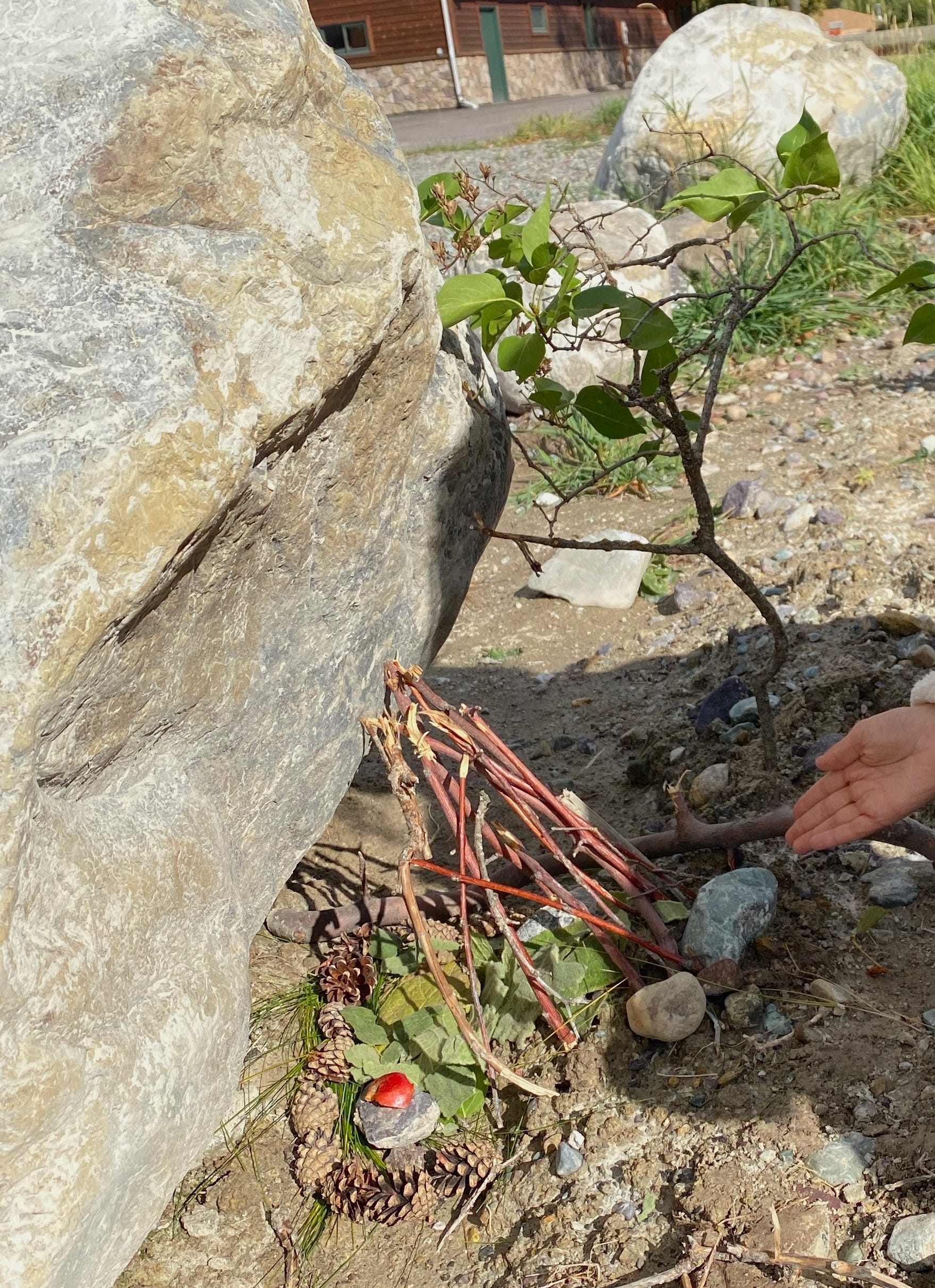
Once the smaller children had had enough of dropping apples in, I took them off to collect materials for fairy houses. The magic of a fairy house never fails to astound me. Children seem to love building them, and instinctively know what fairies will need: beds, tables, pillows, protection from wind, a place to gather water, and an offering of food. One kid wanted to build them a fire (Eek. Can you imagine? Worse than a gender reveal-sparked wildfire . . .), so instead collected tiny sticks as a firewood stash for the fairies to use when they were ready, and the youngest built a separate shelter for the baby fairy, who was too shy to come out.

I never get tired of reading Gerard Manley Hopkins, his delight in nature and in playful language. I wonder if he ever built a fairy house?

Walking composition

What comes after the revolution?

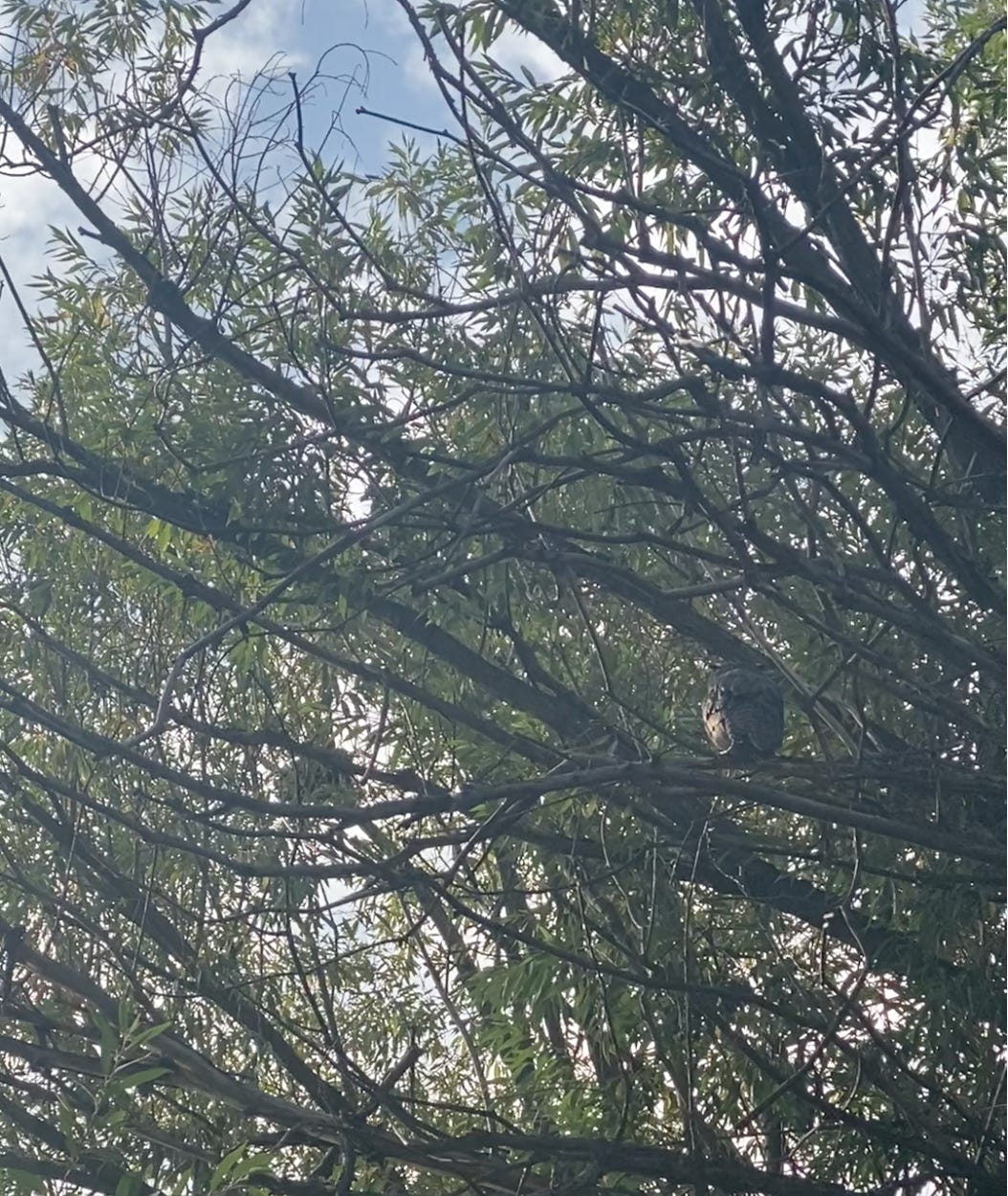
Can you spot the owl? It looks like a small gray lump carved into the wood. It only turned around to look at me when I put down my camera. Oh well. A woman who walked by commented that it looked very well-fed.

I read Brandon Sanderson’s Mistborn trilogy last week. It feels like it was written just as fantasy was beginning its shift away from epics where the world-building tended to be over-detailed (I skipped many, many fight scenes and blow-by-blow descriptions of the characters using Allomancy, the metal-based magic-adjacent power particular to this world) and the characters often annoyingly stereotyped. I didn’t like the Mistborn trilogy nearly as much as The Rithmatist, which was just wildly weird and fun (an eternal war with two-dimensional creatures known as chalklings because they’re comprised of . . . chalk drawings??? and you fight them by . . . drawing other chalk drawings???), but it provided a few days of escapism.

Sanderson wrote an intro to each book, and in the second one he talked about how he’d been less interested in writing the first, which is about the overthrow of an all-powerful immortal dictator, than in the second, which was about the difficulties of forming a functioning society after toppling the previous government:

“Everyone wrote stories about bringing down an empire—but I’d rarely seen a story about revolutionaries forced to become politicians. What happens after you topple a government? Building something up is always harder than tearing something down.”

This seems like a good question for our time, and one that many progressive leaders have been trying to articulate. As a citizen, it can be a hopeful practice, too. I’m not talking about toppling a government, but what do we, or can we, envision as a better, more just society, and then how do we start making it happen?

It’s what Naomi Klein talks about in her book No Is Not Enough. What does “yes” look like?

This has been done countless times before. If you’ve ever read The Federalist Papers, you know how deeply America’s founders thought about what a government is, what a country and political entity should be for. There’s also the founding ideas of the Iroquois Confederacy, which from my understanding was crafted as a way to help the several nations set guidelines for how to exist peaceably alongside one another. (In other words, government.)

The world feels very dark right now. But we all know there’s light in the cracks. At least, that’s what I tell myself—after all, my father grew up under Stalin and his parents survived the Siege of Leningrad. No world is without love, laughter, and a vision of better things. We just need to figure out how to make that vision the prevailing one.

___

  • FUN! The science behind why honey never goes bad.

  • Related FUN FACT: Both of my children hate honey. I have no idea why.

Consumption without exploitation

“I don’t trust that there is some unilateral, final way to plant our feet in the earth without displacing something. It means that we should be humble.”
—poet and clinical psychologist Dr. Bayo Akomolafe

Commodity and consumption. Use. Life. Death. Exploitation. There is nothing about being alive either now or in our collective hunter-gatherer past that can save us from causing damage or death simply by existing. This does not absolve us from our responsibility to the world that gives us life. Any action attempting sustainability has to begin with caring for the ecosystems that sustain us; but we will, somehow, still cause damage.

In the West’s predominant culture, it’s hard to find examples of the humility that Dr. Akomolafe speaks of. Michael Gibb, a journalist who previously investigated conflict finance for Global Witness, recently published a wide-ranging piece about the injustices of global supply chains, covering everything from the insidiousness of metaphors (with a nod to George Lakoff and Mark Johnson’s classic Metaphors We Live By) to philosophy, including my favorite philosopher John Rawls, and the links between bars of gold and violent warlords. Speaking of the products we buy in terms of a “supply chain,” he writes,

“steers us away from a deeper reflection on the systemic pressures and incentives that created the problems in the first place – not least the pressures to increase profits through larger production volumes at ever-lower prices. These pressures regularly combine with wider problems, such as weak labour protections, poor environmental regulation and outsized corporate influence, to pass on the resulting hardships to those least able to resist them, such as miners and textile workers.”

It reminded me of part of an interview I heard with filmmaker and educator (and daughter of anthropologist Gregory Bateson) Nora Bateson last year about walking into a cell phone store and, on being asked what kind of phone she was looking for, said that she wanted one “without slavery.” Such a thing, it turns out, is almost impossible to find, and no amount of conscious consumerism on our part is likely to change that. You run into the same issues with electric cars. Elon Musk talks a good marketing line, but a Tesla’s battery still requires cobalt, the same rare earth metal linked to slavery in cell phones.

The Canadian documentary Angry Inuk provides a different, more delicate model for sustainable commodity, one driven by a local population with an interest in maintaining the health of their ecological system. The point that the people in this documentary repeatedly make as they advocate for the right to sell their handmade sealskin products to the world is that subsistence will not give them a future. They cannot hunt solely for their own subsistence and at the same time resist the offshore oil wells that would provide jobs but devastate the entire ecology of their home. They need to participate in the global economy, but on their terms, without themselves or their ecosystem being exploited. Angry Inuk points to the question at the heart of our modern battle between private property rights and the health of the global commons: Can a community and ecosystem participate in the global economy at a level that’s locally sustainable?

People of a Feather is another documentary about a community struggling to maintain not just its way of life, but its life and all the lives around it in the face of upheaval caused by upstream hydroelectric dams. The residents of the community at the center of the film have lived in balance with ice, seal, eider ducks, and the sea for countless years. But as massive Canadian hydropower projects pump fresh water into the ocean at the wrong times of year, responding to southern neighbors’ needs to heat their homes, the resulting imbalance in ocean salinity puts the entire ecosystem at risk. That’s the other side of the private property/commons coin—the pillager, the absentee landowner, the mandate of corporations to place shareholder return and personal profit above all other values.

Stories like these, and plenty of ongoing situations I follow here in Montana, expose as a fantasy the libertarian dream that we can all get along without laws, government, and regulation as long as we “don’t hurt people and don’t take their stuff.” In order for that precept to work, we first have to agree on the definitions of “hurt” and “take,” whether you’re facing a belligerent neighbor or a multinational mining corporation. This agreement is the fluid result of continual compromises with no settled answers. There will always be someone who wants to take more, and always people who do not have the power, or even the proximity, to stop them.

Acknowledging this reality gives us the knowledge we need to begin creating a different kind of society, one that puts the health of people and ecosystems first, including those at a distance that might be affected by our activities. Models like that proposed in Angry Inuk don’t mean we can never do anything, only that we must do it more slowly and consciously, driven by the needs of the local ecosystem, including people, and without mass commodification and exploitation.

life > profit

—-

Some related stuff:

  • Sand grab,” a 16-minute video detailing Cambodian islands’ loss of habitat and livelihood to Singapore’s industrial sand mining.

  • A fascinating conversation with industrialist and conservationist Rudi Roeslein on Backcountry Hunters & Anglers Podcast and Blast. Roeslein understands that a growing worldwide population will drastically change our North American landscapes, and we have to start planning accordingly, with a humane, ecosystem-first development ethos. Not that I agree with everything Roeslein says—he’s doing some groundbreaking work with industrial farm waste, but concentrated agricultural feeding operations (CAFOs) are still inhumane and breeding grounds for antibiotic-resistant superbugs. But in general I found his vision compelling.

  • There are many episodes of Ed Roberson’s Mountain & Prairie podcast that touch on these themes. I love how Ed constantly looks for people who are just doing the damn work, like bison rancher Matt Skoglund or engineer, professor, rock climber, and CEO of Natives Outdoors apparel company Len Necefer.

  • The At a Distance podcast also covers many of these issues, like this one about fashion’s environmental and human damage with author of Fashionopolis Dana Thomas, or anthropologist Gina Rae La Cerva on wild food, commodification, and building resilient agricultural systems.

  • Speaking of wild food, Sara Bir’s The Fruit Forager’s Companion is probably a wonderful thing to get you through rough pandemic spots. Plenty of information (I had no idea ripe mayapples were toxic) and recipes with funny smatterings of memoir.

  • Edward Posnett’s book Strange Harvest, which I mentioned in a previous post on commodification, was engaging enough that I read it at bedtime. (In general, I only read fiction in the evenings. I read mountains of nonfiction for research, much of it brain-crushingly dull, so I tend to avoid it at night.)

  • FUN! Did the idea of Santa evolve from a psychedelic trip?

Walking composition

Remembering Kay Luding, outdoorswoman and enabler of gluttony

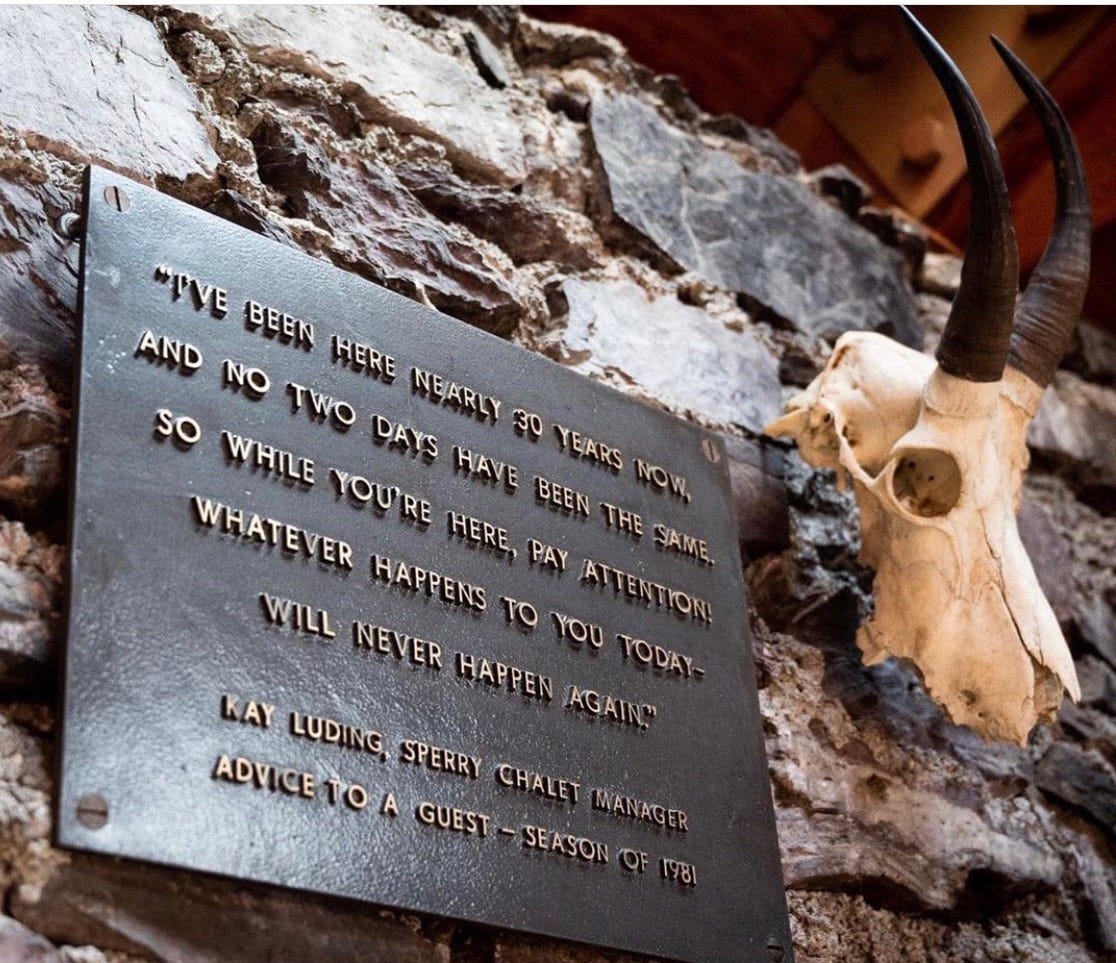
One of the very last posts I saw before deleting my Instagram account was this photo from fellow Montana writer Eric Heidle (whose work I discovered when we both had pieces in the anthology A Million Acres: Montana Writers Reflect on Land and Open Space, benefiting 50 years and a million acres preserved through the Montana Land Reliance). He took it on a visit to Sperry Chalet, one of Glacier National Park’s two backcountry chalets. The text reads:

“I’ve been here nearly 30 years now, and no two days have been the same. So while you’re here, pay attention! Whatever happens to you today—will never happen again.”

—Kay Luding, Sperry Chalet Manager, Advice to a Guest—Season of 1981

Now there, I thought, was a blast from the past. My first legal, tax-paying job was working for Kay Luding in 1992 as a waitress and cook while she was running the Belton Chalet Dining Room just outside of Glacier. (My first actual job was cleaning houses when I was 9. I earned 25 cents an hour, which I mostly spent on Jolly Ranchers. I have a terrible problem with cavities but am really good at cleaning houses.)

Kay was about 76 years old at the time and an incredible character. She was petite in stature but monumental in personality. People would come from all over in search of her huckleberry pies, which were rightfully famous with their homemade whole wheat crusts, but at one point during the summer a couple came in looking for pie, which we seemed to be out of, and when I went back to ask Kay if she had any ready she came out to inform me and the tourists that she would no longer make huckleberry pies. She’d decided that people were too gluttonous.

The restaurant was a wreck. Mayonnaise-heavy crab salad floated all day in a tray above melting ice, well above safe eating temperature. A can of mandarin oranges bulged on a shelf, such an obvious case of pending botulism that my mother brought a pair of rubber gloves, removed the can, and buried it deep. Kay made incredible fried chicken—I’ve only had better once, after a hike in a small village in Austria—but would regularly leave raw chicken out waiting to be breaded for 24-48 hours.

I took countless stories home from that summer and they’ve sat with me for close to 30 years now, ever since I was 16: Kay eating entire watermelons because she was certain it would relieve her chronic water retention. Or how the gift shop was covered in a thick layer of dust and once terrified a tourist because the woman wandered in and found Kay lying on the floor (which she did often because she thought it helped her heart) and thought she was dead. Or how we only had two CDs so ended up playing Vivaldi’s Four Seasons over and over.

Belton Chalet was also the first place I saw dusty pictures posted on timbered walls showing the decreasing glaciers over the decades, victims of climate change. And listened to Kay’s stories of leading pack trains up and down the mountains to Sperry and Granite Park Chalets when she and her husband managed them as the park’s concessionaires starting in 1954 (the chalets are currently managed by her grandson and his wife). Belton Chalet Dining Room is now a much fancier place—and, I assume, up to health codes—that serves things like duck confit and until recently had a Bloody Mary bar on Sundays. Last I checked they had no crab salad, but every original beam reminds me of that summer.

Kay was strong and independent, sometimes conservative in ways that seemed to contradict much of her life. She was funny and generous (when gluttony wasn’t a factor) and taught me how to make a “baked potato” in a decrepit microwave. I’ve been thinking of her a lot since seeing Eric’s post. Kay is a reminder that many of the biggest influences in my life are people who’ve lived through massive change, through war or extreme hardship, and tended to self-sufficiency; who loved to cook and adored their families and were often overly judgmental and lived with the kind of fierce, kind-hearted independence that gets you through hard times large and small.

At a time when the world is in turmoil and many of the leaders who have held the line for sanity, reason, and justice are leaving us, Kay reminds me to pay attention, no matter what. Today will never happen again.

Story needs no platform

Whenever I talk with writer friends about abandoning social media, the issue of “platform” nearly always comes up. Writers need, we’re told, a solid social media following so that their stories can be seen, noticed, read, and shared. Most of all shared. If their stories are shared, they can get more followers and the platform will grow until it’s unassailable, leading to speaking engagements and book sales.

Or something. I’ve never been sold on the idea that social media is an effective platform for most of us. If you’re an influencer, of course, that’s one thing and that thing is basically your job, but unless a writer has tens of thousands of followers to begin with an active social media account doesn’t generally seem to make much of a difference, and the effort involved in building that kind of platform often detracts from the time and focus required to do the actual work.

That’s not true of everyone, obviously. Some writers do incredible work and also run fabulous, smart social media accounts. Plenty of us don’t, and likely shouldn’t try, though it’s hard to resist putting the effort in when you’re constantly hammered with the Siren call, “You need a platform!” Maybe the question we should ask ourselves is whether those with massive social media followings are doing it because they’re building and maintaining a platform (the more I type that word the more images of deep-sea oil rigs come to mind), or because they enjoy engaging with readers and the general public online in a variety of ways. I suspect it’s the latter. Then there are those with massive followings who don’t engage, and I always find those feeds kind of dull.

There has always been a fundamental struggle between the act of writing and the sharing or promotion of it. But once you approach a work with readers in mind, your relationship to it changes. The work itself changes.

When I was in grad school, this shift was often spoken of scornfully, as if Art were demeaned by the wish to share it, to publish. (In one class the teacher said explicitly that the minute you get paid for your art, it becomes a commodity. I saw a lot of depressed faces in class that day. The word “commodity” is definitely a killjoy for creativity and I’m no fan of mass commodification, but we all need to eat and we all have our skills and talents to contribute. Money just happens to be how we currently exchange things of value.) I don’t know where or when this attitude developed. Story, after all, is one of humankind’s oldest and most enduring technologies. Stories are meant to be shared; they aren’t crafted solely for the storyteller herself.

My first draft of anything is always written for me first. Even this newsletter goes down in a notebook so I can dump out all my messy ideas before letting anyone else have a look-in. But the moment I begin transferring the words from the page to the screen, I begin thinking of readers. If I didn’t, why bother with any of this in the first place?

In a way, writers are often tricked into thinking that social media is part of this process, essential to bringing your work to others’ eyes and ears. But I’ve found that each platform I’ve been on deflated creative work in its own unique way, and all of them gobbled up the spaces in my brain where creativity happens, or at least that’s what it felt like. Social media connected me with a lot of great people; it took a long time to realize that it was also invading the time solely by myself with a notebook that I needed to create anything that I felt worthwhile. It drowned out wherever it is that Story comes from until I couldn’t hear it anymore.

That said, when I was revising my book, the one constant question I faced myself with was, “At what point will a reader put this down to go check Facebook?” Social media will continue to change writing even if every writer abandons it, because readers’ minds and attention will still be shaped by it.

My mother, who’s a singer-songwriter of cowboy songs, once talked to me about Story that picks you up by the scruff of the neck and takes you off into the night. Martin Shaw, in an excerpt from one of his books (link below—it might be from Courting the Wild Twin but I’m not sure), speaks of Story as a kind of echolocation from Earth itself, hoping to find someone who’s tuned in.

Story is magic; its role in our existence as conscious, connected beings is eerie and beautiful and full of power. That’s all the platform it needs.

___

Some related stuff:

  • Small gods,” mythologist Martin Shaw on story, myth, and Earth.

  • Dougald Hind and Anna Björkman on the State of Emergence podcast—mostly a conversation about the Trickster archetype but the relevant section on “story” starts a little after 1:00 (one hour) and continues for about 20 minutes. I was less interested in what was said than in the way it got me thinking that I needed to walk with these ideas for a while.

  • What comes first: ideas or words?” by Eli Alshanetsky on Aeon.

  • Sharon Blackie, author of If Women Rose Rooted, with a TEDx talk on the primacy of Story for human beings: “Post-heroic stories are not about strength; they’re about compassion,” like the story of the Holy Grail in which the knight must ask a question of compassion.

Walking composition

Community and plum jam

A friend invited us over to glean from their plum trees last weekend. I picked enough to make fruit leather and jam for the winter, and the trees still looked like they’d hardly been touched. Fruit trees, I thought as I picked, expose capitalism’s lie of scarcity.

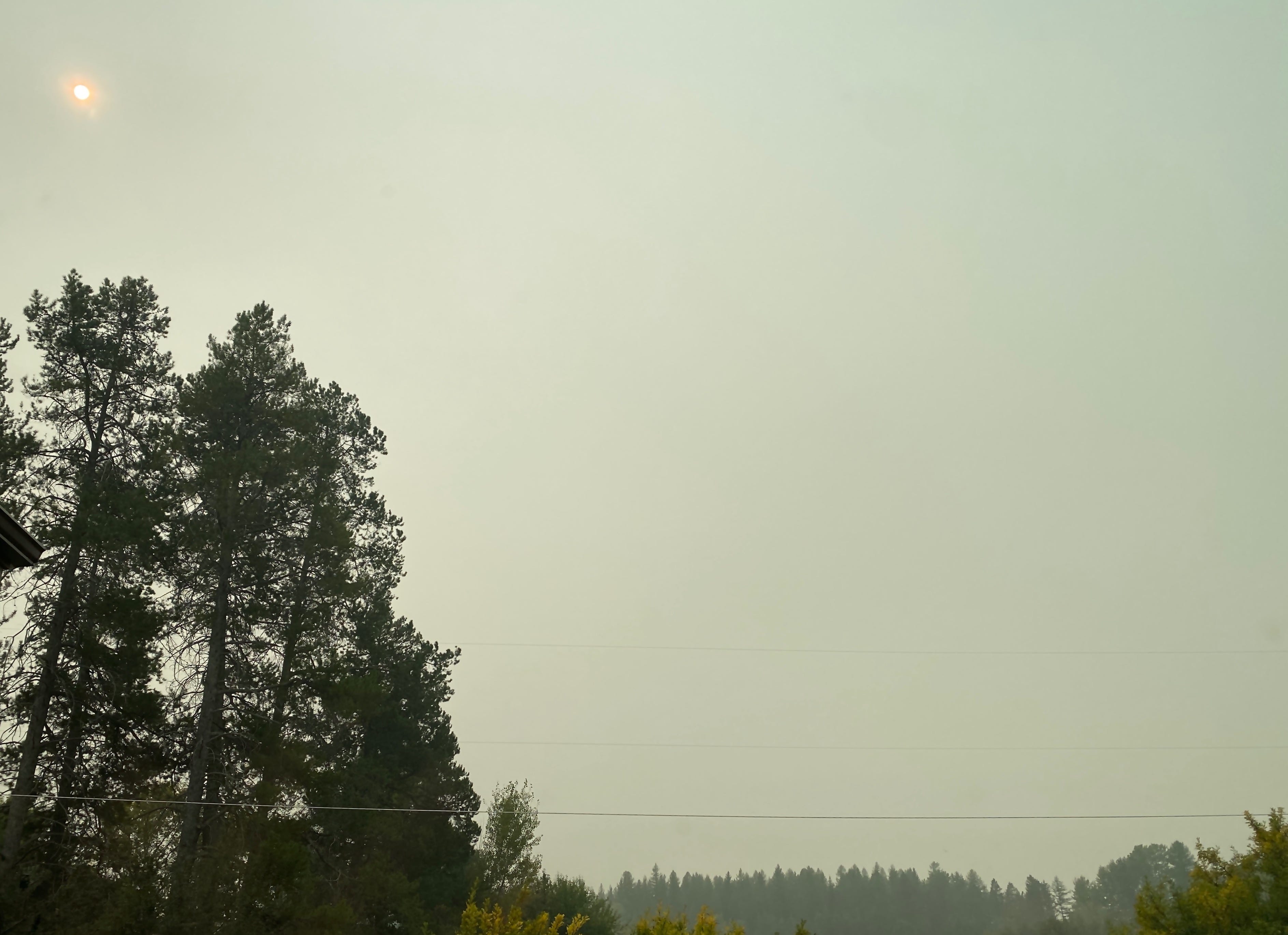
And then the smoke rolled in and we closed our windows and watched the sun turn red and I checked a list against the contents of our emergency bag before pitting the plums and turning my thoughts to bounty.

___

Ever since the local bookseller introduced me to N.K. Jemisin’s Broken Earth trilogy, fire season reminds me of her novels (and of Octavia Butler, who Jemisin has said was a tremendous influence in her).

In The Fifth Season, the first of the Broken Earth trilogy, we’re introduced to an Earth that periodically has some sort of volcanic or seismic event, called a “Season” (hence “Fifth Season”), with the destructive effects of each season often lasting for decades and upending normal life. Except that “normal” describes a world built to respond to these events—not with firepower or technology because those are repeatedly destroyed by Earth’s periodic seasons but with localization and community. No agrarian utopias here: These communities are towns, often walled, that are porous and fluid until a season comes, and then they shut their borders and try to survive with the people and resources left inside. There is no rugged individualism or survivalist tendency. Without the complexity and diverse skills of a community, survival isn’t possible.

Jemisin’s world, set around 40,000 years in the future, is not kind. As Earth is no longer a bountiful and forgiving place, all people must have something useful to contribute—each person’s name, in fact, consists of a first name, a middle name that indicates their skill class or “use-caste” (leader, breeder, etc.), and last name that is simply the name of their community. At the same time, orogenes, people who have the ability to control stone and its forces, are scorned, feared, oppressed, enslaved, and killed.

It’s a worrisome if interesting portrait of what happens to people when the planet they evolved on can’t be trusted to support them. Community is acknowledged as necessary, the only way of life that can ensure survival, but it’s hardly depicted as soft and generous (though individual people might be). The implication is that it can’t afford to be.

I think I’m going to pick more plums. Anyone want some jam? I’ve never made plum jam before but if I get enough fruit leather stocked up I’ll give the jam a shot.

___

Some slightly related things I listened to or read this week:

Conspiracy theories and uncertainty

In one of those odd synchronicities, I’ve been having more in-person conversations recently about cults in general and conspiracy theories* in particular. We’ve been gnawing around this question of what causes people to believe in things in the first place—to believe in anything at all, whether conspiracy theories or established religion.

I don’t have any answers, though it’s curious to me that it seems easier for some kinds of minds to believe in that which can’t be proven than in that which can and I keep coming back to wondering if fear is at the heart of it.

Cory Doctorow recently published a book on Medium (it’s 109-minute read and well worth it) called How to Destroy Surveillance Capitalism. Before getting into the very real, very urgent problems of surveillance capitalism itself, he wrote probably the smartest thing I’ve read on the disconnect between conspiracy theories and facts:

What if the trauma of living through real conspiracies all around us — conspiracies among wealthy people, their lobbyists, and lawmakers to bury inconvenient facts and evidence of wrongdoing (these conspiracies are commonly known as “corruption”) — is making people vulnerable to conspiracy theories?

“Trauma, not contagion,” he reiterates in the next paragraph, is what we need to look at to understand the divisive and often violent rhetoric flaring up all around us.

There’s something in that, but I also, again, look at embodiment, or lack thereof, as part of the problem, exacerbated by fear of what we can’t know or control. Why is it so hard for large numbers of people to believe that scientific research on, say, climate change, reflects real situations? Part of it’s identity—denying climate change tends to be connected with a particular political identity, and nothing is harder to change than a person’s view of their own identity because it’s who they are—but part of it is also in how we teach science, as cold research unconnected to the lives we live and the planet we live them on.

Some science writer friends and I had a conversation many months ago about the failings and pitfalls of science communication, and the responsibility of those of us who write about scientific research to help people understand it. But when people don’t see science as having anything to do with their lives, even the best communication can only go so far.

When my son was in 5th grade, he looked forward to his first science lessons. He looked forward to them until the first one, which focused on learning the scientific method and didn’t leave that subject for at least two weeks, quickly instilling an aversion to science in who knows how many formerly eager school kids. Now, I have nothing against the scientific method. It is obviously a very important thing to learn. But teaching it before kids have a chance to run their own messy experiments, try out their own observations of something they’re curious about—in short, before they come to know and love science as a way to explore and investigate everything they want to understand about the world—leaves them feeling that science is something “other.” It doesn’t have to do with them, doesn’t have to do with life. You can explain six ways from Sunday that your washing machine uses fuzzy logic in order to function and nobody will care, even though fuzzy logic is a really amazing thing to think about and is a reason the Mars Rover can walk around.

I think of science education as equivalent to that period of time in parenthood when you agonize over whether to just let your kid touch the hot stove or not. Because no matter how many times you tell them it’s hot and it will hurt, they will never totally believe you unless they’ve experienced it themselves. Without that experience, without seeing, feeling, smelling, messing around with the world and seeing what it can do (in a fun poking-sticks-in-the-mud way, not Facebook move-fast-and-break-things way), how can we expect people to believe what they haven’t experienced simply because some scientist said so?

The problem in early-age science education is reflected in our tendency to believe conspiracy theories and sloppy science not because people are stupid or gullible, but because life is full of uncertainty anyway and a poor science education makes that uncertainty an even scarier thing. It translates to a fear of making mistakes because mistakes are penalized by a lower grade; it translates into thinking science is a realm for the “smart kids,” not for those of us who struggle to get it. So some look for answers that gives them a more solid footing in the world, and others go further, looking for answers that don’t rely on the smart kids interpreting reality for them.

One essay that came into my inbox this week was a short one on Karl Jaspers, a philosopher I’d never heard of before who urged his fellow Germans to face the realities of their country’s recent actions after World War II. He also, wrote the author, made a life’s work of arguing for becoming comfortable with uncertainty:

Jaspers believed that we might not be able to come to an agreement about who we are and what we want to be, but we can agree on what we don’t know and how we’d like to act toward this nonknowledge. . . . ‘All thoughts,’ Jaspers therefore concluded, ‘could be judged by this touchstone question, do they aid or hinder communication.’

I wish I’d come across Jaspers earlier in life. I will never persuade a believer in conspiracy theories that they’re wrong, and it’s long since evident that more facts don’t change a climate change denier’s mind. But wondering what could further communication might be more productive. And in the long run, a better, more hands-on, messy science education full of dead-ends and mistakes could teach us both science’s potential and its limits, and help us become comfortable with uncertainty.

______

*Still looking for another word for “conspiracy theory” that is less loaded with dismissiveness. The closest I’ve come is “a theory that purports to explain pretty much every perceived wrong in the world and names the specific people supposedly responsible.” That is obviously not going to work.