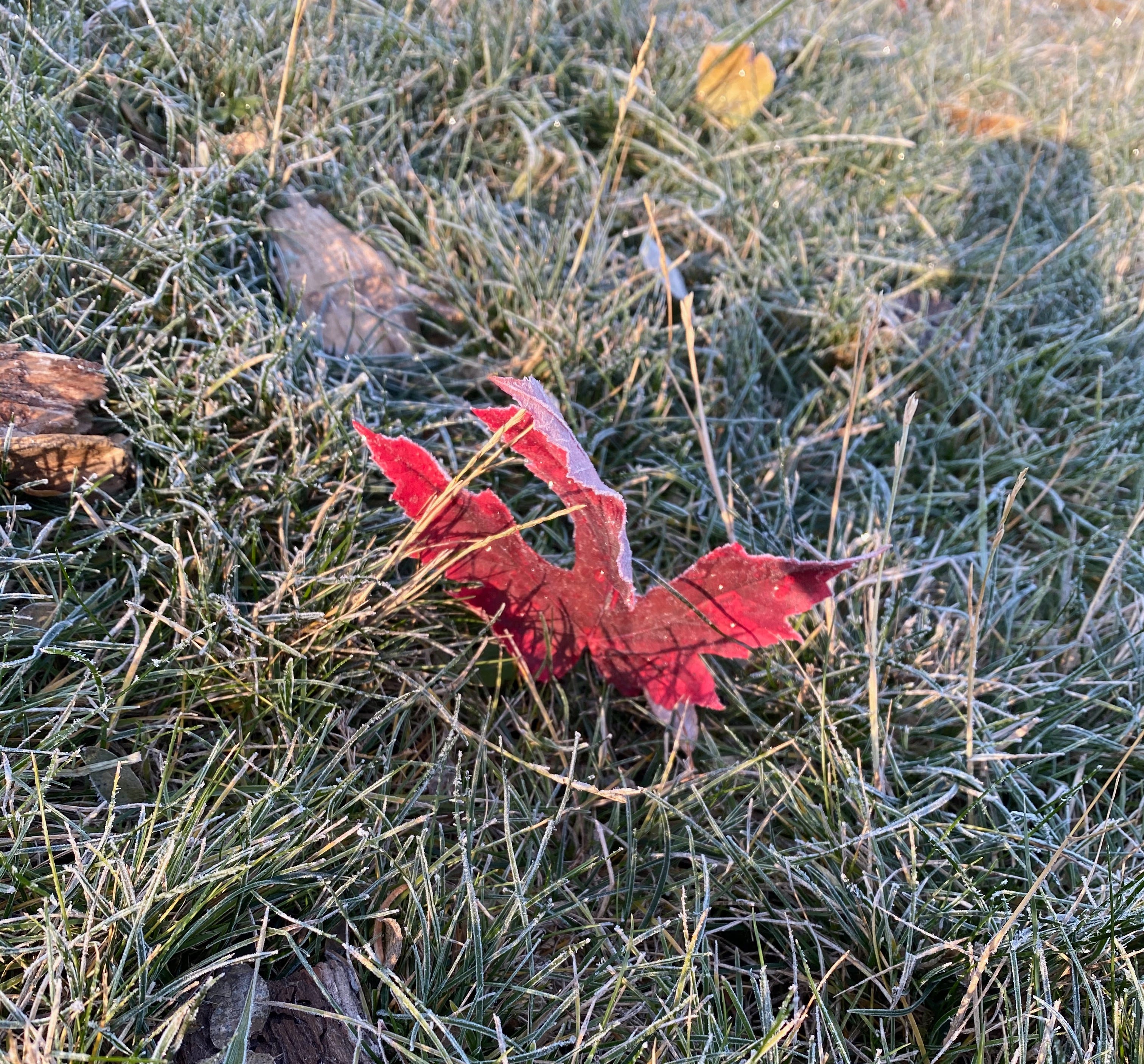
Walking composition

Ancestry and future planning

“If we want to be good ancestors, we should show future generations how we cope with an age of great change and great crises.” —Jonas Salk

My maternal grandmother showed up in a dream the other night. I can safely say I can’t remember ever dreaming about either of my grandmothers, but here was Grandma, standing behind me as I turned around and giving me a big hug and smiling and talking, which, for anyone who knew her, was very out of character.

Grandma was born and raised in Ohio in 1912 but spent the last forty or so years of her life in Great Falls, Montana, separated and then divorced from my grandfather, the man she’d met while in graduate school and with whom she’d probably imagined a very different life than isolation and motherhood on his family’s Montana homestead and eventual descent into alcoholism (his, though she did like her two or three glasses of scotch in the evening). She was not, to put it mildly, a hug-giving cookie-baking type. I think she made microwave brownies once. Or maybe I made them. She talked sparingly and read books almost not at all. She liked small dogs and swimming and playing bridge and volunteering weekly the Soroptomists and watching bull-riding competitions. She’d once been a pilot and flew competitively. I loved her very much though can’t say I ever really knew her. We got along well because I was tidy and not much trouble and liked to go to church with her. She died two days before my first baby was born.

I’ve been reading Roman Krznaric’s book The Good Ancestor and haven’t gotten to the “prescription for long-term thinking” part of the subtitle, but have been thinking a lot about elders and ancestry. Maybe that’s why I dreamed about my grandmother.

But maybe not. It’s hard to grasp what our relationship was, since she really did talk so little, especially about her life, and didn’t like children all that much. I don’t know how she would have coped with the realities of climate change and rising white nationalist movements and bewildering fake news saturating the internet. Probably calmly (though she had a healthy dislike of Donald Trump, even back in the 1980s). She didn’t like fuss any more than she liked cats (she deeply disliked cats).

I was listening to an audio version* of this piece on short-term thinking from MIT Technology Review this morning, and found myself irritated not just by the title—“Humanity is stuck in short-term thinking. Here’s how we escape,” by BBC journalist Richard Fisher (not that I blame him for the title since writers never write headlines)—but by the foundational idea behind it. It’s well-meaning, and presents a not-too-bad acronym idea for what keeps society stuck in short-term planning, but when it comes down to it I’m not sure I really buy the drumbeat claim that humanity as a whole is incapable of thinking and planning in the long term.

We hear this all the time, especially when it comes to climate change: humans are wired for short-term thinking, short-term benefits, short-term results. Thinking in longer generational or century terms is beyond us.

The more you look at human history, and even human present, though, the less realistic that claim seems. Yes, we have trouble refusing salt, sugar, and fats that are bad for us, even when we’re taught the long-term effects on our bodies, but plenty of people work and plan in the hopes of providing a good future for their children and grandchildren. You can find examples of long-term thinking all over the place without even starting to look at the ample evidence of societies that have made decisions for centuries based on some version of the seventh-generation concept.

I’m not so sure that humanity is incapable of working to build a world that will benefit our great-great-grandchildren so much that it’s in the interests of capitalism to convince us that we’re incapable of it. People get a sense of satisfaction from knowing that they’re benefiting a future they’ll never see all the time. My husband and I planted a number of trees last year that we know won’t provide shade and shelter until we’re old, but we take pleasure in knowing that future people will benefit from them, and we’re hardly examples of enlightened holistic futurism. Corporations dependent on short-term profits, however, are also dependent on convincing us that this kind of investment is an aberration.

Many of us have been persuaded to believe in a “fact,” even though it might not be true, simply because those who control the narratives profit when we’re convinced of its veracity. They then push the narrative further to convince most people that if they don’t grab resources for themselves—minerals, water, education, power, whatever—someone else will. Humans suck at long-term thinking; therefore, we have no chance of changing the course of a planetwide climate catastrophe, plus people are greedy and you can’t trust them, QED, so why bother?

Screw that.

—-

My grandmother was a practical person who had no real trouble planning for the future or thinking about what to leave her grandchildren. Years before she died, she gave my older sister her flatware set, my younger sister her locket, me her own grandmother’s diamond pin, and that was that. She also believed in education and working hard and saving money and contributing to her community. She believed, I think, in creating a good future for future generations, even if she wasn’t one to talk much about it.

As Grandma might have said if she’d bothered to opine on anything at all, face the future, don’t make a fuss, and get on with it.

—-

*I enjoy podcasts, but also use an app called Curio, which helps me stay away (most of the time) from news addiction by providing in-depth news stories from a variety of outlets—Aeon, The Economist, Financial Times, The Guardian, and several others—read aloud and beautifully by professional journalists. It costs about $8 per month (I have the beta version, so pay less than that, but I think I’d still subscribe at this level.) That’s where I listened to the MIT Technology Review piece, which I think is available to read only for subscribers.

—-

Some stuff to read or listen to:

  • Origin Stories, the podcast from The Leakey Foundation, recently had an episode featuring a lecture by paleobiologist Dr. Nina Jablonski on the evolution of human skin color. Many of us have learned that darker skin has more eumelanin (melanin) than lighter skin, providing natural UV protection, but I didn’t know that part of this evolution might be to protect folate metabolism (a crucial B vitamin that protects against birth defects like spina bifida), or that people who ended up depigmented, with lighter skin, at northern latitudes still couldn’t absorb enough Vitamin D and so had to supplement with a fishy diet. There’s a lot in this lecture, including how NASA helped map shifts in ultraviolet radiation over deep time, and I highly recommend making the time to listen.

  • The Origin Stories episode pairs well with this article from Nautilus on how deeply eugenics and statistics are intertwined, and on how early eugenicists forced categories of difference—inventing the concept of “statistical significance”—onto “races” that they helped invent, simply because they were certain those differences should exist: “Pearson’s statistical work was inseparable from his advocacy for eugenics.” (Insert me swearing a lot at these people throughout.) It’s no surprise that these early pseudoscience statisticians were deeply racist, nor that their influence has proven difficult to uproot. I am reminded again of the gazillion thistles in my yard.

  • How Jakarta, long at risk from plate tectonics and volcanic activity, is working to save itself from sinking into the ocean by relocating 1,250 miles northeast: “The primary danger is not the changing climate, although that is a grave threat, too, but a potent yet lesser-known peril called subsidence, in which the combined forces of urbanization and plate tectonics push these vulnerable metropolises into the ocean.” From Steve LeVine on Medium’s magazine GEN.

  • I really, really liked this essay in Aeon by Hayden Kee on how empathy makes us human.

  • FUN! Following on the adventures in baking with ancient Roman yeast, Sapiens found some archaeologists making beer using 3,000-year-old yeast scraped from ancient jugs. The most interesting part about this was the theory put forth that agriculture might have developed from cultivation of grains for booze, not bread.

  • MORE FUN! While I am an unabashed Trekkie, I am not really a pop culture aficionado. However, I am such a Trekkie that I delight in reading Vulture’s recaps of Picard and Star Trek: Discovery (plus, Vulture generally has quirky, entertaining writing about TV—it was only by reading their recaps of each week’s episode beforehand that I got through the first two seasons of The Handmaid’s Tale.) “The reigning organization protecting Earth [in Star Trek: Discovery Season 3, in which the crew of Discovery has jumped 900 years in the future to find the Federation pretty much wiped out] is the United Earth Defense Force, a protectionist super-agency whose charming demeanor brings to mind the likes of the IDF or ICE, and they are not interested in making friends. One of its leaders, Captain Ndoye, gets on the horn and immediately negs them for still using space Zoom (viewscreens) before telling them to GTFO or die. Welp!”

Walking composition

Movement and stillness

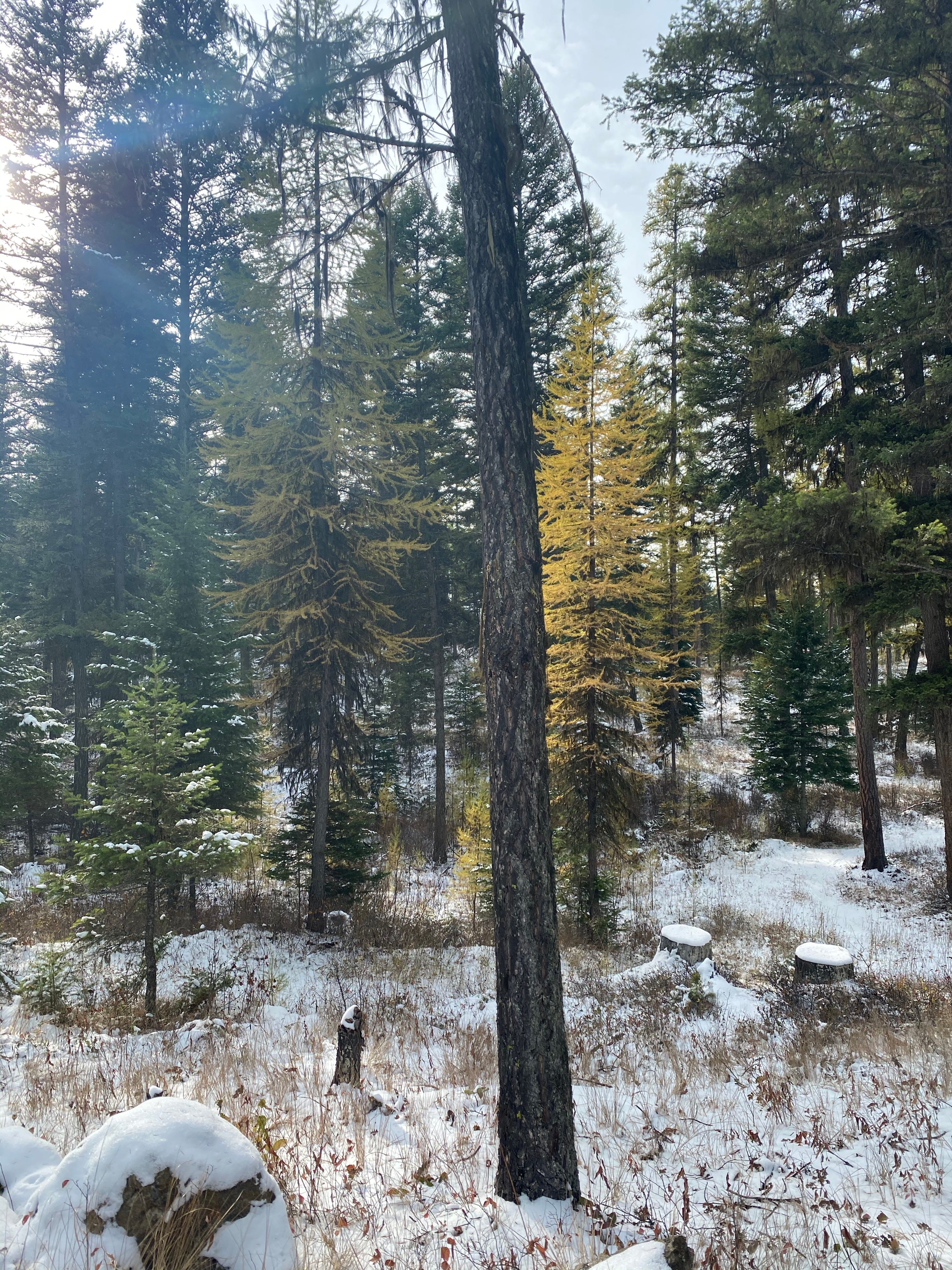
I wrote this post in my notebook early in the morning, by inadequate candlelight. In a gap through a neighbor’s larch trees and lodgepole pines, the planet Venus glowed for a while. Clouds came in eventually and it disappeared but not before it reminded me of one of my favorite things about living in a place where you can (for now) see the stars: If you’re up early in the morning, especially if it’s too early and you can’t sleep, and it’s a clear night, you can watch as the stars shift position and be reminded that it’s not the stars moving or the sun coming up but this massive, delicate planet spinning through space, held only by the relationships that gravity enforces.

—-

We stayed at a forest service cabin last week to give ourselves a reprieve from election updates, at least for a couple of days. (A break for me, that is. I can’t begin to describe how much of a mess I usually am on election days. We still have a good absentee ballot system, so for once I decided to take advantage of it and get outta Dodge.) It was one of the best, most restorative decisions I’ve made in a long time.

I brought a backlogged pile of magazines along, and all the adults ended up sitting around the woodstove in the evenings, reading The Atlantic under the low yellow glow of propane lights. I helped my daughter finish a sewing project from the kit I’d bought her in the spring. My kids and their cousins played cards and read books and took photos with an old digital camera I’d dug out. We went for walks and had a bonfire and my brother-in-law stuffed us with tremendous meals.

We go camping a lot in the summer, so it’s not as if I don’t regularly spend time in places with no cell service. But camping is more work than the cabin turned out to be, and I don’t usually have time to sit around reading by the campfire while the kids sleep.

Without the constant work of tent camping, the amount of space that my phone’s existence takes in my head became alarmingly obvious. Even if it’s off or in another room, I know that it’s there, all the messages to respond to and news to check. And that’s after I’ve deleted all of my social media accounts. Sitting around the cabin in the evenings with no possibility of internet or cell phone service anywhere, my mind felt like it whimpered with relief, curled up to take a nap, and came out refreshed and ready to give its attention to the sunrise, or my daughter’s sewing, or eight issues of The Atlantic.

Pico Iyer, who pays attention to at most five minutes of news per day and preferably only two, has a wonderful short TED talk on the rewards of stillness: “Sometimes making a living and making a life point in opposite directions.” Iyer does not own a cell phone, a car, or even a bicycle, and writes for five hours pretty much every single day. And still he grapples with modern distraction. Shakespeare, he pointed out, didn’t have to deal with 200 emails per day, and the Stoics weren’t on Facebook.

Maybe we should all have the right to a regular digital detox. My mind is constantly frazzled, even though I live in a place where I can see the stars at night and go for regular walks. I didn’t want to leave the forest cabin, it was such a relief to be away from the demands on my attention for a couple of days. How must millions of others’ minds feel?

—-

Iyer goes on a three-day retreat to a monastery once per season. He says in his TED talk that he feels guilty about it, about leaving his wife behind and not answering all the emails. But, he says, “as soon as I get to a place of real quiet, I realize that it’s only by going there that I’ll have anything fresh or creative or joyful to share.”

I felt guilty about escaping to a forest service cabin when so few people have that kind of option, especially in places where the right to vote is so constantly under attack. But I came back more ready to work for a better world instead of worn out by following the second-by-second anxiety of the news cycle. And can keep in mind, at least for the moment until it’s worn away by daily life, the larger realities of our existence.

The stars are not moving. We are.*

*That’s not entirely true, as our galaxy has its own rotation, but for the purposes of what we see in our night sky, it’s the shift in perspective of Earth’s movement versus stars and the sun moving across the sky that matters to me.

—-

Some stuff to read or listen to:

  • I was stalking Twitter the last few days, to my deep regret because Twitter is poison for me and that’s why I deleted my account in the first place a couple years ago. But because I was stalking and finally reminded myself I could go stalk people I actually know, like, and respect, I’m able to share these two threads: One from N.K. Jemisin (possibly my favorite living writer) via Chris La Tray on progressives’ inability to effectively storytell (salty snacks!); and the other from someone with Rural Organizing on the difference between what rural voters want versus what the Democratic National Committee thinks they want, h/t to the excellent journalist and Butte native Kathleen McLaughlin.

  • Not all, or even many, of you will be into Star Trek, but you still might get a lot out of this interview with Reza Aslan on the Star Trek: The Pod Directive podcast. It’s about religion and an episode of Star Trek: The Next Generation that I’ve always been particularly fascinated by, “Darmok,” where the Enterprise crew meets a people they’ve never met before and can’t communicate with them. Now, this is pretty much unprecedented because the universal translator (inexplicably, as the podcast hosts discuss) makes communication between all peoples possible. However, the people they meet turn out to communicate only by metaphor and story, so while the words make sense individually, together they mean nothing to the Enterprise crew. Anyway, Aslan’s breakdown of how profound this episode is and its application to our failures to understand one another goes far beyond fun Trek trivia (though there’s plenty of that in the episode):

“People that are not you are trying to tell you their stories, and they’re trying to tell you over and over and over again, and the thing that’s holding everything up is certain people are refusing to hear those stories. They don’t want to go deeper than, ‘The thing that you’re saying, it makes me uncomfortable, so I’m tuning it out entirely.’”

  • In a non-public thread of book recommendations, I remembered how much I loved reading Darius the Great Is Not Okay, by Adib Khorram. Probably the best book about depression, especially for a teenager, I’ve ever read, and just a wonderfully told story. It’s technically young adult, so a fairly quick read.

  • I am absolutely not into running, but loved this piece in The American Scholar about running, pushing yourself too hard, Aristotle, Camus, and coming to terms with mortality.

Walking composition

Love and lines

This is sunrise over a range of the Rocky Mountains that marks the western edge of Glacier National Park and runs into Canada, which is ten miles from where this photo was taken. But on Election Day, standing far from internet or cell phone service and watching the light come up and hit the snow-covered peaks one by one, I wasn’t able to think of it that way geographically. I’ve found myself erasing those kinds of lines over the past few years. I’m not sure if it’s the effect of trying to immerse myself more in pre-Columbus history where it’s available, or other stories in North America from non-white settler perspectives, or something else. I love this land so much. Sometimes I think it’s the love itself that’s erasing the lines.

Wouldn’t that be something, if enough love could erase boundaries and banish imaginary political lines and erode barriers?

—-

I just finished reading Tyson Yunkaporta’s Sand Talk, and it was one of the most mind-bending books I’ve ever read. I was only partway into it when I knew I would be rereading it again soon. It was an aligning book and like so many things these days I’m saying that without knowing what I mean by it. But it was. He said many things that I’ll probably walk with forever, at least I hope so, and one he kept coming back to is the question so many of us ask: Why are we here? To paraphrase his answer: Silly question. We’re here to be custodians of Earth, land, place, life. (It was more than that, but that’s the tweet version.)

He wrote about songlines (Yunkaporta is of the Apalech Clan in Australia) and, knowing how little he is probably allowed to say about them yet how much energy came through that little bit, I wonder what else I’m missing. What many of us are missing.

How much life are we missing? Is attention life? Do we breathe life into that which we attend to?

—-

An extra photo, just because, because when I stand in these places the love seems to come from my feet and my gut, not centered in my heart, and I don’t have any idea what that means either but damn it fills me up and topples out everything else. Photos can never do it justice, but it’s what I have to share. With love, and no borders.

Walking composition

The extraordinary unlikeliness of us

I mentioned in my Saturday walking composition a video that my journalist friend— Bethany Bell, who works for the BBC—made back in March about lockdown in Rome. I couldn’t find it, so she sent it to me again (it’s something she did independently, not a BBC production, to be clear). The feelings in it, the strange shifts and concerns, are coming back like the turn of the tide. I asked her if I could share it for Election Day and she said of course, and that “it reflects the way my cameraman and I felt in March—and again now” as many parts of Europe roll back into lockdown.

I can’t think of more to say, nor more intelligently and compassionately, than Bethany does about humanity and its long, uncertain history in this short video: “It’s extraordinary that anything survives.

“But somehow, we have. And somehow, we will.”

Rome—Lockdown City, March 2020

Walking composition

Life is long, complex, and beautiful

“What I am trying to tell you is that I am not an easy going gardener and there are people who say they enjoy it and they are liars, I’m certain of it.” — Alexis Bonogofsky, “Planting Potatoes in a Pandemic” in East of Billings

We Skyped with an old friend this afternoon, a journalist I’ve known for over 20 years. She lives in Vienna, where we first met, and was just sent to Rome for work. The sight of heavy old wooden furniture in the hotel room brought back a moment’s whiff of when we lived in Vienna and did things in Europe and health care didn’t require scrimping and food was good even though we were poor.

My 13-year-old, who’s taking an online Minecraft architecture class, talked with our friend about characteristics of Roman architecture, and after he left I said, “You know, we keep talking here about how lucky we are to just be able to get out into nature any time we need, but there’s something to be said for being around those old buildings and reminding yourself of the struggle and plagues and politics that humans have survived for thousands of years.”

She reminded me of a piece of reporting she’d done from Rome back in the spring, when she’d been sending dispatches from Barcelona and Rome during the first horrific surges of virus, saying something similar: these buildings remember people who have endured much and a reminder that life continues. (I will try to find the link.) And I told her of a piece in Sapiens last spring about anthropological research on Venice’s quarantine islands and their role in its response to the Black Death 700 years ago.

Ars longa, vita brevis

We talked about hugging, about children’s loneliness, and about research she’d read that certain receptors in human shoulders responded to the touch of a hug but also to lying down on the earth.

Est quaedam flere voluptas

And I told her that we’d built a garden during lockdown and she said that was wonderful, we could lie down in it, and I said, no, it’s pretty much a vast carpet of vicious, spiky thistles. I don’t love gardening much—I’m more of a hunter-gatherer than an agriculturalist—but making that fenced-in soil hospitable to plants other than knapweed and thistle has now become a mission that might take years.

That seems like a good metaphor—for something.

Longissimus dies cito conditur

Free speech and the mind-body disconnect

I’ve been thinking a lot about free speech recently, possibly due to over-exposure over the last few years to podcasters like Sam Harris, Joe Rogan, and the like* (also known as “thought leaders,” a phrase that has a kind of irritating and infantilizing tone to it—please, tell me how to think!), not to mention tech leaders’ mantras that free speech above all other values prevents them from doing anything about hate speech or misinformation on their platforms.

“Speech” as a concept seems to have run into a wall. Or maybe it’s our conception of it that’s run into a wall. One some level, we know that words can hurt, and more specifically that online hate and misinformation campaigns can cause immense damage, not even precluding genocide. On the level of social action and public discourse, though, we disconnect it from “real life.” We seem to believe that what happens with words only comes from the mind and intellect and is incapable of having an effect on physical humans. The result of a mind-body disconnection in Western philosophical discourse that goes back centuries.

What happens when someone gets radicalized online and perceives a group of “others” as unwanted, as less than human? What about if they take a next step to commit some form of atrocity to rid society of what they perceive as an undesirable element?

It’s almost as if we think that the person who was being radicalized and the person who commits atrocities are two different people—the actor is a horrible person, but the online viewer is separate from that, a brain only, not a human whose entire being is affected by what they absorb online.

This problem can go society-wide. Propaganda plays out in the voting box and can warp both our values and democracy’s ability to function. Or early in the pandemic, when people who only got their news from Fox had higher rates of coronavirus infection until people like Sean Hannity started talking about Covid-19 as a real thing rather than disparaging it as a hoax. (I live in a rural state with an aging and generally conservative population, so this was something I wondered about early on, how infection rates might intersect with areas that have low population densities but more vulnerable populations who are also more inclined to watch conservative newsish [news-adjacent? hardly] media. Someone actually did a study on the effects of Hannity’s and Tucker Carlson’s portrayal of the virus on the infection rates of their viewers, and sure enough, rates were higher until they started talking about it as a real thing.) People’s actions are very much influenced by the words, opinions, and discourse they’re exposed to, which is common sense but these days seems to need hard evidence for at least some people to understand that it’s a real thing.

I don’t know what the right answer is to speech online, but I think it’s far more complex and nuanced than is served by simply refusing to limit speech in any way.** It’s one thing to host a volatile forum on Reddit and another when a concentrated campaign, possibly related to that volatile forum, damages an individual or population.

As someone who has been on the receiving end of some intensive verbal abuse, I know from experience that just because words are not physical weapons does not mean they fail to damage, often permanently. The first amendment’s free speech phrasing originally applied to a citizen’s right to criticize the government, and I understand that it’s vital to protect freedom of speech in all sorts of unrelated venues, but to blanketly apply that protection to any form or volume of verbal harassment both misses the point and cramps our ability to think widely about what we mean by both freedom and harm.

Speech is not just an action of the brain or the intellect. It is, like all actions, an act of the mind, of which the body is a part. And its effects are also received as a full mind-body experience. Perhaps like so many other things, enjoying its full freedoms requires us to have honest conversations with a level of maturity and self-reflection that few leaders, whether political or thought, are willing to engage in.

—-

*I spent over two years listening to every Sam Harris and Jordan Peterson podcast episode, and as much Joe Rogan as I could make time for, trying to understand what they were all het up about. And then I asked my older sister to listen to a bunch of Peterson stuff and try to explain it to me because she’s smarter than I am (sorry, sis!). What we landed on is that Peterson has an inexplicable affection for hierarchy and a skewed perception of women. Harris just complains a lot, which is weird for someone who markets himself as a mindfulness expert. In the end what I decided is that these people and others like them started out trying to ask difficult questions, but very quickly got trapped in their own echo chambers and egos and provide little of value anymore, at least to me (unless you’re super into the Peterson videos about archetypes and so on, but went through the Joseph Campbell phase of life in high school and grew up in a household that had Carl Jung books around, so nothing about that feels new to me). This piece from Jacobin magazine about Peterson’s thinking and its many internal disconnects is one of the best things I’ve read on his . . . philosophy?

**Except for money. I don’t think this is complicated at all. Money should not be treated as speech, and Buckley v. Valeo’s 1976’s SCOTUS decision seems to justify it on very lazy grounds.

—-

Just one thing:

  • Almost everyone I know has already voted but if you haven’t, VOTE. If you need inspiration or an uplift, a friend of mine participated in this amazing flash mob dance video. Makes me wish I could dance, but at least I can vote!

Walking composition

Education and being human

“We have to stop trying to make our children fit into the world that they find themselves in, and start creating a world that fits them.” —Sherrie Mitchell, Sacred Instructions

Yesterday one of my kids asked me what kind of college degree I thought would be useful for their future. It was an unexpected question. Despite coming from generations of people who have revered higher education above almost all other achievements, I haven’t drilled college into my kids. That is, I haven’t drilled university and degrees as a high ideal in the way that my family—on both sides—thought of it. It feels odd not to revere higher education. Both of my grandmothers had degrees and worked in their fields in a time when very few American women went to university; education in my family is almost a religion.

I’ve been in a years-long conversation with our local school board about what the priorities of our school district should be, mostly because I was increasingly alarmed and disappointed at the emphasis on testing scores and computerized learning. It’s sobering how many people take the “promote STEM learning and groom future programmers” as an unquestionable truth for elementary through high school education right now (when STEAM is mentioned, it’s not generally given much room or understanding). My own argument at school board meetings is generally that, by holding firm to these strategies, we’re preparing our children for the jobs from 20 or 30 years ago (this thought occurred to me one night, but I’m not the first one to express it).

Communication skills, I told my kid. Being able to understand people’s needs and emotions, and to express your own ideas in ways that large numbers of other people can understand and sympathize with them.

I don’t know that it’s right, but it certainly seems more useful than preparing for a job like programming that has a high chance of being almost exclusively automated. I’m not the first person to express this idea, either, but it seems to me that as the future becomes more digital, the skills that will stand out are the ones that tap ever deeper into what makes us most human. Part of that is having greater respect for the life all around us, and part is having more respect and understanding of one another.

—-

Some thoughtfulness and uplift:

  • Alan Watts on wonder, sent by someone here through the gift of online connection.

  • Dirk Philipsen, author of The Little Big Number on how GDP rules and corrupts life, writing in Aeon on the supremacy of the private and how we can reclaim the commons: “To own was always less about protection of the self than it was about exclusion of others.”

  • What if there is life on Venus? Anthropologist Gideon Lasco examines our exploration of space in the context of Earth-based colonialism for Sapiens magazine.

  • In his article, Lasco mentions Chinese author Cixin Liu’s enormous and bestselling sci-fi trilogy (he refers to it as Remembrance of Earth’s Past; I think of it as The Dark Forest trilogy), which I am never sure whether to recommend or not, but if someone does or has read it and can explain to me the process by which a particle is unfolded in different dimensions to spy on Earth, I’d be grateful. I read it several times and never got it.

  • A fantastic must-read: Melissa L. Sevigny’s amazing piece “The Wild Ones,” published in The Atavist last year, about botanists Lois Jotter and Elzada Clover running the Colorado River for their own scientific expedition in 1938: “Jotter smiled at the journalist who asked the question. ‘Just because the only other woman who ever attempted this trip was drowned,’ she replied, ‘is no reason women have any more to fear than men.’”

Walking composition

Empathy and anger

“The most important work today, the action most needed to be taken by each of us, is work across boundaries, across differences. . . . Anything that gets in the way of natural, compassionate, unconditional loving relationships and interactions is artificial.” —Robert Atkinson speaking on the Love (and Revolution) podcast in 2017

I didn’t manage to post anything yesterday partly because I gave myself the day off after a week feeling horribly stuck in the formlessness that defines so many of our days right now, and in part because I couldn’t find a quote I really wanted to fit with this photo. I read Fredrik Backman’s Us Against You (sequel to Beartown and just about as good; I hope he does a third with Alicia as the main character) and thought about using some of the opening lines because it’s such an excellent book and I inhaled hard when reading the paragraph about resenting other people simply for the fact that you need them. Backman is Swedish, but the sentiment felt resonant for much of why America can’t seem to move forward. The ways in which he portrays Beartown and its residents feel familiar, either from my childhood, or from where I live now—a liberal-leaning small Montana town in an extremely conservative county. Insult and offense are raw and constant and everywhere. As if anything from clean water to public health is an assault against . . . what? The words are always “freedom,” “liberty,” “America,” but none of that means anything. It’s just identity.

I wrote in a non-public forum recently that one of the biggest things I’m struggling with right now is hanging onto empathy in the face of so many forces willing to discard lives and real freedoms in the name of either power or identity. I know I’m not alone in that frustration. When our county commissioners refuse to enforce any mask mandates while the hospital is pushed beyond its capacity to treat coronavirus patients and my friends and family who work in frontline jobs are constantly at risk, it’s hard to feel empathy for those who refuse to lead due to mistaken loyalty to a conservative identity. I keep trying because what other option do we have? Nobody wins when everyone is angry. Maybe one of my tasks is to protect space for anger for those who have a greater right to it.

My formless days are fortunate days. I am hyper-aware of that, especially as I watch my sister go off to a customer-facing job she doesn’t have a choice about every day. And yet no matter how much structure I inflict on our household—math at 9:30, practice music, Skype with grandparents, read chapters, exercise—the malleable squishiness of time is affecting everyone. I wonder what our children—not just mine; everyone’s—will take from this time, if as adults they’ll yearn for structure while prioritizing social contact after a year or so battling loneliness in childhood.

It’s been rough. It will likely get rougher. Take care of one another.

—-

Stuff to read or listen to:

  • The joys of walking at night.

  • Forget self-driving cars. The automated robot future will look very different, and might help cities adapt more flexibly to the shock of pandemics: “Flexible density . . . recognizes the existential nature of the threats that cities face in the 21st century, and that the static way we’ve been thinking about resilience to date may not be enough.” “The Self-Driving Car Is a Red Herring,” by Anthony Townsend in Nautilus.

  • FUN! Stacey Abrams interviewed on the Star Trek podcast The Pod Directive.

The Unholy Legacy of the Doctrine of Discovery

I finished reading Unsettling Truths: The Ongoing, Dehumanizing Legacy of the Doctrine of Discovery, by Mark Charles and Soong-Chan Rah very quickly after opening it over the weekend. Which for me is always a nice surprise because it generally can take me months to get through a nonfiction book, sometimes a year. The authors put something together that is massively informative and should have been dense but was very accessible reading. Charles is a member of the Navajo nation (and you might not know he’s been running for president), and I believe both authors are Christian pastors.

The Doctrine of Discovery is something I only had vague schoolchild notions of until stumbling across Charles’s TEDx talk a few years ago. Unsettling Truths is a must-read, I think, for anyone seeking to understand the psychological and spiritual sicknesses that North American culture was founded upon. It’s perhaps a beginning book, an opening of a conversation and revision that is long overdue. There is so much to discuss about it, a mass collection of ideas in a very small and well-organized space, but I’ll stick mostly with the Doctrine itself here.

The Doctrine isn’t one document; it’s a set of papal precepts issued in the 1400s that gave official Catholic blessing to the right of Portuguese and Spanish monarchs to claim title to land they’d “discovered” and all that land’s resources, including its people. The first was Pope Nicholas V’s in 1452, a papal bull titled Dum Diversas that gave permission to the king of Portugal “to invade, search out, capture, vanquish, and subdue all Saracens [the word used for Muslim people at that time] and pagans whatsoever, and other enemies of Christ . . . and the kingdoms, . . . possessions, and all movable goods whatsoever held and possessed by them and to reduce their persons to perpetual slavery.” The passage quoted in Unsettling Truths goes on to grant the king the right to appropriate all said kingdoms, possessions, etc., and convert them to the crown’s own use and profit. Romanus Pontifex, written in 1454, expanded the idea to give European Catholic nations dominion over non-Christian lands they “discovered.” The authors’ discussion of this papal bull points to its role in enslavement of people living in Africa by Prince Henry of Portugal, which relied partly on the warped logic that enslaving non-Christians might save their souls by bringing them closer to Christ.

The book leaned far more heavily on Christianity and the disconnect between Jesus’ actual teachings and the pursuit of Christendom—that is, building a Christian nation—than I was expecting, but that’s understandable given the authors’ callings as Christian pastors, and it’s clear that the project of forming a Christian nation can’t be disentangled from the Doctrine of Discovery and the evils that it has perpetuated for centuries. More than that, it puts many current movements, such as Dominionism, into historical context.

A taste of the authors’ thinking on the need to save Christianity, not just America, from the Doctrine’s legacy:

“The formation of the Doctrine of Discovery in the fifteenth century was the culmination of the development of a diseased theological imagination that resulted in the severely dysfunctional expression of the church. This imagination operated beneath the surface of the European mind, particularly towards those deemed as outsiders or infidels.”

The authors trace the Doctrine’s effects through to modern times, including very recent Supreme Court Cases. One was in 2005, and the Doctrine was explicitly cited in 1985 in City of Oneida v. Oneida Indian Nation:

“The ‘doctrine of discovery’ provided, however, that discovering nations held fee title to [lands inhabited by Indian nations], subject to the Indians’ right of occupancy and use.”

As far as I can work out, this means that whoever pays money for land has the right to it, no matter who was there first and whether or not paying for land ownership was a system in place before the “discoverer” landed there. It’s an idea that was articulated in an earlier and more well-known case, Johnson v. McIntosh in 1823, which stated outright that Indian tribes could not own land; only European nations—and after them the United States—that had conquered and settled the land could. Part of the opinion contains the following baffling language: “It has never been contended that the Indian title amounted to nothing. Their right of possession has never been questioned. The claim of government extends to the complete ultimate title, charged with this right of possession and to the exclusive power of acquiring that right.” So Indian nations could have or inhabit land but not sell it? Cue WTF emoji.

(Related: The myth of money and the narrative of capitalism are also on my reading pile.)

There are many other ideas packed into a short book, on white supremacy and power and, something I think about a lot, how narrative is never just words but shapes how people see themselves and others, and how that in turn shapes society, not always, obviously, for the better:

“The captivity of individualism in the West leads many to reject the possibility of institutions and systems inflicting social harm that requires a social response.”

The GoFundMe campaign for this book (disclaimer: I contributed to it) was launched long before the Covid-19 pandemic, and the book itself was published in 2019, but this statement is remarkably prescient regarding the disaster that the U.S. finds itself in this year, not just in a lack of national response to the pandemic, but in the small but extremely vocal minority who rely on the narrative of individualism to reject any moves to promote the common good.

I’ll end with an idea that was slipped in the middle of the book, and one I’m pondering because it’s related to some of my current research:

“The word privilege suggests that the inequality that favors white people is actually a blessing which they must learn to share. The term white privilege perpetuates an implicit bias. Whiteness is neither a privilege nor a blessing to be shared, it is a diseased social construct that needs to be confronted.”

Much of Claudia Rankine’s most recent work is on the subject of whiteness being a social construct rather than a race (and any white nationalist can go to Scotland and see what they actually think of the English to disabuse themselves of the notion that living in a place exclusively reserved for white people will somehow rid society of its ills), so this passage isn’t out of the blue. But I’m not sure if a white person such as myself could, or should, take the step that the authors do here to dismiss white privilege as a reality. I see the logic, but there are too many situations where having pale skin like mine leads to a certain kind of treatment that I wouldn’t get if my skin weren’t the color it is. I’m not sure “privilege” in Unsettling Truths jives with the meaning in the context it’s generally used but will be thinking about it further.

—-

Some stuff to read or listen to:

  • Garrett Bucks on Gerda Lerner’s classic The Creation of Patriarchy (which I have not read but now plan to) and how a patriarchal system that elevates individualism above community makes dealing with a pandemic almost impossible, and how easy it makes it for a white man like himself to sit back and do nothing to forward the causes of justice and equality.

  • An interview with the authors of Angrynomics on the state of the world, the role of anger in social movements, good and bad, and the moral outrage that ensues after recessions.

  • Mark Charles’s TED talk on the Doctrine of Discovery and the failed promise of “We the People.” It presents the overall ideas behind the book, though the book itself obviously has far more information.

  • The Very Rev. Kelly Brown Douglas interviewing Austin Channing Brown, author of I’m Still Here: Black Dignity in a World Made for Whiteness.

  • I read Fredrik Backman’s Bear Town this week. Holy wow I could not put that book down, and not only am I not particularly into hockey, I am not into any sport at all (I do enjoy rugby sometimes, and since my spouse is English I can’t help seeing more than a few soccer games). But it’s not really, in the end, about hockey. It’s about many things, the core of which is identity:

    • “One of the plainest truths about both towns and individuals is that they usually don’t turn into what we tell them to be, but what they are told they are.”

    • “The twentysomething men at the Bearskin have become the most conservative people in town: they don’t want a modern Beartown, because they know that a modern Beartown won’t want them.”

    • “You have a ‘job’ so you can provide for your family whereas a ‘career’ is selfish.”

Walking composition

Snow selves

“We’re dealing with a concept that is based on illusion that has created a sickness within our minds, that has taught us to view ourselves as nothing more than a commodity that can be sold on a market.” —Sherrie Mitchell, speaking at Bretton Woods 75 in 2019

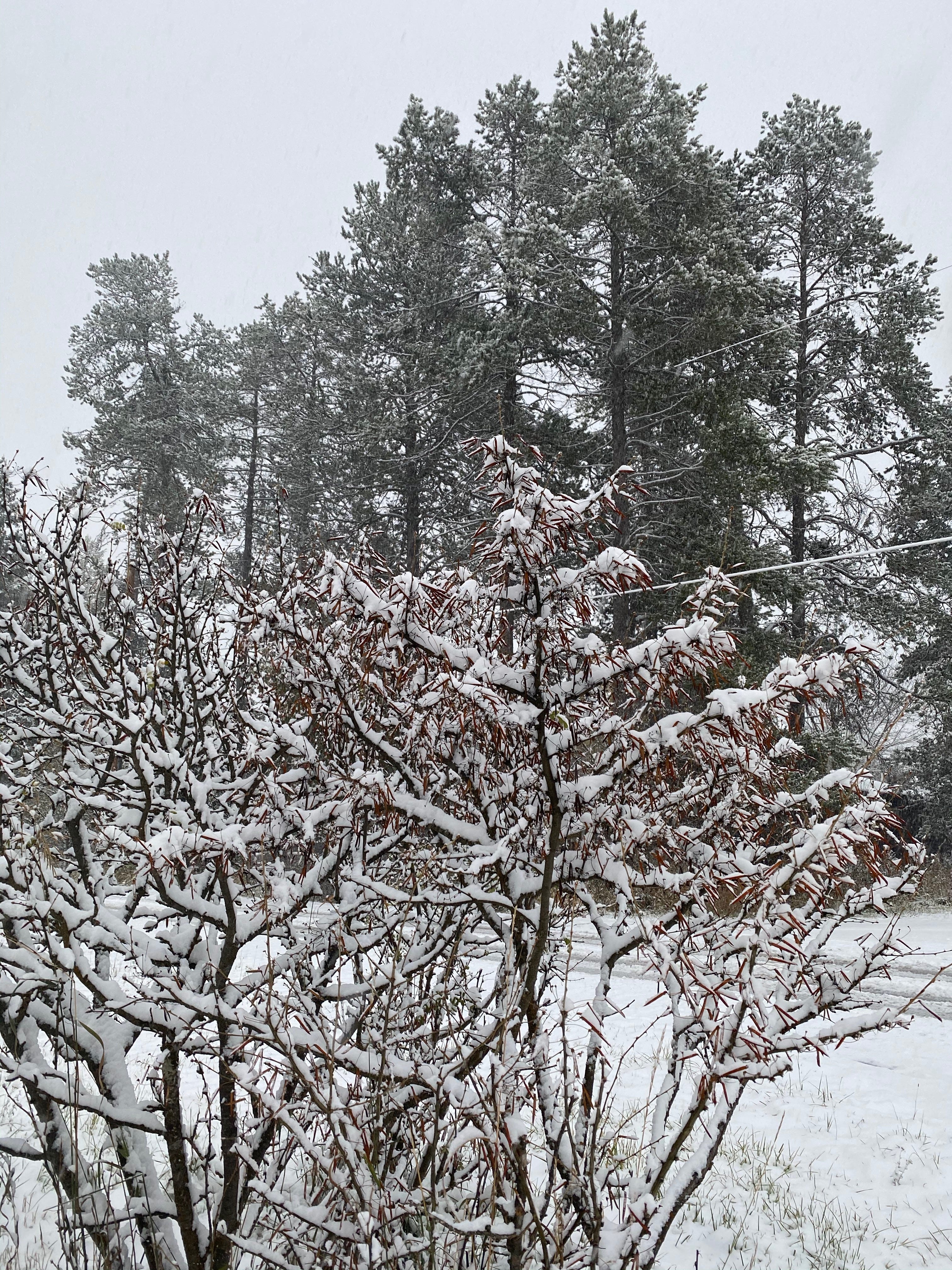
It snowed, finally, on Sunday and it was that kind of sticky, thick snow that transformed easily into snow people, snowballs, and some magic formula that made the dog go nuts (she literally pulled me sliding down a hill trying to chase a buck). It will melt—it’s an early-season snow—but we’ll look forward to the next, and the next, hanging onto this miracle that is not a miracle because it’s just part of what makes this planet work. I love the snow, and knowing how its melting eventually trickles down into rivers in the spring that will come.

In 2016 about this time I kept bringing up a line someone had said at an artist’s residency I’d recently attended: “We are practicing the deep ethics of optimism.” I kept wondering what that really meant. I’m still wondering.