The North Fork of the Flathead River, northwest Montana.
A few days ago, I was sitting by this river, near a U.S. Forest Service cabin where I went recently for a sorely needed offline, off-grid, off-network recalibration. It’s been too long since I sat in the woods by myself for a few days.
Late October, the larch trees have yellowed, turning mountainsides bright and the woods full of unexpected sunshine even on gloomy days. Larch in autumn is a spirit-lifter, an anti-demon spell, a joyous shaft of light when the world is shifting dark.
It snowed the first night I was at the cabin. I trekked down to the river carrying my coffee the next morning before sunrise, happy despite knowing that in my rush to pack water, food, sleeping bag, and books, I’d grabbed a coat too thin and decided against snow boots—a mistake and I knew it, as the hole in the sole of the thin canvas shoes I’ve been intending to replace reminded me.
Ravens flew down the river and high above the trees, more than I usually see at this place. I could hear more further off in the woods and wondered what was keeping them so social. I wondered that for the next three days and never got an answer. They sounded not anxious exactly, but somewhat like me getting my stuff ready to stay in the woods and my kid packed up to stay at their dad’s: busy, harried, organized but frazzled.
The river at that spot is wide, its rapids gentle but the rushing tumble of water strong enough to be heard a long way off.
I watched some rapids tumbling around opposite bank from where I sat, the burble and leap over hidden rocks tricking my mind into thinking they looked like two otters playing in the water.
Wait, I thought. Those are two otters playing in the water.
I recently spent several days pitting, pureeing, and dehydrating a vast amount of plums picked from a friend’s trees—trees so heavy with fruit that after an hour of filling my bucket, the branches looked untouched. My friend had already picked and dehydrated his own many batches of fruit leather from his other trees, which ripen earlier, but I’d been too busy with the rest-of-life, the crises and plans and bureaucracies and commitments that translate into too little time in the garden and out foraging.
But this one bucket made it into my home, my fingers purpled dry by the slicing and pitting and feeding to the blender—a many bladed monster that, as I texted to the friend I’m renting a furnished house from, looks like something from a horror movie.
In the kitchen now is enough fruit leather and dried apples—from another friend’s August generosity—to see my kid and me through the winter if we’re not too greedy.
How does one get that way? Too greedy. Or perhaps the question is, how does a human, or a whole society of humans, lose perspective on what is enough?
From fruit to food
I recently finished Caroline Dodds Pennock’s book On Savage Shores: How Indigenous Americans Discovered Europe, and in it Pennock described briefly the value of cacao beans in Mesoamerica in the late 1400s and early 1500s, which were a form of wealth: a turkey egg or avocado could cost three beans, a small rabbit thirty.
Only the very wealthy could feast with gourds of cacao to drink; when resource-hungry European people came, claimed, and took, they took so much that even just reading about it felt like watching land being actively drained of life: gold, emeralds, brazilwood, cacao, people.
And yet, as many Indigenous people of the time noted after having spent time in the “noble” houses of Seville and Lisbon, no matter how much wealth was siphoned from their homelands, it did nothing to change the circumstances of ordinary European peoples. The poverty of the majority of people’s lives was often remarked on, especially when contrasted with the opulence of royalty and their hangers-on.
How much is enough?
What breaks a belief in kinship and reciprocity—how does one lose the knowledge that it is mutual care, not taking more for ourselves, that gives the best assurance of security?
I’d like to have a functional health care system that doesn’t bankrupt people, and to not worry about food and housing, but beyond a certain point can’t imagine an amount of money that would replace the kinds of relationships woven among people, and between humans and ecosystems, inherent in nature sharing gifts so wealthy that even multiple families can’t use them all—like my friends’ plum and apple trees, or the potatoes and strawberries I grow, or the wild huckleberries throughout the nearby mountains—and in people sharing them with one another.
Maybe “enough” is forever undefinable, guided only by that clear thread of relationship and reciprocity, of what keeps life life-ing.
There were in fact two otters in the river. I watched them for a long time, absolutely filled with delight. They tumbled and rolled upstream, all along the far shore, their sleek bodies and tiny whiskered heads popping out of the water every few seconds, their slim tails flying up to dive back down.
I wanted to step into my real skin, like a Selkie, and swim across the freezing water to join them. I wanted to not feel the frozen ground so acutely through my thin-soled shoes, to be indifferent to the bite of chill wind through my inadequate coat. I wanted to dance a song to Moon that night and to know each Raven by name, and to soar with the Bald Eagle who circled over the river downstream, toward the new-snowed mountains.
I wanted these minutes to be my entire life. I was, in fact, greedy for them to last forever.
Lower Two Medicine Lake, Blackfeet Nation, Montana, host of the 2025 black/death metal music festival Fire in the Mountains
Some years ago when I still lived I upstate New York, I began working at a sawmill. I had two very small children at the time, and had never intended nor desired to be a full-time stay-at-home mom, not to mention be one and working at the same time (due to the full-time stay-at-home mom reality, most of my work happened in the middle of the night, a capacity I no longer have). But I was doing exactly that, and rapidly dying inside because staying at home with children all day is not, to put it mildly, my calling in life.
One of my kids went to part-time preschool twice a week at a nature museum, which also offered adult classes like beekeeping and wild foraging, both of which I took—out of curiosity but also to stay sane—along with rustic woodworking, an activity I’d never imagined myself doing. I am the kind of person who can’t be trusted with a table saw or even, frankly, a spirit level. The rustic woodworking artist who taught the class introduced me to New York Heartwoods, a micro-mill run by a woman (coincidentally, also from Montana) who’d bought a Wood-Mizer LT40 and specialized in milling wood from downed and diseased trees on public and private land.
Working at the sawmill a couple days a week—interning, really, since I was there to learn and wasn’t being paid—helped keep me from going completely numb, from depression and dissociation from life, and it got me into research on embodied learning, but I was also intrigued by the mill’s mission: the owner only worked with fallen or scavenged trees. The point of the mill was to introduce circularity within the wood milling system, which fit right in with efforts I’d been making toward supporting local food systems and fending off long-term despair over single-use plastics.
We worked with a lot of city Ash trees felled by emerald ash borer, and Cedar that had been cleared from farm fields. I spent one entire day planing Cedar planks for someone who’d rescued them, already milled, from her family’s farm and was making an art installation out of them.
Rescued Cedar planks, before planing down to their gorgeous hearts
Another time we spent most of a cold, snowy day dragging out enormous old beams from a fallen barn, taking them back to the mill to be sawn into boards that would be lightly sanded and used to make shelves.
Reclaiming beams from a fallen barn. That’s me in the blue coat and black hat, sometime right before or after I punctured my leg with a 100-year-old nail and went to get a tetanus shot. Photo credit: New York Heartwoods.
The mill’s shady, forested yard was full of beauties, every one of them cared for, whether already milled and kiln-dried or not. I don’t ever plan on moving away from Montana, whose forests are full of soft-wooded Pine and Fir, Aspen and Spruce, but do sometimes miss working with hardwood.
One day, we were milling reclaimed beams from an old barn for a client. Old barn beams are a pain because they’re often full of nails—long, heavy, rusted nails that are hard to spot. We ruined a few blades as hidden nails made it through and wrecked the metal, and finally gave up. That barn beam went back to its owner, or maybe to a scrap pile, joining the piles of beautiful wood resting around the property, testimony to one woman’s commitment to making sure their lives continued.
Barn beams can be a nemesis, too
It only occurred to me later to wonder why we hadn’t taken the time to look for and remove the nails ahead of time, why we sacrificed several saw blades and in the end the beam itself rather than take the time to remove as many nails as we could find and make the wood workable again. It obviously would have been a waste of time, but then again, the entire endeavor could be classified a waste of time, if all we use for measurement are the standards of capital and efficiency.
A couple months ago I succumbed to the urge to crawl through all the essays and posts in this newsletter, starting from the very first essay in late summer 2020, about Marcus Aurelius and my own cognitive disconnects around the U.S. invasion of Iraq, when my older sister was still in the military.
I ended up deleting almost 200 out of nearly 300 essays and posts. Some were from before Substack launched its Twitter-like Notes platform, and were brief photo + quote + sentence or two “walking compositions,” a practice I’d migrated over from my deleted Instagram. Many posts I thought were pointless, and others need more revision work. The ones I kept, I’m slowly revising and recording audio for, since I only started doing audio versions in late 2023 (I’ve made my way through nearly 20, starting from the beginning).
This was actually a super fun process. I played around with my work, scrawling all over posterboard with Sharpie markers, in a way I haven’t in years.
Many of the posts and essays I deleted, I saved in offline Word documents, collecting them by theme. By far, the largest of these collections is one I’ve labeled “Abundance and Commodification,” with over 40 pages of text. Some of what I’ve rewritten here about my time working at a sawmill are lines scavenged from that document.
Out of all the writing I do on the commons, the complementary topics of abundance and commodification—of food and seeds in particular, but of everything in general, including labor, creativity, and ideas—overwhelms the amount I have written about land ownership, which surprised me because I feel like I never shut up about land ownership, and repeat myself to a tiresome degree.
Something about rereading all of those words and stories, and collecting together the ones that I felt needed more editing, or perhaps shaping into a larger, more cohesive project, reminded me of my faith in storytelling, how deeply I believe in its power, and in the world’s need for it. For more stories, stories with heart and truth, as many as possible from as many different perspectives as possible, especially from voices, people, and places who’ve been heard the least. Every iteration, not for the purpose of telling anyone else how to feel or what to think, but sharing the unique experience of what it is to live one’s own individual life. The joy, the pain, the traumas, the grief, the love, the visions and losses and hope.
I don’t think we can ever have enough ways to help ourselves feel what it’s like to live in someone else’s experience.
Yet it often feels like the world is awash in stories. Good stories, important stories. Stories we need to hear and stories we need to tell. Fantastic fiction that opens up possibilities for imagining different ways of living; investigative reporting that unfolds the truth of the world. I have been floored by the work of brilliant documentary filmmakers, by novelists who are bona fide geniuses, many of them personal friends.
And what changes?
It is very easy for the path opened up by that question to lead to despair. I’ve been there myself more than once—I’m there myself more than once on any given day, and I don’t think it’s solely a genetic half-Russian Jewish fatalism. It’s looking at the world, and humans, as clear-eyed as possible. It’s seeing people I believed in and trusted coopt genuine need and good causes for their own benefit; it’s seeing the hard work of millions crash against the walls of capital and power.
But down that path is also possibility. My father used to say, and still does, that the biggest problem in the world is lack of imagination. He meant a capacity to place ourselves in other people’s lives and experiences, a capacity for empathy. It’s both true and bigger than that.
Every story shared is a chip in the systems and structures that seem unbreakable and insurmountable. Most of the time we don’t see what’s changed until long after the fact. Real life isn’t a Hollywood apocalypse movie with sudden shocks to the system and people screaming for the walls. We’ll never know what cracks it all open. But those stories, that work, looking at life slant and seeing what can change, that’s how the light gets in.
After taking my first rustic woodworking class, I couldn’t get enough of working with the diversity of hardwoods that grow and fall in the U.S.’s northeast. I learned about the different high-end uses of varieties of Maple, and how bad Black Locust smells—there is no other way to say it but that Black Locust smells like ass—but also how useful it is. Black Locust is so hard that it can be used in decking. It’s like cement board.
I learned how bacteria and fungi cause spalting and how beautiful its black lines are lacing through decaying stumps or sawn boards. In midwinter, the mill’s owner sent me on a day-long chainsaw safety course, where, after several hours of learning to care for chainsaws and safety equipment and looking at photos of people who’d had horrifying accidents, I stood in knee-deep snow and cut down a Pin Oak. I decided I never wanted to use a chainsaw again because I am clumsy and it was terrifying.
The entire project of New York Heartwoods was at core anti-capital. It was inefficient, time-consuming, space-consuming. Slow. Laborious.
It was an enormous amount of work simply to find markets for the wood products, much less retrieve the trees and logs and mill and kiln-dry and shape and sand it all. That entire day one employee and I spent planing someone’s recovered stack of Cedar planks? The client probably could have bought something similar from IKEA for far less money than that day’s labor cost. Even though I was working at that sawmill for free, nobody else was.
But that’s the point. The work was slow and laborious. And smelled heavenly. I could eat my winter-cold sandwich on a stump of spalted Sugar Maple and smell the melt-snow damp of coming spring. I could peek into the kiln and its stacks of Ash boards. I could do work, and feel alive while doing it.
What does efficiency in our lives get us? The question sits like an invisible monster in the center of capitalism: if “the economy” isn’t there to serve human and ecological well-being, what is the point?
If working with wood by hand gave me and others pleasure and satisfaction, and gave clients connection to their ecosystem and its cycles, why not engage in that kind of work? And why are we prevented from doing that work simply because it doesn’t provide enough income to feed our families?
It’s the reason I recommend reading Wengrow and Graeber’s book The Dawn of Everything as a balm for despair. Or at least listening to interviews about it, or reading summaries. Whatever works. It’s an enormous book and what’s important is the message behind it: there have been countless ways of forming human societies over the past several thousand years. Just because our current industrialized culture feels like some kind of inevitable endpoint doesn’t mean it’s true. Those endlessly varied histories remind us what might be at the core of true freedom.
It also gives an opening into that question, “What changes?” Well, a lot can change. We never know how, not completely. Working toward change for the better doesn’t guarantee success, nor does it guarantee lack of pushback, but without stories we don’t even know how to imagine something different.
I heard someone recently—one of the tarot readers I follow on YouTube—talk about leaning into fear with curiosity. Despair, too, I suppose. That’s where we can find self-empowerment, and perhaps an entirely different way of perceiving both problems and possibilities.
Like in K-Pop Demon Hunters: perhaps a failure to seal the Golden Honmoon isn’t a failure at all. Maybe it’s a way to discover something more powerful and more honest, with a capacity to connect us all.
Me making a bowl out of discarded Maple and an axle grinder in the workshop of Dan Mack, rustic woodworking artist, where I found something akin to hope, by working with my hands at one of the lowest points of my life.
To new subscribers—welcome to On the Commons! To those of you who’ve been around a while, welcome back!
I recently wrote an essay for Psyche/Aeon’s “one thing that changed me” series that’s probably the most personal thing I’ve ever published. If you came here from that essay, I’m very glad to see you here. This newsletter is generally not the space for that kind of personal essay, but I hope you’ll give it a try and explore what it means to be part of a commons—including our relationships with one another.
From the steps under the footbridge. People have also installed rope swings below the bridge’s jumping-off point. This bridge, this river, the way people relate to it with joy — to me it’s the epitome of the commons.
“Ma’am, watch this.”
Two teenage boys stopped me on the footbridge, right where they’d been jumping into the river. One of them was about to attempt a backflip off the railing, and the other was betting it would turn into a belly flop.
I stopped, and thought briefly of my father’s childhood stories—growing up in Leningrad (now called St. Petersburg) in the Soviet Union, he and his friends jumping (illegally) from a bridge into the Neva, near the Peter & Paul Fortress. Living under a dictator, a life structured around fear, rigid rules, almost nonexistent interpersonal trust, and waiting in hours-long lines for bread. And still, laughing, challenging one another, unwilling to resist the lure of the water.
The cathedral at St. Petersburg’s Peter & Paul Fortress; my father and his friends on the banks of the Neva.
The boy jumped, did not belly flop. “That was actually pretty cool,” I agreed with the other kid, and went on my way.
I’d been sitting at the other end of the footbridge for a while, on new stone steps that the city had just had put in to make access to the river at that spot easier, and to repair the worrying degree of erosion from years of people walking up and down the slope. Although there are easier access points and several public docks all along the river, the ends of the footbridge see heavy use, people drawn down to the water with dogs, with kids, with themselves.
But it was a steep slope and slippery from time-ground dirt eroding away from the bank. In ten years I’ve gone down to the water at that spot maybe two or three times. In the week since the steps were finished, I’ve been down them, walking into the water, sitting on the lowest steps doing nothing, almost every day. The steps didn’t change how I relate to the river—I visit it at plenty of other points that have gentler slopes and docks to sit on—but they did transform my relationship to it at that particular point. I feel invited now to sit with the water, drawn to greet it. From what I’ve seen, a lot of other people do, too.
When I was a teenager—over thirty years ago now; I’ll be fifty in less than a year—this river was not one people swam in. My younger sister says she used to go in, but it wasn’t common. It was so polluted, so contaminated from nearly a century of pollution leeching from the rail yard’s containment ponds, that in decades past it used to catch fire.
In 2009 a years-long Superfund cleanup began on the river, which runs wide and slow right through our town from its outlet at the lake, eventually down to Flathead Lake, all the water collected in this basin eventually funneling out to the massive Columbia River watershed. Superfund, for those outside the U.S., is a designation implying a degree of pollution that might take decades, more likely centuries, to repair.
The first time I visited the new steps was with a friend who was in charge of that Superfund cleanup. Like many of my friends, her work —cleaning up oil spills in rivers for the railways—is far more interesting and important than mine.
To remedy the extensive contamination, the river was drained completely. Blocked at its outlet from the lake and the water removed. I’ve seen pictures but hadn’t moved back home by then. It’s hard to wrap my head around the enormity of the project.
Location of this river cleanup photo is approximately from where the same footbridge is located, dated 2010.
In late 2014, the year after the initial cleanup completed (there have been small leakages and spills since then; the rail yard area remains a Superfund site and the river will likely always be at risk), a several-mile stretch of the river was designated non-motorized. Now, as soon as winter begins to loosen, the water is popular for paddleboarding, kayaking, swimming, jumping off the footbridge at that one spot where the water’s deep enough to do it safely for most of the summer, and now, with the new steps down to the water, for those of us who simply want to sit by it, let it welcome our feet and our thoughts. An invitation to rest.
The river will never be the same as it was before the rail yard was built and contamination started to seep into the water, at least not for generations beyond count. Not everything can be fixed. But that doesn’t mean it’s impossible to repair.
The new steps, like someone’s opened a door wide into a world that was always there. (This slope was too steep to make wheelchair-friendly, but other public access points along the river are more accessible.)
Recently, the novelist and physician Abraham Verghese came to give a talk at our local community college. The region I live in is not, to put it mildly, a place where people of that stature and renown come to speak. We might never get to listen to someone like him again in person, but the hospital sponsored the talk (a friend quipped, I’m sure rightly, that it was probably cheaper than doing what they needed to be doing, hiring more nurses), and it was close to sold out.
Verghese was a generous and thoughtful speaker, full of compassion and insight. Before answering questions from the audience—packed with people who worked at the local hospital or their relatives, including some of the friends I’d gone with—talked about his childhood in Ethiopia and the books that shaped who he became as a writer as well as a doctor.
And then he spoke about being a doctor serving HIV/AIDS patients in Tennessee in the early 1980s, when HIV was terrifying and unknown—it hadn’t even been labeled human immunodeficiency virus (HIV) yet—and had no treatment.
It was at that time, he said, when he began to understand that, for all the medical profession’s fixation on curing illnesses, there is an equal or perhaps even greater need to understand what “healing” means. There was no cure for his HIV patients at the time. The end was known and usually not far off and involved a great deal of suffering. But that didn’t mean he couldn’t work with healing, for them and their families.
I’ve been thinking about that ever since—curing versus healing, along with Verghese’s calm, generous presence with this tired audience tucked into an often huffy, even angry, and stunning little corner of Montana.
I think it’s what I want to say when I talk so often in this space about compassion and caregiving, whether it’s in our interpersonal, private relationships, or with the world at large. Why the ethos of “burn it all down” makes me chafe, knowing as I do—and most of us should—that when worlds fall apart, those who suffer most are those who are already suffering most, those who always have suffered most.
Dismantling structures of oppression and violence requires building and repairing alongside collapse, lest we simply allow the same harms to grow in the ruins. Not easy. Still necessary.
It made me think of Chloe Hope’s work—as an end-of-life doula and carer of baby birds at a wildlife sanctuary—and her writing at Death & Birds. What is at the core of life in the end but death, and the compassion and care that is its cosmic twin? But also of Sarah C Swett’s regular journeys with milkweed and mending on The Gussett, which fascinate me, as if her foraging, spinning, and weaving represent a life I was meant to live, the ways that nature can be literally woven into our lives if we learn how, and allow her to do her work.
Heal. Mend. Repair. So many words we have to acknowledge damage, and what we might attempt to soothe the harms that linger.
As a handful of people here already know, I’m in the midst of a marriage dissolution that is almost finding its way to an ending, which of course for both me and my spouse will be another beginning. It’s been a slow, painstaking process focused on prioritizing our two teenage kids, and repairing of friendship and a different kind of partnership after 26 years of marriage. It surprises me with a shock of gratitude on a regular basis that we’re able to do this with a focus on mending, rather than rending one another apart. (That’s probably the last thing I’ll ever say on this subject except that it’s amazing to be able to make a legally binding commitment essentially as a child that requires a career in accounting and a PhD in psychology to undo.)
To be surrounded in life with people who heal, whether rivers or relations, animals or animosities, is a kind of magic. I’ve learned the hard way that not all those who speak with reverence of the importance of relationships think it’s equally important to live by it, and am all the more grateful for people who live true to those expressed values.
The first time I sat on the new river steps by myself, one warm evening after a busy day, there were no other people nearby. I allowed myself a tiny proprietary twinge because, although I recently gave up my seat on the town’s Board of Parks, I was there for the years of planning and permitting of these steps and it felt good to know I’d been a tiny part of something built for the good of the public, a miniscule contribution to repairing our local commons.
A yellow warbler sang from a willow tree draped over the water a little upstream. The particular psithurism that comes from a breeze catching on the branches of lodgepole pines and larches drifted from the opposite bank.
I wish I could bottle that sound for people, or record it effectively. It fills me with a feeling that change is coming. It always has, ever since childhood. There is something about the way the needles of those trees shatter the air, maybe, that gives it a different sense than wind among aspen leaves, or old oaks. Something . . . impending.
Sometimes—or in times like our own, often—it feels like forces of destruction, greed, hate, and even evil are insurmountable. That nothing good can be saved, nothing can be repaired.
But my town, my wider region, is full of people doing their utmost to repair the commons. People dedicated to affordable housing efforts, to the seemingly neverending struggle for a county-wide bike and pedestrian trail system, to building places for homeless people to rest and feeding the hungry, to cleaning up rivers and lakes and restoring wildlife habitat, to helping refugees find homes and settle into this winter-shaped, sometimes strange place.
There are so many people everywhere working to fix the wounds of the world, knowing that pain and scars will remain.
The river that I’m now spending a lot more time in has a long way to go in repair. Though it’s designated endangered bull trout habitat, there are almost no fish in it except for a few bottom feeders. I like watching them; they’re a reminder of how far the water has come from the damage inflicted on her slow current.
Not all can be cured. Maybe nothing can. But the potential for healing is infinite.
I live in a train town with a gorgeous sky. It’s endlessly interesting. Came across these cars full of crushed scrap metal while on a walk with a friend.
I used to love crossing borders. When I was young, they smelled of adventure and exploration, of languages I hadn’t learned and could tune my ear to, of foods like a book to be tasted instead of read. I still remember the first time I managed to say “thank you” correctly in a small town in Turkey; and plunging my wrists one summer day under freezing cold fountain water on a hill outside of Budapest, where the heat felt like it might crush me and our friends woke us daily with tiny glasses of espresso and brandy.
To hand my passport over to a border agent once brought a tiny thrill. To a person brought up in a small Montana town where daily rhythms were determined by the train howling nightly as it passed by the Con Agra grain tower and the church bells I sometimes got to pull after Sunday school, borders were to enter a world unknown, a world made large.
Borders haven’t felt like that in a long time. When my spouse and I prepared to move to Australia from Austria, I was 22 years old. We spent exhausting hours at the Australian embassy in Vienna filling out forms and answering questions and submitting to lung X-rays to check for tuberculosis and compiling massive customs forms in two languages for our scant two boxes of belongings. We flew out on my 23rd birthday, which in Australia time had already passed. My spouse had a job in Sydney, which was why we were moving; my first three months in the country were a slog of employment applications and residency requirements and trying to find out how to get a birth control prescription. Living there had its wonderful moments—most of them spent in the ocean, though I maybe wouldn’t count the ocean moments trying to avoid bluebottle jellyfish—but those were wonderful despite the border and residency struggles, not because of them.
Last year, I spent a few days in Canada cross-country skiing and cooking with some longtime friends. I have lived in proximity to this border, between America and Canada, for almost the whole of my life. The closest crossing to me is an hour’s drive from my home, and I’ve driven over it so many times it’s as familiar as the footbridge I usually take to walk into town.
It wasn’t that long ago—only decades, and what is that in geological time? not even a fingernail’s worth—that other friends and I would get the idea to go to Canada at some stupid hour of the night just to jump into a lake we liked visiting. We didn’t need passports back then, and the border guards were mostly bored.
Going to and coming back from Canada with my friends last year involved little stress. We presented our passports or passport cards. I, as the driver, answered questions about alcohol, drugs, tobacco, and weapons in the negative or semi-negative as not all of us were non-smokers. Our carful of mothers in their forties was waved through easily.
And yet there was nothing about that interaction that didn’t put me on edge, nothing about it that didn’t remind me of threat, of what can be denied. If not denied to me personally, to plenty of other people who have just as much right to traverse this man-made barrier as I do.
The entire interaction of crossing the border, beginning with the slowdown to the border gates and the scramble of finding passports, and through the questioning that brings up vivid memories of previous border crossings involving full-on stripped-out car searches and quizzes split between me and college boyfriends about what color our toothbrushes were, makes obvious the crushing power of borders. They are arbitrary yet all-powerful creations of nation-states, creations that have no recognition from water, air, rock, wildlife, or human relationship, yet maintain the say of life, death, and the birthright of wandering that belongs to every human being even if it’s denied.
Borders have the power to strangle our travel, our relationships, our communities, and our work. They impart the conviction that anyone on one side of a border or another has the power to judge, to condemn, to dispense death.
My friends and I were just going cross-country skiing as part of a tradition to celebrate one person’s birthday. What if we’d been fleeing genocide? What if our entire personhood were suddenly made illegal?
My paternal grandparents were Jewish people in the Russian empire, subject to strict rules about religious and cultural practices, limited work opportunities, male children’s compulsory conscription into the military (as young as the age of 9 depending on the tsar), and, like in much of Europe, forbidden from owning land. Not to mention being confined to living in shtetls within the borders of what was called the Pale of Settlement. My immediate family history is defined by who is allowed to live, work, travel, and wander, where.
To show my passport and be waved through a border says everything about the kinds of freedoms I have, and how easily they can be taken.
When I published the original version of this piece, Kristin DeMarr left a comment that included a link to an essay on borders I hadn’t read before, by Leslie Marmon Silko, whom I’d always only known as a fiction writer.
“I will never forget that night beside the highway,” Silko wrote.
“There was an awful feeling of menace and violence straining to break loose. It was clear the uniformed men would be only too happy to drag us out of the car if we did not speedily comply with their request (asking a question is tantamount to resistance, it seems).”
Silko wrote that essay in 1994, of a border—in the U.S.’s southwest—that has been increasingly militarized since at least the 1980s. Over half of U.S. citizens live within the jurisdiction of border patrol—which was extended in the early 2000s to cover 100 miles within any land or maritime border. Consciousness of that barrier’s power pervades how all of us behave and perceive ourselves and our freedom to varying degrees.
Shaina Fisher Galvas wrote a small poetry collection on borders last year, partly in response to that borders essay but unfolding out into ideas of perception and belonging, the way that borders of the mind and body spill into each other.
“The mind constructs borders but bodies cross them.”
she wrote in the poem “Border stories.”
Borders are physical, but they are also psychological and emotional. There is a great deal about my life and myself that I don’t include in this newsletter because doing so could have consequences that would make my life at best difficult. I don’t include yet others because they are not my stories to tell. Those are borders I mostly created and maintain myself. I will dismantle them when I feel ready, which is probably never.
Borders are social and cultural. When I enter a mosque or a Russian Orthodox Church, I cover my hair. When certain people come into my home, I take down and hide the sign above the coffee grinder that reads “Keep Your Fucking Shit Together” because I know it would offend them. I don’t walk through other people’s yards even though I don’t believe that private property boundaries should exist.
My views on the importance of free speech are boundaried by the reality of its lack for the half of my family living in Russia, but also by an understanding that words can cause just as much harm as physical violence, a perspective that puts me strongly at odds with an absolutist view of free speech. (I wrote about my town’s experience with neo-Nazi troll storms, including some of the messages I received personally and what effect it had on me, here.)
My stepbrother and his family weren’t able to come camping with us the past couple summers because they are Russian and can’t readily leave a country that’s been waging war on a neighboring one. They, and my cousins, friends, and other relatives in Russia, can disagree with the war all they want, but the border created by geopolitics doesn’t care what they think, or desire, and it’s illegal for them to say anything about it publicly.
These are very different kinds of borders with vastly different consequences. Not all of them require a passport; many of them still require a form of passing, or of shaping oneself to accepted expectations.
One of the books that I’ve learned most from over the past few years is Harsha Walia’s Border & Rule. Since reading it, I’ve watched several of her online presentations and webinars, and am often inspired by her expansive view of what borders are, what they do to us, and how dismantling them requires also dismantling the systems of oppression that they enable, as she wrote about in this interview:
“A no border politics is expansive. It includes the freedom to stay and the freedom to move, meaning that no one should be forcibly displaced from their homes and lands, and that people should have the freedom to move with safety and dignity. Those two freedoms may seem contradictory, but actually they are necessary corollaries. The crux of a no border politics is nestled in the broader politics of home. How do we create a world where we all have a home?”
It’s an answer to something brought up repeatedly in Karl Widerquist and Grant S. McCall’s book The Prehistory of Private Property. The essence of freedom is contained in the answer to one question: Can you leave?
Can you? Can I? Could I just pick up and walk north until I reach the border and then, like the rivers that run down from Canada full of selenium pollution from coal mining, ignore it?
The answer is no, obviously, and it might serve us all to ask more frequently why not. What borders constrict our lives and how much of a choice we have in their construction and enforcement.
When I lived in Austria, I had to apply for a meldetzetl, a residency visa for foreigners. To get it, I had to go to a special foreigners’ police station. I had lived in the country for two months and had been taking intensive German lessons for two weeks. I arrived in good time for my appointment, only to find that nobody there spoke English, or in fact any language other than German. At the foreigners’ police station. The officers ridiculed and belittled me in words I barely grasped, and told me to come back with a translator.
I was 22 years old and had used my last speck of savings from waiting tables to pay for a root canal at the dentist. I was scared and sad, but had a multi-lingual friend who worked for the BBC and came back with me to translate and also threaten the police with press exposure if they didn’t follow their own damn rules. I got my residency visa purely because of her.
Within a couple years after the September 11th, 2001, attacks in New York City and elsewhere, my spouse and I were stopped by border patrol about 70 miles from the Canadian border. My spouse, who only became a U.S. citizen a few years ago, is English. Our friends who were going hiking with us were also stopped. The wife was American, while her spouse—one of my husband’s oldest friends—was from Northern Ireland. We were taken to an immigration center, sat down with a whole lot of other people, and told in no uncertain terms that the males of our parties, the non-American spouses, could be deported immediately because they weren’t carrying their identification and green card papers.
The border agents were dead serious and it was scary as hell. Close to that time period, a colleague of my spouse’s avoided her own husband’s deportation by moving back to her country of birth—she was Japanese and her spouse was Italian; the renewal of his U.S. residency visa had been denied and for neither of them, suddenly, was it possible to live and work on land where cranberries grow and turkeys roam wild and where they had employment.
The land had no judgment of them, but the political regime most certainly did. He had to leave the country within ten days of his visa denial, and so they did. Permanently.
I look back on all of these interactions, and more, like the innumerable run-ins I’ve had with the police in Russia trying to get a bribe out of me, and see a world laced with borders. Borders are not, as Harsha Walia wrote, “fixed lines simply demarcating territory. They are productive regimes firmly embedded in global imperialism, and border controls exist far beyond the territorial border itself.”
Coming back from Canada last year, my friends and I passed several herds of grazing bighorn sheep, and slowed for a flock of pine grosbeaks reluctant to leave the road. We got through border security easily, drove forward, and then paused to debate if we were allowed to go back and ask the guard about using the bathroom. We were allowed, but sat there for a minute literally asking one another, “Do you think we’re allowed to go back and ask him?” with an undercurrent of uncertainty and fear created on purpose by the psychological architecture of the place.
My younger kid and I recently spent a few days in Canada for their spring break, in a small town similar to our own where we did little but walk by the river in between sitting in a coffee shop reading books. Our border crossings were uneventful and took seconds. That same week, my kids’ father and our son were crossing the border with Canada by train and bus north of Seattle; their experience in both directions was harsher.
Borders are physical, social, cultural, and emotional, but what they are most is a form of power. When I hand my passport over, it’s with the knowledge that my freedom to go, to wander this Earth and love it freely, can always be denied.
I encourage people to go back and read the comments in the original version of this piece from last year, the range of chilling and threatening experiences people have had crossing, or trying to cross, borders. Share your own here. Read one another’s. This is an experience that affects everyone, even those of us who think we have the privilege to remain unaware until something happens.
This is a reality I’ve lived with my entire life—my father grew up in the Soviet Union, a country he was not allowed to leave for a long time. When he was finally given permission to emigrate with my mother and older sister, both American, he was given 3 days to leave the country and told not to return. He was almost 30 years old. He lived in exile for 17 years and never saw his own father again.
The original version of this essay probably had the most comments of any I’ve written on this platform, which longtime subscribers know is saying a lot, and it’s not without reason. The experience of borders is like air pollution full of poisons and invisible heavy metals, seeping into every aspect of our being.
A world of boundaries and respect, but no borders, could truly be one where traveling smells of freedom, a way of being in a world that can be read and known through our footsteps, this shared planet the only true book, one to be experienced rather than read, and whose air shifts like poetry as we traverse every curve of her spine.
Early morning after nearly 36 hours of rain at North Birch Creek in the Bob Marshall Wilderness near the Badger-Two Medicine, trail crew camp, August 2023 (my tent is the green one)
The following is a reprint of my essay “Trespassing,” published in the Air volume of Elementals, a new anthology from the Center for Humans & Nature.
It was late September, and the aspen trees were just beginning to yellow. They grew thick on the hillside, a broad grove giving way to small meadows that sloped upward, transitioning after less than a mile to heavy stands of spruce and pine. The group I was with rambled along an old logging road just south of the eastern side of Glacier National Park while a biologist among us talked about the ecotone we were walking through: a mingling of prairie and forest that stretched all down along the Rocky Mountain Front, the eastern-facing slope of the Rockies, where the mountains spill onto the prairie. A light wind blew constantly.
As we left the aspens and walked into evergreens, the wind became a whispering—psithurism, a sound that’s like a rustle and a shush at the same time. That sound characterized almost my entire Montana childhood, but I never consciously noticed it until a few years ago, shortly after moving back to my hometown. One day, a few months into my return, I was walking home through town and stopped to listen to the wind blowing through a stand of tall lodgepole pines bordering the path. That sound, I thought, remembering its company in the Rockies on many a family hike that I had dragged my feet on as a child, and later on treks as a teenager with friends. That sound is home.
***
The place along the Rocky Mountain Front I was hiking that late September day is a two-hour drive east from the valley where I grew up. In another region, it might not be considered anywhere near my home. But this is the American West: expanses are vast, yet their very vastness and sparse human population are part of the intimate familiarity that welcomes those of us who live here. Montana is often called a “small town with very long streets.” The psychological network of what I think of as my homeland encompasses the Rocky Mountain Front. For a white settler like me, a fifth-generation descendant of Montana homesteaders, the question of homeland and belonging is constantly shifting. But there is one constant: wherever my feet happen to be, my heart has always longed to be right here, among the cold mountains and prairie grasses.
Hiking along the prairie-forest ecotone, every aspect of the air felt like home—the smell of pine, the sound of wind in the evergreens, the way the sun was almost warm enough but the air kept me chilled. That same air had wound itself eastward from the valley I live in through a pass in the Rockies and unfurled here, to race down the foothills and speed its way across the prairie and farmland to the little agricultural town of barely two hundred people where my mother is from.
Although I never lived in my mother’s hometown, or even on the kind of spread-out farmland she knows so well, the air of her childhood landscape calls to me almost as insistently as that of the stream-saturated peaks I was raised in: I can smell it now, sitting at my desk on the other side of the Rockies in a mountain valley with its different kind of big sky. I love the way virga strolls across the miles of prairie and farmland like it’s got all the time in the world, how I can watch it for hours, how my skin tightens slightly at the drop in temperature, and how I can still smell the ozone of rain’s promise, with its dust-tang, months later in the back of my nose. I can’t understand why that air also smells like home to me, why I can look at those houses surrounded by thousands of acres of wheat and feel in my gut what it is to be a child growing up with your eyes on that far horizon, nothing between you and the rainstorm but the air and wind who make constant companions. Companions who can issue either invitation or warning, for those who listen closely enough.
There is one stark difference between these places, a difference that I too often take for granted and that most people might not notice: where I live, I’m not far from access to millions of acres of designated wilderness and national forest areas and a national park, places where my feet are as free to roam as the air itself. However, when I go out to eastern Montana, my mother’s home ground, everywhere I turn is blocked by fences. You can drive for hours and see little else but weather-beaten houses huddled together on the prairie, their siding bitten with winter and the fierce, scorching sun of August. These vast counties, where you can drive past more visible wheat silos than homes and only the occasional hawk or pronghorn, are squared out and fenced off with countless miles of forbidding barbed wire.
My body can’t pass through these fences without permission, but the air has no such limitations. It’s a freedom that has an underacknowledged impact: No Trespassing signs are ubiquitous in America (in Montana, Trespassers Will Be Shot is a threat I always take seriously), yet at the same time, air pollution trespasses into our bodies every moment of the day. When I walk around my hometown, it’s impossible not to breathe in vehicle exhaust, especially on days when an inversion layer holds it close to the ground. Out where my mother’s from, on those expanses that feel like they host some of the cleanest, most unadulterated air on the planet, on any given visit I might see a crop-dusting plane emptying loads of pesticide or herbicide over the fields and still smell the strange, metallic tang in the back of my nose the next morning.
Trespass can be turned back on us. With bodies and lungs and circulatory systems porous to the air, neither humans nor the rest of life have much defense against the kinds of airborne attacks that other people have unleashed upon us. And I don’t use the word attacks lightly. Air pollution from vehicle traffic can decrease children’s lung capacity by 20 percent and significantly affect cognition in their growing brains; recently, it has been found that carbon pollution from car exhaust crosses the placental barrier and affects fetal development and even ovarian egg production in women. Living near a landfill raises a person’s risk of lung cancer due to the hydrogen sulfide that’s released from decaying trash. Fully 95 percent of the world’s human population lives with levels of air pollution considered unsafe. Air pollution is one of the leading causes of premature death worldwide.
Without clean air, humans are denied an inherent right to health and flourishing. If billionaires’ dreams of colonizing Mars were ever to be realized, the first mission, the second mission, the millionth mission, the missions for generations far beyond our imaginations would be to secure water and breathable air. Air is so vital that a common right to it was recognized in legal code as far back as the Roman Empire. “The following things are by natural law common [to] all—the air, running water, the sea and consequently the sea-shore,” declared the Institutes of Justinian in 535 CE.1 In 1972, after decades of relentless air and water pollution, aided by political corruption paid for by the powerful men of industry known as the Copper Kings, Montana’s legislature passed a new state constitution that guaranteed a “clean and healthful environment” as an inalienable right, including the right to clean air.
Air is a shared commons: it’s an entity we all rely on for survival, and it moves freely across the world. The air I breathe that smells of dry pine needles and early snow was somewhere else a few hours ago, a few days ago, a few weeks ago. Maybe it was bringing some other hikers the smell of their own woods, or picking up sulfur dioxide, nitrous oxides, and soot from a coal-fired power plant, whose particulates are now seeping into my lungs, unasked for and unwanted on a cool September day. We all depend on and all share the air, and yet the ability to pollute it is treated as a private property right. Legal systems around the world make air the recipient of industrial waste; in turn, that means that all of us are, too. Air knows no international boundaries, and neither does the pollution it carries.
When I think of trespass, what first comes to mind is the Lord’s Prayer, which I recited with my parents and sisters Sunday after Sunday in Episcopal and Lutheran churches, and often around the dinner table, throughout my childhood. The lines “And forgive us our trespasses, as we forgive those who trespass against us” refer not to who crosses whose property lines but to committing sins that the deity has forbidden. The word trespass occurs many times in the New Testament. In some translations it’s replaced with sin or debt.
Trespass, in other words, is a transgression. In the case of pollution, trespass is far more invasive than simply breaking through a property line. If I sneak through my neighbor’s yard to get to the public nature preserve on the other side, I might annoy him, but there’s no actual harm done. If my neighbor burns a pile of tires in that same yard and I don’t go near it, his waste will trespass into my family’s bodies just the same, pouring itself into my children’s lungs with the law’s consent. The polluted air has trespassed into us, but it wasn’t by choice. The first crime of trespass was against air itself. When air has been violated, it is forced to violate in turn.
***
I was hiking along the Rocky Mountain Front in late September 2022 with a group working to stop oil leases in what is known as the Badger-Two Medicine. It’s an area bordered by Glacier National Park to the north, the Bob Marshall and Great Bear Wildernesses to the west and south, and the Blackfeet Reservation to the east. The Badger-Two Med is sacred to the Blackfeet Nation. Under laws written and enforced by the federal government, it’s legally part of the US National Forest Service, but it was carved off of Blackfeet land in 1895, along with the eastern part of Glacier Park, in yet another land seizure accomplished with a deceptive treaty signed under duress, one in a long history of betrayals.
I hadn’t been to the Badger-Two Med before, although I’d been following the oil lease situation—which has been ongoing for nearly forty years—since before moving back to Montana. This was the first time I’d managed to visit it, on a hike sponsored by the Glacier-Two Medicine Alliance, which was founded in the 1980s to fight oil leases granted in the area by the Reagan administration. Most of the leases have been successfully canceled over the years, but in late September 2022, one oil company had just won a court appeal to keep its lease.2
Emerging from the aspen groves and into pines and spruce, my group walked a path that ran parallel to a buried natural gas pipeline; the organizers pointed out where a road to the remaining proposed site of the oil well would be built if the lease were upheld. A few miles further in, we would see a hillside already scarred by preparatory clearing.
It’s hard to imagine a place that feels more like the white European settler’s idea of pristine wilderness. Pristine wilderness and its ideals of unchanging purity have never really existed, of course, but perhaps places like this offer something better: I felt whole on that hillside. The air’s movement and scent felt like a welcome. And even though I know that there is no clean air, really, anywhere in the world—everything from dioxins to Chernobyl radiation has been found in polar ice, carried by the air and dropped even on places where few humans have ever stepped—I felt an extra surge of resentment at the thought of the trespass that would come not just from the physical invasion of an oil well but from the particulate matter, carbon monoxide, nitrous oxide, and volatile organic compounds that have been found in the air around and downwind of oil-drilling operations. At what the air would be forced to carry through no choice of its own.
***
As we walked to the top of a hillside where we could see out toward the plains of eastern Montana, the air shifted from a gentle breeze to a wind traveling east—stiff, but not quite the hard-blowing kind that is almost a constant presence on the wheat and cattle ranches that cover what’s known as the Golden Triangle, the wheat farming region my mother grew up in.
The wind blew the smells of encroaching autumn in my face, dried grasses underfoot and fecund soil under bear-claw-scarred aspen trees. The tiny bit of late-September chill reminded me that snow would be coming soon. There is nothing that smells more alive to me than that air. It feels conscious: the warm pine in summer, the tang of ice in winter, traveling down from these mountains to kick prairie and dirt-road dust in the faces of children growing up in the same tiny town my mother had over seventy years before. The heart that has always insisted on calling this place home, even during the twenty years I lived elsewhere, tells me, quietly, that this air I love in all its moods and seasons is conscious. It has a life of its own and a right to live it unviolated.
The crime of trespass goes both ways—what happens when we require the very source of life to carry sickness instead? Is this not a violation of the gods of life, of home, and of air’s own right to exist?
Acquiescence to the abuse and neglect of air is a trespass against humanity—against all of life, even against the air itself, for its own sake. Every living being has a common right to air that not only allows us to live the healthiest lives we can but also smells like pine and snowmelt, desert dust and prairie flowers, swamp grasses and moss. Air that feels like home.
Almost a year later, in September 2023 just before this went to print, that lease—the last in the Badger-Two Medicine—was bought out and was in the process of finally being retired.
Welcome! For those new here, On the Commons explores the deep roots and ongoing consequences of private property and commodification—from the Doctrine of Discovery to ancient enclosures of the commons, and more—along with love for this world and being human in the middle of systems that often make such “being” difficult.
Book update: Apologies for the continued “wow it’s been many months since I intended to have this chapter out” delay. I have taken apart Chapter 1 of No Trespassing for the fourth time, but this time because, when I was describing my difficulties with it to a friend, she gave a piece of advice that showed me what I’d been missing. It’s finally coming together as it was meant to.
New podcast interview: “Land, democracy, identity” with UK-based Future Natures.The path from writing about walking to private property and ownership, how they each intertwine and conflict with freedom and senses of identity, and how craving for land relationship can drive both love and extremism . This has been one of my favorite podcast listens over the past couple years, and the larger projects of Future Natures have become a go-to resource.
5% of this quarter’s On the Commons revenue will be given to the Flathead Warming Center, the only low-barrier houseless shelter in my general region.
There’s a place I’ve been taking my family camping for nearly ten years. It’s a campground around an hour’s drive from where I live, on the far side of a reservoir whose waters hold some fond decades-old memories of lingering with boyfriends, along with a couple regrettable memories involving fire and the irresponsibility of teenagers. (The fact that nobody was hurt aside from lost eyebrows was sheer luck.)
To get to this campground, we have to drive to the far end of the reservoir and then thirty miles along a gravel forest service road. It’s a place where every summer my and my friends’ kids stuff themselves with huckleberries and spend hours in the water and nobody can access text messages or online games, much less email. For four days or so I wake up hours before everyone else and sit with coffee and the calls of Swainson’s thrushes as Sun makes his slow way up from behind mountains so tall and close they almost feel looming (isn’t that a great word? looming), but in a comforting way, like a protective uncle.
The surrounding forest backs against the Great Bear Wilderness to the east, with Glacier National Park a little ways north. When I’m there, I manually direct my brain to these facts because for some reason I’ve never been able to understand, I feel very turned around for the days I’m there, as if I don’t know where I am in the world. It’s not uncommon for me to get lost, especially when in a city and nearly always when driving somewhere for the first time, but in non-city areas I usually have a pretty good sense of place, if not direction. It’s one of the things that makes maps so delightful, being able to trace a finger along terrain or position and feel the embodied reality of one’s own self within that represented space, feel the feet tingle in the knowing of here I am. I have a hard time feeling that sense at this campground.
For years I’ve wondered if my place-confusion there might have something to do with being on a huge reservoir. When we’re on the water, paddleboarding or kayaking or just swimming, there’s an eeriness that is unrelated to my phobia of deep water. This is a drowned river, is what comes to mind as I try to ignore the growing conviction that deep-water monsters are going to pull me under.
A drowned river. It sounds nonsensical. It’s all water. But rivers have spirit and shape and purposes of their own, all of which is smothered when a dam is built to stop their flow and extract their energy.
A friend reminded me recently that I’d been meaning to look for old maps of this area from before the dam was completed in 1953, to see where the river, the South Fork of the Flathead, flowed when she was free. So earlier this week on our way north on a day of sleet, snow, and fierce wind, my younger kid and I stopped in at the forest service’s ranger station, where there turned out to be no old maps or any idea where I might find them. But it was a slow day and someone’s interest was sparked enough to spend time poking into CalTopo online for historical maps until she found what I’d been looking for.
And there she was, the South Fork, undulating through a narrow valley as mountains spilled streams and creeks into her, receiving snowmelt and rainfall as she headed down to Flathead Lake. Next to her, the modern reservoir looks less like an expansive lake we play on every summer, less like a monumental feat of engineering, and more like many technological outputs of modern humans: a little grandiose. And temporary. The reservoir is fun—and of course it’s still water, with its own voice and energy—but it doesn’t have quite the same sense of wholeness, the this-lifeness, of the river. I look at that old map and feel oddly relieved. Like I finally know where I stand.
On the left, the modern landscape of Hungry Horse Reservoir. On the right, the South Fork of the Flathead River before it was dammed.
During the Q&A session after a recent online presentation, someone asked me about the chapter titles in my book A Walking Life—nine iterations of “Stumble,” “Lurch,” “Stride,” and so on. I don’t think anyone’s ever asked me that before, and it took me a minute to remember that I had originally used similar section headings—variations on “walk” and ideas related to it—for the first essay I ever wrote on walking, years ago, for the small literary journal Lunch Ticket, titled “Wander, Lost.”
It was in that essay that I first linked freedom of movement with freedom of thought. It was also, as far as I can remember, the first time I thought of both as, tangentially, related to the movement and constraint of rivers.
“As our freedom to walk becomes ever more constrained, as air quality and housing developments and busy roads force us to spend more time in our homes and cars, we might lose even the words of movement that reflect every land-tethered animal’s most basic motion. Ramble, meander, rove, roam, wander, deviate, digress—will they slip into disuse, become arcane ideas? As we forget that they ever applied to our physical bodies, to our ability to get from here to there or from here to nowhere in particular, will our minds lose the ability to do the same? What happens to our ideas and bodies when neither can wander aimlessly, get stuck in the mud, backtrack, reconsider, keep moving until we find ourselves in a place beyond our knowledge? . . .
. . . like a river that’s been straightened and reinforced with concrete, exploding every now and then in an anger of floodwaters but never again allowed to meander. My mind has begun to feel the same.”
I think constantly about the relationship between freedom of movement and freedom of the mind. I have an unpublished essay on the subject lurking in my files that might or might not ever see the light of day, structured around the movie WALL-E, which I’ve watched about twenty times, and it came to mind again recently when reading Thomas Pluck’s novel Vyx Starts the Mythpocalypse, as Vyx’s parents are taken by the government’s Ice Men who then stalk their path as they travel the land in search of safety, running into awakened mythological beings along the way. Control of thought—including the freedom to live as our true selves—and control of movement go hand in hand.
“Wander, Lost” also provided the seeds for the sections of A Walking Life about my father’s life in the Soviet Union and the ways in which interpersonal and public trust can make or break a society, especially when it comes to government suppression of speech and protest, and how personal relationships are weaponized in its enforcement.
Trust is, like the freedom to wander, an invisible force whose degradation can make visible the erosion of liberties to those who had always thought themselves free. What one once might have thought endless and inviolable is revealed to be that which can be taken, and lost. Kind of how degradation of a river ecosystem can’t help but be reflected in the health of every single life touched by its waters.
I’ll probably never get to meet the river buried under the reservoir we camp at. Hungry Horse Dam is one of the largest in the country, and seen as essential in a network of electricity-generating hydropower dams along the Columbia River watershed. But there’s something about seeing a map of where she was, the free river, that might help orient me next time I’m up there.
At the very least, when the kids race down to the little peninsula where they watch the sunset, I can remember that while the placidity of the water is a human-made artifice, the beauty remains wild and free, and something of the river reaches up to meet that evening glow, to say the river is not gone—her stillness won’t be forever. It might be generations in the future, but she will one day find her familiar curves, playgrounds, and resting spots again, running her way through the mountains as she was meant to. Free to roam.
If we’re lucky, someday our freedom to wander, too, will be un-lost.
On the Commons explores the deep roots and ongoing consequences of private property, commodification—from the Doctrine of Discovery to ancient enclosures of the commons, and more—along with love for this world and being human in the middle of systems that often make such “being” difficult.
Alpenglow-lit clouds at sunset, above the western peaks of Glacier National Park.
Last August I wrote about my time on a volunteer trail crew in the Bob Marshall Wilderness here in northwest Montana, about the river we camped next to and the trail we worked along, what it means to serve land and try to build a relationship with both river and Earth, and how, when I’m in areas where I have no phone or internet access, time itself becomes fluid.
“To sit on a charred log eating trail mix and hearing nothing but air in the foliage-less trees and a persistent woodpecker somewhere out of sight. To watch the light shift along those mountainsides. To spot snowberries and poke at the masses of Oregon grape, and to watch a river that slips through the valley like time itself.
Or it might be that time is slipping through us like the river. That’s what being out there does for me: it turns time into water.”
I felt that again last week, during my three nights at a U.S. Forest Service cabin I like to stay at by myself a couple times a year. This cabin is near the North Fork of the Flathead River, and ever since I started staying there a few years ago, I’ve found myself spending less and less time working and much more time hanging out with the river.
This trip, I intentionally brought very little work with me: Chapter 1 of No Trespassing, which I’m sorry to say I’m unsatisfied with, a couple of books to read, a raw essay draft I’ve been sitting on for over a year, and some half-baked ideas.
I touched almost none of it until the day I had to leave, and was okay with that. Instead, I devoted chunks of the afternoons to sitting by a fire, and otherwise spent hours by the river. A couple of hours before and after sunrise, coffee in hand, another hour in the evening to catch the alpenglow, and at least a couple hours in the middle of each day, when the sun was just hot enough to keep me from going hypothermic after (probably stupidly but I can’t help it) dipping in the freezing water.
A boulder under my head, I lay there listening to the water and an occasional robin, blinking at a dusky daytime crescent Moon in the northeast and Sun at a complementary angle, both high in the sky. Sometimes Canada geese flew over. Sometimes a thought passed through my head that I could, or should, go back inside the cabin and do a little work. I told the thought to gently carry itself off downstream.
To be completely at peace with that spot, occasionally asking the river a question, makes me wonder if it’s something of what place-time and space-time feel like if we could ever fully shake off imposed structures of time, deadlines, progress, and profit enough to find these moments of simply being. I feel like I got a hint of it there during those hours by the river, what it might be like to be wholly alive in a world that itself also feels whole, and there was—and is—nothing I want more than to stay within that awareness.
For a few hours last week I was able to fully release anxieties about being productive, getting work done, earning a living. Bundled up against the temperatures near freezing, lying on a bed of river rocks, listening to water flow—it was like a recuperation regimen for the mind. It didn’t feel lazy. It felt necessary.
In their book The Prehistory of Private Property, authors Karl Widerquist and Grant S. McCall repeatedly go back to the main difference that they see in a private property society versus one where private ownership of, say, land, much less water and food, is unknown: freedom to leave. That is, if you want to walk away from your people, or your place, can you do so and still support yourself? Can you walk away and find or make food, shelter, and clothing? In non-private property societies, the freedom to walk away and still live just fine is the norm. In private property societies, it’s almost nonexistent. You have to work to make rent. Land-rent, you might call it. Someone else owns the land, and you have to pay to live on it.
The extent to which this reality runs counter to most of our existence, even if we’re just counting the few hundred thousand years that Homo sapiens have been here and not the millions of years of hominin evolution before that, is mind-bending. There have been territories and civilizations and controlling empires for thousands of years all over the world, but for most of our species’ existence, most humans had some kind of freedom to live on, with, and from land without needing to pay someone else for the privilege of existing. Until relatively recently.
We can’t all spend our time as we would wish not just because capitalism allows a few humans to hoard an increasing amount of money and power, but because the planet’s dominant societies force land to be privately owned, and make access to food and clean water something we have to pay for. Priscilla Stuckeywrote a beautiful and very informative piece about the bizarre concept of land ownership recently:
“It’s a strange idea if you think about it, the idea that we can own land. Because land is not like, say, a shirt or a table or other objects we own. Land is something else altogether. Land provides the material that makes the shirt. Land grows the trees that make the table. Land brings forth everything—all our food, all plants and animals, all the forests and creeks. And us! Land has brought us forth too!
So it’s absurd to think that we could ‘own’ land.”
Around a year ago, I wrote about this same cabin, and explorations of time and attention, and how much I truly like working, how I could spend hours losing myself every single day in writing and research, and even copy editing work.
“I like other kinds of work, too, like chopping wood and digging in the garden and pulling knapweed and spending whole days hunting in the freezing rain, or hiking miles to spend a couple hours picking berries and then processing whatever I’ve brought home or gathered from the garden, thinking about what’s needed to get my family through the winter and early spring.
I do those things because I enjoy them and can make the time for them, but the reality is that as long as a few people at the top of the capital pyramid keep sucking up the richness of the world, including human labor and time and ingenuity as well as land and what are called ‘resources,’ none of those activities will ever amount to much more than hobbies, even for me.”
Add to that the question of land access. We have to pay to live on land, and at the same time people with far more money and resources can buy and cut off access to the lands where berries, roots, animals, free-flowing water, and trees exist. Can you walk away and survive has become, for me, a key question of freedom. In a world where you have to pay rent for your footsteps, freedom isn’t possible.
During these times when I run away from the online world and my domestic obligations, I’ve become accustomed to waking up in the middle of the night and spending some time with the stars. They were at their brightest this last week. Nights so clear it was like I was breathing a poem of air, and, with Moon setting earlier, the starscape hovered low, rich and full, our galaxy’s path clearly visible and the sky so transformed I wondered if, if every human could see the sky like this every night, smothered in starlight, we could all remember what it is like to walk among a living spirit world.
I met up with a friend a few months ago who has been through significant trauma, and now runs trauma workshops and mindfulness training. We were talking about grounding, and I told her I’d realized recently that when I feel out of whack and need grounding, the only thing that works is to put my bare feet in running water, no matter what the weather. “So you find grounding in flow,” she said.
I love that. Flow is where I ground myself, and it’s this river that has taught me that lesson most often. We should all have access to food, shelter, air, water, and medicines, but we need this, too: the freedom to find what brings us closest to home, to our selves.
I take gifts to the river when I go, and to the creek that lies hidden behind the cabin. No matter what I bring them, or how much of my coffee I share in the mornings, it never feels like enough for what I walk away with. All those hours by the river being reminded: you are alive, with all that could possibly entail if we had both the courage and freedom to embrace it, draw it into ourselves and walk out into the flow of existence we live in, remembering that time, and this water, are one and the same.
I used to love crossing borders. When I was young, they smelled of adventure and exploration, of languages I hadn’t learned and could tune my ear to, of foods like a book to be tasted instead of read. I still remember the first time I managed to say “thank you” correctly in a small town in Turkey; and plunging my wrists one summer day under freezing cold fountain water on a hill outside of Budapest, where the heat felt like it might crush me and our friends woke us daily with tiny glasses of espresso and brandy.
To hand my passport over to a border agent once brought a tiny thrill. To a person brought up in a small Montana town where daily rhythms were determined by the train howling nightly as it passed by the Con Agra grain tower and the church bells I sometimes got to pull after Sunday school, borders were to enter a world unknown, a world made large.
Borders haven’t felt like that in a long time. When my spouse and I prepared to move to Australia from Austria, I was 22 years old. We spent exhausting hours at the Australian embassy in Vienna filling out forms and answering questions and submitting to lung X-rays to check for tuberculosis and compiling massive customs forms in two languages for our scant two boxes of belongings. We flew out on my 23rd birthday, which in Australia time had already passed. My spouse had a job in Sydney, which was why we were moving; my first three months in the country were a slog of employment applications and residency requirements and trying to find out how to get a birth control prescription. Living there had its wonderful moments—most of them spent in the ocean—but they were despite the border and residency struggles, not because of them.
I have just spent the last few days in Canada, where some longtime friends and I cross-country skied and cooked for one another. I have lived in proximity to this border, between America and Canada, for almost the whole of my life. The closest crossing to me is an hour’s drive from my home, and I’ve driven over it so many times it’s as familiar as the footbridge I usually take to walk into town. It wasn’t that long ago—only decades, and what is that in geological time? not even a fingernail’s worth—that other friends and I would get the idea to go to Canada at some stupid hour of the night just to jump into a lake we liked visiting. We didn’t need passports back then, and the border guards were mostly bored.
Going to and coming back from Canada last week involved little stress. We presented our passports or passport cards. I as the driver answered questions about alcohol, drugs, tobacco, and weapons in the negative or semi-negative as not all of us are non-smokers. Our carful of white mothers in their forties was waved through easily.
And yet even to me, there was nothing about this interaction that didn’t put me on edge, nothing about it that didn’t remind me of threat, of what can be denied. If not denied to me personally, to plenty of other people who have just as much right to traverse this man-made barrier just as much as I do.
The entire interaction of crossing the border, beginning with the slowdown to the border gates and the scramble of finding passports, and through the questioning that brings up vivid memories of previous border crossings involving full-on stripped-out car searches and quizzes split between me and college boyfriends about what color our toothbrushes were, makes obvious the crushing power of borders. These are arbitrary yet all-powerful creations of nation-states, creations that have no recognition from water, air, rock, or wildlife, yet maintain the say of life, death, or the birthright of wandering that belongs to every human being even if it’s denied—they have the power to strangle our travel, our relationships, our communities, and our work. They impart the conviction that anyone on one side of a border or another has the power to judge, to condemn, to dispense death.
My friends and I were just going cross-country skiing as part of a tradition to celebrate one person’s birthday. What if we’d been fleeing genocide? What if our entire personhood were suddenly made illegal?
My paternal grandparents were Jewish people in the Russian empire, subject to strict rules about religious and cultural practices, limited work opportunities, male children’s compulsory conscription into the military (as young as the age of 9 depending on the tsar), and, like in much of Europe, forbidden from owning land. Not to mention being confined to living in shtetls within the borders of what was called the Pale of Settlement. My immediate family history is defined by who is allowed to live, work, travel, and wander, where.
To show my passport and be waved through a border says everything about the kinds of freedoms I have, and how easily they could be taken.
Borders are psychological, emotional, and physical. I don’t publish fiction because I attended a hyper-competitive MFA program where other students and at least one professor persuaded me I had no talent for fiction. I know this is an idiotic way to let my life be determined, but I haven’t had the time to counteract the effects of the snobbery and need to tear people down that were pervasive in those fiction writing workshops. This is a border I mostly created and maintain myself. I will dismantle it when I have time.
Borders are social and cultural. When I enter a mosque or a Russian Orthodox Church, I cover my hair. When certain people come into my home, I take down and hide the sign above the coffee grinder that reads “Keep Your Fucking Shit Together” because I know it would offend them. I don’t walk through other people’s yards even though I don’t believe that private property boundaries should exist.
My views on the importance of free speech are boundaried by the reality of its lack for the half of my family living in Russia, but also by an understanding that words can cause just as much harm as physical violence, a perspective that puts me strongly at odds with an absolutist view of free speech. (I wrote about my town’s experience with neo-Nazi troll storms, including some of the messages I received personally and what effect it had on me, here. I wouldn’t usually urge people to go read something like that, but in this case, if you haven’t, I actually think it’s important.)
I am, for some masochistic reason, a moderator on my local NextDoor, which is peppered with decisions and behind-the-scenes debates often determined by my own borders about what should be allowed, and what should be removed.
My stepbrother and his family weren’t able to come camping with us this last summer because they are Russian and can’t readily leave a country that’s been waging war on a neighboring one. They can disagree with the war all they want, but the border created by geopolitics doesn’t care what they think, or desire, and it’s illegal for them to say anything about it publicly. These are very different kinds of borders with vastly different consequences. Not all of them require a passport; many of them still require a form of passing, or of shaping oneself to accepted expectations.
One of the books that I’ve learned most from over the past few years is Harsha Walia’s Border & Rule. Since reading it, I’ve watched several of her online presentations and webinars, and am often inspired by her expansive view of what borders are, what they do to us, and how dismantling them requires also dismantling the systems of oppression that they enable, as she wrote about in this interview:
“A no border politics is expansive. It includes the freedom to stay and the freedom to move, meaning that no one should be forcibly displaced from their homes and lands, and that people should have the freedom to move with safety and dignity. Those two freedoms may seem contradictory, but actually they are necessary corollaries. The crux of a no border politics is nestled in the broader politics of home. How do we create a world where we all have a home?”
It’s an answer to something brought up repeatedly in Karl Widerquist and Grant S. McCall’s book The Prehistory of Private Property. The essence of freedom is contained in the answer to one question: Can you leave?
Can you? Can I? Could I just pick up and walk north until I reach the border and then, like the rivers that run down from Canada full of selenium pollution from coal mining, ignore it? The answer is no, obviously, and it might serve us all to ask more frequently why not.
When I lived in Austria, I had to apply for a meldetzetl, a residency visa for foreigners. To get it, I had to go to a special foreigners’ police station. I had lived in the country for two months and had been taking intensive German lessons for two weeks. I arrived in good time for my appointment, only to find that nobody there spoke English, or in fact any language other than German. At the foreigners’ police station. The officers ridiculed and belittled me in words I barely grasped, and told me to come back with a translator.
I wasn’t a middle-class, middle-aged white woman at the time. I was 22 years old and had used my last speck of savings from waiting tables to pay for a root canal at the dentist. But I was still a white woman in a country that at the time was extremely racist toward anyone not obviously white. I was scared and sad, but had a multi-lingual friend, also a white woman, who worked for the BBC and came back with me to translate and also threaten the police with press exposure if they didn’t follow their own damn rules. I got my residency visa purely because of her.
Within a couple years after the September 11th, 2001, attacks in New York City and elsewhere, my spouse and I were stopped about 70 miles from the Canadian border. My spouse, who only applied for U.S. citizenship a few years ago, is English. Our friends who were going hiking with us were also stopped. The wife was American, while the spouse—one of my husband’s oldest friends—was from Northern Ireland. We were taken to an immigration center, sat down with a whole lot of other people, and told in no uncertain terms that the males of our parties, the non-American spouses, could be deported immediately because they weren’t carrying their identification and green card papers.
The border agents were dead serious and it was scary as hell. Close to that time period, a colleague of my spouse’s avoided her own husband’s deportation by moving back to her country of birth—she was Japanese and her spouse was Italian; the renewal of his U.S. residency visa had been denied and for neither of them, suddenly, was it easy to live and work on land where cranberries grow and turkeys roam wild and where they had employment. The land had no judgment of them, but the political regime most certainly did.
I look back on all of these interactions, and more, like the innumerable run-ins I’ve had with the police in Moscow trying to get a bribe out of me or the stories I’ve heard from a local border patrol agent we used to be friendly with, and see a world laced with borders. Borders that are not, as Harsha Walia wrote, “fixed lines simply demarcating territory. They are productive regimes firmly embedded in global imperialism, and border controls exist far beyond the territorial border itself.”
Coming back from Canada, my friends and I passed several herds of grazing bighorn sheep, and slowed for a flock of pine grosbeaks (I think) reluctant to leave the road. We got through border security easily, drove forward, and then paused to debate if we were allowed to go back and ask the guard about using the bathroom. We were allowed, but sat there for a minute literally asking one another, “Do you think we’re allowed to go back and ask him?” with an undercurrent of uncertainty and fear created on purpose by the psychological architecture of the place.
Borders are physical, social, cultural, and emotional, but what they are most is a form of power. When I hand my passport over, it’s with the knowledge that my freedom to go, to wander this Earth and love it freely, can always be denied.
A world of boundaries and respect, but no borders, could truly be one where traveling smells of freedom, a world that can be read and known through our footsteps, the only true book, one to be experienced rather than read, and whose air shifts like poetry as we traverse every curve of her spine.
These snowghosts! I like to think of them watching over the winter-quiet ranges all the way to Glacier National Park (the peaks of which you can see from here on a clear day) and beyond.
Winter is my most joyful time. It came late this year. We didn’t get significant snow and it was barely what I’d call cold until a little over a week ago, when usually we’d have feet of snow by December, or at least mid-December.
Winter is being driven out of much of our lives. Being aware of the shift in temperatures and the decreasing snow packs and number of snow days breaks my heart; trying to pretend it’s reversible at this point would break my brain. Maybe we find our sharpest, brightest shards of humanity in loving most fiercely what we know will be lost.
Last Sunday I shortened my usual early-morning routines involving coffee, greeting the morning air and sky and ground, writing by candlelight, and some other rituals, and threw my ski gear into the car to meet my sister and father up on the downhill ski hill just outside of town. It had been dumping snow for over twenty-four hours after weeks of winter being just out of reach and, while everywhere was still gray and foggy, my spirits were soaring. The Ramones’ “I Wanna Be Sedated” blasted too-loud in the car as I joined the line crawling uphill to chase a powder day.
By the time I’d finished making coffee, my phone had already gone off with texts from friends with ideas for the day. “Anyone want to join for a ski around Loon Lake?” “Snowshoeing in Glacier?” “Good day for a bonfire! We’re going to hike up the forest service road and roast brats.”
Not everyone where I live is a winter-lover. By March, many minor exchanges are guaranteed to have a complaint about wishing the snow would stop, or the inversion layers would lift and Sun make an appearance. But aside from difficulties that many have with the near-perpetual gray skies, which can bring on an undeniable depression (not for me but for many people), I’m fortunate to feel surrounded by people who, like me, seem to come alive in winter.
I love the cold and snow of these months, and mourn their passing even while delighting in spring. The long, dark nights are like a blanket to wrap up in. The overcast skies for weeks on end don’t bother me much, though I do find a surge of energy overtakes me that one day in February when Sun comes out, and the three nights I’ve seen Moon in the past month—I’m looking at Her right now!—have brought me pure, intense joy. The beauties of winter, which Freya Rohn portrayed lovingly in poems and photo-poems in The Ariadne Archive, work their fractal way through my imagination and attention like so much flower-frost on an old window. The magic of winter is unparalleled, from the fox tracks my niece and I part-followed on our route to school last week, to the sun halos that burst out every few years on the ski mountain.
Sun halo and sun dogs, from 2021
Nothing makes me believe more in something more about our existence than Nature herself, Earth herself, Moon, Sun, trees, rivers, ice rime on a ponderosa pine, coming across a snow-covered bear den or snowshoe hare tracks when out hunting, a glorious sundog following me all day around a ski mountain—all of it, themselves. No matter where we originated in this world, there have always been forces and delights and entities to remind us that what we call creation or life is always in the process of becoming, and astonishing us. To feel humble before it all, and love for it all, might be our greatest calling.
This weekend has been bitterly, unbelievably cold. I’ve experienced this kind of cold before but not often. Thursday and Friday nights were around -58°F (-50°C) with wind chill, and it was very windy. Saturday morning dawned with -31°F (-35°C) even without the wind, but there was no wind, and with Sun making a rare appearance it was one of the more beautiful days I’d seen in a while.
Frostbite is a real issue, as is hypothermia. So are cabin fever and depression. I take all of it seriously. After spending Friday mostly crawling out of my mind with near-claustrophobic irritability from staying inside, on Saturday I dragged a heavily bundled and face-wrapped kid out for a walk, and then spent an hour by myself sliding around the neighborhood on cross-country skis a friend had lent me for a couple of weeks.
This friend and I had gone cross-country skiing on a nearby lake before the cold front came in. Her dog romping free across the ice and snow, we sh-slshed among silent woods under a rumpled silver sky for a little over an hour, sometimes talking, sometimes just skiing. I haven’t felt that good in a long time, like I was convalescing from a severe illness and was rediscovering what it was like to move my body through the world.
I’ve been meaning to get back into cross-country skiing since moving back to Montana nearly ten years ago, but with kids and work and life in general, haven’t managed much of it. Luckily, most of my close friends are avid cross-country skiers and started getting me out last year. Skiing is one of my favorite things to do, whether downhill or cross-country, but the environmental impact of downhill skiing, which I started doing at the age of two and enjoy more than almost any other activity, has been weighing on me for years. From energy consumption to broken wildlife habitat to the economic inequalities that tend to explode in ski resort towns like mine, it’s a lifelong pleasure whose real-life impacts are impossible to ignore. Even most ski wax contains endocrine-disrupting PFAS chemicals.
Cross-country skiing brings similar joys without nearly the impact (not to mention cost), and is something people have been doing without chairlifts and heavy-duty boots for centuries. Some of my favorite scenes from Sigrid Unset’s trilogy of novels Kristin Lavransdatter, set in 14th-century Norway, involve Kristin strapping on a pair of skis and heading off into the woods alone.
There are bigger changes to make than giving up downhill skiing, but I’m looking forward to shifting more of that time toward those quieter snow-graced days. For however many years we continue to have snow to treasure, I hope to spend more days sliding quietly across land and water untouched by grooming machines.
Silent lake-skiing under a rumpled sky
Who knows how many true winters my part of the world has. All I know is that I’ll welcome every one of them, every hour toward Solstice added to beloved darkness and starry nights, visible or not, every flake of snow that makes it from the clouds to land on laden spruce trees, every story told in an animal’s tracks, every footstep or glide of skis, every frosty breath and peek of Moon from overcast skies, every ice crystal refracting light to result in a sun halo, every single moment of creation that persists in living and creating despite the worst that humanity tries to throw at it. Every bit of it that reminds me I am an evolved animal capable of living joyously on a planet very much alive, and that I intend to do so.
When I was 19, I watched my father walk into a meeting room with the Chechen mafia.
My father has run a small coffee roasting business in Moscow, Russia, since 1992—or ran it for 30 years, until Putin invaded Ukraine and also made it illegal for U.S. citizens to have any part in managing a Russian business. Those three decades have had so many wild and surreal stories that I could probably make narrative out of nothing but “running a coffee roasting business in Russia” for the rest of my life. I was there at the beginning, watching my parents and their co-venturists from Montana Coffee Traders rent a building aside the mud-grooved roads behind the Komsomol’skaya train station, where wild dogs roamed and people were always trying to bum papirossi off of me—tiny, harsh cigarettes. I didn’t smoke.
In 1995, I had just finished my first year of college, where I also worked as a barista at a small coffee shop and roaster in St. Paul, Minnesota. The business in Russia was building its first coffee carts: small, mobile espresso stands that they would place in supermarkets around the city. I was there to train some of the employees on how to make lattes, cappuccinos, stiff Americanos—not stiff enough, at first, for all the new customers annoyed that the flavored sugar syrups were non-alcoholic.
The Soviet Union had collapsed shortly after we left the country in 1991, bringing down the Iron Curtain that had kept my father in exile for 17 years and opening up the country to free-market enterprises like this coffee roastery. Oligarchs started claiming the massive profits from state-run enterprises like oil fields and steel factories almost immediately, and the mafia moved in on small businesses shortly thereafter. There was no way to do business in Moscow without dealing with a mafia until years later, when the police figured out their own corruption and bribery mechanisms and took over the mafia’s role.
In the years between when he had to meet regularly with Igor from the Chechen mafia, and when the Moscow police had his phone tapped, my father said something to me that I’ve never forgotten: “How do you do anything as a person of integrity in a corrupt system like this?”
My father’s company has managed to remain solvent throughout decades of social and economic upheaval. It’s stayed small, and still employs many of the people who started there, a small raft of security and honest work in a country where both are scarce. He is also a person of integrity and honesty, whose ethics have been pushed and challenged throughout every single one of those years, into choices that have no right or wrong answers, only a hopeful contemplation of what does the most good.
A flock of what I think were Bohemian waxwings kept me company the entire two hours I spent wandering the Old Highland Cemetery outside of Great Falls.
Last week, after a research trip to meet with the archivist at the historical museum in Great Falls, Montana, I joined my family and some friends at a hot springs for solstice. In both Great Falls and at the hot springs, Moon showed up and I can’t tell you how relieved I was to see Her. Especially driving through the mountains toward Great Falls and the prairie and farmland of eastern Montana, out of the low gray skies that are a near-constant in the winter where I live. I hadn’t seen Her, or the stars, in well over a week. I stopped the car at several points to stand in Her light, a moonlight waterfall. Moonfall.
There was something other-worldly about it, by which I mean this-worldly. The this-world that too much of most of our daily lives washes out and hides from us. The this-world I soak in when I go to forest service cabins or my stepdad’s cabin, far from any electricity, especially electric lighting, where the stars can show their brilliant, miraculous selves.
I was re-watching The Hobbit the other night, and remembered all the nights, so many nights, I’ve spent in my life under unfiltered starlight, alone or with family or friends. I’ve always thrilled to the elves’ love of starlight in those stories, which I think was described more fully in The Silmarillion but which Tauriel’s lines in the movie bring to life so beautifully:
“All light is sacred to the Eldar. But what elves love best is the light of the stars.”
“I’ve always thought it was a cold light, remote and far away,” said Kili.
“It is memory,” Tauriel responded. “Precious and pure. Like your promise.
I have walked there sometimes, beyond the forest and up into the night. I have seen the world fall away, and the white light forever fill the air.”
I have seen the world fall away. That is what happens when I’m out there those nights, walking out or simply looking up when sleep leaves for a time to linger in starlight; and at dawn and twilight when the sun rises and sets as if he has all the time in the world—which he does, far more than this world itself has—and the times I’ve seen Moon come up from behind the mountains, as if She were gathering all of existence in Her light. A world that feels whole, one you can wander without fences or property lines, borders or walls, greed or war.
From the hot springs, I drove my younger kid to the Bison Range instead of going straight home. It’s just far enough from where I live that I hadn’t taken them yet, though I knew they’d love the place. We saw bald eagles on the drive in and out—four in total, very active; it’s always awesome, in the older sense of the word, to see them that close—a cluster of buffalo on a distant hill below the low fog line, and a kestrel taking off from a fence post in front of us.
My kid asked a lot of questions about the land and the bison, questions I couldn’t answer without entangling myself in inadequate language. They know about invasion and theft, and the museum at the Bison Range did a much better job than I could ever hope to of describing the history of that specific land, the buffalo herd, and the Confederated Salish & Kootenai Tribes’ relationship with all of it.
Trying to tell these histories without using the word “own” is difficult, though it’s made easier with someone who already understands the sheer wrongness of ownership, as my kids both do—instinctively, somehow, on their own, having arrived at that belief. Maybe they got it from living in a place where “No Trespassing” and “Private Property” signs are ubiquitous and it’s hard to understand why you can’t just walk where your feet and mind wish to go. Or maybe this is an understanding that is innate to most people, and we have to be taught to think differently. To say, “The federal government used to own the Bison Range and then gave it back to the CSKT” makes absolutely no sense, especially without including the rest of the story, the original theft of all that land, all this land, and more. How can you give back, much less own, what was never rightfully yours in the first place?
The wrongness of it can’t be told enough, or in enough ways, and one of my biggest struggles with the work I’m doing here is finding effective ways to explain, for people who don’t already get it, that wrongness—of ownership itself, and more specifically what it means to take land that all rely on for sustenance and survival, and turn it into private property, into capital. It’s like a rift in reality that many people can perceive but far too many can’t, and I don’t know that we can make much progress in the world until they do.
There’s a display at the museum that shows the effects of the Dawes Act of 1887, also known as the General Allotment Act, which forced reservation land into individual private ownership and demanded that any reservation land not subsequently owned by individual Native Americans be open to white settlement. The display shows the erosion of land by mostly white settler private property claims more clearly than anything I’ve ever read. It’s startling every time I look at it, even though I know that history, and even without considering the travesty of justice that “reservations” are to begin with.
There is no owning here, no gentle waves of agricultural settlement that are ubiquitous in U.S. history stories. There is only taking. Like everywhere else in the world where “landed property” is a legally protected value. There is only theft, violence, and the power to defend it. Visiting the Bison Range is a reminder of this, and of what all this land could be again. A world made whole.
Sunrise over the frozen river last March from near the cabin I stay at most often.
Every year there is a Luminaria near where I live, down by the footbridge that rests over the river. It was begun in honor of people I care for deeply and all the others who care for them, and one another, here. It’s about the only part of the Christmas season I enjoy, and I’ve been grateful every year since I moved back that it’s there, keeping connected all the people who comprise the heart of this community, a place and people that most visitors never see.
This year I had heard a rumor that it might be the Luminaria’s last because event permitting has become difficult. After saying hello to whole bunches of my favorite people, faces I couldn’t recognize in the dark but whose friendly gaits and voices were familiar, I handed my kid my phone to take photos of the candlelight glittering off the water and settled in for conversation with the person who’d started this tradition, asking him about the permitting issue.
Considering what has been happening in Substack-world regarding monetized publications by Nazis, this person’s explanation felt almost ironic: in late 2016 and early 2017, my town was terrorized through an online neo-Nazi hate campaign, with people in the Jewish community specifically targeted for death threats, including months of personal phone calls and emails. I don’t really want to go into it more specifically again. I wrote some about it and its effects on me here (trigger warning for anti-Semitism), but, as is the case with her response this week to Substack’s Nazi issue, Anne Helen Petersen’s reporting on what happened, from when she was still at BuzzFeed, remains the best I’ve seen.
The reason that getting a permit for the Luminaria is difficult now is because the city revamped its block party and event permitting process in the wake of the threatened neo-Nazi march at that time. The march never occurred but the threat is ever-present.
Though I was appointed to the Board of Parks late last year, I don’t yet know all the details of how these permits work—we spend a surprising amount of time trying to figure out how to mitigate damage to Depot Park’s grass from the annual Oktoberfest—but am personally very interested in making sure we can keep the Luminaria going.
These gatherings are important. Maybe you have a similar tradition where you are, or one around Solstice, or harvest festivals, or religious or spiritual or ancient practices I know nothing about. Or maybe they exist near you and you’re not aware of them. These traditions create what’s called culture. They bring people into relationship with one another, and into relationship with this-world. The land and water, animals and moonlight.
Like walking, traditions and rituals remind us that we are animals evolved in relationship with this planet, with the life and light that co-create existence.
I was thinking the other morning about my father’s struggles with how to maintain integrity in a corrupt and unjust system, and the struggles that all of us face at one point or another with our ethics, morals, and values, and I remembered something Tyson Yunkaporta, author of Sand Talk, said in an interview once:
“We’re at the beginning of a thousand-year cleanup. What generations to come will need most is good stories, and good cognition.”
Good stories and good cognition. I think about that a lot now, and something
“Are we all also not fireflies, sending coded signals across the continuum of space and time by beaming our light into the quantum of gift we leave behind in our pursuit to build a better world, in pursuit of finding others who can decode the signals, who can see our light?”
Good stories and good cognition are like fireflies, or the lights of the Luminaria, sending signals of understanding and solidarity across the night, their seasonality hinge points as this planet, this-world, makes its annual circumambulation of the sun, whose light makes all of our lives possible.
Not every question has an absolute answer. But we can each of us try to be a firefly, a candle’s small flame, sending our solidarity across space and time. Or at least I can try, try my best to be a light—starlight brought by memory.
My kid took this photo, of the footbridge with its Luminaria lights and their reflection in the river, starlight above. I was very impressed!
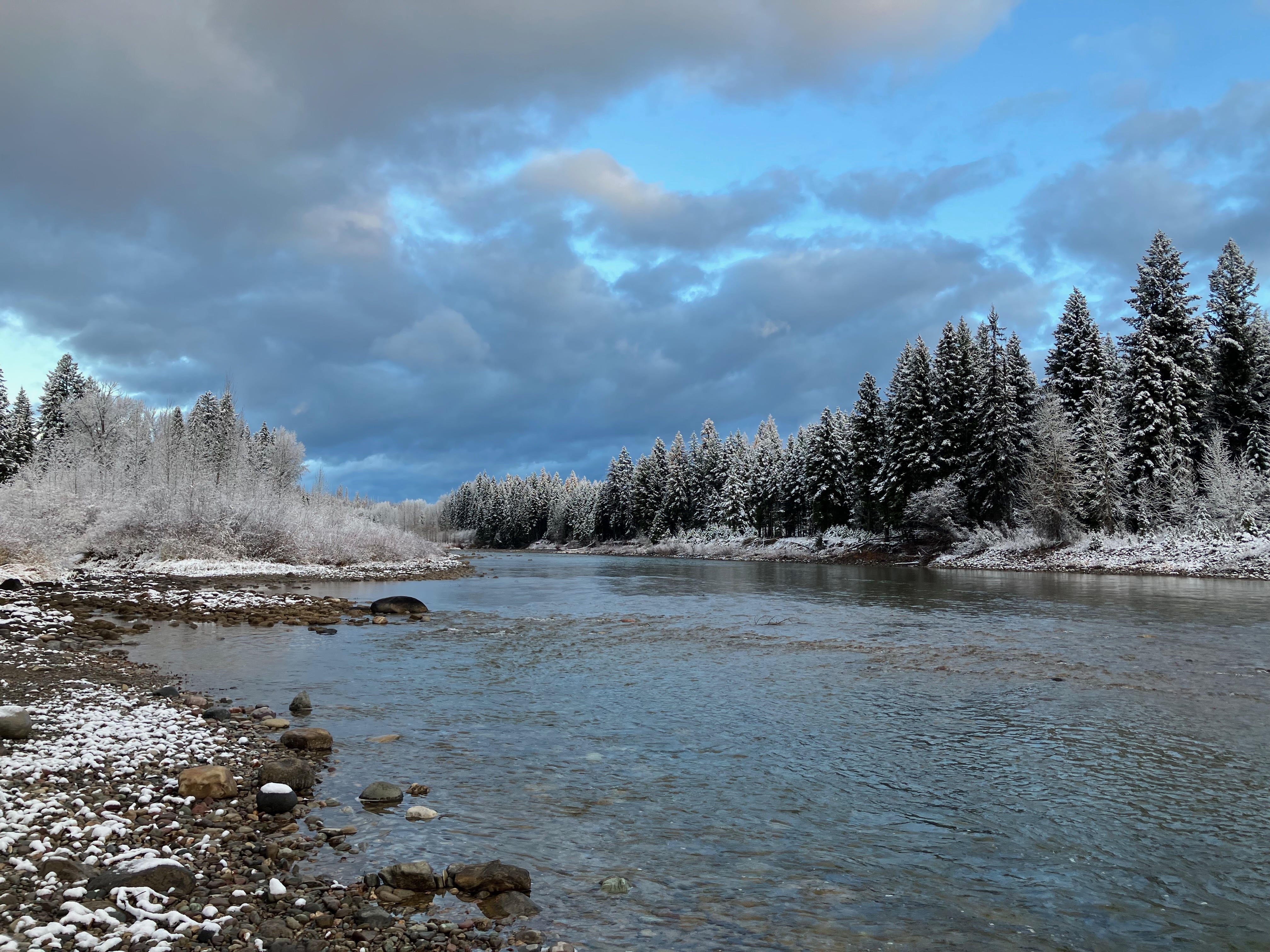
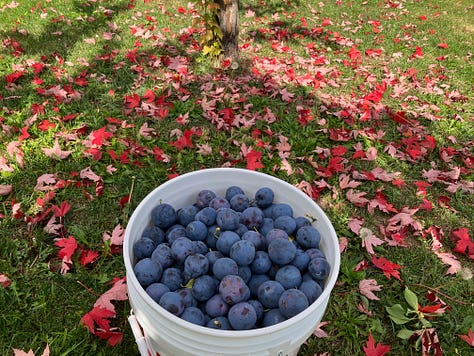
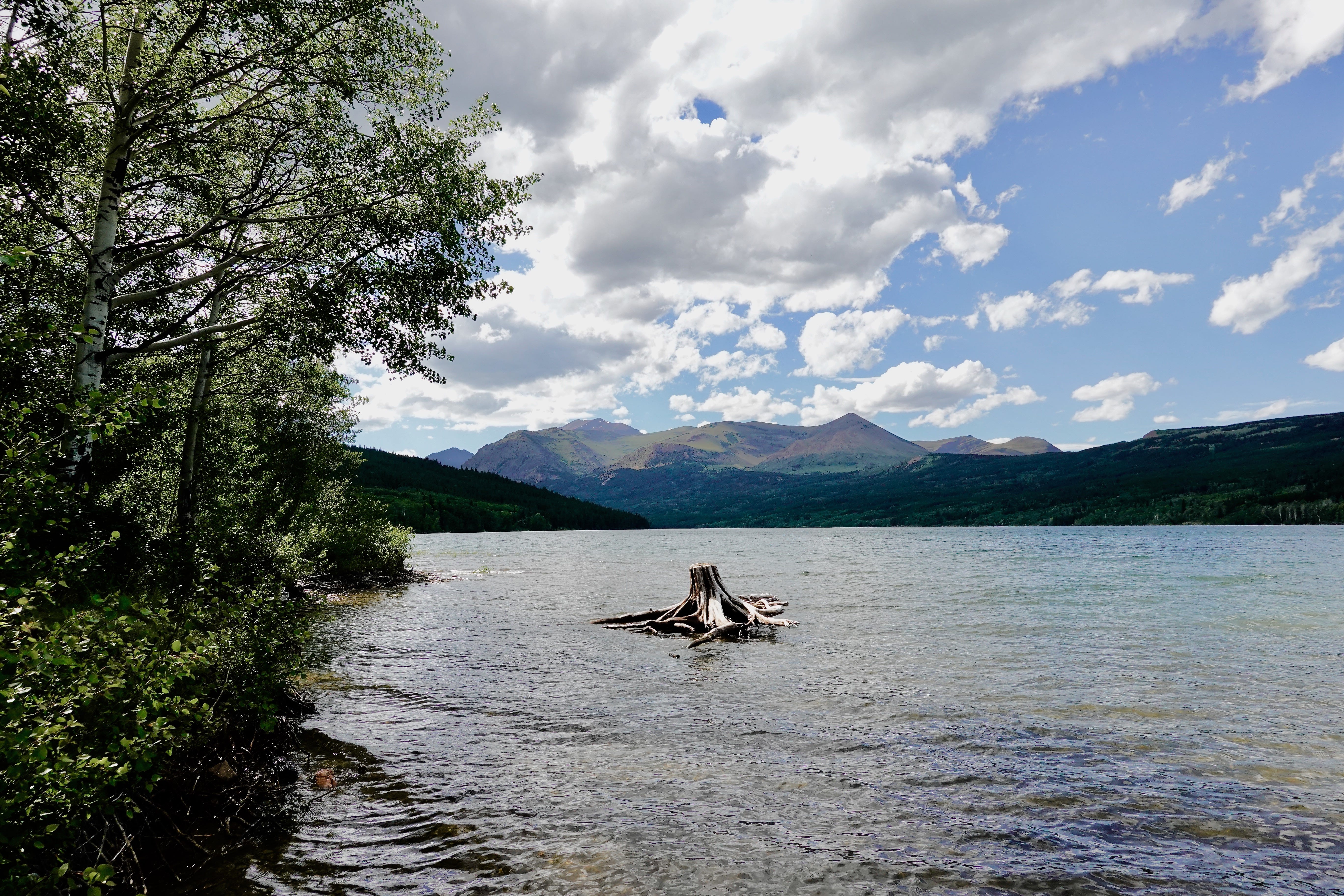
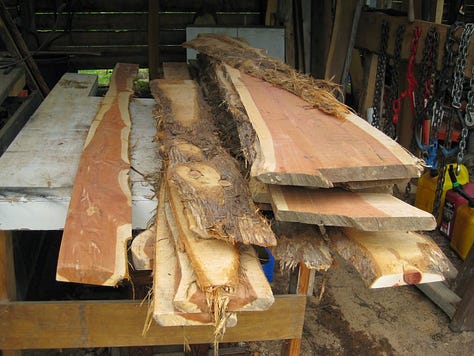
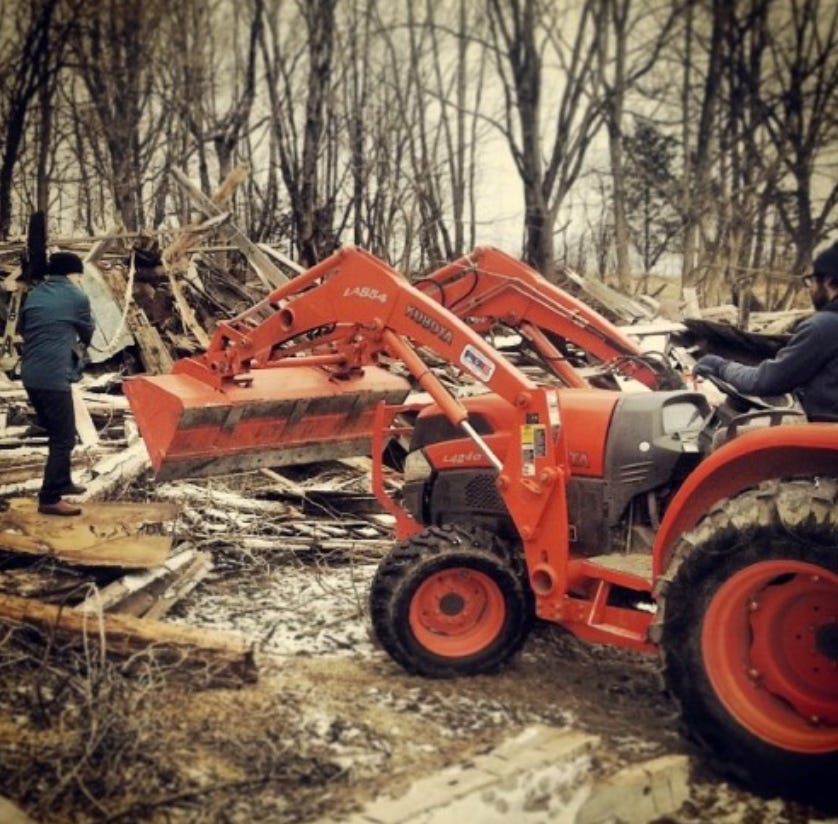
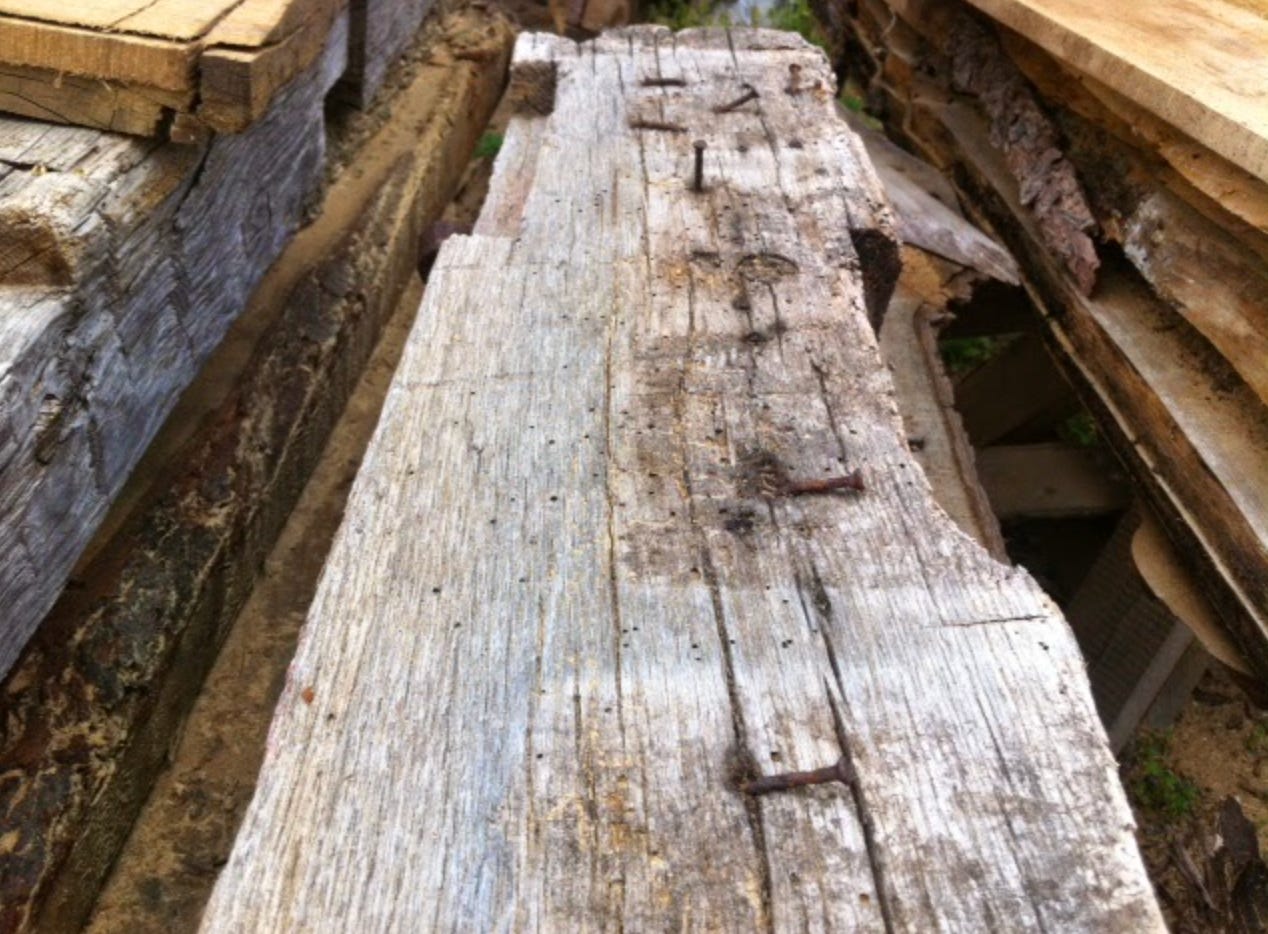
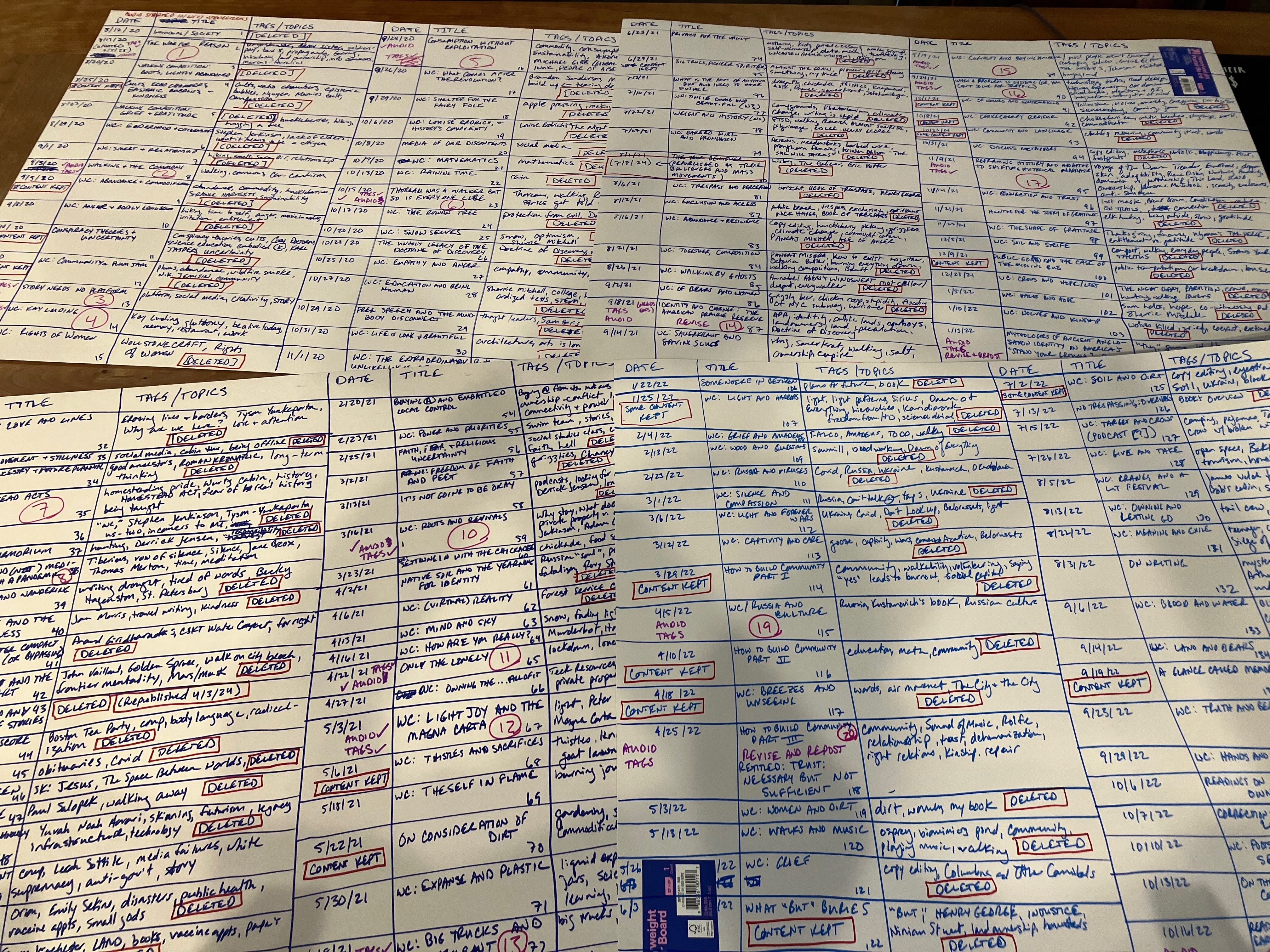
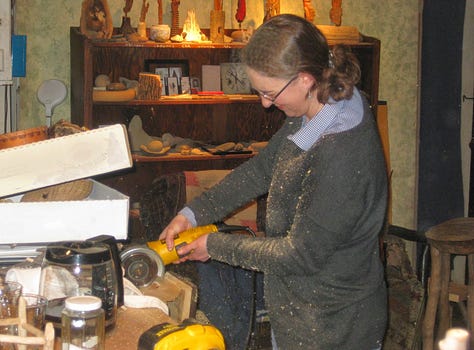
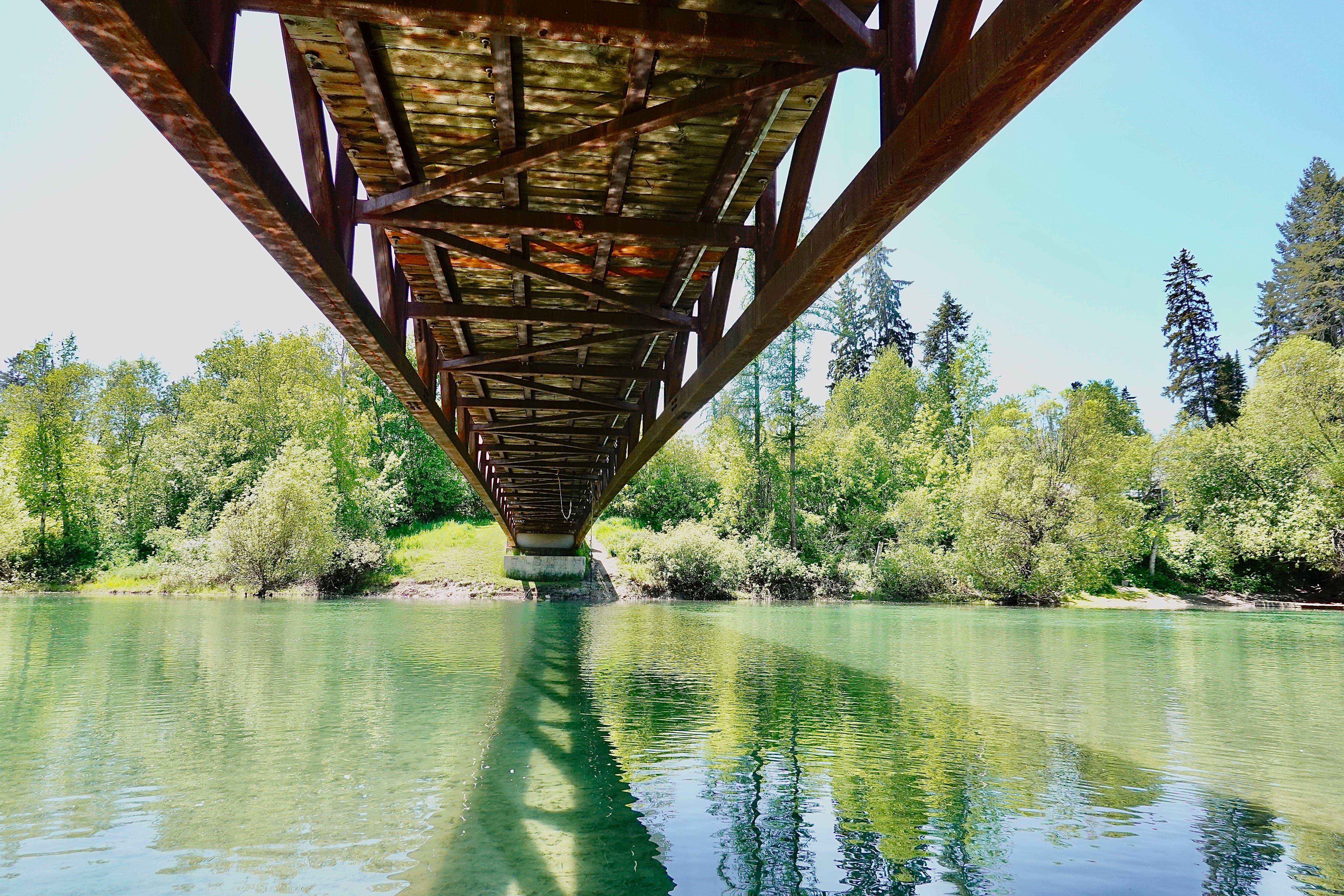
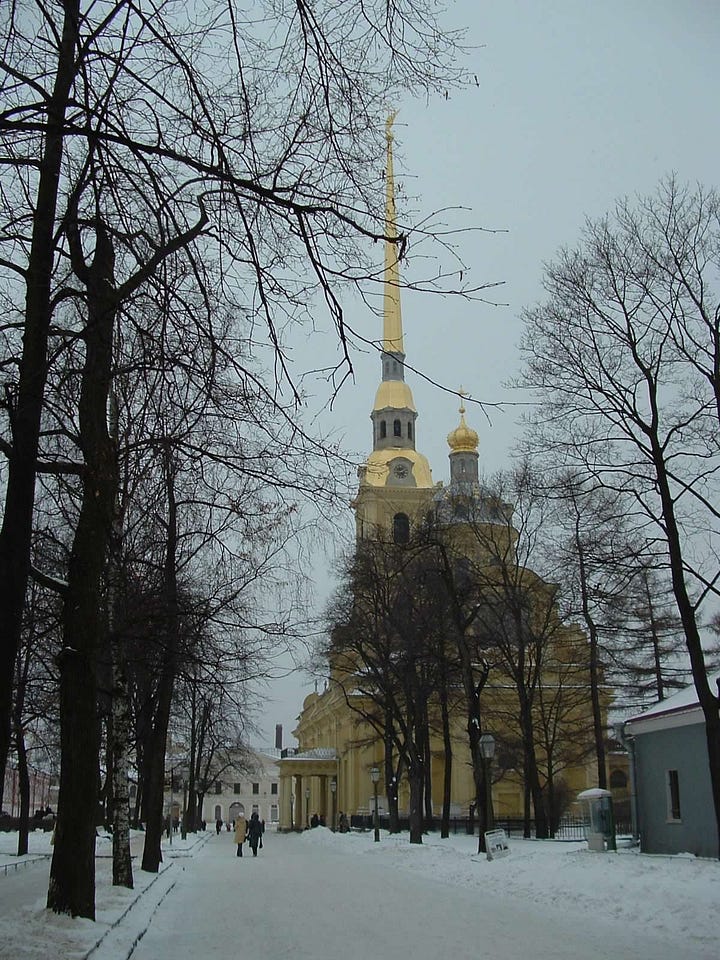
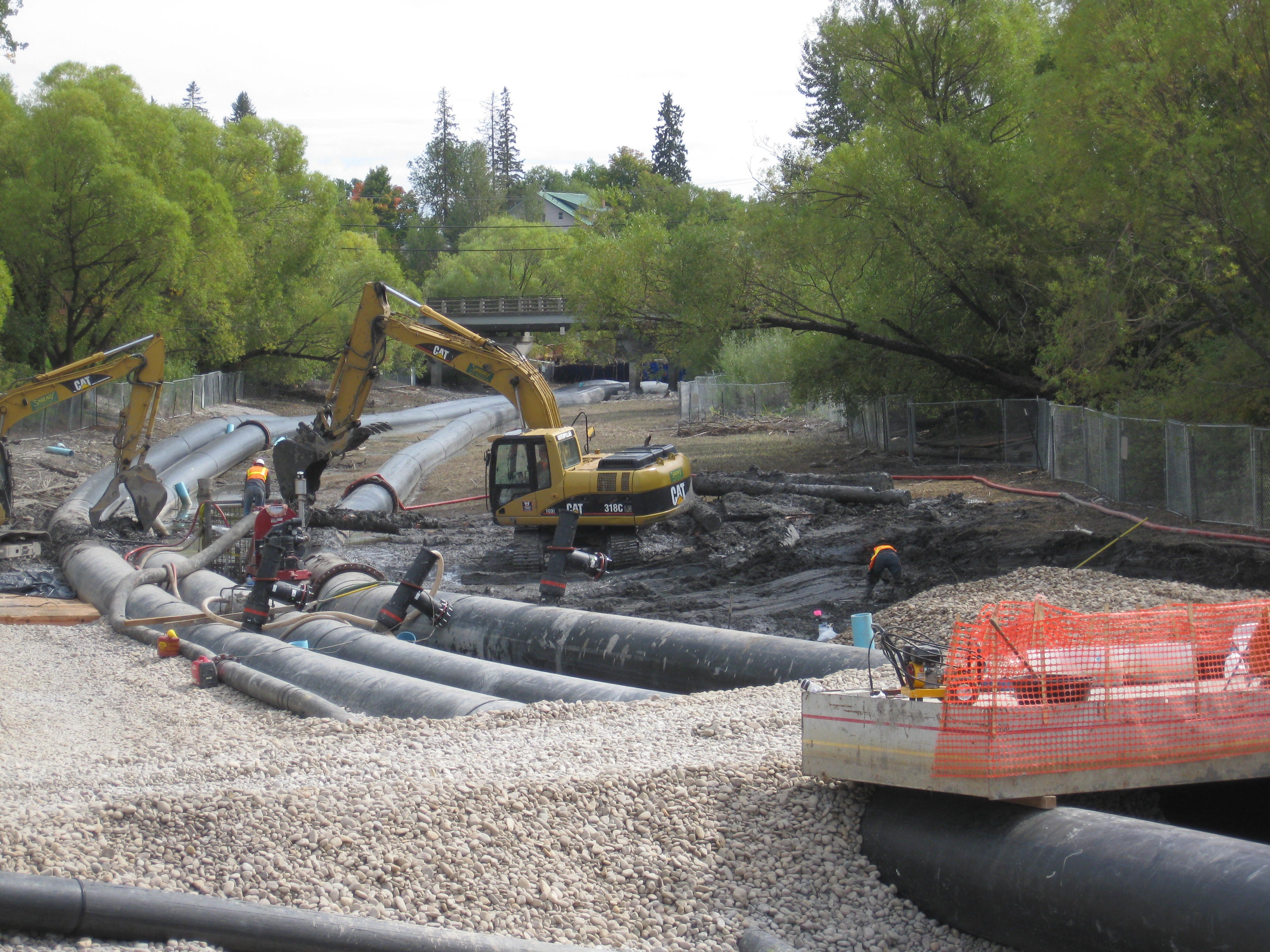
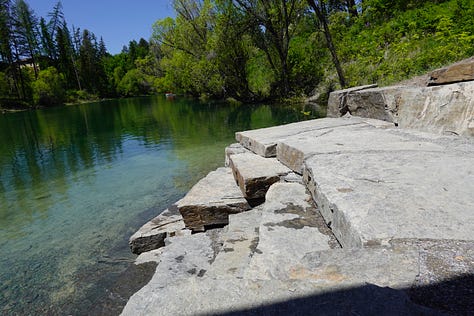
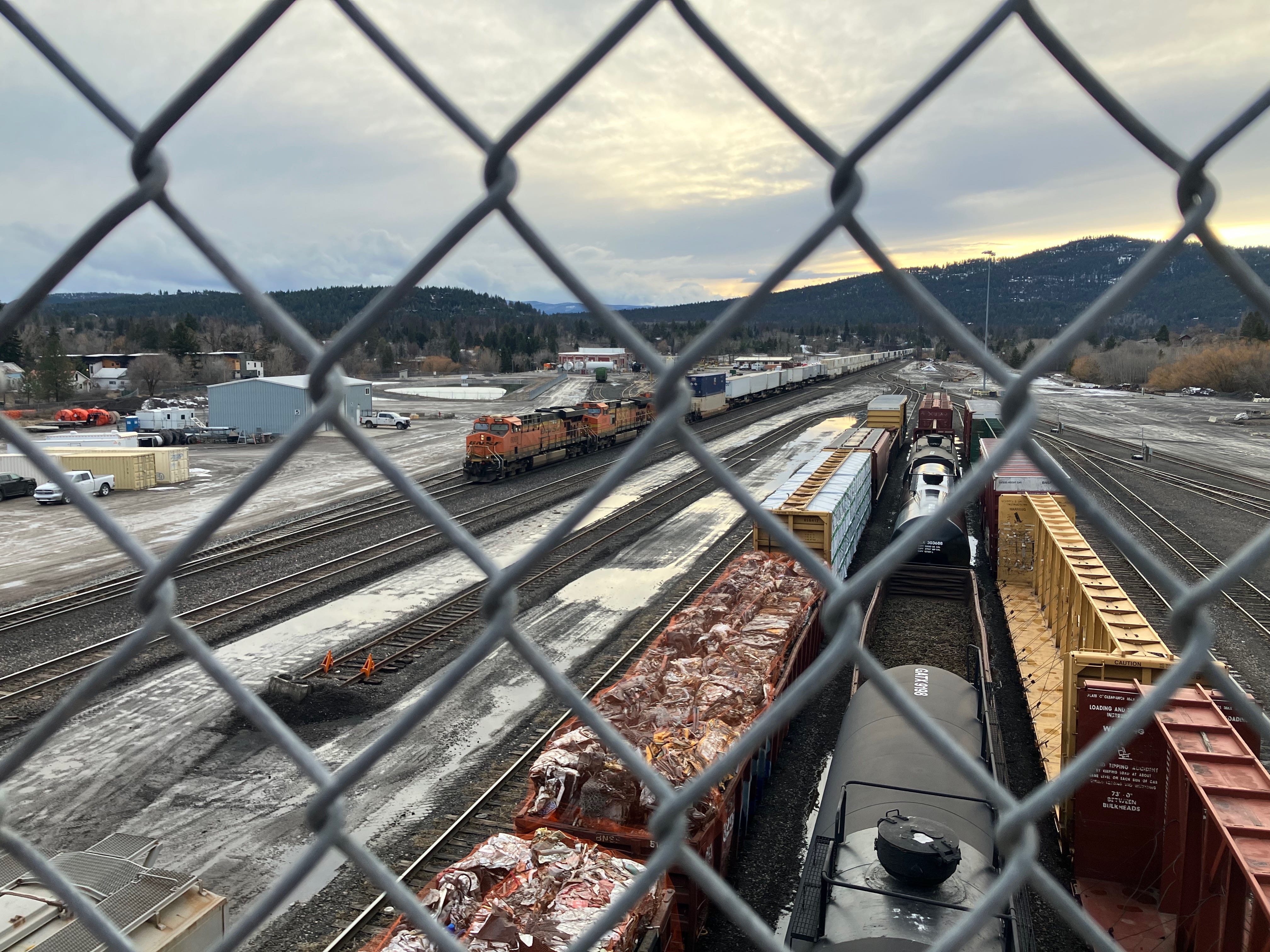
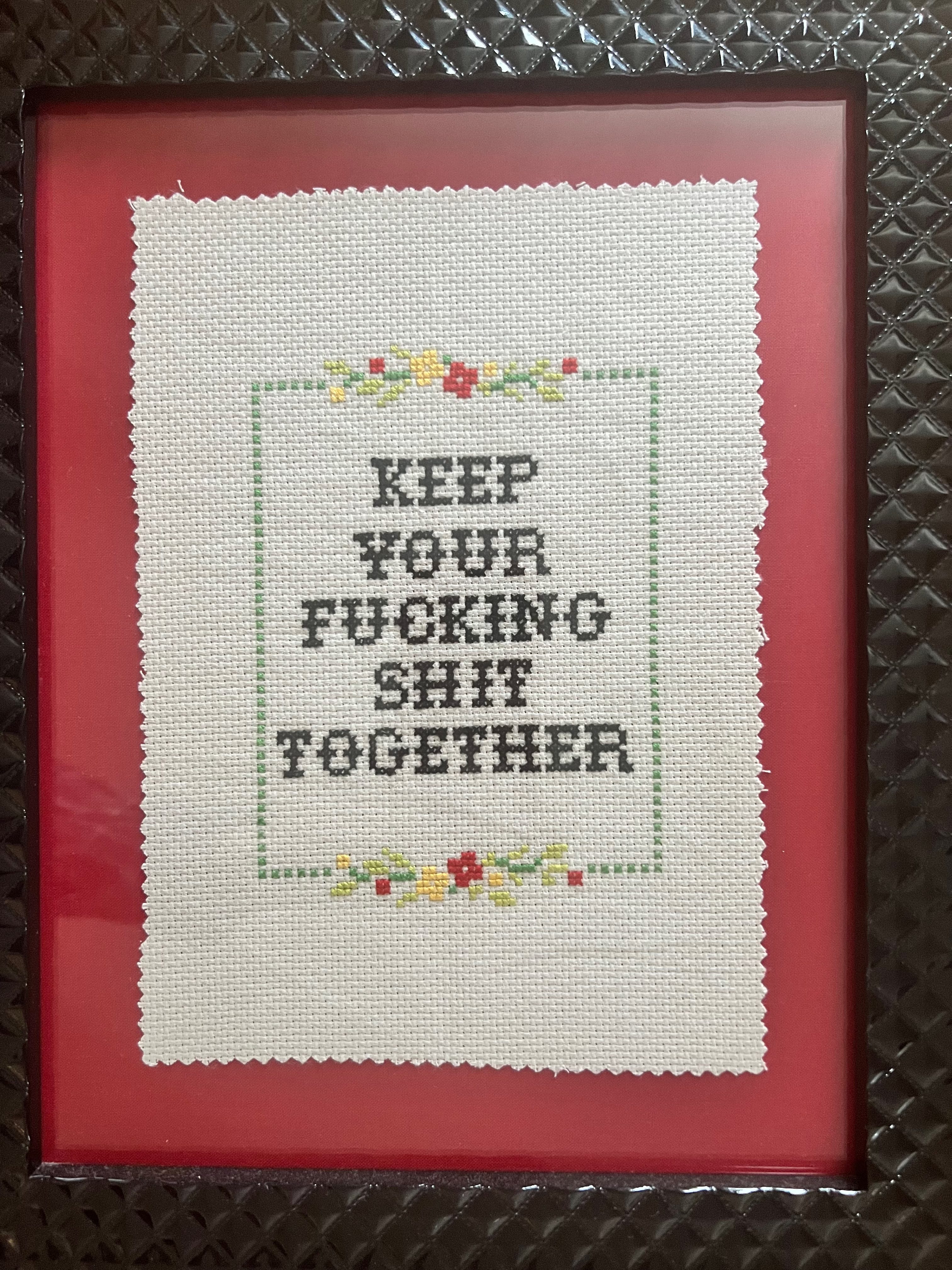
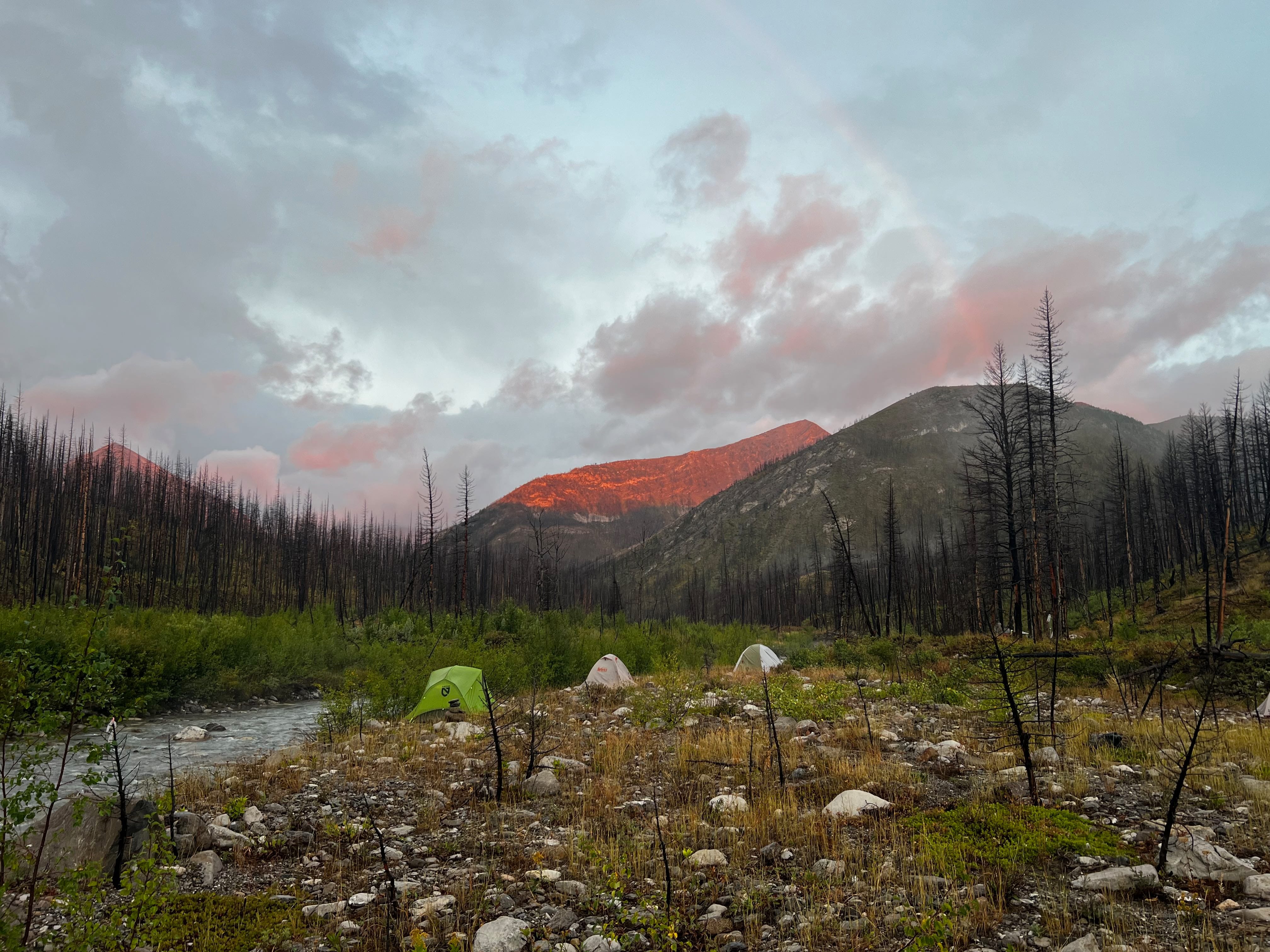
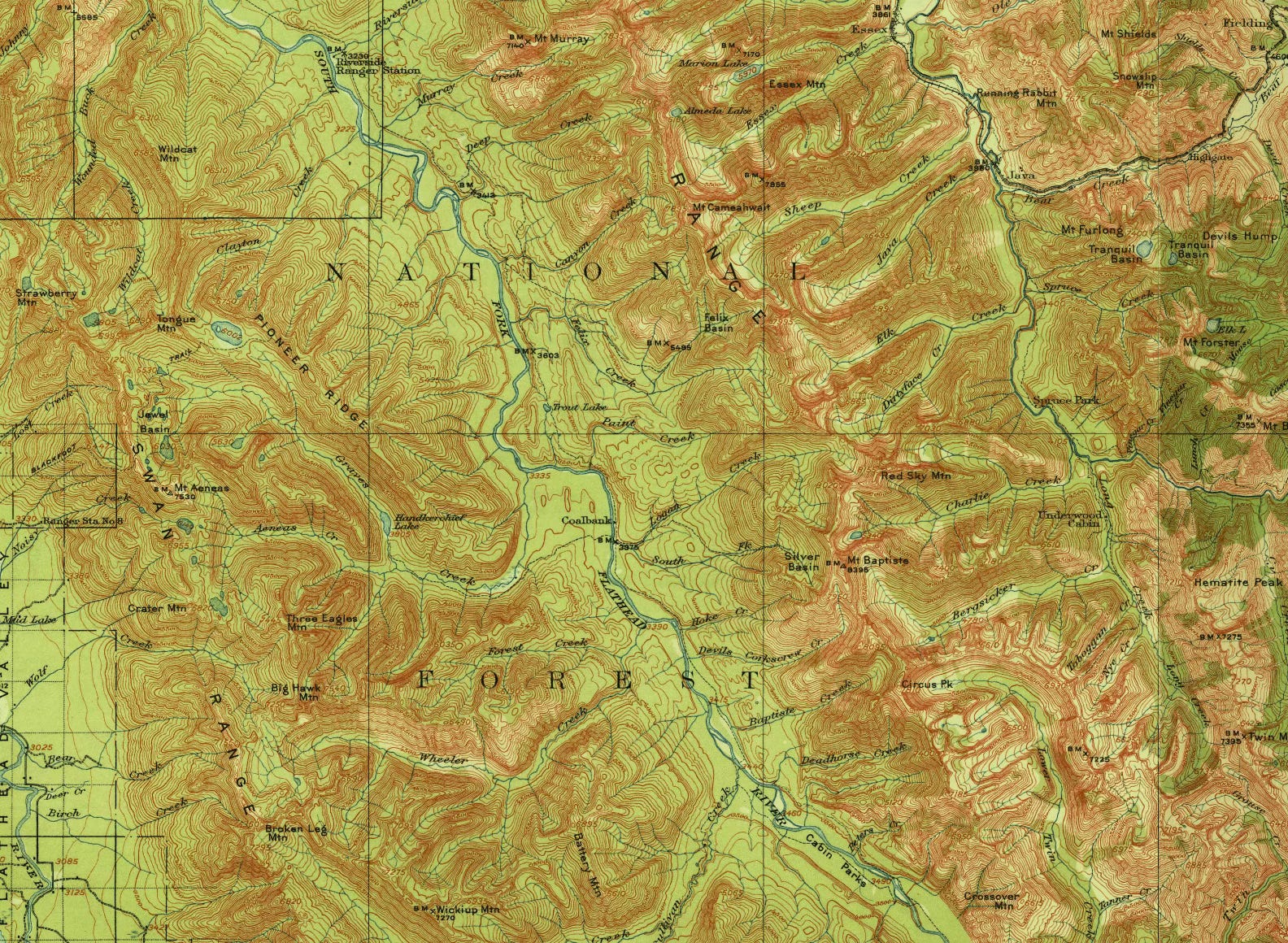


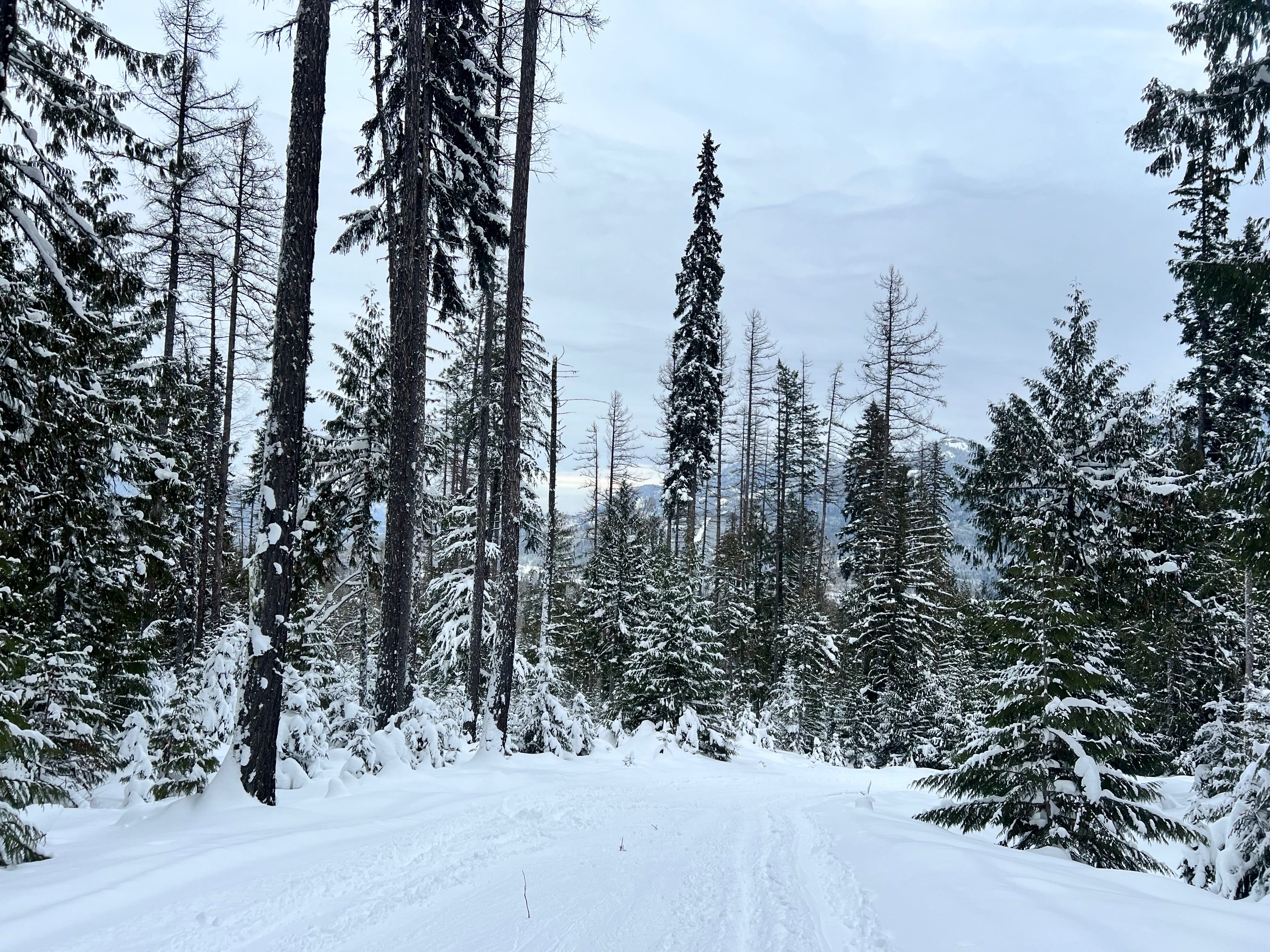

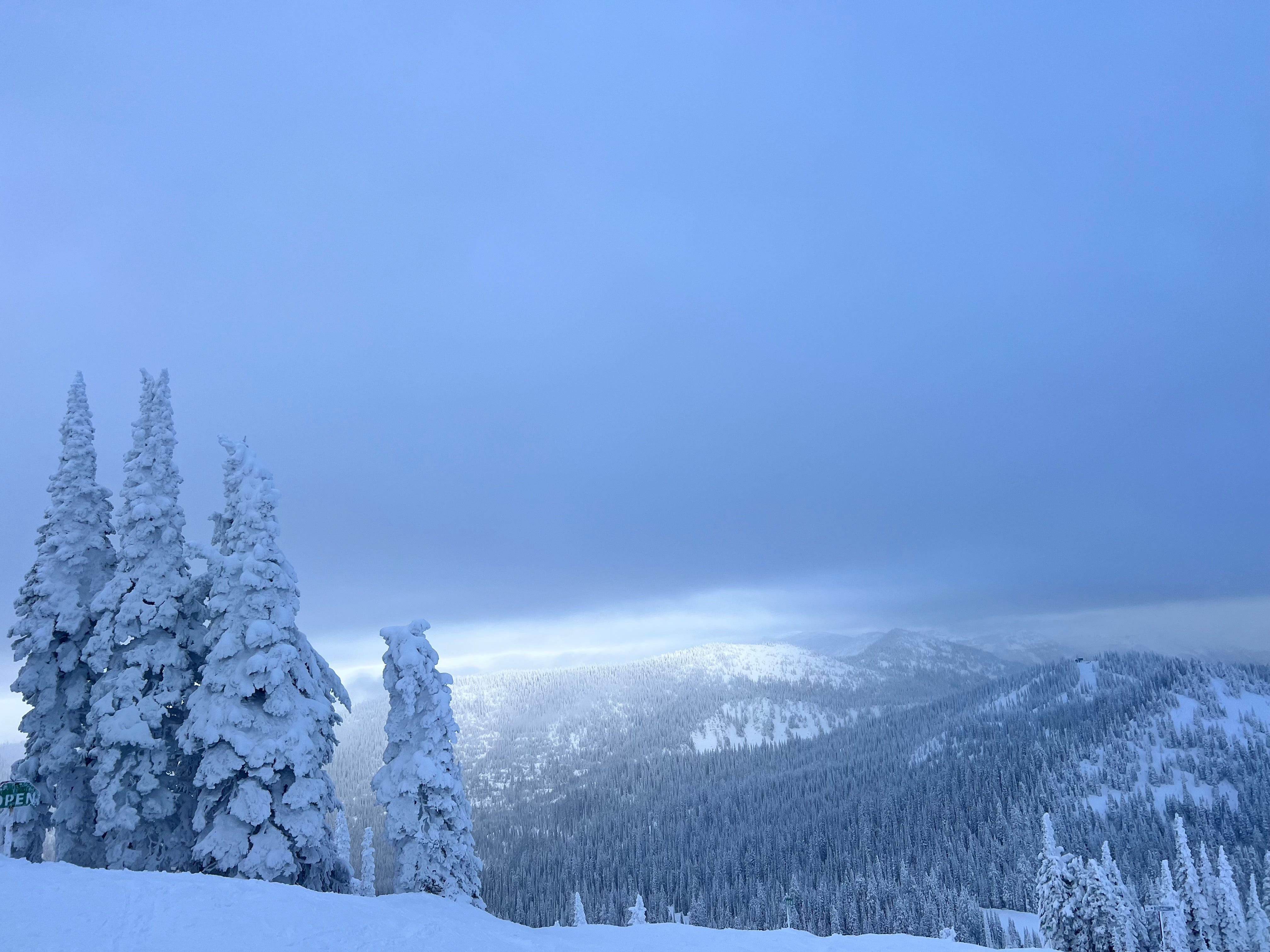

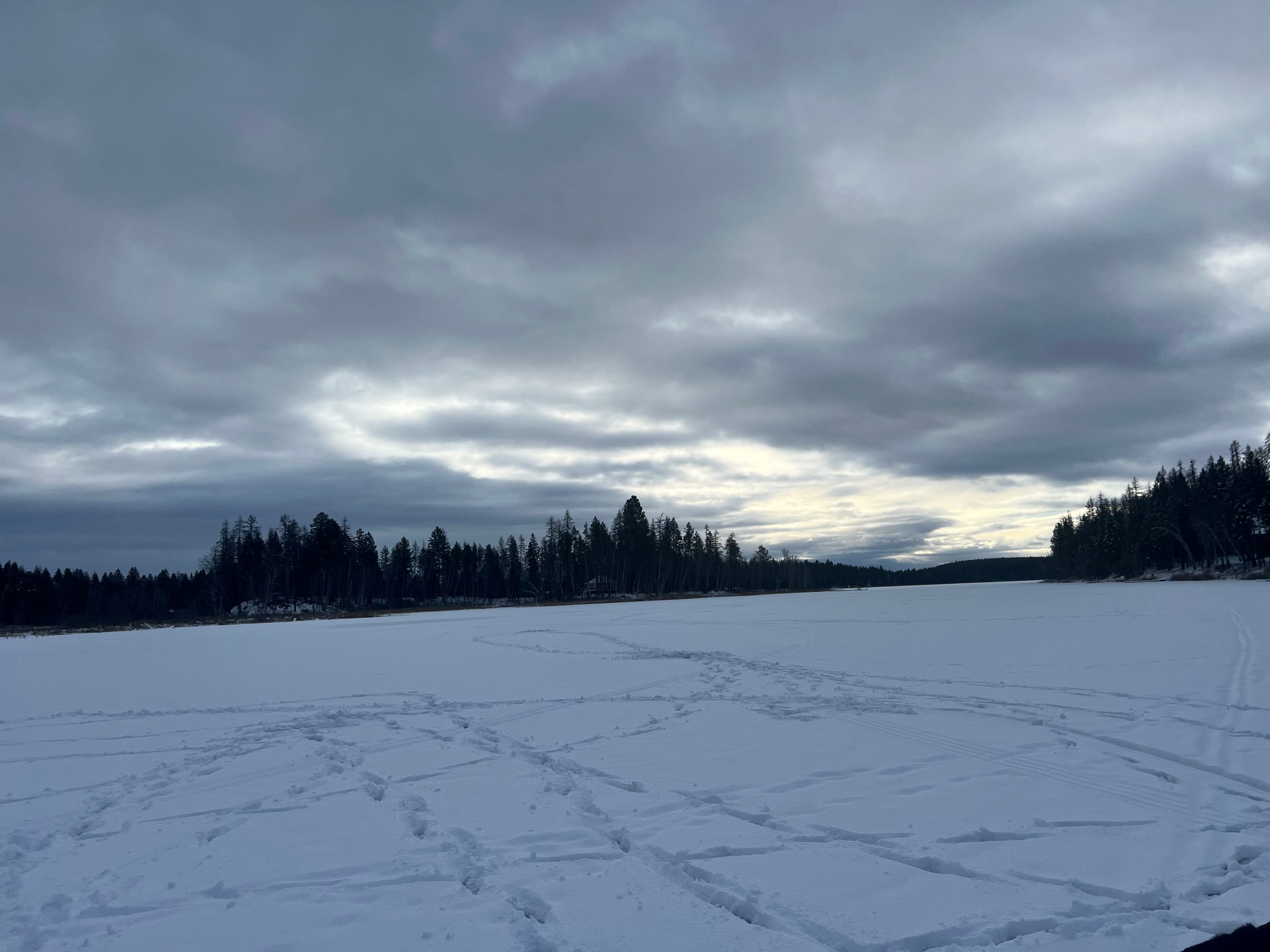
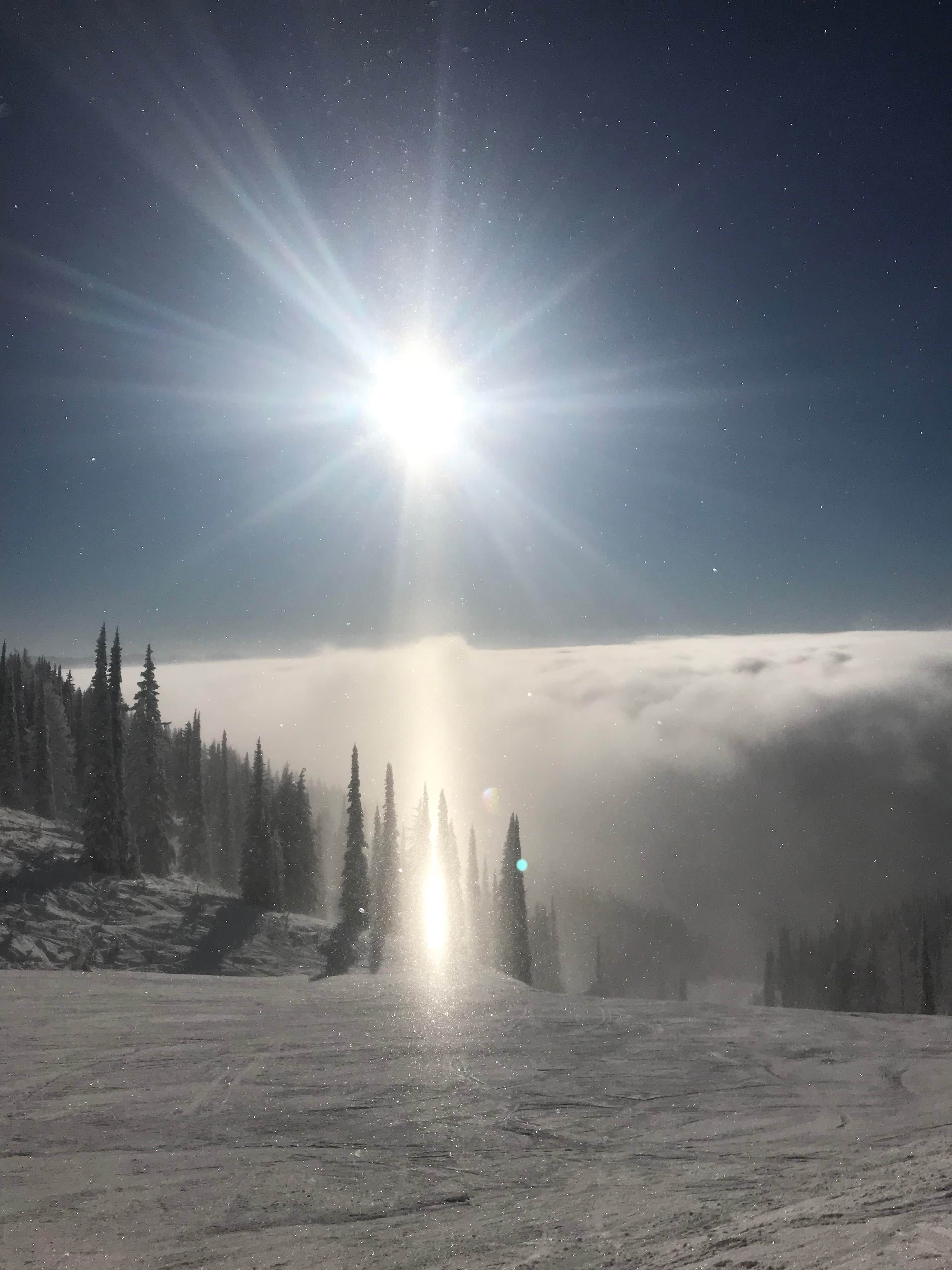
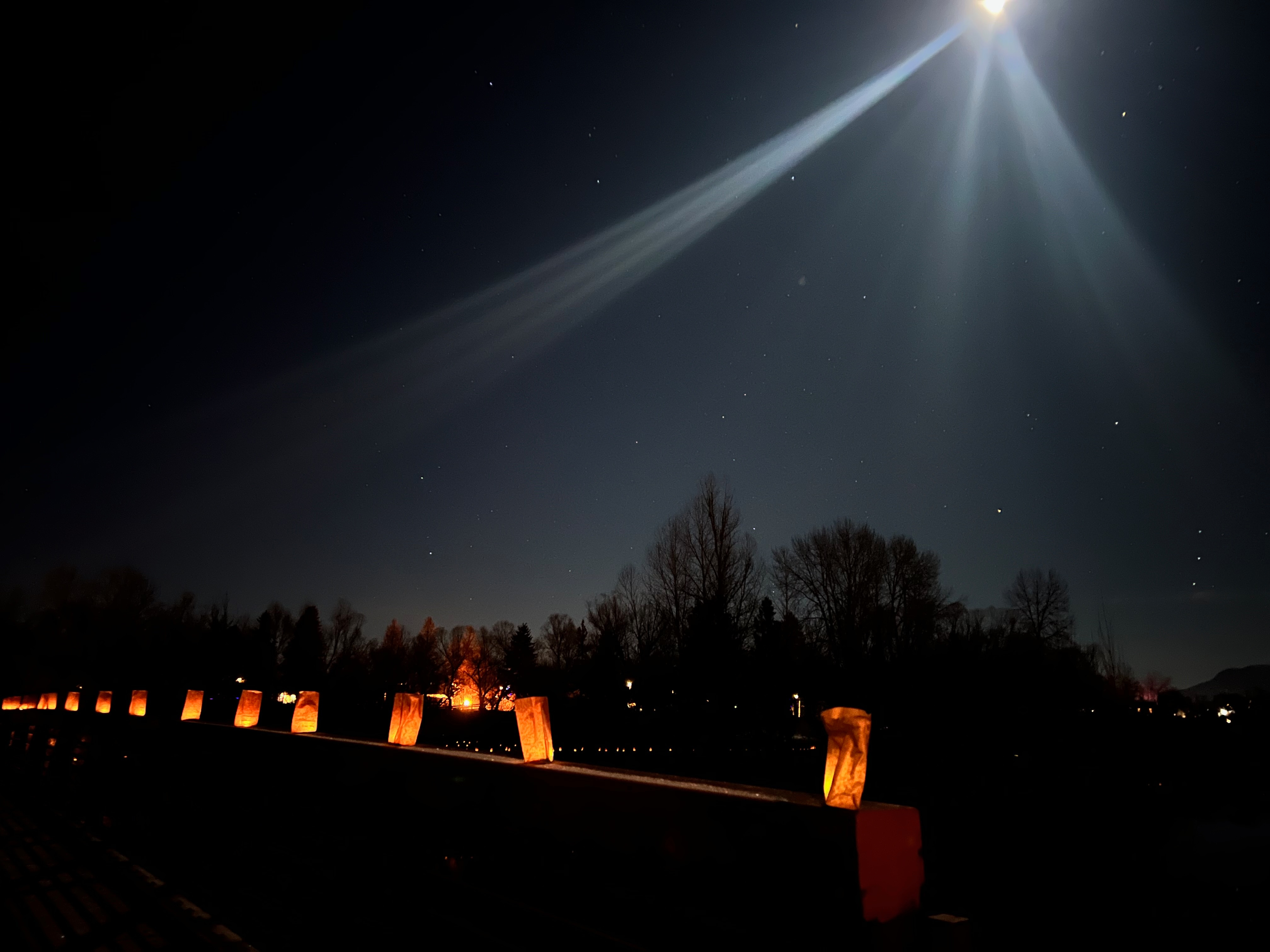
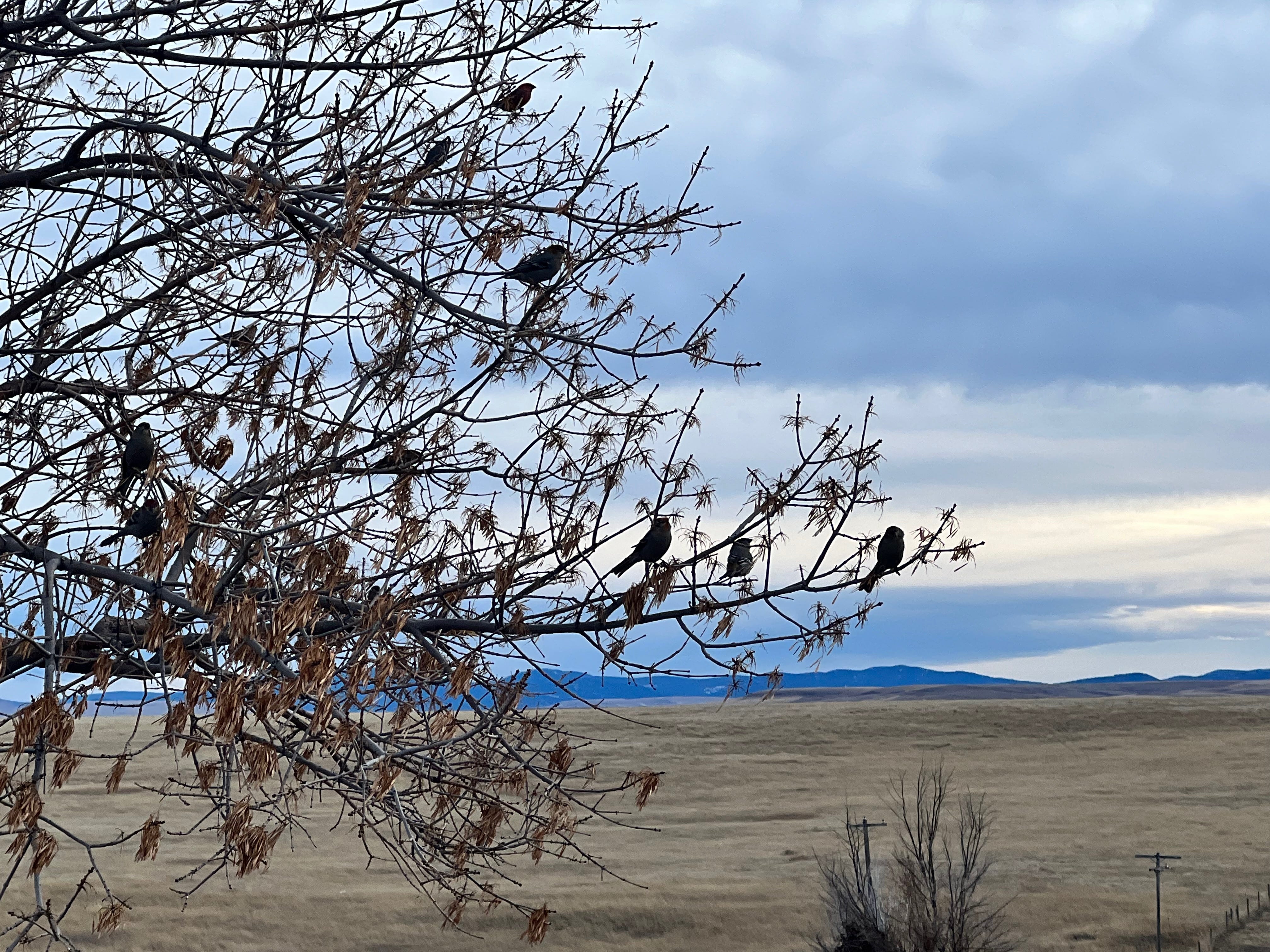

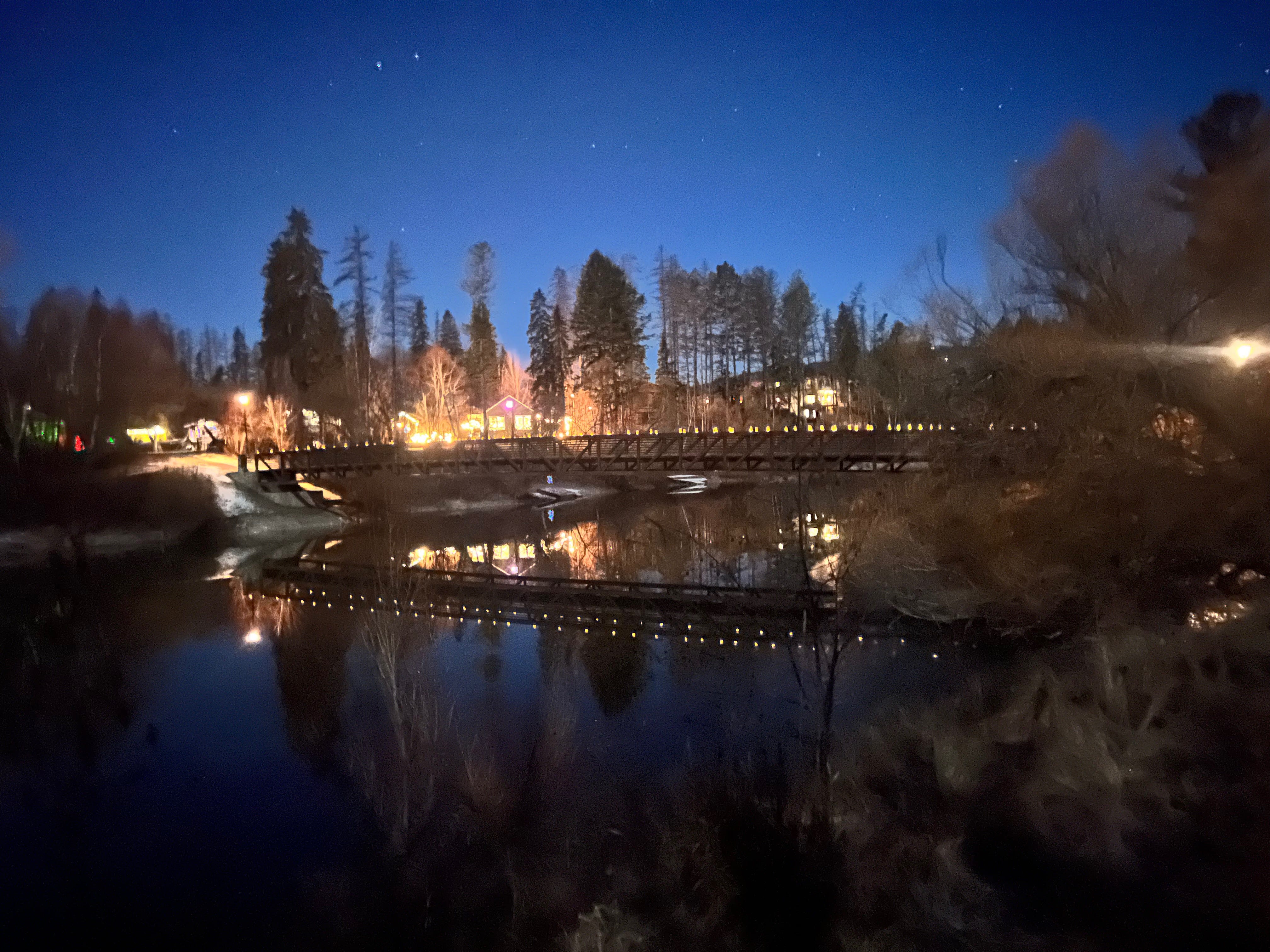
 Antonia Malchik