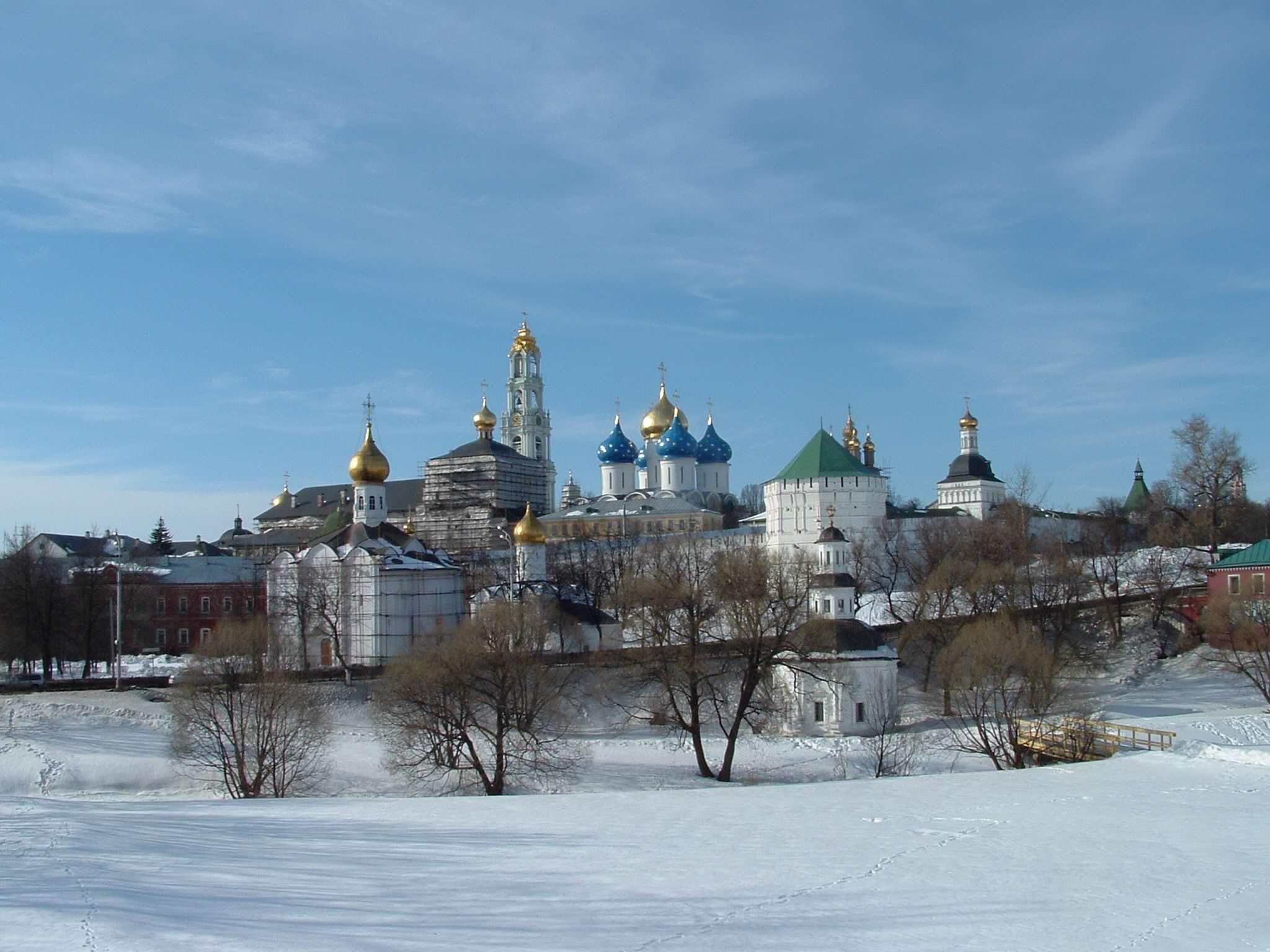
Bound for hell

Sergeiv Posad, outside of Moscow, Russia, winter 2005

My father recently sent me a photo from outside the apartment he and my stepmother share in Moscow. It’s a tiny one-room flat that once belonged to my stepmother’s grandmother, Anastasia Tsvetaeva. Anastasia’s sister, Marina Tsvetaeva, is still one of the most beloved poets in Russia; it was lesser known that Anastasia wrote poetry, too, but the hardship and heartshatter that both women endured is well documented.

I once read Anastasia’s own poetry back to her in that tiny room, poems she’d written in English but could no longer understand. The memory of sitting with her there, next to the piano that took up most of her small room, has the flavor of another time, another life. Sometimes it makes me miss a Russia I never knew.

“No, be assured, my gentle girls, my ardent

And lovely sisters, hell is where we’re bound.”

—Marina Tsvetaeva, from “Bound for Hell,” 1915

The photo my father sent shows snow-covered sidewalks and bare birch trees, someone shoveling in the distance. I have older photos very similar to it—different apartments, different winters, a different someone shoveling in the distance. Different times I’ve sat in small rooms being served cucumbers with dill, or blini pancakes.

Though I was born and mostly raised in Montana, I’ve been homesick for Russia ever since I left in 1991 at the age of 14, just weeks before the coup that collapsed the Soviet Union. Even while watching Moscow and St. Petersburg morph into unrecognizable cities, I missed it, that land, that language, some indefinable, ancient pull. It’s an ache of belonging, and of loss.

I’d like to say my longing is generational, since my father was born in the Ural Mountains and grew up in Leningrad. But his parents weren’t from Russia, at least not as its current borders lie. They were Jewish, and so were confined, as all Jews in the Russian empire were, to shtetls in the Pale of Settlement, the only band of territory Jews were allowed to live, their lives and occupations and movement strictly controlled and their communities at the mercy of violent pogroms. My grandfather came from a small village in Ukraine, my grandmother from another near Belarus.

The history of that entire part of the world is thick like blood. Miles of forests, birch and poplar, and wide grasslands, holding fast through shifting territorial lines and allegiances all through Eastern Europe and the Caucuses, lands and peoples linked by thousands of years of invasion, control, tribute, and trade with the Ottoman and Mongol Empires.

Its history runs like blood, too: there’s the raiding and enslavement of Slavic peoples, who knows how many tens or hundreds of thousands or more kidnapped and sold away from their homes to the wealthy in empires south and west of the Black Sea. That slave route operated unbroken for nearly a thousand years.

There are the Jews whose ancestors had migrated to Europe centuries before, who ended up in lands controlled by the Russian empire after over a thousand years of oppression, expulsion, and massacres so violent and comprehensive that it’s estimated the DNA of almost half of Ashkenazi Jewish people comes from only four mothers. Four women who survived in a community that by their time had been massacred down to a few hundred people.

That land bears other scars, too, ones that run a different kind of heartblood. Lithuanians were the last people in Europe to convert to Christianity, first enduring over a century of invasions and battles pursued by the Crusades, and other pressures from Catholic and Orthodox powers—all that after the previous century’s attacks from the Golden Horde in the north of the Mongol Empire. Jogaila, who in 1386 was crowned king of Lithuania in exchange for being baptised and forcing conversion on his people, subsequently allowed Christian churches to be built for the first time. He also ordered sacred oak trees to be cut down. Household grass snakes, who were kept in homes as protective spirits and were considered dear to the sun goddess Saule, were ordered killed.

The cutting down of sacred groves and the destruction of sacred springs throughout Britain and Ireland as the lands and people were bent to Christianity—having spent previous centuries recovering from Roman occupation—is more well-known than the histories of the same happening throughout the European continent. But those lands, too, are laced with memories of spiritual land, water, and animal connections that power spent centuries erasing, usually with violence.

What became of the people whose cultures the Roman general Tacitus recorded in 98 CE in his Germania—the Vangiones, Triboci, Nemetes, the Gauls, and countless other peoples? Tacitus wrote that their sacred places were trees and waters rather than human-built temples, and he wrote of the role of women in leadership. What memories does the land hold of those peoples? When were their holy trees cut down and how did they cope with the loss?

“To your mad world—one answer: I refuse.”

—Marina Tsvetaeva, from “Poems to Czechoslovakia”, 1939

When I was researching my first book, I read a great deal on the science of epigenetics, related to what’s become known as intergenerational trauma, focusing on the work of scientists like Rachel Yehuda and Lars Bygrov.

“What Yehuda found in her early research was that the children of Holocaust survivors were three times more likely to develop PTSD if exposed to a traumatic event than were demographically similar Jewish people whose parents were not Holocaust survivors. This is not, to be clear, a change in a person’s genetics; it’s a change in how a person’s genes will respond to their particular environment.”

Yehuda repeated those results in studies of the children of women who were pregnant and present at the September 11, 2001, attacks on New York City’s World Trade Center. Other researchers have shown epigenetic effects in children whose mothers survived the Dutch Hunger Winter; and still more comes from Maria Yellow Horse Brave Heart’s research on historical trauma in Native American people. Epigenetics is still a relatively new field, but its conclusions about intergenerational trauma are well established.

After the Russian Revolution of 1917 that overthrew the tsardom in favor of communism, my grandparents came to Leningrad. They walked straight out of the pogroms, massacres, restrictions, and theft of children that Jews had endured for over 2000 years, a history that had not yet ended when they each left their villages behind to help build a new nation.

My grandparents, Jacob and Anna, enjoyed an extremely short few years of believing they could finally live and work in the world simply as people. A few years, before Russia’s—and especially dictator Joseph Stalin’s—anti-Semitism kicked back in. They endured returned restrictions on Jewish people, Stalin’s paranoia and threats of violence against and expulsion of Jews, and then the Siege of Leningrad during World War II, which my grandfather barely managed to survive, almost becoming one of the thousands dying each month of starvation. Jacob and Anna endured war and poverty, dictatorship and societal upheaval, and never escaped the millennia of prejudice and hate that had stalked their ancestors.

I’ve often wondered what of their experiences I carry in my own genes. And that of their parents and their parents and on and on and on. Those histories, and my own personal traumas, made their way into my children, through the blood and cells we shared as they became. The effects that accumulation will have on their lives is unpredictable.

As far as I know, there is no study on intergenerational trauma that gives it an end date, an end generation.

I read a study a while back on probable PTSD symptoms showing up in the medical records of men of ancient Mesopotamia who’d been at war. The reports say they were haunted by ghosts. What happened to the man of 14th-century BCE who’d just come home from his mandatory three-year rotation in the Assyrian army? Could he find healing in the land, or in his children; or did his pain turn inward to depression or outward to attack others?

What happened to the young mother in 1226 who’d been kidnapped by slave traders in her Swedish village and found herself serving in an Ottoman household? Did she ache for home, for the relatives and sacred trees and waters she’d been torn from? What happened to those people’s children, and grandchildren and great-grandchildren, and those of their villages and nations?

What happens to us?

Patrick Teahan, a licensed therapist who maintains a YouTube channel specializing in childhood trauma, recently posted a video of a bit of his own family history: One day in the winter of 1920, his great-grandmother, who had just days before given birth to twins, was at home in County Kerry, Ireland, when members of the Black and Tans, a paramilitary British force, dragged her, her newborn twins, and the rest of her children, outside while the soldiers raided their home.

Teahan’s grandfather, who was 14 at the time, came home to find the house ransacked. His mother died the next day. The experience, Teahan says, reverberated in cycles of violent abuse, from his grandfather to his father and onto him.

“My grandfather’s home invasion was 106 years ago. The trauma didn’t just pocket in 1920 and filter out. It went through the generations until someone did something different.”

His point in telling the story is to demonstrate the ways intergenerational trauma plays out. He gave background on who the Black and Tans were, how they were recruited and trained, and the enormous violence they inflicted on Irish people; and the parallels between their makeup, recruitment, and training, and that of the U.S. government’s ICE terrorists today. Those who inflict violence on others, he reminds us, are rarely rewarded in the end—power will discard them as soon as they no longer serve a use. In Teahan’s words, “Power does not love you,” but all have to live with what they have done. Many Black and Tans, when the the force was disbanded, were rehired and posted to then British-ruled Palestine.

Teahan’s story reminded me of Arnold Schwarzenneger’s personal video a few years ago, about his father, an angry man hiding in alcohol, the inevitable outcome of rage and shame many men experienced after participation in World War II as Nazi soldiers:

“They drank to numb their pain. Their bodies were riddled with injuries and shrapnel from the evil of war, and their hearts and their minds were equally riddled with guilt. . . . They were all broken in the same way.”

The perpetrators of violence have to live with what they have done, but so do their victims, and descendants of both not even born.

It wouldn’t surprise me to know that all of us carry widely varying degrees of ancestral hardship, oppression, violence, and shame deep in our marrow. I wonder about the grief of those who saw the sacred groves felled or witnessed the massacres of their mothers, sisters, and brothers as witches; and what is carried by those who themselves participate in massacres of people, and what each passes onto their descendants, and for how long.

I wonder, a lot, about my own lineage, how an ancestral legacy of fear and oppression and violent prejudice that extends back millennia can transmute itself. How it turns, in cases like my grandparents, to unshakeable moral codes of honesty, hard work, and generosity; yet in others warps into a strangely shaped sense of entitlement, license to perpetuate the violence of generations on others.

The neurochemical balance that helps humans maintain a sense of right and wrong, love and hate, is shaped by shadows, some of them ancient, some of them hiding in our own cells.

Maybe my yearning for Russia is a short intergenerational root, or maybe it comes simply from having lived there and fallen in love with it as a teen. Maybe if I visited my grandfather’s Ukrainian village I’d feel something entirely different, something closer to what I feel in Montana, as if I want to spend every day of the rest of my life walking the lands barefoot and drinking the waters unfiltered. Or maybe I’d feel the terror of generations living with that land under the threat of violence and expulsion, never quite able to feel safe, never able to feel at home. Never feeling a sense of belonging at all.

The say ars longa, vita brevis—roughly translated as “skill takes time, life is short”—but maybe vita is far longer than we care to think about. One story might take a lifetime to write well, but it draws on years and generations beyond count.

Our stories don’t just live on by being told. They live on because the lives of those long gone are carried as complex messages in our DNA, as sparks in our hearts. They live on because we live on.

“A kiss on the forehead—erases memory.”

—Marina Tsvetaeva, “a kiss on the forehead,” 1917

Moral codes that withstand the wreckage of history

Church of the Transfiguration, Peredelkino, Russia, midwinter

At the age of nineteen my grandfather, Jacob Davidovich Malchik, flipped an electric switch, saw a working light bulb for the first time, and knew his future waited somewhere outside his muddy Ukrainian village. In post-Revolution Russia, he left the Pale of Settlement’s shtetls, where Jews had been confined to living for generations, for proletarian Leningrad. With the tsar gone and the Bolsheviks promising equality for all, he had the chance to discard centuries-old restrictive laws that had been attached to him more closely than clothing, ground into his skin like a tattoo.

But Jacob hadn’t counted on the damage a dictator’s paranoia would do to that dream. As a Jew and the son of a moneylender he struggled even to gain admission to the Leningrad Polytechnical Institute in the 1930s, despite his top score each year on the entrance exam. It took him years to finally become an engineer, and only his intelligence, work ethic, and sheer luck pushed him against the later current of Stalin’s deeply anti-Semitic Soviet Union.

Those very qualities endangered his life in a Soviet state that required thinking and acting only in absolutes.

In 1937, the year Stalin’s first great purge of “undesirables” began, a popular Party boss summoned Jacob to his office and ordered him to denounce a man who was suspected of being an “enemy of the people.”

Hard words, those: denounceenemy of the peoplethe Party. Concepts that in that world, at that time, had punitive, harsh meanings, a black hole of language dwindling into singularities, hostile to nuance or texture.

Jacob replied that he didn’t believe the man was an enemy of the people. In doing so, he knew the risk he was taking. To be denounced in 1937—and, equally, to refuse to denounce someone—meant a surprise visit in the middle of the night followed by a show trial, possibly torture, and either a bullet or exile to Siberia. Denunciations were anonymous, required no proof, and more often than not led to the victim’s death.

Two million people died during Stalin’s first purge, known as the Great Terror, an average of a thousand executions per week.

The Party boss tried again to convince Jacob to write a denunciation, but he refused to comply. Jacob went home that night, told my grandmother Anna Davidovna what had happened, and together they packed a small suitcase and waited for the KGB’s midnight knock.        

Jacob knew what was being asked of him. He also knew that his own morality—for which the words justice and honor and honesty are only brushstrokes—would not allow him to sacrifice an innocent man’s life for the sake of his own, innocent, life.


My grandparents were not active dissenters against Stalin. But they retained hold of their sense of self, of who they knew themselves to be and the difference between right and wrong. They read forbidden Solzhenitsyn with their children at night, sitting around the table passing each illegally copied page to the next person as they finished. My grandmother listened to banned Voice of America and Voice of Israel—though I imagine that these days she would feel about the Israeli government the way most of my family in Russia does: absolutely opposed.

In the last few years, my cousins in Russia have spoken up against the invasion in Ukraine and found themselves silenced in the face of mass arrests. Relatives reported years ago of watching ballot boxes stuffed with pre-filled forms during sham presidential elections. Nobody in my family takes democratic freedoms for granted, but perhaps it takes living under dictatorship or oppression to realize that even the right to fight for something better can be stripped away.

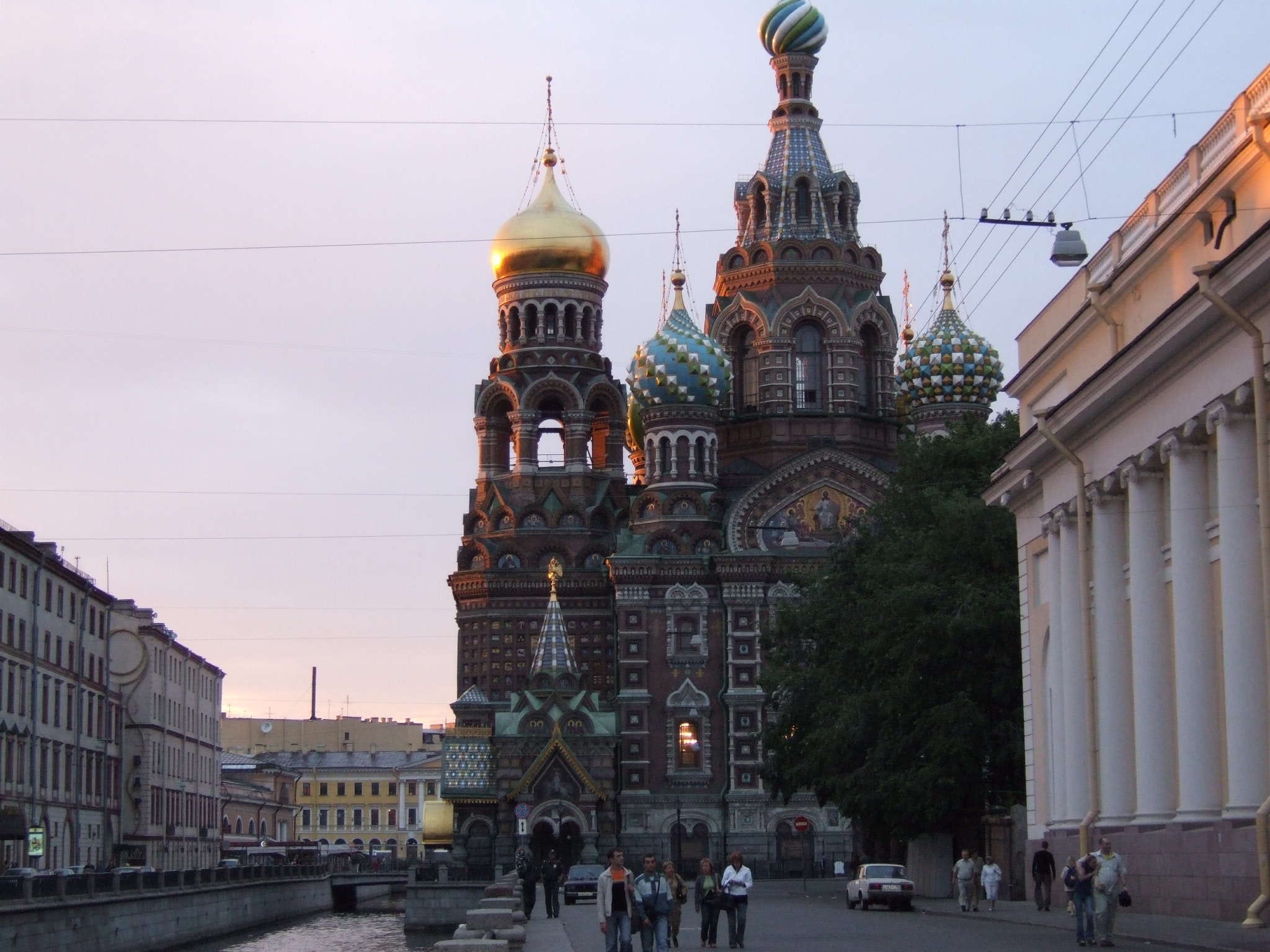
The Church on Spilled Blood, St. Petersburg, Russia, the sky rose-gold under a midnight Sun in June

Most of what I know about being a good ancestor comes from grandparents I never knew. To do what is right without expecting recognition for it, without even expecting to survive. They taught me that in good times and bad, being a good ancestor entails treating all your relationships with respect, no matter how intimate or how distant. To live with integrity, whether you’re ever recognized for it or not, and whether or not the world around you seeks to shatter all that you value as good and right and moral.

Being a good ancestor begins with how we treat those beings closest to us. That’s a minimum but not the totality.


The KGB never came for my grandfather. The next morning Jacob found out that the Party boss whose orders he refused had been arrested, with a letter in his vest denouncing Jacob as an enemy of the people. The man was shot a few days later. His letter, his “right answer,” gave my grandfather some immunity from further accusations; if Jacob had given the answer he knew was expected, I would not be here.

Jacob and Anna never saw the end of the Soviet Union—or barely did, in my grandmother’s case. They had no expectation that their world would shift to meet their values, but they likewise refused to abandon their values to meet that world.

When my father was finally given permission to emigrate from the Soviet Union with my mother and older sister in 1974, he was given three days to leave the country. Three days to say goodbye to his family, his friends, his job, Leningrad with her endless canals and pastel light under a midnight Sun, ice skating on the Neva River in the depth of that far northern winter that I crave returning to the way I crave water drunk from cold mountain streams, or walking this world barefoot.

Three days, and he was told not to return. He didn’t even speak English when he came to Seattle at nearly 30 years old.

And he never saw his father again. Jacob died a few years before Mikhail Gorbachev began loosening the restrictive borders of the Iron Curtain. Anna Davidovna, my grandmother, died shortly after the Soviet Union fell, less than a year after I met her for the first time. I was 14 years old.

My grandparents left me some small understanding of the complexities we live with when daily routines and adhering to one’s higher values are riddled with life-or-death pitfalls. They also left me with a question I wake and walk with every day of my life: how do I make choices and exist in a world that seems intent on destroying everything I care about? How does anyone?

The work I do is aimed at exploring these questions, and on reviving and strengthening truths like those left me by my grandparents, at bringing us back to the good in the world, to reminders that we are all alive, interwoven with all of life, and that how we treat one another and non-human life alike matters. Interconnection, relationship, kinship—they’re a mosaic that presents the opposite of individual ownership and private property.

Under authoritarianism, my father told me shortly after Putin’s invasion of Ukraine, you have to find your red line—like his father did when asked to denounce another innocent man, the line you will not cross, even at risk of your own life.

No matter who wins or loses elections large and small, these truths have been under assault for thousands of years. They need repair, just as the wild, breathing, beautiful living world needs our attention and care.

No matter what times we live in, no matter who holds power or who is being oppressed, we all have to hang onto ourselves, to what we know to be right and good, to not sacrifice those values even for our own skin, much less our own power, success, or status.

The moral codes we live by do not have to be immaculate. They do not have to check every box of what we think is expected of us, or what we expect of ourselves. All they must be—and this is harder than it sounds—is sturdy enough to withstand the wreckage of history.

The starlight of integrity

When I was 19, I watched my father walk into a meeting room with the Chechen mafia. 

My father has run a small coffee roasting business in Moscow, Russia, since 1992—or ran it for 30 years, until Putin invaded Ukraine and also made it illegal for U.S. citizens to have any part in managing a Russian business. Those three decades have had so many wild and surreal stories that I could probably make narrative out of nothing but “running a coffee roasting business in Russia” for the rest of my life. I was there at the beginning, watching my parents and their co-venturists from Montana Coffee Traders rent a building aside the mud-grooved roads behind the Komsomol’skaya train station, where wild dogs roamed and people were always trying to bum papirossi off of me—tiny, harsh cigarettes. I didn’t smoke.

In 1995, I had just finished my first year of college, where I also worked as a barista at a small coffee shop and roaster in St. Paul, Minnesota. The business in Russia was building its first coffee carts: small, mobile espresso stands that they would place in supermarkets around the city. I was there to train some of the employees on how to make lattes, cappuccinos, stiff Americanos—not stiff enough, at first, for all the new customers annoyed that the flavored sugar syrups were non-alcoholic.

The Soviet Union had collapsed shortly after we left the country in 1991, bringing down the Iron Curtain that had kept my father in exile for 17 years and opening up the country to free-market enterprises like this coffee roastery. Oligarchs started claiming the massive profits from state-run enterprises like oil fields and steel factories almost immediately, and the mafia moved in on small businesses shortly thereafter. There was no way to do business in Moscow without dealing with a mafia until years later, when the police figured out their own corruption and bribery mechanisms and took over the mafia’s role.

In the years between when he had to meet regularly with Igor from the Chechen mafia, and when the Moscow police had his phone tapped, my father said something to me that I’ve never forgotten: “How do you do anything as a person of integrity in a corrupt system like this?”

My father’s company has managed to remain solvent throughout decades of social and economic upheaval. It’s stayed small, and still employs many of the people who started there, a small raft of security and honest work in a country where both are scarce. He is also a person of integrity and honesty, whose ethics have been pushed and challenged throughout every single one of those years, into choices that have no right or wrong answers, only a hopeful contemplation of what does the most good.


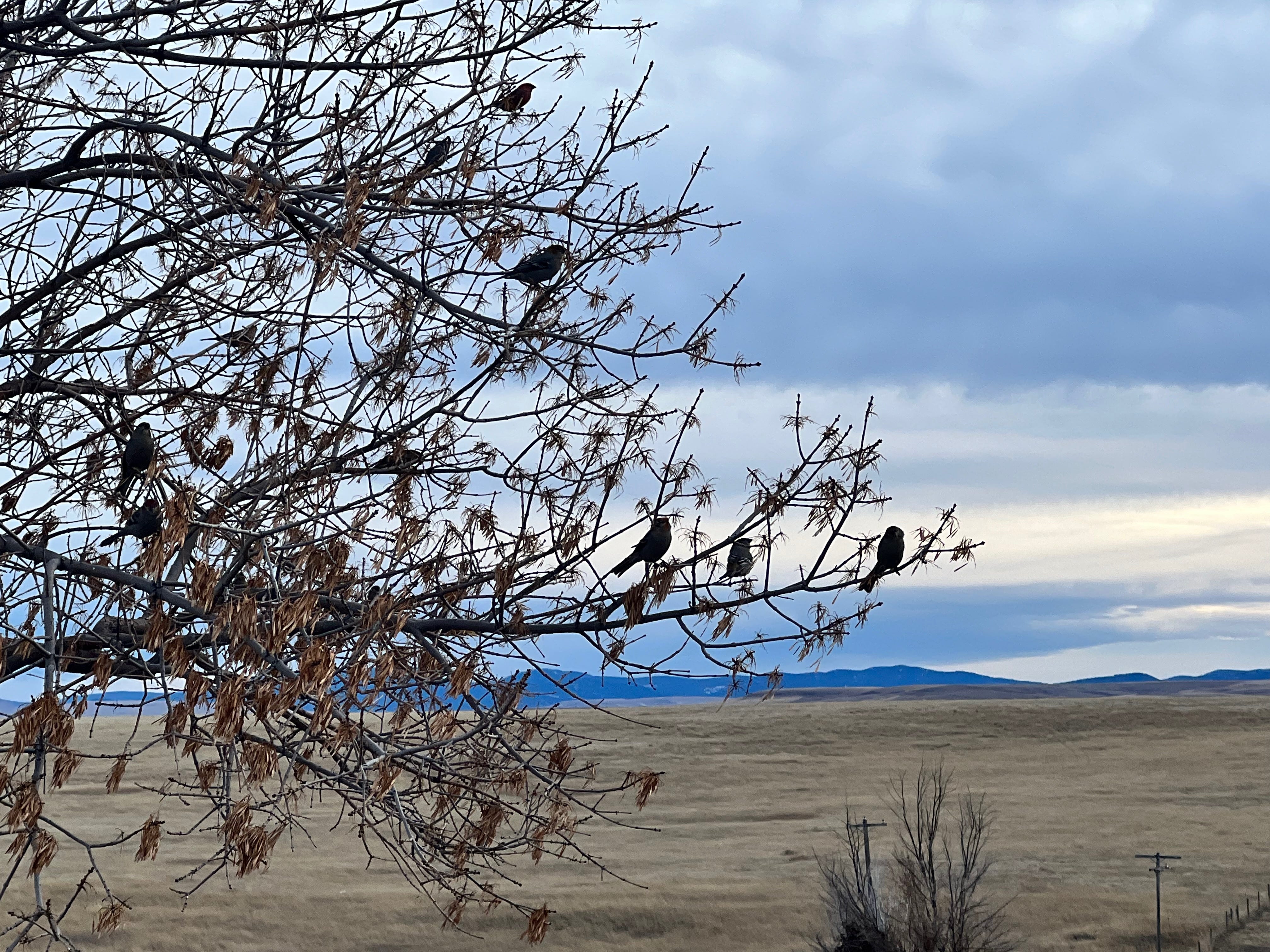
A flock of what I think were Bohemian waxwings kept me company the entire two hours I spent wandering the Old Highland Cemetery outside of Great Falls.

Last week, after a research trip to meet with the archivist at the historical museum in Great Falls, Montana, I joined my family and some friends at a hot springs for solstice. In both Great Falls and at the hot springs, Moon showed up and I can’t tell you how relieved I was to see Her. Especially driving through the mountains toward Great Falls and the prairie and farmland of eastern Montana, out of the low gray skies that are a near-constant in the winter where I live. I hadn’t seen Her, or the stars, in well over a week. I stopped the car at several points to stand in Her light, a moonlight waterfall. Moonfall. 

There was something other-worldly about it, by which I mean this-worldly. The this-world that too much of most of our daily lives washes out and hides from us. The this-world I soak in when I go to forest service cabins or my stepdad’s cabin, far from any electricity, especially electric lighting, where the stars can show their brilliant, miraculous selves. 

I was re-watching The Hobbit the other night, and remembered all the nights, so many nights, I’ve spent in my life under unfiltered starlight, alone or with family or friends. I’ve always thrilled to the elves’ love of starlight in those stories, which I think was described more fully in The Silmarillion but which Tauriel’s lines in the movie bring to life so beautifully:

“All light is sacred to the Eldar. But what elves love best is the light of the stars.”

“I’ve always thought it was a cold light, remote and far away,” said Kili.

“It is memory,” Tauriel responded. “Precious and pure. Like your promise. 

I have walked there sometimes, beyond the forest and up into the night. I have seen the world fall away, and the white light forever fill the air.”

I have seen the world fall away. That is what happens when I’m out there those nights, walking out or simply looking up when sleep leaves for a time to linger in starlight; and at dawn and twilight when the sun rises and sets as if he has all the time in the world—which he does, far more than this world itself has—and the times I’ve seen Moon come up from behind the mountains, as if She were gathering all of existence in Her light. A world that feels whole, one you can wander without fences or property lines, borders or walls, greed or war.

From the hot springs, I drove my younger kid to the Bison Range instead of going straight home. It’s just far enough from where I live that I hadn’t taken them yet, though I knew they’d love the place. We saw bald eagles on the drive in and out—four in total, very active; it’s always awesome, in the older sense of the word, to see them that close—a cluster of buffalo on a distant hill below the low fog line, and a kestrel taking off from a fence post in front of us.

My kid asked a lot of questions about the land and the bison, questions I couldn’t answer without entangling myself in inadequate language. They know about invasion and theft, and the museum at the Bison Range did a much better job than I could ever hope to of describing the history of that specific land, the buffalo herd, and the Confederated Salish & Kootenai Tribes’ relationship with all of it. 

Trying to tell these histories without using the word “own” is difficult, though it’s made easier with someone who already understands the sheer wrongness of ownership, as my kids both do—instinctively, somehow, on their own, having arrived at that belief. Maybe they got it from living in a place where “No Trespassing” and “Private Property” signs are ubiquitous and it’s hard to understand why you can’t just walk where your feet and mind wish to go. Or maybe this is an understanding that is innate to most people, and we have to be taught to think differently. To say, “The federal government used to own the Bison Range and then gave it back to the CSKT” makes absolutely no sense, especially without including the rest of the story, the original theft of all that land, all this land, and more. How can you give back, much less own, what was never rightfully yours in the first place?

The wrongness of it can’t be told enough, or in enough ways, and one of my biggest struggles with the work I’m doing here is finding effective ways to explain, for people who don’t already get it, that wrongness—of ownership itself, and more specifically what it means to take land that all rely on for sustenance and survival, and turn it into private property, into capital. It’s like a rift in reality that many people can perceive but far too many can’t, and I don’t know that we can make much progress in the world until they do.

There’s a display at the museum that shows the effects of the Dawes Act of 1887, also known as the General Allotment Act, which forced reservation land into individual private ownership and demanded that any reservation land not subsequently owned by individual Native Americans be open to white settlement. The display shows the erosion of land by mostly white settler private property claims more clearly than anything I’ve ever read. It’s startling every time I look at it, even though I know that history, and even without considering the travesty of justice that “reservations” are to begin with. 

There is no owning here, no gentle waves of agricultural settlement that are ubiquitous in U.S. history stories. There is only taking. Like everywhere else in the world where “landed property” is a legally protected value. There is only theft, violence, and the power to defend it. Visiting the Bison Range is a reminder of this, and of what all this land could be again. A world made whole.

Sunrise over the frozen river last March from near the cabin I stay at most often.


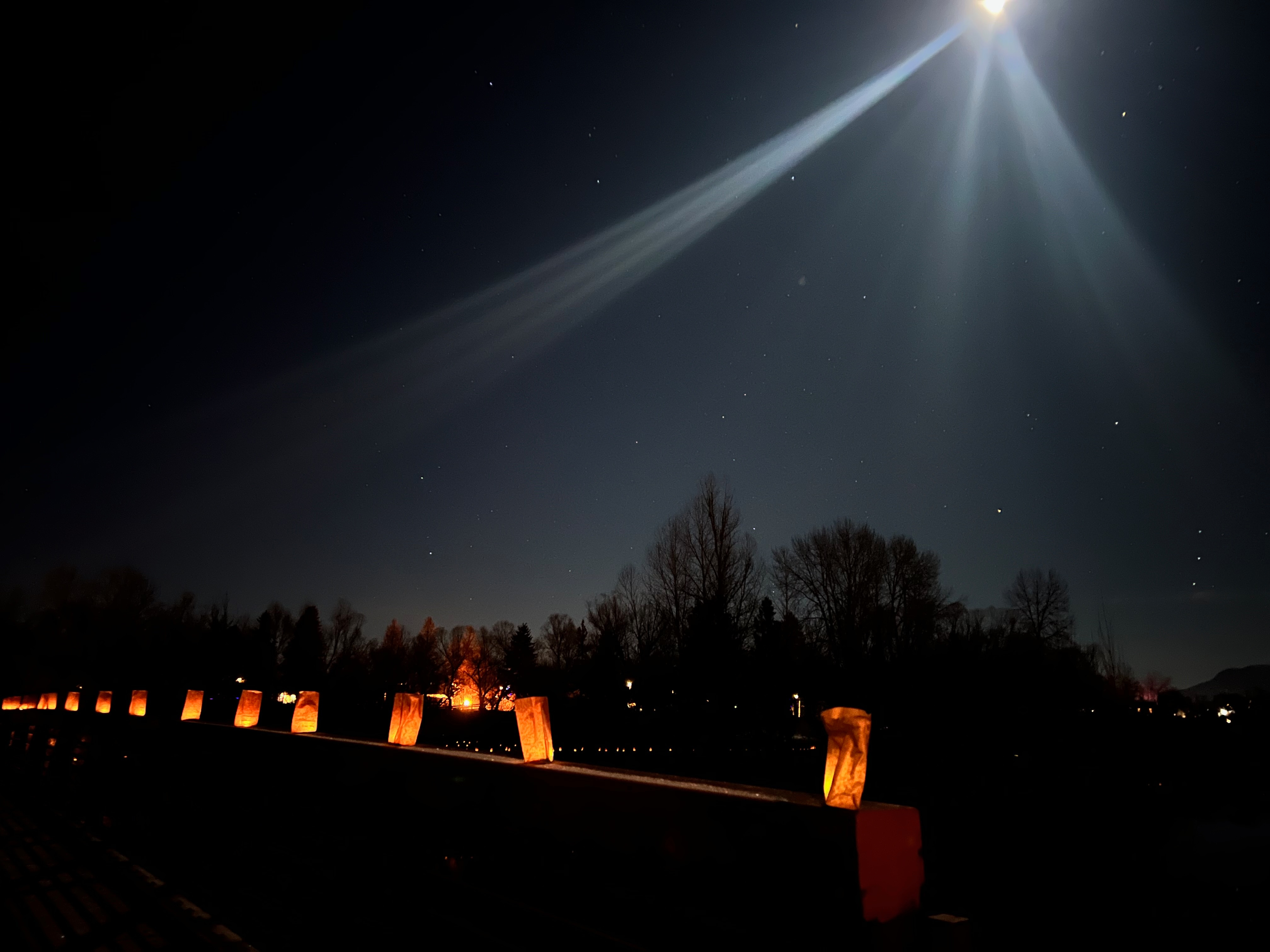
Every year there is a Luminaria near where I live, down by the footbridge that rests over the river. It was begun in honor of people I care for deeply and all the others who care for them, and one another, here. It’s about the only part of the Christmas season I enjoy, and I’ve been grateful every year since I moved back that it’s there, keeping connected all the people who comprise the heart of this community, a place and people that most visitors never see. 

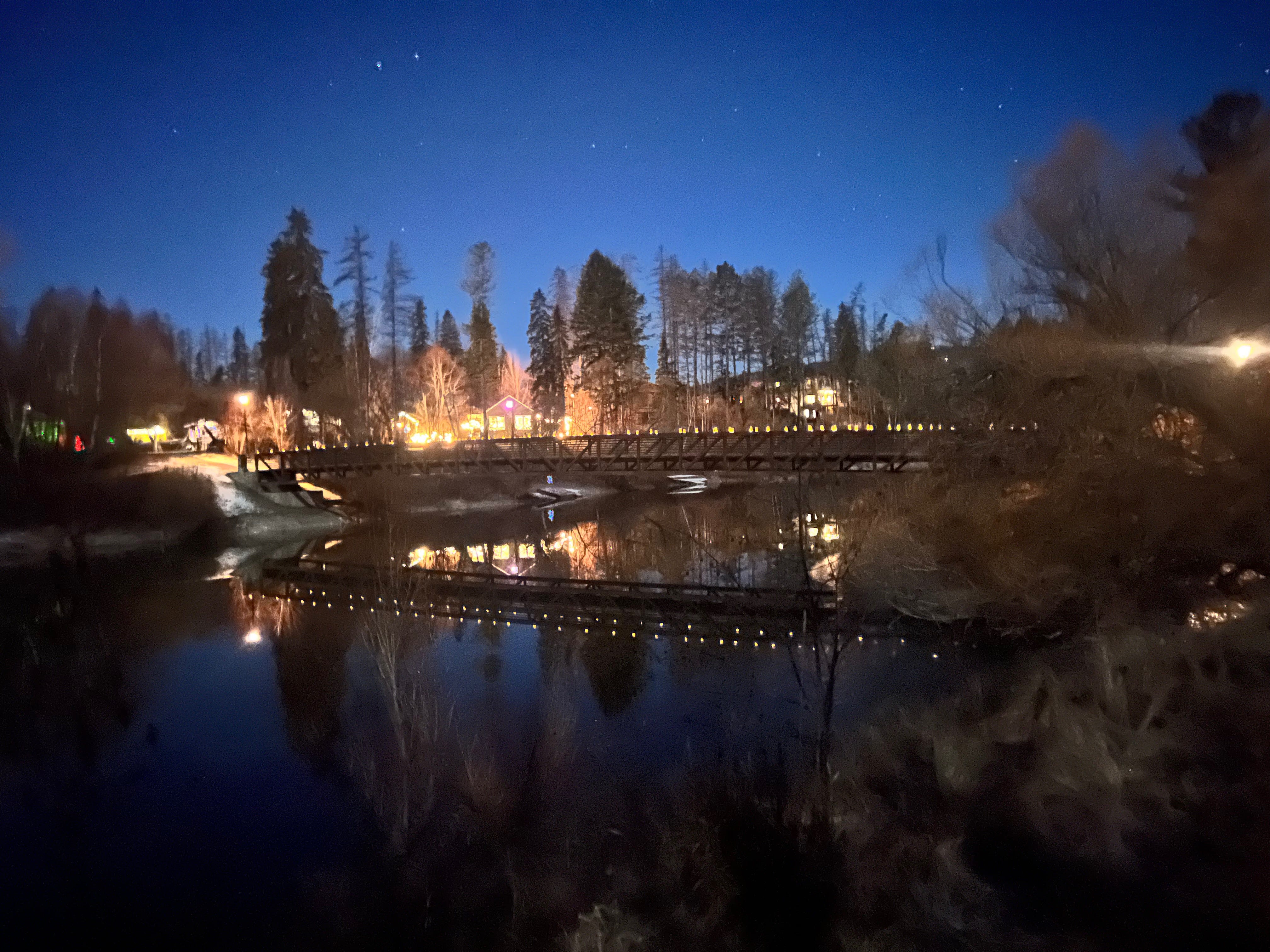
This year I had heard a rumor that it might be the Luminaria’s last because event permitting has become difficult. After saying hello to whole bunches of my favorite people, faces I couldn’t recognize in the dark but whose friendly gaits and voices were familiar, I handed my kid my phone to take photos of the candlelight glittering off the water and settled in for conversation with the person who’d started this tradition, asking him about the permitting issue.

Considering what has been happening in Substack-world regarding monetized publications by Nazis, this person’s explanation felt almost ironic: in late 2016 and early 2017, my town was terrorized through an online neo-Nazi hate campaign, with people in the Jewish community specifically targeted for death threats, including months of personal phone calls and emails. I don’t really want to go into it more specifically again. I wrote some about it and its effects on me here (trigger warning for anti-Semitism), but, as is the case with her response this week to Substack’s Nazi issueAnne Helen Petersen’s reporting on what happened, from when she was still at BuzzFeed, remains the best I’ve seen.

The reason that getting a permit for the Luminaria is difficult now is because the city revamped its block party and event permitting process in the wake of the threatened neo-Nazi march at that time. The march never occurred but the threat is ever-present.

Though I was appointed to the Board of Parks late last year, I don’t yet know all the details of how these permits work—we spend a surprising amount of time trying to figure out how to mitigate damage to Depot Park’s grass from the annual Oktoberfest—but am personally very interested in making sure we can keep the Luminaria going.

These gatherings are important. Maybe you have a similar tradition where you are, or one around Solstice, or harvest festivals, or religious or spiritual or ancient practices I know nothing about. Or maybe they exist near you and you’re not aware of them. These traditions create what’s called culture. They bring people into relationship with one another, and into relationship with this-world. The land and water, animals and moonlight. 

Like walking, traditions and rituals remind us that we are animals evolved in relationship with this planet, with the life and light that co-create existence.

I was thinking the other morning about my father’s struggles with how to maintain integrity in a corrupt and unjust system, and the struggles that all of us face at one point or another with our ethics, morals, and values, and I remembered something Tyson Yunkaporta, author of Sand Talk, said in an interview once:

“We’re at the beginning of a thousand-year cleanup. What generations to come will need most is good stories, and good cognition.”

Good stories and good cognition. I think about that a lot now, and something 

Swarnali Mukherjee wrote recently in an essay about the colonial history of tea in India:

“Are we all also not fireflies, sending coded signals across the continuum of space and time by beaming our light into the quantum of gift we leave behind in our pursuit to build a better world, in pursuit of finding others who can decode the signals, who can see our light?”

Good stories and good cognition are like fireflies, or the lights of the Luminaria, sending signals of understanding and solidarity across the night, their seasonality hinge points as this planet, this-world, makes its annual circumambulation of the sun, whose light makes all of our lives possible. 

Not every question has an absolute answer. But we can each of us try to be a firefly, a candle’s small flame, sending our solidarity across space and time. Or at least I can try, try my best to be a light—starlight brought by memory.

My kid took this photo, of the footbridge with its Luminaria lights and their reflection in the river, starlight above. I was very impressed!