Welcome (or welcome back!) to On the Commons. Here, we explore questions as varied (but related) as: Why are 3 little-known 15th-century papal bulls still being weaponized against Indigenous sovereignty today? How is the right to forage for food related to the Magna Carta, and freedom? How can a night of firelit poetry and some barefoot walking bring a person back to herself?
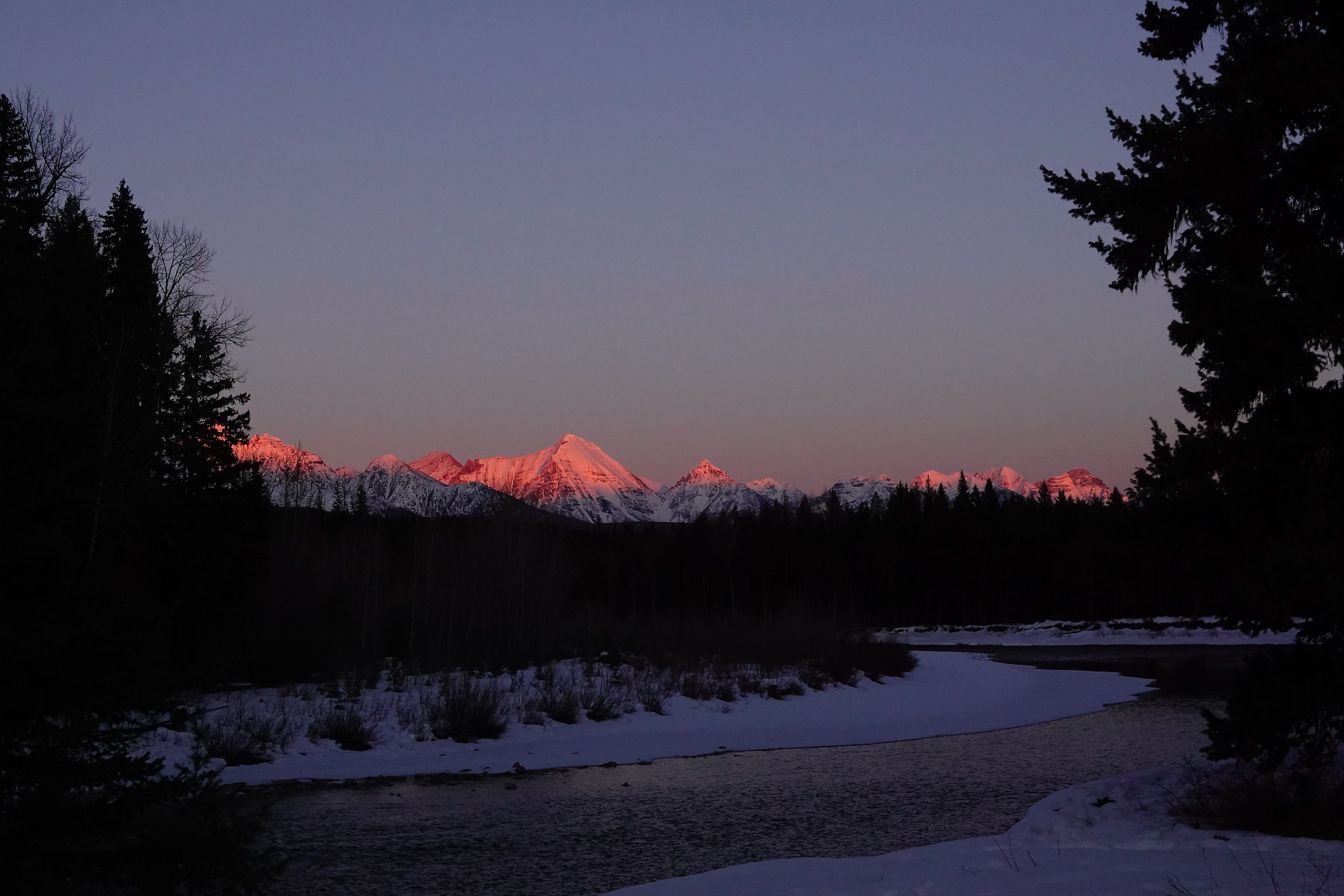
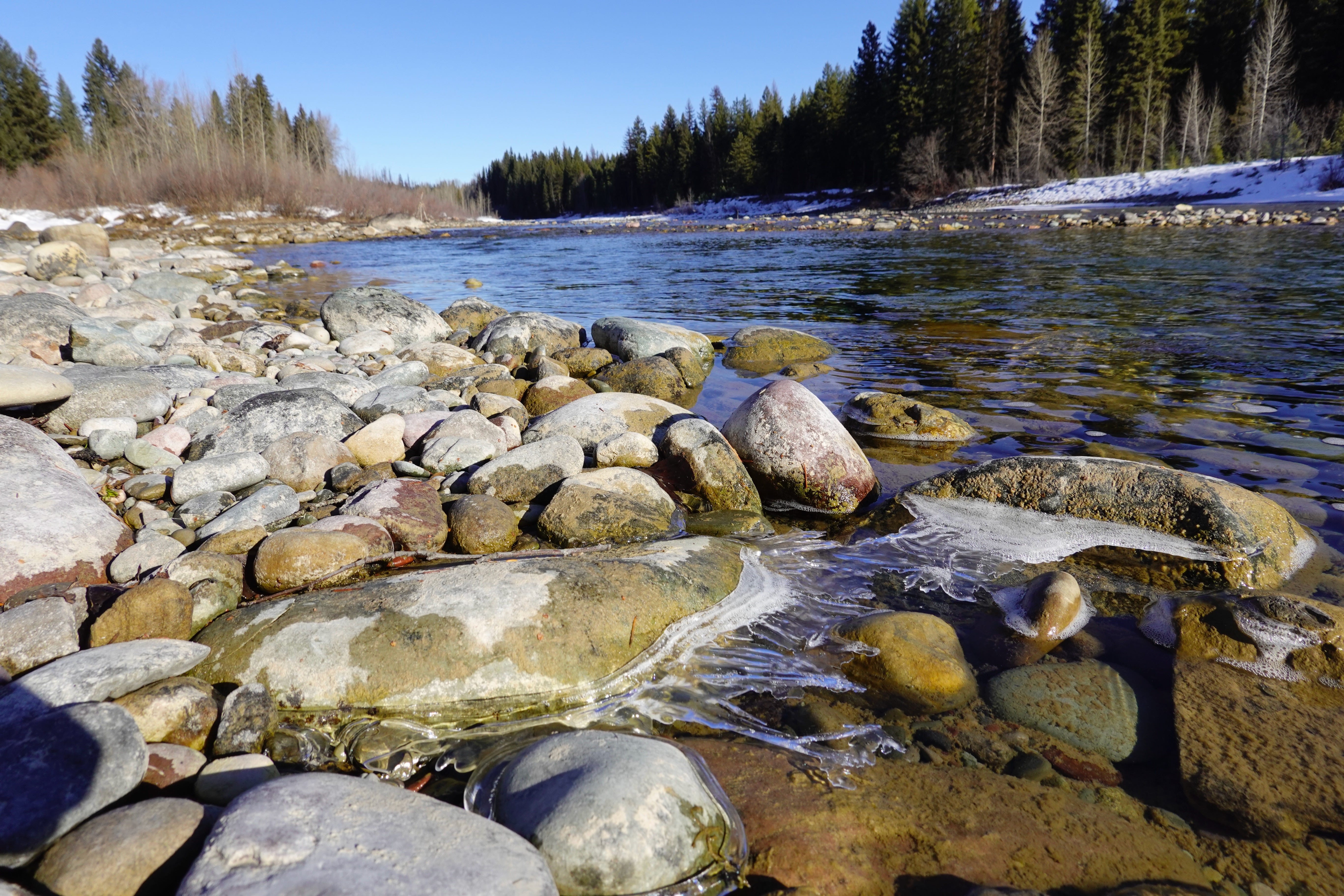
I’ve taken so many pictures of this particular curve of this particular river I couldn’t begin to count them. Pictures of sunrise from behind those mountains, of the rocks and ice where I sit to watch that sunlight grow hour by hour before finally flashing above the peaks, my scorching coffee pouring heat back into what a frozen early-morning river dip has snatched away.
Pictures of alpenglow, that rose quartz soaking the snow and rock, the late-struck sunlight from the west slipping slowly up and off the mountains as the sky behind turns purple, then indigo, then something dark and rich that takes hours to reach anything like true black, drizzled with stars and blanked by the light of a half-full Moon high in the western sky.
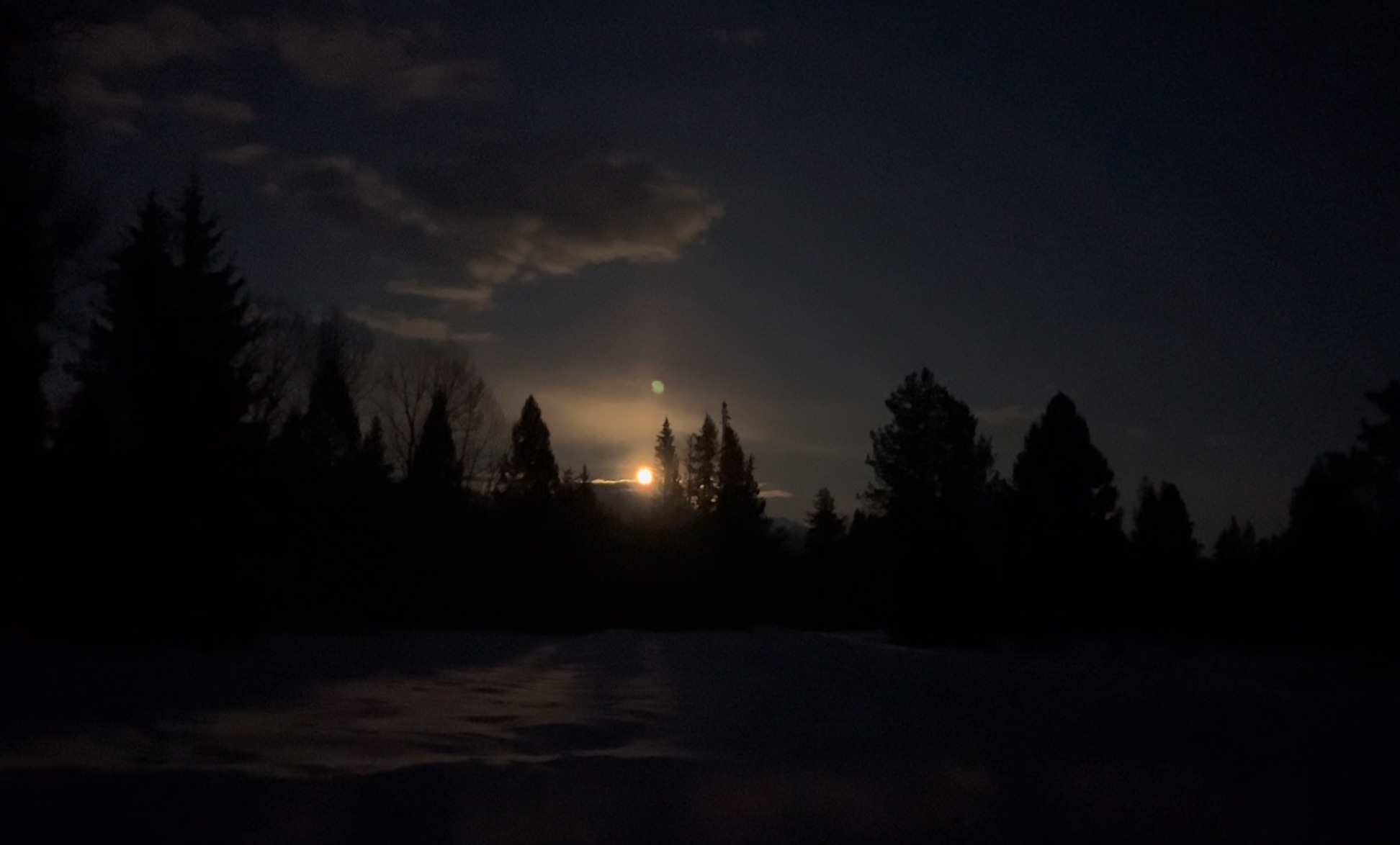
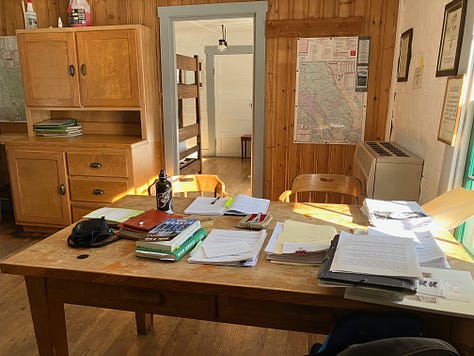
The last two years, I was there this same time but over a full Moon, watching Her rise slowly from the same spot in the east where Sun comes up hours later. I still have a four-minute video of one of those nights, when I sat in the Forest Service cabin embroidering under the single propane-powered light and listening to mice run around the walls.
During my Master Naturalist course a couple years ago, we learned about phenology journals, a way of tracking sightings, behaviors, noticings, and movements of the natural world over the seasons and years. To be able to compare Moon phases and birds, temperature and river’s ice coverage even over three or four years is a little thrilling—for a modern person. For the vast span of human history, in any part of the planet, it would have been expected and shared knowledge, a matter of survival as well as of culture. Such a short time of industrialization, and in that time how much has been lost, how much there is to relearn.
There is something about reminding myself of the Moon phases and bird encounters from last year, and the year before, that has begun to give me a settled sense of belonging to this place where I’ve spent most of my life. A sense of responsibility, even, that I’ve been quietly working on ever since moving back home to Montana in 2014—serving the land and lives I live among starts with knowing them.
While at this most recent offline, off-grid cabin visit, I reread a couple of books I read last fall: How Wealth Rules the World by Ben G. Price (more about that in a future essay), and Wild Service: Why Nature Needs You, edited by Nick Hayes (of The Book of Trespass) and Jon Moses and written by people involved in England’s Right to Roam movement.
Wild Service takes its ethos from the serviceberry tree, an intersection of both worldview and metaphor with Robin Wall Kimmerer’s The Serviceberry—the service is native to both England and North America, and is similarly under-valued by modern industrial culture.
In the introduction to Wild Service, Nick Hayes speaks to the concepts of kinship and belonging, and the book’s overriding theme that there is no “saving nature” (however one interprets that) by placing it in some sort of walled garden never touched by humans. Humans need to re-relationship with nature, re-kin, reconnect. Recommon.
“Recommoning is how we can change this. Recommoning is the idea that all humans can and should have the collective responsibility to care for nature.”
To learn the lands and waters of one’s home, ask permission and feel one’s way into a sense of welcome and belonging, is one of the best antidotes I can think of to a culture and power structures that seem intent on destroying every single bit of good and beauty in the world.
I started going to these forest service cabins, and often camping by myself in the woods, to, frankly, get work done. The life of a caregiver is, as anyone who does it knows, even in the best circumstances characterized by nearly nonstop interruption. When I’m somewhere alone, and especially without internet or phone access, I suddenly have time to read a book, sort through research, brainstorm ideas. Write, edit, revise, edit other people’s work for my copy editing job. Write again.
But over the last couple of years I’ve started to let myself spend that time—usually two or three nights—to just be. The last two times I was at that cabin, I lay by the river for up to four hours a day doing nothing but listening to the water run and watching the shift of Sun through the spruce and pine trees. Catching an occasional glimpse of raven or bald eagle, northern flicker or chickadee.
This time, all four were present, along with a pair of Canada geese and some Canada jays (Canada seemed to be in the air, go Canada).
And one day, there was a wolf.
I had lingered by the river at sunset, as usual, and that night it snowed. The next day, toward sunset again, at that same spot, I almost walked right over fresh wolf tracks in the fresh snow. Struck still in amazement—we must have been there within hours of each other, if not minutes—I followed them down to the river, where the wolf had probably taken a drink of water not twenty feet from where I’d been sitting much of the chilly afternoon.
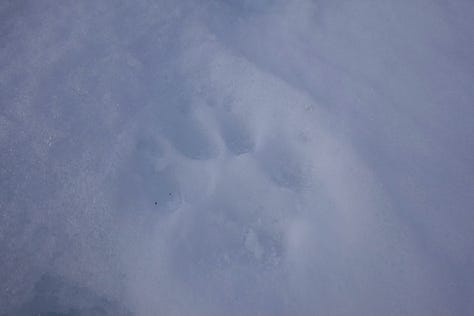
The next morning, I followed the tracks a little way back into the forest, toward a spot I’d camped above the river one hot weekend the previous August. I didn’t go very far, not wanting to disturb or stress the wolf or wolves, since they prefer to keep their distance from humans when given the choice.
I’ve been going to that cabin and river for years and though I know wolves live in the area—the packs there originally repopulated those mountains from Canada over 40 years ago, as local wildlife biologist Diane K. Boyd writes about in her recent memoir A Woman Among Wolves—it’s a vast, mostly unpeopled, region and I’ve never seen tracks anywhere near that cabin.
A wolf came by. Being a brief part of a wolf’s story is the most thrilling thing that’s ever happened to me there, even counting full Moonrises over Glacier and the time one of the packrats ran off with my best tea strainer.
There is something about these experiences to bring back home, something that eases the chew of guilt at even having the privilege of time itself to go sleep by a river alone for a couple of nights. Of having two flexible freelance careers, a reliable co-parent and an able-enough body and kids who don’t need round-the-clock care. These times make me whole, they keep me human. But due to a combination of early training against any hint of selfishness, and a tradition of service to others from both sides of my family, it nags at me to luxuriate in them.
I tell myself I can do my work more effectively by spending these times away, by having hours and days where influences and rhythms are given by starlight and free-flowing water rather than clocks and news cycles and dinnertimes and the finicky washing machine. I tell myself that, because it helps me feel better about simply doing and being what I want to do and how I want to be for a few days.
I recently read Pico Iyer’s new book Aflame, about the monastery in California he’s been spending time at for decades, and found much to connect with in the conversations he had with people over the years, their struggles with mortality and service, how we live with one another and the world. I keep going back to one line toward the beginning, about the writing Iyer does while staying there:
“The point of being here is not to get anything done; only to see what might be worth doing.”
Which reflects the shift over the years in how I, too, spend my time in these places. There’s a lot I stop caring about or stressing over. Priorities are shaken loose and values realigned. I’ve got one life. How do I care for, and even treasure, the stardust that makes up each of its days, each of its moments? Where is the balance between attending to oneself and attending to the world?
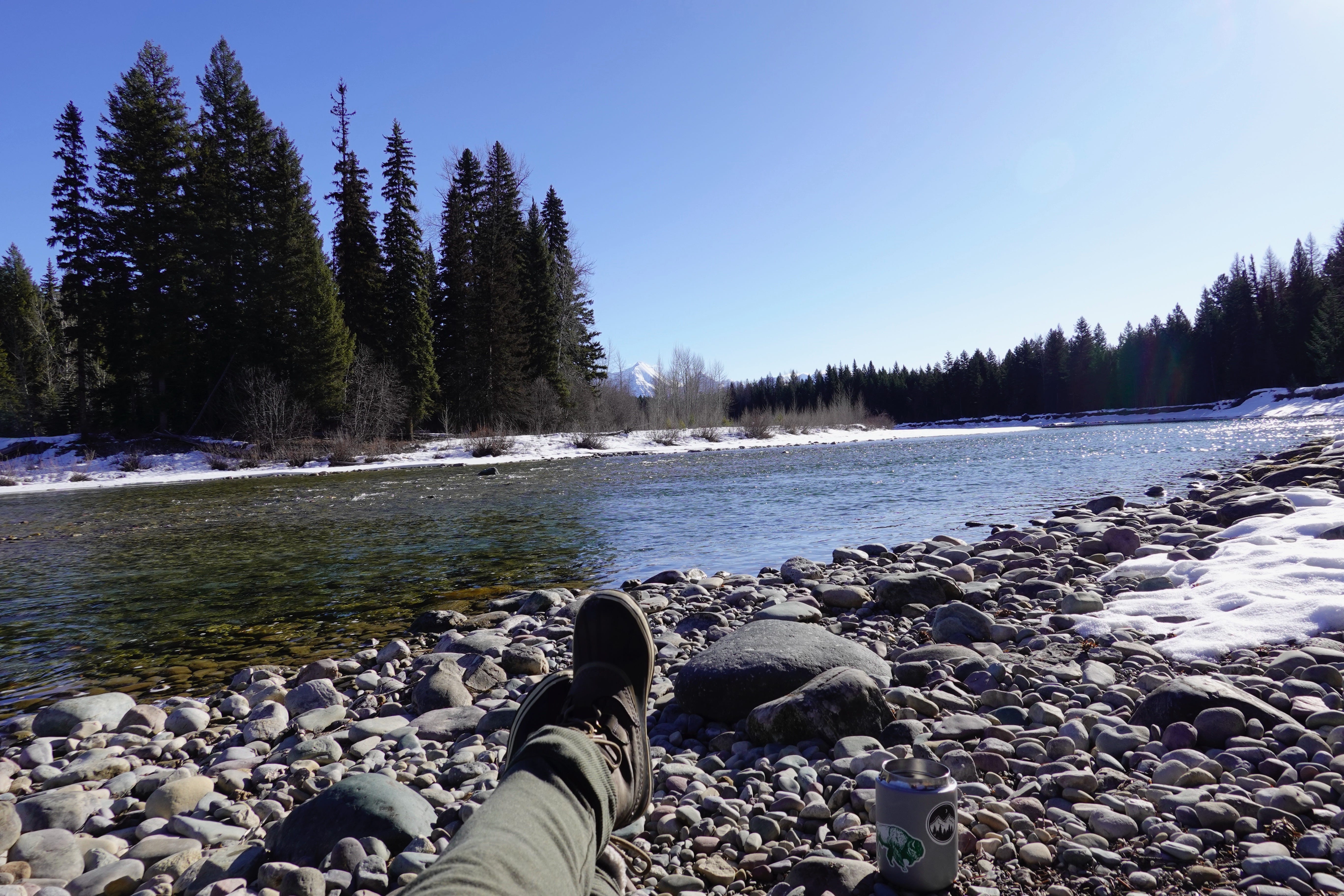
What I often come to on these trips is that anything approaching balance is found in accepting that those two things are often one and the same—a tricky idea with many complications, not least of which is a warping of “attending to oneself” into a wellness culture that too often encourages our own personal little walled gardens and No Trespassing signs.
“Protect your peace” is vital advice, and at the same time a slippery slope. When does self-care turn into selfishness? Yet how much giving or service is too much? At what point does providing support turn into taking away others’ agency? When does focusing on “internal stability” rather than “external security”—which is another way of phrasing Nazi concentration camp survivor Viktor Frankl’s insight that the final freedom is in choosing one’s attitude to external circumstances—turn into accepting injustice? The very real value of self-sovereignty can be weaponized against societal and cultural change the way the idea of “grit” has been in education.
Do any of us have any idea what we’re doing here?
Probably not.
Many times over the years, people have told me that they would not want to imitate these trips, because the prospect of being that alone for that long is too daunting. As someone who’s always been most comfortable in the company of only herself and nature, I try to sympathize, to enter into what it feels like to not crave this alone time as badly as I crave sleep, as I crave gulps of water taken straight from the river, as I crave quiet. I’ve got some frustrating issues going on that have limited more far-flung ventures recently, but in general it’s no feat for me to do this, go to the woods and be alone for a few days, barely a hardship. I sleep best far away from other humans.
Which always leads back into a circular wondering of how selfish taking this time is. I know that coming to these places, holding this time sacred for whatever relationships exist between me and the river, me and the trees, me and the ravens, me and myself, me and that wolf, makes me somehow more human, more real, more alive, and much more capable of managing all the obligations and cares in my life. But I need it, and isn’t it selfish, to take time for what we need?
I know most everyone reading this is generally kind and sympathetic and will say of course not—at least, those of you who comment and email—but it’s a haunting question, embedded in my psyche, that I’ll probably never be fully rid of, and I’m sure I’m not alone in that.
Wild Service refocuses these questions, forcing readers to ask how much we can truly do for the world, or even love the world, if we don’t understand it, don’t know it. While it’s true that over a century of car-centrism and living indoors and, now, digital lives have increasingly disconnected humans from nature, private property and private land ownership did so centuries before, by removing people from their relationship with lands. Recommoning means re-belonging.
“Service is the foundation stone of belonging. While ownership imposes a simplistic, one-way relationship with the land, easily transferable in the passing of deeds, legal spells that confer dominion, belonging takes more work. . . . Belonging is the democratic antidote to despotic ownership, and it requires active engagement with the land, lived experience, knowledge and shared stories.”
If the only answer I can ever find to my own personal quandary is not in words, but in actions—in spending time with family and friends, in laughing and struggling together—and a great deal more in simply learning to belong, letting myself belong, with rivers and starlight, wolves and ravens, basking in Moonfall in the middle of the night under a bare-branched cottonwood tree shaking ice shards and Orion’s Belt off her fingers, in learning to serve the world, and especially the place I live and love, as it is, then I can’t imagine, when I get to the end of my life, I’ll regret having done so, having spent some time to see what, in each of those moments, was worth doing.
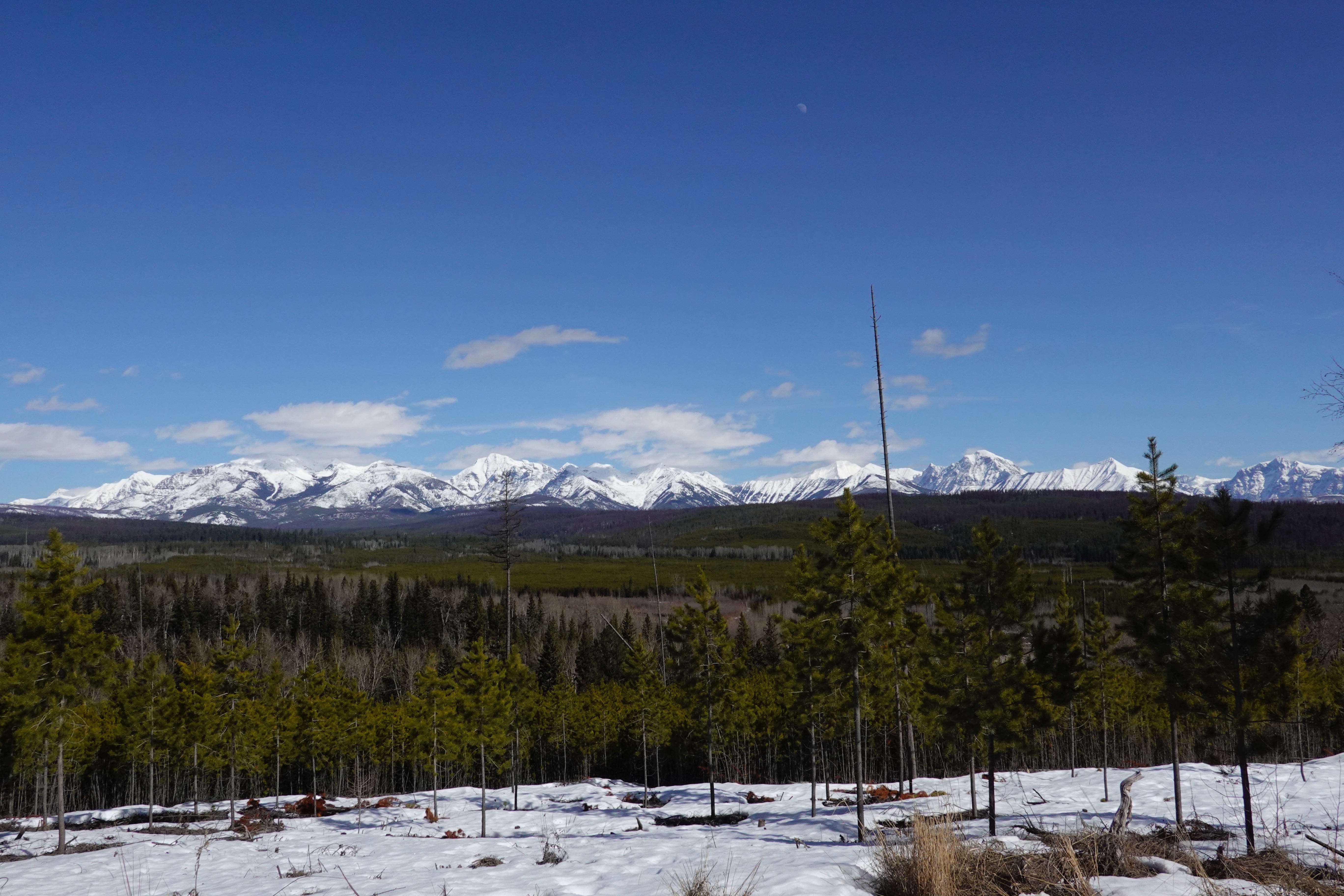
Half-Moon barely visible high over Glacier National Park, where I stopped to watch a bald eagle soar for a long time on my drive out of the North Fork.


 Antonia Malchik