I recently came across a news story about the community of Lake Tahoe, California—a place known as a ski resort, as my town in Montana is also known but, also like my town, a place where thousands of people live full-time. People who keep the community running, whose taxes and labor pay for the infrastructure necessary to make ski vacations and second homeownership possible; and who, like the majority of humans, struggle to survive.
The company that provides Tahoe’s nearly 50,000 full-time residents with electric power has informed them that they will have to find another electricity source within a year. NV Energy, the electricity distributor, told Liberty Utilities, the electric company serving the Tahoe community, that it needs to divert all of Tahoe’s previous capacity to power AI data centers.
This isn’t really a new situation, but the scale of it is mind-boggling. The details, which I recommend reading the original reporting for, are tangled in a complex knot of jurisdiction and state law—NV Energy is located in Nevada, while Tahoe is in California. The legalities of cross-state electricity production and consumption in the U.S. depend on federal regulations from FERC (the Federal Energy Regulatory Commission), as well as each state’s laws and regulatory oversight from that state’s Public Service Commission. In Montana, where I live, three PSC members are elected to well-paid, powerful positions, all of which are currently held by zealous anti-regulationists; other states vary on PSC positions being appointed or elected, and their power over ordinary people’s lives through regulatory oversight of utilities—or lack thereof—is often overlooked.
Like most of the commons we rely on, electricity is being treated not as a public good, a technology necessary to living in this modern world, but as a resource ripe for further privatization and enclosure. It’s treated as a property right that can be taken from those with less power (pun unavoidable) and given to those with more.
There’s a line I’ve often heard among environmental and conservation groups: “private property is bedrock.” Local and regional resistance to conservation is more likely when private property rights are perceived as threatened, so private property is a third rail that environmental advocates rarely touch.
This concept was evident in a 2025 court case that came before the U.S. 10th Circuit Court of Appeals regarding what are known as “corner crossings”—the practice of stepping over (but not physically touching) intersecting corners of private land in order to access public land. Without corner crossings, private property owners can, in effect, privatize public land by denying access. The case originated in Wyoming, and the 10th Circuit found that that corner crossing was legal; the practice remains illegal elsewhere, like in Montana.
In the decision, the judges referenced a previous 2021 case in finding first that
“protection of private property is indispensible to the promotion of individual freedom,”
which in turn referenced an even earlier 2017 case that came to the U.S. Supreme Court out of Wisconsin:
“Property rights are necessary to preserve freedom, for property ownership empowers persons to shape and to plan their own destiny in a world where governments are always eager to do so for them.”
In the 49-page decision, the judges waded into the U.S.’s own laws against enclosure (or “inclosure”) of public land, passed in 1885 to “‘prevent the absorption and ownership of vast tracts of our public domain’ by the cattle barons.”
Though that Wyoming case was a win for public lands and public access, it’s clear that the judges first made an effort to solidify the “private property is bedrock” notion—avoiding, or attempting to avoid, the third rail of private property rights.
In America, private property is akin to religion. You do not touch private property, we’re told. To do so is anathema—property ownership is the bedrock of American individualism, and innovation, and freedom.
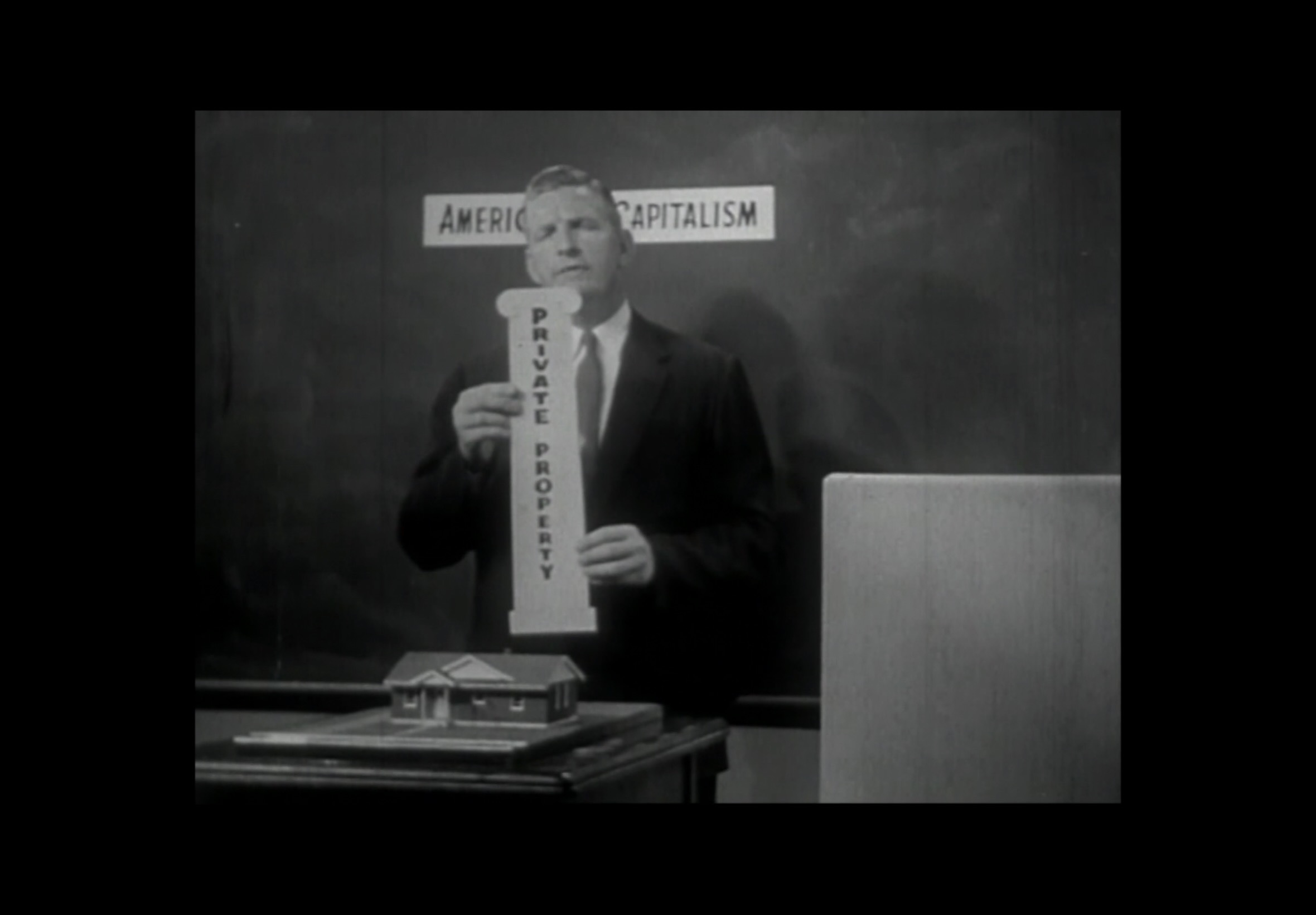
The truth is almost exactly the opposite. America was built on stolen people, stolen labor, and stolen land. The taking of property—the creation of property—through violence and dishonored treaties was exactly what created this country. And once you accept that that taking, that theft, was justified or at least irreversible—once you accept that the creation of private property in land, water, and other forms of life and necessities is an immovable foundation of a society and nation—then by that same logic you must accept that nothing is in fact so insecure as private property ownership.
That is, if the original theft is accepted, if it’s left standing, then any subsequent theft is just as easily justified.
Once you’ve created an idea, a value, a story, that acts like bedrock in the imagination, it becomes almost impossible to fight against. Any land or right can be taken for any reason. The person or entity—a corporation, for example—doing the taking need only have more money or more power, and the two often go hand in hand.
Take the following examples of private property’s fragility, just two from my piles of research:
- Residents of New London, Connecticut, lost their homes when the city took their properties, via the government’s power of eminent domain, to sell to a private developer. The 2005 U.S. Supreme Court decision in the case (Kelo v. New London) expanded the power of eminent domain “for public use” to essentially cover any kind of economic development, even if the public couldn’t access those benefits. The homes were bulldozed for shopping, a hotel, and luxury condos—high-end development that was in fact never completed.
- In 2016, a family of Maple tree farmers lost 558 trees on their land when crews working for a natural gas pipeline company, arriving with the protection of armed federal marshals, cut down the trees to make way for a gas pipeline. The natural gas company had won a court case in 2015 to take the family’s land via eminent domain. (The pipeline was never built, and in 2020 the family won a court case regranting them ownership of the land. They were planning on replanting trees to replace those lost.)
Societies structured similarly to the United States are forced into an odd juxtaposition: on the one hand, ownership of property is almost our only security—just ask anyone whose rental apartment building was bought by an investment company and their rent doubled or more—and on the other, relying on ownership as the basis of security is ridiculously tenuous.
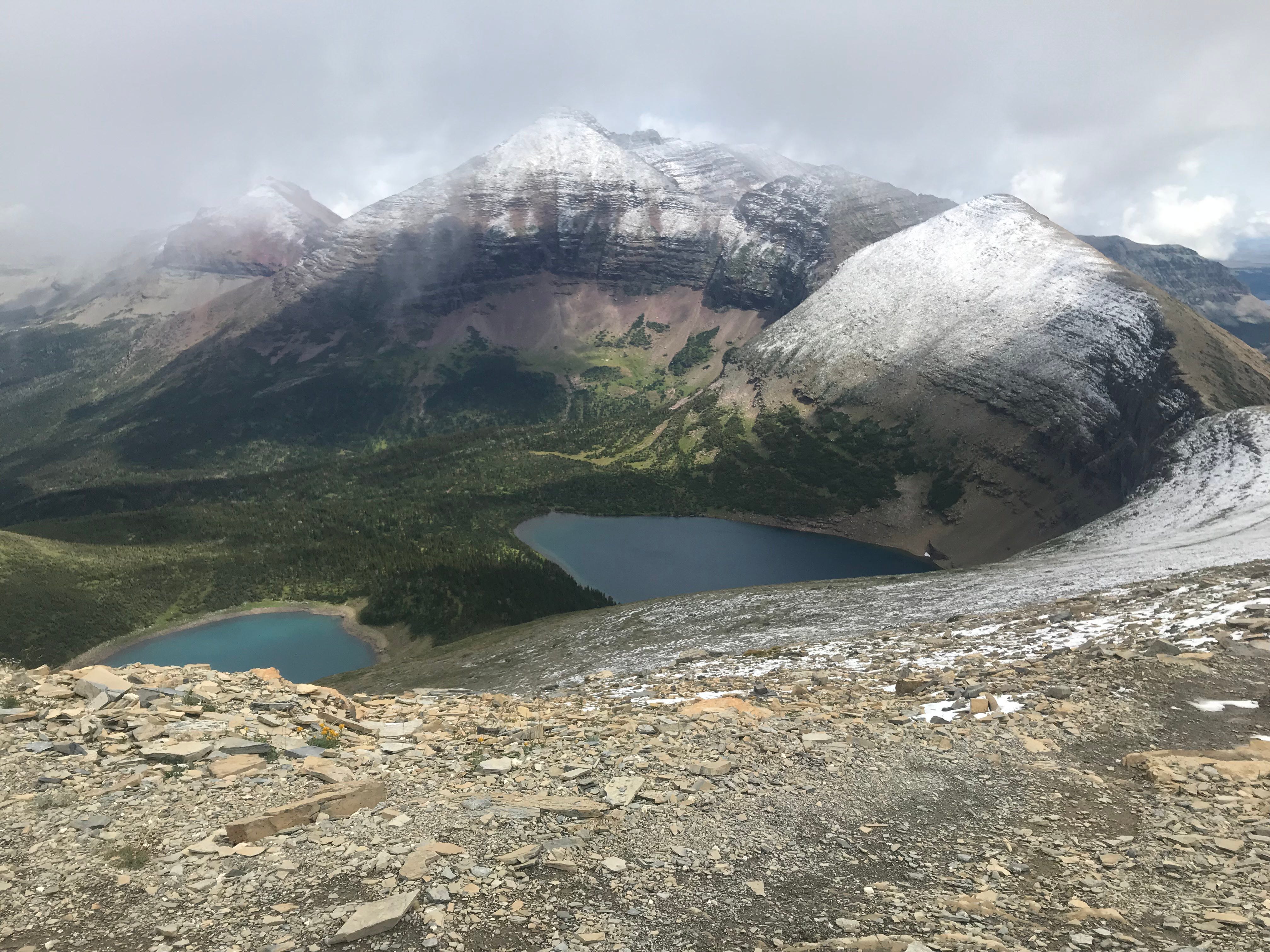
Private property rights are less “bedrock” than a narrow, sometimes maintained and sometimes neglected, path on a steep, shale-covered mountainside. The kind of trail I’ve hiked countless times, knees quivering at the thought of a single slip, a single step out of place that can send me and half the hillside heaving uncontrollably downhill.
Traversing the terrain of life under a private property regime without understanding how fissile these rights are is like walking that path in fog. I’ve done that, too, and in snowstorms and heavy rain. It’s terrifying, not knowing where your steps are landing, what might send you and all you hold dear into the abyss.
Another recent story came out of the U.S. state of Georgia, where over the last year a Blackstone-owned AI data center drew 29 million gallons of water from the local utility without permission, and without paying for it. When the usage was revealed—only through a local resident’s government records request—the water company collected back pay from the data center but there was no fine, no accountability, and no reconsideration of how local water is used, and by whom.
Instead, the water company said, “They’re our largest customer, and we have to be partners. It’s called customer service.”
I live in an area served by a small cooperative electricity company, which sounds fairly secure until you find out that most of its power comes from the massive Bonneville Power Administration and its many hydropower dams all through the Columbia River Basin, starting in Canada. Some of those dams were powering data centers and damaging salmon habitat long before AI was more than a pipe dream—all those photos in the cloud, all the emails from online retailers, all those GoPro videos that seem necessary every time someone bikes a trail or skis a line. All these Substack essays. I have little confidence that Bonneville would choose local communities’ electricity needs over corporate-backed AI data centers.
It’s not even about the kind of money that corporations have to wield influence over policy; the people who cover these stories have also noted that individual rate payers are stuck paying for the needed infrastructure upgrades and expansion for years to come, even if they don’t benefit from it. I’ve seen it happen with our regional natural gas company’s insistence on buying a struggling coal-fired power plant and recouping that cost from their customers over the next few decades.
This is what power and wealth grant, whether they come from individual people or corporations: the right to take from others who have no real recourse. That was true when wealthy landowners privatized the commons—that is, stole them from the people—for private profit in 15th-century England; when the East India Company and the British Crown stole generations of wealth and resources from India from the 1600s until 1947 (read Swarnali Mukherjee’s incredible writing on Britain’s wealth extraction from India); when the Mongol Empire under Genghis Khan conquered, controlled, and extracted so much wealth from other regions in the 12th–13th centuries, including areas of China, Russia, Persia, and Afghanistan, that from my understanding Genghis Khan remains, corrected for today’s values, the wealthiest individual in history.
I could list examples all day, many of them within an hour’s drive of where I live. I’m sure everyone reading this can think of any number of similar examples within seconds.
During a conference I attended a couple years ago on the Doctrine of Discovery, Steven T. Newcomb, author of Pagans in the Promised Land and co-producer of a documentary on the Doctrine of Discovery, said that private property rights do not in fact grant ownership. What they do is grant a right of domination: “Property isn’t a right of possession,” he said, “it’s a right of domination.” If you “own” land, you have the right to extract from it, abuse it, forbid other humans from stepping on it, or even care for it if you wish. You could stop treating land as “it” and instead treat land as kin. But there’s no requirement that you do so.
And if someone more powerful comes along who wants to dominate that land in a different way, the bedrock contained in the idea of private property allows them to do so.
The same is true of water, electricity, seeds, air, trees, rare earth minerals; knowledge, imagination, your mind, your relationships. The law as it currently stands does not protect life. It doesn’t even truly protect rights. It protects property. And the transformation of property into power compounds over time.
The reality we live in is, in fact, exactly the kind of economy that Adam Smith, the famous advocate of laissez-faire capitalism and author of The Wealth of Nations (published in 1776), warned against: one controlled by monopolists and rentiers, in which those who already own extract their wealth from everyone else.
The only way to shift this reality is to build a world around the collective good—of people, but also of wildlife and wild waters, of Tamarack trees and Mountain Chickadees, of starry nights and air you can breathe, of mountains as sacred and oceans as sovereign. And of histories that deserve sunlight and reparations.
Some places are beginning to enact those values in real time. In the state of Oregon, the Public Service Commission just passed a rule that forces data centers to pay for any needed infrastructure upgrades, rather than passing that cost on to individual ratepayers. In Idaho, the state legislature is moving on legislation that restricts data centers’ use of water. The Institute for Local Self-Reliance (ILSR) has been working on community-controlled electricity for over 50 years, and their work expands to all kinds of community power. In countries all over the world, people are pushing back against the rights of data centers’ owners to extract water and electricity and land and make the rest of us pay for it.
Ownership will never guarantee rights, much less safety. Security lies not in pride and what we can own individually—not in our ability to dominate—but in humility and in what we can care for and manage together.