If you don’t know much about the Doctrine of Discovery and want to learn one thing of true importance this year, I’d make it that. You can start with any one of the resources linked to below, or Mark Charles’s powerful TEDx talk on the doctrine and the false message in “We the people.”
The doctrine is not ancient history. It’s a subtly hidden 500-year-old idea with tremendous and lasting global power. It takes the “I took it; now it’s mine” underpinnings of ownership further to “I saw it; now it’s mine.”
You can also read two of the original papal bulls (translated from Latin) comprising the doctrine for yourself, as well as a translation of Bull Inter Caetera of 1493 with introductory commentary from the Doctrine of Discovery organization:
- Bull Romanus Pontifex of 1455
- Bull Inter Caetera of 1493
- Bull Inter Caetera of May 4, 1493, introduced and translated by
Sebastian Modrow and Melissa Smith
“The captivity of individualism in the West leads many to reject the possibility of institutions and systems inflicting social harm that requires a social response.”
—Unsettling Truths: The Ongoing, Dehumanizing Legacy of the Doctrine of Discovery, by Mark Charles and Soong-Chan Rah
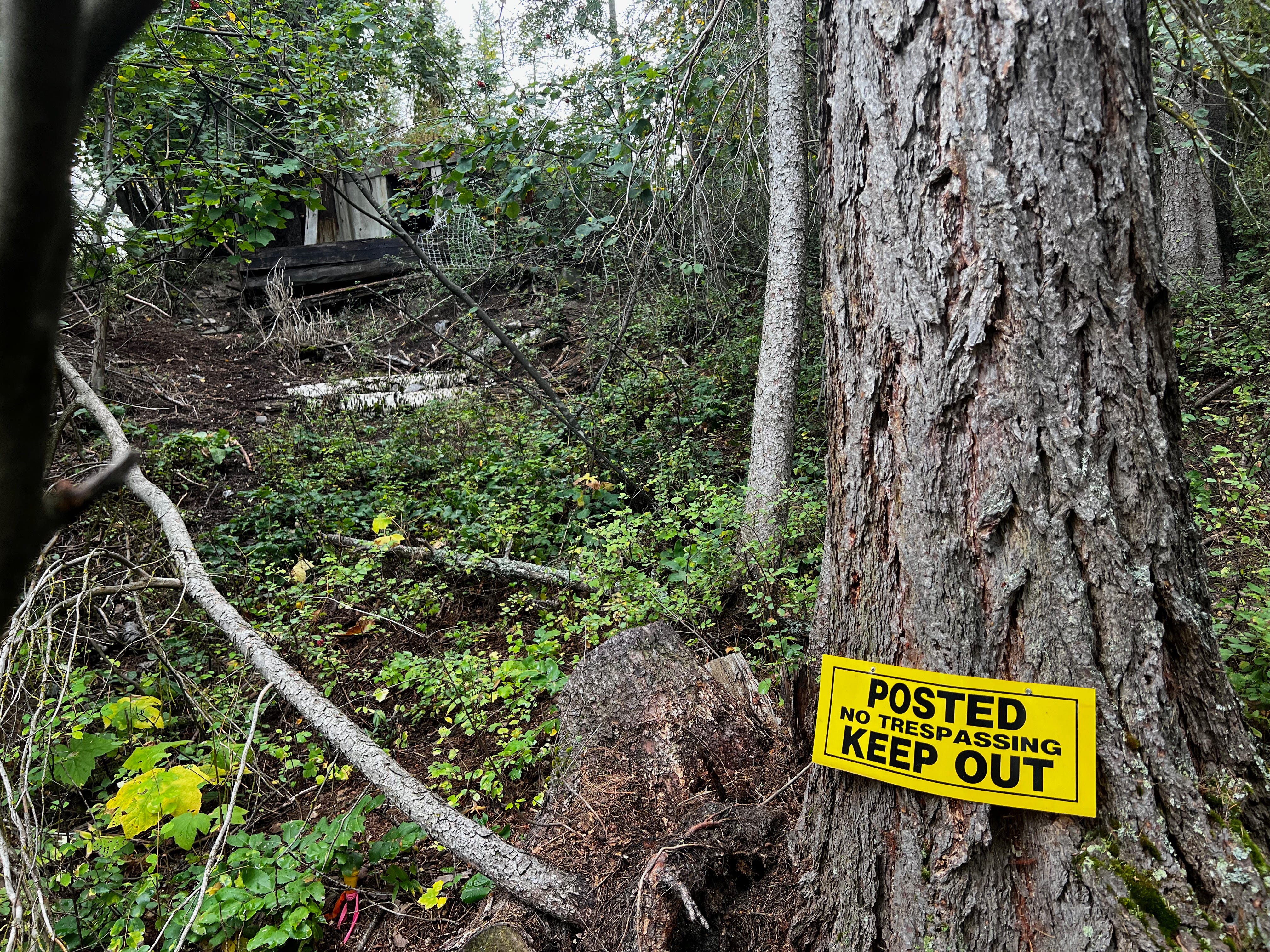
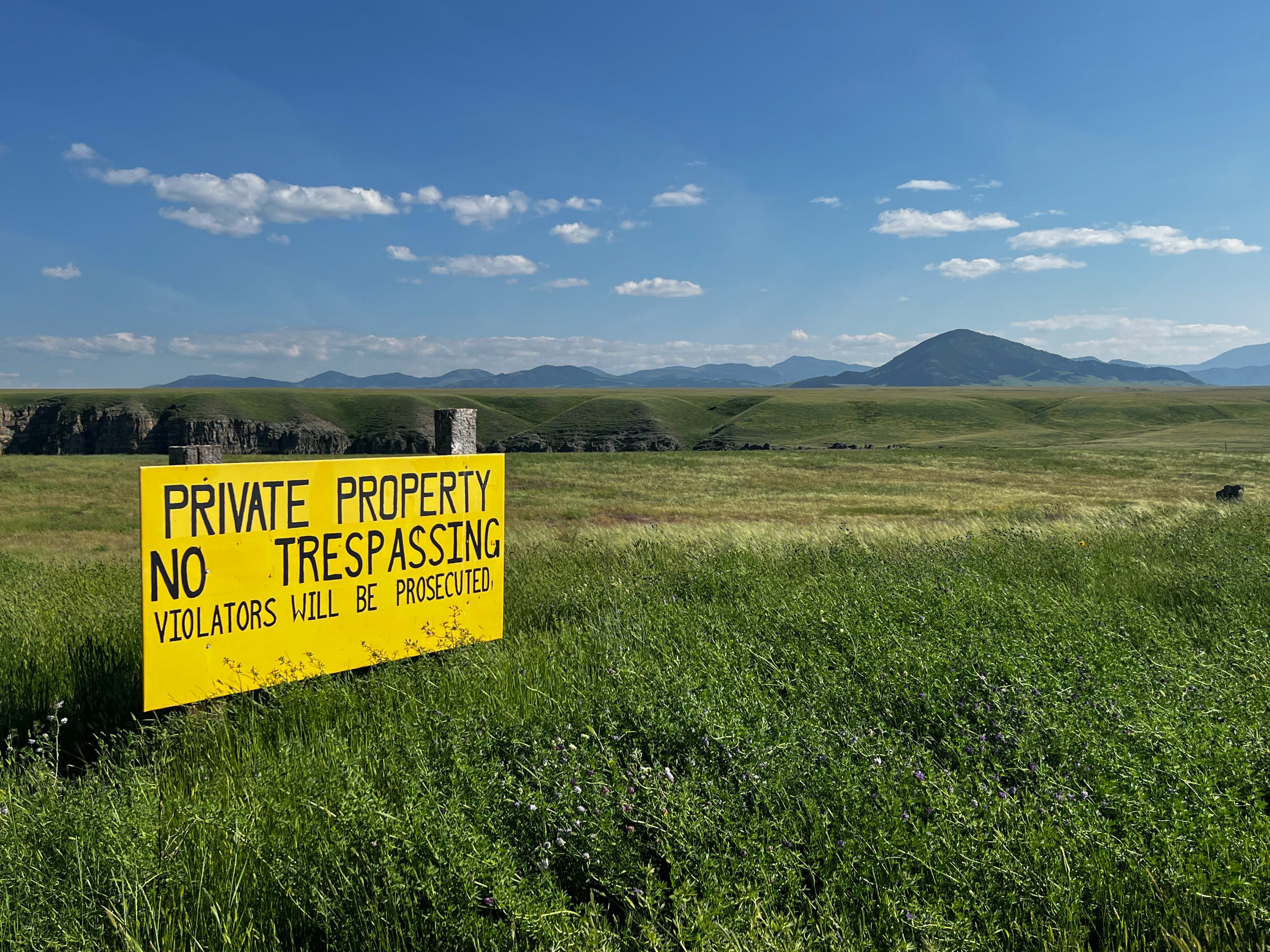
Do you ever wonder how land comes to be privately owned? I wonder all the time. It’s the whole reason for this newsletter. I’m interested in other forms of ownership, too, but it’s land ownership that gnaws at me day in and day out. How can you wander at will, let your feet roam, if your path is constricted by roads built to serve cars on one side, and “No Trespassing” or “Private Property” signs backed by laws made to serve landowning classes on the other?
Living in North America in particular, both the sense of entitlement that comes with owning land, or property in general, and the recency of those ownership titles make the question of “How did this land get turned into real estate?” a sharp one. Considering the shape and flavor that predominant American history narratives tend to take, it’s curious that very few people who live on this continent, in this country, have any idea of the answer.
The Doctrine of Discovery, which was articulated and hardened into U.S. law through the 1823 Supreme Court case Johnson v. McIntosh, is not the basis for all private land ownership, which began centuries, if not millennia, earlier. I’m writing No Trespassingbecause I’m interested in that older, deeper question of ownership. But the doctrine has been adapted to enable colonial land theft throughout the world over the past 500 years, and continues to form the basis for injustices related to land and resource rights—putting the desires of an oil pipeline company over the health of a river, for example.
Sarah Augustine, author of The Land Is Not Empty and co-founder of the Coalition to Dismantle the Doctrine of Discovery, summed up the doctrine as having “legalized the theft of land, labor and resources from Indigenous peoples across the world and systematically denied their human rights” for over five centuries.
The “doctrine of discovery” is a set of papal bulls issued in the 1400s, in which the then-pope gave official Catholic blessing to Portuguese and Spanish monarchs wishing to claim land they’d “discovered,” as well as all of that land’s resources and people. A pope issues a declaration or bull today in the 2000s and much of the world might not notice, but in the late 1400s the Catholic Church in Europe was nearly all powerful. These documents gave express permission for the thefts, oppressions, and genocides that the monarchs of Spain and Portugal were already eager to pursue. Bull Romanus Pontifex, wrote the introducers to the Papal Encyclicals translation,
“is an important example of the Papacy’s claim to spiritual lordship of the whole world and of its role in regulating relations among Christian princes and between Christians and ‘unbelievers’ (‘heathens’ and ‘infidels’). This bull became the basis for Portugal’s later claim to lands in the ‘new world,’ a claim which was countered by Castile and the bull Inter Caetera in 1493.”
The first bull was Dum Diversas, issued by Pope Nicholas V in 1452 on behalf of King Alfonso of Portugal. The second, also for Portugal, was Romanus Pontifex of 1455, granting King Alfonso the right
“to invade, search out, capture, vanquish, and subdue all Saracens [the word used for Muslim people at that time] and pagans whatsoever, and other enemies of Christ . . . and the kingdoms, . . . possessions, and all movable goods whatsoever held and possessed by them and to reduce their persons to perpetual slavery.”
In other words, it granted the king of Portugal the right to appropriate all said kingdoms, possessions, etc., that Alfonso’s representatives happened to come across, and convert them to the crown’s own use and profit, including people.
Bull Inter Caetera was issued in 1493, using similar language to grant the monarchs of Spain ownership of around half the world. No matter who was already living in lands they came across, the representatives of Spanish and Portuguese monarchs had official church license to claim them—and the military backing of their respective countries—on behalf of their kings and queens.
It’s vital to understand the Doctrine of Discovery’s impacts—not just the bulls’ contents or their contemporary effects at the time, but the way the doctrine shapes our world today. In the introductory episode of the Mapping the Doctrine of Discoverypodcast (created by Indigenous Values Initiative), the hosts said that,
“The Doctrine of Christian Discovery is essentially the key to understanding so much of what ails us today in the world. The Doctrine of Discovery is quite simply the Doctrine of Christian Discovery—that is, the relationship between how religion justified and encouraged the taking of lands by European monarchs and the Vatican from Indigenous peoples around the world,”
along with the claiming of resources and permission to extract, and carte blanche to commit genocide of and enslavement over any non-Christian peoples, as long as said lands weren’t already “owned” by a Christian prince.
Inter Caetera was issued shortly after Spanish (formerly Aragon and Castile) monarchs Ferdinand and Isabella had funded the heavily indebted merchant Christopher Columbus’s explorative journey across the Atlantic Ocean. By all accounts deeply devout Catholics, Ferdinand and Isabella had only just reclaimed the kingdom of Granada from the Muslim empire, and in 1492 had ordered the expulsion of all Jewish people from Spain following the edict known as the Alhambra Decree. (I recommend Patrick Wyman’s book The Verge for an in-depth and readable history of this time period.) Their rule was a project of brutal conquest and Christianization at almost any cost, a project and brutality Columbus was heavily involved in.
The power granted and emboldened by these documents cannot be overstated. As I said above, land ownership and land theft didn’t start with the doctrine, nor were they limited to Portugal and Spain—the Charter of the Forest pertained to English land enclosures and rights of the English commons starting in the 1200s—but they empowered a hyper-driven and even more violent colonialism through holy decree. With the pope’s bulls in hand, the representatives of Spain and Portugal undoubtedly felt that their god was on their side.
The “Doctrine of Discovery” found its name through references in later centuries’ legal cases—most famously Johnson v. McIntosh, in which Chief Justice John Marshall slipped in “civilized” to equate with “Christian” and wrote that discovery of land was equivalent to ownership of it. For European nations embarking on a project of discovery and conquering, he wrote,
“it was necessary, in order to avoid conflicting settlements and consequent war with each other, to establish a principle which all should acknowledge as the law by which the right of acquisition, which they all asserted, should be regulated as between themselves. This principle was that discovery gave title to the government by whose subjects or by whose authority it was made against all other European governments, which title might be consummated by possession. . . .
the rights of the original inhabitants were in no instance entirely disregarded, but were necessarily to a considerable extent impaired. They were admitted to be the rightful occupants of the soil, with a legal as well as just claim to retain possession of it, and to use it according to their own discretion; but their rights to complete sovereignty as independent nations were necessarily diminished, and their power to dispose of the soil at their own will to whomsoever they pleased was denied by the original fundamental principle that discovery gave exclusive title to those who made it.”
“Discovery gave exclusive title to those who made it.” Therein lies the Doctrine of Discovery’s origin story, and that entire passage will break your brain if you think about it too much.
It should break your brain. If you got on a boat tomorrow and sailed around on whatever ocean is closest to you, and came across an inhabited island you’d personally never heard of, you might be able to tell yourself you’d discovered it. If by “discover” you simply mean you saw or observed or found something new to you, by all means, go ahead and say you discovered something.
Does your sight of that land, your “discovery,” go further? Does it give you rights of ownership over the island and its people? Why wouldn’t you say they discovered it first, since they’re living there?
But maybe there’s gold, or timber, or cinnamon trees—something you want to make money off of, which you can only do if you claim the island and everything and everyone on it as yours to control. You have to come up with some reason why you, and not the people already living on the island, have the right to benefit from what it offers. “Discovery” must be mangled to mean something more than it does. It must equate to possession.
So you make a ruling that you’re more “civilized” than the people of the island and therefore your discovery has weight while their being there, their existence on the island, doesn’t. You come up with a doctrine that gives rights of ownership not to the people inhabiting a place but to the most recent person to come across it: you. And you back that ruling with military force.
This precedent is still being used. It was referenced in a U.S. Supreme Court decision denying sovereignty to the Oneida Nation in 2005, which was defended on the basis that invasion and colonialism were part of history—done with, in the past, supposedly—while at the same time referencing a doctrine that continues to do harm through legal opinions like this:
“Under the ‘doctrine of discovery,’ . . . ‘fee title to the lands occupied by Indians when the colonists arrived became vested in the sovereign—first the discovering European nation and later the original States and the United States.’ . . .
standards of federal Indian law and federal equity practice preclude the Tribe from rekindling embers of sovereignty that long ago grew cold.”
In other words, the “discoverer” of land retains the ownership right to it, no matter who was there first, or whether or not land ownership existed as a system before the “discoverer” landed there, or even how extensively and violently the Oneida Nation’s sovereignty rights had been suppressed over the last 200 years.
That’s a legal opinion not even 20 years old that relies on the idea that “I saw it; now it’s mine” is a justification for ownership but that already being there isn’t. In his TEDx talk on the Doctrine of Discovery, Mark Charles said that it was “quite possibly the most white supremacist Supreme Court decision written in my lifetime. And it was written and delivered by Ruth Bader Ginsburg.”
Johnson v. McIntosh stated outright that Native Nations could not own land; only European nations—and after them the United States—could. Part of that 1823 opinion contains the following baffling language:
“It has never been contended that the Indian title amounted to nothing. Their right of possession has never been questioned. The claim of government extends to the complete ultimate title, charged with this right of possession and to the exclusive power of acquiring that right.”
That language is all the more baffling because there is a long history of treaties defining coexistence, and even of land purchase transactions of a kind in some places, during the centuries of European presence in North America before the United States existed. Though it’s not so baffling when you consider that John Marshall, who authored the opinion in the case, was himself a well-known land speculator. He and his father owned vast tracts of land, and anything the Supreme Court decided about land ownership rights would directly affect Marshall’s own fortunes.
Legal cases like this one are a reminder that, just because a law exists and can be enforced, doesn’t mean it’s just. If the right of possession had never been questioned, as Marshall claimed, then why was it overthrown simply because a European happened to land on a continent they’d never seen before?
The role of Christianity, and the power of Christian nations, can’t be ignored in the doctrine’s formation. Johnson v. McIntosh didn’t refer directly to the papal bulls giving rights of ownership to discovering Catholic nations, though as legal scholar Peter d’Errico has written, Marshall “was undoubtedly aware of them.” Those bulls never applied to England (which hadn’t been a Catholic country since the 1530s), but England’s rights of ownership were fused with its own Anglican brand of “civilized Christianity.” In 1578, Sir Humphrey Gilbert was granted a charter from the English crown authorizing him to
“discover and take possession of such remote, heathen, and barbarous lands, as were not actually possessed by any Christian prince or people,”
and the Cabots were granted a similar charter in the decades after that.
The first episode of Mapping the Doctrine of Discovery laid out the entanglement of missionary Christianity with the belief in entitlement when it comes to Christian (and eventually white, European, etc.) claiming of resources:
“The Johnson v. McIntosh decision, in which the doctrine of discovery was essentially moved from this Catholic principle of land-taking, conquest, and domination, into a Protestant state-building contest. . . . At the time, Catholics and Protestants literally hated one another. They were killing one another. But on this issue of Christians appropriating everything non-Christians had, they agreed on that principle. After it becomes this principle of law, of property, then this becomes literally the law of the land in U.S. property law. Every law student during their studies is introduced to the Doctrine of Discovery.”
The Christian foundation of the doctrine is why the Coalition to Dismantle the Doctrine of Discovery, whose founders are Mennonite,
“calls on the Christian Church to address the extinction, enslavement, and extraction done in the name of Christ on Indigenous lands,”
and it’s why the authors of Unsettling Truths do the same. Co-author Mark Charles is Navajo and a Christian pastor, both of which are central to his values and worldview.
Last spring I attended a day-long webinar on the international consequences of the Doctrine of Discovery, with presenters from the U.S., Finland, South Africa, India, and New Zealand, among other lands. Steve Newcomb, author of Pagans in the Promised Land, showed how almost every current battle in the U.S. between resource extraction and rights of land and ecosystems, such as Standing Rock, can be threaded through legal precedent to end up back at Johnson v. McIntosh.
Former Chairman of the Yakama Nation JoDe Goudy shared the Nation’s statement that
“. . . the religious, racist, genocidal, fabricated doctrine of Christian discovery . . . the legal fiction that Christian Europeans immediately and automatically acquired legally recognized property rights in our lands upon reaching the Americas . . .
This doctrine of domination and dehumanization—Christian discovery—is not welcome within Yakama Territory, and should no longer be tolerated in United States law.”
The doctrine’s effects are vast. Johnson v. McIntosh gave justifying language to anyone in the world who wished to perpetuate the project of colonialism: take the land, claim ownership over it, and profit from the gifts it holds, no matter what the consequences to anyone else.
These documents are important. They’re important historically because of what they set in motion as European empires spread out across the planet. They’re important because, through the U.S. Supreme Court, they gave license to ever more ravenous land theft in 19th- and 20th-century North America, and were then referenced for similar ambitions throughout the world.
And they’re important because their influence still defines relationships of colonialism today. They’re one of the bases for nearly every claim of absolute land ownership or property right—gold or lithium mining in a place where people have relied on a healthy ecosystem for millennia, for example—and are much of the reason that it’s so difficult to defend the rights of life and well-being over the right to extract and profit.
I’m reminded of a recent interview with physician and sometime-activist Gabor Maté, in which he said to his interviewer,
“You know what [the Canadian government] hasn’t apologized for yet? We have not apologized to Indigenous people for taking their lands and their resources and their forests and their rivers and their oceans. Why haven’t they apologized? Because they’re still taking it.”
“I saw it; now it’s mine,” backed by the violence of state power, justified that taking, and with it came sets of values over how land, food, water, and everything else is used, shared (or not), and cared for (or not). The doctrine carries within it a hunger for profit and a near-obsession with the right to wring dry every drop of life itself in the pursuit of wealth. Along with more ancient systems of power and hierarchies, it defines how humans are allowed to survive in and relate with our world. We still live under that rule, and while a few benefit from it, none of us can be protected from its effects in the long run.
Prosecuted under whose authority?



 Antonia Malchik