Lower Two Medicine Lake, Blackfeet Nation, Montana, host of the 2025 black/death metal music festival Fire in the Mountains
Some years ago when I still lived I upstate New York, I began working at a sawmill. I had two very small children at the time, and had never intended nor desired to be a full-time stay-at-home mom, not to mention be one and working at the same time (due to the full-time stay-at-home mom reality, most of my work happened in the middle of the night, a capacity I no longer have). But I was doing exactly that, and rapidly dying inside because staying at home with children all day is not, to put it mildly, my calling in life.
One of my kids went to part-time preschool twice a week at a nature museum, which also offered adult classes like beekeeping and wild foraging, both of which I took—out of curiosity but also to stay sane—along with rustic woodworking, an activity I’d never imagined myself doing. I am the kind of person who can’t be trusted with a table saw or even, frankly, a spirit level. The rustic woodworking artist who taught the class introduced me to New York Heartwoods, a micro-mill run by a woman (coincidentally, also from Montana) who’d bought a Wood-Mizer LT40 and specialized in milling wood from downed and diseased trees on public and private land.
Working at the sawmill a couple days a week—interning, really, since I was there to learn and wasn’t being paid—helped keep me from going completely numb, from depression and dissociation from life, and it got me into research on embodied learning, but I was also intrigued by the mill’s mission: the owner only worked with fallen or scavenged trees. The point of the mill was to introduce circularity within the wood milling system, which fit right in with efforts I’d been making toward supporting local food systems and fending off long-term despair over single-use plastics.
We worked with a lot of city Ash trees felled by emerald ash borer, and Cedar that had been cleared from farm fields. I spent one entire day planing Cedar planks for someone who’d rescued them, already milled, from her family’s farm and was making an art installation out of them.
Rescued Cedar planks, before planing down to their gorgeous hearts
Another time we spent most of a cold, snowy day dragging out enormous old beams from a fallen barn, taking them back to the mill to be sawn into boards that would be lightly sanded and used to make shelves.
Reclaiming beams from a fallen barn. That’s me in the blue coat and black hat, sometime right before or after I punctured my leg with a 100-year-old nail and went to get a tetanus shot. Photo credit: New York Heartwoods.
The mill’s shady, forested yard was full of beauties, every one of them cared for, whether already milled and kiln-dried or not. I don’t ever plan on moving away from Montana, whose forests are full of soft-wooded Pine and Fir, Aspen and Spruce, but do sometimes miss working with hardwood.
One day, we were milling reclaimed beams from an old barn for a client. Old barn beams are a pain because they’re often full of nails—long, heavy, rusted nails that are hard to spot. We ruined a few blades as hidden nails made it through and wrecked the metal, and finally gave up. That barn beam went back to its owner, or maybe to a scrap pile, joining the piles of beautiful wood resting around the property, testimony to one woman’s commitment to making sure their lives continued.
Barn beams can be a nemesis, too
It only occurred to me later to wonder why we hadn’t taken the time to look for and remove the nails ahead of time, why we sacrificed several saw blades and in the end the beam itself rather than take the time to remove as many nails as we could find and make the wood workable again. It obviously would have been a waste of time, but then again, the entire endeavor could be classified a waste of time, if all we use for measurement are the standards of capital and efficiency.
A couple months ago I succumbed to the urge to crawl through all the essays and posts in this newsletter, starting from the very first essay in late summer 2020, about Marcus Aurelius and my own cognitive disconnects around the U.S. invasion of Iraq, when my older sister was still in the military.
I ended up deleting almost 200 out of nearly 300 essays and posts. Some were from before Substack launched its Twitter-like Notes platform, and were brief photo + quote + sentence or two “walking compositions,” a practice I’d migrated over from my deleted Instagram. Many posts I thought were pointless, and others need more revision work. The ones I kept, I’m slowly revising and recording audio for, since I only started doing audio versions in late 2023 (I’ve made my way through nearly 20, starting from the beginning).
This was actually a super fun process. I played around with my work, scrawling all over posterboard with Sharpie markers, in a way I haven’t in years.
Many of the posts and essays I deleted, I saved in offline Word documents, collecting them by theme. By far, the largest of these collections is one I’ve labeled “Abundance and Commodification,” with over 40 pages of text. Some of what I’ve rewritten here about my time working at a sawmill are lines scavenged from that document.
Out of all the writing I do on the commons, the complementary topics of abundance and commodification—of food and seeds in particular, but of everything in general, including labor, creativity, and ideas—overwhelms the amount I have written about land ownership, which surprised me because I feel like I never shut up about land ownership, and repeat myself to a tiresome degree.
Something about rereading all of those words and stories, and collecting together the ones that I felt needed more editing, or perhaps shaping into a larger, more cohesive project, reminded me of my faith in storytelling, how deeply I believe in its power, and in the world’s need for it. For more stories, stories with heart and truth, as many as possible from as many different perspectives as possible, especially from voices, people, and places who’ve been heard the least. Every iteration, not for the purpose of telling anyone else how to feel or what to think, but sharing the unique experience of what it is to live one’s own individual life. The joy, the pain, the traumas, the grief, the love, the visions and losses and hope.
I don’t think we can ever have enough ways to help ourselves feel what it’s like to live in someone else’s experience.
Yet it often feels like the world is awash in stories. Good stories, important stories. Stories we need to hear and stories we need to tell. Fantastic fiction that opens up possibilities for imagining different ways of living; investigative reporting that unfolds the truth of the world. I have been floored by the work of brilliant documentary filmmakers, by novelists who are bona fide geniuses, many of them personal friends.
And what changes?
It is very easy for the path opened up by that question to lead to despair. I’ve been there myself more than once—I’m there myself more than once on any given day, and I don’t think it’s solely a genetic half-Russian Jewish fatalism. It’s looking at the world, and humans, as clear-eyed as possible. It’s seeing people I believed in and trusted coopt genuine need and good causes for their own benefit; it’s seeing the hard work of millions crash against the walls of capital and power.
But down that path is also possibility. My father used to say, and still does, that the biggest problem in the world is lack of imagination. He meant a capacity to place ourselves in other people’s lives and experiences, a capacity for empathy. It’s both true and bigger than that.
Every story shared is a chip in the systems and structures that seem unbreakable and insurmountable. Most of the time we don’t see what’s changed until long after the fact. Real life isn’t a Hollywood apocalypse movie with sudden shocks to the system and people screaming for the walls. We’ll never know what cracks it all open. But those stories, that work, looking at life slant and seeing what can change, that’s how the light gets in.
After taking my first rustic woodworking class, I couldn’t get enough of working with the diversity of hardwoods that grow and fall in the U.S.’s northeast. I learned about the different high-end uses of varieties of Maple, and how bad Black Locust smells—there is no other way to say it but that Black Locust smells like ass—but also how useful it is. Black Locust is so hard that it can be used in decking. It’s like cement board.
I learned how bacteria and fungi cause spalting and how beautiful its black lines are lacing through decaying stumps or sawn boards. In midwinter, the mill’s owner sent me on a day-long chainsaw safety course, where, after several hours of learning to care for chainsaws and safety equipment and looking at photos of people who’d had horrifying accidents, I stood in knee-deep snow and cut down a Pin Oak. I decided I never wanted to use a chainsaw again because I am clumsy and it was terrifying.
The entire project of New York Heartwoods was at core anti-capital. It was inefficient, time-consuming, space-consuming. Slow. Laborious.
It was an enormous amount of work simply to find markets for the wood products, much less retrieve the trees and logs and mill and kiln-dry and shape and sand it all. That entire day one employee and I spent planing someone’s recovered stack of Cedar planks? The client probably could have bought something similar from IKEA for far less money than that day’s labor cost. Even though I was working at that sawmill for free, nobody else was.
But that’s the point. The work was slow and laborious. And smelled heavenly. I could eat my winter-cold sandwich on a stump of spalted Sugar Maple and smell the melt-snow damp of coming spring. I could peek into the kiln and its stacks of Ash boards. I could do work, and feel alive while doing it.
What does efficiency in our lives get us? The question sits like an invisible monster in the center of capitalism: if “the economy” isn’t there to serve human and ecological well-being, what is the point?
If working with wood by hand gave me and others pleasure and satisfaction, and gave clients connection to their ecosystem and its cycles, why not engage in that kind of work? And why are we prevented from doing that work simply because it doesn’t provide enough income to feed our families?
It’s the reason I recommend reading Wengrow and Graeber’s book The Dawn of Everything as a balm for despair. Or at least listening to interviews about it, or reading summaries. Whatever works. It’s an enormous book and what’s important is the message behind it: there have been countless ways of forming human societies over the past several thousand years. Just because our current industrialized culture feels like some kind of inevitable endpoint doesn’t mean it’s true. Those endlessly varied histories remind us what might be at the core of true freedom.
It also gives an opening into that question, “What changes?” Well, a lot can change. We never know how, not completely. Working toward change for the better doesn’t guarantee success, nor does it guarantee lack of pushback, but without stories we don’t even know how to imagine something different.
I heard someone recently—one of the tarot readers I follow on YouTube—talk about leaning into fear with curiosity. Despair, too, I suppose. That’s where we can find self-empowerment, and perhaps an entirely different way of perceiving both problems and possibilities.
Like in K-Pop Demon Hunters: perhaps a failure to seal the Golden Honmoon isn’t a failure at all. Maybe it’s a way to discover something more powerful and more honest, with a capacity to connect us all.
Me making a bowl out of discarded Maple and an axle grinder in the workshop of Dan Mack, rustic woodworking artist, where I found something akin to hope, by working with my hands at one of the lowest points of my life.
True wealth lies in the freedom to roam, and the freedom to leave—and survive. (Hike down from Nasukoin, near my home in northwest Montana)
“Oligarchy is based on the notion that those who are unequal in one respect are in all respects unequal; being unequal, that is, in property, they suppose themselves to be unequal absolutely.” –Aristotle, Politics, 350 BCE
My last year of college, I applied for a coveted internship at a relatively prestigious literary magazine in St. Paul, Minnesota. When the acceptance arrived, I was excited for all of a few hours.
Then it came home to me that the internship—as is the case for most internships—was unpaid. The editor who’d interviewed me seemed surprised when I called later to ask about the possibility of even a small stipend.
It was the final semester of my final undergraduate year. I’d taken the previous semester off of university and moved back to Montana to be an adult around for my younger sister, who, at fifteen, was in high school and living for the most part alone (long story). Before that, I’d been working up to five different jobs at a time to support myself through college.
The week I was offered the internship, I went for a long walk with someone I’d been friends with since our first confused, heady days of freshman year. He bought me a sandwich and listened to me angst about whether or not I could afford the money—and the time—to work at a job I’d probably enjoy but for which I wouldn’t be paid.
It wasn’t possible, I already knew that, and at the end of our walk we parted at the door of the family diner where I’d been working as a waitress the previous year—a job I took because making tips got me a lot more rent and grocery money than the coffee shop I’d worked at my first two years of college.
So I turned down the internship and waited tables instead. Every now and then another waitress and I got together at her apartment to paint our nails and watch Xena: Warrior Princess and I tried not to think about who got the assistant editing position I’d been so excited to be offered.
The advantages of wealth and privilege get mentioned a lot but not usually with much substance. I’m not sure how many of us truly understand how wealth accumulation turns into power, influence, and status—the literary world is only one small example of how the financial freedom to work for free gives a person entry and connections in all directions, from publishing opportunities to awards and grants to the strange situation that’s evolved in the past couple decades where “writer” is in many places equated with teaching workshops almost more than it is with publishing, or even with the act of writing itself.
But this isn’t only about the writing world. It’s about money, and power, and their feedback loop.
It took me months to even sit down to write a first draft of this essay because the subject bumps against one of my own failures of imagination: it’s very hard for me to understand how millions, or even billions, of people don’t understand how accumulation of wealth leads to accumulation of power, and how the combination leads inevitably to large-scale human oppressions, environmental degradation, and almost every kind of injustice and inequality.
The combination of power and wealth has always led to the failure of societies, and in their current iteration are leading quickly to the failure of the human species.
In the month or two before the November 2024 U.S. presidential election, I picked up David Herszenhorn’s book The Dissident: Alexei Navalny: Profile of a Political Prisoner, about the Russian dissident and anti-corruption activist Alexei Navalny.
Navalny became internationally known after surviving an attempted poisoning, likely ordered by Russia’s top leadership, and then running for president of Russia against Vladimir Putin. But the core of his work was always about corruption. His investigations and fiercely productive blogging activity focused on business deals that benefited government officials, their families, their friends, their friends’ families . . . almost always at the expense of the Russian people and Russian land, whose natural resource wealth of oil, timber, and minerals was not-so-quietly but very quickly privatized by those already in power, for their own gain, in the years following the 1991 collapse of the Soviet Union. Those who benefited most from the privatization were, largely, either those who had held power in the Soviet Union, or people connected to them.
Vladimir Zelensky, an actor and comedian who was elected president of Ukraine after starring in a very successful comedy show about a teacher whose anti-corruption rant went viral, resulting in him unintentionally becoming president, came to fight internal corruption and the influence of Russian wealth and power as the real-life leader of Ukraine.
Navalny was most likely murdered for his anti-corruption work. Zelensky’s country was invaded in 2022 and continues to battle an army of Putin’s soldiers, many of whom were forced into fighting. I’ve heard plenty of stories of disobedience turning into forced conscription that I can’t even share publicly.
And in January 2025, the U.S. government faced, and quickly folded to, a hostile corporate takeover in which the wealthiest person in the world for months wielded the power to fire anyone employed by the government, from wilderness trail crew workers, to people monitoring clean drinking water, to core staff running the power grid of the entire Pacific Northwest.
Everywhere you look, a combination of wealth and power seems to be battling to control more of the same—and winning.
Of course I want to burn it all down. Don’t you?
The problem with that is, as I’ve written here several times before, whenever entire systems and structures are burnt down, it is nearly always those most at risk, those who’ve suffered most, who end up suffering more.
The accumulation of wealth leads to rule by oligarchy, but it also provides those with power the means to protect themselves from inevitable resistance, even mass violence, the French Revolution notwithstanding.
A political cartoon showing Maximilien Robespierre guillotining the executioner after having already guillotined everyone else in France. A commentary on the Reign of Terror. Unknown author, c. 1794, care of Bibliothèque nationale de France.
Whatever system arises from the rubble, those who’ve previously accumulated wealth usually have the means to maintain their power structures, or rebuild them all over again.
In his book Black Sea, Neal Acherson described the strange self-protective quality of wealth through the behavior of Polish nobles whose resistance to reform led to the Third Partition in the late 18th century and the dissolving of Poland as a country for 123 years:
“To the end of their lives, many of these Targowican barons failed to understand what they had done. They kept their vast estates, travelling now to St. Petersburg and Odessa rather than to Warsaw and Krakow. They had lost the political influence they had enjoyed in the old commonwealth, but to be appointed Marshal of Nobility in some Ukrainian county was not a bad substitute. . . . The fact that they themselves were secure and prospering could only mean that all was well with Poland too.”
To put it in more familiar terms: in the 18th century, the Polish nobles fucked around and everybody else got to find out.
In The Sociology of Freedom, co-founder of the Kurdistan Workers’ Party (PKK) Abdullah Öcalan—who has been incarcerated in a Turkish prison since 1999, many of those years in isolation—tracked the question of power back at least 5,000 years, to the beginning of people’s ability to begin controlling and accumulating surplus “product”—food for the most part, but also other people’s labor.
Wealth, in his writing, is the ability to accumulate and hoard the resources that people need to survive, including food and work. Power comes from control over that wealth:
“The fundamental characteristics that have marked the central civilization from its very beginning and determined its character have remained essentially unchanged for five thousand years. . . . One characteristic that remains stable whatever the differences or forms adopted is the monopoly’s hegemonic control of surplus product. . . . We must take care to understand the monopoly. It is neither purely capital nor purely power. It is not the economy, either. It is the power to use organizations, technology, and violence to secure its extortion in the economic area.”
Much of the power in wealth is about who owns what, which translates into who controls and dominates what, especially land, water, food, and the right to pollute the commons we all need for survival. Vandana Shiva—who’s been working on seed and food sovereignty in India for decades—has in recent years reiterated what can never be said enough: “If you control food, you control people.”
The U.S. government’s determination to wipe out buffalo and destroy land relationships through iterations of theft so as to force people and Native Nations into dependence in recent history is proof enough of this (its goals in this respect are explicit and well documented); and if you read about enclosures of the commons over the past 800 years of British history, you’ll also run into plenty of examples of entire villages of people evicted and starving and forced into “jobs” for the first time because a few already-rich people wanted to get wealthier by raising sheep on land that was previously used and lived with in common.
To give just one example, Andro Linklater, in his sections on England’s enclosures of the commons in Owning the Earth, wrote:
“In a single day in 1567, Sir Thomas Gray of Chillingham in the north of England cleared off his manor no fewer than 340 villeins, cottagers, and laborers whose right to work their plots of land existed simply by tradition. Whole villages and townships were soon emptied—in Shakespeare’s county of Warwickshire alone, sixty-one villages were wiped out before the year 1500.”
These land thefts and evictions led to starvation and mass homelessness and criminalization of the same through anti-vagrancy laws and the right to enslave people found to be in violation. Those who were already wealthy had the power to take what they wanted, call it theirs, and justify the theft through philosophies and laws that placed rights of property—no matter how it was acquired—over the rights of people, and of life in general.
The long-term impacts of wealth—whether of land or wealth in other forms—accumulate intergenerationally, for far longer than most of us realize. A research paper co-authored by scholars with the Bank of Italy and the University of Bologna that tracked intergenerational wealth in family dynasties in Florence, Italy, from 1427 to 2011 challenged a common misconception that family wealth is usually wiped out within three generations. They found instead that the top earners of today are most often descendants of those “at the top of the socioeconomic ladder six centuries ago,” families who had been lawyers or members of elite trade guilds in the year 1427:
“Intergenerational real wealth elasticity is significant too and the magnitude of its implied effect is even larger: the 10th-90th exercise entails more than a 10% difference today. Looking for non-linearities, we find, in particular, some evidence of the existence of a glass floorthat protects the descendants of the upper class from falling down the economic ladder.
These results are new and remarkable and suggest that socioeconomic persistence is significant over six centuries.”
The authors pointed out that the results are particularly remarkable when you consider the enormous social, economic, and political upheavals that took place in that region over those centuries, “and that were not able to untie the Gordian knot of socioeconomic inheritance,” a reality that they felt comfortable extending to similar countries in western Europe.
Ownership and wealth are far stickier and more resilient over time, even over collapsing societies, than most of us would like to believe.
And of course what security of wealth both comes from and translates into, along with power, is ownership of property—land in particular.
A screenshot from a webinar I attended on the Doctrine of Discovery and its relation to capitalism’s entanglement with private property.
The weight of wealth and power is enormous. It sucks up life and resources, and seeks more of the same; it crushes people and feeds off their labor, and seeks more of the same. When it faces resistance, it responds by protecting itself. Maybe firing someone. Maybe abusing or even murdering them. Maybe invading an entire land.
The Roman Empire is one of the most well-known cases in point. “Empires entail ongoing costs,” political economist John Rapley wrote in Aeon about the Roman Empire. “The richer an empire becomes, the more it must spend to preserve that wealth,” spending more money on ever-shakier military campaigns and using up public funds to protect the security—and property—of the wealthy and powerful within its borders.
“Power,” wrote Abdullah Öcallan, “is not simply accumulated like capital; it is the most homogenous, refined, and historically accumulated form of capital.”
Power, in other words, is a manifestation of wealth itself. It is what wealth is for.
Given the resilience of wealth, the protective quality it gives to those who have it, what are we meant to do about the power it wields, power that causes an immense amount of damage and limits everyone else’s freedoms? What’s the answer, the solution?
There are two that I can see: the first and most urgent is to tax wealth, obviously. Prevent the kinds of massive accumulation of resources that lead to accumulation of power. Pretending that one doesn’t lead to the other, and that their combined strength don’t lead to oppression of most of the human population as well as destruction of much of the rest of the living world, is a fairy tale.
David Wengrow and David Graeber’s book The Dawn of Everything is partly directed at this problem, detailing societies across the planet over several thousand years and how they rose and fell and shaped themselves—or didn’t—around an awareness of the dangers of wealth and property accumulation. Those shapings, the authors wrote, determine everyday people’s security of three essential freedoms: “the freedom to move, the freedom to disobey and the freedom to create or transform social relationships.” Wealth accumulation—especially in landed property over the last near-millenium—leads to the kind of power accumulation that erodes or outright prohibits these freedoms.
“The freedom to move, the freedom to disobey and the freedom to create or transform social relationships.”
“Progress” is never a clear path; it’s a messy, tangled walk through an overgrown forest that often leads in circles. The benefits of whatever we call progress are only fully realized when they come hand in hand with an awareness of wealth’s downfalls.
The second response is to pay serious attention to building parallel systems that not only show the viability of, for example, commons management of land and life, water and work, but have the resilience to keep going even when shit does hit the fan—which systems run by and for wealth and power are generally too fragile to withstand.
The more a society is designed to crush you, though, the harder it can be to make these efforts successful. In my book A Walking Life, I wrote about the St. Paul, Minnesota, area of Rondo, a majority Black community of thriving businesses and neighborhoods, which was largely destroyed, losing over 700 homes and 300 businesses and the community split in half, to build a now 8-lane freeway during the U.S.’s highway-building craze in the middle decades of the 1900s. It’s a far too typical story. Most of the U.S.’s major highways, where they run through cities, were built by destroying mostly majority-Black and poor communities, along with any equity they’d built in those businesses and homes, and largely to serve more affluent suburbs.
Wealth gets its resources, including power, by extracting from everyone else in any way legally possible and many illegal.
Screenshot of a Twitter account with a map from Bill Bunge’s 1971 book Fitzgerald: Geography of a Revolution, showing how equity is extracted from poverty and precarity to benefit wealth
You can’t separate injustices from one another without power weaponizing that separation to eradicate resistance—or attempting to.
The right to vote, for example, has long been entwined with wealth, specifically wealth of land. In 1819, a peaceful rally of nearly 60,000 unarmed working class people in Manchester, England, was organized to advocate for the right to vote for those who did not own property (the U.S. Constitution, too, originally limited voting rights to property owners in addition to requiring that they be male, white, and over the age of 21). Land enclosures—theft of the commons—going back as early as the 13th century meant that very few people owned land, but laws they had no opportunity to participate in writing affected them anyway.
Government forces attacked the peaceful rally, resulting in 18 dead and over 650 injured in what is called the Peterloo massacre. Those who didn’t own property wouldn’t get the right to vote until the late 1800s.
Self-taught American economist Henry George spent most of his 1879 book Progress & Poverty writing about the ways that land ownership leads to wealth inequality and accumulation of political power by a few, and resistance to the same:
“Absolute political equality does not in itself prevent the tendency to inequality involved in the private ownership of land, and it is further evident that political equality, coexisting with an increasing tendency to the unequal distribution of wealth, must ultimately beget either the despotism of organized tyranny or the worst despotism of anarchy.”
If normal, everyday people understood the reality that all wealth comes from land, from nature, as well as from the labor of others, human and non-human alike, they wouldn’t vote for a system that gives yet more wealth and power to those who already have it, that hands power to those who control land and are therefore able to accumulate wealth.
But as should be painfully obvious by a simple glance at the daily news, mass understanding of that reality requires more than education; it requires imagination and insight. It requires that those who do the storytelling—journalists, reporters, novelists, and poets—share experience with the bulk of humanity, at least enough to access some empathy, to be able to put themselves in other people’s shoes. To understand that what they’re being told by those in power might simply be a story benefiting and protecting the same—power, and wealth.
It takes a lot of imagination and intention to see where our own privileges have blinkered our vision. If I had come from a family with even middle-class income, if my parents or grandparents had money and I weren’t working more than one job at a time just to support myself and be able to finish college, I could have taken that internship with a prestigious literary journal. I could have started climbing some kind of literary ladder, become an editor at an equally prestigious publisher maybe. And I maybe would have assumed that it was only my hard work and talent that got me there, not seeing the ways the trail was cleared and the path smoothed before I ever stepped on it.
We all need self-awareness to be able to see how power is actually structured, how it is shaped around the interests of wealth and property. That there is no “trickle-down,” that enormous accumulation of wealth is detrimental, actually, to life and freedom at every level you can think of, including the individual lives shaped and softened by wealth itself. All of this requires an understanding of propaganda and Story and how deep attachment to identity—both individual and shared—runs through every human being.
It requires a shift in consciousness, you might say, as well as changes in tax codes and societal priorities.
Or there’s a third option, which is to wait for the incompetence and nepotism inherent in oligarchy to eat their own power structures from the inside out.
The philosopher Aristotle, who made an extensive study of the rise and fall of city-states, rulers, and power structures in his book Politics, written over 2300 years ago, warned that oligarchies are inherently unstable. They can’t meet the needs of the regular population, they can’t abide competition in business or culture, and they can’t be bothered to follow the laws they write, even those that benefit themselves.
In a video summation of oligarchies, how to fight them, and Aristotle’s Politics, the narrators of the YouTube channel Legendary Lore1 said that,
“Aristotle observed that while a state can handle many types of protest, the real danger comes when people stop believing the state serves its proper end: the good life and virtue of its citizens,” resulting in an erosion of legitimacy.
“Aristotle warned against the wealthy treating common things as their own, like when public spaces become effectively private, when shared infrastructure serves only elite interests, when common goods like water and, in our times airwaves and digital networks, become de facto personal property of the economic political class.”
Oligarchies tend toward nepotism and its ruling members live openly in opposition to the laws imposed on the rest of the population. Their networks become brittle, and the systems often succumb to infighting among oligarchs themselves.
“Many oligarchies,” Aristotle wrote in Politics, “have been destroyed by some members of the ruling class taking offense at their excessive despotism; for example, the oligarchy at Cnidus and at Chios.”
We can wait it out, knowing that not only does everyone else suffer in the process—and it’s a long process; some form of oligarchy has been in charge of Russia going on decades now, culminating in the theft of Crimea in 2014 and the invasion of Ukraine in 2022—but the reality of wealth will likely, in the long run, still protect many of those who caused the damage. And then the cycle can start all over again.
One of the biggest things I learned while writing my book about walking was that connection, care, and community are just as core to our evolution, just as ancient if not more so, as any of our worst tendencies. If humans were all despotic, greedy, and evil, our species wouldn’t still be around. There are hundreds of thousands of years of archaeological evidence showing us capable of greed but even more of cooperation, and we have the opportunity, in every generation, to choose which of those tendencies we reward, strengthen, and build societies upon. Likewise, that reality inevitably gives something to build hope upon.
“If mutual aid,” wrote Wengrow and Graeber in The Dawn of Everything,
“social co-operation, civic activism, hospitality or simply caring for others are the kinds of things that really go to make civilizations, then this true history of civilization is only just starting to be written.”
My own energies tend toward helping to build, support, and research and write about those parallel systems, usually hyperlocal, that go under the radar but that provide examples for lifeways that make societies life-supportive, locally adaptable, self-aware, and achievable. St. Paul’s Rondo, for example, has never stopped working to repair the damage done by the building of a freeway, and restore its community.
It’s not sexy or loud or charismatic, and it’s not going to topple globally powerful and corrupt international criminals hell-bent on making everyone else suffer. It certainly won’t make me or anyone else whose attention is directed that way famous or rich, nor will it save us all from authoritarians and murderous dictators next week or feed all the children tomorrow.
But it’s still work that’s needed, and in the long run, with enough people, its own power might surprise us.
The law locks up the man or woman Who steals the goose from off the common But leaves the greater villain loose Who steals the common from off the goose
The law demands that we atone When we take things we do not own But leaves the lords and ladies fine Who take things that are yours and mine.
—from 17th-century protests against English enclosures
Over half a lifetime ago, I was walking with some friends along the harbor road of Ephesus, once an embattled, storied, and thriving city of Ionia (and then Greece and then Rome and various lesser-known empires in between and after), and now an archaeological ruin in Turkey with just enough intact or restored architecture to hold our then-20-year-old selves in awe.
The harbor road, we were told, had once ended at the sea, which was now miles away after thousands of years of change and silt. We walked along the broad, flat stones and one of my friends said, “3,000 years ago, people were walking this same road, flirting with each other. Can you picture them?”
I’ve been picturing them ever since—people, just like you and me, full of hopes and heartaches, their particles sifted amongst the harbor’s silt for thousands of years, even their names forgotten for generations beyond anyone’s count. Someone worried over their child’s illness, another holding back tears at the cruelty of a former lover.
I’ve been working on an essay about the unholy marriage of power and wealth. I keep stalling on finishing it because every day brings another example that leaves me wondering: isn’t it obvious now? How wealth buys power and they feed off of each other? To write about Alexei Navalny’s long and eventually ill-fated battle against oligarchs and corruption in modern Russia, or the sacrifice of 18th-century Poland by prosperous nobles who cared mostly for their own comfort and position, or countless other instances of the ruin brought by unchecked wealth and its hold over unchecked power, feels . . . well, yes, obvious.
I could write for years about the compounded injustices and cumulative wealth inequality engendered by private land ownership alone—and in fact have been writing about it for years—but to find something different to say about it when the results are playing out not just in the daily news cycle, but almost the hourly, feels a bit like trying to hang onto a soap bubble.
While I try to find ways to keep that soap bubble intact—describing its shimmers and form without popping it into nonexistence—I’m going to republish a revised version of a related essay on wealth and entitlement (the psychological kind) in a few days.
Over the last couple weeks, as I kept asking myself how to bring some more foundational purpose to that essay on power and wealth, I took a break and started some vegetable seeds for this year’s garden.
I don’t usually start seeds. I don’t have a greenhouse, my kitchen isn’t generally warm enough even for fermenting sauerkraut, and it’s usually so overcast in winter here that there’s barely enough sunlight to keep a spider plant alive. But my brother-in-law gave me an old grow light to try to keep a medicinal tobacco plant growing over the winter (it did! it’s small but still living! the aphids love it) so I thought I might as well try to get a start on the garden, since where I am in Montana we don’t get enough warm summer days most years to coax a tomato plant from seed outside, much less pumpkins or melons.
Sorting through my box of seeds turned out to be one of the most hope-generating things I’ve done in a long time. I don’t know why. I wasn’t thinking about “well, life goes on” or “no matter what, people still need to eat.” It was the seeds themselves, like they were wrapping little tendrils of magic light around my fingers as I tried to figure out what I’d need to buy and what I had too much of. They took me completely out of myself and the most recent text threads of news from family and friends. Life. No narration or clever turns of phrase, just a few moments of life, of feeling alive and part of it all.
It felt really good.
Some days later, I was driving toward home and a truck with the U.S. Forest Service logo stamped on the side—not an uncommon sight where I live, among well over a million acres of wilderness and non-wilderness land overseen by the USFS—turned through an intersection in front of me and I started crying.
Among the insanity of what’s going in the U.S.’s ongoing hostile corporate takeover of a government, the professions and lives wrecked and overturned, and uncertainty and fear of Forest Service and many other employees, the goal of selling off and profiting from public lands is clear. It was an aim in 2017 and remains one. It’s why I wrote an op-ed in the Los Angeles Times about the commons and the kind of freedom held in public lands in 2019.
All land “owned,” public or private, has in fact been stolen, and it can be stolen over and over and over again. As I wrote shortly before the 2024 U.S. presidential election of my relatives in Russia, “Nobody in my family takes democratic freedoms for granted, but perhaps it takes living under dictatorship or oppression to realize that even the right to fight for something better can be stripped away.”
Which is just as true of nature, of the more-than-human world, of clean water and freedom to roam, of foraging for huckleberries and sleeping by wild rivers, as it is of the right to protest and to vote. This week I am going once again to my favorite Forest Service cabin, and wonder now if it might be for the last time, if I might never again be able to walk into the freezing waters of one of the only free-flowing and minimally polluted rivers on this continent, might never again listen to the packrats thumping around at night.
The day after I cried at the sight of a Forest Service truck, for all my friends and acquaintances who had lost their jobs or were worried about losing them, for the lands and waters that gift us so much, I gave a talk to an audience largely composed of public lands and wilderness advocates.
The talk was half about walking and evolutionary biology, and half about the commons, the stark injustice of privately owned land, and the vital role that public lands play in ensuring freedom. (It was recorded; I’ll post a link to the recording when it’s available.)
It felt right to give that talk, to say what I thought needed saying, but it also felt like a bit of mustering before a battle, when few besides those in the room knew what was to come, or how to prepare for it.
The residents of Ephesus lived and died, planted seeds and fought for what they loved, for over a thousand years. The city was ruled by tyrants and overtaken by emperors eager for land, spoils, and subjects, including Alexander the Great and later, at various periods, as part of the Ottoman Empire.
They are forgotten, almost every single one of those people. Every seed they planted, every hand that worked a chink into the Library of Celsus or wrapped a cloth around a newborn baby. Every bit of laughter echoing along the harbor road, every flirtatious side-glance and jealous narrowing of the eyes. “History” wants to leave us only with Mithridates, king of Pontus, not the 80,000 Roman citizens throughout Asia he ordered murdered. It wants us to to credit the emperor Titus with building the Colosseum, not the tens of thousands of Jewish slaves who were forced to do the actual work.
Most people who have ever lived are forgotten.
So will I be forgotten, and almost every single one of us. But how we treat one another, and the stands we take against injustice, and for a better world, still matter.
The past few nights I’ve watched the thinnest slivers of Moon low, and on subsequent nights higher, in the western sky, and thought about where my particles will be, what soil I’ll have been fortunate enough to fertilize, in a few thousand years when other eyes are watching that same Moon, Venus low and bright nearby, perhaps kept awake by a lover’s betrayal, a child’s worrisome cough, next month’s bills, or the battle of eons against the power of tyrants whose wealth has made them seem unstoppable.
History might be written around the names of those who destroy, and take credit for others’ labor, but it is lived, lost, and sometimes won by the rest of us. Those who plant seeds of all kinds, who nurture and care. In truth, history is never fully won or lost. It is a living record, the concerns and tasks that wend through our days, the neverending struggles for justice and against oppression. History is lived. It is life. It starts over again every time we plant something new.
When I went to Turkey in 1997, I had a cheap little travel camera and only found out after the pictures were developed that I’d grabbed black and white film instead of color. Below is Ephesus: the Library of Celsus, a stone carving detail, and the harbor road from a vantage up in the ampitheater.
Church of the Transfiguration, Peredelkino, Russia, midwinter
At the age of nineteen my grandfather, Jacob Davidovich Malchik, flipped an electric switch, saw a working light bulb for the first time, and knew his future waited somewhere outside his muddy Ukrainian village. In post-Revolution Russia, he left the Pale of Settlement’s shtetls, where Jews had been confined to living for generations, for proletarian Leningrad. With the tsar gone and the Bolsheviks promising equality for all, he had the chance to discard centuries-old restrictive laws that had been attached to him more closely than clothing, ground into his skin like a tattoo.
But Jacob hadn’t counted on the damage a dictator’s paranoia would do to that dream. As a Jew and the son of a moneylender he struggled even to gain admission to the Leningrad Polytechnical Institute in the 1930s, despite his top score each year on the entrance exam. It took him years to finally become an engineer, and only his intelligence, work ethic, and sheer luck pushed him against the later current of Stalin’s deeply anti-Semitic Soviet Union.
Those very qualities endangered his life in a Soviet state that required thinking and acting only in absolutes.
In 1937, the year Stalin’s first great purge of “undesirables” began, a popular Party boss summoned Jacob to his office and ordered him to denounce a man who was suspected of being an “enemy of the people.”
Hard words, those: denounce, enemy of the people, the Party. Concepts that in that world, at that time, had punitive, harsh meanings, a black hole of language dwindling into singularities, hostile to nuance or texture.
Jacob replied that he didn’t believe the man was an enemy of the people. In doing so, he knew the risk he was taking. To be denounced in 1937—and, equally, to refuse to denounce someone—meant a surprise visit in the middle of the night followed by a show trial, possibly torture, and either a bullet or exile to Siberia. Denunciations were anonymous, required no proof, and more often than not led to the victim’s death.
Two million people died during Stalin’s first purge, known as the Great Terror, an average of a thousand executions per week.
The Party boss tried again to convince Jacob to write a denunciation, but he refused to comply. Jacob went home that night, told my grandmother Anna Davidovna what had happened, and together they packed a small suitcase and waited for the KGB’s midnight knock.
Jacob knew what was being asked of him. He also knew that his own morality—for which the words justice and honor and honesty are only brushstrokes—would not allow him to sacrifice an innocent man’s life for the sake of his own, innocent, life.
My grandparents were not active dissenters against Stalin. But they retained hold of their sense of self, of who they knew themselves to be and the difference between right and wrong. They read forbidden Solzhenitsyn with their children at night, sitting around the table passing each illegally copied page to the next person as they finished. My grandmother listened to banned Voice of America and Voice of Israel—though I imagine that these days she would feel about the Israeli government the way most of my family in Russia does: absolutely opposed.
In the last few years, my cousins in Russia have spoken up against the invasion in Ukraine and found themselves silenced in the face of mass arrests. Relatives reported years ago of watching ballot boxes stuffed with pre-filled forms during sham presidential elections. Nobody in my family takes democratic freedoms for granted, but perhaps it takes living under dictatorship or oppression to realize that even the right to fight for something better can be stripped away.
The Church on Spilled Blood, St. Petersburg, Russia, the sky rose-gold under a midnight Sun in June
Most of what I know about being a good ancestor comes from grandparents I never knew. To do what is right without expecting recognition for it, without even expecting to survive. They taught me that in good times and bad, being a good ancestor entails treating all your relationships with respect, no matter how intimate or how distant. To live with integrity, whether you’re ever recognized for it or not, and whether or not the world around you seeks to shatter all that you value as good and right and moral.
Being a good ancestor begins with how we treat those beings closest to us. That’s a minimum but not the totality.
The KGB never came for my grandfather. The next morning Jacob found out that the Party boss whose orders he refused had been arrested, with a letter in his vest denouncing Jacob as an enemy of the people. The man was shot a few days later. His letter, his “right answer,” gave my grandfather some immunity from further accusations; if Jacob had given the answer he knew was expected, I would not be here.
Jacob and Anna never saw the end of the Soviet Union—or barely did, in my grandmother’s case. They had no expectation that their world would shift to meet their values, but they likewise refused to abandon their values to meet that world.
When my father was finally given permission to emigrate from the Soviet Union with my mother and older sister in 1974, he was given three days to leave the country. Three days to say goodbye to his family, his friends, his job, Leningrad with her endless canals and pastel light under a midnight Sun, ice skating on the Neva River in the depth of that far northern winter that I crave returning to the way I crave water drunk from cold mountain streams, or walking this world barefoot.
Three days, and he was told not to return. He didn’t even speak English when he came to Seattle at nearly 30 years old.
And he never saw his father again. Jacob died a few years before Mikhail Gorbachev began loosening the restrictive borders of the Iron Curtain. Anna Davidovna, my grandmother, died shortly after the Soviet Union fell, less than a year after I met her for the first time. I was 14 years old.
My grandparents left me some small understanding of the complexities we live with when daily routines and adhering to one’s higher values are riddled with life-or-death pitfalls. They also left me with a question I wake and walk with every day of my life: how do I make choices and exist in a world that seems intent on destroying everything I care about? How does anyone?
The work I do is aimed at exploring these questions, and on reviving and strengthening truths like those left me by my grandparents, at bringing us back to the good in the world, to reminders that we are all alive, interwoven with all of life, and that how we treat one another and non-human life alike matters. Interconnection, relationship, kinship—they’re a mosaic that presents the opposite of individual ownership and private property.
Under authoritarianism, my father told me shortly after Putin’s invasion of Ukraine, you have to find your red line—like his father did when asked to denounce another innocent man, the line you will not cross, even at risk of your own life.
No matter who wins or loses elections large and small, these truths have been under assault for thousands of years. They need repair, just as the wild, breathing, beautiful living world needs our attention and care.
No matter what times we live in, no matter who holds power or who is being oppressed, we all have to hang onto ourselves, to what we know to be right and good, to not sacrifice those values even for our own skin, much less our own power, success, or status.
The moral codes we live by do not have to be immaculate. They do not have to check every box of what we think is expected of us, or what we expect of ourselves. All they must be—and this is harder than it sounds—is sturdy enough to withstand the wreckage of history.
Welcome! For those new here, On the Commons explores the ancient roots and ongoing consequences of private property and commodification—from the Doctrine of Discovery to ancient enclosures of the commons, and more—along with love for this world and being human in the middle of systems that often make such “being” difficult.
After nearly a year of collaborative work, High Country News has published my essay on the transition from land relationship to land ownership through the theft of the commons. I’m a longtime reader and sometime contributor to HCN, and am thrilled that an essay about this idea made its way to their readers. You can read “The theft of the commons” here.
The following essay, about mass movements and true believers, was first published nearly two years ago. Like Eric Hoffer’s book The True Believer itself, the ideas within are unfortunately relevant again. The commons include land, water, and air, but also ideas and imagination. As Ijeoma Oluo wrote recently, “we have the power to effectively fight this.” But as with the stories of ownership that keep us entangled in systems of domination, knowing how we got here—and what keeps us stuck—is key to knowing how to get out.
Thirty years ago I had a high school history and government teacher who forever changed the way I think about the power of identity, especially group identity, in affecting human behavior. In my senior year of high school, in the early 1990s, he taught a section on Nazi propaganda that I’m sure these days would be posted to social media in a hot minute, for good or ill. Recently, I’ve begun to wonder if on some level he hoped through this course to inoculate his students against the kind of groupthink that characterizes movements like Nazism.
In addition to having us watch and analyze Nazi propaganda videos to learn about the power of dehumanization along with the lure of group identity and belonging, one of the books he assigned to us was Eric Hoffer’s 1951 classic The True Believer.
Hoffer, for those who haven’t heard of him, was a lot of things. Born, he said, in 1902 in the Bronx to German immigrants who died young, he worked as a migrant farm laborer and spent time on Los Angeles’s Skid Row before ending up working as a longshoreman after being rejected from Army enlistment in 1940 due to a hernia.
All of this information comes from Hoffer himself, and there remain some questions bordering on controversy about how much of his early life is true and what he might have fabricated.
He definitely did write ten books, however, and spent a few years as an adjunct professor at Berkeley. The True Believer became a bestseller after President Dwight D. Eisenhower mentioned it in a press conference and it remains Hoffer’s most well-known and widely read book.
The True Believer has cropped up here and there over the past several years in mass media mentions of seemingly inexplicable or out-of-nowhere mass movements and political forces. One of the intriguing things about the book is that one’s interpretation of who constitutes a “true believer” can be bent according to perspective or ideology. But no matter how readily its characterizations are construed to serve any political interpretation, the main messages regarding the appeal of mass movements remain the same. They’re lessons that have stuck with me for three decades.
Mass movements are more, and less, than what we think they are. Fostered and promoted by what Hoffer calls “men of words” (Hoffer’s “men of words” are people who prime the populace for radical change through language, but who are not leaders of change themselves—pundits, maybe, or, these days, social media influencers), these movements rely on charismatic leaders with little need for truth or integrity, but who have, among other qualities:
“. . . audacity and joy in defiance; a fanatical conviction that he is in possession of the one and only truth; faith in his destiny and luck; a capacity for passionate hatred; contempt for the present; unbounded brazenness which finds expression in a disregard of consistency and fairness; . . .”
along with
“a capacity for winning and holding the utmost loyalty of a group of able lieutenants. . . . The uncanny powers of a leader manifest themselves not so much in the hold he has on the masses as in his ability to dominate and almost bewitch a small group of able men.”
All of which sounds awfully familiar.
Mass movements, when presented with the right kind of leader, catch fire with a populace that is bored and somewhat self-disgusted, possibly angry but not completely downtrodden. Pointing to examples like the French Revolution, Hoffer posits that mass movements are far more likely to occur when people have seen small improvements in their life conditions than when they have very little and expectations of less. These movements also rely heavily on “inventing memories of past greatness” to persuade true believers that the present is a miserable state of existence. The movement must then go beyond the mirage to “make a misery of the present” in order to keep followers fixed on a prize that is always just a little out of reach.
To get there, though, mass movements need to rely on unifying forces and unifying messages. Hatred is the obvious choice, “the most accessible and comprehensible of all unifying agents.”
“Mass movements can rise and spread without belief in a God, but never without belief in a devil.”
There is nothing so easy as shared hatred unless it is shared contempt.
Hoffer has a lot to say on the subject of hatred. Reading his assessment struck me in particular because in the year I reread The True Believer, Montana’s legislative session saw the characterization of people as “mean” mentioned more than once. Never in recent memory, I heard both privately and publicly, have people seen a group of lawmakers so bent on cruelty, so eager to use their power to punish those they deem an enemy, or just plain abhorrent. Never so desirous of finding an outlet for an emotion that gets as close to hatred as you can without saying it out loud.
This essay was originally published in 2021, and I can only say that 2023’s legislative session (Montana’s legislature meets every two years) was far worse.
Where, Hoffer asks, does this hatred come from? My own thoughts had landed on a general fear of and resistance to change, but Hoffer’s ideas are perhaps ahead of his time, a kind of gut-thrust into the human psyche:
“They are an expression of a desperate effort to suppress an awareness of our inadequacy, worthlessness, guilt, and other shortcomings of the self. Self-contempt is here transmuted into hatred of others—and there is a most determined and persistent effort to mask this switch. . . . Even in the case of a just grievance, our hatred comes less from a wrong done to us than from the consciousness of our helplessness, inadequacy and cowardice.”
The unifying force of the mass movement, then, realizes itself eventually in its vilification of the present, mirages of past and future greatness, shared hatred of a manufactured enemy, and, finally, a leader’s ability to control the movement, its members, and its loyalties.
A few years ago a leader in my state’s legislature published an editorial complaining about members of what at the time was called the Common Sense Caucus—a group of a particular party, say Party A, of legislators willing to vote with the other party, Party B, over what they saw as common sense legislation that benefited Montanans. I wish I could remember what the exact wording of the letter was, but it boiled down to the idea that Party A members were not doing their job unless they voted in lockstep with the nationwide Party A’s priorities. Nevermind what legislators’ local constituents wanted of them; what mattered was following the Party line.
The merging of individual identity with Party identity—and a subsequent leader’s control over that group identity—is an early characteristic of mass movements:
“Stalin succeeded in turning proud and brave men into cringing cowards by depriving them of any possibility of identification with the party they had served all their lives and with the Russian masses. These old Bolsheviks had long ago cut themselves off from humanity outside Russia. . . . There was for them neither past nor future, neither memory nor glory outside the confines of holy Russia and the Communist party—and both these were now wholly and irrevocably in Stalin’s hands.” (Emphasis added.)
The submersion of an individual’s identity into the mass, into a group identity, is the main thrust of Hoffer’s thesis. He repeatedly makes the point that people do not turn to mass movements because they are inspired or because they are stupid, but because they are bored, searching for a way to exist that allows them to escape an unsatisfactory or unfulfilling “self”—to escape themselves. The particular ideology doesn’t always matter—Hoffer points out that there was plenty of ship-jumping between Nazism and communism during World War II, a common theme among adherents to hardline or extremist ideologies that is no less true today. It’s not the movement itself but the sense of belonging that matters.
In other words, any of us could fall in with a mass movement, an understanding that I believe might have been the purpose of my high school teacher’s lesson on Nazi propaganda. The attraction of escaping yourself and being part of something bigger, grander, could lure anyone, given the right time of life or right circumstances.
Interestingly, Hoffer also makes the repeated but less emphasized point that creative people—fulfilled creative people; Hitler was not alone among Nazi leadership in being a failed, frustrated artist—are less prone to subsume themselves in mass movements. Not because fulfilled creative people are smarter or more successful or wiser, but because they have a way of being secure with themselves, within themselves, and their work that negates the need for finding an outside identity. I would at that creativity in general can do much to undermine the attraction of a mass movement, through fostering imaginations and increasing empathy.
Sadly, he doesn’t provide a method of cultivating this kind of groundedness among the greater populace. But it was in fact Ijeoma Oluo’s recent essay on the social and political futures staring America in the face that reminded me of The True Believer, due not to the dire facts she rightfully set forth, but to her inclusion of joy and strong relationships as necessary for getting through what is to come:
“Cultivate joy. Remember, we’re not just fighting against fascism, colonialism, and oppression. We’re fighting for us. We’re fighting for our lives, for our freedom, for our communities, for our children. There are so many ways in which our lives can be taken from us, and they can be taken from us while we are still living. How we live matters.”
I often talk and write about my Russian grandparents. They were born during the Russian Empire, were as Jews confined to living in the Pale of Settlement and had limited rights. They married and raised children during Stalin’s purges (during which millions died) and under increasing anti-Semitism. Not to mention surviving the Siege of Leningrad. Through lives that never had much of what we might call hope for a better future, they stayed true to values of honesty, ethics, and integrity. They laughed, they loved, they lived, even when they had much to fear.
My grandparents didn’t escape the Soviet Union or overthrow authoritarianism. Most of us don’t. And still, how they lived mattered. I can only hope to be as good an ancestor to others as they have been to me.
Once someone has fallen in with a mass movement, facts cease to become persuasive, if they ever were in the first place. It is the certainty of belief that matters, never reality:
“The effectiveness of doctrine should not be judged by its profundity, sublimity or the validity of the truths it embodies, but by how thoroughly it insulates the individual from his self and the world as it is. . . . the effectiveness of a doctrine does not come from its meaning but from its certitude.”
In an effective mass movement, the true believer’s yearning for identity finds a place. A sense of belonging is fulfilled, and individual responsibility is then taken out of one’s hands. The movement, and its leader, decide what’s right and wrong. All one needs to do is stay with the movement and the whole gnawing existential issue of what is the point of this life; what am I doing here? is lifted blissfully off of one’s shoulders.
That’s what I got from those long-ago lessons on Nazi propaganda, anyway. It’s hard to get my mind around the fact that millions of people are able to find belonging and hatred compatible, even easy, but then I think of The True Believer and remember that the question is how many people are capable of releasing their own moral responsibility.
Though the last sections of the book talk a bit about Gandhi and Lincoln and other mass movement leaders who managed to channel the energy of true believers into change for good, The True Believer spends more time on Nazism and Soviet communism (it was published only a few years after World War II ended) and isn’t what I’d call a hopeful book. I was left feeling that there is little anyone can do to stop a mass movement once it has gathered enough true believers, even if the movement hasn’t yet reached a point of no return. The minds are locked away and there’s little anyone can do but try to survive it.
I really don’t want to live that way, much less think that way.
There are a few things to consider here that make me feel a little less hopeless. One is research I did a few years ago for an essay on riots in Aeon magazine. I suspect, though I don’t know for certain, that Hoffer took some understanding about human nature from late-1800s theories about common people, riots, and the thought that people (commoners, that is) lose their individuality when in a crowd, acting as a destructive mass. More recent scholarship (much of which I wrote about in that essay on riots) undermines this understanding. Even when I asked one of the researchers in Britain about the phenomenon of football hooliganism, he pushed back: alcohol and euphoria are at play there, but many football riots have been found to have outside actors prodding violence. Where the line is between manufactured violence and “real” violence I don’t know, but much of what we believe about crowd groupthink is both incorrect—this is backed by research going back decades—and, seemingly, intractable.
While lacking or despising one’s sense of self, and the unifying force of hatred, certainly ring true as foundation stones for mass movements—the early-1990s genocide in Rwanda comes to mind—I don’t know that the inevitability of them is as certain as the book left me feeling. Maybe that’s just me; maybe it’s part of my belief that we have to change the narratives of what we think humans are capable of in order to change our societies and our future, but I remain persuaded that humanity is capable of more, and better, even if we don’t always know how.
One of the essays I share and recommend more than just about any other is also from Aeon, on echo chambers and epistemic bubbles by philosophy professor C Thi Nguyen. I keep returning to it because it gives me an in-depth understanding of epistemic bubbles and echo chambers—and the differences between them—but also of what works and what doesn’t in escaping them, or trying to help someone else escape them. “We can pop an epistemic bubble simply by exposing its members to the information and arguments that they’ve missed,” wrote Nguyen. “But echo chambers are a far more pernicious and robust phenomenon.”
“Does a community’s belief system actively undermine the trustworthiness of any outsiders who don’t subscribe to its central dogmas? Then it’s probably an echo chamber. . . . Epistemic bubbles are rather ramshackle; they go up easily, and they collapse easily, too. Echo chambers are far more pernicious and far more robust. They can start to seem almost like living things.”
These needn’t be purely socio-political-religious phenomena. Nguyen uses Crossfit exercise devotees and adherents to the Paleo diet as brief examples. But the researchers he discussed also use the late right-wing talk-radio host Rush Limbaugh as an example of an effective echo chamber:
“Limbaugh uses methods to actively transfigure whom his listeners trust. His constant attacks on the ‘mainstream media’ are attempts to discredit all other sources of knowledge. He systematically undermines the integrity of anybody who expresses any kind of contrary view. And outsiders are not simply mistaken—they are malicious, manipulative and actively working to destroy Limbaugh and his followers. . . . The result is a rather striking parallel to the techniques of emotional isolation typically practised in cult indoctrination.”
As with Hoffer’s description of mass movements, facts cease to matter. What matters is what the echo chamber or movement’s leaders make of those facts. Unlike an epistemic bubble, “an echo chamber doesn’t destroy their members’ interest in the truth,” wrote Nguyen; “it merely manipulates whom they trust and changes whom they accept as trustworthy sources and institutions.”
That sounds a lot like the kind of mass movement that Hoffer detailed. And while Nguyen doesn’t offer a cure or a fix for these phenomena, there are at least ways to think about them that might be helpful.
The main method is through what Nguyen describes as a “social-epistemic reboot”: Whether you’re following René Descartes’s arguments in Meditations on First Philosophy or imagining a “hapless teenager” who’s grown up in a cult, what’s required is abandoning what they believe about pretty much everything and starting from scratch. Which honestly sounds terrifying for the average person and is probably why these positions are so hard for people to shift out of.
What makes the difference is having at least one person outside of the echo chamber whom you can trust. Nguyen brings in the example of Derek Black, who was raised by a neo-Nazi family to be a neo-Nazi leader. He wasn’t looking for a way out of his indoctrination—he was in fact hosting a neo-Nazi radio show while in college—but a way found him in the form of a Jewish student at his undergraduate college who began inviting Black over for Shabbat dinners.
“In Black’s telling, Stevenson was unfailingly kind, open and generous, and slowly earned Black’s trust. This was the seed, says Black, that led to a massive intellectual upheaval—a slow-dawning realisation of the depths to which he had been misled. Black went through a years-long personal transformation, and is now an anti-Nazi spokesperson. . . .
“Why is trust so important? Baier suggests one key facet: trust is unified. We don’t simply trust people as educated experts in a field—we rely on their goodwill. And this is why trust, rather than mere reliability, is the key concept. Reliability can be domain-specific. The fact, for example, that somebody is a reliable mechanic sheds no light on whether or not their political or economic beliefs are worth anything. But goodwill is a general feature of a person’s character. If I demonstrate goodwill in action, then you have some reason to think that I also have goodwill in matters of thought and knowledge.”
People do leave cults and exit echo chambers, and although Hoffer didn’t talk in The True Believer about what could prompt people to leave mass movements, I don’t think it’s impossible for a movement to dissolve for various reasons—whether members come to terms with the harm that’s being caused, or trusted family members or friends leave some room for welcome, or some other inexplicable tipping point is reached.
I don’t necessarily know how to do this. I’m just as angry and frustrated and exhausted as anyone else, especially recently as a variety of forces and factors seem hell-bent on proving just how selfish humans can be, just how hell-bent an entire society can make itself on causing others suffering if enough people persuade themselves that there’s an enemy to defeat, even when that enemy is your neighbor or your family.
But I’ve got a lot of influences in my life, including my Russian grandparents, to remind me that self-protection doesn’t have to be one’s only driving force.
And I had this teacher, close to three decades ago, whose parents had, if I remember correctly, been German scientists brought over during World War II to work for the U.S. government, and he used his life to teach adolescent minds what it looks like when a society becomes mindless.
That teacher, and writers like Eric Hoffer who see much (though not all) with clarity, and researchers and thinkers who continue to work on compassion and cognitive empathy, remind us, once again, that we are not alone. Our resources are strained, our compassion is constantly challenged, and yet as a species humanity has been through far, far worse and has still not given up trying to be human.
In the spirit of anti-enclosure movements and the reality of our interconnectedness with life, On the Commons remains unpaywalled. These essays are informed by years of scholarship and research, and the practice of writing. If you’re not already a paid subscriber, please consider becoming one to support this work.
Welcome back to On the Commons! For those of you who are new here, On the Commons is a newsletter exploring ownership and its inevitable injustices, investigating centuries of philosophical and legal arguments made in defense of private property for a much simpler explanation: theft. Or in other words, “I took it; now it’s mine,” and the consequences both large and small for our shared world.
Both top and bottom photos are of No Trespassing signs on the fence of land owned in my town by the Burlington Northern-Santa Fe railway company.
The Boston Tea Party is one of the defining stories of America’s founding as a nation. I remember learning about it year after year in school in the 1980s. Probably every American kid does. What was never said in those scrappy little classrooms across Montana is that the story of the Boston Tea Party is also one of the sharpest tools wielded in defense of the mythologies that make up the American ideal. The fact that it was an illegal riot that destroyed private property doesn’t just get glossed over; it’s never presented that way, not in the U.S. anyway. To present it that way would fly in the face of the American ideology that private property is bedrock. Instead, the story is presented as noble: the little nation that could refusing injustice imposed by a far-off monarchy.
What also gets glossed over is that the impetus for the riot wasn’t simply taxes; it was taxes imposed by government in order to benefit a private corporation.
The struggle over taxes in the British colonies of North America had been ongoing for years. The tax on tea, however, had a second purpose besides enriching King George III: the British Parliament wanted to keep the tea tax as a symbolic acknowledgment that the government maintained its right to tax the colonies, but they also wanted to help the East India Company claw its way out of debt. The story of the Boston Tea Party, the real one, points to the longer history of government enabling corporate power and profit until it essentially becomes an arm of the corporation itself.
The East India Company had its own private army. It in effect controlled all of India at one point, nominally representing Britain’s interests but serving its own.
Swarnali Mukherjee has written extensively in Berkana about what the British Crown and the East India Company’s actions meant for the economy of India. I encourage you to read the entirety of her essay on this subject, to understand the importance of the point she makes:
“The construction of railways was funded by Indian taxpayers, and the economic benefits often flowed back to Britain in the form of profits pocketed by British shareholders. The total wealth drain of India under British rule, in today’s value is an estimated $45 trillion.”
“The EIC remains history’s most ominous warning about the potential for the abuse of corporate power — and the insidious means by which the interests of shareholders can seemingly become those of the state. . . .
For just as the lobbying of the Anglo-Persian Oil Company was able to bring down the government in Iran and United Fruit that of Guatemala in the 1950s; just as ITT lobbied to bring down Salvador Allende’s Chile in the 1970s and just as ExxonMobil has lobbied the US more recently to protect its interests in Indonesia, Iraq and Afghanistan, so the EIC was able to call in the British navy to enhance its power in India in the 18th century. And just as Facebook today can employ Nick Clegg, the former UK deputy prime minister, so the EIC was able to buy the services of Lord Cornwallis, who surrendered Yorktown to Washington.”
It’s a long but excellent article (and unfortunately I think now paywalled), detailing the Company’s permission to wage war, and instances of forced privatization across the world at the Company’s behest. It also points to England having isolated itself from the rest of Europe due to wars over religion (I assume the author was referring to the abandonment of Catholicism and establishment of the Church of England) as a factor prompting the country to look for markets outside of Europe, a vital ingredient for colonialism:
“The English were forced to scour the globe for new markets and commercial openings further afield, and to do so they had no compunction but to use, for the first time in history, unbridled corporate violence.”
One of the questions I keep asking myself is if government, of almost any form but particularly of the nation-state, has always existed to serve private interests. Its main claim to enforcement of law is a monopoly on state violence, most often employed in the name of protecting private property, rather than protecting citizens from harm.
This is obvious when you look at laws and police actions against something like constructing an oil pipeline. The pipeline is private property built in pursuit of profit; therefore, it qualifies for legal protection from the state even though it threatens clean air, water, and soil—even if it takes others’ private property in turn. The U.S. government’s power of eminent domain, after all, was first used for private gain when railroads were being built across the continent, and has continued to be wielded in the name of private profit ever since—the Supreme Court decision in Kelo v. City of New London (2005) and the Pennsylvania District Court case granting eminent domain to a pipeline builder over the objections of a family of maple tree farmers in 2016 are only very recent examples of a longstanding pattern.
What to do about it is another question. Even democratically elected representatives are eager, as we see all too clearly every day, to promote corporate interests over that of their constituents if it assures them a safer and longer place in a seat of power. We need democracy and the right to vote, but those tools aren’t enough to assure a livable planet and lives of dignity. They are necessary conditions, but not sufficient.
There’s a tendency to just say, f— it, burn it all down and start over. But that’s been done more than once throughout history, in several places within living memory, and all it results in is a lot of suffering and the same cycles starting over again. It’s as if there’s something broken at the center of humanity, or at least a sizable portion of humanity, and we’re never going to find a better way to live together until we clearly define the shape and scope of that brokenness. As long as we* accept structures that prioritize private profits over life and health, pollution and structural injustice is all we’ll get.
If I believed in the devil, it would be someone in a sharp suit promising me two or three generations of decent jobs in exchange for the water, soil, and air I depend on, with the added bonus of sacrificing my kids’ health and senses of themselves as free human beings. It is the purest kind of evil to smile and hand out some cash while snipping the threads that link us to life.
The stories we tell and accept about ourselves and others have tremendous power. If we can change the stories, maybe we can begin to change something about our lives.
Instead of trying to burn it all down, plenty of people focus on building from the ground up—better systems, better ways of doing and being and living: this profile of a local food and farm co-op in Washington is a reminder that even when things feel like they’re falling apart, there are people and networks all over the world trying to piece them back together. Montana’s Alternative Energy Resource Organization (AERO) has been working against corporate agriculture for decades, from lobbying for a different kind of Farm Bill that works for people and food rather than commodities, to producing the bulk of the country’s organic lentils and heirloom grains like kamut. Oakland’s Unity Council has also been working for decades on affordable housing, higher-quality food access, and integrated public transportation in Fruitvale, one of the city’s poorest areas.
There are plenty more. I’m reminded of these organizations and people every time I work on a story about urban planning, affordable housing, or pedestrian advocacy. They are everywhere. They just never get featured on cable news or the podcasts of so-called “thought leaders.”
Changing our systems to serve people involves all of these efforts. And they don’t have to be scaled up—they have most power and efficacy when they stay connected to a particular place and community. Instead of scaling up small, workable, place-based systems, we need to take out the support systems that keep oppressive conglomerations afloat, from tax subsidies to weak interpretation of anti-monopoly laws (which should always include what monopolies truly cost life). And of course to change the way a large percentage of human beings see themselves as co-existing with the rest of life, which is no small task after millennia of negating and oppressing this reality.
During a recent U.S. election cycle, my state elected a governor who ran on the tired trope of lowering taxes, “creating jobs,” and being a successful businessman. People in my state are actually very good at “creating jobs.” Small business owners sometimes feel as common as pine trees. Many of those jobs—upwards of 70,000—are dependent on a healthy commons in the form of clean rivers full of fish and public lands that provide the kind of solace and clean air that no job could touch.
It’s often hard to get people to acknowledge the existence of these jobs and the kind of healthy shared commons that make them possible because our idea of a “job” is so starved of meaning and hamstrung by identity and self-perception. (Journalism jobs have fallen by 65% in the last 20 years, for example, while coal jobs have fallen by 61%, but we don’t hear much about the former.) Working in a lumber mill is a job; working as a fishing guide is, too, but also somehow isn’t the kind of job you’re talking about when you’re voting for “job creators.” Real jobs means lumber mills, slaughterhouses, car factories, oil pipelines, tech engineers. It means hundreds of people, massive profits for the bosses, and a no-holds-barred attitude when it comes to environmental destruction. Maybe it’s the type of job or maybe it’s the number of people employed at each operation, but there are plenty of small businesses that somehow don’t count when it comes to political rhetoric.
This is just a story we’ve been told, one that people then tell one another. But we are capable of telling different stories. We just need more people doing so, and then acting on them.
The East India Company and various colonial governments were very effective at telling stories. They’ve left legacies of imperial pride that still resonate and warp people’s thinking today, and blind us to the dangers of corporate power. As that Financial Times article pointed out:
“We still talk about the British conquering India, but that phrase disguises a more sinister reality. For it was not the British government that began seizing chunks of India in the mid-18th century, but a dangerously unregulated private company headquartered in one small office, five windows wide, in London.”
The company did so with the support of the British Crown, and when the EIC was facing further debts from their activities and obligations worldwide, the Crown stepped in once again to help them recoup losses through a monopoly and tax on tea in what they saw as their “possessions” in America. To quote from the Boston Tea Party’s own museum:
“The British East India Company was suffering from massive amounts of debts incurred primarily from annual contractual payments due to the British government totaling £400,000 per year. Additionally, the British East India Company was suffering financially as a result of unstable political and economic issues in India, and European markets were weak due to debts from the French and Indian War among other things. Besides the tax on tea which had been in place since 1767, what fundamentally angered the American colonists about the Tea Act was the British East India Company’s government sanctioned monopoly on tea.”
The East India Company is one of many lessons throughout history of the dangers inherent in encouraging the mutual support of corporate and state power. There are countless examples to explore, like the land stolen throughout North America and given by the U.S. government to railway companies, with profits for the railway and timber industries continuing even to the present day. The timber company Weyerhaeuser, for example, first bought 900,000 acres from the Northern Pacific Railway in 1900, and now profits off of not just the trees grown on land they own, but on the land itself, which the combination of state and corporate power has turned into “real estate.”
Phrases like that—“real estate”—carry their own stories, their own burials of what land has been, could be, and is.
We can change what we believe, starting with what we think we know about history and the real, live world around us. We can tell better stories about what is possible and what we’re capable of. We need to, because corporate growth and greed will not stop taking and commodifying and destroying all that makes life worthwhile, nor will it stop fabricating stories that make vast numbers of people believe it’s inevitable, unstoppable, and probably for the best. We need more stories, better stories, and we need them everywhere in hopes that those stories can, over time, change what is.
Change takes a lot of time and a lot of work. We can start by finding and amplifying as many instances as possible of people doing real work in real communities to make their worlds better. We can commit to finding, and believing in, different stories—the ones that make us realize a different world is possible, and then making it probable.
*“We” is a word I frequently stumble over and have begun to specify more clearly since this piece was first published. Fundamentally, I think English just needs a different word, or a few different words, to bring about more nuance when talking about societal thinking that shouldn’t be characterized as “us vs. them” while also finding ways to make it clear who is meant by every varied instance of “we.”
If you don’t know much about the Doctrine of Discovery and want to learn one thing of true importance this year, I’d make it that. You can start with any one of the resources linked to below, or Mark Charles’s powerful TEDx talk on the doctrine and the false message in “We the people.”
The doctrine is not ancient history. It’s a subtly hidden 500-year-old idea with tremendous and lasting global power. It takes the “I took it; now it’s mine” underpinnings of ownership further to “I saw it; now it’s mine.”
You can also read two of the original papal bulls (translated from Latin) comprising the doctrine for yourself, as well as a translation of Bull Inter Caetera of 1493 with introductory commentary from the Doctrine of Discovery organization:
“The captivity of individualism in the West leads many to reject the possibility of institutions and systems inflicting social harm that requires a social response.” —Unsettling Truths: The Ongoing, Dehumanizing Legacy of the Doctrine of Discovery, by Mark Charles and Soong-Chan Rah
Do you ever wonder how land comes to be privately owned? I wonder all the time. It’s the whole reason for this newsletter. I’m interested in other forms of ownership, too, but it’s land ownership that gnaws at me day in and day out. How can you wander at will, let your feet roam, if your path is constricted by roads built to serve cars on one side, and “No Trespassing” or “Private Property” signs backed by laws made to serve landowning classes on the other?
Living in North America in particular, both the sense of entitlement that comes with owning land, or property in general, and the recency of those ownership titles make the question of “How did this land get turned into real estate?” a sharp one. Considering the shape and flavor that predominant American history narratives tend to take, it’s curious that very few people who live on this continent, in this country, have any idea of the answer.
The Doctrine of Discovery, which was articulated and hardened into U.S. law through the 1823 Supreme Court case Johnson v. McIntosh, is not the basis for all private land ownership, which began centuries, if not millennia, earlier. I’m writing No Trespassingbecause I’m interested in that older, deeper question of ownership. But the doctrine has been adapted to enable colonial land theft throughout the world over the past 500 years, and continues to form the basis for injustices related to land and resource rights—putting the desires of an oil pipeline company over the health of a river, for example.
Sarah Augustine, author of The Land Is Not Empty and co-founder of the Coalition to Dismantle the Doctrine of Discovery, summed up the doctrine as having “legalized the theft of land, labor and resources from Indigenous peoples across the world and systematically denied their human rights” for over five centuries.
The “doctrine of discovery” is a set of papal bulls issued in the 1400s, in which the then-pope gave official Catholic blessing to Portuguese and Spanish monarchs wishing to claim land they’d “discovered,” as well as all of that land’s resources and people. A pope issues a declaration or bull today in the 2000s and much of the world might not notice, but in the late 1400s the Catholic Church in Europe was nearly all powerful. These documents gave express permission for the thefts, oppressions, and genocides that the monarchs of Spain and Portugal were already eager to pursue. Bull Romanus Pontifex, wrote the introducers to the Papal Encyclicals translation,
“is an important example of the Papacy’s claim to spiritual lordship of the whole world and of its role in regulating relations among Christian princes and between Christians and ‘unbelievers’ (‘heathens’ and ‘infidels’). This bull became the basis for Portugal’s later claim to lands in the ‘new world,’ a claim which was countered by Castile and the bull Inter Caetera in 1493.”
The first bull was Dum Diversas, issued by Pope Nicholas V in 1452 on behalf of King Alfonso of Portugal. The second, also for Portugal, was Romanus Pontifex of 1455, granting King Alfonso the right
“to invade, search out, capture, vanquish, and subdue all Saracens [the word used for Muslim people at that time] and pagans whatsoever, and other enemies of Christ . . . and the kingdoms, . . . possessions, and all movable goods whatsoever held and possessed by them and to reduce their persons to perpetual slavery.”
In other words, it granted the king of Portugal the right to appropriate all said kingdoms, possessions, etc., that Alfonso’s representatives happened to come across, and convert them to the crown’s own use and profit, including people.
Bull Inter Caetera was issued in 1493, using similar language to grant the monarchs of Spain ownership of around half the world. No matter who was already living in lands they came across, the representatives of Spanish and Portuguese monarchs had official church license to claim them—and the military backing of their respective countries—on behalf of their kings and queens.
It’s vital to understand the Doctrine of Discovery’s impacts—not just the bulls’ contents or their contemporary effects at the time, but the way the doctrine shapes our world today. In the introductory episode of the Mapping the Doctrine of Discoverypodcast (created by Indigenous Values Initiative), the hosts said that,
“The Doctrine of Christian Discovery is essentially the key to understanding so much of what ails us today in the world. The Doctrine of Discovery is quite simply the Doctrine of Christian Discovery—that is, the relationship between how religion justified and encouraged the taking of lands by European monarchs and the Vatican from Indigenous peoples around the world,”
along with the claiming of resources and permission to extract, and carte blanche to commit genocide of and enslavement over any non-Christian peoples, as long as said lands weren’t already “owned” by a Christian prince.
Inter Caetera was issued shortly after Spanish (formerly Aragon and Castile) monarchs Ferdinand and Isabella had funded the heavily indebted merchant Christopher Columbus’s explorative journey across the Atlantic Ocean. By all accounts deeply devout Catholics, Ferdinand and Isabella had only just reclaimed the kingdom of Granada from the Muslim empire, and in 1492 had ordered the expulsion of all Jewish people from Spain following the edict known as the Alhambra Decree. (I recommend Patrick Wyman’s book The Verge for an in-depth and readable history of this time period.) Their rule was a project of brutal conquest and Christianization at almost any cost, a project and brutality Columbus was heavily involved in.
The power granted and emboldened by these documents cannot be overstated. As I said above, land ownership and land theft didn’t start with the doctrine, nor were they limited to Portugal and Spain—the Charter of the Forest pertained to English land enclosures and rights of the English commons starting in the 1200s—but they empowered a hyper-driven and even more violent colonialism through holy decree. With the pope’s bulls in hand, the representatives of Spain and Portugal undoubtedly felt that their god was on their side.
The “Doctrine of Discovery” found its name through references in later centuries’ legal cases—most famously Johnson v. McIntosh, in which Chief Justice John Marshall slipped in “civilized” to equate with “Christian” and wrote that discovery of land was equivalent to ownership of it. For European nations embarking on a project of discovery and conquering, he wrote,
“it was necessary, in order to avoid conflicting settlements and consequent war with each other, to establish a principle which all should acknowledge as the law by which the right of acquisition, which they all asserted, should be regulated as between themselves. This principle was that discovery gave title to the government by whose subjects or by whose authority it was made against all other European governments, which title might be consummated by possession. . . .
the rights of the original inhabitants were in no instance entirely disregarded, but were necessarily to a considerable extent impaired. They were admitted to be the rightful occupants of the soil, with a legal as well as just claim to retain possession of it, and to use it according to their own discretion; but their rights to complete sovereignty as independent nations were necessarily diminished, and their power to dispose of the soil at their own will to whomsoever they pleased was denied by the original fundamental principle that discovery gave exclusive title to those who made it.”
“Discovery gave exclusive title to those who made it.” Therein lies the Doctrine of Discovery’s origin story, and that entire passage will break your brain if you think about it too much.
It should break your brain. If you got on a boat tomorrow and sailed around on whatever ocean is closest to you, and came across an inhabited island you’d personally never heard of, you might be able to tell yourself you’d discovered it. If by “discover” you simply mean you saw or observed or found something new to you, by all means, go ahead and say you discovered something.
Does your sight of that land, your “discovery,” go further? Does it give you rights of ownership over the island and its people? Why wouldn’t you say they discovered it first, since they’re living there?
But maybe there’s gold, or timber, or cinnamon trees—something you want to make money off of, which you can only do if you claim the island and everything and everyone on it as yours to control. You have to come up with some reason why you, and not the people already living on the island, have the right to benefit from what it offers. “Discovery” must be mangled to mean something more than it does. It must equate to possession.
So you make a ruling that you’re more “civilized” than the people of the island and therefore your discovery has weight while their being there, their existence on the island, doesn’t. You come up with a doctrine that gives rights of ownership not to the people inhabiting a place but to the most recent person to come across it: you. And you back that ruling with military force.
This precedent is still being used. It was referenced in a U.S. Supreme Court decision denying sovereignty to the Oneida Nation in 2005, which was defended on the basis that invasion and colonialism were part of history—done with, in the past, supposedly—while at the same time referencing a doctrine that continues to do harm through legal opinions like this:
“Under the ‘doctrine of discovery,’ . . . ‘fee title to the lands occupied by Indians when the colonists arrived became vested in the sovereign—first the discovering European nation and later the original States and the United States.’ . . .
standards of federal Indian law and federal equity practice preclude the Tribe from rekindling embers of sovereignty that long ago grew cold.”
In other words, the “discoverer” of land retains the ownership right to it, no matter who was there first, or whether or not land ownership existed as a system before the “discoverer” landed there, or even how extensively and violently the Oneida Nation’s sovereignty rights had been suppressed over the last 200 years.
That’s a legal opinion not even 20 years old that relies on the idea that “I saw it; now it’s mine” is a justification for ownership but that already being there isn’t. In his TEDx talk on the Doctrine of Discovery, Mark Charles said that it was “quite possibly the most white supremacist Supreme Court decision written in my lifetime. And it was written and delivered by Ruth Bader Ginsburg.”
Johnson v.McIntoshstated outright that Native Nations could not own land; only European nations—and after them the United States—could. Part of that 1823 opinion contains the following baffling language:
“It has never been contended that the Indian title amounted to nothing. Their right of possession has never been questioned. The claim of government extends to the complete ultimate title, charged with this right of possession and to the exclusive power of acquiring that right.”
That language is all the more baffling because there is a long history of treaties defining coexistence, and even of land purchase transactions of a kind in some places, during the centuries of European presence in North America before the United States existed. Though it’s not so baffling when you consider that John Marshall, who authored the opinion in the case, was himself a well-known land speculator. He and his father owned vast tracts of land, and anything the Supreme Court decided about land ownership rights would directly affect Marshall’s own fortunes.
Legal cases like this one are a reminder that, just because a law exists and can be enforced, doesn’t mean it’s just. If the right of possession had never been questioned, as Marshall claimed, then why was it overthrown simply because a European happened to land on a continent they’d never seen before?
The role of Christianity, and the power of Christian nations, can’t be ignored in the doctrine’s formation. Johnson v. McIntosh didn’t refer directly to the papal bulls giving rights of ownership to discovering Catholic nations, though as legal scholar Peter d’Errico has written, Marshall “was undoubtedly aware of them.” Those bulls never applied to England (which hadn’t been a Catholic country since the 1530s), but England’s rights of ownership were fused with its own Anglican brand of “civilized Christianity.” In 1578, Sir Humphrey Gilbert was granted a charter from the English crown authorizing him to
“discover and take possession of such remote, heathen, and barbarous lands, as were not actually possessed by any Christian prince or people,”
and the Cabots were granted a similar charter in the decades after that.
The first episode of Mapping the Doctrine of Discovery laid out the entanglement of missionary Christianity with the belief in entitlement when it comes to Christian (and eventually white, European, etc.) claiming of resources:
“The Johnsonv.McIntosh decision, in which the doctrine of discovery was essentially moved from this Catholic principle of land-taking, conquest, and domination, into a Protestant state-building contest. . . . At the time, Catholics and Protestants literally hated one another. They were killing one another. But on this issue of Christians appropriating everything non-Christians had, they agreed on that principle. After it becomes this principle of law, of property, then this becomes literally the law of the land in U.S. property law. Every law student during their studies is introduced to the Doctrine of Discovery.”
“calls on the Christian Church to address the extinction, enslavement, and extraction done in the name of Christ on Indigenous lands,”
and it’s why the authors of Unsettling Truths do the same. Co-author Mark Charles is Navajo and a Christian pastor, both of which are central to his values and worldview.
Last spring I attended a day-long webinar on the international consequences of the Doctrine of Discovery, with presenters from the U.S., Finland, South Africa, India, and New Zealand, among other lands. Steve Newcomb, author of Pagans in the Promised Land, showed how almost every current battle in the U.S. between resource extraction and rights of land and ecosystems, such as Standing Rock, can be threaded through legal precedent to end up back at Johnson v. McIntosh.
Former Chairman of the Yakama Nation JoDe Goudy shared the Nation’s statement that
“. . . the religious, racist, genocidal, fabricated doctrine of Christian discovery . . . the legal fiction that Christian Europeans immediately and automatically acquired legally recognized property rights in our lands upon reaching the Americas . . .
This doctrine of domination and dehumanization—Christian discovery—is not welcome within Yakama Territory, and should no longer be tolerated in United States law.”
The doctrine’s effects are vast. Johnson v. McIntosh gave justifying language to anyone in the world who wished to perpetuate the project of colonialism: take the land, claim ownership over it, and profit from the gifts it holds, no matter what the consequences to anyone else.
These documents are important. They’re important historically because of what they set in motion as European empires spread out across the planet. They’re important because, through the U.S. Supreme Court, they gave license to ever more ravenous land theft in 19th- and 20th-century North America, and were then referenced for similar ambitions throughout the world.
And they’re important because their influence still defines relationships of colonialism today. They’re one of the bases for nearly every claim of absolute land ownership or property right—gold or lithium mining in a place where people have relied on a healthy ecosystem for millennia, for example—and are much of the reason that it’s so difficult to defend the rights of life and well-being over the right to extract and profit.
I’m reminded of a recent interview with physician and sometime-activist Gabor Maté, in which he said to his interviewer,
“You know what [the Canadian government] hasn’t apologized for yet? We have not apologized to Indigenous people for taking their lands and their resources and their forests and their rivers and their oceans. Why haven’t they apologized? Because they’re still taking it.”
“I saw it; now it’s mine,” backed by the violence of state power, justified that taking, and with it came sets of values over how land, food, water, and everything else is used, shared (or not), and cared for (or not). The doctrine carries within it a hunger for profit and a near-obsession with the right to wring dry every drop of life itself in the pursuit of wealth. Along with more ancient systems of power and hierarchies, it defines how humans are allowed to survive in and relate with our world. We still live under that rule, and while a few benefit from it, none of us can be protected from its effects in the long run.
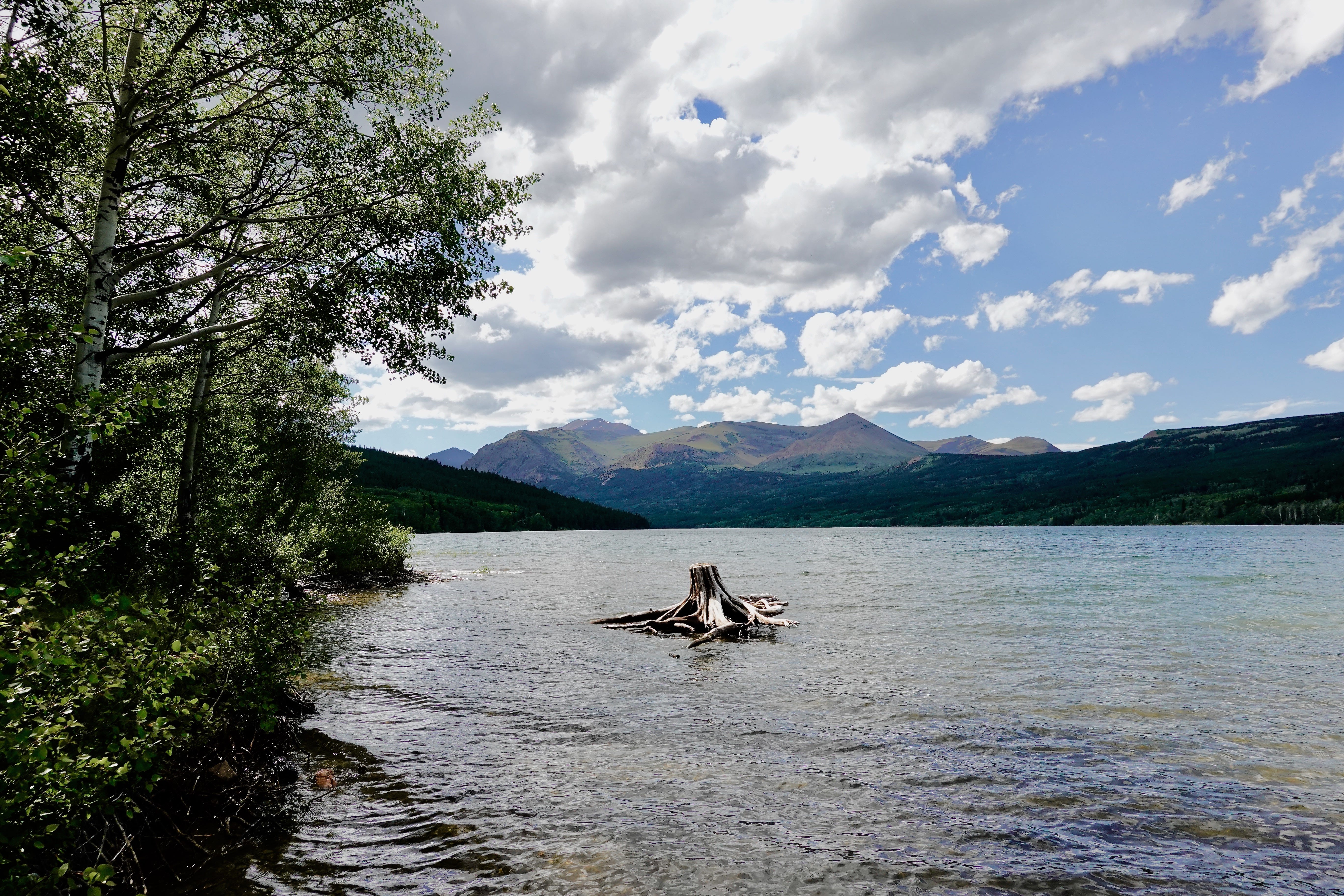

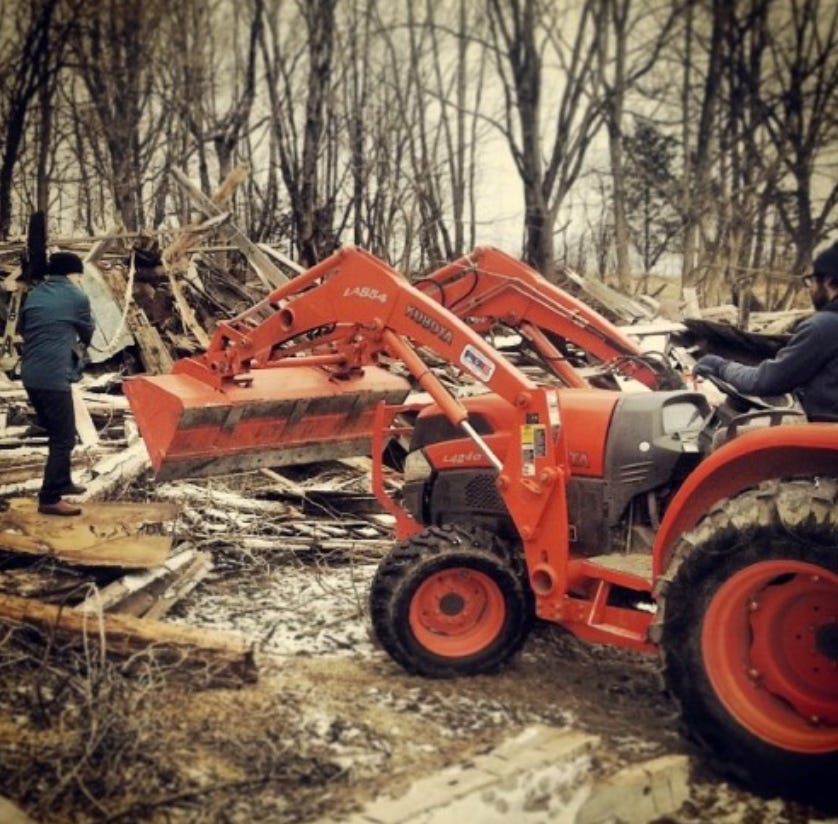
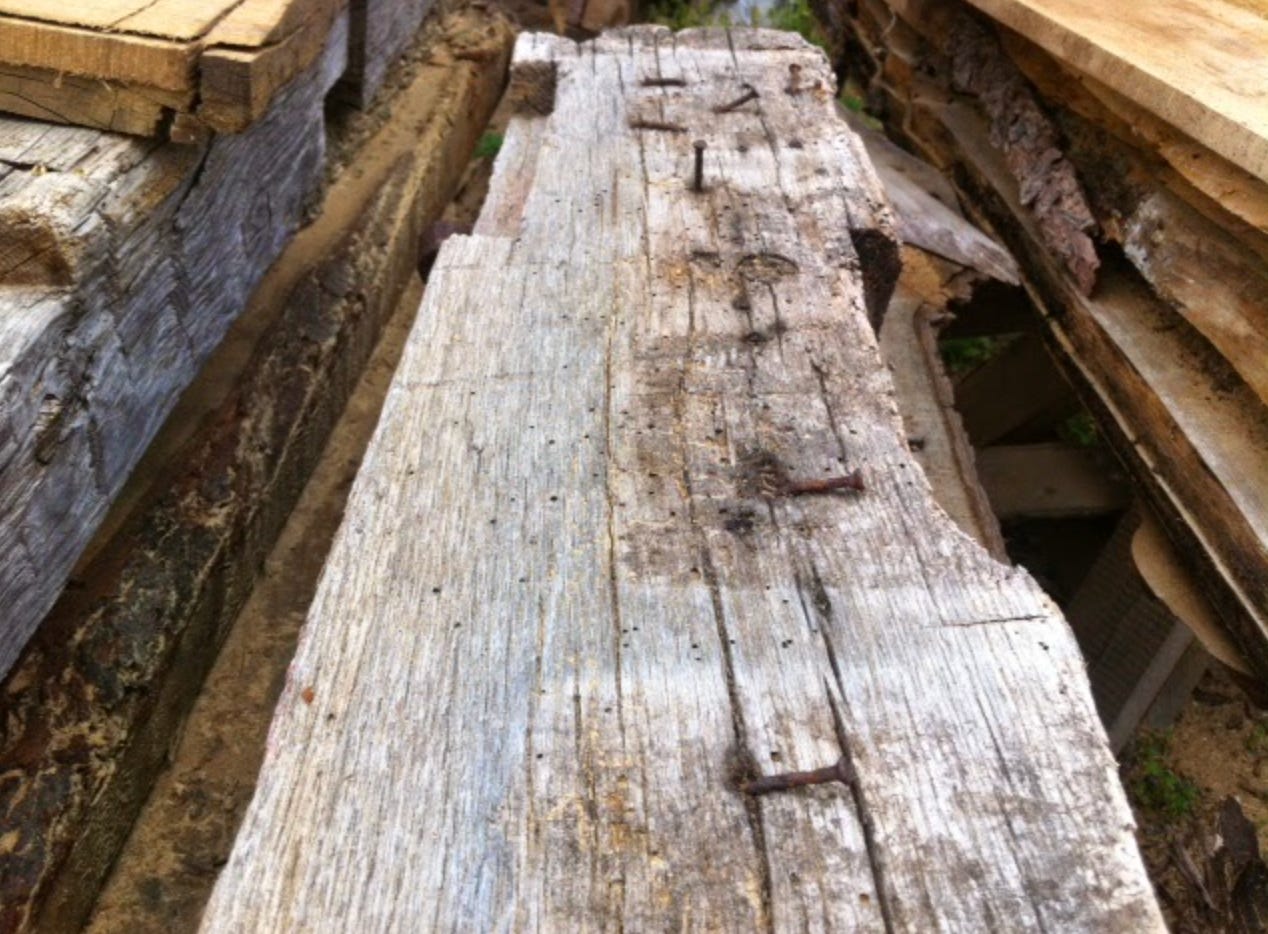

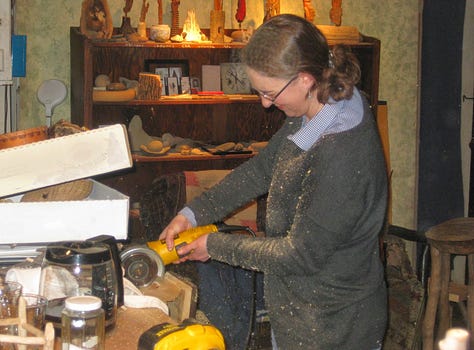
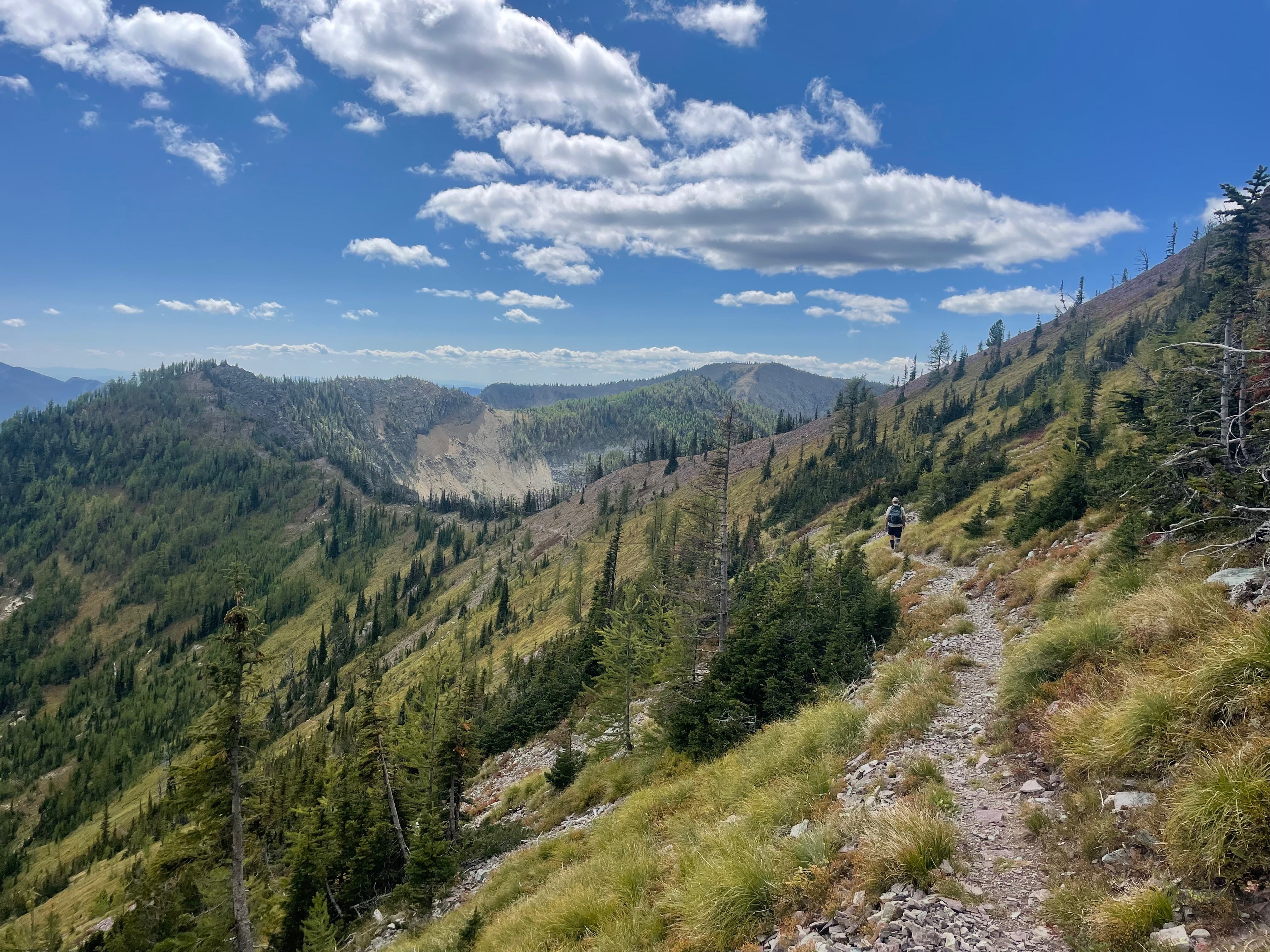
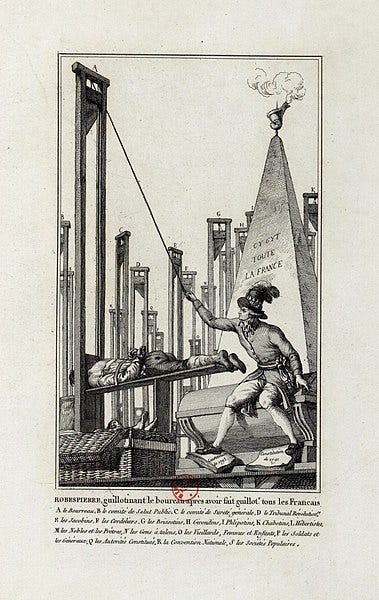
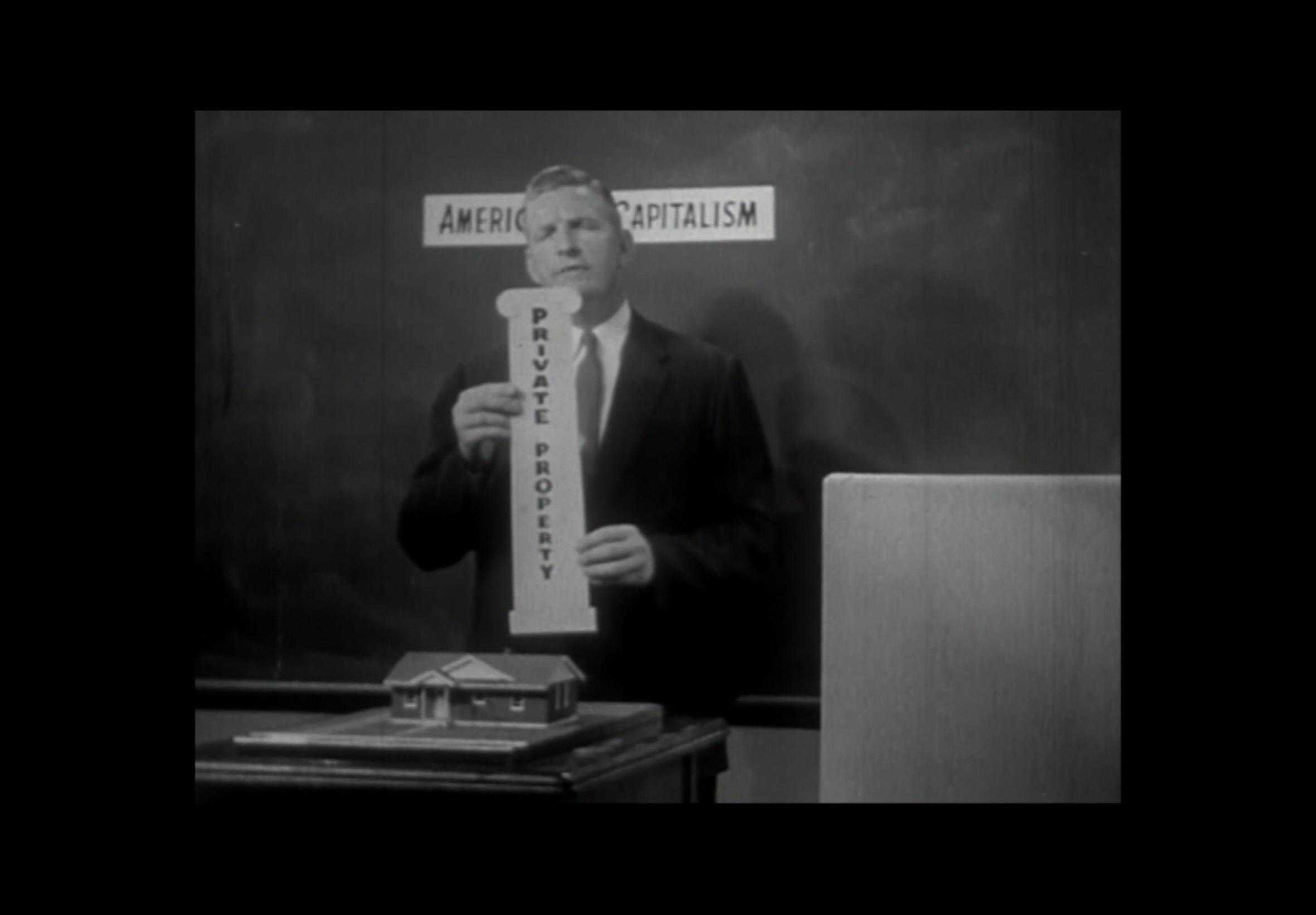
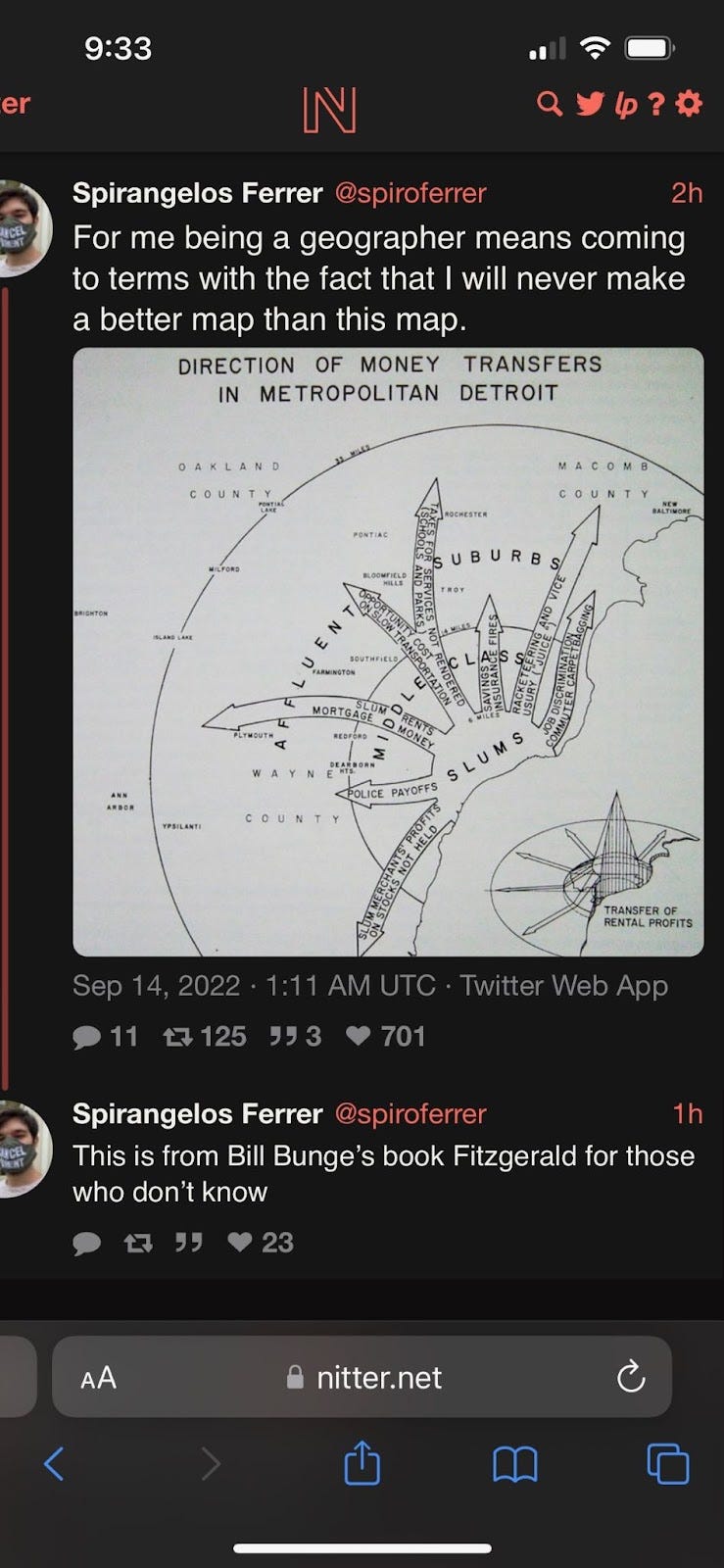
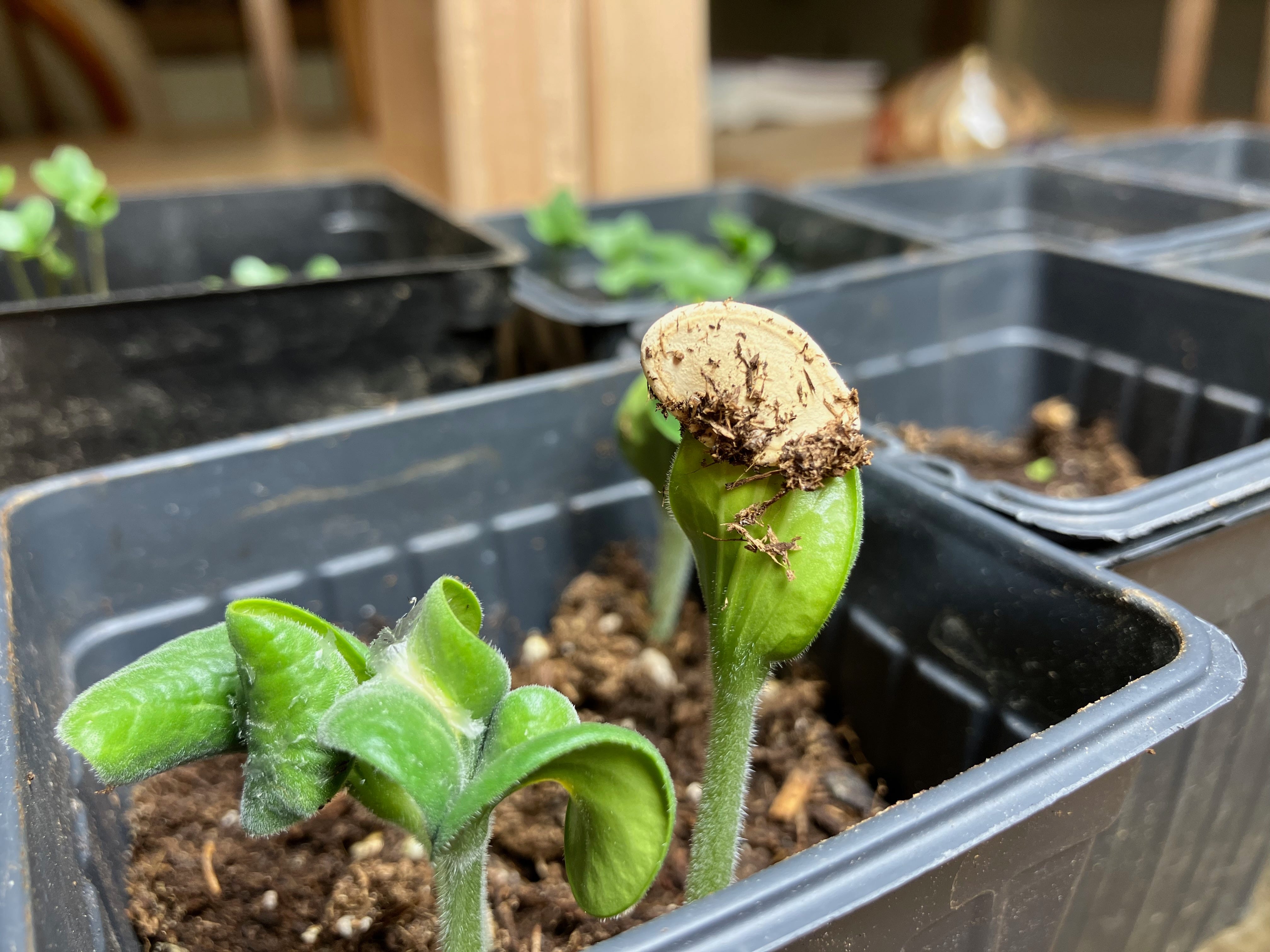
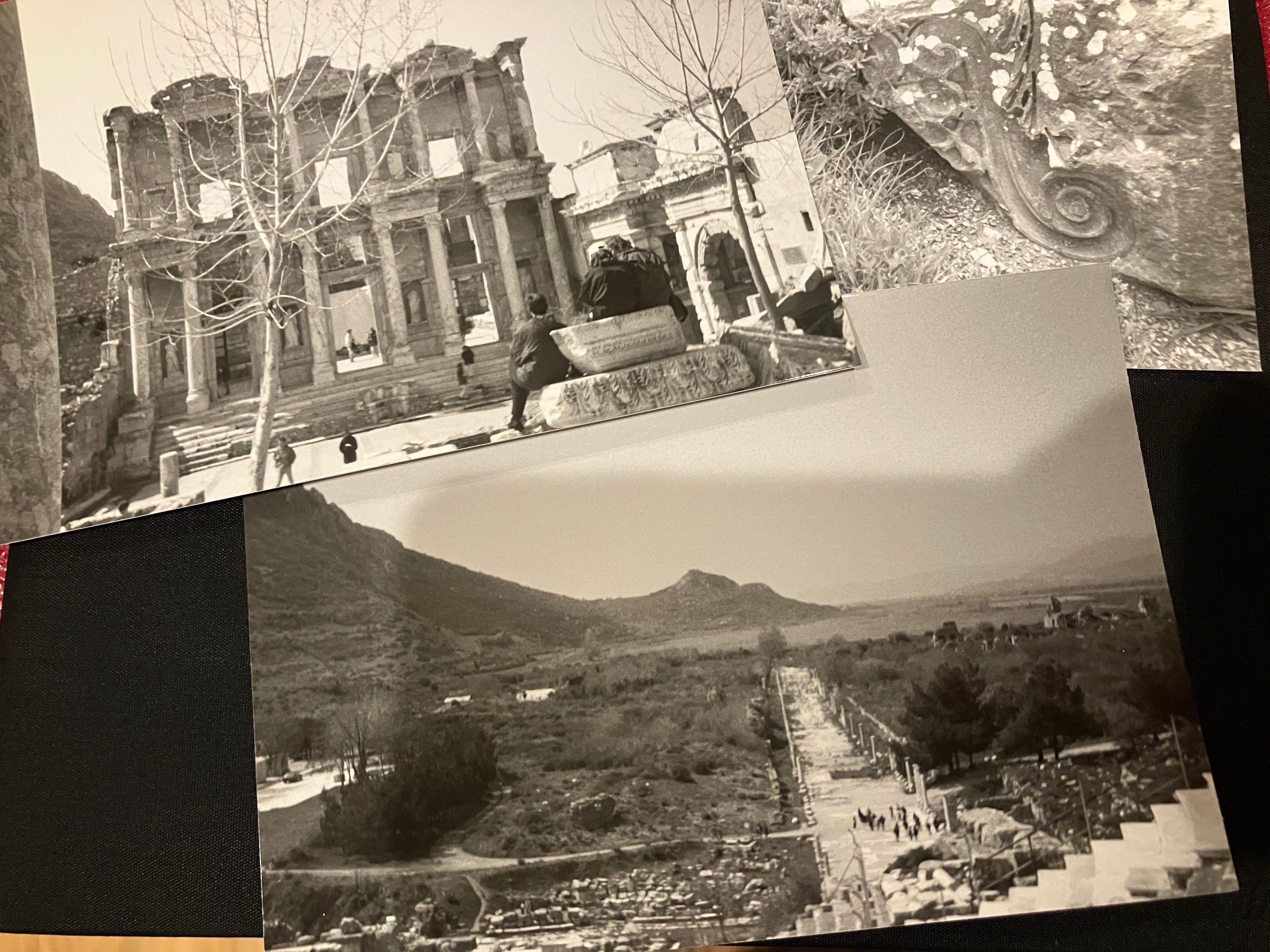

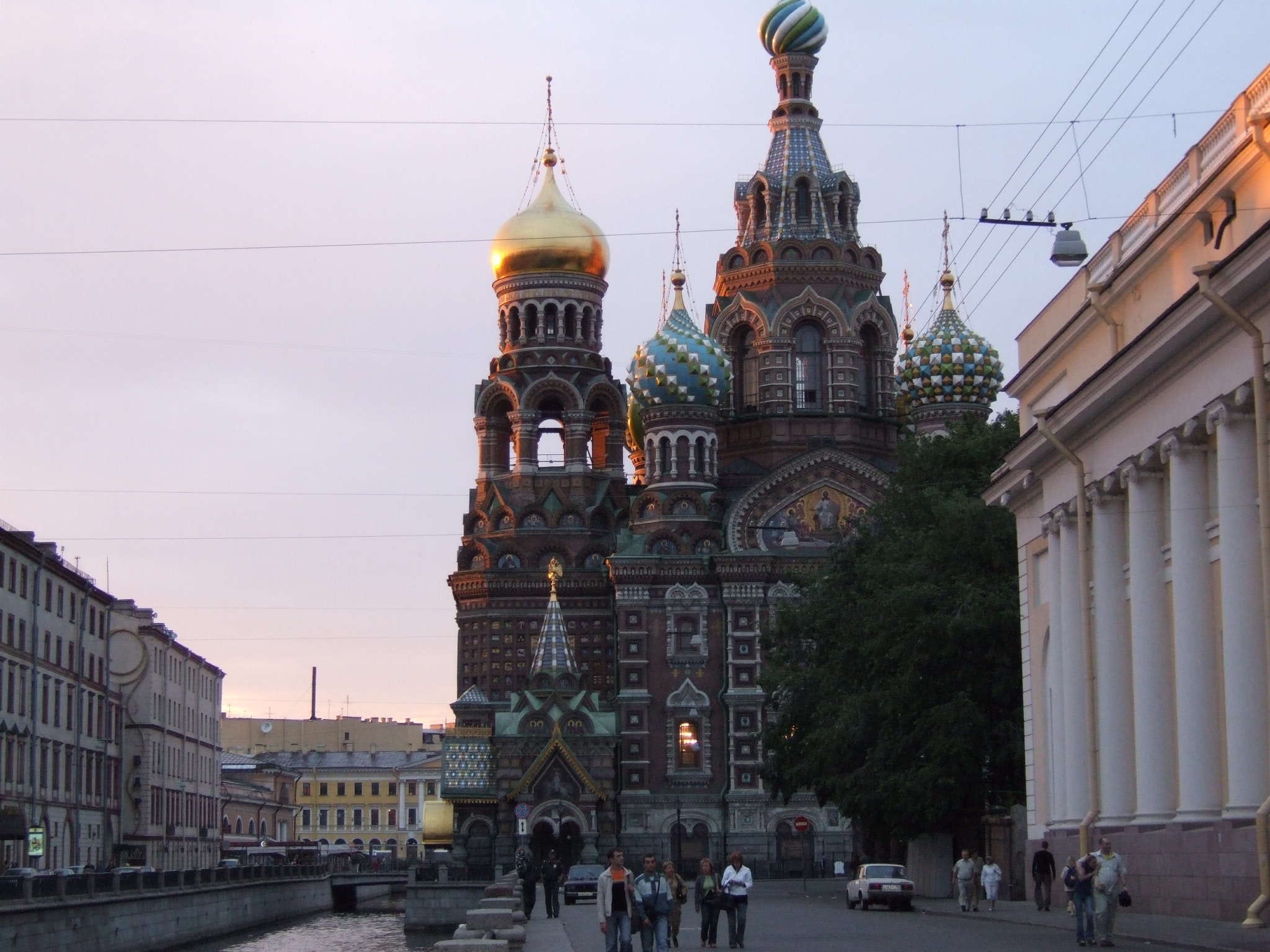
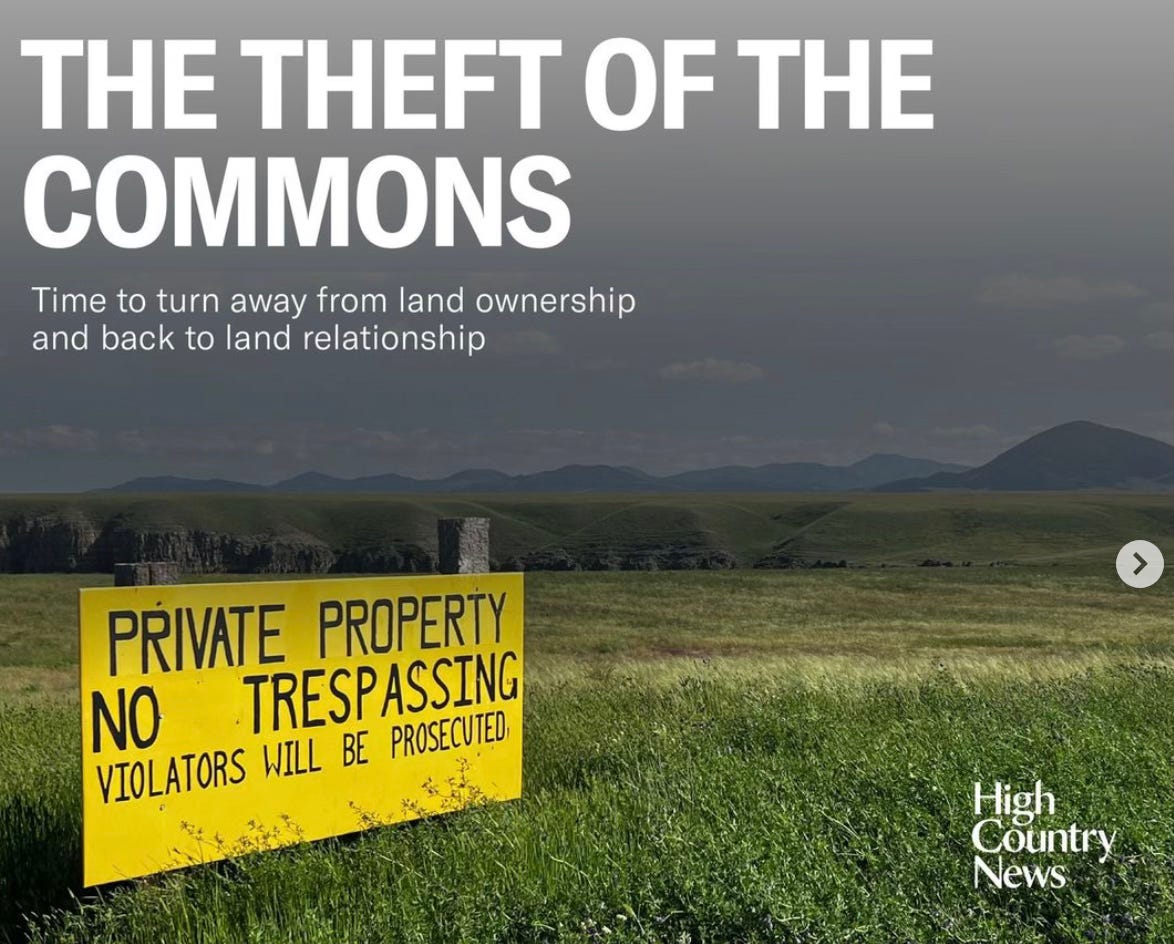


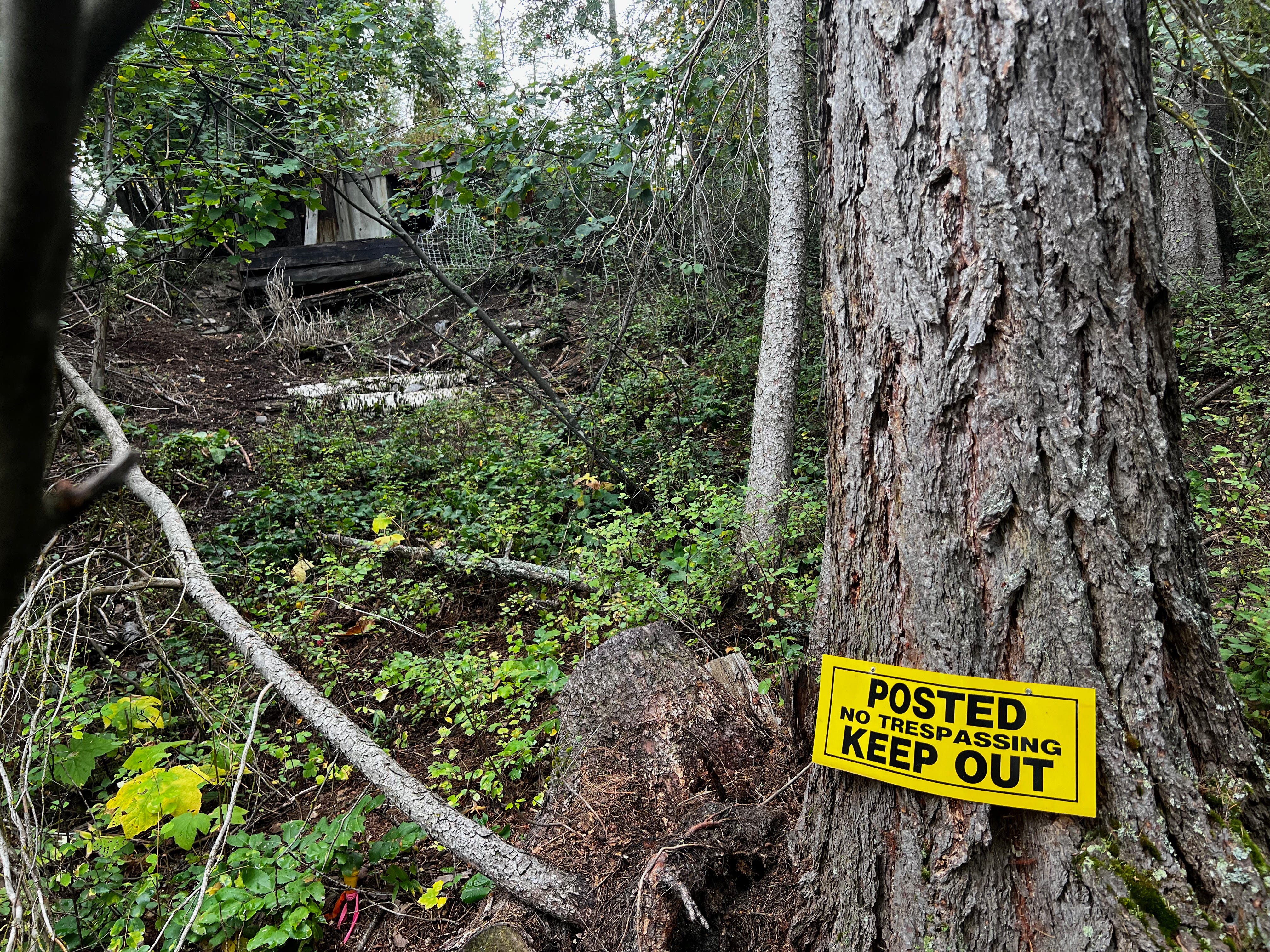
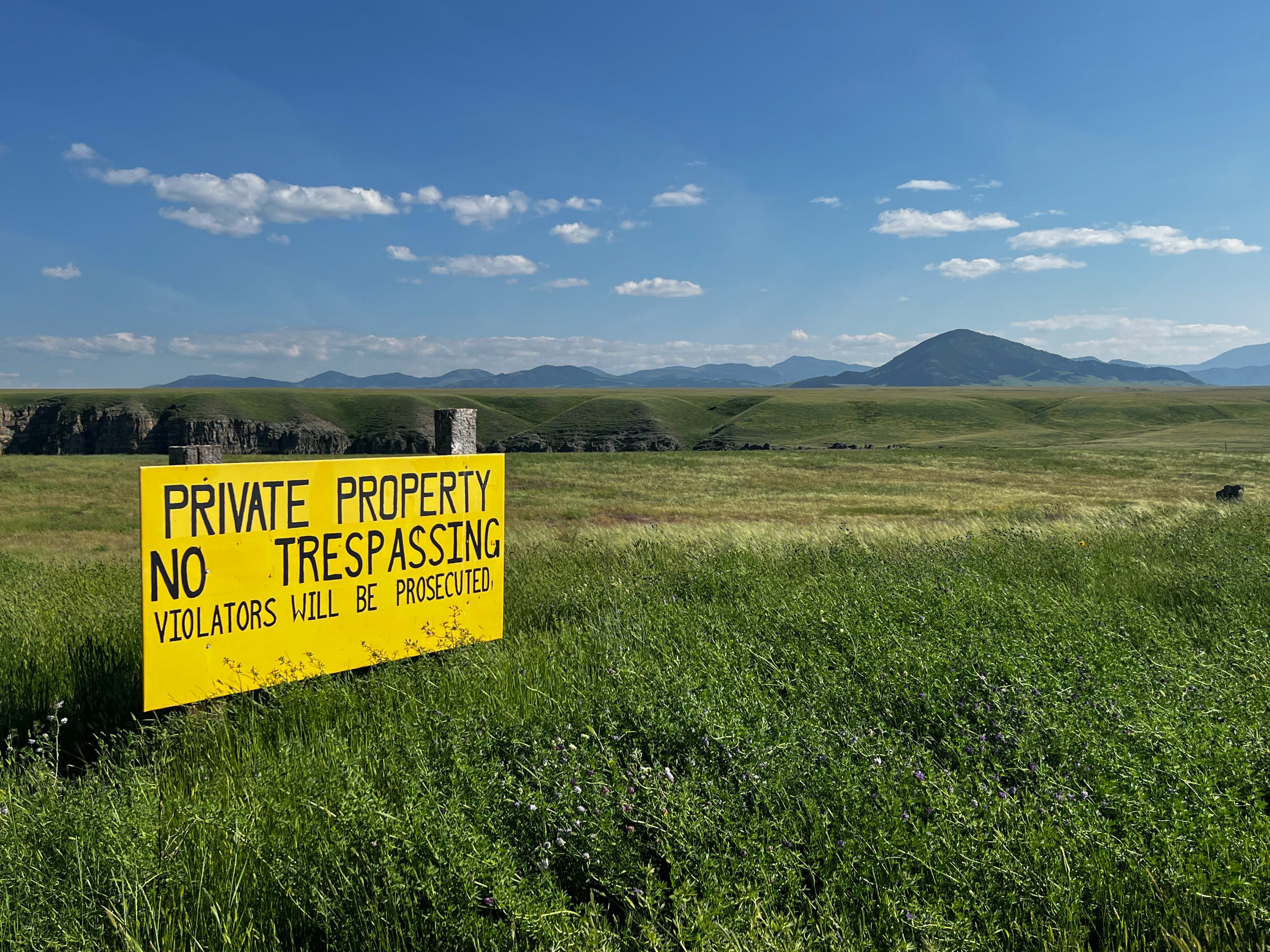
 Antonia Malchik