Moral codes that withstand the wreckage of history

Church of the Transfiguration, Peredelkino, Russia, midwinter

At the age of nineteen my grandfather, Jacob Davidovich Malchik, flipped an electric switch, saw a working light bulb for the first time, and knew his future waited somewhere outside his muddy Ukrainian village. In post-Revolution Russia, he left the Pale of Settlement’s shtetls, where Jews had been confined to living for generations, for proletarian Leningrad. With the tsar gone and the Bolsheviks promising equality for all, he had the chance to discard centuries-old restrictive laws that had been attached to him more closely than clothing, ground into his skin like a tattoo.

But Jacob hadn’t counted on the damage a dictator’s paranoia would do to that dream. As a Jew and the son of a moneylender he struggled even to gain admission to the Leningrad Polytechnical Institute in the 1930s, despite his top score each year on the entrance exam. It took him years to finally become an engineer, and only his intelligence, work ethic, and sheer luck pushed him against the later current of Stalin’s deeply anti-Semitic Soviet Union.

Those very qualities endangered his life in a Soviet state that required thinking and acting only in absolutes.

In 1937, the year Stalin’s first great purge of “undesirables” began, a popular Party boss summoned Jacob to his office and ordered him to denounce a man who was suspected of being an “enemy of the people.”

Hard words, those: denounceenemy of the peoplethe Party. Concepts that in that world, at that time, had punitive, harsh meanings, a black hole of language dwindling into singularities, hostile to nuance or texture.

Jacob replied that he didn’t believe the man was an enemy of the people. In doing so, he knew the risk he was taking. To be denounced in 1937—and, equally, to refuse to denounce someone—meant a surprise visit in the middle of the night followed by a show trial, possibly torture, and either a bullet or exile to Siberia. Denunciations were anonymous, required no proof, and more often than not led to the victim’s death.

Two million people died during Stalin’s first purge, known as the Great Terror, an average of a thousand executions per week.

The Party boss tried again to convince Jacob to write a denunciation, but he refused to comply. Jacob went home that night, told my grandmother Anna Davidovna what had happened, and together they packed a small suitcase and waited for the KGB’s midnight knock.        

Jacob knew what was being asked of him. He also knew that his own morality—for which the words justice and honor and honesty are only brushstrokes—would not allow him to sacrifice an innocent man’s life for the sake of his own, innocent, life.


My grandparents were not active dissenters against Stalin. But they retained hold of their sense of self, of who they knew themselves to be and the difference between right and wrong. They read forbidden Solzhenitsyn with their children at night, sitting around the table passing each illegally copied page to the next person as they finished. My grandmother listened to banned Voice of America and Voice of Israel—though I imagine that these days she would feel about the Israeli government the way most of my family in Russia does: absolutely opposed.

In the last few years, my cousins in Russia have spoken up against the invasion in Ukraine and found themselves silenced in the face of mass arrests. Relatives reported years ago of watching ballot boxes stuffed with pre-filled forms during sham presidential elections. Nobody in my family takes democratic freedoms for granted, but perhaps it takes living under dictatorship or oppression to realize that even the right to fight for something better can be stripped away.

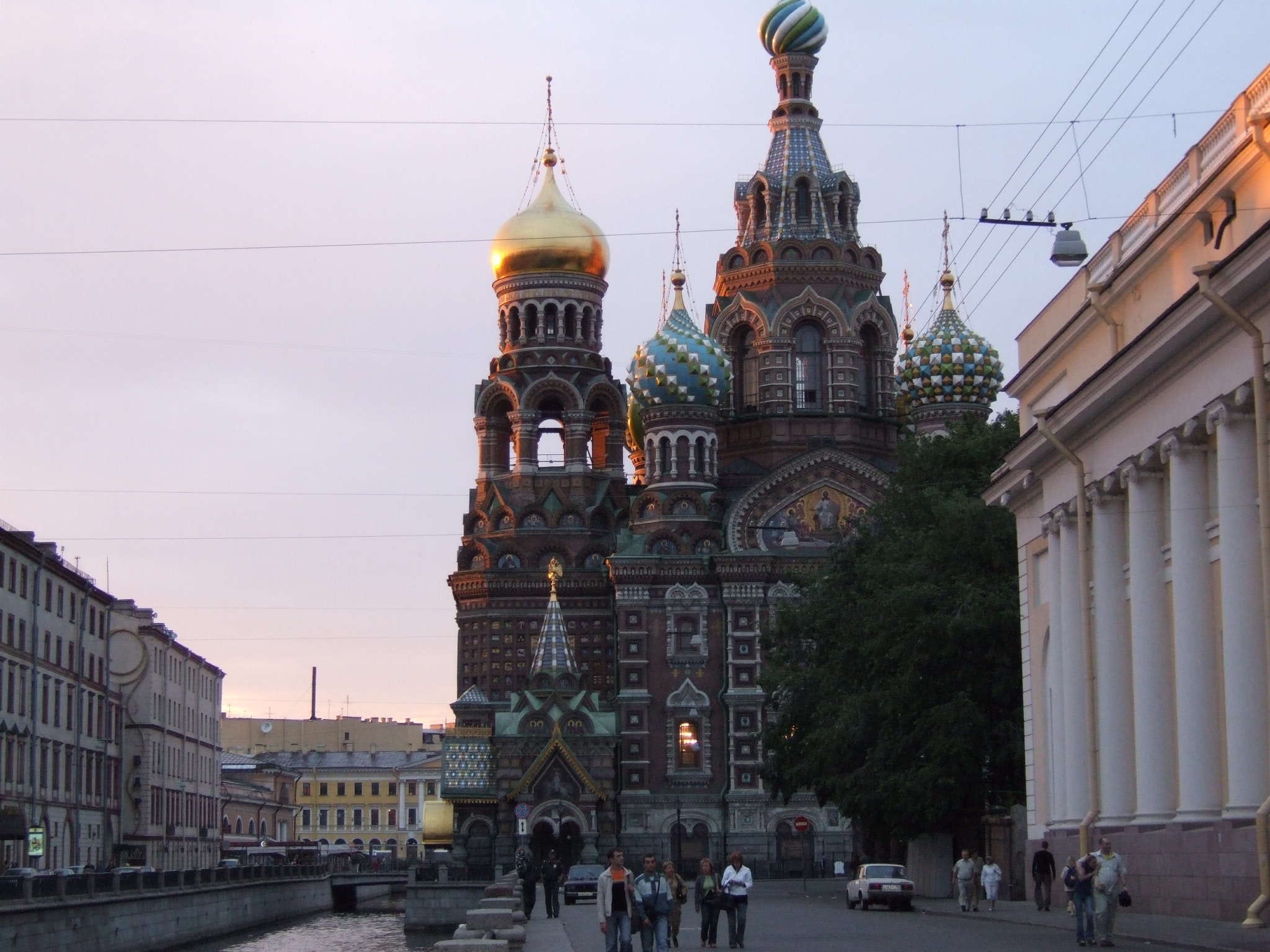
The Church on Spilled Blood, St. Petersburg, Russia, the sky rose-gold under a midnight Sun in June

Most of what I know about being a good ancestor comes from grandparents I never knew. To do what is right without expecting recognition for it, without even expecting to survive. They taught me that in good times and bad, being a good ancestor entails treating all your relationships with respect, no matter how intimate or how distant. To live with integrity, whether you’re ever recognized for it or not, and whether or not the world around you seeks to shatter all that you value as good and right and moral.

Being a good ancestor begins with how we treat those beings closest to us. That’s a minimum but not the totality.


The KGB never came for my grandfather. The next morning Jacob found out that the Party boss whose orders he refused had been arrested, with a letter in his vest denouncing Jacob as an enemy of the people. The man was shot a few days later. His letter, his “right answer,” gave my grandfather some immunity from further accusations; if Jacob had given the answer he knew was expected, I would not be here.

Jacob and Anna never saw the end of the Soviet Union—or barely did, in my grandmother’s case. They had no expectation that their world would shift to meet their values, but they likewise refused to abandon their values to meet that world.

When my father was finally given permission to emigrate from the Soviet Union with my mother and older sister in 1974, he was given three days to leave the country. Three days to say goodbye to his family, his friends, his job, Leningrad with her endless canals and pastel light under a midnight Sun, ice skating on the Neva River in the depth of that far northern winter that I crave returning to the way I crave water drunk from cold mountain streams, or walking this world barefoot.

Three days, and he was told not to return. He didn’t even speak English when he came to Seattle at nearly 30 years old.

And he never saw his father again. Jacob died a few years before Mikhail Gorbachev began loosening the restrictive borders of the Iron Curtain. Anna Davidovna, my grandmother, died shortly after the Soviet Union fell, less than a year after I met her for the first time. I was 14 years old.

My grandparents left me some small understanding of the complexities we live with when daily routines and adhering to one’s higher values are riddled with life-or-death pitfalls. They also left me with a question I wake and walk with every day of my life: how do I make choices and exist in a world that seems intent on destroying everything I care about? How does anyone?

The work I do is aimed at exploring these questions, and on reviving and strengthening truths like those left me by my grandparents, at bringing us back to the good in the world, to reminders that we are all alive, interwoven with all of life, and that how we treat one another and non-human life alike matters. Interconnection, relationship, kinship—they’re a mosaic that presents the opposite of individual ownership and private property.

Under authoritarianism, my father told me shortly after Putin’s invasion of Ukraine, you have to find your red line—like his father did when asked to denounce another innocent man, the line you will not cross, even at risk of your own life.

No matter who wins or loses elections large and small, these truths have been under assault for thousands of years. They need repair, just as the wild, breathing, beautiful living world needs our attention and care.

No matter what times we live in, no matter who holds power or who is being oppressed, we all have to hang onto ourselves, to what we know to be right and good, to not sacrifice those values even for our own skin, much less our own power, success, or status.

The moral codes we live by do not have to be immaculate. They do not have to check every box of what we think is expected of us, or what we expect of ourselves. All they must be—and this is harder than it sounds—is sturdy enough to withstand the wreckage of history.

To walk a prayer to the world

Imagine yourself in a cabin, curled up on a beaten couch in the corner of the small room shared by a couple of bunk beds, a table, a counter and stove, and you. It’s night out, and an almost-full Moon was rising in the south when you went out earlier, a boreal owl barely audible from the woods.

The propane-fueled fireplace is warm but doesn’t give off quite enough light to read by. But you sink into the pages anyway, take them slowly because you’re in that kind of mood. You watched a whole flock of bluebirds for an hour earlier, and as you drove up to the cabin, a bald eagle flew overhead. There are no people nearby. You are fed and tired and ready for bed; to slip into it via firelit poetry feels perfect.

As you turn the pages, something happens, a quiet internal earthquake. It’s not one particular poem or line or turn of phrase, but the accumulated effect of their weight: quiet and light, like snowflakes, carrying that same balance of power and delicate beauty. The poems each strip away a layer of something, you’re not even sure what, and by the end of it you look up at the flames slightly irritating in their gas-powered sameness and think, That’s where I’ve been hiding


A few hours earlier, I’d been standing by the side of the road watching bluebirds. I have never seen so many bluebirds in one place. At most I see one or two of them a year, their impossible bright colors a flash of delight. There were at least ten, maybe fifteen, flying among last year’s grasses, barely pausing on the dry branches waving in the wind. I truly could not believe my eyes. At the far end of the field, a couple of elk romped together among their herd, and snow-clung mountain peaks stopped up the horizon like a postcard for Montana.

My feet ached to wander into that field, wiggle toes into the soil that could draw so many bluebirds. 

My friend 

Amanda B. Hinton and I were talking recently about the ease I feel when letting my feet rest in running water, the concept another friend had proposed of feeling “grounded in flow.” Maybe, Amanda wondered to me, you pray through your feet. That idea tasted like a fresh wild huckleberry on a hot hike when I’ve run out of water, reminding me of something 

Chris La Tray has often quoted from Eddie Benton-Banai, that “to live an Anishinaabe life is to live one where every footstep is a prayer” and the fact I sometimes forget, that I’ve spent years now devoting my professional and personal life to walking this world and relating to it as deeply as possible. The more I do it, the more I want to do it.

Which is how I ended up writing about ownership, private property, and the commons in the first place. Because too many places I yearn to walk, like that field of bluebirds and elk, are inaccessible not due to terrain or danger, but to the simple fiction of ownership.

It’s a friendly No Trespassing sign, the orange almost cheerful, the font relatively friendly, and no hint of being shot at—far too common in Montana—for crossing the barrier, but it’s a barrier nevertheless.

In his book Enlivenment, the German philosopher Andreas Weber writes of the enclosures of the commons throughout Europe as not just a denial of physical sustenance and survival, but of a spiritual severing. Enclosures and the rise of the market economy 

“not only governed the allocation of land, but also redistributed the spaces of our consciousness. In reality, the forced separation between that which gave life (the biosphere) and those who were gifted by life (the commoners) was an act of violence on the part of the landlord, who excluded members of the ecosystem from their rightful positions and thereby damaged these participants, the ecosystem itself, and the unifying experience of self-organizing coherence.”

Commons, Weber had written earlier, is a system in which there are no users or resources, “but only diverse participants in a fertile system, which they treat in accordance with a higher goal: that it continue to give life.”

When the land was no longer commoned, when it was stolen for the purposes of private ownership, it could also no longer be related to. People were denied access to that most fundamental yearning, to relate to the land we live with. Their minds were bent, by force—the number of bloody rebellions against enclosures of the commons might be surprising to those who assume private property came about naturally—to see themselves as separate from nature, disconnected from land and a living world, and able to survive only by working for someone else—the genesis, commons scholar Peter Linebaugh has said, “of the j-o-b.”

We know how well all of that has turned out.

Dismantling the story behind private land ownership, and exposing the lack of foundation for laws defending it, is necessary to finding a way out of it. But so is restoring a shared relationship with all of life. I wanted to walk that field because I am alive and the field is alive and the bluebirds were so beautiful I wanted to cry and it means something to know that, and to know it’s true and right to feel that way, even if the No Trespassing signs stop me acting on it.


The book I read that first night at the cabin (for those who’ve been around a while, this is the same cabin I stayed at about a year ago where the heat didn’t work and I turned around on a hike after coming across a fresh grizzly bear track) was by someone I was fortunate to meet recently, poet, essayist, and woodworker Charles Finn. He’d generously given me a copy of each of his books: Wild Delicate Seconds, a book of short essays, and On a Benediction of Wind, a collaboration between Finn’s poetry and the black and white photography of Barbara Michelman. 

It’s tempting to spend the rest of this space quoting numerous lines that I keep going back to, like

“Above the geese the soft colors of the afternoon deepen into a tremendous wound and a gibbous moon is birthed, shadows crawling over the snow to dissolve into the river”

from Wild Delicate Seconds, but like most reading for pleasure and insight, how anyone receives those passages will be personal to them. There’s a quiet reverence for the world that invites rather than demands the reader’s attention, both to the writing and to the lives it honors. I read On a Benediction of Wind all in one sitting that first night, which I don’t think I’ve ever done with a book of poetry, and at the end I closed it and stared at the fire and went out to visit with Moon and felt, for the first time in a long time, a steadied feeling of being at home—in the world, and in myself.

The next day I chose a trailhead at random and walked barefoot for two miles on dry pine needles along a waterlogged trail, the nearby river free to stretch herself over the ground. I spent hours by the lake after gasping into its snowmelt cold, watching the waterfall far across the valley, crashing snow from its mountains’ embrace through a ravine and brushing into my dripping hair snowmelt and sunshine, a wolf’s nose nudging a track, a wolverine’s strand of fur, the promise of berries still sleeping, and the call of the loon diving under spring’s early waves.

“Conspires,” from  On a Benediction of Wind

Competence Lost


Competence Lost

9 a.m.

            The tires slipped, eager for the ditch that hugged this steep, curvy section of road. I twiddled the steering wheel, resisted tapping the brake pedal. The car made its way to the flat without heading for either the languid, half-frozen river or the snow-crusted cornfield, and my hand shook as I finally shifted down to first.

            “Mommy, mommy, mommy?” The o’s drawn out long, nearing a whine, ma-AWmy. My son watched the snowfall from the back seat.

            “Can you sing ‘Twinkle, Twinkle’ for me, honey?” The shakiness had migrated to my voice. We reached the end of our road, pitched at an inconvenient incline where it met the hill of the highway. The stop sign was irrelevant. There was no way I was stopping, not until I pulled up in front of our garage. The bald tires of the station wagon protested every time I steered them anywhere but straight, the road so slippery that brakes had become a danger.

            It hadn’t looked that bad from the house, when I’d decided to run out for coffee before the snowstorm started in earnest. If the car slid off the road, I’d never be able to explain that idiotic decision to my husband, safe in Toronto on a business trip.

            “Twinkle, twinkle, little star,” my son sang. The car waggled its rear end along the highway, eeking as slowly as possible. A plow, its blade raised, passed us going the other direction and the driver shook his head at me.

            A journey that should have taken fifteen minutes lasted an hour; we never stopped for coffee. I didn’t dare. My heart thumped in time with attempts to move ever slower; I threw silent apologies at the red light in town where I turned right without pausing. When we got home, I wanted nothing more than to drink something warm and alcoholic, and to curl up in bed, reliving the number of times the car should have slid off the road. But there was my three-year-old son, eager to play, and the five-months-along fetus inside me, not allowed booze.

            By afternoon the shakiness had begun to disappear, but it refused to leave completely. Growing up in Montana, I’d spun our rusted-out Suburban around empty parking lots to get the feel of driving on ice. I’d rocked and dug countless cars out of snowdrifts. I’d driven through blizzards so thick that daylight had no effect on visibility. Now I was living in upstate New York, where the difference lay not in the texture of the snow but in the advent of motherhood. Doubt had crept in and stayed, invited during that drive by the constant worry of landing in the ditch and injuring the child in the back seat. The snowstorm felt like a live thing, come to haunt me, to lay its cold fingers on my child and strip away my sense of self.

7 p.m.

            The snow came down in thick, fat flakes all day long. My son and I built towers with his blocks, ate scrambled eggs, read Goodnight Moon ten times or maybe twenty. I measured the snow line rising against the deck door and wondered if whisky was healthier for the fetus than stress. I finally put my son to bed and drank a hot cup of chamomile tea before bundling up to wrestle with the snowblower. I’d come to hate chamomile tea during my second pregnancy, but with a little honey it was better than plain hot water.

            By the time I got the snowblower started and forded the drift outside the garage, the night was already pitch, the darkness made eerie by continuing heavy snowfall. It piled two feet high and was cemented at the bottom with six inches of freezing rain and sleet that had fallen the day before. It usually took me two hours to clear our five-hundred-foot-long driveway, which cut to our house built in a former cornfield. I could barely see the driveway markers in the snowblower’s headlight, and there was nothing I wanted to be doing less right then than wrangling the gas-guzzling machine with its spinning blades down the driveway—nothing, that is, until twenty feet from the door, the blower sheared a pin. Our route to the outside world was closed off.

            When I came back inside, the emotional moorings that had been weakening all day finally broke loose. The lights flickered and flickered again, responding to the outages in the main transformer a few miles away, and I started crying, picturing myself trying to keep my son warm before a fading fire while outside the snow kept falling. Dramatic scenarios that would never come to pass but I couldn’t stop impaling myself on. I sat on the couch wrapped in three blankets, checking the power company’s website every few minutes and crying harder every time the lights wavered.

            Buried somewhere in my squishy body and unskilled self are the genes of more resourceful ancestors. Growing up, I learned to embroider using my great-grandmother’s thread, pickled cucumbers in another’s massive crock-pot. When I started learning to ride a horse, I inherited a great-aunt’s saddle. It once seemed to me that if I were to time travel and land at my ancestors’ dugout on the Montana prairie, I’d have no problem contributing something to daily life, being useful. I’d haul water and hew wood, cheerfully clear a trail through snowdrifts to the barn.

            I no longer think that self exists. Maybe I’d just freak out, and sit by the fireside rocking my babies, waiting for the loneliness and wind to drive me insane.

            After the snowblower gave out, I sat inside staring at the gathering whiteness of the yard and surrounding field, steeped in panic, fighting the bone-tiredness that had possessed me my entire second pregnancy. I wanted to reach back to my ancestors and shake them. Where are my lessons, my skills? Why didn’t you leave anything for me? What happens when the apocalyptic post-oil climate-change future finally heads our way? If it all falls apart, how do I keep my children alive?

            Those ancestors of mine didn’t leave much record of themselves. Some photos. A solid barn in eastern Montana that is still intact and in use over a hundred years later. No diaries, no precious letters. Sometimes I browse through the sparse journal excerpts of other women from that time period, looking for the winters, the loneliness, the lost babies. Those who mythologize the earlier histories of those lands both erase the violence inherent in every family with a personal history like mine, and romanticize what life would have been like for them. But there was no romance. There was just life, and hard work. A lot of loneliness, a lot of scraping for survival, frozen cattle, locust-riddled wheat crops, sickened children.

            These days, city-dwellers and land-seekers looking for a bit of space, a bit of privacy, air to breathe, are searching, often without realizing it, for what those romanticized histories seem to promise. But we haven’t cut the umbilical cord to modern conveniences and the security they offer: electricity (meaning light and warmth), roads (meaning both escape and connection), and supply lines (meaning food and fuel).

            All of which, as demonstrated by the storm that stripped away my self-respect, are easily made inaccessible. The storm left in its wake collapsed barns—four of them within a few miles of us, each standing for a hundred years or more, finally sighing to the ground under the weight of that thirty-six hours of wet, constant snow. It left truck engines blown out, and several communities aching for electricity for nearly a week. At times like these our plump houses set on their own, away from other people, planted in former cornfields, take on an unnerving aspect. They come to represent the past rather than the future.

            Overnight three feet of snow, a little more, made the car sitting in front of the garage pointless. What I needed to traverse those five hundred feet were snowshoes and I didn’t own any. In fact, right then, I owned little that was useful. The weather was oppressive, there was no shaking it. The storm’s repeated excitement of panic and worry, its irritation as the snow continued to fall in thick, quiet flakes, was torturous. It seemed almost intentional.

            Instinct is to gather oneself in, to fold one’s children into one’s arms and bow one’s head over them. Hoping the storm—whatever storm—will pass over us without notice. Despite my grandmother’s pickle crock and an ability to chop firewood, my upbringing was mostly books and escapism and stories and emotional survival. Nobody ever taught me to do anything truly useful except bake snickerdoodles. Everything else is self-taught and it’s not enough, never enough. To be more, to do more, to grab competence by the tail and swallow it, maybe raw, maybe dripping with blood, that’s what we need to survive what might come, or what we might lose. To tell the elements we see them, and respect them, and are not afraid.

10 p.m.

            Before I curled up in bed, I turned the heat way up. Just in case. In case it all fell apart and the residual heat was all we had. I filled up pots of water. In case our option was to die of thirst or freeze to death from trying to eat snow. I mapped out a route to drag my son by sled to a friend’s house a couple miles away. In case the driveway wasn’t clear until spring.

            All of which, given the facts, were just plain silly. Even if the driveway stayed blocked, there was no thought of starving, or freezing. Not this time. The fridge was plump with produce, the pantry wedged tight with rice, pasta, beans, and oatmeal, and there was half a deer chopped up and packaged sitting in the deep-freeze. If the electricity went out, it was cold enough in the garage to keep most food, and I didn’t need electricity to light our propane-fueled stove. The basement was stocked with enough canned peaches, tomatoes, jam, and salsa to last a month. And the woodpile outside would have kept us warm enough for a solid week, at which point there was plenty of pre-broken hand-me-down furniture to put under the ax. If I could find the ax and remember how to use it.

            But I’d become like an old wheat rancher, rigid in my beliefs, with obsolete fears. That night reminded me that I was tethered not only to the fierce, energetic child sleeping upstairs, but to the incubating little person in the womb who did and did not yet exist. A woman at night, pregnant, is reminded constantly by the discomfort of rearranged organs, by the aches in her back, by the pesky insomnia when sleep is needed most, that her body has been pressed into service.  

11 p.m.

            Just before I turned off the bedroom light, I opened the blinds. There, lining the driveway parallel to ours, were our neighbor’s big, bright lampposts. I’d been making fun of them for the last two years. Like many of the locals, our neighbors moved out there from New Jersey saying they liked “living in the country,” and immediately turned it into a close approximation of suburbia. They dug a pond, put in a phallic fountain, stripped down their field to achieve a four-acre lawn, and then planted iron lampposts all down the driveway leading up to their spotlit house. It was the lamps I found most irritating. “Drowning out the stars,” I said. “So obnoxious.”

            That night, I opened the blinds so I could see them as I fell asleep, their electric filaments burning in the snowstorm. Before daybreak, I woke up several times and searched immediately for the lights leading to the road like they were a signal from the rest of the world. Were they still burning? Were we still here? Had it all fallen apart? But there they were, an anchor to the civilization I never learned to live without.

            Twinkle, twinkle.