
The bacon was frying slowly and the water wouldn’t boil. I was poking at both over the camp stove, rain beating the tarp overhead, when my sister asked me something. “I was just thinking,” I answered her, “about how this stove is getting old, and how cold it was the other night, and how I’m stiff from the hike yesterday. I can’t get warm by the fire unless I stand in the rain, and we’re going to have to suck it up and pack all our gear away wet.”
It had dipped below freezing the previous night as we lay huddled in our tents, and I’d been up since 3, tired but still soaking in the full double rainbow that had spanned the narrow valley a little after 5 that morning. I rambled on in that vein to my sister for a minute and then said, “And how much I love all this.”
I’ve always enjoyed camping, ever since childhood. It’s something else to be standing wet and tired and cold over a semi-functional camp stove, and realize you’re happy. I do. I love it.
The more I do these things, the less I want anything the digital world provides—other conveniences, too, like central heating and electric lights, which bring comfort and ease but also are frustratingly disconnected from whatever rhythms and routines my 48-year-old descendant of millions of years of hominin evolution craves. I want less of that and more waking up stiff and sore, a rock digging into my hip, to hear the birds start up and wait for Sun to soak the mountains while Moon is still shining in the south and a rainbow forms and a cold river welcomes my feet, all of it so beautiful it feels like a miracle. It is a miracle; is there anything more natural than worship of stars and Moon, trees and animals?
I recently gave up my smartphone. It was a long process that started in my head over a year ago, and in action sometime last February, when I spent too much time in Reddit forums trying to find a mobile phone that didn’t support apps and wouldn’t allow me to go online.
There used to be a podcast called Note to Self that was one of my favorites until it abruptly disappeared, and with its guidance I had all notifications except for calls and texts turned off, and my phone in grayscale, by the end of 2016. I’d deleted all social media and email apps, the internet browser app, and anything else unnecessary, and corralled all the other apps into tightly controlled categories, where they remained until sometime in June, when I factory reset the phone, removed its number from Apple ID and iMessages, and handed the device over for someone else to make use of.
I was a late smartphone adopter, but quickly became addicted and spent far more time trying to manage my phone use than I ever thought would be necessary. I’d gotten a better grip on time spent staring at that screen over the years, but none of the usage tweaks had been enough and I still needed some kind of phone. I’m fortunate to have work that doesn’t require me to have a smartphone, but I have young kids. Being unavailable in emergencies isn’t usually an option.
The first draft of this was written sitting by a creek listening to a mountain chickadee, waiting for my hair to dry in the sun and being distracted by a small blue butterfly—two blue butterflies, who seemed to enjoy hanging out around the mud at the edge of the creek, buttercups nodding overhead. A month ago I would have had my phone with me and tried to catch their fluttering, but the camera I replaced it with is heavy enough to make me think twice about carrying it around, and so there I was, idly noting the butterflies’ presence in a notebook with a pencil that was growing dull.
Over the last few months, preparing to let the device go, I thought carefully about what sociologist Zeynep Tüfekçi in her book Twitter and Tear Gas called “affordances”: In what ways is a technology useful or enabling of personal freedom and societal democracy? In what ways is it at best a distraction or, worse, a tool for oppression?
I was in a meeting recently where I had to listen to a presentation on the use of what’s called artificial intelligence in the classroom. I’m not going to go into AI. I don’t find it an interesting subject or even an interesting technology. What I find interesting is its use case for lessons on ethics, along with labor and wage theft. I’ve written before about the theft of my first book for the profit of ChatGPT’s owners.
As I told the group in this meeting, a technology isn’t a thing. It’s a philosophy, a structure used to change the way humans live and work together and with the rest of life. A fence isn’t some abstract, objective material, or even a noun. It’s a form of relationship, one used to either work with life in balance, or subject it to domination and control, usually in the form of ownership.
So I spent a lot of time thinking about what my smartphone afforded me that was useful (voice memos), what was nice but unnecessary (Merlin Bird ID, iNaturalist), and what was an annoyance that degraded my life (Apple News). I made a list, worked out what was replaceable and what I could live without, bought a camera and a dumb phone, and, once I’d ported my number to said phone, tried to remember if texting had always been so maddeningly slow.

I have only 24 emojis. I miss the rest of them. But so far, it’s been worth it.
The whole process reminded me of when I first started dedicating my life, and my kids’, to walkability. Walking them to and from school every day, biking in the rain and snowstorms, teaching them to do the same themselves, building in extra time to get to meetings, trying to find myself a yoga class that didn’t require a drive to get to.
It all took work and time. As with all technologies, there come points when some people have that luxury and most don’t. Without our agreement or desire, we’re forced into dependence on technologies that are expensive and have disastrous consequences for both the living planet and for human social connections. Over time, societies are taught to forget those harms. The forgetting is intentional. That’s what happened with cars, their pollution and theft of public spaces and greediness for our income buried under the narrative that people chose to create their lives around car culture. With digital technology it’s simply happening on a faster timeline. A percentage of people benefit, a tinier portion profit hugely, and the vasty majority either suffer or are given no choice or both, and life continues to be subject to extraction for something that is mostly unnecessary.
No technology is without cost. The energy use of data centers for cloud storage is monumental and rarely reported on. We cannot say that we have true choice in its adoption unless that cost is weighed into its manufacture and use—the cost to everyone, not just in the balance of our own personal comfort or convenience.
There are no absolute right answers. There never have been at any time in human history. But there are better directions, led by the health of waterways, the diversity of bugs and plants, the visibility of the stars, the nurturing of empathy and compassion and relationships, and the restoration of our own fractured attention.
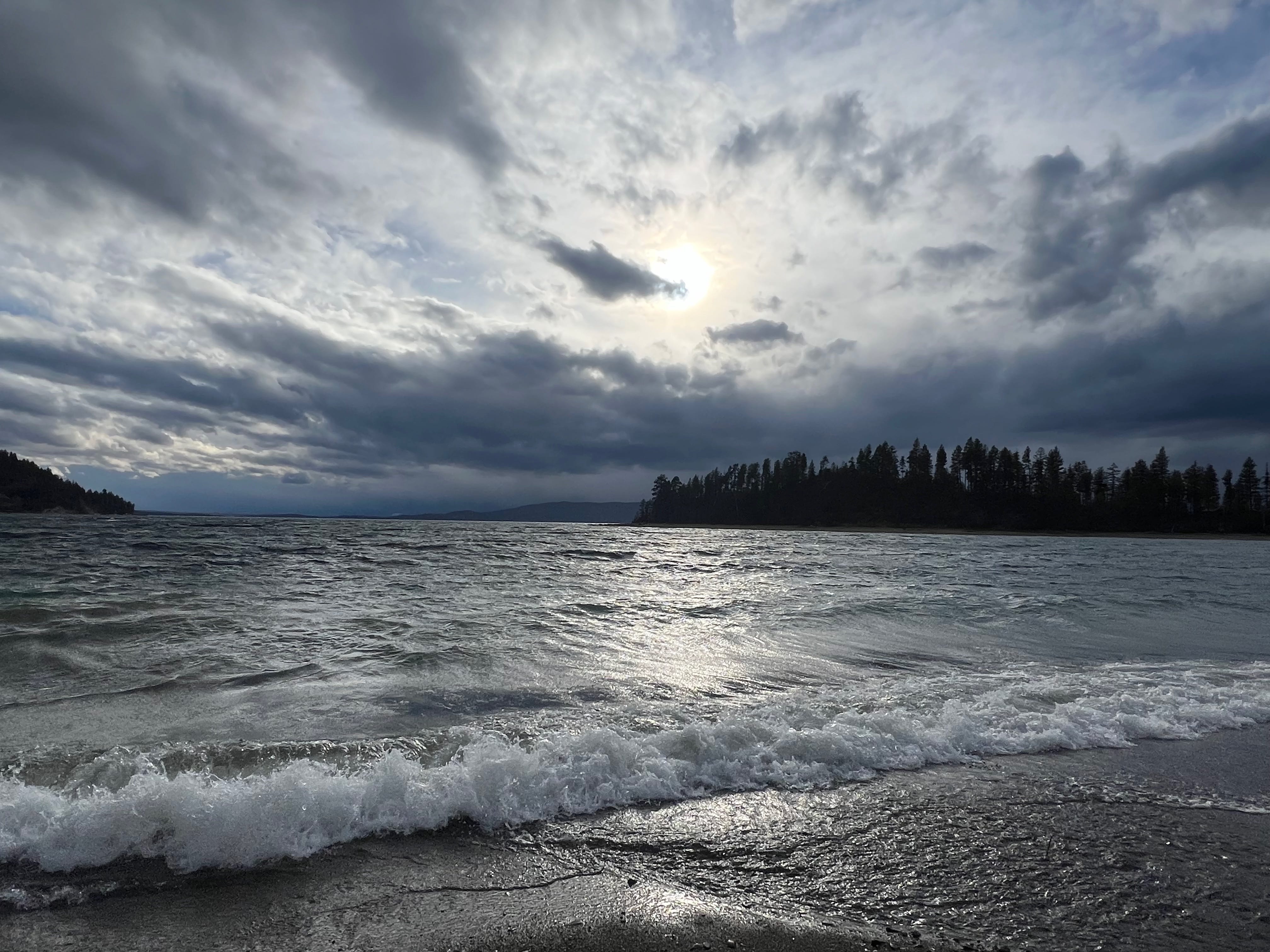
I’m glad to have some of mine back. When I first sat down to start writing this, it was in a cabin that my mother’s husband built in the 1970s. A creek runs past banks of willow bushes. There is no electricity, and water comes from a spring piped through a hose.
Making coffee can take an hour, building a fire in the old cast iron cookstove and waiting for the fire and then the water to heat up. But even waiting for the coffee is its own pleasure, sitting in a chair by the stove, reading a book and enjoying the fire’s heat while rain and hail hammer the roof.

It is something in this world, to be able to spend as much time offline as I’m able to, watching yellow warblers in the willow outside the door and hearing Swainson’s thrushes start up after the last of the night’s snipes have finished calling, to not see the sight of a digital screen for days, or hear the sound of digital music or voices. To go to bed with Sun and embrace boredom and reach occasionally for the field guides on the bookshelf while two marsh hawks soar and cry above a meadow. To linger in memory of the clearly visible Milky Way and confetti of stars covering the sky in the middle of the night.
To face ourselves without distraction, temptation, numbing, even other humans’ company, is one of humanity’s most consistent terrors, as well as one of its most consistent needs. Who are you, who am I, without the demands of a routine, schedule, the pressing obligations of work or caregiving, and the ability to check out? The allure of distraction is constant because to face ourselves is so terrifying. It’s also, in a time when our minds are offered or force-fed distraction at almost every turn, an odd kind of privilege.
If we know ourselves, we might have to be ourselves, and the dominant culture has spent thousands of years ensuring we can’t do, and even learn to avoid doing, either.

My last morning at the cabin, I was walking through a meadow after a final dip in the creek, feeling sun-warmed and a little lazy, and almost walked smack into a pair of sandhill cranes. I stopped twenty feet from them as they called and wandered down-field. The marsh hawks were soaring and screeching as I passed through, and two whitetail deer bounded off into the woods, pausing, tails raised, to watch me.
In that moment, I had nothing with me to record the calls or take any photos. But all of that life was present, vivid and vibrant, along with the wind in the lodgepole and songbirds calling from the willows, and so was I, present. As I was a minute later writing this paragraph in a notebook leaned against a wooden fence rail, under two friendly pines. In the hope that if I stay in these moments then you, too, can find yourselves present within them.



 Antonia Malchik