Short stories we read for the Threadable* reading circle on the commons, identity, and belonging in science fiction and fantasy (links are only given when the story is available online):
“Cloud Dragon Skies,” by N.K. Jemisin in her short story collection How Long ‘Til Black Future Month?
“The Heart of the Museum,” by Tang Fei, in the anthology Sinopticon: A Celebration of Chinese Science Fiction
“Robert Greenman and the Mermaid,” by Anjali Sachdeva in her short story collection All the Names They Used for God
“The Red Thread,” by Sofia Samatar in her short story collection Tender
“How to Survive the Apocalypse for Native Girls,” by Kai Minosh Pyle, in the anthology Love After the End: An Anthology of Two-Spirit and Indigiqueer Speculative Fiction
*Threadable is a social reading platform where people can read and comment on books and stories together. This is a continuation of a previous reading circle I led for Threadable on the topic of land ownership.
Samatar was recommended to me by Stefanie, a subscriber here, and I had so much fun reading the short story collection Tender that I ordered her novel A Stranger in Olondria. “The Red Thread” is a spare story set in a future that might or might not be post-apocalyptic but definitely isn’t the world we live in. It hints at a clash between those devoted to a borderless, mobile world, and those who fight for something more fixed—neither, though, clear about who gets to belong where. “Belonging, Fox. It hurts,” wrote the main character to her lost friend. Samatar is one of the best fiction writers I’ve been introduced to in a very long time. Thanks, Stefanie!
I can honestly say that I’d read a full book by any one of the writers in Love After the End, they were all so good. And they break the genre out of its decades-old stifled mold. “These stories include a relationship with the land that isn’t common in science fiction stories,” one reviewer wrote of the anthology. “They assume a greater responsibility for protecting the Earth than I’m used to from a dystopia.”
I chose Pyle’s “How to Survive the Apocalypse for Native Girls” because of the difficult—to me—way they write about kinship and acceptance. “You always gotta ask yourself,” said one character, “who is being excluded here?” If we could make our worlds, our communities, from scratch, what would we choose to guide us, and how? This story was a little gutting for me, and compelling, and I would love to find some interviews with the author about it because it poses some very difficult questions. In the meantime, I’ll be reading more of their work.
I went away to a Forest Service cabin earlier this week and caught up on a lot of offline work and also a lot of offline-self. Usually when I do this, the work gets many hours of determined focus. It still did, but I also spent probably two hours a day, maybe more, just sitting by the river. That’s it. Sitting. Listening. Or hearing maybe. Listening indicates more intention than I want to imply. Every time I thought, “I should go back to the cabin and get some work done,” the river’s flow and ripple answered: “But why?” I watched a dipper play and eat at the edge of a sheltered pool near the shore for a whole hour. I took a video of him but he made me laugh so much I couldn’t hold my phone still.
There were some mice at the cabin. At least, I used to think they were mice. Every time I’ve stayed there, they started racing around the ceiling over the bed after it got dark. But this time I had left my tea strainer on top of the cooler out on the porch—so as not to attract any mice inside, though I should have known better than to leave any food attractants outside—and when I went out in the morning the strainer was gone. Packrat, I thought. Probably. I’ve never seen mice droppings inside this particular cabin, and the droppings outside are larger than regular mice would leave. And I’ve never known a mouse to steal a tea strainer.
I moved the cooler further away and used coffee filters for my tea, and that night listened to the animal scurry around the ceiling and through the walls when I went to sleep. I got up later to watch Moon make Her way across the mostly overcast midnight sky, and the next day went back and soaked in the river again, both physically and metaphorically, letting the rippling water run through my mind and wash out all the detritus that’s been piling up, refreshing some old channels and carving out new ones.
I wondered what you’d find besides my tea strainer if you scouted out the packrat, how many shiny little moments of people’s lives are holed up somewhere. If they, too, sat by the river and left less tangible shiny moments behind.
The Master Naturalist course I’ve been taking finished the week before I went to the cabin. It was more intensive than I was prepared for, but packed with interesting information, and more importantly, provided a way to do exactly what I’d taken it for: to better get to know this land and all the beings I live among. We learned birds, tracking, macroinvertebrates (I’ve written about them before, but I do love caddisflies so much, one of my favorite creatures, and I got to see many of them), and plants. We talked about the Swan Valley’s ecology and long history of human relationship, and the difficult task of widening the window of tolerance for people living among realities like grizzly bears and long winters.
And I learned that squirrels dig up mushrooms and then place them on tree branches to dry for later consumption. I decided to call them squirshrooms. Squirrel mushrooms! Come on, isn’t that the coolest thing you’ve ever heard?
It’s been decades since I did anything like “school,” and many years since I worked 9-5 hours in an office. Sitting for two hours in the mornings watching slideshows devoted to learning about genus and species and the like was pretty taxing. And I know myself well enough to know that I don’t learn science well via lectures or even reading. Things stick in my brain or don’t. The only way for me to get them to stick better is to get my hands involved. I only really learn by doing, which I think is true of more people than realize it about themselves.
Lack of embodied, hands-on learning is one of the things that bugs me most about modern education, especially when it comes to math and science. It’s why I co-created and help run a math games program for third-graders, because too many people think they’re “bad at math” when in reality our most natural way to learn math—through our hands and eyes and experiencing the world—is taken from us at a far too young age.
Science is prone to this, too. I remember how disappointed I was when my son was in 5th grade and looking forward to learning science in earnest, only to find that it started with drills on how to set out objectives, form hypotheses, run experiments, and properly keep a lab notebook.
There are reasons those methods are important, but for most of us laypeople science should always start with getting muddy. It should end that way, too.
In fact, that goes for all learning. Even all creativity. That there is a picture of me smelling mountain lion pee. I kept going back for more because I couldn’t quite shape words around what it smelled like. The two sensory details that get overlooked in most writing are smell, and the feel of the air. “How would you describe it?” I kept asking the leader of our course as I went back down to smell again. “It’s almost skunky but not quite, almost a metallic undertone . . .”
“Funky,” she finally said. It is. It is funky. Like skunk, but also a trace of the iron smell of blood.
You wouldn’t know this if you didn’t get your nose down into it.
Like everything else in the dominant culture, science teaching has to tick some boxes to be considered acceptable. Learning classifications, species, differences in habits and characteristics in a very specific, head-centered way—people have to do it because that’s what’s accepted and rewarded, and for practicing scientists it’s necessary.
For me, maybe for most of us, true learning happens through experience. I can learn all those classifications, but they’ll only stay in my memory if I relate them first to being in the world: smells, sounds, embodied experiences. I learn backwards, in a way, and I wouldn’t be surprised to find that a lot of other people do, too. The couple hours a day we spent in the classroom won’t stick in my head, but the subtle sign of a mountain lion marking will because I’ll remember the smell of that urine and everything that was associated with learning it.
That’s what science always was to begin with, a way of further exploring and understanding the world we live in. It was, and should be, about curiosity and care and love for a place enough to know it really, really well—with an understanding that our own human lives depended on the health of the rest of the living world. Abdullah Öcalan (the former Kurdistan Workers’ Party leader and a Turkish political prisoner since 1999) wrote about this a bit in his book The Sociology of Freedom:
“The sole purpose of knowledge and science was to ensure society’s continued existence and provide it with protection and nourishment. . . . The profound severing of science from society, and from women in particular, also meant its detachment from life and the environment. . . . In social nature science was understood as divine,”
a reality that he wrote of as being coopted and corrupted by civilization’s monopolization of power and surplus.
When we gave our final presentations at the Master Naturalist course, I started mine by talking about this idea of “widening the window of tolerance,” which is a phrase I’ve often heard in wildlife conservation. While teaching tolerance is necessary, I don’t think it’s sufficient to the task. If the rest of life’s only chance at survival is determined by what certain humans will tolerate, a truly thriving world will continue to diminish.
What’s needed are more relationships with science that do what this course did: rebuild a sense of humans as part of life, integral to it. This sense hasn’t disappeared, as most of us here know; it’s just diminished and damaged. The more energy we put into re-enlivening human beings and human understanding, the less need we’ll have to rely on the narrowing allowances given solely by tolerance.
Science can still do what it originally did: infuse each of us with a sense of belonging to the world we live in.
Over the six days of the course, we hiked miles. We walked through a marsh and a fen. Some of you have probably walked on fens but I haven’t. It was amazing, disconcerting, like being on a paddleboard but it’s the entire ground that’s wobbling. We waded rivers and got down in the dirt.
We found prints of mink and muskrat and spent ages unraveling a story of tracks in a muddy field: grizzly—two, we realized—wolf, mountain lion, coyote, raven. All of us dancing around the tracks from one grassy tussock to another trying not to step on them, kneeling in the mud to measure lion tracks pressed into moss-covered mud and determine whether the canine prints were wolf or domestic dog; speculate on where the animals had gone and what they’d done while they were there.
Watching caddisflies scurry part way out of their shells to scoop in more material, and then standing in the river to spot more of their little casings stuck to rocks. Smelling the grapefruit-pine scent of grand firs, which I’ll always associate now with their flat needles and that one curvy, rutted mountain road that made several of us carsick.
These things will stick with me in a way that learning from a book or talk never would. They lingered with me for days, long enough to bring them up to the cabin, where I applied some of the new knowledge, along with things I already knew, to a place I’ve come to love for many reasons. For the time and peace it gives me, for its ability to bring me back to myself, for the river and moonlight, for memories and associations. For the packrat and her possession of my tea strainer.
Most of all for the place itself. For the fact that it exists, whether or not I ever get to go there. For the river that I can hear in my head right now, whose sound and feel I’ve come to know in all her seasons, who will continue to flow, I hope, long after I’m gone. And for all the life thriving around her, whose existence isn’t dependent on my detailed knowledge but might be dependent on all of our understanding that, just as they’re part of the river, we’re part of them.
I let my phone record for about 25 minutes as I sat by the river earlier this week. It’s just a recording of running water. I think there’s a bird in there somewhere, and some wind sounds because I didn’t bring down my fuzzy windscreen that I usually use to filter the wind in recordings. But if you need a bit of peace in your day and want to let this play while you do things, or do nothing, it’s here. The photo is right from where my phone and I were sitting.
I’ve been fully immersed in a Master Naturalist course (through Swan Valley Connections—thanks to the inimitable Chris La Tray for talking about how awesome they are; I’m sure he’s written about them at some point), and was planning a post about grizzly tracks, the grapefruit scent of grand firs, caddisflies (among my favorite creatures), and the colonization of science, but on the morning of the third day of the course, I got a message from my father that his cousin Zhenya had died.
It’s been months since I wrote anything here about Russia. I’ve been pretty immersed in Montana both physically and mentally; I also have trouble knowing what to say. Because I have close family there, there are too many things I have to write around. Here in Montana, I can say whatever I want about Putin. They can’t. Many of the things I think and say are illegal there. This is a reality that those of us who’ve only ever known freedom can have trouble grasping, a reality that for various reasons was always part of my upbringing. You learn to live dually, split your mind, develop careful boundaries of trust, and often learn that trust just isn’t possible.
Although much of the English-speaking world has stopped talking about the invasion of Ukraine, anyone who pays the slightest attention to Russia’s current reality and the centuries of history in Eastern Europe* is worried. I’m worried.
But we all, also, live in the ebbs and flows of personal and public concerns, and today I’m setting aside geopolitical worry to honor a personal loss. Zhenya and my father grew up more brothers than cousins. In Russian, the words for “cousin,” dvoyurodnyy brat’ or dvoyurodnyy syestra, contain the words for brother and sister. Partly because of how close my family there is, and partly because of the culture, his daughter Irina and I have always considered each other sisters rather than distant cousins.
Zhenya—Yevgeny Yassin—was a public figure in Russia, an economist with respect and influence. When the Soviet Union collapsed, he was involved in forming a new government and eventually became Minister of Economics. For many years he was the academic supervisor at the Higher School of Economics in Moscow (not pictured above; that’s Moscow State University). He had strong opinions about the promises of the free market and the failures of communism, opinions that took the rise and power of Russian oligarchs to shake. And he was a stalwart advocate of human rights, something his daughter, my sister-cousin, continued: she ran a humanitarian organization in Russia until Putin outlawed it several years ago.
Zhenya was also someone who made me feel more loved and welcomed than almost anyone else in the world. Even though I didn’t meet him or any of the rest of my Russian family until I was fourteen, he made me feel like we’d known each other forever, an integral part of a close-knit family despite the fact that I could barely communicate in the language. He often called me maya malen’kaya mat’, “my little mother,” because he said I looked like his mother. One of my middle names, Evgenia, was given to me in his honor. It’s one of my lasting personal sadnesses that I haven’t been to Russia in over a decade, and lost the chance to see him once more.
When my grandfather in Leningrad died in the late 1980s, my father was still living in exile, unable to return to the Soviet Union after leaving in 1974. I doubt I’ll ever forget that day, the call from my aunt on our party line phone in Polson, starting to understand for maybe the first time what it means to be separated from your family, forever as far as you know. The kinds of fractures it creates. The kinds of bonds it tries to cut. I don’t know if there’s a greater evil humans inflict on one another than forcing families apart. It is something that Russia, like all other places with imperial ambitions, has excelled at throughout its history, particularly when it came to Jewish people, which my family were. My parents’ story has a little more choice in it, but in the end the Soviet authorities still told my father he could leave with my American mother and my older sister, or stay, but if he left it would be forever.
That Zhenya always managed to make me feel like we’d never been separated, never seen our family fractured, is a quality that today stuns me with its loss. To make people feel that welcome in the world as part of your nature is something I wish I could live up to.
My stepmother’s great-aunt, the Russian poet Marina Tsvetaeva, lived for many years in exile and lost her daughters to starvation and the gulag. Like millions, her life in Russia was defined by suffering. And yet what she created in return was poetry, of love and life and a piercing view of the world:
“I am happy living simply: like a clock, or a calendar. Worldly pilgrim, thin, wise—as any creature. To know
the spirit is my beloved. To come to things—swift as a ray of light, or a look. To live as I write: spare—the way God asks me—and friends do not.”
Zhenya didn’t have a simple life, but he, too, cultivated a sharp mind while spreading love and liveliness all around him amidst the realities of the Soviet Union. He is one of the many people who taught me, unintentionally, that what is worthwhile in life is always simple. Maybe a few shots of vodka and debates over politics and economics and literature long into the night. But most of all, that where our true human potential lies is in laughter, hugs, a meal, stories, some good friends, a much-loved family, and mourning the loss of the same. In our connections to one another.
I heard once that who a person is, their fundamental human self, is defined in part by who claims them. Who their people are. Zhenya gifted me that, a profound sense of belonging to people. He will be mourned by many, his public service and accomplishments lauded in newspapers across Europe. But me, I’ll light a candle tonight, and feel the loss of his ready smile, his keen conversation, and how easily he made me feel like I belonged.
The morning that my father’s message about Zhenya came, I drove again the too-long route to the Master Naturalist course, watching sunlight strengthen above a mountain range, rising through cloud cover just thick enough to hide its full brightness but thin enough to spread gold across the sky. A flock of Canada geese winged overhead in the direction of the sun, and as I watched, a few of them somersaulted in the air, wings folded, their flips in that golden light the kind of pure earthly joy that arrives, also, in the smile of someone you love.
*Two good books on that region I read recently were Neal Acherson’s Black Sea and Orlando Figes’s The Story of Russia. I also still recommend Konstantin Kustanovich’s Russian and American Cultures: Two Worlds a World Apart for a closer understanding of Russian worldviews.
Note: I’ve created one extra section in this newsletter where I’m collecting references and resources on all aspects of ownership, the commons, and commodification. It’s not something I’ll email out, but I’ll add to it regularly and it’s there for your use. Feel free to share, send suggestions, and ask questions.
Important regarding subscriptions: Three real-life friends who are paid subscribers to On the Commons have told me that their payments are showing up as coming from Medium, not Substack, which obviously looks fraudulent. Both Substack and Medium use Stripe for payments. I intermittently contract with Medium, so my account has both platforms on it—the payments are still for Substack, but for some reason are being labeled Medium. I’m trying to resolve this issue with Stripe. It seems like a coding issue, and if it’s affected you, I apologize. Fingers crossed a real human works there, somewhere, and can figure it out.
If they can’t fix the problem, I’m not sure what the best thing to do is. I have Venmo, I guess, and PayPal, and a post office box . . .
Or we could just abolish capitalism. Can’t take that long if we all team up, can it?
When I moved back to my hometown—secondary hometown, I call it, where I graduated high school—almost ten years ago, I was moving back for the community. The pace of parenting expectations on the rural fringes of New York City’s orbit, where our kids were born, was exhausting, and I’d been homesick for Montana for 20 years, since I first left for college. I didn’t feel alive anymore, going through the motions of working and parenting and trying to connect with a place I didn’t understand that also had a hell of a lot of poison ivy and humidity and Lyme disease-bearing ticks. So I came home. It wasn’t as easy or straightforward or quick as that, but it’s one of the things I’m most grateful for, that I got to make that choice.
Every time I go on a hike with a friend or pick huckleberries or drive some unnamed gravel road, there’s this flood of gratitude that’s almost absurd. Like gratitude with a thick buttercream layer of extra gratitude. I get to live here, and walk these mountains. I get to slow-breathe the smell of a trail covered in sun-warmed pine needles, and the sharp scent of those same needles in the spring when winter hasn’t yet let go. I can take my kids places where we watch meteor showers with no discernible light pollution. I worry about mountain lions and my aging knees, and spend November hours when I’m meant to be hunting watching chickadees deep in the woods instead.
High-mountain lakes the same indigo-blue of sky the moment it’s losing the last of the day’s sunlight; hillsides smothered in beargrass and grouse whortleberry—how could I not feel gratitude?
Stand on a mountaintop where the air is silent and a hawk soars overhead and look across to ridges draining into gouged-out tracks; imagine what they’re like as spring thaw sets in. Think about the kind of water-force it takes, over how many years, to scour a mountainside into the form of a pastry blender.
I will never stop being grateful for it, and never, I hope, stop remembering that I’m a visitor here. I love it and hope to never leave, and none of it is mine or ever will be.
I spent most of last weekend in East Glacier at the annual Gathering of the Glacier-Two Medicine Alliance, where instead of talking about further legal strategies to appeal last year’s upholding of the last remaining oil lease in the Badger-Two Medicine area, everyone got to celebrate the recent announcement that the lease was being retired.
This really is a huge thing to celebrate, especially for the Blackfeet Nation. It’s not often that anti-extraction efforts get a win like this, and in such a place, too. It was an honor to be present as elders spoke of their families’ relationship with that land and the waters that flow out of it.
From the broader perspective of private property law and the damage it causes, the retirement isn’t an unadulterated success. One point of the settlement stands out: the agreement specifies that, in return for the leaseholder accepting $2.6 million to relinquish their claim, the interested parties drop their appeal against last year’s court decision upholding the lease. If you read that legal opinion—from a D.C. district court judge who’s been favorable to the leaseholders from the outset—you’ll understand why the lawyers for the leaseholders are pleased with this outcome. The opinion defends this kind of extractive private property right on public lands, and on sacred lands, as long as the right is legally granted. Whether it happens in the Badger-Two Medicine someday or elsewhere, that right is currently in good standing in U.S. law.
It’s easy to hide the implications inside legalese, but if you read, say, this one line:
“NEPA and NHPA impose procedural requirements with which government agencies must comply before acting, but neither requires that the agency elevate the preservation of environmental or historical resources above other priorities,”
you have, in a nutshell, the problem with the bent of current property law, which is that no other claim—no matter how ancient, even that of life itself—can take precedent over the private right to extract and make a profit. It’s one of the many reasons, I assume, that the attorneys for the leaseholder were happy with the outcome and said that,
“We think Judge Leon’s opinion at the district court will be a powerful precedent for years to come.”
Law, as I’ve written before, is a reflection of the dominant society’s values at any given time. It’s a story we’re told about what matters. Right now a strong lean into absolute private property rights is a narrative that runs roughshod over ever-increasing aspects of life.
John Murray, Blackfeet Tribal Historic Preservation Officer and someone who’s by now probably been involved in the fight against these leases longer than anyone else alive, spoke at the Gathering of more recent efforts to declare the entire area a National Monument and therefore forever off-limits to oil, gas, and mineral extraction.
That’s not a reliable plan, he said. We never know who’s going to be the next president, or the one after that. He didn’t mention Bears Ears National Monument in Utah and Trump’s reduction of its boundaries to accommodate oil and gas industry preferences, but I’m sure everyone was thinking of it.
The only right answer, said Murray, is to give the land back to the Blackfeet Nation.
At those words, a shock-flash went through the room. I don’t know what a shock-flash is—I just made it up—but I can tell you what it felt like because I was sitting right there. It was like a stiff wind, made of energy, that lasted for less than a second and hit right in the heart as well as the head. I would not have been surprised to see people’s hair standing on end.
The proposal to return the Badger-Two Medicine to the Blackfeet Nation has been around for a few years. I had a conversation last year with someone—another white person—sympathetic to everything regarding protection of the Badger-Two Medicine except, perhaps, hesitation over this one last step.
“We might not be able to do what we just did,” this person said, indicating the hike we’d just been on to view the then-proposed drill site. Not in a defensive way, more that they’d never considered it seriously before and were trying to get their head around it. “We might not be allowed in.”
“That shouldn’t really be up to us, should it?” I answered, thinking of the vast miles of stolen now-Montana land bent under barbed wire fencing and “Private Property” signs, of broken treaties and how little settlers—including me—understand of what Land Back means, much less of sovereignty.
Settler resistance to Land Back is impossible to disentangle from all aspects of colonialism itself. In a 2022 podcast episode discussing the movement to return the Badger-Two Medicine to the Blackfeet Nation, a law professor said that the idea of returning land “can present some real challenging political determinations for Congress and for others who may see the interests that have developed in public lands as too important to be disturbed,” leading the co-host to explain that,
“Public lands are a really, really big deal, especially in the West. Businesses like outfitters, guiding services, equipment retailers, they all rely on access to these public lands. Counties with big areas of federally owned land, they get payments from the federal government, so there’s also public funding at stake.”
It comes down, once again, to the interests of capital, and the continuing legacy of the Doctrine of Discovery. How this perspective views public versus private land and property rights has differences of degree but not always of kind.
That doesn’t mean everyone running a business dependent on public lands access is a bad person, or selfish, or doesn’t care about the land. It does mean that a society’s values regarding relationship with land, water, wild animals, trees, wild berries, . . . is dictated by interests perhaps adjacent to but still dominant over the interests of all other life, including those of the people from whom nearly everything was stolen. That dominance, by its nature, is incapable of giving the only right answer possible. Maybe that was the shock-flash that went through the room: dominance getting a jolt.
Late on Saturday, the Gathering symbolically burned copies of the oil lease in a firepit. The Blackfeet Rawhide Singers sang a song for and of the Badger-Two Medicine as John Murray danced around the fire and placed the first copy on the flames. Everyone was given a stake to burn and Sharpies to write messages. I slunk back into the shade as the drumbeat and song wove their way into my memories of working trail crew along and sleeping next to North Birch Creek in the Badger-Two Med a few weeks ago, and wept a bit. I don’t think I’ve cried in public since I was about 14 years old.
On my way home, I stopped at a creek I’m fond of, near a trailhead leading into the Bob Marshall Wilderness. The parking lot was empty of other cars or people. Last year when I’d camped there, the creek had held a delightful number of cylindrical caddisfly shells constructed from gravel about the size of a sesame seed. I looked for them but it was too late in the year.
The creek ran cold across my bare feet, its sound and movement and chilly reminders of snowmelt all I really need in this world to ground myself in what’s real, and what matters. I sat there letting my feet go numb and the sound run through me, September’s late afternoon sunlight filtering through the aspen trees to glance off the water.
I don’t even know what to call that sound—a trickle, a ripple, a slow rush?
Sometimes the right answer is an action. Sometimes it’s a change in policy, or in culture. And sometimes it’s simply being, sitting there by a creek reminding yourself what it feels like to be alive, in a place you love. It’s asking questions of belonging and responsibility, and struggling with your own place in the world.
That sound is all of life to me. I could have sat there forever, grown cold and hungry, but I never for a moment would have felt alone.
I was working on an entirely different essay this week partly about staying at the American Prairie with my sister and her family over Labor Day weekend—which has become an annual ritual for all of us—combined with something that’s been on my mind a lot and that came up in the comments last week, which is the question of, “Who gets to say no?”
But that essay is currently at 4000 words and I could see the prairie section needed to be removed along with other heavy revisions. Plus I linked to the more comprehensive essay I wrote about American Prairie two years ago (then called American Prairie Reserve), and if you’re relatively new here I do recommend reading it. It has much better photos than I took this year, and gets into what I think is one of the least-understood sources of societal tensions: identity. In American Prairie’s case, cowboy and settler identity.
This current essay was exploding at the seams and it was about time to go dig potatoes and pick some cucumbers for dinner anyway and then the Neighborhood Bear Report text thread popped off with news of a black bear and three cubs in the adjacent four-acre nature preserve, which has a lot of apple trees. The Neighborhood Bear Report is always a source of good humor (except for that one time the guy at the end of the road sloppily shot at a bear who was getting into his outdoor chest freezer and ended up just pissing the bear off) and sometimes cute photos, and also prompts my annual season of “Should I really let my kids walk to school?” The answer to which is always yes. We’re all at far greater daily risk from people inattentively driving enormous vehicles around anyway.
So that one will wait for another day. Who gets to say no is integral to colonialism, imperialism, exploitation, and extraction, and is a question that matters enough to explore fully, though in less than 4000 words.
It is related to something that’s been on my mind, which is slightly Montana-specific but I think in the end applies wherever you live: who has a say in shaping community.
A couple of days after I returned from my trail crew in the Bob Marshall Wilderness, my sister and I attended a meeting at city hall scheduled to cover Montana’s new law regarding cities’ required Growth Policy plans, and its limitation of public comment on developments after plans are adopted. It was sobering to listen to—and to see the statistics of median home prices, rents, and incomes from 2007 compared to now—and heartening to see the huge turnout. There is a lot of work to be done and I hope people manage to maintain that level of engagement.
“It seems like we aren’t asking what communities want, we’re waiting for developers to come in and tell us. Even when the city (of Dover, Idaho) tried to push back, the developer took them to court. . . .
We need to plan for growth, and for climate change, people who do remote work, people are going to come to Montana and the West. I think we’re at this moment where people can see how fragile the service economy is and we have to build communities where everybody has a place.”
During the Q&A portion of this meeting, one woman took over the microphone to ask if people from outside our city’s zip code would have a say in the Growth Policy and then asked if “we” really want people from “outside” (aka “them”) to have a say in the town’s growth. Thankfully, a woman in the front row responded immediately: I work here, she said. I’d live in town if I could afford to but I can’t.
What does it take to build communities where everybody has a place? It probably starts with one where everybody has a say.
A few weeks ago my father, younger sister, and I were hanging out together and rambled into telling funny stories about houses we used to rent when I was growing up. We lived in Belgrade, Montana, until I was 10, and after that moved around frequently enough that I attended 6 schools in 6 years and my sister says we moved house 13 times (I only kept count of schools, not homes). Each of those rental houses had its own idiosyncrasies, creating its own set of quirky, colorful memories.
One of them was a place outside of Polson, down a little hill—the kind of place where the directions included “turn left at the second potato barn.” Our phone was a party line that always seemed to be occupied, and we hadn’t had a phone much of my life before that (we first got a landline when I was 9), so I’d ride my bike two miles over hilly gravel roads to my nearest friend’s house, where we read Anne of Green Gables and played basketball in her family’s alfalfa field.
My sister and I shared a tiny room with concrete walls. It was almost brutally cold. Probably more so for her since I had a mattress and she slept on a foam mat on the floor.
My father was telling us that the reason the house was so cold was that its only heat was an inefficient wood stove in the main room, and the only type of firewood he could find when we moved there was damp birch, which to put it mildly burns like crap. Not to mean any disrespect to dung fires. I’m sure they’re more effective.
We were laughing about that house and how cold it was, and the tiny one-bedroom apartment we briefly lived in in Chico, California, when we all stopped and I said, “There’s no way we’d be able to afford that place now.”
And we couldn’t. The housing prices where I live—across the county, not just in my currently insanely expensive town—are astronomical. I’m guessing that we probably wouldn’t have ended up homeless. We might have, but my financially stable-enough grandmother often helped us out. Maybe we could have moved into her tiny house in Great Falls, but no way could my family, living on food stamps and the free lunch program as we often did, have afforded rent right now, much less down payment for a mortgage.
Too many people who have the power to make decisions about inequality, poverty, housing, and all the rest of it have never faced caring for children without a roof over their heads, never had to choose between medicine and food, never been subjected to the exquisitely contemptuous social dismissal that comes with being poor, much less without a home—never experienced being a political tool, but never a human being worthy of mutual respect. They’ve never felt the seams of a ragged safety net rip, never known what it’s like to live without that net at all, never tried to survive in the economic cracks of a society. Some of them don’t even believe those cracks exist.
There was an article in The Atlantic a few weeks back profiling some changes in zoning laws and approaches to housing in Montana that—I say this with all possible respect that I once had for The Atlantic and continued respect for the editors I’ve published with there—idiotically claimed something along the lines of “Montana might have solved housing.”
The article featured a number of recently passed laws, some of which are needed (I’m all for density and infill and rethinking what people mean when they say “neighborhood character”), but most of which are simply a wish list from developers and those who profit from real estate transactions. None of these laws will show whether or not they have improved—much less “solved”—our dire housing situation for years to come, nor did The Atlantic bother to interview even one person who’s, say, had to move away permanently due to rent increases, or any unhoused person, or anyone living in an RV or camper in a family member’s yard. The Missoulian had a good critique of the article (though I object to the defamation of chokecherries in the headline):
“Positing that a simple ‘let developers do what they want’ policy will fix Montana’s housing crisis shows the thinkers can’t see over their own castle walls.”
The law under discussion at the Growth Policy meeting was one of those. While it promotes—one hopes—intensive community engagement in development of a growth policy and development vision, it then prohibits any public meeting regarding specific developments once the Growth Policy has been adopted. My understanding is that, if the development fits within a city’s growth policy plan, city staff are required to approve it and no public discussion is allowed.
I can see the argument for this being that it then prevents people from turning out to NIMBY down, say, an affordable housing development. But it also prevents people from being able to object to, say, a low-rent apartment building being torn down by an absentee developer to be turned into “lifestyle condominiums,” which is currently my least-favorite local development followed by the second and completely unnecessary “boutique hotel” being built downtown.
Some people whose opinions I often turn to supported this law, so I’m reserving some judgment. But fundamentally, we will never solve problems of inequality by giving more money to the wealthy, nor will we solve them by blind faith in a free market that expects profit-seeking will eventually persuade developers to build places people can actually afford to live in.
Trickle-down economics hasn’t worked in the 40 years since it was first grafted onto the American psyche, and trickle-down housing isn’t going to fare any better.
My sister asked probably the best question at the meeting, which was whether or not the state would strike out any Growth Policy regulations our city adopted that the state legislature didn’t like, and the answer was that nobody knew. It was a necessary question because the last time my city passed measures to get developers to include a percentage of affordable units in their developments, the state legislature promptly made that measure illegal. Which really means that any city’s Growth Policy plan is only good so far as it can meet with state legislative approval. Given the current legislature’s track record, I’m not loving our odds of “solving” anything. If I’m wrong, I’ll gratefully eat my words.
If you’re in Montana, this law applies to where you live. If you have time and/or energy, I encourage you to start looking into what your own place is doing with its Growth Policy plan.
If you’re not in Montana, well, community engagement still matters. It often doesn’t go anywhere. It’s often frustrating to the point of breaking my own exhausted brain. I understand why people give up. Societal trust has been broken and eroded across the board, and I personally find it rare to meet people at any level of government who are willing to listen rather than just wanting to tell you what they think. Truly listen, not just nod along to show they’re “listening.”
But I’ve also been involved in local civic work for a good few years now, and I know who shows up at these meetings every time, whether it’s the planning board or the board for the dog park. For the most part, it’s people who are willing to deal with the tedium and the finicky details and the sacrifice of time because they’ll benefit. And having attended and participated in these things for years, I can only pass on Pilgeram’s advice that she shared with McLaughlin two years ago:
“For places like Butte or Helena or Hungry Horse, one of those places that’s the next to fall, organize now. Build a group of concerned citizens who do the work of meeting regularly, who have a vision, who show up at city council meetings. So much of this happens in the dark, but it’s important to have a group of people who are willing to be witnesses and are willing to speak up, to essentially pretend to have more power than they have.”
I’ll add to that encouragement to read this op-ed in my local paper by the person who runs the Flathead Warming Center, the low-barrier houselessness shelter I’ve talked up before. She’s one of my personal local heroes and is probably the first person I’d turn to for input on what people actually need:
“We urge the [County] Commissioner to stop grouping everyone who is unsheltered together and labeling this group without any genuine attempts to understand the difficult and complex issues that the homeless community experiences. We implore him to stop implying that those struggling in our community must have a character flaw, only needing to find purpose in one’s life. This is a hurtful narrative that furthers the stigma of mental illness in our community. We invite him to listen to — and learn from — what is actually happening.”
If nothing else, maybe we can all be witnesses in our communities. Failure is possible, but so is success.
There are possibilities for more, if we’re patient and persistent and keep showing up for the places we love while working harder to ensure that everyone’s voices are heard and everyone’s needs are considered. Listen to people who know where the cracks are not because they’ve read an economic theory about them, but because their bones know what it’s like to try to shape a life within them.
Driving home from American Prairie toward the Rocky Mountain Front. Who could ever tire of this sky?
Starter resources for understanding and models of Land Back
When we read Nick Estes’s Our History Is the Future in the Threadable reading circle, several people asked in the comments about Land Back in response to Estes’s writing about repatriation of land and the theft of the Black Hills in South Dakota.
This is, as I mentioned there, not something I’m an expert in. I do think it’s incredibly important. Even so, “barely informed” would be a more accurate description of my knowledge. But the question also came up in the Threadable app itself, so this list is devoted to starting points for anyone wanting to learn more about that subject. It is not at all comprehensive; I just want to point people to voices and groups and thoughts other than mine to learn more about land repatriation—or rematriation, which autocorrect refuses to admit is a word but I love as a way of thinking about this. I’ll add to it whenever I find something new. Please feel free to make suggestions!
This webinar from the David Suzuki Foundation is long—about an hour and a half—but gives an overview of Land Back ideas from a variety of perspectives. Which is, as is pointed out early in the webinar, one of the commonly misunderstood points: there is no one way this looks. Nor should there be. In the U.S. alone there are 574 recognized Native Nations and many more the federal government doesn’t recognize (a problem all on its own). If this seems like too many different nations to make Land Back attempts tenable, a reminder that Scotland is geographically not even the size of South Carolina and was ruled by hundreds of distinct clans—there are 500 listed today—until the unfortunate Jacobite Rebellion in the mid-1700s.
Estes’s own Red Nation podcast. I can’t seem to link to individual episodes, but there are several related to Land Back, including from October 4, 2020; June 28, 2021; and July 4, 2021. This last is titled “No Apologies, Land Back” and most of the episode is frank discussion of boarding schools and the Catholic Church: “The only thing that we need from the Catholic Church is the shit that they stole from us. . . . Give us our land back. All that land you took? Give that back. That’s it. No questions asked. Just give it back.”
David Treuer’s article in The Atlantic making the case for returning U.S. National Parks to a consortium of Native Nations: “There is precedent for this kind of transfer. The indigenous peoples of Australia and New Zealand now control some of those countries’ most significant natural landmarks.”
Interviews and videos like Hesapa—A Landback Film from Landback via NDN Collective; and videos and papers from Yellowhead Institute: “The doctrine of discovery is fundamental to the existence of Crown Land in Canada. And Crown Land stands as a foundational roadblock to the possibility of land restitution. Even where Indigenous nations have proven in court the continuity of their occupation, use, and unceded title from pre-contact to the present, according to Canadian law, there is no legal pathway to resume full jurisdiction and governance authority over Indigenous lands.”
A short one from the Canadian Broadcasting Corporation about a teacher planning to return part of the 100 acres she owns (it doesn’t explain why not all of it) to the Alderville First Nation: “For me the question isn’t why, the question is how can I not do this? How can you not do everything in your power to bring about reconciliation in the best way that you can in your tiny corner of Turtle Island?”
High Country News has had a few stories related to LandBack, including this one from Wenatchee, Washington, by Manola Secaira, and B. ‘Toastie’ Oaster’s six questions about LandBack answered: “The LandBack movement is less about a mass real estate transaction than it is about sovereignty, recognition of treaties, and, ultimately, the abolition of the United States’ concept of real estate altogether. From many traditional Indigenous points of view, land ownership is an illusion, no more possible than ownership of a rainbow. Land ‘ownership’ is simply a legal concept — one that keeps wealth and power in white families.”
A podcast episode from Montana Free Press covering discussion and disagreements around Land Back specifically related to the Badger-Two Medicine area in Montana, sacred land to the Blackfeet Nation and currently “owned” by the U.S. government in the form of a national forest. (Link also goes to a transcript if you prefer to read.)
The first night I slept a few feet from this tumbling river, the sky was clear. I’d left the rain fly off my tent and went to bed early enough to watch the darkness ease in. Every time I woke up, Cassiopeia had moved only slightly. I lay there and watched her in that clear, dark sky brightened only by the Milky Way. Moon was, I think, low in the east and hidden by the Rockies surrounding us on all sides. She was two days past new and I was looking forward to seeing Her out there, but there was only one truly clear night and I didn’t spot moonglow once.
I like Moon: She’s generous. She makes space for all Her star companions to shine in their turn.
There was a light amongst the Cassiopeia constellation that I’d never noticed before. Bright and broad, leaving grainy streaks behind it, like a comet. Maybe it was a comet. Maybe not; Cassiopeia has many more stars and star clusters than I could see from my sleeping bag under the light mesh of my tent.
I woke up many times that night, Cassiopeia always up there, the river’s rushing movement over rocks a soothing constant. At one point a large, superbright shooting star streaked past and I smiled myself back to sleep.
This was my second year on a volunteer wilderness trail crew with the Bob Marshall Wilderness Foundation. It’s beautiful out there, though I’m not sure I’m all that suited for the work itself. My left knee objects to almost everything these days, and the rest of my 47-year-old self likes to remind me how much we enjoy sitting around reading books, maybe picking chokecherries. The nine-mile trek into our campsite—on a day topping 100 degrees Fahrenheit (around 38C) and soaked in wildfire smoke just harsh enough to grate in my lungs—with 30-pound packs made me heartily wish someone else would set up my tent and help dig the latrine, much less get going with the saws, clippers, and Pulaskis the next day. (Someone else did dig the latrine—a woman who’d never been camping in her life and chose to start by spending six days laboring in a wilderness area with a bunch of strangers and who had the best attitude about discomfort I’ve ever met. She might be one of my new favorite people. My left knee and I could take some lessons.)
Complaining knee aside, there is nothing I love so much as being out there, in the mountains, a mid-sized river—they call it a creek, North Birch Creek, but unless someone can give me a good reason for calling an entity that large a creek, I’m going to think of it as a river—rushing constantly a yard or two away. This wouldn’t be everyone’s idea of an ideal place to spend a week, but it is mine. I’d like to sink right into it, become part of the calf-high lodgepoles and aspens regenerating a thriving forest after the 2015 Spotted Eagle Fire burned well over 50,000 acres.
It was something else to spend that kind of time in a forest doing what it evolved and was cultivated to do, growing green again after a thorough burn. To look at the grey-white snags standing tall in the high winds that first day and think about what all this greenery would look like again in twenty years, or ten.
Common nighthawks soared and dipped high overhead each evening as we ate dinner and cleaned up, and a bluebird crossed my path once, which always surprises and delights me because they’re so pretty and I don’t see them often, but there was no sign of larger animals—not much food for them, though there were plenty of tracks on the unburned areas a few miles from the trailhead.
There will be plenty of food eventually, though. That’s the magic of these cycles, and part of why the increasing intensity of wildfires is worrying—huckleberry rhizomes, among other crucial foods, can be damaged by too-hot fires—and why intact, connected ecosystems for wildlife is so important. It’s also one of the less-acknowledged damages wrought by absolute private property laws: the disruption of lifeways for animals, forests, rivers, and everyone else out out here.
Being on a volunteer trail crew is nothing like being on the non-volunteer crews with their ten-day stretches of eight-hour-plus days. The BMWF calls trips like mine “volunteer adventures,” which makes me cringe but I can’t disagree with. You’re in the wilderness, often deep in it, by choice; pack mule leaders, also usually volunteer, help with bringing in food and cooking supplies; and the BMWF crew leader does all the (surprisingly good) cooking. I still wouldn’t call it a vacation, even for people like me who thrive on being out there. We’re there to work. It starts at eight, which means having breakfast, packing lunch, doing dishes, and making camp bear-safe by then; and ends at four, by which time my aforesaid 47-year-old self usually has had more than enough of whacking out backslope with a Pulaski or moving rocks or taking down small trailside trees with a handsaw.
The three breaks we get make me feel lazy—I’m not sure that paid trail crews get breaks—but I live for those quarter- to half-hours. To sit on a charred log eating trail mix and hearing nothing but air in the foliage-less trees and a persistent woodpecker somewhere out of sight. To watch the light shift along those mountainsides. To spot snowberries and poke at the masses of Oregon grape, and to watch a river that slips through the valley like time itself.
Or it might be that time is slipping through us like the river. That’s what being out there does for me: it turns time into water.
Those who’ve read the introduction to my book-in-progress No Trespassing know a smidge of the attachment I have to this particular land, the edges of what’s known as the Badger-Two Medicine. It’s why I signed up for this particular trail crew, to serve that land in some way. We were meant to work on a different trail, accessed from the north instead of the east, and located more in the heart of the Badger-Two Med; fortunately, Forest Service managed to figure out another project when the first location was nixed due to nearby fire.
I can’t tell you why I love this land so much, but I do. I’ve been attached to it since following news of the oil lease cases from back in New York, years before I returned to Montana. As far as I remember, I’d never physically been in it until last year, though my mother tells me we spent some time there in my teen or pre-teen years. I don’t know. My only strong memory is of the paleontology summer camp I attended in that area when I was eleven, at Egg Mountain outside of Choteau, and we spent plenty of time driving around that part of the state over the years to visit my grandmother.
That landscape, especially the Rocky Mountain Front, has been showing up in my writing for nearly 30 years, since my second semester of college. I can’t explain that, either.
At the annual Gathering of the Glacier-Two Medicine Alliance (an organization formed in 1982 to stop oil and gas leases in the Badger-Two Med) last year, Blackfeet artist and Piikani language instructor Jesse DesRosier talked about the connection that the mostly white settler audience expressed feeling with that land, a love for it. Imagine then, he said, how much deeper the relationship is when it goes back sixteen thousand years.
I’ve been thinking about what he said and how he said it ever since then, and I thought about it more when we hiked in that first day through smoke-filled, oppressively hot air past juniper bushes and bear tracks; and later in soaking, chilling rain among low-growing chokecherry and kinnickinnik, water suddenly everywhere.
It’s what I think about most when I’m writing about or researching land ownership in particular, and what probably makes me most sad about it: that relationship. What it means, how little of it I can possibly understand, and what it has meant—what it continues to mean—to have settlers like my own ancestors and attendant value systems of domination and separation paradigms walk in and say, “This is mine now.” And what it takes to keep justifying and glossing over that theft, the stories that have been crafted and taught and enforced to make sure it stays that way.
I don’t think our societies will ever be able to begin solving our many problems until we both sit down and walk with that reality for a really long time—a historical reality but also an ongoing one. It’s an unimaginable destruction, layered on top of the fundamental injustice of the kind of private land ownership that was itself imposed and fought against for centuries among the European societies that then forced themselves upon people and lands across the world.
There’s a constant tension, too, among the private lands abutting the public, of what uses and damage the laws allow in one versus the other and what that says about societal values.
Rarely is whose land we’re all on, and how that land became others’ “public” or “private,” truly part of that conversation. Some in conservation speak of a “continuing story of stewardship,” but the reality is a rupture that very few settlers are willing to face, including those of us who claim to care about conservation.
Then there’s the question looming over all of that, of what it means to have a culture so bent on domination that the only way it can keep itself from destroying life is to severely limit interaction by making some of it off-limits. What would it take to interact with our world, including the human-built world, in ways that make conservation efforts not obsolete exactly, but increasingly unnecessary? A world where you don’t have to run away to mountains or wildlife refuges to breathe clean air and listen to birds instead of traffic? Where the animals don’t need refuges to survive? Where your caution is around not attracting bears to your camp instead of avoiding the infinite ways humans harm one another?
I’ll probably keep doing these trips. It’s not about giving back to the not-for-profits doing the work of conservation. It’s about serving the land herself in whatever way I’m capable of doing, despite the objections coming from my aging knees. Maybe it’s about continuing to strengthen a connection to land I don’t even understand, a sense both of responsibility and joy as well as care—a feeling that, frankly, I don’t have many people in my daily life to talk about with.
I spend a lot of time walking the forests and mountains in my own part of Montana, west across the continental divide from the Badger-Two Medicine, and mostly I talk with the land herself, asking what she needs. She misses her people, is what I’m often thinking.
Maybe that’s something real, or maybe it’s just what I want to be able to think because I’m out there waiting for snowberries to blossom, and watching the particular way that ponderosa pines hold frost on their needles, and listening for the liquid raven call I only hear when alone in the woods, sitting among the trees wondering what on earth everything is all about. Always waiting for time and relationships to feel fluid again.
Most of our trail crew went in the river after work every day, including me, and it was still frigid, almost as cold as snowmelt, ankles achingly numb within seconds. We each found our own shiver-holes to dip in, gasping for breath as the cold, rushing water snatched at our lungs. Or at least I gasped for breath, trying to stand it long enough to get water in my hair and rub off the worst of the charcoal on my arms and face. My favorite spot was closer to camp than the others’; I saw a small patch of white sage growing on the gravely bank, hidden by bushes, and wanted to be near it.
The last full work day, it started raining around four in the morning and didn’t fully stop for over twenty-four hours, after we’d packed up and left camp. It rained so much the trail became a succession of elongated ponds, with one section a full-blown stream fed by a mass of trickles sliding down a mountain through snowberry and young aspen. Two days left in the sun at home and my hiking boots were still wet and mud-caked from that day; I’d spent the hike back to camp wringing water out of my leather work gloves. That day, walking through rain-drenched meadows where purple fireweed grew taller than my head, our crew leader said what I’d been thinking, that it looked like something from Lord of the Rings. The edges of Lothlorian, I thought, after the Fellowship landed above the Falls of Rauros and just as Boromir was battling with his own desire for the Ring.
Even looking at this photo from that day, downstream from a triple-tiered waterfall, I can feel it. The deep chill of being soaked through, every layer I’d put on wet or damp, the rush of the river, the way it clouded into milkiness later in the day as the weather stirred up silt and mud far upstream. The rain coming in waves of gentle to pouring, soaked up by soil that my Pulaski showed was fire-dry less than an inch down. And the green of it all. It reminded me of the ending chapters of The Overstory: Ask yourself, what does green want us to do?
I could have stood in the rain and watched those trickles for ages, slipping among moss and shale to eventually join the stream and then the river below, each state of water its own mark in a time-cycle, the movement and seasonality more real than anything I would see when I got back to places with WiFi and cell phone service and a bed without rocks under my back.
(This is not entirely true. Before transferring the first messy draft of this from my notebook to the computer, I was in the garden absentmindedly munching on late peas, checking on the sweetgrass—which is doing well—being happily surprised that the tobacco seedlings I’ve been trying to coax into growth finally seem to be getting somewhere, tying up some massive raspberry canes, and digging up a pile of fingerling potatoes for dinner while two spotted fawns munched grass on the other side of the fence and some ridiculous baby turkeys chortled around the house. That’s all pretty real.)
North Birch Creek from my spot among the white sage.
The next morning, as we packed up camp, the sun covered the clouds with orange-pink light and a rainbow kept us company all morning. A dense fog suddenly came in and just as suddenly left. I’m not sure any of us cared much about our sodden shoes and wet tents, but if we had, the land and sky that morning, and the rainbow that wouldn’t quit, would have burned it right out of us.
I’ve used river and water metaphors for everything human more times than I can count. I’m pretty sure I used it in my last book, writing about topographical maps, and I know I’m using it in the current one—not just to talk about water itself, but to talk about people and how we approach life, problems, relationships, and time. There are so many good metaphors for these subjects, even though I’ve been wary of metaphors for a while now because too many of them feel empty, but I never land on a better one than water.
Water free-flowing and fluid, drenching fire-baked land, widening and constricting, never really ending but caught in an endless cycle full of grace. Like time embodied, dancing.
The most recent science fiction short story selection posted to my Threadable reading circle is N.K. Jemisin’s “Cloud Dragon Skies” from her collection How Long ’Til Black Future Month?
The theme for this reading circle has been identity and belonging in science fiction and fantasy. The previous story, Nnedi Okorafor’s “Excerpt from the Book of Phoenix,” gets to a question I never stop asking: what does it mean to be free? In this story, if you could see the world around you clearly and it horrified you (maybe you do), what would you do to change it, or escape? Join the reading circle and/or download the Threadable app if you’d like to join and comment. (For iOS only at the moment.)
Last week I went on a long walk around town, which I do often. It’s one of the things that keeps me from succumbing completely to the Eastern European-flavored fatalism I’m prone to. Sometimes I think I talk about walking too much, more often that I don’t talk about it enough but then, I wrote a whole book and most of what I could write about walking I’ve already written elsewhere. What more is there to say about it but that I’ve never found it go wrong as a response to pretty much anything? And that everyone should be able to walk wherever they need or want to go?
This walk took me by some of the chokecherry trees I rely on for making jelly every year; the chokecherries are already turning that particular shade of bright pie cherry-red that precedes their near-black ripeness. The huckleberries, too, ripened earlier than usual.
There’s a short space in my life between planting the last of the garden after early-June or late-May frosts, and preparing for winter. I like this seasonality. You might say the entire calendar of my being revolves around it: when I take my younger kid to our secret spot in the woods in July to eat as many huckleberries as they want for an hour, and a few weeks later when I’m picking huckleberries at higher altitudes and in greater quantities for the freezer. When I make chokecherry jelly and when the freestone peaches from Washington come in—freestone are the easiest to skin and freeze—and canning tomatoes and drying mint and planning for hunting season and looking for plums to make into fruit leather and taking the truck out for firewood.
It’s a time of year when I start making work for myself, as I put it to a friend last year. Work that doesn’t end until January, sometimes March, when I finish dehydrating and powdering the garlic put by in September. I don’t have to do any of it. But I like living this way, by seasons, and having opportunities to nurture relationship with the land I live among along with the acute annual reminders of how quickly things are changing.
Maybe because Montana summers are always so short, or because I grew up in a household where pickling things and making jam and eating from the garden and the woods was the norm, August has always felt like a time of preservation. A slow-time, bejeweled-time, not like wearable jewels but like the way sunlight looks through a jar of rhubarb syrup. Bee time and hoverfly time, watching them among the borage and oregano and radishes I let go to flower. Bird time and berry time, picking pecked-at strawberries and thinking of some small bird nabbing a bite in the early morning, its feet rustling lightly in the straw.
On this walk around town, I ended up eating handfuls of serviceberries and thinking of Robin Wall Kimmerer, whose essay on serviceberries and kinship a reader sent me ages ago. It’s one of her pieces of writing I’ve returned to over and over, an essay that is itself a gift, about manufactured scarcity and what people have to do to deny the realities of abundance:
“When we speak of these not as things or products or commodities, but as gifts, the whole relationship changes. I can’t help but gaze at them, cupped like jewels in my hand, and breathe out my gratitude.
In the presence of such gifts, gratitude is the intuitive first response. The gratitude flows toward our plant elders and radiates to the rain, to the sunshine, to the improbability of bushes spangled with morsels of sweetness in a world that can be bitter.”
Though Kimmerer writes about what can be made with serviceberries, acts of creation and care that keep the gift flowing to birds and other humans—pies, jams—these berries are something I have particular affinity for because I don’t do anything with them, not even gather them for the freezer. I just eat them, or watch sparrows eating them out of the tree in my yard. It’s a richness that I can’t imagine any monetary wealth being able to replace, to feel the gratitude that comes with a mind-wandering walk and handfuls of berries so sweet that they’re like self-contained jam and so abundant that, even as they’re now drying up, the trees look barely touched by either humans or birds. Serviceberries are a world I want us all to have, a world I want to help rebuild.
August is when my personal year really starts. The tension of relentlessly long days starts to ease enough that I can once again light a candle in the dark when I do my early morning writing, and see the stars and Moon before going to sleep at night. I’ve missed them.
It’s a season when my hands are busy and my attention is drawn constantly to the changes each day as chokecherries ripen, and huckleberries are ready to gather further up the mountains, when the potatoes suddenly need burying—like, two weeks ago—and somehow we don’t yet have wildfire smoke even though there is more than one fire burning nearby and yesterday evening, while eating a dinner of sandwiches on the rocky beach, we watched helicopters dropping water on a fire at the far end of the lake. An hour later two tanker planes flew down to the water, scooped up, and headed off somewhere further north where a recent lightning storm started several fire complexes.
I could mark the start of my year with an equinox, or the turn of spring weather or the onset of summer. Or when the larches put out their first soft, fresh needles. Or when the new-green climbs visibly up the slopes of the ski hill and reaches the lingering patches of snow. I could mark it from when my kid’s huckleberry-grazing starts or when the tree swallows start nesting.
But these all feel like the ends of my old year. My new one starts when my spouse looks in the fridge and says there’s nothing to eat and I say there’s borscht and he says, “Borscht isn’t food.”
That’s when I feel the internal calendar of my year shift, a new one beginning with something that feels ancestral, or even primal: looking at the short season of growth and ripening that has barely begun, and the long months of dark and cold ahead and thinking, “How will I feed everyone?” When my fingers are often sticky and always stained—from beets, or huckleberries, or just plain dirt—and I’m fueled by what most people would probably think is too much borscht and the pen and paper on my desk start to look a little like foreign countries for a while. Places I enjoy learning about and meandering around in but not something that has anything to do with my everyday life.
Do we all have our seasons? Mine are formed around the growth of things, of ripening and harvest, preservation for the near future, around the first snow and Moon’s waxing and waning, of ice on the river and larch needles turning orange and the donning and shedding of layers with the temperature. These things will change. Drastically, soul-breakingly, unjustly. All the more reason to attend to them as we can.
One of my closer friends has the unenviable job of cleaning up oil spills on rivers. She’s been working on the Yellowstone River for the last month after a train derailment dumped molten sulphur and asphalt binder into the river. She and her crew have been working fifteen-hour days throughout July, in the heat of eastern Montana. It sounds, I told her, like literal hell. As angry as I am about a world where that kind of thing can happen to a river, I’m also glad there are people like her who care enough to do a good job of that kind of work.
Over the weekend when she was finally home for a couple of days I made several dozen cookies for her and her crew and took them over to her house. It rained hard while I was baking and the kitchen smelled of cinnamon—for the snickerdoodles—and I thought, maybe this will dampen the two nearby fires before they get unmanageably big. I also thought, what an incredible thing it is to live in a world with cinnamon. Cinnamon exists. And rivers, and serviceberries, and people who care about all of it.
What’s beautiful about growing, foraging, hunting, and preserving food is that it’s not static and it’s not permanent. It’s for enjoyment and sustenance in the near future. It’s part of the very real abundance that “the economy” tries to hide.
And it’s part of our relationships to one another. Very little of the jam I make gets consumed in my house. I give most of it away, to be opened maybe in the dead of winter when the taste of fresh berries can remind someone that the year begins again. That the world is still full of gifts, and that we can be generous to one another, too.
What kinds of fragrance might linger with each of us from something we harvested long ago? What are you putting away this season for future you?
For me, today, it’s the liquid slowing of time as the morning sky lightens away from starlight, the two brand-new spotted fawns and their relatives nibbling grass all over my yard, the shift of air rustling a nearby mountain ash tree, the magpie staring at me from the other side of the screen, and a handful of berries.
I haven’t done this in a while, a list of listen/read stuff. I’m heading out on a trail crew in the Badger-Two Medicine in a couple of weeks—fires and smoke permitting—and might just leave your inboxes alone until after that, when the chokecherries are ripening, and wanted to pass on some heartening or beautiful or interesting things in case you’re in need of them:
Robin Wall Kimmerer’s “The Serviceberry” was in Emergence Magazine. In some ways, it has become the only essay I ever want to read: “In a gift economy, wealth is understood as having enough to share, and the practice for dealing with abundance is to give it away. In fact, status is determined not by how much one accumulates, but by how much one gives away. The currency in a gift economy is relationship, which is expressed as gratitude, as interdependence and the ongoing cycles of reciprocity. . . . Hoarding won’t save us either. All flourishing is mutual.”
Thomas Linzey on Frontiers of Commoning talking about the growing legal Rights of Nature efforts and his years of working in conventional environmental law, realizing that he could win all the awards in the world without truly accomplishing anything environmentally beneficial: “When we say the word ‘community,’ I think we mean more than just the two-legged people that are moving in the community. When we say community, we also mean the biosphere and the ecosystems and all that kind of stuff. That seems to be a little far for some people to go. They still see community as the human community and then nature as the nature community. But I think we’re getting there.”
Leah Penniman, author of Black Earth Wisdom and Farming While Black and co-founder of Soul Fire Farm, also on Frontiers of Commoning: “Our final area of work, I affectionately term rabble rousing. Where the laws are frankly quite unjust to the earth and to the people who care for the earth. You know, farm workers don’t have a fair shake. Black farmers have lost a lot of land and continue to do so. Indigenous folks need land back. People are not getting the food that they need that’s culturally appropriate and healthy and on and on. And so we’re working on policy and institution building and trying to through storytelling, through speaking and writing, to mobilize the public to really see how important these issues are.” (For some reason I can only link to the transcripts of Frontiers of Commoning right now, but these two episodes are recent and should show up in whatever podcast app you use. For those who use podcast apps.)
Tenants’ unions and uprooting the power of private equity in U.S. rental housing on Building Local Power. What would you do if you didn’t have to worry about rent? “Come here, children. Let me read to you because I can do that at night. I’m not worried about these bills anymore.”
In Noēma, an exploration of “deep-time sickness” afflicting people still living, it seems, in the geological moments of an earthquake: “Rather than a pathological individual condition or a culture-bound form of expression, we might see being tocado as an emergent form through which bodies, histories, legislations and earths come into relation. Deep time, in Mexico City, is resolutely present if you are compelled to notice.”
An excerpt from a new book by Margaret Killjoy of the black metal band Feminazgûl: “When I work to share cultural values, I want people to know where I’m coming from, so they can make up their own mind about whether or not I’m to be trusted. To me, this is one of the cornerstones of anti-authoritarian cultural work.”
Just for fun: In June I recorded me and my younger kid making pancakes on a camping trip. There’s nothing significant here, just a small soundscape in the early morning as I mixed batter, made tea and coffee, and we talked huckleberries.
My interview with the Water Cooler Podcast is out. It was a wide-ranging conversation. I’d forgotten that we talked about conspiracy theories straight off the bat. The first hour is mostly about walking, the second hour largely about the commons, watersheds, and hydrology; and within that we discussed the need for local community engagement and attention, talking with people of opposing worldviews, how cars are an identity, and my charity of choice the Flathead Warming Center (a local-to-me low-barrier homeless shelter) along with my county commissioners’ dogged opposition to it. The host did an impressive amount of research. He referenced a very old personal essay I’d written about my name (including my two middle names), so we spent much of the last half hour talking about the importance of names. And OF COURSE Lord of the Rings came up.
For those who requested a print copy of the Introduction to No Trespassing, I put them in the mail yesterday. For those who are new here, just email me a mailing address if you’d like a print copy (overseas included).And welcome!
I spent the last morning of my recent Dear Butte writing residency in tears. The evening before, I’d finished reading Debra Magpie Earling’s new novel The Lost Journals of Sacajewea, which is followed only by her first novel Perma Red in being one of the most stunning I’ve ever read. As with Perma Red, Sacajewea was a book I had to downshift for. I turned off all my devices and sat on the porch of that perfect little house in Butte, listening to the rain and thunder and being unraveled by Earling’s storytelling.
I wish I could describe Sacajewea’s power and precision. It’s impossible to compare Earling to another writer. The only thing I can say about her is how good she is. She’s better than Virginia Woolf, more multi-dimensional than Margaret Atwood. Far more intelligent and insightful than Haruki Murakami. She reminds me a little of Svetlana Aleksievich, except completely different. Whom could I compare her to? All I can really do is create a patchwork of writers her books make me think of. She’s on another level from all of them.
Afterward, driving hours northeast and out of the mountains toward Fort Benton through White Sulphur Springs and the wrinkled gullies of Belt (where one of my second cousins farms), I thought a lot about that book. About how the settler-colonizer structures imposed on the land seemed to unravel under the power of Sacajewea. All that barbed wire rolling itself up, the surveyed boundary lines—behind which massive mountainside homes and ranchettes looked so self-assured—scorching, the monument stones and survey markers cracking under the force of it. Like that slim novel is its own geological epoch.
It made me want to believe something was changing.
The international Reclaiming the Commons conference, which I’ve just returned from, was something else, another shift in the sand beneath my feet. Monday evening I attended a screening of Brazilian documentary filmmaker Marcos Colón’s new movie about Indigenous resistance in Peru and Brazil to extractive capitalism and violence in the Amazon, Stepping Softly on the Earth. Marcos and I ended up having a long conversation the next day about the conference, resistance, what he thinks needs to change in how these stories are told, and our mutual admiration for the perspectives Jessica Hernandez shared in her book Fresh Banana Leaves.
There was so much commitment to deep change at this conference that it’s hard to pluck out presentations or conversations to share, or even construct a narrative about it, though there is one, even if it hasn’t coalesced for me yet.
One strand of that narrative was hidden in the title of the conference itself, “Reclaiming the Commons.” JoDe Goudy, former Chairman of the Yakama Nation Tribal Council, clarified the unspoken point in his keynote speech:
“Who took the commons? If it’s being reclaimed, who took it?”
Listening to Goudy’s speech came on the heels of being very annoyed by an opening plenary in which the speaker didn’t seem to know much about the conference topic, or even what “the commons” are beyond a vague abstraction. One person asked a question about reclaiming the commons and the speaker talked about a rancher doing regenerative agriculture—which I’m not opposed to; let’s regenerate soil, by all means, but in a conference where land theft came up a lot its context at best missed the point. I don’t blame the speaker so much as think the organizers missed a step in judgment in that one choice.
Another audience member asked about solving problems across differences, to which the speaker’s answer went something along the lines of people being kind to one another. Which, again, considering the topics of many of the panels, at best missed the point.
Kindness matters. I’m big on kindness and compassion. But kindness is a floor, not a ceiling. It’s a necessary condition for many things, but it’s not always sufficient and in too many cases puts the onus of compassion and understanding on the people being most harmed.
One speaker on a panel I watched later presented on a Land Back example from Australia, leading to an audience member’s question about Land Back prospects in the U.S. and how to mitigate “white settler anxiety.” Which, kindness aside, I just about scorched my brain wanting to answer.
I wanted to tell that audience about the Bison Range, close to where I live, which was returned to Confederated Salish and Kootenai Tribes (CSKT) management in 2022. Not the whole history of the range and the bison, which is a record of forced removal and land thefts laid down one on top of another (including allotment through the Dawes Act) along with the U.S. government’s intentional and wholesale slaughter of bison almost to extinction. I wanted to tell them instead about the kinds of comments that turned up in local newspapers (attitudes also covered in Threshold’s Season 1 episode about the Bison Range) when return of the Range was first being discussed, only to be canceled in 2017 by then-Secretary of the Interior Ryan Zinke. The letters to the editor came from people living in my valley, the same kinds of comments that are coming this year from a lot of the same people with regards to the CSKT’s water compact agreement, and the same kinds that attended CSKT’s purchase of Seli’š Ksanka Qlispe’ Dam in 2015. I don’t see anybody asking those objectors to consider anyone else’s possible anxiety. Nobody is asking them for kindness, or justice, even basic honesty.
There is a point at which one has to recognize that the word “anxiety” is a cover for racism and entitlement. A point at which one has to understand that when these complaints are aired, what people really mean is, “These benefits and resources are something I’m entitled to because our system is designed to ensure that they only go to people like me and I expect to be satisfied,” that there is no amount of anxiety-easing that will end up in compromise, much less in changing their minds. A point at which one has to make the choice to do the right thing anyway.
The coddling of racism in the guise of “anxiety” or similar words has been enabled and perpetuated for hundreds of years by an entire system of colonialism designed to hand every possible advantage over to a few people at the expense of almost everyone else. It didn’t begin with the Doctrine of Discovery, but the Doctrine solidified acceptance of it into U.S. legal statute and the rest of the colonizing world followed.
In a recent episode of the Mapping the Doctrine of Discovery podcast, Tina Ngata of the Māori Nation described how the Doctrine’s values are embedded in psyches all over the world, and the monumental effort it’s going to take to even raise awareness of its existence and those values, much less begin dismantling it:
“As an ideological concept, the Doctrine of Discovery is deeply embedded in the present moment. It takes deliberate work to confront the ideological power of the Doctrine of Discovery.”
“It wasn’t just about extracting. It didn’t just accord rights in relation to lands. It set a power structure in place. . . . There are two main tasks that they need to carry out in order to maintain this economic project: One is the setting up of a system so that you can protect the flow of privilege. And that comes of course with military force. And the second thing that they need to do is that they need a narrative to legitimize the system that they set up.”
Ngata talked about narratives of domination, about who has the authority to make laws and in whose interests. Detailing the Doctrine and its effects on the U.S. legal system and Indigenous rights in his recent keynote speech, JoDe Goudy said that, “We are all dealing with a framework of dispute resolution that’s founded on a false religious pretense”—the Doctrine is based on papal bulls issued by the Catholic pope in the 1400s and was encoded into U.S. law in the 1823 case Johnson v. M’Intosh. As I wrote in a post on the Doctrine, the Johnson v. M’Intosh decision stated outright that “discovery of land (by Christians or Europeans in general, depending on which empire was doing the discovering) was equivalent to ownership of it” no matter who else was already living there. Or, as law professor Robert J. Miller put it,
“The Doctrine of Discovery is international law that’s been around since the early 1400s, and what it gives is legal justification for European Americans to acquire legal title and sovereignty and jurisdiction over the Indigenous nations around the entire world.”
Which brings me back to “white settler anxiety” and the ways in which that framing hides the real forces at work. Thinking about these issues and their barriers as “white settler anxiety” is incredibly disempowering. It makes it very easy to perpetuate the current system, in which white settlers continue to be the primary beneficiaries of ongoing theft and racism.
Deciding acts of justice by what makes a dominant culture least uncomfortable isn’t justice at all.
I’m not saying anyone has to go around being intentionally cruel to people (please don’t) or dismissive of their fears, or even that solutions to these problems are uncomplicated or don’t involve seemingly insurmountable social and political forces. Again, kindness is a floor for most things. I’m saying that I’ve been in more conversations with people holding opposing or offensive or frankly dangerous worldviews than I can count, and there are many who will never agree with what needs to be done, no matter how long you give them or how much trust you build, and that those things need to be done anyway, “anxiety” be damned.
Dina Gilio-Whitaker, author of As Long as Grass Grows, said it succinctly in her panel talk on Aldo Leopold and N. Scott Momaday:
“A transformational American land ethic must be accountable for U.S. history of genocide and land theft; establish a relationship of true respect and dignity with tribal nations.”
And remember that the erasure of these histories is intentional, part of the larger efforts at colonization. “This forgetting is nothing new,” wrote Steve Minton in a recent Aeon essay on residential schools. “It is part and parcel of the European colonial project.” Settlers “didn’t just choose to forget, we participated in a grand project of forgetting.” One can also choose not to, and to act accordingly.
Leaving Butte last month, before heading up to Fort Benton, I first drove toward Bozeman and spent a little time walking around the neighborhood I grew up in, in Belgrade, which had changed almost not at all. The stained glass window my mother had made for the front door was gone, but the fence my father had built was still up. One neighbor’s front garden—cultivated by the town librarian, who, judging by the name sign on the front porch, still lived there—looked the same. None of the homes had been replaced by fancy new constructions. Even the cottonwood trees felt familiar.
It was disconcerting. I walked to the elementary school as I had so many times in childhood but stopped short when the first brick building came into sight. I hadn’t made the connection until seeing it again, but that building has shown up many, many times over the years in a particular recurring nightmare—decaying, inescapable, full of crumbling stairs and dark passageways—and I have no idea why. I wasn’t particularly unhappy in it that I can remember.
Both elementary schools (why such a small town had two separate elementary buildings I also have no idea) had the same playground equipment from when I’d swung on the monkey bars almost forty years ago. I stood for a while by the cracked concrete and four basketball hoops, two of them missing nets and the metal posts looking battered, and remembered walking there to shoot hoops over and over by myself so long ago.
It was a surreal experience all around. My legs felt weak, like they were full of straw. Like I didn’t want to be there, anywhere in that town. Maybe it was the unchanged nature of my old neighborhood, how my feet knew how to get to my friends’ houses, the lot where the outdoor skating rink used to be, the library. I knocked on the screen door of the house I’d grown up in, which also hadn’t changed almost at all aside from one in-window air conditioning unit. I could hear the family out in the backyard and see the whole downstairs through the open front door, the layout just like I’d remembered it, but they couldn’t hear my knocks and there was no doorbell, so I stood on the sidewalk and looked up at the tiny window of my former bedroom on the second floor, where I used to crawl out on the roof to be alone. I wondered if they knew about the root cellar underneath the old lean-to back porch.
My family moved away from that town when I was ten, and I entered another six school districts over the next six years. The memories of those places and how I experienced them live within me one way or another, but it’s Belgrade that forms the base layers, the bedrock.
The past will haunt us in both good ways and bad. It can’t be buried or ignored. It will forever refuse to remain hidden.
“People say history is history but do not understand that it’s the reality of the present moment,” said JoDe Goudy in his talk. If one can accept truth that for one’s own personal life, then one has to face it for centuries of history and the ongoing damage. Learning about the Doctrine of Discovery and its continuing influence, along with the longer history of the privatization, theft, and domination of life everywhere, is essential. Once you see it, you can’t unsee it.
Or, as a presenter on another panel put it:
“The story of how we got here is also the story of how we get out of here.”
Next week, July 9-12, is the international Reclaiming the Commons conference in Portland, Oregon. I’ll be on a panel titled “Tales of Loss and Restoration” on July 10th. If you’re in Portland and would like to go for a walk or have coffee, I might have time! My son is coming with me and I’ve been informed that at various points we’ll be visiting the Japanese gardens, a Manga store, and playing laser tag (him, not me).
I’ve just posted a new story to the Threadable reading circle on Identity & Belonging in Science Fiction and Fantasy, Nnedi Okorafor’s “The Book of Phoenix.” I lingered on the previous read, Octavia Butler’s “Bloodchild” (no online version), because I’m a little obsessed with the ways she writes about identity and belonging—obliquely, sparingly, perfectly—in a world where the human characters have limited choices around their own freedom. It’s a quintessential Butler theme that I think gets less attention than other aspects of her stories. (Threadable is only works for iOS right now.)
On the rain-sogged soil by a cabin hiding up in the Pintler Mountains, miles past the last electric line, the camas flowers were blooming. There’s a cluster down by the outhouse, and an even bigger patch next to the toolshed, where a whole bunch of buds were just about to open. I can smell them now, looking at that photo above, except it’s a real scent, like apple blossoms, coming to me from the open door. It’s too late for apple blossoms so I’m not sure what I’m smelling. Something wonderful and distracting.
Distraction gets a bad rap, probably because most distractions that we’re consciously aware of these days are digital demands or machine-made noise or others’ needs interrupting attention or requiring constant awareness. Too many kinds of distraction feel physically draining, and we rarely have a choice about its presence. I go offline for days at a time and turn off WiFi for many working hours, and still feel constantly bombarded.
There are distractions that restore, though. Like when I was up at that cabin sitting on the porch between window-shaking thunderstorms, reading The Prehistory of Private Property in between staring at the rumbling sky and its moods, and the Swainson’s thrushes calling somewhere in the woods beyond the dense willows surrounding the creek. Like this:
“The modern Western conception of property is an outcome both of the forcible establishment over the objections of the people and of the conscious effort of early modern property theorists ‘to establish preemptively exclusive private ownership of material things by individuals as the essential nature of property.’ According to Olsen . . .”
Swainson’s thrushes. I look around, knowing they’re too far to see but hope to spot them anyway. They might have woken Sleeping Beauty with their liquid song, or called Merlin from his cave. Who can hear them and not feel their heart lifted?
It takes ages to get back to the book and its critique of John Locke and private property. But when I do, I feel refreshed. Giving the book my attention is easier than it was before.
There’s research on this kind of distraction, the attention nature requests of us. I included it in A Walking Life because the loss of energy and attention many of us are conscious of in our daily lives can be directly traced to what happens to our brains while trying to handle the onslaught of noise and activity often experienced in urban areas. Cities aren’t inherently draining, so much as the vehicle traffic and other machinery they’re built for are draining. “In a city, even relatively simple tasks are cognitively taxing,” as one study put it.
In natural settings the attention needed is of the soft kind. It’s symbiotic. It doesn’t demand of us; it entrances us, even if we have to be on alert for dangers. It’s inherently interesting to humans because we evolved along with it, whereas so much of the attention and distraction that’s exhausting was imposed upon us relatively recently. Even building and street design make a difference in how tired, drained, and anxious people feel just going about living their lives.
It’s not anyone’s imagination that spending time in nature is restorative. Including for me, spending far more hours watching and listening recently than I did reading self-assigned research:
“The labor-mixing criterion gives colonial settlers and European lords the right to take all of that land, i.e. most of the world’s land. . . . Lockeanism eventually revolutionized the world’s conception of what property was by portraying full liberal ownership as if it were something natural that had always existed, even though it was only then being established by enclosure and colonization.”
Thunder, roiling clouds, Swainson’s thrush. Attention drifts upward and outward.
Earlier this week I was on a backcountry camping trip in Glacier National Park with my spouse and daughter. I’ve never been backcountry camping in the park—I don’t even go hiking there much in the summer despite living a half-hour’s drive away from the west entrance because it feels too crowded—so had never seen the safety video the backcountry permit office requires you to view before heading out. It’s all good reminders, mostly about hanging food and anything with a scent out of bear reach, how to deal with trash and any food particles, how to deploy bear spray, and all kinds of tips on interacting with bears if you run into them. Talk quietly, don’t present as a threat, etc. It all made plenty of sense until they got to the line, “If a bear starts to eat you, . . .”
It immediately became a family joke that will probably be quoted until everyone involved is once again soil in the ground. “If a bear starts to eat you, . . .” What? What do you actually do if a bear starts to eat you?
The word choice of “starts” instead of “tries” is telling and important: your options for not letting the bear succeed in eating you are limited.
We hiked a little over five miles in, along thick patches of ripe huckleberries and blooming snowberry bushes—one of my favorite flowers—trillium, fireweed and pearly everlasting. And every few moments, the call of a Swainson’s thrush.
My daughter and I hammered in the stakes of our shared tent in a drizzle and rising wind that turned Lake McDonald into an unrecognizable mass of high waves, the bare tree snags of the shoreline’s vast old burned area teetering in the gale. We ate in the food prep area, sheltered from the wind by young ponderosa pines and being cautious of losing any food scraps to the ground. My daughter had trouble getting to sleep, and I tried not to wake her when I crawled out much later to find the wind completely stilled and a full, golden Moon shining above the peaks, over the lake like it was daylight.
The next morning was cool but not cold, the air calm, and the tall snags around the camping area populated by cedar waxwings chasing one another around. We walked down to the lake, its waters nearly smooth. A kingfisher flew across the sun.
Human attention isn’t easy to control. The most demanding things snag it all the time, and it’s no wonder that meditation apps and noise-canceling headphones are enormously popular for those who can afford them. I don’t want to be distracted by my email or phone notifications or even a neighbor stopping by or someone in my house looking for lunch. But I do want to be distracted by the rest of this: the world that humans didn’t build but that we are part of, evolved with, interacting among all of the time. The world that we use and exist with and could attend to more if it weren’t constantly being pressed into service for solely human purposes.
How many people get times like I get, to watch a full Moon rise over a silent lake, listen to birdsong and the sound of air moving through the trees? I want everyone to have access to it, to choose where their attention goes and to always have opportunities to restore it.
I finished The Prehistory of Private Property while at the cabin; the welcome distractions even added to its relevance:
“The myths with real power are the ones we don’t notice—the ones that affect our thinking in ways we seldom recognize and therefore seldom challenge. The most effective myths keep people from asking the right questions.”
I love bears and plan on coexisting with them forever. Being eaten by one doesn’t seem to be a bad way to go but I’d rather . . . not. And if it came to the moment I’m sure I’d rather not. It will, however, have my full attention. Which I hope will not have been devoured too much by the demands of the human-made world—the digital, the machine-serving, the cannibal-capital.
You know what you do if a bear starts to eat you? “Fight back in any way possible.”
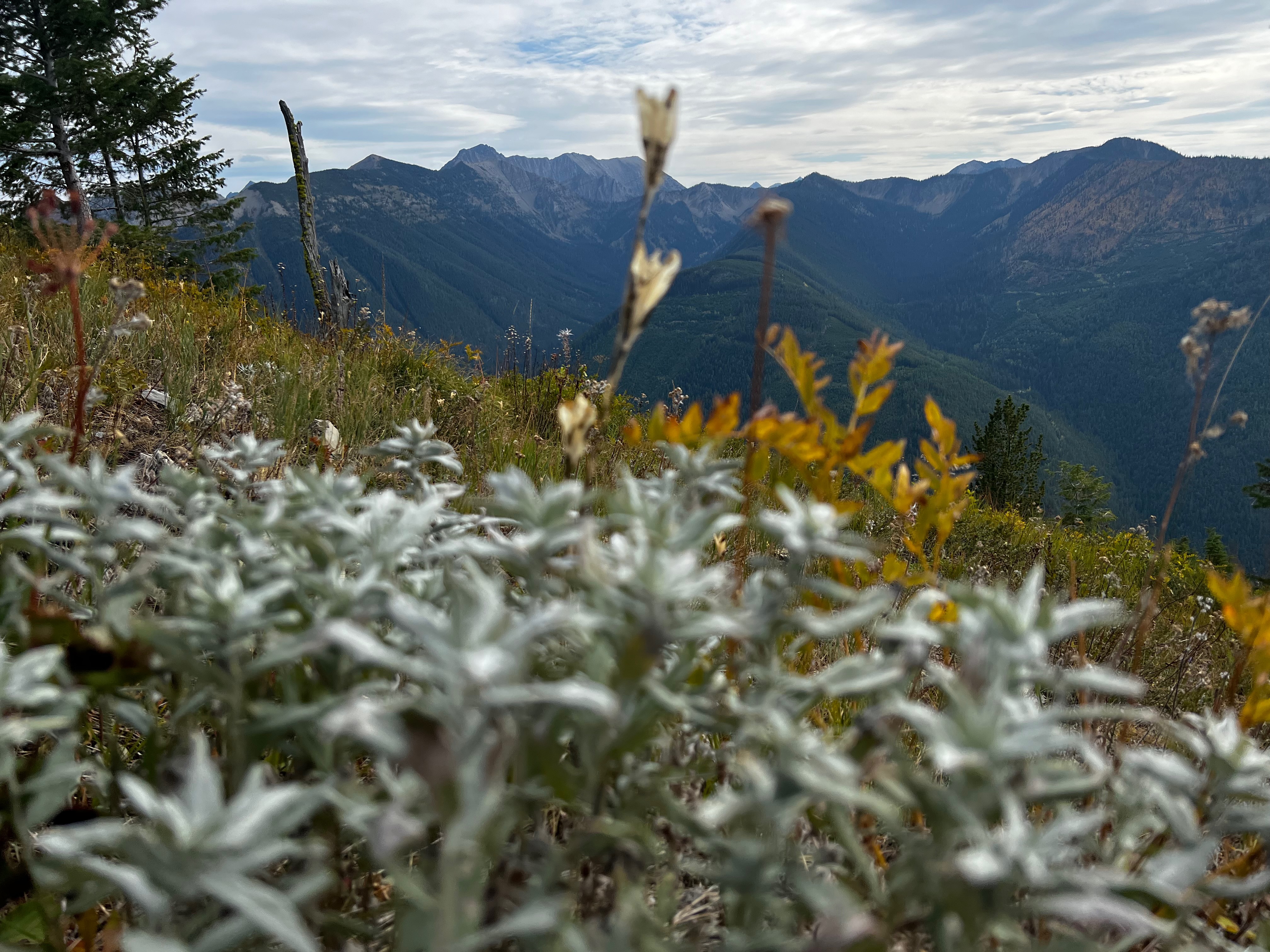
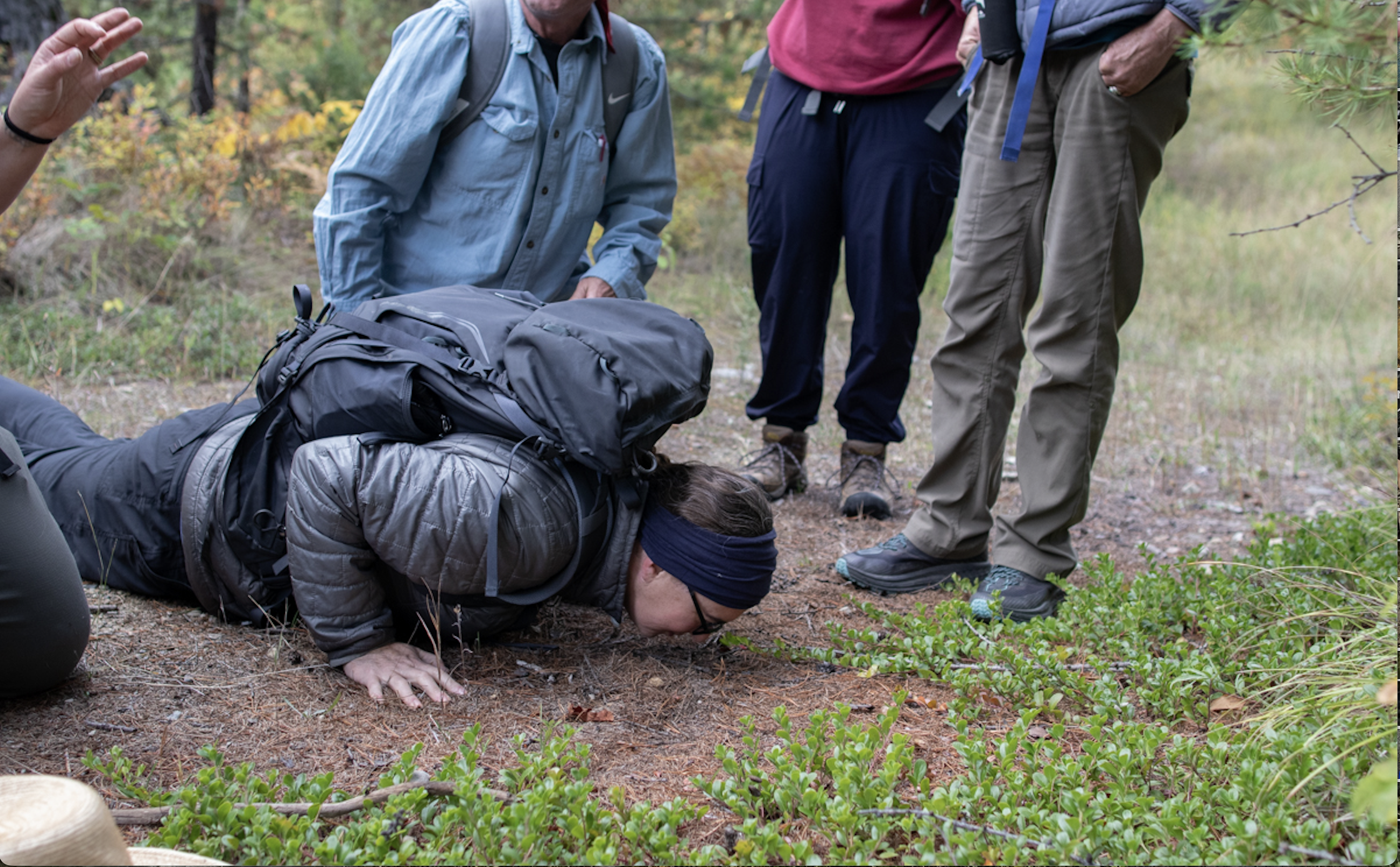
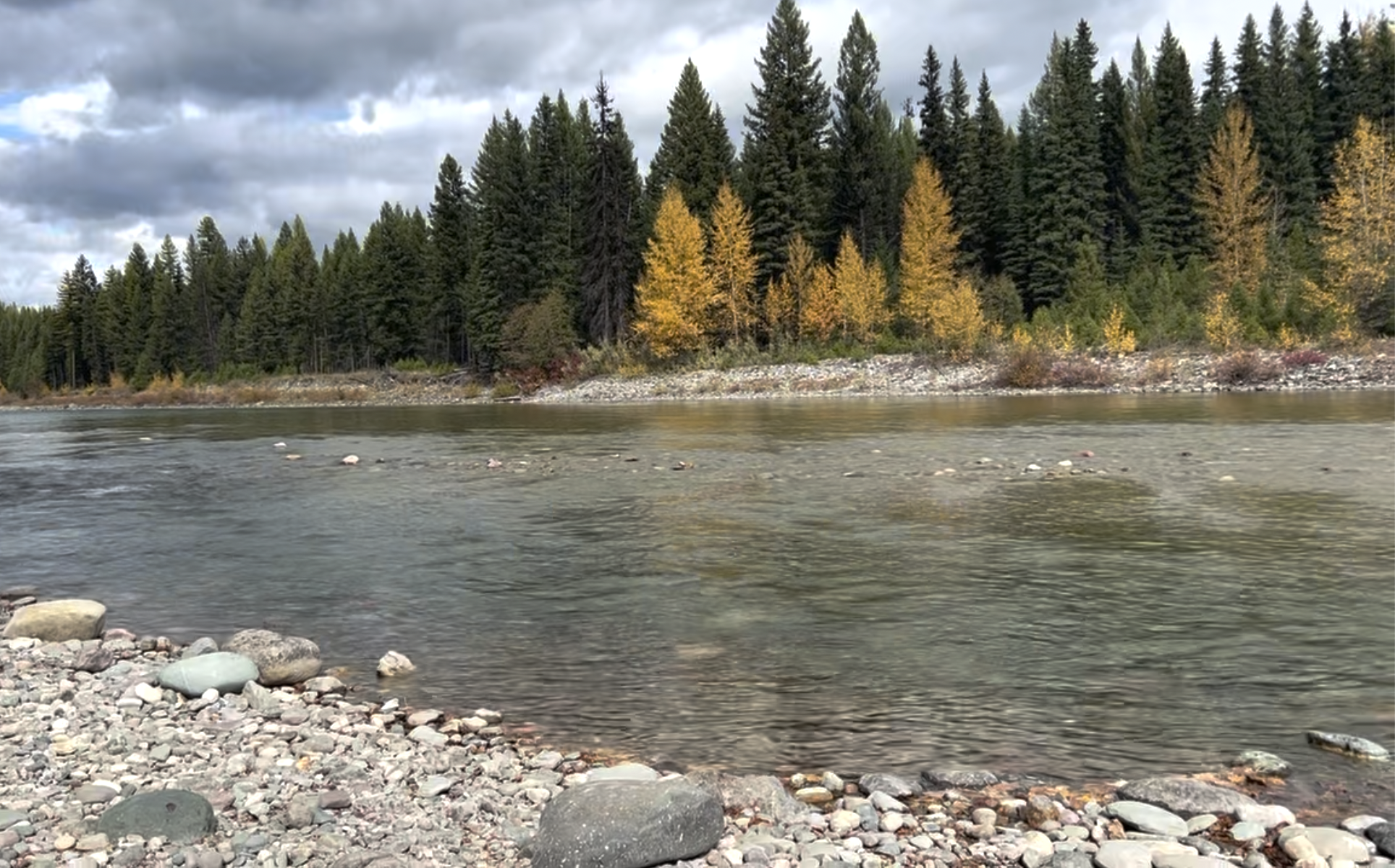



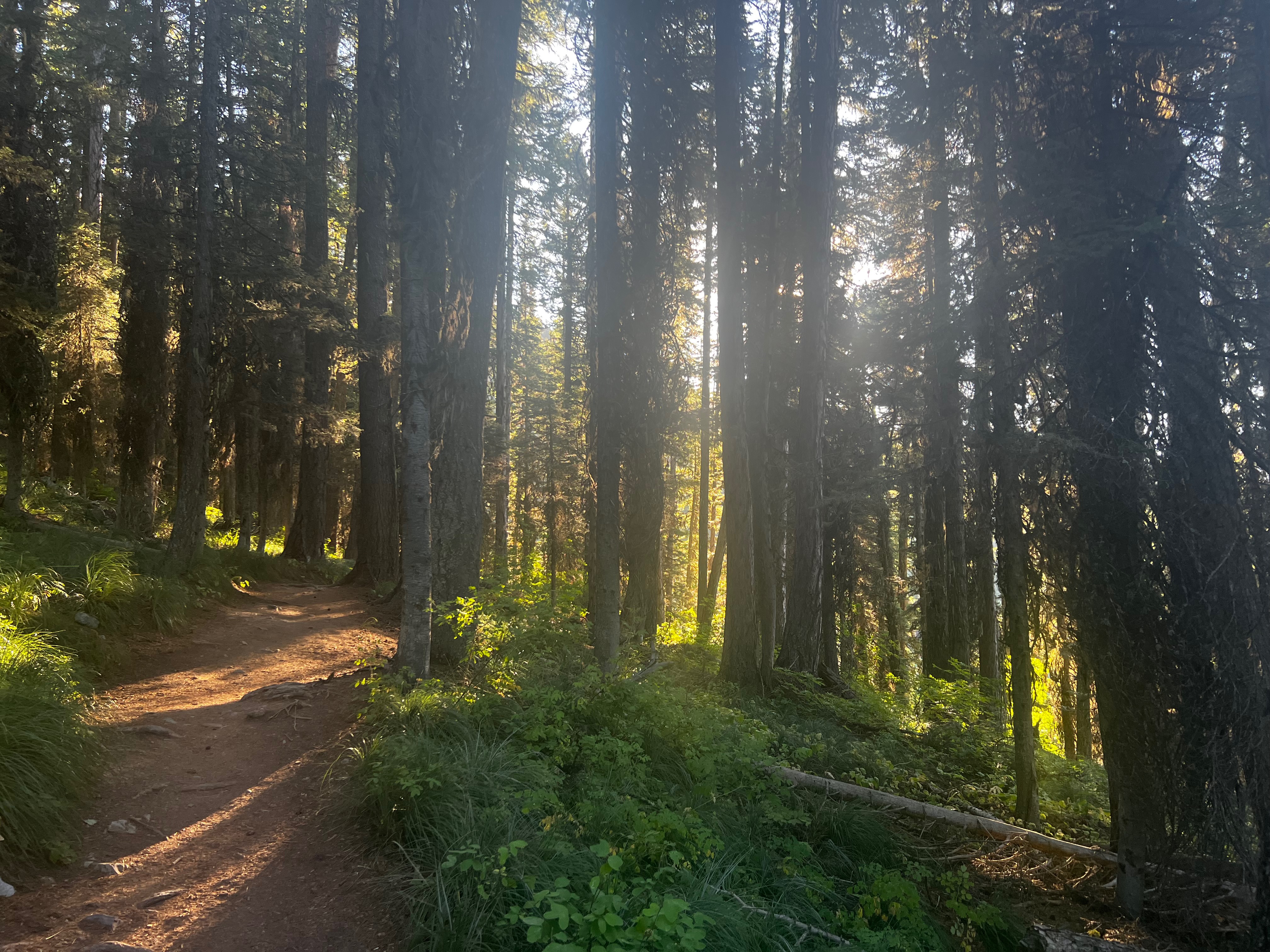

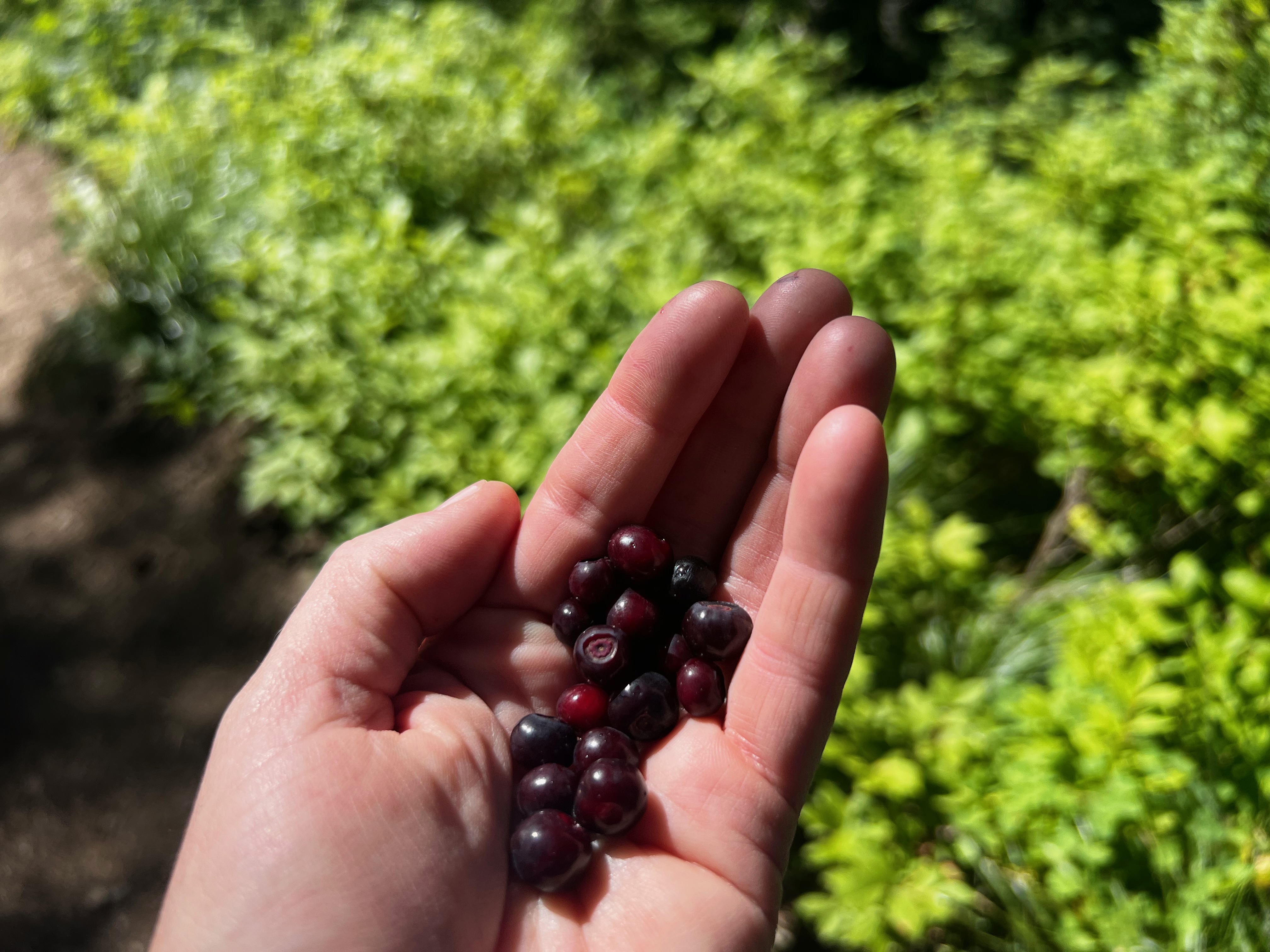


 Antonia Malchik