Walking composition

Anger and bodily equilibrium
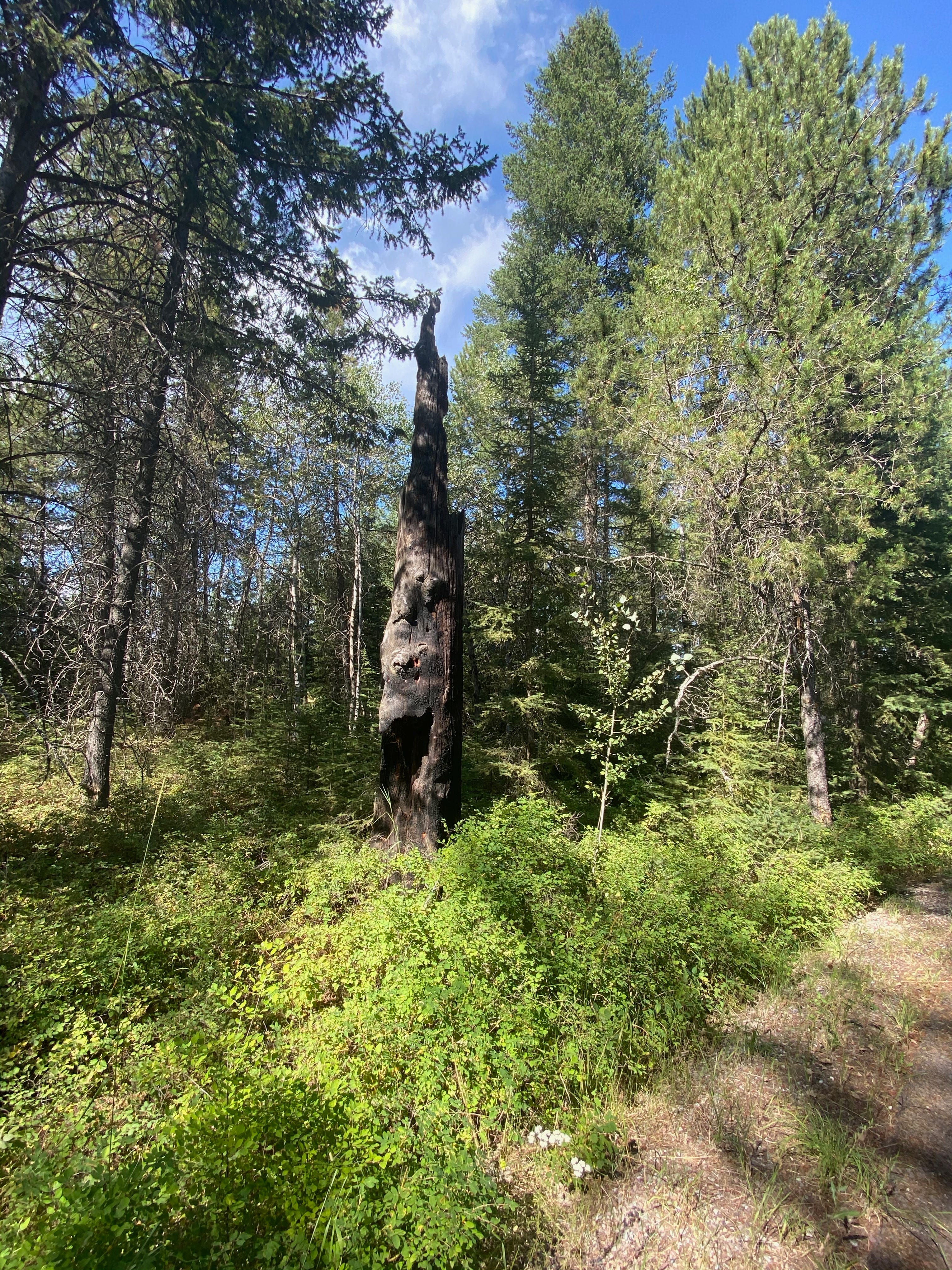
I hiked up this mountain to go huckleberry picking last weekend. By myself! For hours! Which these days is a precious rarity, reminding me of when my children were babies and I faced months without an hour alone. (Early on in this pandemic jokey memes floated around urging introverts to check on their extrovert friends—“they are not okay”—which I did via phone, but it took a bit longer for the reality of being an introvert stuck at home with people around all the time to sink in.)

While I was chin-deep in huckleberry bushes, filling an old milk bucket in a promise to my daughter that we would pick enough to make jam this year, a man walked down the trail wearing a hat whose slogan prompted, in me, anger, irritation, and despair. A little while later a young couple walked up the path with a speaker blasting music from the woman’s backpack. (Someone later explained to me that people often play music while hiking because of bears, but this was loud. Egregiously, rudely loud.) More irritation and internal mumblings about entitlement. (Also I have never yet been eaten by a bear because I wasn’t forcing fellow hikers to listen to my music.)

I tried to breathe my way to some kind of mindfulness, but my responses were deeply physical. I could feel the anger, despair, irritation, and frustration through my whole body and it wasn’t going away.

I imagine a lot of people, millions probably, feel this way on a daily basis. I’ve long been fascinated, though, in why it is that we think these reactions are only in our minds, not our bodies. After decades of research on embodied learning, epigenetics, and the physical realities of emotional trauma, we still walk around the world pretending that our minds and our bodies are separate things.

Usually I walk or yoga-stretch my way out of these reactions, but I really wanted to pick berries, which required me to be mostly stationary. Usually just being in nature will do the trick but it wasn’t this time. So I put earbuds in and listened to a podcast episode about the million-plus-year-old bones of a hominin, homo antecessor, found in a cave in Spain. And then another about the future of physics and the search for a theory of everything (as in something to stitch Newtonian physics and quantum mechanics together, not an equation that tells humans how to finally get along with one another.) Slowly, over the next two hours, my body began to let go of its reactions as my mind helped put them in perspective.

We, or at least I, can’t help the world find its way to justice and a sustainable relationship with nature by staring angrily at political slogans I disagree with or growling because someone is rude enough to blast their music when I just want to listen to the trees. But pulling the mind and body back to some kind of equilibrium, whether through physical action or stories that bring the vastness of existence to the forefront, strengthens my ability to practice true citizenship, or at least to try.
Walking composition

Abundance and commodification

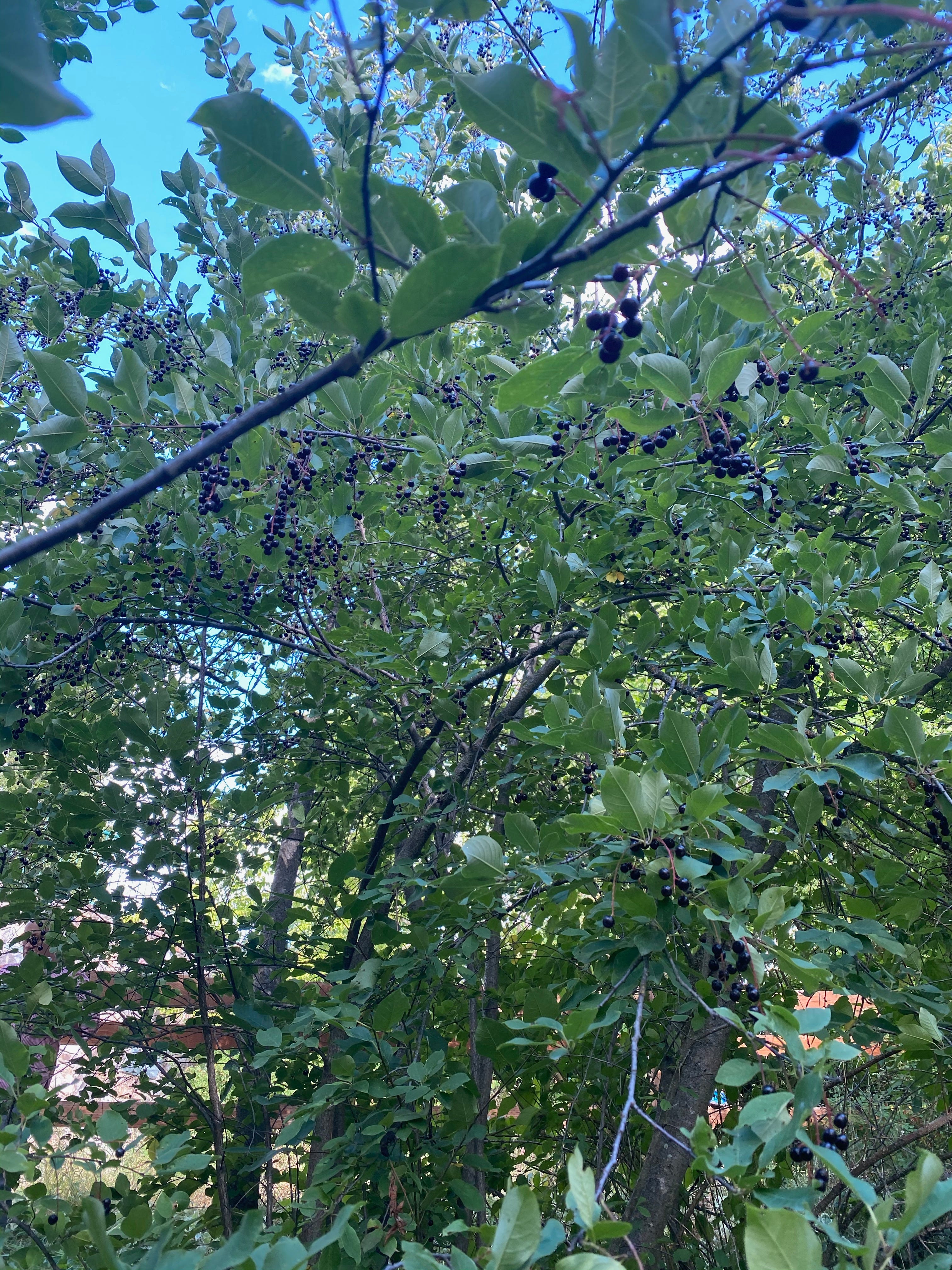
I’ve been thinking about abundance and commodification all summer. Every July we go camping with a bunch of friends and family, and our trip happens to coincide with when huckleberries are ripe in that particular location. (This photo is of chokecherries, not huckleberries.) This year was the first time I noticed that, although the kids eat huckleberries all day long, as do other camping kids, and campers and day visitors gather gallon bags full of berries to take home, the huckleberries never run short. There’s always enough for everybody until their season is over.

If commercial pickers aggressively harvested that area, though, the situation would be very different. There might be enough berries for that picker(s) to turn a profit, but little for everyone else. I would be seriously pissed off if that happened, and deeply sad, but isn’t it the reality for most of the world, and an increasing reality throughout much of human history? (This problem has plagued many civilizations.)

I’m just about finished reading an intriguing book, Strange Harvests, by Edward Posnett, in which the author visits the sources of 7 different items around the world and writes about their history, harvest, and commodification. The items include eiderdown in Iceland and cave-harvested birds’ nests in Borneo (popular particularly in China as the essential ingredient in bird’s nest soup). Although Posnett’s book is about the items and their harvest, what he’s really looking for throughout is a model for using and relating to the natural world and its bounties that is, for lack of a better word, sustainable and mutually beneficial for the ecosystem and animals involved.

There are actually many modern examples of this and plenty more throughout history. Success depends on group, community, or tribal cooperation along with management of a local resource being enabled and respected by larger authorities (a national government, say). The problem with the profit-above-all motive is that it encourages one actor to use up the resource and pocket the profits before others can take a cut. It leads to clearcut forests, extinct species, and poisoned waterways.

This week my stepmother, nieces, daughter, and I walked to a public park to pick chokecherries for jelly. I’ve picked from this particular public tree for years now, and it always produces far more than I could possibly use or even reach. So I make jelly and give it away and my daughter and I and stepmother eat some and every single time I think about what our relationship with this world could be if we stopped using everything up as if it’s not going to be there next year.

Walking and the Commons

When someone asked me many months ago what my next big project would be and I talked about the commons, private property, and ownership, they asked me why I would go write about something so completely unrelated when my whole thing, for many years now, has been walking.

This question has come up more than once, and relates to what people are possibly thinking when they say that my book wasn’t at all what they expected. Perhaps it’s the kinds of readers who are attracted to walking as a subject, but I’ve found that any book about walking tends to set an expectation of someone like Rebecca Solnit writing about someone like Henry David Thoreau.

One of the reasons I wanted to write a book about walking instead of stopping at a couple of longform essays about it was precisely because of that expectation. Everywhere I turned, with the exception of Tom Vanderbilt’s four-part 2012 series for Slate that started with “The Crisis in American Walking,” walking was presented as an intellectual and philosophical subject that only intellectuals and philosophers practiced. It’s as if only minds are allowed to walk, not bodies and especially not the bodies of everyday people.

My approach to walking is related to my advocacy for embodied learning: we are real, physical beings who evolved on a real, physical planet. We understand this planet, ourselves, and one another through our physical relationships. Walking is one of the most fundamental of those relationships.

Which goes back to the commons. This planet is everyone’s birthright, not to abuse or exploit or use up, but to care for and be cared by and most definitely to wander. Yet in a car-centric culture, not to mention the barriers created by the fiction of nation-states and borders, that right is taken away. Mass amounts of space in towns and cities is given to cars, not people; in many places there are vast miles with no sidewalks.

The situation has only gotten worse over the last decade or so. In her recently published book Right of Way, former editor of Streetsblog USA Angie Schmitt details the mid-2000s loss of even meager national funding for biking and pedestrian infrastructure in favor of more highway funding. If you’ve ever tried to advocate for more walker-friendly infrastructure in your town or state, this excellent article from Vice explains how state-level Departments of Transportation are locked into an algorithm that is only able to consider improvements or funding through the lens of legally-mandated Travel Demand Modeling. Improving traffic flow, not creating a world that prioritizes health and humanity, is where your tax dollars get to work.

Any infrastructure we invest public funds in or permit private developers to build should be designed with the needs and interests of human (and the rest of life’s) bodies, minds, and psyches first, and machines last. The fact that we are, for all intents and purposes, required to devote a significant percentage of our incomes to finance at least one car so we can get to our jobs is a failing of public policy, not a reflection of societal values.

If we are to exercise the right to walk, we need a healthy and accessible commons. Clean air and water, healthy soil, fewer roads and machine noise (car or otherwise), more trees. Whether we can walk in the future depends on whether it’s healthy and safe to do so and whether there’s anywhere to go in the first place.

What stands in the way of your walking, or in the way of others in your community? Finding out how to remove those barriers, how to create a human-friendly commons, is not a bad thing to devote one’s energy to. There is so much in our world that we don’t have control over, so many issues of equity and justice. This is one that affects every community in unique ways and requires responses unique to each of those communities. It starts with understanding that we all have a right to the world.

Walking composition

Smelt and relationship

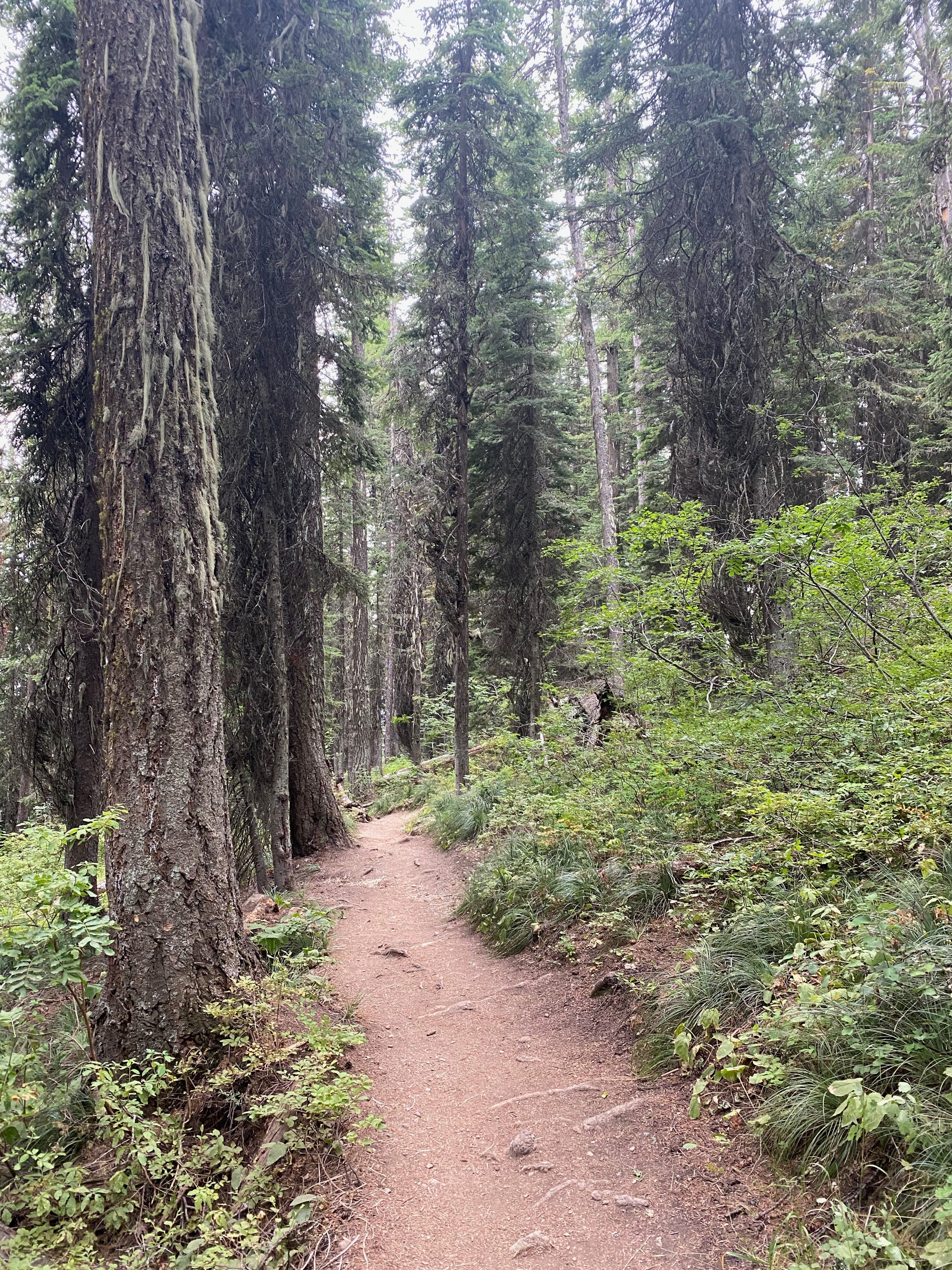
I went for a much-needed hike with my sister today, up a mountain in chilly fog and nearly-freezing rain. My body felt grateful and rested after the haul, a result that should never surprise me after years of physical and intellectual research on walking.

I don’t know why smelt popped into my head while we were hiking. I knew we had a small bag of them in our freezer that my husband had bought on a whim last spring, a treat for us to experiment with. I laughed when he showed them to me, and told him about my only knowledge of smelt: an essay my friend Sara Bir had once written—“Smelted” for the online magazine Full Grown People, where we were both regular contributors—that intertwined cooking smelt for the first time with the fraught nature of marriage. Sara is a masterful writer as well as chef and the essay was chosen for the next year’s Best Food Writing anthology.

So I looked up a recipe online—Sara’s right, it is indeed “tiny, stinky work,” and I had an entire childhood of gutting fresh trout to lean on—and gamely pan-fried the pile of butterflied fishlets. My husband enjoyed one, I ate the rest, my son pointed out that there were heads, and my daughter asked if I were going to eat the eyes (it’s a well-known family fact that I will eat trout eyes). And I thought back to the fact that I get to hike with my sister because we live in the same town, and the many years now that Sara and I have been in the same writing group and what we’ve gone through together. And how marriage is difficult, but so is friendship and that all we have, really, is relationship. To everything.

Walking composition

Elderhood and citizenship

A couple of weeks ago I finished reading Stephen Jenkinson’s book Come of Age: The Case for Elderhood in a Time of Trouble. I’ve been following Jenkinson for a few years after being introduced to his work on dying through the Pondercast podcast and am always eager to find more of his thinking.

I think Come of Age is possibly easier to read if you’ve listened to some of his talks and can hear his voice in the writing, or watched the short documentary about him on Vimeo titled Griefwalker. But his points about our lack of elders—particularly that being an elder has nothing to do with being elderly; it’s something cultivated and earned—made me think about whether we’re in a similar place with citizenship. We have legal citizens of societies, and plenty of people who agitate and complain about politics, but what does it mean to be an engaged, involved citizen? It’s hard and boring and often daunting work but it’s demanded of all of us if we want our societies to function. I’ve been pushing for more people to vote for many years, but we don’t just need voters; we need citizens in the same way we desperately need elders.

I am fortunate to have had a few people in my life whom I think of as elders. Unfortunately, they all died when I was young. I think I’m always searching for more, even if unconsciously.

Walking composition

Grief and gratitude

Grief comes close on the heels of gratitude these days, especially when I’m out in nature. Is this just part of being a grown-up, I wonder? Maybe it’s been true ever since humans became conscious and hits us sharply when we face human-caused suffering like war and environmental degradation.

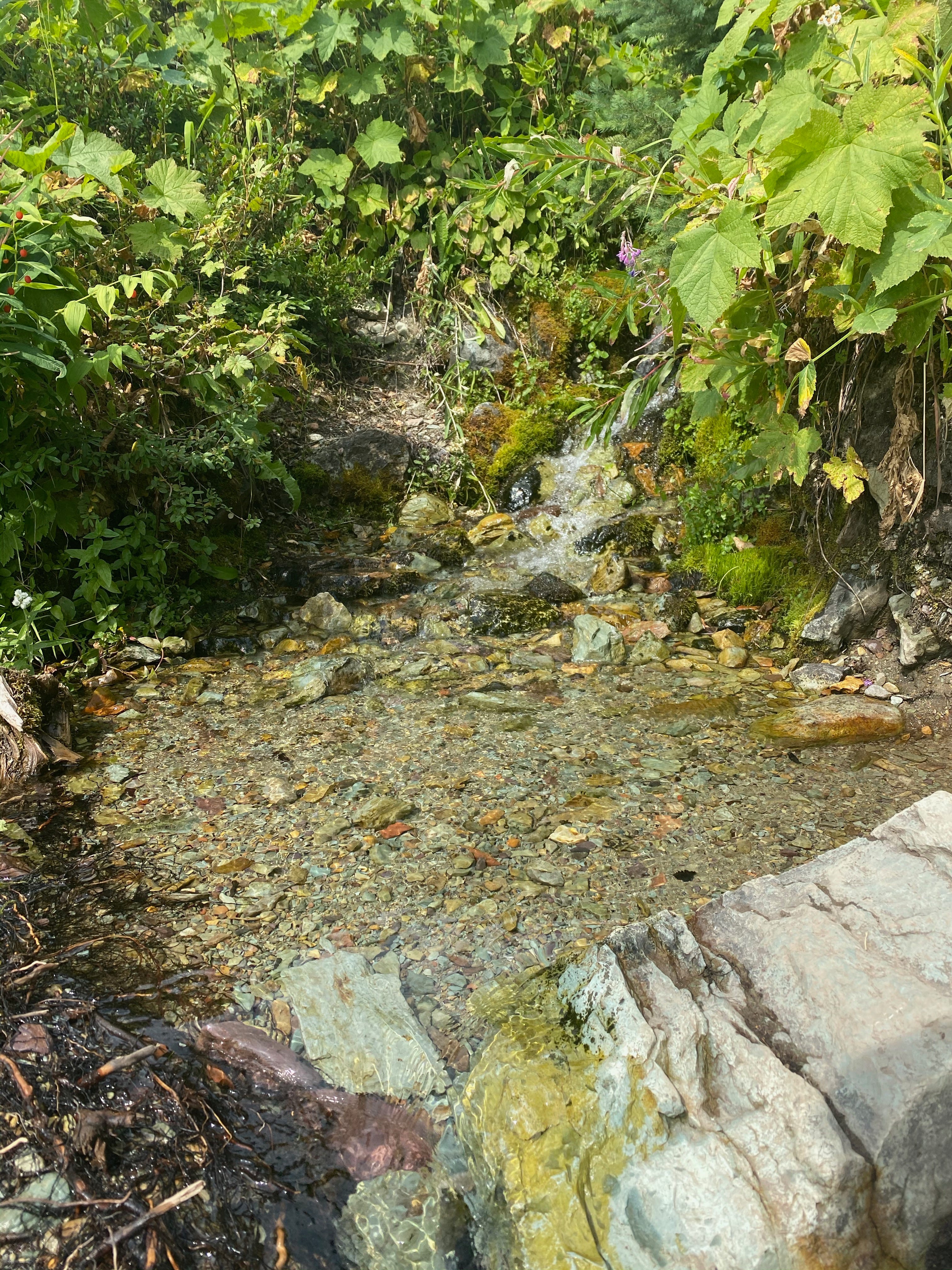
I sat by this stream for a few minutes the other day after hiking up a mountain to pick huckleberries. Filled with gratitude. A few minutes later a woman walking up the trail with an empty huckleberry container caught me hugging a tree. I hope it gave her a few moments of joy, delight, laughter, or at least a bit of lightheartedness to her day.

Cults, echo chambers, epistemic bubbles, and kindness

I recently read a short piece in MIT Technology Review about how to talk with family or friends who are enmeshed in a cult or conspiracy theory.* I am fortunate that my friends and family are generally science-respecting people of reason. We tend to argue about details and strategies, not politics or facts. But many of my friends struggle with loved family members or longtime friends who they feel they’ve lost to conspiracies or cults.

The point that really stuck with me from the Technology Review piece, which relied on academic researchers and active members of the subreddit r/ChangeMyView, echoed something I’d read from Steven Hassan, an escapee from the Moonies cult who now devotes his life to studying cults and helping deprogram cult members: remind people of who they were. Who they’d been before joining the cult or getting drawing into the vast web of information that can be connected a million different ways as evidence of any theory that can be dreamt up. Don’t point out the differences; just keep connecting them back to their former self.

(The lure of conspiracy theories is one of the hundreds of reasons I am such an advocate for embodied, hands-on learning, especially in the sciences. We all benefit from remaining grounded in the real, physical world.)

This advice might not release someone from a cult or a conspiracy’s charm, but it probably can’t hurt, and it reminded me of an essay on Aeon that I probably send to people more than any other.

Escape the echo chamber,” by C. Thi Nguyen, details the differences between echo chambers and epistemic bubbles, most importantly how the latter protects members from outside information (like a cult), while the former filters all such information throw its chosen groupthink lens (like a conspiracy theory). “In epistemic bubbles, other voices are not heard; in echo chambers, other voices are actively undermined,” Nguyen explains, using Rush Limbaugh as an example.

Nguyen makes the case that you can’t reach people in an echo chamber by trying to reason with them. All you can do is to keep providing a space or place for them to turn if they ever try to leave the echo chamber, and erode their trust in the echo chamber if it’s possible. Members within the chamber, cult, etc., find themselves quickly on the outs if they ever disagree with something the group says or believes in. For someone to take that risk, they have to have someone outside the group they can trust.

WhatsApp groups can evidently behave similarly, with members afraid to contradict groupthink belief. I’ve never used WhatsApp so don’t know the feel of the space, but have found myself on the wrong end of group norms in a Facebook group more than once. One conversation was about female writing mentors intertwined with criticism of older male writers (much of it valid criticism). I hazarded to say that all of my writing mentors had happened to be older men and I’d always found them willing to give supportive guidance when I asked. It was the wrong thing to say in a group that by that point disallowed almost anything good said about men. (I am all for down with the patriarchy, but maintain that the white patriarchy hurts everybody, including men. Who was it who said that before we teach boys to break girls, we first have to break the boys?)

It was a short lesson in groupthink that is too easily enabled by social media but that has likely always existed in humans in some form since we became self-conscious beings. The Moonies didn’t need a WhatsApp group to lose their independence of thought and action.

Nguyen’s essay and the Technology Review article are reminders that of the many ways to deal with these situations, the most effective are probably with compassion.

What’s interesting is that, for all the noise that thought leaders and mass media make about our society’s so-called divisiveness and polarization, you don’t have to look far to find people who are truly trying to understand one another, who make an effort to find common ground and build trust. Difficult conversations are happening all around you, right now, and people’s perspectives are always shifting; it’s just that you won’t generally see these efforts happening on public-facing platforms. They’re awkward and sometimes tense. But they’re happening because people don’t want to be polarized.

Perhaps the healthiest thing we can do for our society right now and into the future is to begin dismantling the fixed idea that deep divisiveness is what defines us. To act and speak from the belief that humans care about one another. Conspiracies dazzle far too many, and cults provide a sense of safety in an uncertain world. But believing that we are divided and that echo chambers provide no way out does nothing to serve us.

____

*A friend recently pointed out that “conspiracy theory” is usually used derisively, and my neighbor stopped me mid-conversation last week to remind me that not all conspiracies are theories. She’s right—I enjoyed the BBC miniseries Cambridge Spies, which details a pro-Soviet conspiracy high in the British government that was quite real—but I haven’t yet found replacement phrasing that more specifically describes belief in a far-fetched and improbable conspiracy that is most definitely not true. (Think Pizzagate.)

Walking composition

Boots, lightly abandoned

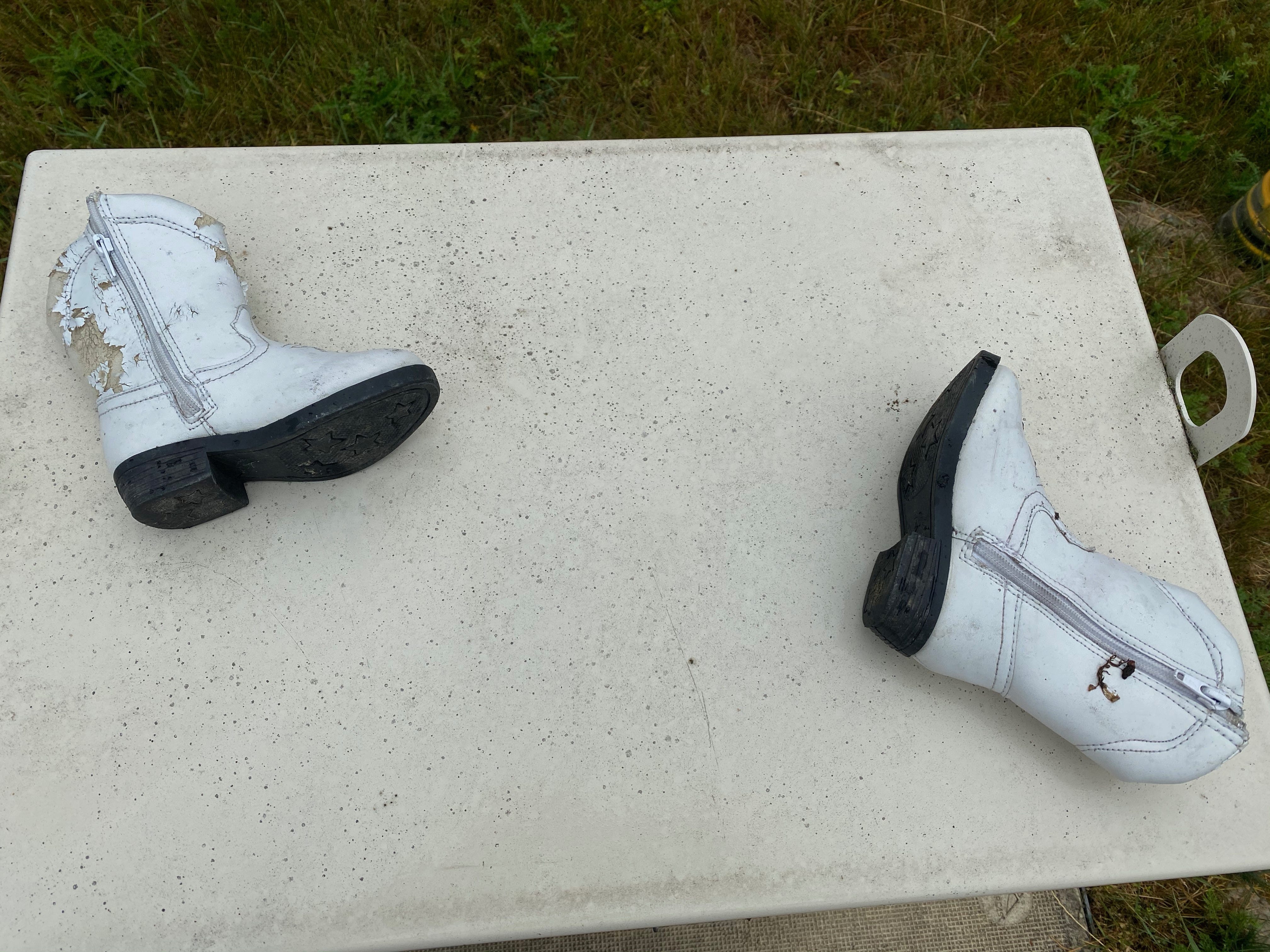
These shoes have been in this location since about mid-lockdown, which is something like five years ago in Covid time (in real time about four months). For the first two weeks I thought someone would come back for them, but all the neighborhood children have played and biked and run up and down the road all summer long and the boots have stayed. To mangle Hemingway: “For free, child’s shitkickers, lightly abandoned.”

The War for Reason

A long time ago I registered a domain name called War on Reason. This was during the George W. Bush years, when Congress passed the Patriot Act so quickly they seemed to intentionally be thumbing their noses at the Constitution, and our president and his administration mired the country in an unjust war that cost trillions of dollars and an estimated hundreds of thousands of lives. When I registered the domain name, my sister was a sergeant with the Army Reserves, and her entire battalion was being deployed to Iraq (my sister, being pregnant at the time her battalion was sent, never ended up serving overseas).

The world felt insane, which can be a hard thing to remember in the exhausting and nonsensical times of 2020. Because my sister was in the military, I paid close attention to inexplicable stories, like how soldiers had to pay for their own body armor and in-country flights home, but military contractors could make $10,000 per day. Considering the ragged state of the Veterans Affairs office and the dire lack of treatment for post-deployment illnesses PTSD, I spent a lot of time wondering what my tax dollars did once they landed in the Pentagon’s black box budget.

What I really couldn’t figure out was the ease with which millions of Americans were willing to forego basic, once-treasured freedoms as soon as our leaders told us we were under attack and had to go knock down the bad guys. The Hermann Goering quote about how you could easily convince an unwilling populace to support a war by telling them they’re being attacked was in regular circulation among friends and acquaintances. Goering was a high-profile Nazi who was tried at Nuremberg, where he once said to an American intelligence officer and psychologist that “All you have to do is tell them they are being attacked, and denounce the pacifists for lack of patriotism, and exposing the country to greater danger.”

That this quote now feels tiresomely familiar feels . . . tiresome. As much so as the quip about how those who don’t learn history are destined to repeat it, while those who do learn history are destined to watch everyone else repeating it.

I let go of War on Reason partly because the ideas I had for it became too large for me to feel comfortable wrangling, and also because I was very busy working as a copy editor for textbook publishers and complaining about how standardized testing leads increasingly to substandard education (I still do both the job and the complaining). And this newsletter isn’t a way to reboot that idea. But as I’ve been working over the past few months on a new book proposal (more about that soon-ish but not today), I’ve gone back to the questions that prompted it, and the repetitive nature of our societal mistakes.

I have a deep interest in land ownership and the commons, and how the theft of the commons strangles freedom—and has in fact been strangling freedom for hundreds of years. I’ve written two long essays on the subject, for Aeon (“Who Owns the Earth”) and more recently for the Center for Humans & Nature (“Reclaiming the Ancient Roots of Ecological Citizenship”), and an op-ed for the Los Angeles Times on the essential role that public lands play in ensuring freedom.

It took me a while, but I finally began to see that “the commons,” which was originally land and access to water for grazing, encompasses a far larger reality: it’s our air, soil, and water, yes, but it’s also information and belief, freedom of movement and freedom to think. Our societal landscape has become just as impoverished, restricted, exhausted, and saturated with toxins as our physical landscape. And this is nothing new. The American Scholar recently published an essay on Marcus Aurelius, the Roman emperor whose armies conquered Germanic tribes nearly 2,000 years before there was such a thing as Germany. While he was busy conquering, a smallpox pandemic was ravaging the Roman Empire, killing millions.

Despite the lives lost to both war and the pandemic, it was misinformation, writes Robert Zaretsky in the essay, that Marcus Aurelius thought the greater threat:

“For corruption of the mind,” he writes, “is a far graver pestilence than any comparable disturbance and alteration in the air that surrounds us; for the one is a plague to living creatures as mere animals, and the other to human beings in their nature as human beings.”

So while this newsletter is a new foray to me (though in some part also a nod back to a somewhat intellectual blog another friend and I used to write on motherhood and philosophy called Pooplosophy), it is also my own small foray in the war on reason, a reminder that we are all, every single one of us, trying to figure out how to be human, and that where that exploration takes us is linked at a fundamental level to the stories we tell ourselves about who we are.

Reason isn’t just about modern scientific discovery or the world-shifting paradigms of the Enlightenment. It is, at its core, an exploration of how we live together.

Individual / Society

Welcome to The Commons. I write about the long struggle between private property rights and the health of the commons, and how it affects everything from the air we breathe to the social fabric that binds us together. “Walking compositions” are, loosely, a photo combined with something I was thinking about while walking. Usually while walking my dog, who would rather be chasing deer.

Sign up now.

In the meantime, tell your friends!