Walking composition

Life is long, complex, and beautiful

“What I am trying to tell you is that I am not an easy going gardener and there are people who say they enjoy it and they are liars, I’m certain of it.” — Alexis Bonogofsky, “Planting Potatoes in a Pandemic” in East of Billings

We Skyped with an old friend this afternoon, a journalist I’ve known for over 20 years. She lives in Vienna, where we first met, and was just sent to Rome for work. The sight of heavy old wooden furniture in the hotel room brought back a moment’s whiff of when we lived in Vienna and did things in Europe and health care didn’t require scrimping and food was good even though we were poor.

My 13-year-old, who’s taking an online Minecraft architecture class, talked with our friend about characteristics of Roman architecture, and after he left I said, “You know, we keep talking here about how lucky we are to just be able to get out into nature any time we need, but there’s something to be said for being around those old buildings and reminding yourself of the struggle and plagues and politics that humans have survived for thousands of years.”

She reminded me of a piece of reporting she’d done from Rome back in the spring, when she’d been sending dispatches from Barcelona and Rome during the first horrific surges of virus, saying something similar: these buildings remember people who have endured much and a reminder that life continues. (I will try to find the link.) And I told her of a piece in Sapiens last spring about anthropological research on Venice’s quarantine islands and their role in its response to the Black Death 700 years ago.

Ars longa, vita brevis

We talked about hugging, about children’s loneliness, and about research she’d read that certain receptors in human shoulders responded to the touch of a hug but also to lying down on the earth.

Est quaedam flere voluptas

And I told her that we’d built a garden during lockdown and she said that was wonderful, we could lie down in it, and I said, no, it’s pretty much a vast carpet of vicious, spiky thistles. I don’t love gardening much—I’m more of a hunter-gatherer than an agriculturalist—but making that fenced-in soil hospitable to plants other than knapweed and thistle has now become a mission that might take years.

That seems like a good metaphor—for something.

Longissimus dies cito conditur

Free speech and the mind-body disconnect

I’ve been thinking a lot about free speech recently, possibly due to over-exposure over the last few years to podcasters like Sam Harris, Joe Rogan, and the like* (also known as “thought leaders,” a phrase that has a kind of irritating and infantilizing tone to it—please, tell me how to think!), not to mention tech leaders’ mantras that free speech above all other values prevents them from doing anything about hate speech or misinformation on their platforms.

“Speech” as a concept seems to have run into a wall. Or maybe it’s our conception of it that’s run into a wall. One some level, we know that words can hurt, and more specifically that online hate and misinformation campaigns can cause immense damage, not even precluding genocide. On the level of social action and public discourse, though, we disconnect it from “real life.” We seem to believe that what happens with words only comes from the mind and intellect and is incapable of having an effect on physical humans. The result of a mind-body disconnection in Western philosophical discourse that goes back centuries.

What happens when someone gets radicalized online and perceives a group of “others” as unwanted, as less than human? What about if they take a next step to commit some form of atrocity to rid society of what they perceive as an undesirable element?

It’s almost as if we think that the person who was being radicalized and the person who commits atrocities are two different people—the actor is a horrible person, but the online viewer is separate from that, a brain only, not a human whose entire being is affected by what they absorb online.

This problem can go society-wide. Propaganda plays out in the voting box and can warp both our values and democracy’s ability to function. Or early in the pandemic, when people who only got their news from Fox had higher rates of coronavirus infection until people like Sean Hannity started talking about Covid-19 as a real thing rather than disparaging it as a hoax. (I live in a rural state with an aging and generally conservative population, so this was something I wondered about early on, how infection rates might intersect with areas that have low population densities but more vulnerable populations who are also more inclined to watch conservative newsish [news-adjacent? hardly] media. Someone actually did a study on the effects of Hannity’s and Tucker Carlson’s portrayal of the virus on the infection rates of their viewers, and sure enough, rates were higher until they started talking about it as a real thing.) People’s actions are very much influenced by the words, opinions, and discourse they’re exposed to, which is common sense but these days seems to need hard evidence for at least some people to understand that it’s a real thing.

I don’t know what the right answer is to speech online, but I think it’s far more complex and nuanced than is served by simply refusing to limit speech in any way.** It’s one thing to host a volatile forum on Reddit and another when a concentrated campaign, possibly related to that volatile forum, damages an individual or population.

As someone who has been on the receiving end of some intensive verbal abuse, I know from experience that just because words are not physical weapons does not mean they fail to damage, often permanently. The first amendment’s free speech phrasing originally applied to a citizen’s right to criticize the government, and I understand that it’s vital to protect freedom of speech in all sorts of unrelated venues, but to blanketly apply that protection to any form or volume of verbal harassment both misses the point and cramps our ability to think widely about what we mean by both freedom and harm.

Speech is not just an action of the brain or the intellect. It is, like all actions, an act of the mind, of which the body is a part. And its effects are also received as a full mind-body experience. Perhaps like so many other things, enjoying its full freedoms requires us to have honest conversations with a level of maturity and self-reflection that few leaders, whether political or thought, are willing to engage in.

—-

*I spent over two years listening to every Sam Harris and Jordan Peterson podcast episode, and as much Joe Rogan as I could make time for, trying to understand what they were all het up about. And then I asked my older sister to listen to a bunch of Peterson stuff and try to explain it to me because she’s smarter than I am (sorry, sis!). What we landed on is that Peterson has an inexplicable affection for hierarchy and a skewed perception of women. Harris just complains a lot, which is weird for someone who markets himself as a mindfulness expert. In the end what I decided is that these people and others like them started out trying to ask difficult questions, but very quickly got trapped in their own echo chambers and egos and provide little of value anymore, at least to me (unless you’re super into the Peterson videos about archetypes and so on, but went through the Joseph Campbell phase of life in high school and grew up in a household that had Carl Jung books around, so nothing about that feels new to me). This piece from Jacobin magazine about Peterson’s thinking and its many internal disconnects is one of the best things I’ve read on his . . . philosophy?

**Except for money. I don’t think this is complicated at all. Money should not be treated as speech, and Buckley v. Valeo’s 1976’s SCOTUS decision seems to justify it on very lazy grounds.

—-

Just one thing:

  • Almost everyone I know has already voted but if you haven’t, VOTE. If you need inspiration or an uplift, a friend of mine participated in this amazing flash mob dance video. Makes me wish I could dance, but at least I can vote!

Walking composition

Education and being human

“We have to stop trying to make our children fit into the world that they find themselves in, and start creating a world that fits them.” —Sherrie Mitchell, Sacred Instructions

Yesterday one of my kids asked me what kind of college degree I thought would be useful for their future. It was an unexpected question. Despite coming from generations of people who have revered higher education above almost all other achievements, I haven’t drilled college into my kids. That is, I haven’t drilled university and degrees as a high ideal in the way that my family—on both sides—thought of it. It feels odd not to revere higher education. Both of my grandmothers had degrees and worked in their fields in a time when very few American women went to university; education in my family is almost a religion.

I’ve been in a years-long conversation with our local school board about what the priorities of our school district should be, mostly because I was increasingly alarmed and disappointed at the emphasis on testing scores and computerized learning. It’s sobering how many people take the “promote STEM learning and groom future programmers” as an unquestionable truth for elementary through high school education right now (when STEAM is mentioned, it’s not generally given much room or understanding). My own argument at school board meetings is generally that, by holding firm to these strategies, we’re preparing our children for the jobs from 20 or 30 years ago (this thought occurred to me one night, but I’m not the first one to express it).

Communication skills, I told my kid. Being able to understand people’s needs and emotions, and to express your own ideas in ways that large numbers of other people can understand and sympathize with them.

I don’t know that it’s right, but it certainly seems more useful than preparing for a job like programming that has a high chance of being almost exclusively automated. I’m not the first person to express this idea, either, but it seems to me that as the future becomes more digital, the skills that will stand out are the ones that tap ever deeper into what makes us most human. Part of that is having greater respect for the life all around us, and part is having more respect and understanding of one another.

—-

Some thoughtfulness and uplift:

  • Alan Watts on wonder, sent by someone here through the gift of online connection.

  • Dirk Philipsen, author of The Little Big Number on how GDP rules and corrupts life, writing in Aeon on the supremacy of the private and how we can reclaim the commons: “To own was always less about protection of the self than it was about exclusion of others.”

  • What if there is life on Venus? Anthropologist Gideon Lasco examines our exploration of space in the context of Earth-based colonialism for Sapiens magazine.

  • In his article, Lasco mentions Chinese author Cixin Liu’s enormous and bestselling sci-fi trilogy (he refers to it as Remembrance of Earth’s Past; I think of it as The Dark Forest trilogy), which I am never sure whether to recommend or not, but if someone does or has read it and can explain to me the process by which a particle is unfolded in different dimensions to spy on Earth, I’d be grateful. I read it several times and never got it.

  • A fantastic must-read: Melissa L. Sevigny’s amazing piece “The Wild Ones,” published in The Atavist last year, about botanists Lois Jotter and Elzada Clover running the Colorado River for their own scientific expedition in 1938: “Jotter smiled at the journalist who asked the question. ‘Just because the only other woman who ever attempted this trip was drowned,’ she replied, ‘is no reason women have any more to fear than men.’”

Walking composition

Empathy and anger

“The most important work today, the action most needed to be taken by each of us, is work across boundaries, across differences. . . . Anything that gets in the way of natural, compassionate, unconditional loving relationships and interactions is artificial.” —Robert Atkinson speaking on the Love (and Revolution) podcast in 2017

I didn’t manage to post anything yesterday partly because I gave myself the day off after a week feeling horribly stuck in the formlessness that defines so many of our days right now, and in part because I couldn’t find a quote I really wanted to fit with this photo. I read Fredrik Backman’s Us Against You (sequel to Beartown and just about as good; I hope he does a third with Alicia as the main character) and thought about using some of the opening lines because it’s such an excellent book and I inhaled hard when reading the paragraph about resenting other people simply for the fact that you need them. Backman is Swedish, but the sentiment felt resonant for much of why America can’t seem to move forward. The ways in which he portrays Beartown and its residents feel familiar, either from my childhood, or from where I live now—a liberal-leaning small Montana town in an extremely conservative county. Insult and offense are raw and constant and everywhere. As if anything from clean water to public health is an assault against . . . what? The words are always “freedom,” “liberty,” “America,” but none of that means anything. It’s just identity.

I wrote in a non-public forum recently that one of the biggest things I’m struggling with right now is hanging onto empathy in the face of so many forces willing to discard lives and real freedoms in the name of either power or identity. I know I’m not alone in that frustration. When our county commissioners refuse to enforce any mask mandates while the hospital is pushed beyond its capacity to treat coronavirus patients and my friends and family who work in frontline jobs are constantly at risk, it’s hard to feel empathy for those who refuse to lead due to mistaken loyalty to a conservative identity. I keep trying because what other option do we have? Nobody wins when everyone is angry. Maybe one of my tasks is to protect space for anger for those who have a greater right to it.

My formless days are fortunate days. I am hyper-aware of that, especially as I watch my sister go off to a customer-facing job she doesn’t have a choice about every day. And yet no matter how much structure I inflict on our household—math at 9:30, practice music, Skype with grandparents, read chapters, exercise—the malleable squishiness of time is affecting everyone. I wonder what our children—not just mine; everyone’s—will take from this time, if as adults they’ll yearn for structure while prioritizing social contact after a year or so battling loneliness in childhood.

It’s been rough. It will likely get rougher. Take care of one another.

—-

Stuff to read or listen to:

  • The joys of walking at night.

  • Forget self-driving cars. The automated robot future will look very different, and might help cities adapt more flexibly to the shock of pandemics: “Flexible density . . . recognizes the existential nature of the threats that cities face in the 21st century, and that the static way we’ve been thinking about resilience to date may not be enough.” “The Self-Driving Car Is a Red Herring,” by Anthony Townsend in Nautilus.

  • FUN! Stacey Abrams interviewed on the Star Trek podcast The Pod Directive.

The Unholy Legacy of the Doctrine of Discovery

I finished reading Unsettling Truths: The Ongoing, Dehumanizing Legacy of the Doctrine of Discovery, by Mark Charles and Soong-Chan Rah very quickly after opening it over the weekend. Which for me is always a nice surprise because it generally can take me months to get through a nonfiction book, sometimes a year. The authors put something together that is massively informative and should have been dense but was very accessible reading. Charles is a member of the Navajo nation (and you might not know he’s been running for president), and I believe both authors are Christian pastors.

The Doctrine of Discovery is something I only had vague schoolchild notions of until stumbling across Charles’s TEDx talk a few years ago. Unsettling Truths is a must-read, I think, for anyone seeking to understand the psychological and spiritual sicknesses that North American culture was founded upon. It’s perhaps a beginning book, an opening of a conversation and revision that is long overdue. There is so much to discuss about it, a mass collection of ideas in a very small and well-organized space, but I’ll stick mostly with the Doctrine itself here.

The Doctrine isn’t one document; it’s a set of papal precepts issued in the 1400s that gave official Catholic blessing to the right of Portuguese and Spanish monarchs to claim title to land they’d “discovered” and all that land’s resources, including its people. The first was Pope Nicholas V’s in 1452, a papal bull titled Dum Diversas that gave permission to the king of Portugal “to invade, search out, capture, vanquish, and subdue all Saracens [the word used for Muslim people at that time] and pagans whatsoever, and other enemies of Christ . . . and the kingdoms, . . . possessions, and all movable goods whatsoever held and possessed by them and to reduce their persons to perpetual slavery.” The passage quoted in Unsettling Truths goes on to grant the king the right to appropriate all said kingdoms, possessions, etc., and convert them to the crown’s own use and profit. Romanus Pontifex, written in 1454, expanded the idea to give European Catholic nations dominion over non-Christian lands they “discovered.” The authors’ discussion of this papal bull points to its role in enslavement of people living in Africa by Prince Henry of Portugal, which relied partly on the warped logic that enslaving non-Christians might save their souls by bringing them closer to Christ.

The book leaned far more heavily on Christianity and the disconnect between Jesus’ actual teachings and the pursuit of Christendom—that is, building a Christian nation—than I was expecting, but that’s understandable given the authors’ callings as Christian pastors, and it’s clear that the project of forming a Christian nation can’t be disentangled from the Doctrine of Discovery and the evils that it has perpetuated for centuries. More than that, it puts many current movements, such as Dominionism, into historical context.

A taste of the authors’ thinking on the need to save Christianity, not just America, from the Doctrine’s legacy:

“The formation of the Doctrine of Discovery in the fifteenth century was the culmination of the development of a diseased theological imagination that resulted in the severely dysfunctional expression of the church. This imagination operated beneath the surface of the European mind, particularly towards those deemed as outsiders or infidels.”

The authors trace the Doctrine’s effects through to modern times, including very recent Supreme Court Cases. One was in 2005, and the Doctrine was explicitly cited in 1985 in City of Oneida v. Oneida Indian Nation:

“The ‘doctrine of discovery’ provided, however, that discovering nations held fee title to [lands inhabited by Indian nations], subject to the Indians’ right of occupancy and use.”

As far as I can work out, this means that whoever pays money for land has the right to it, no matter who was there first and whether or not paying for land ownership was a system in place before the “discoverer” landed there. It’s an idea that was articulated in an earlier and more well-known case, Johnson v. McIntosh in 1823, which stated outright that Indian tribes could not own land; only European nations—and after them the United States—that had conquered and settled the land could. Part of the opinion contains the following baffling language: “It has never been contended that the Indian title amounted to nothing. Their right of possession has never been questioned. The claim of government extends to the complete ultimate title, charged with this right of possession and to the exclusive power of acquiring that right.” So Indian nations could have or inhabit land but not sell it? Cue WTF emoji.

(Related: The myth of money and the narrative of capitalism are also on my reading pile.)

There are many other ideas packed into a short book, on white supremacy and power and, something I think about a lot, how narrative is never just words but shapes how people see themselves and others, and how that in turn shapes society, not always, obviously, for the better:

“The captivity of individualism in the West leads many to reject the possibility of institutions and systems inflicting social harm that requires a social response.”

The GoFundMe campaign for this book (disclaimer: I contributed to it) was launched long before the Covid-19 pandemic, and the book itself was published in 2019, but this statement is remarkably prescient regarding the disaster that the U.S. finds itself in this year, not just in a lack of national response to the pandemic, but in the small but extremely vocal minority who rely on the narrative of individualism to reject any moves to promote the common good.

I’ll end with an idea that was slipped in the middle of the book, and one I’m pondering because it’s related to some of my current research:

“The word privilege suggests that the inequality that favors white people is actually a blessing which they must learn to share. The term white privilege perpetuates an implicit bias. Whiteness is neither a privilege nor a blessing to be shared, it is a diseased social construct that needs to be confronted.”

Much of Claudia Rankine’s most recent work is on the subject of whiteness being a social construct rather than a race (and any white nationalist can go to Scotland and see what they actually think of the English to disabuse themselves of the notion that living in a place exclusively reserved for white people will somehow rid society of its ills), so this passage isn’t out of the blue. But I’m not sure if a white person such as myself could, or should, take the step that the authors do here to dismiss white privilege as a reality. I see the logic, but there are too many situations where having pale skin like mine leads to a certain kind of treatment that I wouldn’t get if my skin weren’t the color it is. I’m not sure “privilege” in Unsettling Truths jives with the meaning in the context it’s generally used but will be thinking about it further.

—-

Some stuff to read or listen to:

  • Garrett Bucks on Gerda Lerner’s classic The Creation of Patriarchy (which I have not read but now plan to) and how a patriarchal system that elevates individualism above community makes dealing with a pandemic almost impossible, and how easy it makes it for a white man like himself to sit back and do nothing to forward the causes of justice and equality.

  • An interview with the authors of Angrynomics on the state of the world, the role of anger in social movements, good and bad, and the moral outrage that ensues after recessions.

  • Mark Charles’s TED talk on the Doctrine of Discovery and the failed promise of “We the People.” It presents the overall ideas behind the book, though the book itself obviously has far more information.

  • The Very Rev. Kelly Brown Douglas interviewing Austin Channing Brown, author of I’m Still Here: Black Dignity in a World Made for Whiteness.

  • I read Fredrik Backman’s Bear Town this week. Holy wow I could not put that book down, and not only am I not particularly into hockey, I am not into any sport at all (I do enjoy rugby sometimes, and since my spouse is English I can’t help seeing more than a few soccer games). But it’s not really, in the end, about hockey. It’s about many things, the core of which is identity:

    • “One of the plainest truths about both towns and individuals is that they usually don’t turn into what we tell them to be, but what they are told they are.”

    • “The twentysomething men at the Bearskin have become the most conservative people in town: they don’t want a modern Beartown, because they know that a modern Beartown won’t want them.”

    • “You have a ‘job’ so you can provide for your family whereas a ‘career’ is selfish.”

Walking composition

Snow selves

“We’re dealing with a concept that is based on illusion that has created a sickness within our minds, that has taught us to view ourselves as nothing more than a commodity that can be sold on a market.” —Sherrie Mitchell, speaking at Bretton Woods 75 in 2019

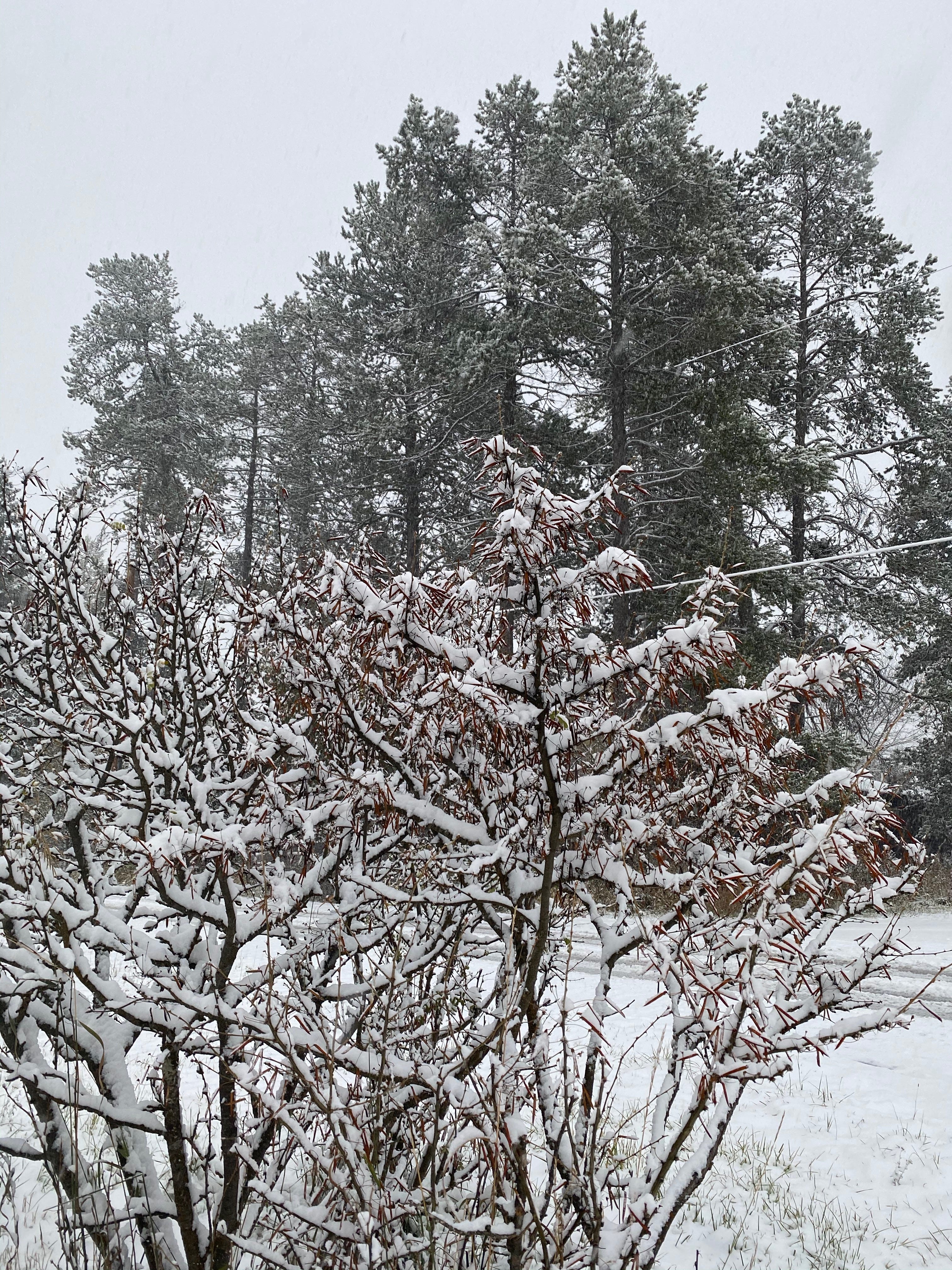
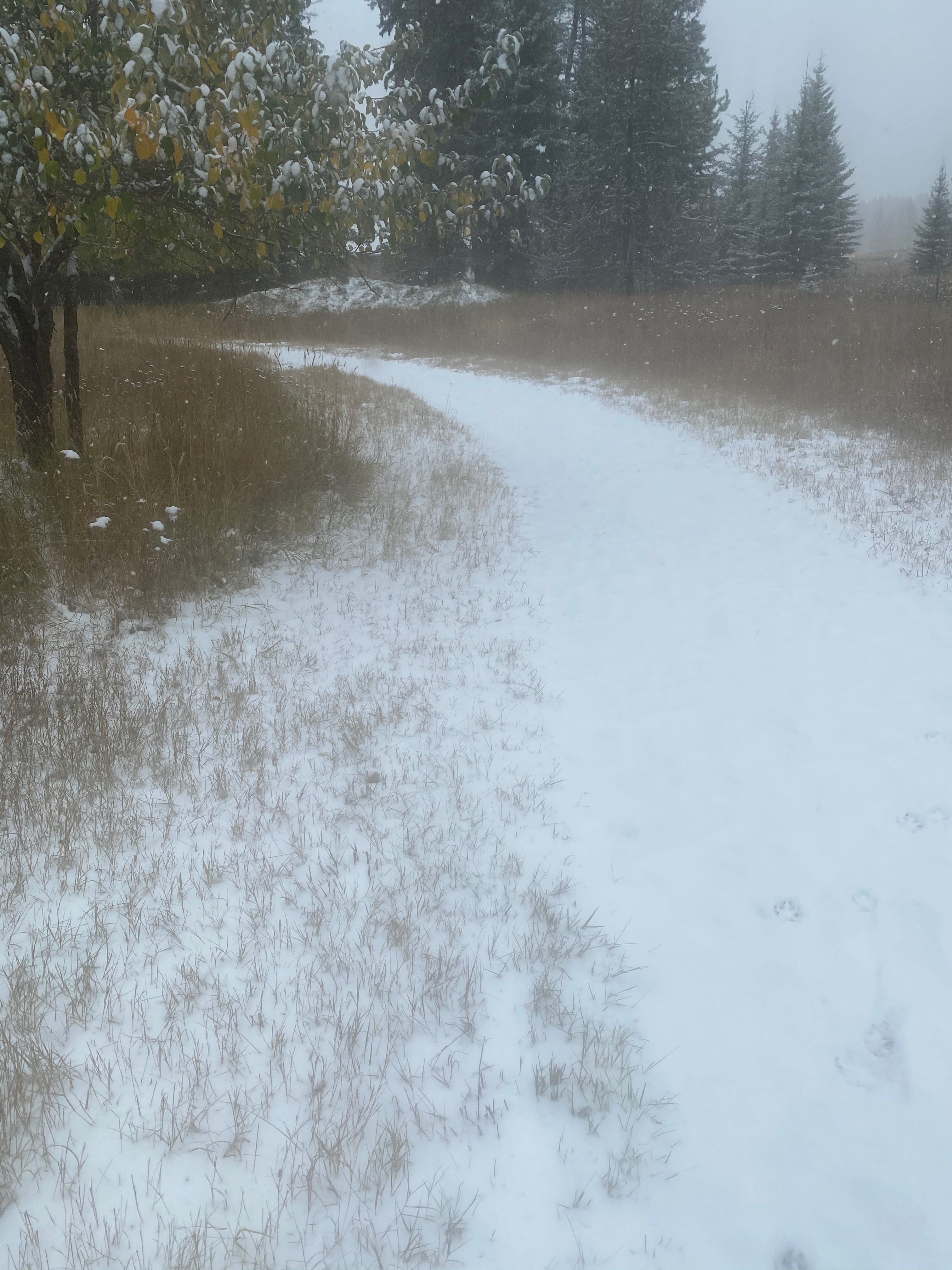
It snowed, finally, on Sunday and it was that kind of sticky, thick snow that transformed easily into snow people, snowballs, and some magic formula that made the dog go nuts (she literally pulled me sliding down a hill trying to chase a buck). It will melt—it’s an early-season snow—but we’ll look forward to the next, and the next, hanging onto this miracle that is not a miracle because it’s just part of what makes this planet work. I love the snow, and knowing how its melting eventually trickles down into rivers in the spring that will come.

In 2016 about this time I kept bringing up a line someone had said at an artist’s residency I’d recently attended: “We are practicing the deep ethics of optimism.” I kept wondering what that really meant. I’m still wondering.

Walking composition

The rowan tree

“An early-morning walk is a blessing for a whole day.” — Henry David Thoreau

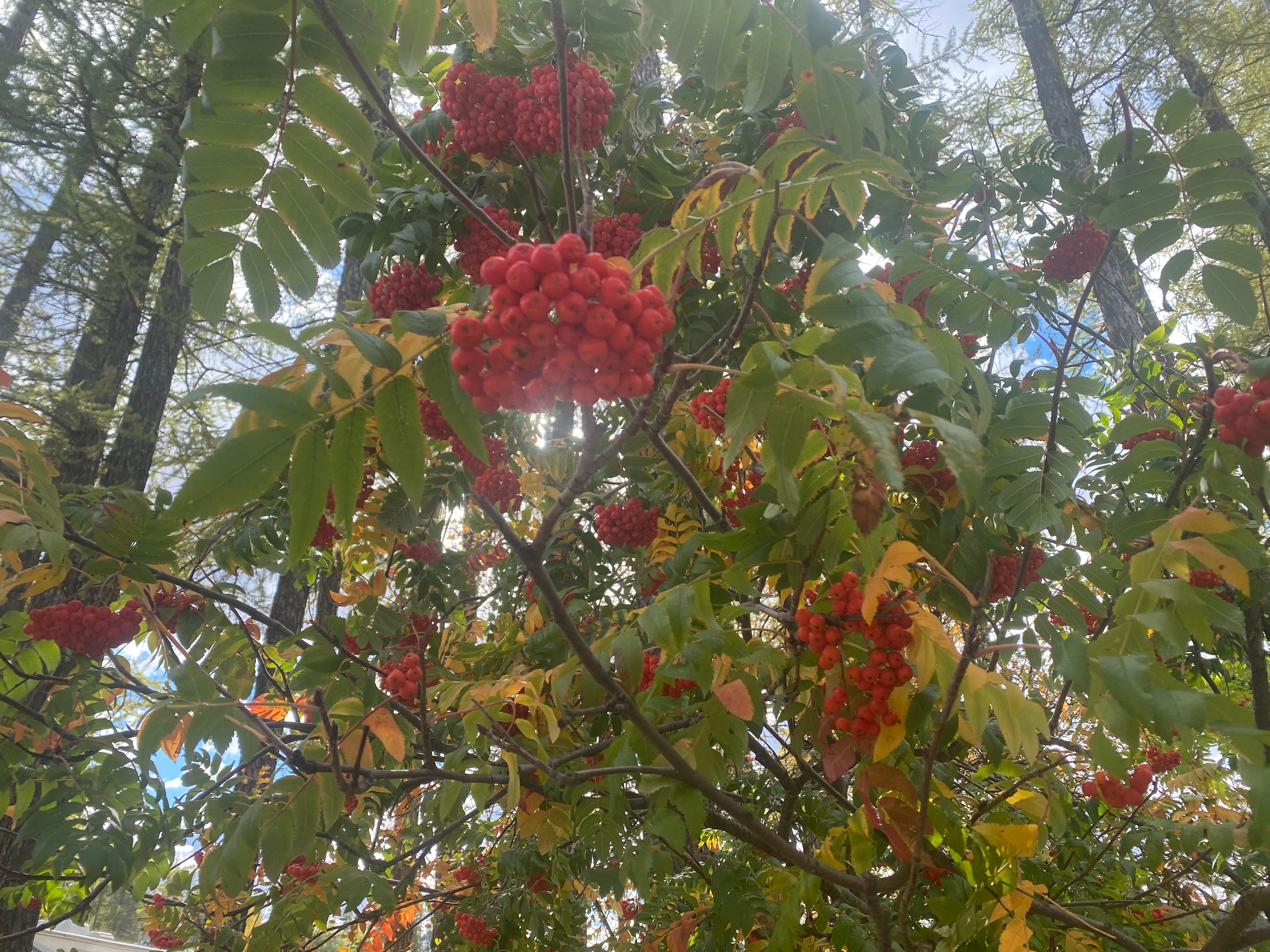
I was rereading Susan Cooper’s The Dark Is Rising series last week, one of those childhood favorites that’s managed to stand the test of adulthood. Every time I read the scene in The Dark Is Rising where the Old Ones renew one of the Signs using rowan wood, I wonder if there’s anything in it. Mountain ash, rowan, grows plentifully around here. In Celtic lore it’s said to protect against evil.

Our household delivered our election ballots to the county dropbox in person yesterday. I hope that those pink envelopes are a protection against evil, too.

Thoreau was a walker but so is everyone else

Whose stories are held to be a reflection of who “we” are?

Every now and then I come across a comment about my book that mentions its glaring lack of Henry David Thoreau. (Is it the lack that glares, or Thoreau himself? Is there a Thoreau-shaped hole in the universe somewhere glaring at me?)

It does actually include Thoreau—exactly once because I figured that without at least one mention I’d endlessly be receiving kind emails pointing to his book/article Walking, which was originally published as a long piece in The Atlantic Monthly in 1862. Maybe it’s slipped in so discreetly that nobody notices it.

Leaving Thoreau out of the book was a conscious decision. I don’t much like Walking to begin with because right off the bat he writes scornfully of clerks and shop assistants, who rarely have the chance to get their bodies and sun-deprived skin out of doors:

“I confess that I am astonished at the power of endurance, to say nothing of the moral insensibility, of my neighbors who confine themselves to shops and offices the whole day for weeks and months, aye, and years almost together.”

I wonder how he would have dealt with pandemic lockdown in a city of millions?

He waxes on about these morally insensible people for a bit before taking a jab at women: “How womankind, who are confined to the house still more than men, stand it I do not know,” later seeming to imply that women just up and go to bed at 3 or 4 in the afternoon. (Just . . . look, I know it was a different time, but honestly.) It might have bolstered him to know that I, at least, have spent big chunks of 2020 going quietly insane because I have trouble getting out of the house for various reasons mostly related to being a mother.

Considering his reputation for being justice-minded, it’s jarring to read such near-contempt for people who had fewer choices than he did about how to spend their time and certainly couldn’t have spent four hours a day sauntering over the hills (also he did not have children, and it’s easy to be dismissive of how people spend their time when you don’t understand how much of it kids can take up).

What’s more relevant to me is the stranglehold that writers’ fascination with Thoreau, Wordsworth, the Stoics, and the like have had on what we imagine walking to be. I read a large stack of books on walking over the past few years, and almost none of them presented the action as a birthright of all humanity. Instead, it’s walking as art, the walking of poets and philosophers, one might say elitist walking, seeming to agree with Thoreau’s claim that “It requires a direct dispensation from Heaven to become a walker.” It’s intellectualized, cerebral walking.

What about just walking to work?

Then there’s the larger question of stories and how they create a society’s vision of itself. American school students are taught Thoreau and Ralph Waldo Emerson and Nathaniel Hawthorne and so on because they’re American classics, but who chooses a classic? Why do we have to read of Hester Prynne’s adultery in The Scarlett Letter* but are rarely introduced to the fiercely independent pioneer Alexandra Bergson in Willa Cather’s O Pioneers! not to mention anything by people whose ancestors have lived here for tens of thousands of years (Leslie Marmon Silko notwithstanding—occasionally a story of hers makes it into the K-12 curriculum). Why is Thoreau hauled out as a model of freedom and self-sufficiency rather than, say, Sacagawea (as an actual person not solely Lewis and Clark’s guide); or Elinor Pruitt Stewart, a single mother who actually did explore the Wyoming landscape as a homesteader, not only on her own but with her four-year-old daughter—and whose letters were also published in The Atlantic Monthly? This hardly needs reiterating because so many people have written about it, but Thoreau’s time “alone” in the Walden Woods was punctuated by frequent dinners at his friends’ houses in town, and to his mother’s house so she could do his laundry.

Stewart’s case shows that it’s not just about who writes down the stories; her collected Letters of a Woman Homesteader is a fun, engaging read scripted by an acute observer, and it was a bestseller in its time.

It’s about whose stories are accepted as a reflection of who we are. It’s why we see such battles now over teaching a truer version of American history, acknowledging its violent beginnings and recent past and cracking open our understanding of ourselves to be more varied and complex, rich and intricate. To rightfully ask what a society envisions when it says, “we.”

—–

I recently finished a book about the mathematician Ramanujan—The Man Who Knew Infinity, by Robert Kanigel. Everything about Ramanujan’s life lends itself to drama and romance: his early mathematical gifts combined with his failures in school (due, it seems, to inattention to exams and non-mathematical subjects), his family’s near-poverty in South India, his persistence in finding someone who appreciated and could support his mathematical genius, his eventual success in catching the attention of Cambridge University’s G.H. Hardy. The efforts involved in getting him to Cambridge, the groundbreaking work he did there, and, eventually, his death in 1920 at the age of 32 from a long and intractable illness.

Ramanujan left behind thousands of theorems and unique mathematical identities, work that confounded many of his contemporaries and still provides rich areas of research for mathematicians today. But in addition to detailing Ramanujan’s life and genius, Kanigel also wrote of what it meant for the mathematician to have been eventually supported both financially and academically, and wonders how many people in how many fields are never able to realize their potential due to lack of an environment in which they can thrive:

“What if he had been every inch the genius he was, with just as much to give the world, but his mother had been a little less supportive? Or he had been the barest bit less likable or less sure of his abilities . . . For those who have biographies written about them, the System by definition works; the measure of its failure lies in those who never bask in the warm glow of the world’s acclaim. Those you never hear about.”

It was one of the most surprising and enjoyable aspects of my research to hear people’s relationships with walking, their own stories and experiences. More people than I ever imagined talked to me about walking, most of whom never made it into the book but whose stories, and the spontaneous sharing of them, will stick with me forever. Sometimes it’s the stories that are gifted to us more than the ones we search for that have the most staying power.

The opening and growth of story obviously applies to more than walking. But it was, and remains, important to me because walking is such a formative part of our evolution and I was, and am, tired of the stories around it being over-intellectualized. We are all walkers, whatever that looks like for each of us.

—-

*I’m sure there are many who find The Scarlett Letter valuable, but it irritated the bejesus out of me in high school. The only book I disliked more was F. Scott Fitzgerald’s The Great Gatsby.

—-

Some related and unrelated stuff:

  • Speaking of the stories we tell, Marc Ambinder’s book review of Gambling with Armageddon, by Martin J. Sherwin, made me rethink everything I was ever taught about nuclear deterrence, peace, and the Cuban missile crisis: “There have been many nuclear near-misses over the years, almost of all of them the result of mistakes by ghosts in the machine—and many prevented only by young men in uniform, whose guts told them to pause and question direct or standing orders.”

  • I never get tired of reading High Country News, but their piece on Black cowboys has been one of my favorites. (I first learned of the history of late-1800s Black cowboys in one of my copy editing projects, a book club textbook for 6th-graders. Not all textbooks are bad.)

  • Daniel Schmachtenberger’s extremely long presentation on sensemaking for the Rebel Wisdom podcast is probably the most, uh, sensible presentation I’ve heard on the subject but I’m still waiting for one of these thought leaders to realize that there aren’t any theory-of-everything answers that are going to fix the human world and no amount of 3-hour podcast episodes with Joe Rogan or anyone else is going to change that.

  • I imagine there are scholarly flaws and anthropological misinterpretations in Charles C. Mann’s book 1491: New Revelations of the Americas Before Columbus but I don’t know enough about that period to find them. It was a fascinating read, especially for someone like me who generally doesn’t love reading history, and I appreciated his driving question, which was, to paraphrase: “Why is my son being taught the same inaccuracies and untruths about America before European invasion that I was taught in school?” I’ve had similar questions, though my kids’ schools do a little better on that front than mine did.

  • I did not read anything fun this week 😦 But our dog keeps chasing and snapping at the vacuum cleaner and it’s hilarious.
Walking composition

Raining time

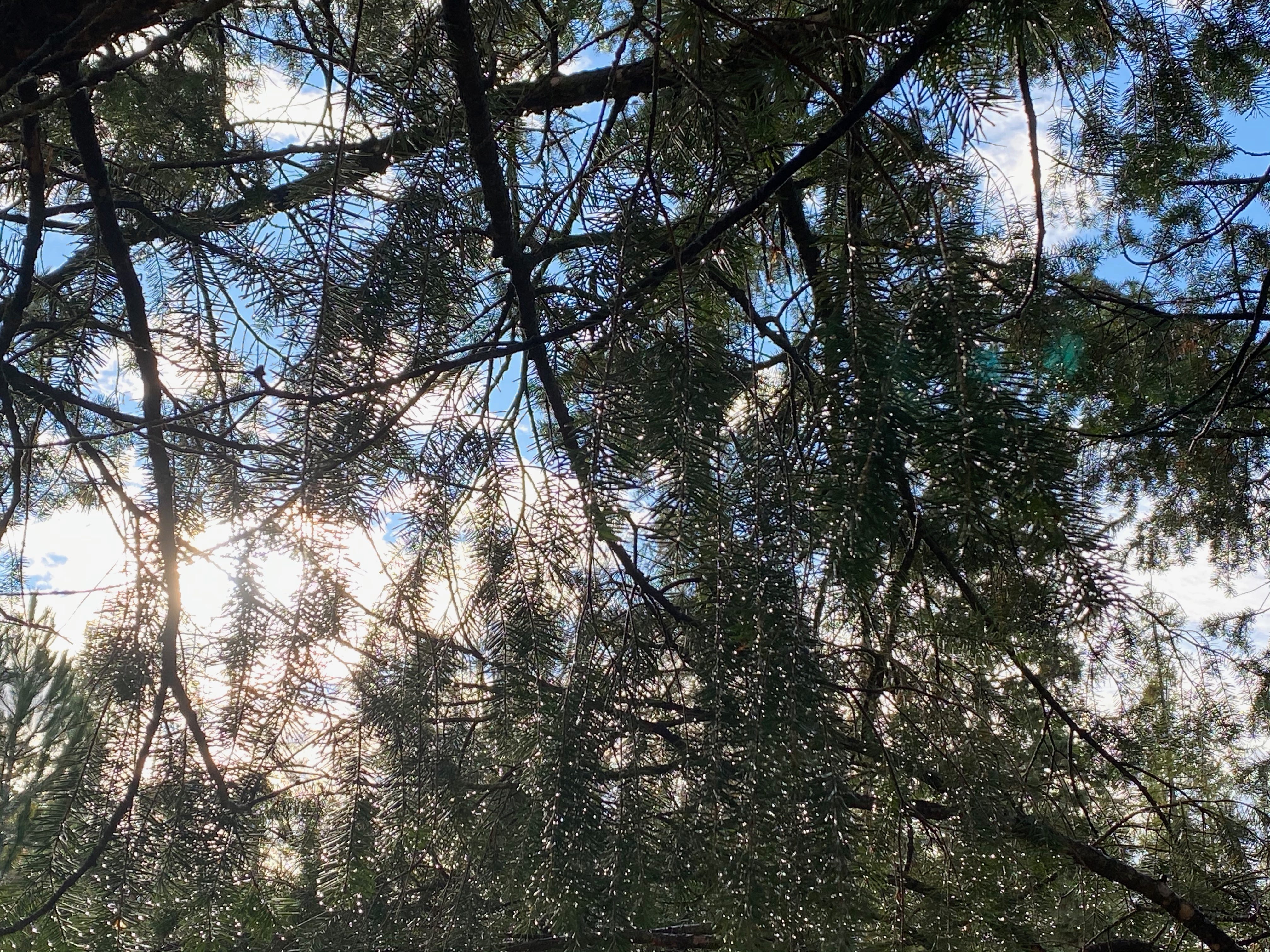
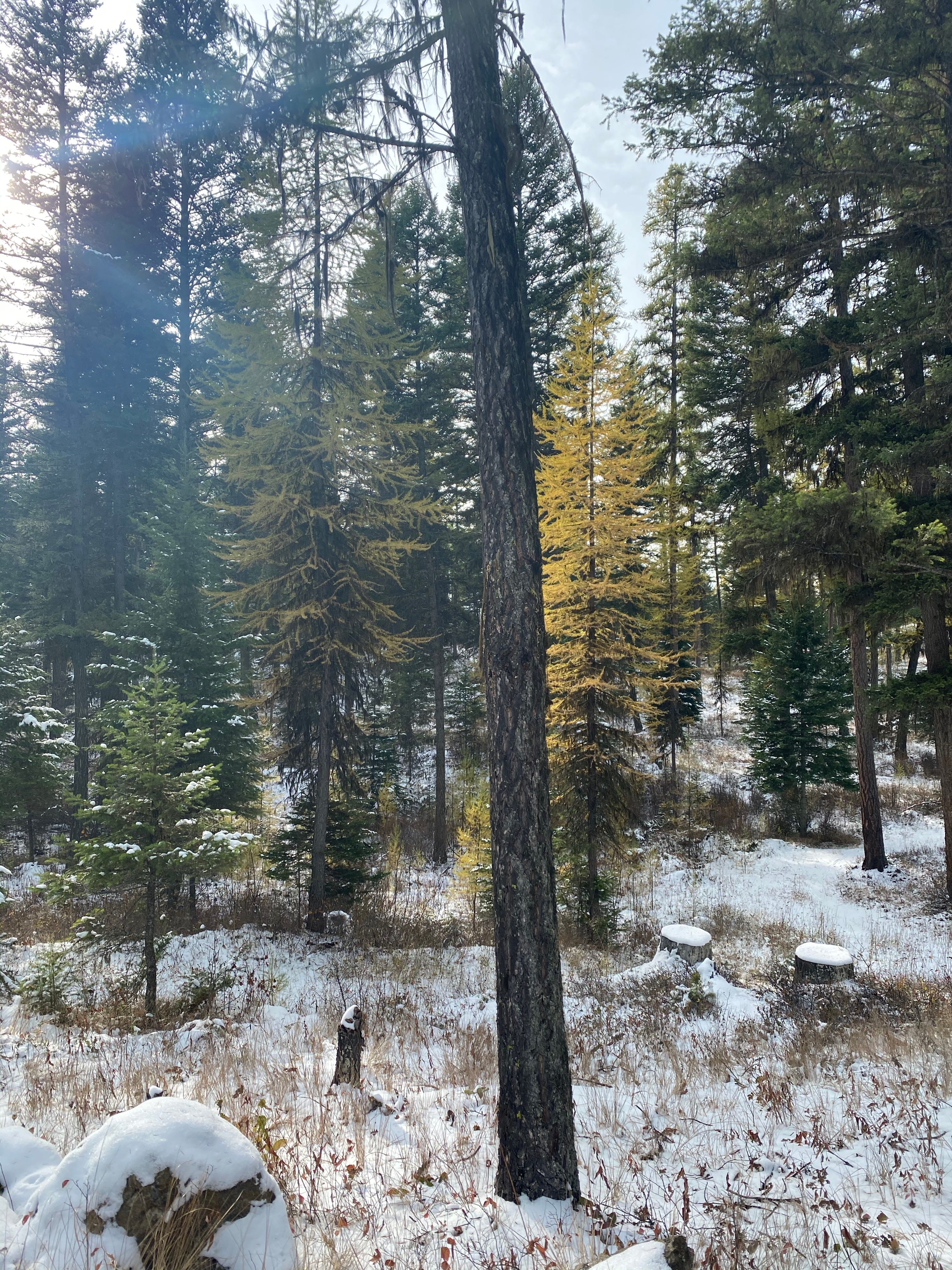
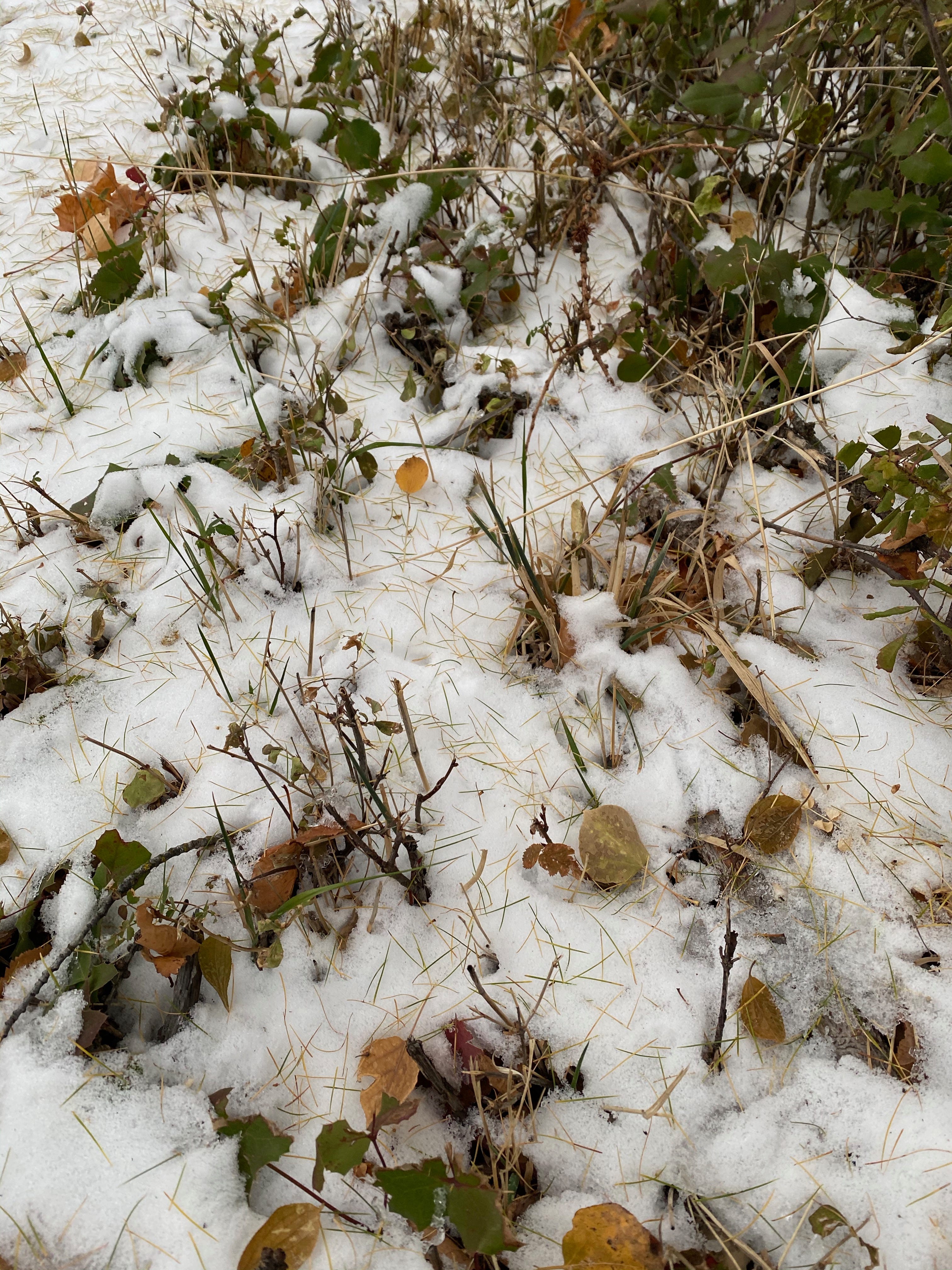
It rained yesterday, hard and cold and fast. I got caught out in it just as I was finishing walking the dog. I’d seen the storm coming from over the mountains and thought it would be slow-moving but it wasn’t, and there was nothing better than to feel and smell that bite of cold in the morning, a promise that the planet’s spin is finally shifting us away from summer. Before my fingers froze and my feet got soaked and the dog started chasing little whirlwinds of fallen aspen leaves, sunlight sparkled on water left by an earlier rain, and this Douglas fir stood there with water on its fingertips in a relationship that was old before I was born and will likely outlast me.

The storm left the mountains dusted with snow—there are few sights that make my heart so glad as winter’s first transformation.

Walking composition

Mathematics

“Nature is an infinite sphere of which the center is everywhere and the circumference nowhere.” —Blaise Pascal (1623-1662)

Sometimes when I’m doing math with my kids on weekday mornings I forget what’s going in the world because the sheer beauty of mathematics overwhelms me. Mathematics itself, whether we understand it or not, is beyond time, outside of human troubles, untouched by opinion. If I’m able to go for a walk later, the world looks brighter on those days, more complex and intricate and waiting for humans to see ourselves again as part of it.

My kids do not share my devotion.