Over half a lifetime ago, I was walking with some friends along the harbor road of Ephesus, once an embattled, storied, and thriving city of Ionia (and then Greece and then Rome and various lesser-known empires in between and after), and now an archaeological ruin in Turkey with just enough intact or restored architecture to hold our then-20-year-old selves in awe.
The harbor road, we were told, had once ended at the sea, which was now miles away after thousands of years of change and silt. We walked along the broad, flat stones and one of my friends said, “3,000 years ago, people were walking this same road, flirting with each other. Can you picture them?”
I’ve been picturing them ever since—people, just like you and me, full of hopes and heartaches, their particles sifted amongst the harbor’s silt for thousands of years, even their names forgotten for generations beyond anyone’s count. Someone worried over their child’s illness, another holding back tears at the cruelty of a former lover.
I’ve been working on an essay about the unholy marriage of power and wealth. I keep stalling on finishing it because every day brings another example that leaves me wondering: isn’t it obvious now? How wealth buys power and they feed off of each other? To write about Alexei Navalny’s long and eventually ill-fated battle against oligarchs and corruption in modern Russia, or the sacrifice of 18th-century Poland by prosperous nobles who cared mostly for their own comfort and position, or countless other instances of the ruin brought by unchecked wealth and its hold over unchecked power, feels . . . well, yes, obvious.
I could write for years about the compounded injustices and cumulative wealth inequality engendered by private land ownership alone—and in fact have been writing about it for years—but to find something different to say about it when the results are playing out not just in the daily news cycle, but almost the hourly, feels a bit like trying to hang onto a soap bubble.
While I try to find ways to keep that soap bubble intact—describing its shimmers and form without popping it into nonexistence—I’m going to republish a revised version of a related essay on wealth and entitlement (the psychological kind) in a few days.
Over the last couple weeks, as I kept asking myself how to bring some more foundational purpose to that essay on power and wealth, I took a break and started some vegetable seeds for this year’s garden.
I don’t usually start seeds. I don’t have a greenhouse, my kitchen isn’t generally warm enough even for fermenting sauerkraut, and it’s usually so overcast in winter here that there’s barely enough sunlight to keep a spider plant alive. But my brother-in-law gave me an old grow light to try to keep a medicinal tobacco plant growing over the winter (it did! it’s small but still living! the aphids love it) so I thought I might as well try to get a start on the garden, since where I am in Montana we don’t get enough warm summer days most years to coax a tomato plant from seed outside, much less pumpkins or melons.
Sorting through my box of seeds turned out to be one of the most hope-generating things I’ve done in a long time. I don’t know why. I wasn’t thinking about “well, life goes on” or “no matter what, people still need to eat.” It was the seeds themselves, like they were wrapping little tendrils of magic light around my fingers as I tried to figure out what I’d need to buy and what I had too much of. They took me completely out of myself and the most recent text threads of news from family and friends. Life. No narration or clever turns of phrase, just a few moments of life, of feeling alive and part of it all.
It felt really good.
Some days later, I was driving toward home and a truck with the U.S. Forest Service logo stamped on the side—not an uncommon sight where I live, among well over a million acres of wilderness and non-wilderness land overseen by the USFS—turned through an intersection in front of me and I started crying.
Among the insanity of what’s going in the U.S.’s ongoing hostile corporate takeover of a government, the professions and lives wrecked and overturned, and uncertainty and fear of Forest Service and many other employees, the goal of selling off and profiting from public lands is clear. It was an aim in 2017 and remains one. It’s why I wrote an op-ed in the Los Angeles Times about the commons and the kind of freedom held in public lands in 2019.
All land “owned,” public or private, has in fact been stolen, and it can be stolen over and over and over again. As I wrote shortly before the 2024 U.S. presidential election of my relatives in Russia, “Nobody in my family takes democratic freedoms for granted, but perhaps it takes living under dictatorship or oppression to realize that even the right to fight for something better can be stripped away.”
Which is just as true of nature, of the more-than-human world, of clean water and freedom to roam, of foraging for huckleberries and sleeping by wild rivers, as it is of the right to protest and to vote. This week I am going once again to my favorite Forest Service cabin, and wonder now if it might be for the last time, if I might never again be able to walk into the freezing waters of one of the only free-flowing and minimally polluted rivers on this continent, might never again listen to the packrats thumping around at night.
The day after I cried at the sight of a Forest Service truck, for all my friends and acquaintances who had lost their jobs or were worried about losing them, for the lands and waters that gift us so much, I gave a talk to an audience largely composed of public lands and wilderness advocates.
The talk was half about walking and evolutionary biology, and half about the commons, the stark injustice of privately owned land, and the vital role that public lands play in ensuring freedom. (It was recorded; I’ll post a link to the recording when it’s available.)
It felt right to give that talk, to say what I thought needed saying, but it also felt like a bit of mustering before a battle, when few besides those in the room knew what was to come, or how to prepare for it.
The residents of Ephesus lived and died, planted seeds and fought for what they loved, for over a thousand years. The city was ruled by tyrants and overtaken by emperors eager for land, spoils, and subjects, including Alexander the Great and later, at various periods, as part of the Ottoman Empire.
They are forgotten, almost every single one of those people. Every seed they planted, every hand that worked a chink into the Library of Celsus or wrapped a cloth around a newborn baby. Every bit of laughter echoing along the harbor road, every flirtatious side-glance and jealous narrowing of the eyes. “History” wants to leave us only with Mithridates, king of Pontus, not the 80,000 Roman citizens throughout Asia he ordered murdered. It wants us to to credit the emperor Titus with building the Colosseum, not the tens of thousands of Jewish slaves who were forced to do the actual work.
Most people who have ever lived are forgotten.
So will I be forgotten, and almost every single one of us. But how we treat one another, and the stands we take against injustice, and for a better world, still matter.
The past few nights I’ve watched the thinnest slivers of Moon low, and on subsequent nights higher, in the western sky, and thought about where my particles will be, what soil I’ll have been fortunate enough to fertilize, in a few thousand years when other eyes are watching that same Moon, Venus low and bright nearby, perhaps kept awake by a lover’s betrayal, a child’s worrisome cough, next month’s bills, or the battle of eons against the power of tyrants whose wealth has made them seem unstoppable.
History might be written around the names of those who destroy, and take credit for others’ labor, but it is lived, lost, and sometimes won by the rest of us. Those who plant seeds of all kinds, who nurture and care. In truth, history is never fully won or lost. It is a living record, the concerns and tasks that wend through our days, the neverending struggles for justice and against oppression. History is lived. It is life. It starts over again every time we plant something new.
When I went to Turkey in 1997, I had a cheap little travel camera and only found out after the pictures were developed that I’d grabbed black and white film instead of color. Below is Ephesus: the Library of Celsus, a stone carving detail, and the harbor road from a vantage up in the ampitheater.
In late 2016, a . . . situation, let’s call it, battered my town. A neo-Nazi site had picked up a disagreement over a local building’s ownership, and the result was months of online and telephoned threats to many people in town, one family in particular, and a threatened armed march that we all prepared for but that never materialized. Possibly because it was never going to but also possibly because that was a bitter winter; if I remember, the day of the proposed march was -17°F (-27°C).
Reporters covered the situation so thoroughly that for a long time you couldn’t google my town without white supremacists being the top story.
The targets of the attacks were pretty much all Jewish, or even seemingly Jewish. At least one business in town was attacked until the neo-Nazi site’s owner found out the owners weren’t Jewish. The “troll storm” (a term I dislike; it makes it sound like a game and attacks like that are anything but a game) was vicious, and left scars that will probably never disappear.
As the attacks started, a friend asked me for help figuring out if there was a way to protect the identity of one of the victims. I’m not a cybersecurity person or even an investigative journalist, but I tried. I spent a night crawling through 4chan and 8chan threads (I do not recommend this for anybody ever) but it was too late to stop personal phone numbers and names from getting out.
That same week, by sheer coincidence, an op-ed I’d written was published in the Los Angeles Times, tangentially related to the already-ongoing situation. I’d written it because one person had already made my hometown synonymous with white supremacy and, since I’m a writer and had an editorial contact at the paper, writing was all I could think of to help.
That op-ed turned me into a target, too. What I experienced was absolutely nothing like what other people went through. I describe it as receiving barely a splash from a tsunami that hit others with full force. I wrote about that in more detail a couple of years ago, including screenshots of the Twitter posts directed at me, in an essay about the digital commons and the ignorance in thinking that what happens online has no true real-life consequences:
I still had a Twitter account then and kept screenshots of some of what was sent my way, which wasn’t notable for its level of hate, but for the fact that the person writing the posts knew my nickname (which I’d almost never shared online before), my phone number (ditto), and my family’s routines. Which meant they either knew me or knew someone who did. I’ll never forget walking to the elementary school playground day after day, wondering who?
Who had given my phone number and my family’s personal details to white supremacists? It was someone who knew me.
Even before someone posted my phone number on Twitter, before I had much of a personal reason for fear, I was scared. The relentlessness of this “troll storm,” the sheer hate and dehumanization behind it, still makes my skin crawl seven years later. I was scared for my friends and acquaintances, my community. I was scared for what it said about what kinds of forces were being empowered worldwide.
I’m not the only person who coped by drinking a lot, by spending time only with people I trusted absolutely.
I stopped being able to sleep much. I mostly consumed chicken wings and booze. I had been walking or biking my kids to school day in and day out for two years, morning and afternoon, ever since my son started first grade, and was suddenly terrified to be physically outdoors, with them, visible. Being a target myself was bad enough; I didn’t want anybody to know who my kids were.
The day of the march came. None of the threatened participants showed. The town had shut down in preparation anyway, so as to withdraw as much attention from the attendees as possible, and a group hosted a matzo ball soup gathering in an emptied downtown. I wasn’t there. I can’t remember what I did that day—watched The Lego Movie with my kids, maybe, for the tenth time (my choice, not theirs; I enjoy that movie). I think we had a fire going in the wood stove all day. Hunkered down in warmth and seeming safety, even if safety is always a mirage, a veneer. Temporary.
The troll storm faded away but the fears and damage didn’t. Everyone, I imagine, learned something different from that time. Everyone, I imagine, learns something different from all such times.
I’m under no illusions that the threat has faded. Anti-Semitism is perhaps, except for misogyny, the oldest and most universal prejudice on the planet, stretching back through massacres, wholesale expulsions from entire countries, theft of children, and vast, structured oppressions for nearly 2000 years. There’s a reason Daniel Goldhagen titled his book about anti-Semitism The Devil That Never Dies. My grandparents in Russia lived that history. Anton Treuer, known most for his work on Ojibwe language and culture revitalization and his YouTube channel featuring an Ojibwe Word of the Day, but whose father was Austrian Jewish, has said that the scope and scale of this history should make Jews, of all people, most acutely aware of the injustice and horror of oppression and genocide.
If it’s not anti-Semitism, there are plenty of other targets for hate, fear, and power-hungry greed, as likely everyone reading this already knows.
Everyone, I said, learns something different from these times, is damaged differently and finds different ways to cope. I’m not here to tell you how you should feel when times are frightening or worrying, or that your fears or worries are greater or lesser than another’s. I can only share my own story. Really, that’s all any of us can do.
The troll storm and threats happened just a couple of months after I signed the book contract for A Walking Life. That time had a lot to do with the parts of the book that focus on social capital, social and interpersonal trust—including their fragility and how authoritarians can weaponize them—and the ways in which authoritarian regimes use loneliness and a sense of isolation to fracture the power of resistance, a dynamic that Hannah Arendt covered decades ago in The Origins of Totalitarianism.
In times like these—in all times—trust is essential. But it is easily broken and easily coopted, especially with the reach of the online world we now live with. One of the things that came through during those months, for me at least and this is part of why I wrote about community and interpersonal trust so much in my book, is that the voices I’d followed online, or in national or international news, were most often almost powerless to help my community, and in some cases caused more damage than good, even when well-intentioned. And not all of them were well-intentioned.
Lauren Hough recently wrote a brilliant piece mentioning the creation of “an entire industry of resistance grifters” after the 2016 election, and Dr. Len Necefer, founder of NativesOutdoors, also recently wrote something addressing that idea more directly:
It’s worth pausing to ask yourself: Why do you follow the influencers you do? This question isn’t about what they say or how they frame their ideas but about the underlying mechanics of why they have your attention in the first place.
I added the emphasis in Necefer’s because it strikes me as an essential question each of us needs to ask ourselves, especially when we’re living with uncertainty and looking for direction.
Both those pieces are necessary reminders of the power of attention, how it can be manipulated, and how it can be used to others’ advantage.
They’re also reminders that not everything or everyone you already agree with, or who seems to care about the same things you do, is acting with anyone’s interest but their own in mind.
In times like these, it’s tempting, it’s human and natural, to look to others for guidance. But as helpful as that can be, there are risks inherent in it, too. More than once I’ve been an avid follower of a writer who seemed to articulate my own thinking to me, who seemed to care about the things I cared about, only to watch that person grow in success and lose their mask, become more truly themselves—prejudiced in various ways, desirous of power over others, unwilling to promote a cause or event unless they were its main star. I don’t know whether enormous ego is born from mass attention and some level of success, or if ego is drawn to the same and feeds off of it, but I’ve watched it happen to enough people whose work I used to like and ideas I used to look up to—during that “troll storm” and again as Covid spread over the world—that I began to question my own judgment. I see it happening again now.
Voices and people we trust can be corrupted by the lure of power and influence, by the attention of masses, and they can forget, if they ever knew, why their work, words, and influence matter. It can happen to anyone. Be wary, is what I’d say, of anyone telling you they’re on a divine mission, especially if they’re asking you for money.
We are all unique, brilliant beings with our own purposes, full of hope and doubt and hidden shadows most of us don’t like to acknowledge. If any one human has a divine mission, we all do. But maybe none of us do. Maybe being alive, being able to touch and smell and love the world, is enough. And no matter how charismatic, how compelling, how persuasive, nobody can be you for you any more than anybody can take you from you. Finding a way to believe and understand that with one’s entire being might be an essential survival skill—collectively as well as individually.
There are some books that helped me in the last eight years, books that I turned to to regain perspective and that I might pick up again: We Are the Middle of Forever: Indigenous Voices from Turtle Island on the Changing Earth, edited by Dahr Jamail and Stan Rushworth; The Art of Happiness in a Troubled World, by the Dalai Lama and Howard Cutler; Walking the Ojibwe Path, by Richard Wagamese, Pankaj Mishra’s Age of Anger, bell hooks’s Belonging, and The Unwomanly Face of War, by Svetlana Alexeivitch. They’re books that at least try to eschew generalizations, that insist on the specific, the individual, narratives that question and explore rather than demand or insist. They remind me, in fact, of why I’m such a big fan of good science fiction writers like N.K. Jemisin, Arkady Martine, and Martha Wells. Stories that remind readers that we often know far too little of any other person’s story and motivations, that caution us against assuming we know anything of their lived experience, of who they are.
But I can still only be me, with my own story, so I go back to my ancestors, especially my grandparents, all of whom I’ve been spending more thought-time with recently, looking for guidance and resilience that I know will never truly be found outside of myself.
My ancestors didn’t gift me with much tendency toward hope, and, despite my Russian grandfather being sent to fight on the German front in World War II with one rifle and no bullets shared between three people, not much of a fight instinct. But they did leave me with a kind of determination and—I feel extremely lucky in this—a strange capacity for joy and humor even in the darkest times. One of my favorite quotes, “Blessed are we who can laugh at ourselves, for we shall never cease to be amused,” by an anonymous author, is a personal mantra.
On the nights I allow myself to crumble into tears, fear, and despair, I think of my Russian grandmother as a refugee from the four-year Siege of Leningrad, in the Ural Mountains, her hands bleeding from hoeing potatoes to keep her children and mother-in-law alive, and I look at the pictures I have of her, her soft smile and eyes kind after a lifetime of oppression, prejudice, and hardship. I think of my grandmother in Montana, the decades she spent in Great Falls working as the director of public assistance for three counties, her compassion and absolute dedication to public service, the lives she touched, and the quiet ways she lived out one of her favorite lines: “Those of us entrusted with positions of power must remember never to abuse it by failing to respect those who seek help.” I remember how unassuming and intensely private she was, how much she loved dogs, and the way she smiled, with her whole being, when amongst friends.
I don’t know what the next months or years will bring. But I know what my community has shown itself capable of withstanding and standing up for over the decades, and I know that chicken wings and booze will not erase my fears when they overcome me. Nothing will. (No judgment here—for someone else, chicken wings and booze might work just fine.) My fears and heartbreaks can only be faced with as much strength and compassion as I can muster in between the fallings apart. And with that fragile trust built within actual relationships with actual people. And maybe the occasional basket of tater tots and my newfound addiction to watching tarot readers on YouTube.
Gandalf’s words when Frodo said, in The Lord of the Rings, “I wish it need not have happened in my time” are never not apt: “So do I. And so do all who live to see such times. But that is not for them to decide. All we have to decide is what to do with the time that is given us.”
The Substack version of this essay has a recording at the end of my father reading his translation of Aleksandr Kushner’s poem “We Don’t Get to Choose.” I haven’t yet figured out how to include those audio recordings here–apologies!
Early morning after nearly 36 hours of rain at North Birch Creek in the Bob Marshall Wilderness near the Badger-Two Medicine, trail crew camp, August 2023 (my tent is the green one)
The following is a reprint of my essay “Trespassing,” published in the Air volume of Elementals, a new anthology from the Center for Humans & Nature.
It was late September, and the aspen trees were just beginning to yellow. They grew thick on the hillside, a broad grove giving way to small meadows that sloped upward, transitioning after less than a mile to heavy stands of spruce and pine. The group I was with rambled along an old logging road just south of the eastern side of Glacier National Park while a biologist among us talked about the ecotone we were walking through: a mingling of prairie and forest that stretched all down along the Rocky Mountain Front, the eastern-facing slope of the Rockies, where the mountains spill onto the prairie. A light wind blew constantly.
As we left the aspens and walked into evergreens, the wind became a whispering—psithurism, a sound that’s like a rustle and a shush at the same time. That sound characterized almost my entire Montana childhood, but I never consciously noticed it until a few years ago, shortly after moving back to my hometown. One day, a few months into my return, I was walking home through town and stopped to listen to the wind blowing through a stand of tall lodgepole pines bordering the path. That sound, I thought, remembering its company in the Rockies on many a family hike that I had dragged my feet on as a child, and later on treks as a teenager with friends. That sound is home.
***
The place along the Rocky Mountain Front I was hiking that late September day is a two-hour drive east from the valley where I grew up. In another region, it might not be considered anywhere near my home. But this is the American West: expanses are vast, yet their very vastness and sparse human population are part of the intimate familiarity that welcomes those of us who live here. Montana is often called a “small town with very long streets.” The psychological network of what I think of as my homeland encompasses the Rocky Mountain Front. For a white settler like me, a fifth-generation descendant of Montana homesteaders, the question of homeland and belonging is constantly shifting. But there is one constant: wherever my feet happen to be, my heart has always longed to be right here, among the cold mountains and prairie grasses.
Hiking along the prairie-forest ecotone, every aspect of the air felt like home—the smell of pine, the sound of wind in the evergreens, the way the sun was almost warm enough but the air kept me chilled. That same air had wound itself eastward from the valley I live in through a pass in the Rockies and unfurled here, to race down the foothills and speed its way across the prairie and farmland to the little agricultural town of barely two hundred people where my mother is from.
Although I never lived in my mother’s hometown, or even on the kind of spread-out farmland she knows so well, the air of her childhood landscape calls to me almost as insistently as that of the stream-saturated peaks I was raised in: I can smell it now, sitting at my desk on the other side of the Rockies in a mountain valley with its different kind of big sky. I love the way virga strolls across the miles of prairie and farmland like it’s got all the time in the world, how I can watch it for hours, how my skin tightens slightly at the drop in temperature, and how I can still smell the ozone of rain’s promise, with its dust-tang, months later in the back of my nose. I can’t understand why that air also smells like home to me, why I can look at those houses surrounded by thousands of acres of wheat and feel in my gut what it is to be a child growing up with your eyes on that far horizon, nothing between you and the rainstorm but the air and wind who make constant companions. Companions who can issue either invitation or warning, for those who listen closely enough.
There is one stark difference between these places, a difference that I too often take for granted and that most people might not notice: where I live, I’m not far from access to millions of acres of designated wilderness and national forest areas and a national park, places where my feet are as free to roam as the air itself. However, when I go out to eastern Montana, my mother’s home ground, everywhere I turn is blocked by fences. You can drive for hours and see little else but weather-beaten houses huddled together on the prairie, their siding bitten with winter and the fierce, scorching sun of August. These vast counties, where you can drive past more visible wheat silos than homes and only the occasional hawk or pronghorn, are squared out and fenced off with countless miles of forbidding barbed wire.
My body can’t pass through these fences without permission, but the air has no such limitations. It’s a freedom that has an underacknowledged impact: No Trespassing signs are ubiquitous in America (in Montana, Trespassers Will Be Shot is a threat I always take seriously), yet at the same time, air pollution trespasses into our bodies every moment of the day. When I walk around my hometown, it’s impossible not to breathe in vehicle exhaust, especially on days when an inversion layer holds it close to the ground. Out where my mother’s from, on those expanses that feel like they host some of the cleanest, most unadulterated air on the planet, on any given visit I might see a crop-dusting plane emptying loads of pesticide or herbicide over the fields and still smell the strange, metallic tang in the back of my nose the next morning.
Trespass can be turned back on us. With bodies and lungs and circulatory systems porous to the air, neither humans nor the rest of life have much defense against the kinds of airborne attacks that other people have unleashed upon us. And I don’t use the word attacks lightly. Air pollution from vehicle traffic can decrease children’s lung capacity by 20 percent and significantly affect cognition in their growing brains; recently, it has been found that carbon pollution from car exhaust crosses the placental barrier and affects fetal development and even ovarian egg production in women. Living near a landfill raises a person’s risk of lung cancer due to the hydrogen sulfide that’s released from decaying trash. Fully 95 percent of the world’s human population lives with levels of air pollution considered unsafe. Air pollution is one of the leading causes of premature death worldwide.
Without clean air, humans are denied an inherent right to health and flourishing. If billionaires’ dreams of colonizing Mars were ever to be realized, the first mission, the second mission, the millionth mission, the missions for generations far beyond our imaginations would be to secure water and breathable air. Air is so vital that a common right to it was recognized in legal code as far back as the Roman Empire. “The following things are by natural law common [to] all—the air, running water, the sea and consequently the sea-shore,” declared the Institutes of Justinian in 535 CE.1 In 1972, after decades of relentless air and water pollution, aided by political corruption paid for by the powerful men of industry known as the Copper Kings, Montana’s legislature passed a new state constitution that guaranteed a “clean and healthful environment” as an inalienable right, including the right to clean air.
Air is a shared commons: it’s an entity we all rely on for survival, and it moves freely across the world. The air I breathe that smells of dry pine needles and early snow was somewhere else a few hours ago, a few days ago, a few weeks ago. Maybe it was bringing some other hikers the smell of their own woods, or picking up sulfur dioxide, nitrous oxides, and soot from a coal-fired power plant, whose particulates are now seeping into my lungs, unasked for and unwanted on a cool September day. We all depend on and all share the air, and yet the ability to pollute it is treated as a private property right. Legal systems around the world make air the recipient of industrial waste; in turn, that means that all of us are, too. Air knows no international boundaries, and neither does the pollution it carries.
When I think of trespass, what first comes to mind is the Lord’s Prayer, which I recited with my parents and sisters Sunday after Sunday in Episcopal and Lutheran churches, and often around the dinner table, throughout my childhood. The lines “And forgive us our trespasses, as we forgive those who trespass against us” refer not to who crosses whose property lines but to committing sins that the deity has forbidden. The word trespass occurs many times in the New Testament. In some translations it’s replaced with sin or debt.
Trespass, in other words, is a transgression. In the case of pollution, trespass is far more invasive than simply breaking through a property line. If I sneak through my neighbor’s yard to get to the public nature preserve on the other side, I might annoy him, but there’s no actual harm done. If my neighbor burns a pile of tires in that same yard and I don’t go near it, his waste will trespass into my family’s bodies just the same, pouring itself into my children’s lungs with the law’s consent. The polluted air has trespassed into us, but it wasn’t by choice. The first crime of trespass was against air itself. When air has been violated, it is forced to violate in turn.
***
I was hiking along the Rocky Mountain Front in late September 2022 with a group working to stop oil leases in what is known as the Badger-Two Medicine. It’s an area bordered by Glacier National Park to the north, the Bob Marshall and Great Bear Wildernesses to the west and south, and the Blackfeet Reservation to the east. The Badger-Two Med is sacred to the Blackfeet Nation. Under laws written and enforced by the federal government, it’s legally part of the US National Forest Service, but it was carved off of Blackfeet land in 1895, along with the eastern part of Glacier Park, in yet another land seizure accomplished with a deceptive treaty signed under duress, one in a long history of betrayals.
I hadn’t been to the Badger-Two Med before, although I’d been following the oil lease situation—which has been ongoing for nearly forty years—since before moving back to Montana. This was the first time I’d managed to visit it, on a hike sponsored by the Glacier-Two Medicine Alliance, which was founded in the 1980s to fight oil leases granted in the area by the Reagan administration. Most of the leases have been successfully canceled over the years, but in late September 2022, one oil company had just won a court appeal to keep its lease.2
Emerging from the aspen groves and into pines and spruce, my group walked a path that ran parallel to a buried natural gas pipeline; the organizers pointed out where a road to the remaining proposed site of the oil well would be built if the lease were upheld. A few miles further in, we would see a hillside already scarred by preparatory clearing.
It’s hard to imagine a place that feels more like the white European settler’s idea of pristine wilderness. Pristine wilderness and its ideals of unchanging purity have never really existed, of course, but perhaps places like this offer something better: I felt whole on that hillside. The air’s movement and scent felt like a welcome. And even though I know that there is no clean air, really, anywhere in the world—everything from dioxins to Chernobyl radiation has been found in polar ice, carried by the air and dropped even on places where few humans have ever stepped—I felt an extra surge of resentment at the thought of the trespass that would come not just from the physical invasion of an oil well but from the particulate matter, carbon monoxide, nitrous oxide, and volatile organic compounds that have been found in the air around and downwind of oil-drilling operations. At what the air would be forced to carry through no choice of its own.
***
As we walked to the top of a hillside where we could see out toward the plains of eastern Montana, the air shifted from a gentle breeze to a wind traveling east—stiff, but not quite the hard-blowing kind that is almost a constant presence on the wheat and cattle ranches that cover what’s known as the Golden Triangle, the wheat farming region my mother grew up in.
The wind blew the smells of encroaching autumn in my face, dried grasses underfoot and fecund soil under bear-claw-scarred aspen trees. The tiny bit of late-September chill reminded me that snow would be coming soon. There is nothing that smells more alive to me than that air. It feels conscious: the warm pine in summer, the tang of ice in winter, traveling down from these mountains to kick prairie and dirt-road dust in the faces of children growing up in the same tiny town my mother had over seventy years before. The heart that has always insisted on calling this place home, even during the twenty years I lived elsewhere, tells me, quietly, that this air I love in all its moods and seasons is conscious. It has a life of its own and a right to live it unviolated.
The crime of trespass goes both ways—what happens when we require the very source of life to carry sickness instead? Is this not a violation of the gods of life, of home, and of air’s own right to exist?
Acquiescence to the abuse and neglect of air is a trespass against humanity—against all of life, even against the air itself, for its own sake. Every living being has a common right to air that not only allows us to live the healthiest lives we can but also smells like pine and snowmelt, desert dust and prairie flowers, swamp grasses and moss. Air that feels like home.
Almost a year later, in September 2023 just before this went to print, that lease—the last in the Badger-Two Medicine—was bought out and was in the process of finally being retired.
After recording the audio version of my most recent piece here, on the 1805 property law case Pierson v. Post, I spent a very frustrating hour trying to get my voice recorder to talk to my laptop. Or my laptop to listen, I don’t know which. I kept getting a message that the device wasn’t “recognized” and given the options to ignore, eject, or initialize.
I unplugged and replugged everything several times, turned them off and turned them back on, again several times, every order iteration I could think of. The Sony voice recorder’s troubleshooting page was unhelpful.
Finally, I went for “initialize,” which I’d avoided because I’m a very non-tech-minded person and things like that scare me, hinting as they do at “going to erase everything.”
A screen popped up with a lot of options I couldn’t decipher, but I clicked on the most promising sounding ones, and magic, the laptop suddenly recognized the voice recorder.
I was reminded of when I have to confess my mild face blindness, which frequently results in my being unable to recognize people I’ve known for years.
I told Thomas Pluck after this ordeal that I was on the verge of giving up, deleting everything, and sending him bad photos of birds instead, plus one that Bryan Pfeiffer had kindly run the starling photo through Photoshop for me, making it less-bad.
The next day my phone, a non-smartphone with no apps or internet capabilities, called three people while I was clattering around the kitchen making dinner and listening to my son tell me about his recent school trip to Washington, D.C.
My phone, bless its sane heart, calls people all the time without me asking it to. It also hangs up on my older sister all the time when I’m talking with her. It drives me nuts. I’m constantly tempted to give up on this whole living-without-a-smartphone thing just for that reason.
I got this phone, a Light Phone, back in February, and spent a few months carefully transitioning to ditching my iPhone, which I did in June.
Even with those months of careful preparation, I didn’t realize how dependent I’d become on things like the mapping navigation feature until trying to drive around Portland, Oregon, with my son in August. I’m 48 years old. I know how to read a map. I love maps! I navigated unfamiliar cities without a smartphone until . . . 2015? 2016? How did I lose that capability so quickly?
And how did owning a smartphone become a near-requirement for modern life in that brief timeframe? In August, I took my younger kid to an event that required tickets be presented on a smartphone. Agents checking you in at an airport fumble when I present them with a paper ticket. The yoga class I take my younger kid to at the community gym requires people to register ahead of time, which has to be done via their app, so I end up having to call each day we go because I don’t have the app.
The county commissioners where I live tried to require smartphones to use the anemic, almost nonexistent public bus system, a blatant effort on their part to make the lives of unhoused people even more difficult. I saw a raffle giveaway at a public event recently that required people to scan a QR code to enter.
The demands that technologies make of us can be overwhelming, even if you’re someone who benefits enough from those technologies not to be particularly aware of said demands. It’s too-infrequently asked how we’re expected to bend and shape our lives—all life, really—to the needs of technology, rather than the other way around. Being sold stories of how much any particular technology gives us doesn’t change its demands, or what it takes from our lives.
I’ve written before about the parallels between digital technology and the invasion of automobiles and the roads they require, including in A Walking Life, in which I wrote that
“The future before us requires us to face the realities of our world full-on, and to figure out both what we want from our most cutting-edge inventions, and how they can serve us better, how we can reclaim our physical world, our physical selves, and the time and attention to appreciate both.”
Some time ago, a subscriber had recommended a series of lectures to me from the 1980s, physicist Ursula Franklin on The Real World of Technology, and I now go back to those talks repeatedly.
Franklin starts out talking about pottery making in ancient China, and what kind of shift is demonstrated when vases stopped being individually crafted art, and became something produced en masse to strict standards of quality and conformity.
Technology, she said, is often introduced as a form of social control, but over time people begin to see it as normal, or even necessary. Like cars. Or the looms that the Luddites smashed—not because they feared technology but because they recognized its introduction as a way to increase profits for factory owners at the expense of their jobs, and at the expense of the product’s quality.
Property law is a technology. It has shifted over time to continually expand what rights people think should be granted with ownership, and what rights everyone else, non-owners, lose. The right to prevent “trespass” being one of the more recent and most egregious.
Franklin pointed to several legal technologies that restrict freedoms and imagination, like certain tax codes or contracts. And even in the 1980s she saw early computers’ potential for defining and limiting how and through what mediums people communicate with one another.
Even though I tell people how many things I miss about a smartphone and what a pain in the ass my sane phone is, I rarely meet someone who doesn’t express a longing for the freedom to make the switch; or, likewise, the freedom to give up social media platforms, both technologies often required for one’s job.
What cars and roads have taken from us, the damage they cause, is measurable. I covered plenty of it in my book, from the effects on lungs and brains of car exhausts’ pollution, to the higher rates of social capital in walkable communities. Jason Anthony of Field Guide to the Anthropocene recently wrote about the pollution from cars’ tires, a reality that haunts me, to the point that I gave public comment at a city council meeting several months ago—related to a missing section of our bike and pedestrian trail—about those microplastics shedding into the river.
The effects of social media and smartphones are more difficult to pin down and are almost always subjective. I have talked before about my own social media addiction, something that many researchers still insist isn’t a real thing. Likewise with screen addiction, which I’ve seen in some kids firsthand.
The invasion and theft of attention is unlikely to have excellent science behind it anytime soon. There are too many conflicting and confounding factors. But when I spent some time recently wondering why I started developing an aversion to Substack, I realized it was because interacting with it, or even thinking about interacting with it, was making me feel exactly like I used to when I was on Facebook. I deleted my FB account completely in 2017 after years of repeated deactivations. My mindless scrolling took up hours, and even thinking about being on the platform wrecked my creativity.
This is a specific phenomenon that I find difficult to describe, and am curious if others have experienced it, too.
When I was on FB, someone created a group called Binders of Women Writers, which I was invited to join early on. It quickly became vast and generated many subgroups of genre, identity, region, etc. For a long time, for me, it was wonderful. I’m still friends with people I connected with there, especially in the science writing world, and suddenly had access to editors at bigger-name publications that previously had seemed out of reach.
But when the social expectations of those groups started to seep into my personal page, it became a problem for me. I didn’t always want to repost essays that old family friends might find offensive or hurtful. My personal relationships are very important to me. I’d joined FB in the early months of new motherhood to help alleviate the isolation of living in a rural area with a new baby, and found myself reconnected with many people I cared about and had lost touch with.
The scrolling—the way I do it, literally mindless—got to me, the way I lost time when I was meant to be working, and the blurring of my personal and professional lives became frustrating, while at the same time interacting with FB tended to dilute most of my creative ideas, to the point where many of them would fizzle away if I weren’t careful.
Being on Substack also reminds me of Instagram, which I left in 2020 after getting fed up with curating a “self” online in the midst of a months-long family crisis. The effort it takes to curate a “self” here, on Substack, often feels similar.
And it increasingly feels similar to Twitter’s expectation of constant, immediate opining on every issue of the day, large or small, which I am almost less interested in reading than I am in writing. One of the reasons I admire
Elif Shafak’s newsletter so much is her ability to her use own life experiences and insights to provide broad and deep contextual thought for the problems and horrors our worlds face, like her recent essay about being put on trial for her novel The Bastard of Istanbul.
This is not an “I’m leaving Substack” thought; it’s an “I’m trying to figure out how to do this in a way that feels better” thought. In the past few months, I’ve come back from offline time at forest service cabins or camping to find that the usual buildup of emails and messages feel like innumerable straws quickly draining my psyche.
It takes effort to keep one’s mind strong in the face of being urged to and rewarded for quick responses; I have wondered if Shafak’s dedicated longform fiction writing helps keep those muscles in shape. It’s hard to imagine a book like her most recent There Are Rivers in the Sky even being possible for an imagination pulled into constant online responses and reactions every day—or worse, bent into knee-jerk contrarianism so habitual it ends up being, as I read someone describe a self-anointed “thought leader” guru-type recently, in a situation where “Sometimes contrarianism can be such a strong trait in a person, it bends one into actual bullshit.”
To keep our attention intact and strengthened is a fight, just as hanging onto the freedom to walk and wander is a fight, and it’s not going to get any easier. I’ve been through this self-internet recalibration process many times over the last 20 or so years.
Most of those who create digital technologies, and benefit from them, have no interest in changing its design to truly benefit the rest of us, much less the rest of non-human life, the Center for Humane Technology being a necessary if imperfect outlier. And complaining about all of it online only fuels the machine. Attention is attention.
I recently read Clarissa Pinkola Estés’s book Women Who Run with the Wolves for the first time. Of the many lines and passages I marked in my copy was this one:
“We wish to make rage into a fire that cooks things rather than into a fire of conflagration.”
The problem with “burn it all down” (and I’m not saying I’m immune to this) when it comes to the systems we exist under is that those who will suffer most are those who already suffer most. Most of those who benefit from the systems, and cause the most damage, have ways of shielding themselves. One piece of research that has stuck with me in this work on private property and the commons is a study of intergenerational wealth in Florence, Italy, over 600 years, maintaining itself even through wars, revolutions, massacres, plagues, . . . burning it all down doesn’t get to the root of the problem.
What, instead, can people do to create a world worth being in, to transmute rage and grief and a fierce knowledge of injustice into something flourishing, something alive?
What gives you the skills and focus to cook without starting a grease fire in the kitchen? Do you know how to tend a wild burn so that it nurtures new growth, without fueling a conflagration that kills everything? Where I live, plants like huckleberry bushes, camas root, and lodgepole pine trees need fire to flourish, but if a wildfire burns too hot for too long, even they will not regenerate. The fire needs control, needs tending, needs the kind of kinship that comes from intergenerational knowledge—a better form of wealth.
I heard the term “pyroepistemology” for the first time in the last year or so, applying the concept of controlled fire to clearing ground for new and old ideas. Maybe it can be applied to our own sense of attention and belonging.
I recently stood under a mountain ash tree on a walk home and watched a flock of cedar waxwings nipping snow-dusted berries off and gulping them down. I had forgotten to bring my camera out and could only stand in the snow and watch, trying to fix those moments in my mind—the soft yellow-green of the birds’ chests, the dark red winter berries against my favorite color of indefinable blue-grey sky.
These moments keep alive in me my desire to build and care rather than destroy or complain. I’m trying to bring more of them back into my life. I recently started playing my harp again, and continued working on an interminable embroidery project thingy I’ve been making for a friend for close to two years.
I’m trying to find ways to get more familiar with my own rage and its sparks by spending time with myself and the real, glorious world that wants tending and care and its own nurturing fires.
And I’m trying to find better ways to be online, for myself, putting boundaries around the demands of time and attention, at least within what my work requires. It’s never going to be easy. There’s every incentive to stop trying, just like there is every incentive to give up on walkable communities and the removal of borders and barbed wire fences. Like everything else that makes us human, it’s worth doing anyway. Being better humans, more human, has to be part of being good ancestors and building a world worth being born into.
With that in mind, if you’ve made it this far, don’t share this essay. Or, do, but not yet. Do something to connect with yourself first. If you’re into breathwork, do one of those practices four times. Or stretch your arms overhead for 20 seconds. Go for a walk. Hug someone you like. Ruffle your dog’s ears. Write a letter with paper and pen. Do one of Anna Brones’s 24 Days of Making, Doing, and Being. Rest your feet in running water. Cry for a loved one who’s gone. Cry for the world. Listen to the songs toward the end of this healing conversation about kinship and indigeneity across cultures and time with Dr. Lyla June Johnston and Angharad Wynne (singing starts around 1:03).
What can you do, this moment, the second you get to the end of this essay, to feel alive? To feel as fully present in this-world as possible? Can you feel that shift in yourself, between how you feel when you’re binary in all senses of the word, and when you’re vibrant with awareness of how the air of your home smells?
Where are you? Who are you? What are the embers beneath your unique, individual fire? And what can you do for yourself, today, right now, to bring it all back home?
Ilya Kaminsky’s poem “Letters,” from the anthology You Are Here, edited by Ada Limón and sent to me by a wonderful friend.
New writing! Elementals, a new anthology from the Center for Humans & Nature, is out now: “The Elementals series asks: What can the vital forces of Earth, Air, Water, and Fire teach us about being human in a more-than-human world?”
I have an essay titled “Trespassing” in Air, alongside stellar writers like Báyò Akómoláfé, Ross Gay, and Roy Scranton. Other volumes include writing from Robin Wall Kimmerer, Andreas Weber, Tyson Yunkaporta, Sophie Strand, Joy Harjo, and many more. As with their previous series Kinship, this anthology brings healing and guidance to a world sorely in need of both.
This essay, on the legal question of where ownership originates, and the perspective gained by thinking in geological time, was originally published November 11, 2022.
One mid-morning on a bitterly cold November day, I was sitting at a table with my younger sister, her two little girls, and my younger kid. We were staying at a rented Forest Service cabin in Montana’s North Fork valley, no internet or electricity or running water, having recently cleaned up from breakfast and playing an interminable game of Unstable Unicorns.
I glanced up from my hand with the two “Neigh” cards I kept forgetting to use, when I lost control of words and patted my kid on the arm enthusiastically several times before managing to say, “There’s a fox on the porch!”
My kid had been hoping to see a fox in person for ages and thought I was joking, but no. She was right there looking at us through the window. I’ve seen a number of foxes around our town, but my kid somehow always misses out.
We all put our cards down and padded from window to window as the fox tracked around the cabin, watching her until she disappeared back into the woods.
One of the most famous and pivotal property law cases in U.S. history, the 1805 case Pierson v. Post, involves the hunting of a fox. The legalities of that particular case have staying power for a reason. They hinge on the question of what grants ownership: labor or possession? Was it Post, who was hunting the fox, or Pierson, who actually killed it, who owned the animal in the end? New York State Supreme Court reversed a lower-court decision in Post’s favor and granted ownership to Pierson. The written decision reached back through centuries of legal thinking, drawing even from the Byzantine emperor Justinian I.
Law students—and people like me who study too much about this stuff—can get hung up for ages arguing about the ownership philosophies of William Blackstone and John Locke and whether it was the labor of the hunt, or the person who had physical possession in the end, that determined ownership. Labor and possession being two keystones of property law.
Yet rarely is it asked: What about the fox herself?
How can ownership really be debated or discussed without considering whether every entity has rights in and of themselves? To exist, to wander freely, to sniff around a porch for food humans might have neglected to store. To decide they don’t want to hang out and watch those said humans play Unstable Unicorns.
The five of us were staying at this cabin in my usual run-away-from-election-news routine. I have an unfortunate emotional reaction to elections. I’m sure it’s not uncommon, but it’s exhausting and also completely useless to be refreshing news every few seconds, tracking outcomes to events that I have zero control over. A few years ago I started renting cold, electricity-free, mouse- and packrat-loved cabins far away from internet service over election days. It’s something I hope I can keep doing as long as Montana, where I live, still has early absentee voting widely available. Which might not be long.
When we drove up to the cabin, my sister said, “Are you fucking kidding me?” in response to the stunning view, and I said, “When do they light the beacon fires?” because it really did look like the beacon-lighting scene in the movie version of Lord of the Rings. This is from two people who live barely an hour’s drive away and grew up here. You’d think we’d be used to the beauty. You’d be wrong.
But I don’t just engage in this ritual so that I can get away from it all and admire the view. I persist in it because I want to spend that day reminding myself of why I care. I’m not interested in politics because I’m into politics. I’m interested, and emotionally invested, because I care about this world we all share, these ecological and social and spiritual commons. Going away to a silent river valley, spending all night feeding the wood stove every hour because it’s well below freezing, watching Sun rise over the mountains, being surprised by a fox—these things remind me why I volunteer in my community, why I encourage people to attend school board and city council meetings now and then, why keeping places like the North Fork free from too much human development is important, why the political bent of my home county breaks my heart all the time, and has done since I was a teenager.
It also reminds me that my heartbreak isn’t even a noticeable microbe in the span of geological time.
A few years ago we visited Zion National Park in Utah, another place of surreal beauty. I stopped on a trail to observe the facing cliff for a while, so tall it felt unreal. All that orange- and red-tinted rock, and somewhere deep down in the face, a single, narrow band of black. How much time did that band represent in the hundreds of feet of stone surrounding it? A thousand years? Ten thousand? Everything that happened in a span of time far beyond humans’ ability to grasp, pressed into that one bit of different-colored rock, a tiny note for future observers to see: Something happened here. For millennia. And yet in the vastness of geological time it barely left a mark.
Several hours after the fox left us, alpenglow from the sunset hit the snow-covered peaks of Glacier National Park (pictured below), looking deceptively like a sunrise, and barely forty-five minutes later full Moon rose behind them (pictured at the top of this post), covering the entire valley with the kind of unfiltered indigo sky-light I sometimes forget exists, and we all stood in our pajamas and watched it, our breath spilling out into the frozen air.
I thought about the fox’s visit, and Pierson v. Post and the question of property, and how long ago it was that some humans decided to claim ownership over others—water, women, wildlife, and seeds; our relationship with those contain the ancient genesis of ownership, I continue to believe—and then create justifications for such claims through centuries of philosophical, religious, and legal argument.
What could change if we inverted that relationship? If we started from an assumption that all beings own themselves, that every being has agency and choice?
Our lives are so short. The events that shake our worlds so brief, against the timespan of stone. No matter what is forgotten of these times—eventually, everything will be, and everything for hundreds and thousands of years on either side of us, even foxes and Unstable Unicorns—it still matters how we care for one another. How we practice kindness, how we love, how we watch Moon rise and whom we share it with.
The joys and the pains are not everything, but they are not nothing.
In the comments on the original essay, Charlotte Hand Greeson shared a link to law professor Ann Tweedy’s then-recently published poem from the point of view of the fox, “Pierson v. Post’s Unheard Voice.” You can download the full poem from that link—it’s beautiful—but here’s a taste:
“I learned since that the man on the horse and the man on foot quarreled
about the right to kill me, had a third person decide. . . .

. . . Students still study the story
but give me not a moment of their time. I am the invisible focal point. . . .

. . . You are right to think that, alive, no one could own me.
That’s the only true part of your story.”
Sunset’s alpenglow on the peaks of Glacier National Park
Swan Lake, Montana, nearing sunset, through the smoky haze of a nearby prescribed burn.
In 2016, a month or two before that year’s U.S. presidential election, I was at a two-week interdisciplinary artist’s residency at the Banff Centre for Arts & Creativity in Banff, Canada. We had dancers, writers, visual artists, actors, composers, and musicians in our group, with writer Pico Iyer, musician Richard Reed Perry (of Arcade Fire), and choreographer Christopher House leading workshops.
The residency was formed around the theme of the Art of Stillness, taken after Iyer’s recently-published book The Art of Stillness, with a series of weekend workshops on stillness open to the public—like forest bathing, a Japanese tea ceremony, concerts, and a series of talks on Deep Listening that might have contained one of the most powerful experiences I’ve ever had.
With Iyer, we discussed writing of stillness, and stillness practices. Perry had us listen to our own heartbeats and breathing through stethoscopes, and composed music based on the rhythms we tapped out.
It was a beautiful two weeks, easily the best residency I’ve ever been to. I attended another three-week writing residency in Banff two years later, and decided that interdisciplinary ones are far more inspiring. There’s a cross-seeding of creativity, of playing in unfamiliar forms like (for me) dance and composition. All of us who attended the Art of Stillness have stayed in touch over the years (one of our group, writer and physicist Wendy Brandts, passed away in 2022) and followed one another’s work. Stories shared in that group made their way into A Walking Life, and the book itself was largely shaped by the lessons I got to soak in for those two weeks.
Every morning, Christopher House offered a movement session before we each went off alone to studios to do our day’s work. I can’t remember what kind of music he played or if he gave us much direction in the dancing, but there was one line he repeated day after day, in those movement sessions and in his own presentations and workshops: “We are exploring the deep ethics of optimism.”
I wrote about that line off and on at the time, and remember posting something on Instagram the day of the presidential election with simply that line and a photo of the bitterly cold, snowy morning, Sun’s rise refracting off ice-glazed caragana branches.
That was in 2016.
I wrote about the deep ethics of optimism leading up to that election because I couldn’t figure out what it meant. I’ve thought about it frequently ever since and still don’t understand what it means. The deep ethics of optimism. What does it mean, what does it mean?
I have a feeling it’s the kind of idea I might have an epiphany about just moments before I die. I hope that moment is a long way off, but I look forward to it.
And it’s a thought I find myself wanting to share now and again. Maybe I’m hoping one of you will have an answer. Maybe I hope that for one of you it will be an answer—in the way that I say walking is, not something that gives an answer, but whose action, whose exploration, is an answer in itself.
We are exploring the deep ethics of optimism. Maybe it’s what brought me to writing more seriously about the commons—I’d published my first essay about the commons and land ownership in Aeon earlier that year. Freya Rohn, who writes the Ariadne Archive, recently sent me photos of “a list of women who were named as defying enclosure laws and were imprisoned and executed” in rebellions against enclosure—theft of commonly shared land in England—in 1589.
The optimism of the commons does not require building something new, but it does require an understanding of what has gone before. It needs us to see not only what has been lost, but that things haven’t always been this way. It’s why it was so important to me to write about centuries of violent rebellions against land enclosure in High Country News recently. The harsh restrictiveness of private property in land is very recent—while the same of ownership of people, especially women, and of food and seeds, is very old.
It is deeply ethical to ground yourself in the knowledge that humans have always, everywhere, shaped their worlds—our worlds—differently, have shaped them to treat animals with respect, revere trees, nurture kinship with rivers and springs, and at the same time care for people’s physical, emotional, and spiritual needs. To have, as my friend Sherri Spelic has written about with regards to education, Care at the Core, the kind of ethos that shaped economist Kate Raworth’s Doughnut Economics model, meeting human needs without straining ecological limits.
Maybe optimism is misunderstood. Maybe this is about the deep ethics of knowing, not just believing, that there are better ways to live. That it is possible because it has happened, over and over.
Maybe the deep ethics of optimism is more about what we think of human nature. It can be, and obviously is, dire, cruel, selfish, abusive. But it is also reflective of what a society rewards, what culture cultivates. Humans evolved in community, in interdependence. We wouldn’t be the species we are if we hadn’t cared for one another for hundreds of thousands of years. The paleoanthropological records are clear on this. Hominins evolved within the necessity and ethos of care.
Which means we can, with intentional effort, reward and cultivate behavior that brings care back to the core of human life. Given where we are, that’s not easy. Given where we are, it might be hopeless.
But given where we are, I can’t accept giving up on humans’ capacity to do better. People have burned down their worlds, and others’, countless times throughout history. In such times, those who suffer most tend to be those who have always suffered most.
A friend recently sent me some photos of her visit to Kara E-Walker’s exhibit at the San Francisco Museum of Modern Art. I misread text on the wall that read “A Respite for the Weary Time-Traveler” as “A Respite for the Weary Time-Tender.” It felt a perfect word-shape to hold the increasing everyday stresses of lives even without considering war, genocide, climate change, and the power of billionaires.
A respite from tending to time, because we are weary.
We are weary. We need respite.
We are exploring the deep ethics of optimism. Maybe all it is is being alive, and loving this world with our whole hearts, despite everything that seeks to break us.
First snows! Looking out toward the peaks of Glacier National Park recently in Montana’s North Fork Valley. ☃️❄️🏔️
Church of the Transfiguration, Peredelkino, Russia, midwinter
At the age of nineteen my grandfather, Jacob Davidovich Malchik, flipped an electric switch, saw a working light bulb for the first time, and knew his future waited somewhere outside his muddy Ukrainian village. In post-Revolution Russia, he left the Pale of Settlement’s shtetls, where Jews had been confined to living for generations, for proletarian Leningrad. With the tsar gone and the Bolsheviks promising equality for all, he had the chance to discard centuries-old restrictive laws that had been attached to him more closely than clothing, ground into his skin like a tattoo.
But Jacob hadn’t counted on the damage a dictator’s paranoia would do to that dream. As a Jew and the son of a moneylender he struggled even to gain admission to the Leningrad Polytechnical Institute in the 1930s, despite his top score each year on the entrance exam. It took him years to finally become an engineer, and only his intelligence, work ethic, and sheer luck pushed him against the later current of Stalin’s deeply anti-Semitic Soviet Union.
Those very qualities endangered his life in a Soviet state that required thinking and acting only in absolutes.
In 1937, the year Stalin’s first great purge of “undesirables” began, a popular Party boss summoned Jacob to his office and ordered him to denounce a man who was suspected of being an “enemy of the people.”
Hard words, those: denounce, enemy of the people, the Party. Concepts that in that world, at that time, had punitive, harsh meanings, a black hole of language dwindling into singularities, hostile to nuance or texture.
Jacob replied that he didn’t believe the man was an enemy of the people. In doing so, he knew the risk he was taking. To be denounced in 1937—and, equally, to refuse to denounce someone—meant a surprise visit in the middle of the night followed by a show trial, possibly torture, and either a bullet or exile to Siberia. Denunciations were anonymous, required no proof, and more often than not led to the victim’s death.
Two million people died during Stalin’s first purge, known as the Great Terror, an average of a thousand executions per week.
The Party boss tried again to convince Jacob to write a denunciation, but he refused to comply. Jacob went home that night, told my grandmother Anna Davidovna what had happened, and together they packed a small suitcase and waited for the KGB’s midnight knock.
Jacob knew what was being asked of him. He also knew that his own morality—for which the words justice and honor and honesty are only brushstrokes—would not allow him to sacrifice an innocent man’s life for the sake of his own, innocent, life.
My grandparents were not active dissenters against Stalin. But they retained hold of their sense of self, of who they knew themselves to be and the difference between right and wrong. They read forbidden Solzhenitsyn with their children at night, sitting around the table passing each illegally copied page to the next person as they finished. My grandmother listened to banned Voice of America and Voice of Israel—though I imagine that these days she would feel about the Israeli government the way most of my family in Russia does: absolutely opposed.
In the last few years, my cousins in Russia have spoken up against the invasion in Ukraine and found themselves silenced in the face of mass arrests. Relatives reported years ago of watching ballot boxes stuffed with pre-filled forms during sham presidential elections. Nobody in my family takes democratic freedoms for granted, but perhaps it takes living under dictatorship or oppression to realize that even the right to fight for something better can be stripped away.
The Church on Spilled Blood, St. Petersburg, Russia, the sky rose-gold under a midnight Sun in June
Most of what I know about being a good ancestor comes from grandparents I never knew. To do what is right without expecting recognition for it, without even expecting to survive. They taught me that in good times and bad, being a good ancestor entails treating all your relationships with respect, no matter how intimate or how distant. To live with integrity, whether you’re ever recognized for it or not, and whether or not the world around you seeks to shatter all that you value as good and right and moral.
Being a good ancestor begins with how we treat those beings closest to us. That’s a minimum but not the totality.
The KGB never came for my grandfather. The next morning Jacob found out that the Party boss whose orders he refused had been arrested, with a letter in his vest denouncing Jacob as an enemy of the people. The man was shot a few days later. His letter, his “right answer,” gave my grandfather some immunity from further accusations; if Jacob had given the answer he knew was expected, I would not be here.
Jacob and Anna never saw the end of the Soviet Union—or barely did, in my grandmother’s case. They had no expectation that their world would shift to meet their values, but they likewise refused to abandon their values to meet that world.
When my father was finally given permission to emigrate from the Soviet Union with my mother and older sister in 1974, he was given three days to leave the country. Three days to say goodbye to his family, his friends, his job, Leningrad with her endless canals and pastel light under a midnight Sun, ice skating on the Neva River in the depth of that far northern winter that I crave returning to the way I crave water drunk from cold mountain streams, or walking this world barefoot.
Three days, and he was told not to return. He didn’t even speak English when he came to Seattle at nearly 30 years old.
And he never saw his father again. Jacob died a few years before Mikhail Gorbachev began loosening the restrictive borders of the Iron Curtain. Anna Davidovna, my grandmother, died shortly after the Soviet Union fell, less than a year after I met her for the first time. I was 14 years old.
My grandparents left me some small understanding of the complexities we live with when daily routines and adhering to one’s higher values are riddled with life-or-death pitfalls. They also left me with a question I wake and walk with every day of my life: how do I make choices and exist in a world that seems intent on destroying everything I care about? How does anyone?
The work I do is aimed at exploring these questions, and on reviving and strengthening truths like those left me by my grandparents, at bringing us back to the good in the world, to reminders that we are all alive, interwoven with all of life, and that how we treat one another and non-human life alike matters. Interconnection, relationship, kinship—they’re a mosaic that presents the opposite of individual ownership and private property.
Under authoritarianism, my father told me shortly after Putin’s invasion of Ukraine, you have to find your red line—like his father did when asked to denounce another innocent man, the line you will not cross, even at risk of your own life.
No matter who wins or loses elections large and small, these truths have been under assault for thousands of years. They need repair, just as the wild, breathing, beautiful living world needs our attention and care.
No matter what times we live in, no matter who holds power or who is being oppressed, we all have to hang onto ourselves, to what we know to be right and good, to not sacrifice those values even for our own skin, much less our own power, success, or status.
The moral codes we live by do not have to be immaculate. They do not have to check every box of what we think is expected of us, or what we expect of ourselves. All they must be—and this is harder than it sounds—is sturdy enough to withstand the wreckage of history.
I recently spoke with a class at Michigan State University about walking, health, and cultural views of wellness. As happens during most of my talks with college students, at least one came prepared with a question that left me scrambling for an answer.
Undergraduates consistently show up with a broader range of interests than I find elsewhere—when I spoke at Dartmouth earlier this year, I stopped in the middle of our two hours just to comment that I had never spoken with a group that had such persistent interest in bus systems. It gave me hope, I said, because public transit might seem boring to many people but it’s central to finding ourselves in a cleaner, more just, and less extractive world. At the University of Montana a couple years ago, it was one about propaganda and Mikhail Bulgakov’s The Master and Margarita, which I hadn’t read in years.
During this most recent talk, among several excellent questions was one about the architecture of prisons.
Incarceration and abolition matter to me, but, as I told the student, those subjects are well outside my areas of expertise.
The moment I said that, I paused, remembering a study I’d read very early on in my walking research about psychology, mental health, and architecture. I’d wanted to make more use of that study than I did—my editor was, rightfully, constantly reining in my enthusiasm for straying into research that was, at best, adjacent to walking. In the end, that study only informed one sentence.
I couldn’t remember the details of the study, but managed to scrape a memory that it had said something about how the designs of prisons and schools affect people’s self-perception, along with something that has stuck with me from Jane Brox’s book Silence about the design of a near-silent early prison in America.
What does it do to people, I asked the students, to have every aspect of your life controlled as a constant message that you aren’t to be trusted? Which related to the student’s secondary question about neighborhoods—if you live in a neighborhood that doesn’t have sidewalks or parks, or shade or access to green spaces, or is cut through by a 4- or 5- or 6-lane road and there’s no way for kids to walk to school safely—much less if you live in a region under constant oppression and surveillance, ripped from freedom by razor wire and armed patrols—that’s a pretty strong message about whose neighborhoods and lives are valued, whether by your own city officials or a colonizing imperial power.
Extend that to the criminalization of anyone who can’t afford a home at all, and the message about who matters couldn’t be clearer.
When my literary agent and I were first sending around the book proposal for A Walking Life to publishers, I had phone calls with a number of editors. On one of them, with a publisher that leaned more literary, the editor said, “I could see you know your subject, but I didn’t realize you were a policy wonk.”
It wasn’t a compliment.
That editor wanted the book but wanted me to restructure it as a kind of international intellectual and literary stroll, which was the kind of writing about walking I explicitly wrote my book to move away from. I was tired, and still am, of walking literature being by and about people, largely people of great privilege, wandering the world in their heads. Maybe that’s why I’ve been walking barefoot so much in the last year. I want to feel the ground, not just think about it.
His comment stumped me in the moment because I’m not really a policy wonk. What I thought of—a week after our conversation, of course; I’m a slow thinker—is that there is a difference between being into policy, and knowing your subject well enough to be able to talk about it as knowledgably as possible.
That aspect of writing nonfiction is important to me. I over-research nearly everything I write. It’s absurd. But it matters to me because, when someone has taken the time to read my book or one of these essays or shown up for a talk, I want to be able to respect their—your—time and attention in return. I do that by being as thorough as I possibly can for each aspect of a subject that captures my interest.
When editing my recent piece for High Country News, my focus on centuries of violent rebellions against enclosures of the commons in England came after back and forth with the editors about the current-day relevance of enclosures: when nobility and other landowners enclosed what had been commonly shared and carefully managed land, eviction of tenants, often entire villages of people, was usually part of the process. The Highland Clearances in Scotland is one of the best-known mass evictions in Britain’s history, but millions of acres were stolen and hundreds of thousands of people evicted throughout England before landowners turned their full attention to Scotland.
Mass homelessness inevitably followed, and in the wake of enclosure acts, the government pursued criminalization of being without work and/or a place to live: the Vagrancy (or Vagabonds) Act of 1547, for example, in which any “able-bodied” person who was found to be out of work for three days was to be branded with a V and sold into slavery for two years; or the Vagabonds and Beggars Act of 1494, in which “vagabonds, idle and suspected persons” were to be put in stocks for three days and nights and given nothing but bread and water and then evicted from the town.
“Evicted to go where exactly?” is just as relevant today as it was then. The fact that the Vagrancy Act turned out to be impractical to enforce isn’t the point.
The city of Kalispell, Montana, just a few miles from me and where my father and stepmother live, recently stopped short of pulling the operating permit for my region’s only low-barrier houseless shelter after years of complaints by those who seek to criminalize being without a home; while Missoula, Montana, followed in the steps of many municipalities to make it illegal to camp in city limits overnight.
During a discussion on land ownership and enclosure acts last year, one commenter noted on a section about anti-homeless laws in 1500s England—relating them to the U.S.’s current affordable housing crisis—that, “‘Skin in the game’ counts, while skin itself doesn’t.”People’s lives, in other words, matter less than property values. It matters that this was true during centuries of the theft of the commons, because it’s not new. Like most injustices, it takes different forms, but we’re still living with it.
I’ve read more books than I care to count at this point on land theft and the commons alone for this book I keep promising you all. In every one I learn something new, most of which will never make it into narrative. But I know by now that there’s always a chance that some fact or story that I can pull out of my bedraggled brain will be useful to someone someday, and while I don’t think that makes me a policy wonk, it does give me a lot of satisfaction.
But policy knowledge doesn’t hurt, either. Holding knowledge about walking’s gifts and potential along with knowing about the systems, legacy infrastructure, and ongoing policies—like road designs that are mandated (not just suggested) to optimize traffic flow, even at the expense of healthy ecosystems and human lives—helps me, and I hope helps everyone I share it with. It can be easy to see that a road is unsafe for anyone walking, but you can’t change that reality if you don’t know that federal requirements determine its design. We have to know where the barriers are in order to dismantle them.
Similarly for land ownership and private property: knowing the history of enclosure and rebellions, and the lack of any true foundation for, say, exclusive private property rights in land, matters for how we perceive the paradigms and stories we function within.
Changing a paradigm is hard, involving as it does a massive upheaval of perception and possibility, and especially hard if you can’t see it for what it is. The ancient Greek maxim to “know thyself”—inscribed on the Temple of Apollo—applies equally to knowing the structures that shape our world and our expectations of it. If we want life to count more than skin in the game, more than profit, we have to know what we’re fighting.
Also inscribed on the Temple was the maxim “Nothing in excess,” which, when it comes to research, I’m not very good at adhering to. But then, who defines “excess”? I’ve been reading Guy Standing’s Plunder of the Commons, which turns out to have very little information I need, but even if I never write about the Lauderdale Paradox of 1801, in which James Maitland, the eighth earl of Lauderdale, showed how public wealth decreases as private wealth increases, someday it might be exactly the historical link that someone out there needs.
I don’t generally wonder if the research I do is excessive—I assume it is—but it feels like the excesses of nature: the way I can walk around town right now and eat handfuls of serviceberries, or how there are so many ripe raspberries coming out of the garden that three families can’t eat them all, which means I had enough to make a batch of seedless raspberry jam last week.
The research I do is frequently boring, written as it is for academic expectations and requirements, but it is rarely without some kind of gift, some spillover of story or insight or simple information that makes me feel like I’ve been rewarded. It leaves a richness, and like all true gifts, the greatest pleasure is in being able to share it.
The bacon was frying slowly and the water wouldn’t boil. I was poking at both over the camp stove, rain beating the tarp overhead, when my sister asked me something. “I was just thinking,” I answered her, “about how this stove is getting old, and how cold it was the other night, and how I’m stiff from the hike yesterday. I can’t get warm by the fire unless I stand in the rain, and we’re going to have to suck it up and pack all our gear away wet.”
It had dipped below freezing the previous night as we lay huddled in our tents, and I’d been up since 3, tired but still soaking in the full double rainbow that had spanned the narrow valley a little after 5 that morning. I rambled on in that vein to my sister for a minute and then said, “And how much I love all this.”
I’ve always enjoyed camping, ever since childhood. It’s something else to be standing wet and tired and cold over a semi-functional camp stove, and realize you’re happy. I do. I love it.
The more I do these things, the less I want anything the digital world provides—other conveniences, too, like central heating and electric lights, which bring comfort and ease but also are frustratingly disconnected from whatever rhythms and routines my 48-year-old descendant of millions of years of hominin evolution craves. I want less of that and more waking up stiff and sore, a rock digging into my hip, to hear the birds start up and wait for Sun to soak the mountains while Moon is still shining in the south and a rainbow forms and a cold river welcomes my feet, all of it so beautiful it feels like a miracle. It is a miracle; is there anything more natural than worship of stars and Moon, trees and animals?
I recently gave up my smartphone. It was a long process that started in my head over a year ago, and in action sometime last February, when I spent too much time in Reddit forums trying to find a mobile phone that didn’t support apps and wouldn’t allow me to go online.
There used to be a podcast called Note to Self that was one of my favorites until it abruptly disappeared, and with its guidance I had all notifications except for calls and texts turned off, and my phone in grayscale, by the end of 2016. I’d deleted all social media and email apps, the internet browser app, and anything else unnecessary, and corralled all the other apps into tightly controlled categories, where they remained until sometime in June, when I factory reset the phone, removed its number from Apple ID and iMessages, and handed the device over for someone else to make use of.
I was a late smartphone adopter, but quickly became addicted and spent far more time trying to manage my phone use than I ever thought would be necessary. I’d gotten a better grip on time spent staring at that screen over the years, but none of the usage tweaks had been enough and I still needed some kind of phone. I’m fortunate to have work that doesn’t require me to have a smartphone, but I have young kids. Being unavailable in emergencies isn’t usually an option.
The first draft of this was written sitting by a creek listening to a mountain chickadee, waiting for my hair to dry in the sun and being distracted by a small blue butterfly—two blue butterflies, who seemed to enjoy hanging out around the mud at the edge of the creek, buttercups nodding overhead. A month ago I would have had my phone with me and tried to catch their fluttering, but the camera I replaced it with is heavy enough to make me think twice about carrying it around, and so there I was, idly noting the butterflies’ presence in a notebook with a pencil that was growing dull.
Over the last few months, preparing to let the device go, I thought carefully about what sociologist Zeynep Tüfekçi in her book Twitter and Tear Gas called “affordances”: In what ways is a technology useful or enabling of personal freedom and societal democracy? In what ways is it at best a distraction or, worse, a tool for oppression?
I was in a meeting recently where I had to listen to a presentation on the use of what’s called artificial intelligence in the classroom. I’m not going to go into AI. I don’t find it an interesting subject or even an interesting technology. What I find interesting is its use case for lessons on ethics, along with labor and wage theft. I’ve written before about the theft of my first book for the profit of ChatGPT’s owners.
As I told the group in this meeting, a technology isn’t a thing. It’s a philosophy, a structure used to change the way humans live and work together and with the rest of life. A fence isn’t some abstract, objective material, or even a noun. It’s a form of relationship, one used to either work with life in balance, or subject it to domination and control, usually in the form of ownership.
So I spent a lot of time thinking about what my smartphone afforded me that was useful (voice memos), what was nice but unnecessary (Merlin Bird ID, iNaturalist), and what was an annoyance that degraded my life (Apple News). I made a list, worked out what was replaceable and what I could live without, bought a camera and a dumb phone, and, once I’d ported my number to said phone, tried to remember if texting had always been so maddeningly slow.
My new Sane Phone, from Light Phone.
I have only 24 emojis. I miss the rest of them. But so far, it’s been worth it.
The whole process reminded me of when I first started dedicating my life, and my kids’, to walkability. Walking them to and from school every day, biking in the rain and snowstorms, teaching them to do the same themselves, building in extra time to get to meetings, trying to find myself a yoga class that didn’t require a drive to get to.
It all took work and time. As with all technologies, there come points when some people have that luxury and most don’t. Without our agreement or desire, we’re forced into dependence on technologies that are expensive and have disastrous consequences for both the living planet and for human social connections. Over time, societies are taught to forget those harms. The forgetting is intentional. That’s what happened with cars, their pollution and theft of public spaces and greediness for our income buried under the narrative that people chose to create their lives around car culture. With digital technology it’s simply happening on a faster timeline. A percentage of people benefit, a tinier portion profit hugely, and the vasty majority either suffer or are given no choice or both, and life continues to be subject to extraction for something that is mostly unnecessary.
No technology is without cost. The energy use of data centers for cloud storage is monumental and rarely reported on. We cannot say that we have true choice in its adoption unless that cost is weighed into its manufacture and use—the cost to everyone, not just in the balance of our own personal comfort or convenience.
There are no absolute right answers. There never have been at any time in human history. But there are better directions, led by the health of waterways, the diversity of bugs and plants, the visibility of the stars, the nurturing of empathy and compassion and relationships, and the restoration of our own fractured attention.
I’m glad to have some of mine back. When I first sat down to start writing this, it was in a cabin that my mother’s husband built in the 1970s. A creek runs past banks of willow bushes. There is no electricity, and water comes from a spring piped through a hose.
Making coffee can take an hour, building a fire in the old cast iron cookstove and waiting for the fire and then the water to heat up. But even waiting for the coffee is its own pleasure, sitting in a chair by the stove, reading a book and enjoying the fire’s heat while rain and hail hammer the roof.
Cooking by wood stove, dishes by candlelight
It is something in this world, to be able to spend as much time offline as I’m able to, watching yellow warblers in the willow outside the door and hearing Swainson’s thrushes start up after the last of the night’s snipes have finished calling, to not see the sight of a digital screen for days, or hear the sound of digital music or voices. To go to bed with Sun and embrace boredom and reach occasionally for the field guides on the bookshelf while two marsh hawks soar and cry above a meadow. To linger in memory of the clearly visible Milky Way and confetti of stars covering the sky in the middle of the night.
To face ourselves without distraction, temptation, numbing, even other humans’ company, is one of humanity’s most consistent terrors, as well as one of its most consistent needs. Who are you, who am I, without the demands of a routine, schedule, the pressing obligations of work or caregiving, and the ability to check out? The allure of distraction is constant because to face ourselves is so terrifying. It’s also, in a time when our minds are offered or force-fed distraction at almost every turn, an odd kind of privilege.
If we know ourselves, we might have to be ourselves, and the dominant culture has spent thousands of years ensuring we can’t do, and even learn to avoid doing, either.
Spot the sandhill cranes?
My last morning at the cabin, I was walking through a meadow after a final dip in the creek, feeling sun-warmed and a little lazy, and almost walked smack into a pair of sandhill cranes. I stopped twenty feet from them as they called and wandered down-field. The marsh hawks were soaring and screeching as I passed through, and two whitetail deer bounded off into the woods, pausing, tails raised, to watch me.
In that moment, I had nothing with me to record the calls or take any photos. But all of that life was present, vivid and vibrant, along with the wind in the lodgepole and songbirds calling from the willows, and so was I, present. As I was a minute later writing this paragraph in a notebook leaned against a wooden fence rail, under two friendly pines. In the hope that if I stay in these moments then you, too, can find yourselves present within them.
Welcome! For those new here, On the Commons explores the ancient roots and ongoing consequences of private property and commodification—from the Doctrine of Discovery to ancient enclosures of the commons, and more—along with love for this world and being human in the middle of systems that often make such “being” difficult.
After nearly a year of collaborative work, High Country News has published my essay on the transition from land relationship to land ownership through the theft of the commons. I’m a longtime reader and sometime contributor to HCN, and am thrilled that an essay about this idea made its way to their readers. You can read “The theft of the commons” here.
The following essay, about mass movements and true believers, was first published nearly two years ago. Like Eric Hoffer’s book The True Believer itself, the ideas within are unfortunately relevant again. The commons include land, water, and air, but also ideas and imagination. As Ijeoma Oluo wrote recently, “we have the power to effectively fight this.” But as with the stories of ownership that keep us entangled in systems of domination, knowing how we got here—and what keeps us stuck—is key to knowing how to get out.
Thirty years ago I had a high school history and government teacher who forever changed the way I think about the power of identity, especially group identity, in affecting human behavior. In my senior year of high school, in the early 1990s, he taught a section on Nazi propaganda that I’m sure these days would be posted to social media in a hot minute, for good or ill. Recently, I’ve begun to wonder if on some level he hoped through this course to inoculate his students against the kind of groupthink that characterizes movements like Nazism.
In addition to having us watch and analyze Nazi propaganda videos to learn about the power of dehumanization along with the lure of group identity and belonging, one of the books he assigned to us was Eric Hoffer’s 1951 classic The True Believer.
Hoffer, for those who haven’t heard of him, was a lot of things. Born, he said, in 1902 in the Bronx to German immigrants who died young, he worked as a migrant farm laborer and spent time on Los Angeles’s Skid Row before ending up working as a longshoreman after being rejected from Army enlistment in 1940 due to a hernia.
All of this information comes from Hoffer himself, and there remain some questions bordering on controversy about how much of his early life is true and what he might have fabricated.
He definitely did write ten books, however, and spent a few years as an adjunct professor at Berkeley. The True Believer became a bestseller after President Dwight D. Eisenhower mentioned it in a press conference and it remains Hoffer’s most well-known and widely read book.
The True Believer has cropped up here and there over the past several years in mass media mentions of seemingly inexplicable or out-of-nowhere mass movements and political forces. One of the intriguing things about the book is that one’s interpretation of who constitutes a “true believer” can be bent according to perspective or ideology. But no matter how readily its characterizations are construed to serve any political interpretation, the main messages regarding the appeal of mass movements remain the same. They’re lessons that have stuck with me for three decades.
Mass movements are more, and less, than what we think they are. Fostered and promoted by what Hoffer calls “men of words” (Hoffer’s “men of words” are people who prime the populace for radical change through language, but who are not leaders of change themselves—pundits, maybe, or, these days, social media influencers), these movements rely on charismatic leaders with little need for truth or integrity, but who have, among other qualities:
“. . . audacity and joy in defiance; a fanatical conviction that he is in possession of the one and only truth; faith in his destiny and luck; a capacity for passionate hatred; contempt for the present; unbounded brazenness which finds expression in a disregard of consistency and fairness; . . .”
along with
“a capacity for winning and holding the utmost loyalty of a group of able lieutenants. . . . The uncanny powers of a leader manifest themselves not so much in the hold he has on the masses as in his ability to dominate and almost bewitch a small group of able men.”
All of which sounds awfully familiar.
Mass movements, when presented with the right kind of leader, catch fire with a populace that is bored and somewhat self-disgusted, possibly angry but not completely downtrodden. Pointing to examples like the French Revolution, Hoffer posits that mass movements are far more likely to occur when people have seen small improvements in their life conditions than when they have very little and expectations of less. These movements also rely heavily on “inventing memories of past greatness” to persuade true believers that the present is a miserable state of existence. The movement must then go beyond the mirage to “make a misery of the present” in order to keep followers fixed on a prize that is always just a little out of reach.
To get there, though, mass movements need to rely on unifying forces and unifying messages. Hatred is the obvious choice, “the most accessible and comprehensible of all unifying agents.”
“Mass movements can rise and spread without belief in a God, but never without belief in a devil.”
There is nothing so easy as shared hatred unless it is shared contempt.
Hoffer has a lot to say on the subject of hatred. Reading his assessment struck me in particular because in the year I reread The True Believer, Montana’s legislative session saw the characterization of people as “mean” mentioned more than once. Never in recent memory, I heard both privately and publicly, have people seen a group of lawmakers so bent on cruelty, so eager to use their power to punish those they deem an enemy, or just plain abhorrent. Never so desirous of finding an outlet for an emotion that gets as close to hatred as you can without saying it out loud.
This essay was originally published in 2021, and I can only say that 2023’s legislative session (Montana’s legislature meets every two years) was far worse.
Where, Hoffer asks, does this hatred come from? My own thoughts had landed on a general fear of and resistance to change, but Hoffer’s ideas are perhaps ahead of his time, a kind of gut-thrust into the human psyche:
“They are an expression of a desperate effort to suppress an awareness of our inadequacy, worthlessness, guilt, and other shortcomings of the self. Self-contempt is here transmuted into hatred of others—and there is a most determined and persistent effort to mask this switch. . . . Even in the case of a just grievance, our hatred comes less from a wrong done to us than from the consciousness of our helplessness, inadequacy and cowardice.”
The unifying force of the mass movement, then, realizes itself eventually in its vilification of the present, mirages of past and future greatness, shared hatred of a manufactured enemy, and, finally, a leader’s ability to control the movement, its members, and its loyalties.
A few years ago a leader in my state’s legislature published an editorial complaining about members of what at the time was called the Common Sense Caucus—a group of a particular party, say Party A, of legislators willing to vote with the other party, Party B, over what they saw as common sense legislation that benefited Montanans. I wish I could remember what the exact wording of the letter was, but it boiled down to the idea that Party A members were not doing their job unless they voted in lockstep with the nationwide Party A’s priorities. Nevermind what legislators’ local constituents wanted of them; what mattered was following the Party line.
The merging of individual identity with Party identity—and a subsequent leader’s control over that group identity—is an early characteristic of mass movements:
“Stalin succeeded in turning proud and brave men into cringing cowards by depriving them of any possibility of identification with the party they had served all their lives and with the Russian masses. These old Bolsheviks had long ago cut themselves off from humanity outside Russia. . . . There was for them neither past nor future, neither memory nor glory outside the confines of holy Russia and the Communist party—and both these were now wholly and irrevocably in Stalin’s hands.” (Emphasis added.)
The submersion of an individual’s identity into the mass, into a group identity, is the main thrust of Hoffer’s thesis. He repeatedly makes the point that people do not turn to mass movements because they are inspired or because they are stupid, but because they are bored, searching for a way to exist that allows them to escape an unsatisfactory or unfulfilling “self”—to escape themselves. The particular ideology doesn’t always matter—Hoffer points out that there was plenty of ship-jumping between Nazism and communism during World War II, a common theme among adherents to hardline or extremist ideologies that is no less true today. It’s not the movement itself but the sense of belonging that matters.
In other words, any of us could fall in with a mass movement, an understanding that I believe might have been the purpose of my high school teacher’s lesson on Nazi propaganda. The attraction of escaping yourself and being part of something bigger, grander, could lure anyone, given the right time of life or right circumstances.
Interestingly, Hoffer also makes the repeated but less emphasized point that creative people—fulfilled creative people; Hitler was not alone among Nazi leadership in being a failed, frustrated artist—are less prone to subsume themselves in mass movements. Not because fulfilled creative people are smarter or more successful or wiser, but because they have a way of being secure with themselves, within themselves, and their work that negates the need for finding an outside identity. I would at that creativity in general can do much to undermine the attraction of a mass movement, through fostering imaginations and increasing empathy.
Sadly, he doesn’t provide a method of cultivating this kind of groundedness among the greater populace. But it was in fact Ijeoma Oluo’s recent essay on the social and political futures staring America in the face that reminded me of The True Believer, due not to the dire facts she rightfully set forth, but to her inclusion of joy and strong relationships as necessary for getting through what is to come:
“Cultivate joy. Remember, we’re not just fighting against fascism, colonialism, and oppression. We’re fighting for us. We’re fighting for our lives, for our freedom, for our communities, for our children. There are so many ways in which our lives can be taken from us, and they can be taken from us while we are still living. How we live matters.”
I often talk and write about my Russian grandparents. They were born during the Russian Empire, were as Jews confined to living in the Pale of Settlement and had limited rights. They married and raised children during Stalin’s purges (during which millions died) and under increasing anti-Semitism. Not to mention surviving the Siege of Leningrad. Through lives that never had much of what we might call hope for a better future, they stayed true to values of honesty, ethics, and integrity. They laughed, they loved, they lived, even when they had much to fear.
My grandparents didn’t escape the Soviet Union or overthrow authoritarianism. Most of us don’t. And still, how they lived mattered. I can only hope to be as good an ancestor to others as they have been to me.
Once someone has fallen in with a mass movement, facts cease to become persuasive, if they ever were in the first place. It is the certainty of belief that matters, never reality:
“The effectiveness of doctrine should not be judged by its profundity, sublimity or the validity of the truths it embodies, but by how thoroughly it insulates the individual from his self and the world as it is. . . . the effectiveness of a doctrine does not come from its meaning but from its certitude.”
In an effective mass movement, the true believer’s yearning for identity finds a place. A sense of belonging is fulfilled, and individual responsibility is then taken out of one’s hands. The movement, and its leader, decide what’s right and wrong. All one needs to do is stay with the movement and the whole gnawing existential issue of what is the point of this life; what am I doing here? is lifted blissfully off of one’s shoulders.
That’s what I got from those long-ago lessons on Nazi propaganda, anyway. It’s hard to get my mind around the fact that millions of people are able to find belonging and hatred compatible, even easy, but then I think of The True Believer and remember that the question is how many people are capable of releasing their own moral responsibility.
Though the last sections of the book talk a bit about Gandhi and Lincoln and other mass movement leaders who managed to channel the energy of true believers into change for good, The True Believer spends more time on Nazism and Soviet communism (it was published only a few years after World War II ended) and isn’t what I’d call a hopeful book. I was left feeling that there is little anyone can do to stop a mass movement once it has gathered enough true believers, even if the movement hasn’t yet reached a point of no return. The minds are locked away and there’s little anyone can do but try to survive it.
I really don’t want to live that way, much less think that way.
There are a few things to consider here that make me feel a little less hopeless. One is research I did a few years ago for an essay on riots in Aeon magazine. I suspect, though I don’t know for certain, that Hoffer took some understanding about human nature from late-1800s theories about common people, riots, and the thought that people (commoners, that is) lose their individuality when in a crowd, acting as a destructive mass. More recent scholarship (much of which I wrote about in that essay on riots) undermines this understanding. Even when I asked one of the researchers in Britain about the phenomenon of football hooliganism, he pushed back: alcohol and euphoria are at play there, but many football riots have been found to have outside actors prodding violence. Where the line is between manufactured violence and “real” violence I don’t know, but much of what we believe about crowd groupthink is both incorrect—this is backed by research going back decades—and, seemingly, intractable.
While lacking or despising one’s sense of self, and the unifying force of hatred, certainly ring true as foundation stones for mass movements—the early-1990s genocide in Rwanda comes to mind—I don’t know that the inevitability of them is as certain as the book left me feeling. Maybe that’s just me; maybe it’s part of my belief that we have to change the narratives of what we think humans are capable of in order to change our societies and our future, but I remain persuaded that humanity is capable of more, and better, even if we don’t always know how.
One of the essays I share and recommend more than just about any other is also from Aeon, on echo chambers and epistemic bubbles by philosophy professor C Thi Nguyen. I keep returning to it because it gives me an in-depth understanding of epistemic bubbles and echo chambers—and the differences between them—but also of what works and what doesn’t in escaping them, or trying to help someone else escape them. “We can pop an epistemic bubble simply by exposing its members to the information and arguments that they’ve missed,” wrote Nguyen. “But echo chambers are a far more pernicious and robust phenomenon.”
“Does a community’s belief system actively undermine the trustworthiness of any outsiders who don’t subscribe to its central dogmas? Then it’s probably an echo chamber. . . . Epistemic bubbles are rather ramshackle; they go up easily, and they collapse easily, too. Echo chambers are far more pernicious and far more robust. They can start to seem almost like living things.”
These needn’t be purely socio-political-religious phenomena. Nguyen uses Crossfit exercise devotees and adherents to the Paleo diet as brief examples. But the researchers he discussed also use the late right-wing talk-radio host Rush Limbaugh as an example of an effective echo chamber:
“Limbaugh uses methods to actively transfigure whom his listeners trust. His constant attacks on the ‘mainstream media’ are attempts to discredit all other sources of knowledge. He systematically undermines the integrity of anybody who expresses any kind of contrary view. And outsiders are not simply mistaken—they are malicious, manipulative and actively working to destroy Limbaugh and his followers. . . . The result is a rather striking parallel to the techniques of emotional isolation typically practised in cult indoctrination.”
As with Hoffer’s description of mass movements, facts cease to matter. What matters is what the echo chamber or movement’s leaders make of those facts. Unlike an epistemic bubble, “an echo chamber doesn’t destroy their members’ interest in the truth,” wrote Nguyen; “it merely manipulates whom they trust and changes whom they accept as trustworthy sources and institutions.”
That sounds a lot like the kind of mass movement that Hoffer detailed. And while Nguyen doesn’t offer a cure or a fix for these phenomena, there are at least ways to think about them that might be helpful.
The main method is through what Nguyen describes as a “social-epistemic reboot”: Whether you’re following René Descartes’s arguments in Meditations on First Philosophy or imagining a “hapless teenager” who’s grown up in a cult, what’s required is abandoning what they believe about pretty much everything and starting from scratch. Which honestly sounds terrifying for the average person and is probably why these positions are so hard for people to shift out of.
What makes the difference is having at least one person outside of the echo chamber whom you can trust. Nguyen brings in the example of Derek Black, who was raised by a neo-Nazi family to be a neo-Nazi leader. He wasn’t looking for a way out of his indoctrination—he was in fact hosting a neo-Nazi radio show while in college—but a way found him in the form of a Jewish student at his undergraduate college who began inviting Black over for Shabbat dinners.
“In Black’s telling, Stevenson was unfailingly kind, open and generous, and slowly earned Black’s trust. This was the seed, says Black, that led to a massive intellectual upheaval—a slow-dawning realisation of the depths to which he had been misled. Black went through a years-long personal transformation, and is now an anti-Nazi spokesperson. . . .
“Why is trust so important? Baier suggests one key facet: trust is unified. We don’t simply trust people as educated experts in a field—we rely on their goodwill. And this is why trust, rather than mere reliability, is the key concept. Reliability can be domain-specific. The fact, for example, that somebody is a reliable mechanic sheds no light on whether or not their political or economic beliefs are worth anything. But goodwill is a general feature of a person’s character. If I demonstrate goodwill in action, then you have some reason to think that I also have goodwill in matters of thought and knowledge.”
People do leave cults and exit echo chambers, and although Hoffer didn’t talk in The True Believer about what could prompt people to leave mass movements, I don’t think it’s impossible for a movement to dissolve for various reasons—whether members come to terms with the harm that’s being caused, or trusted family members or friends leave some room for welcome, or some other inexplicable tipping point is reached.
I don’t necessarily know how to do this. I’m just as angry and frustrated and exhausted as anyone else, especially recently as a variety of forces and factors seem hell-bent on proving just how selfish humans can be, just how hell-bent an entire society can make itself on causing others suffering if enough people persuade themselves that there’s an enemy to defeat, even when that enemy is your neighbor or your family.
But I’ve got a lot of influences in my life, including my Russian grandparents, to remind me that self-protection doesn’t have to be one’s only driving force.
And I had this teacher, close to three decades ago, whose parents had, if I remember correctly, been German scientists brought over during World War II to work for the U.S. government, and he used his life to teach adolescent minds what it looks like when a society becomes mindless.
That teacher, and writers like Eric Hoffer who see much (though not all) with clarity, and researchers and thinkers who continue to work on compassion and cognitive empathy, remind us, once again, that we are not alone. Our resources are strained, our compassion is constantly challenged, and yet as a species humanity has been through far, far worse and has still not given up trying to be human.
In the spirit of anti-enclosure movements and the reality of our interconnectedness with life, On the Commons remains unpaywalled. These essays are informed by years of scholarship and research, and the practice of writing. If you’re not already a paid subscriber, please consider becoming one to support this work.
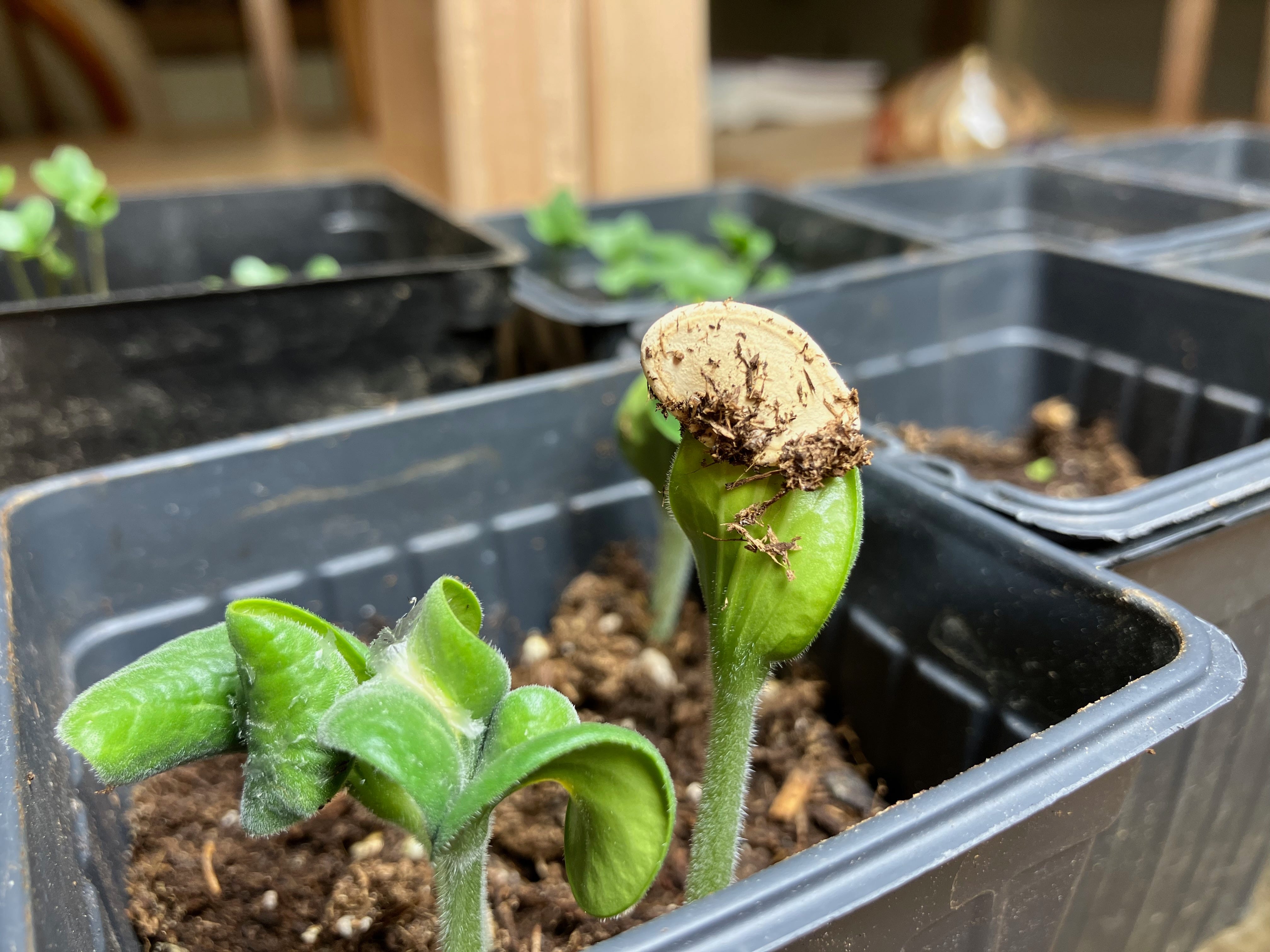
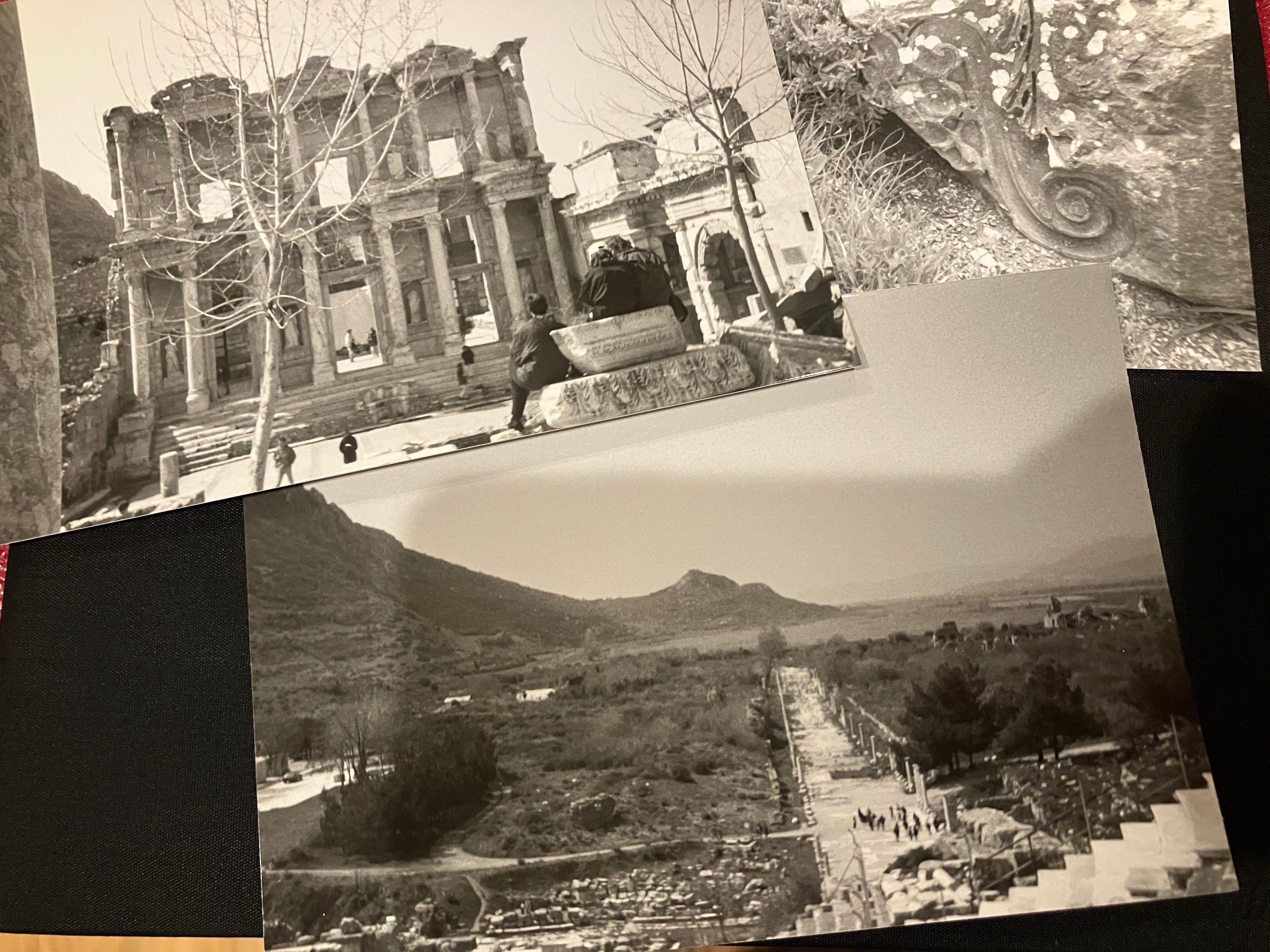
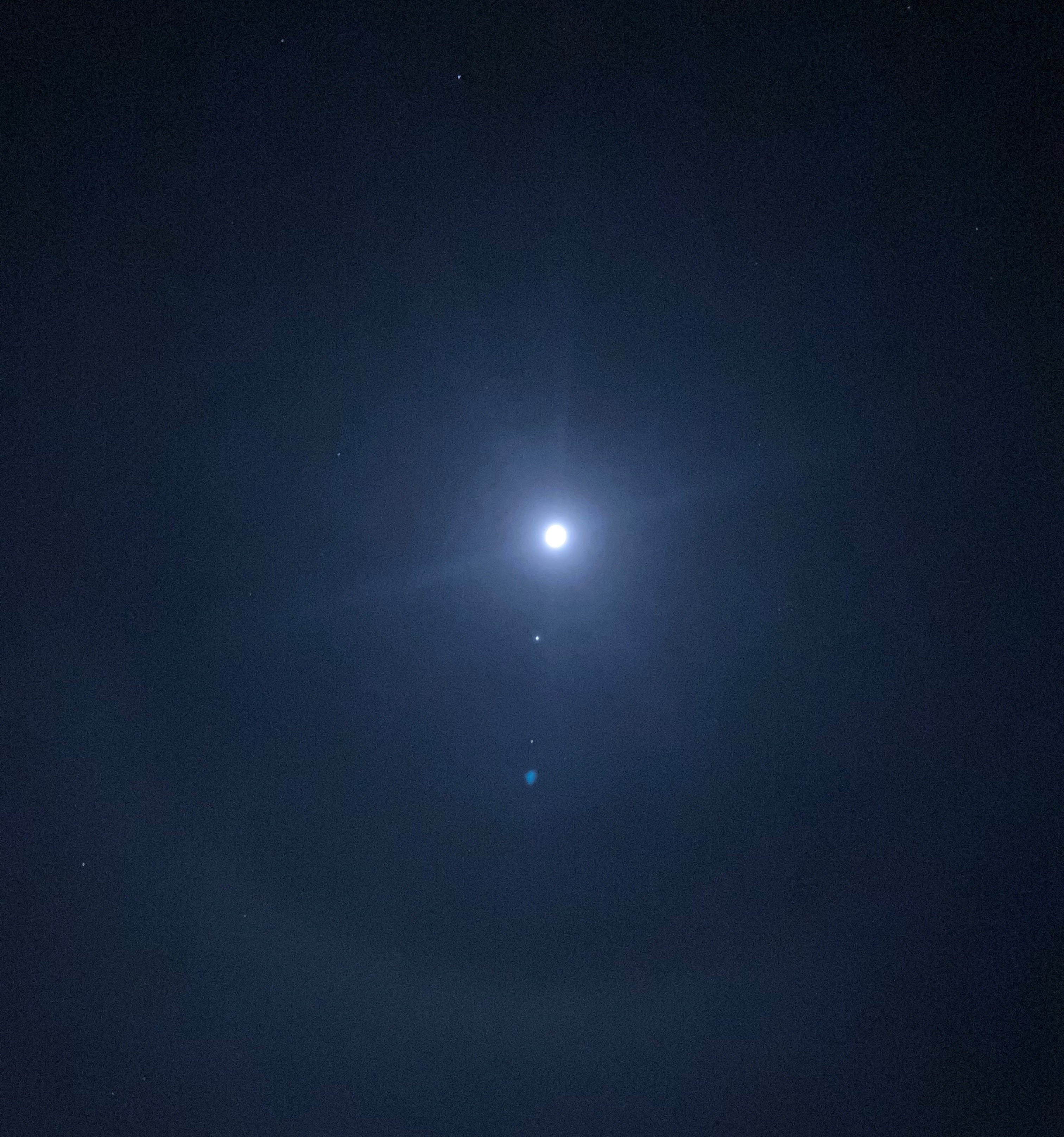
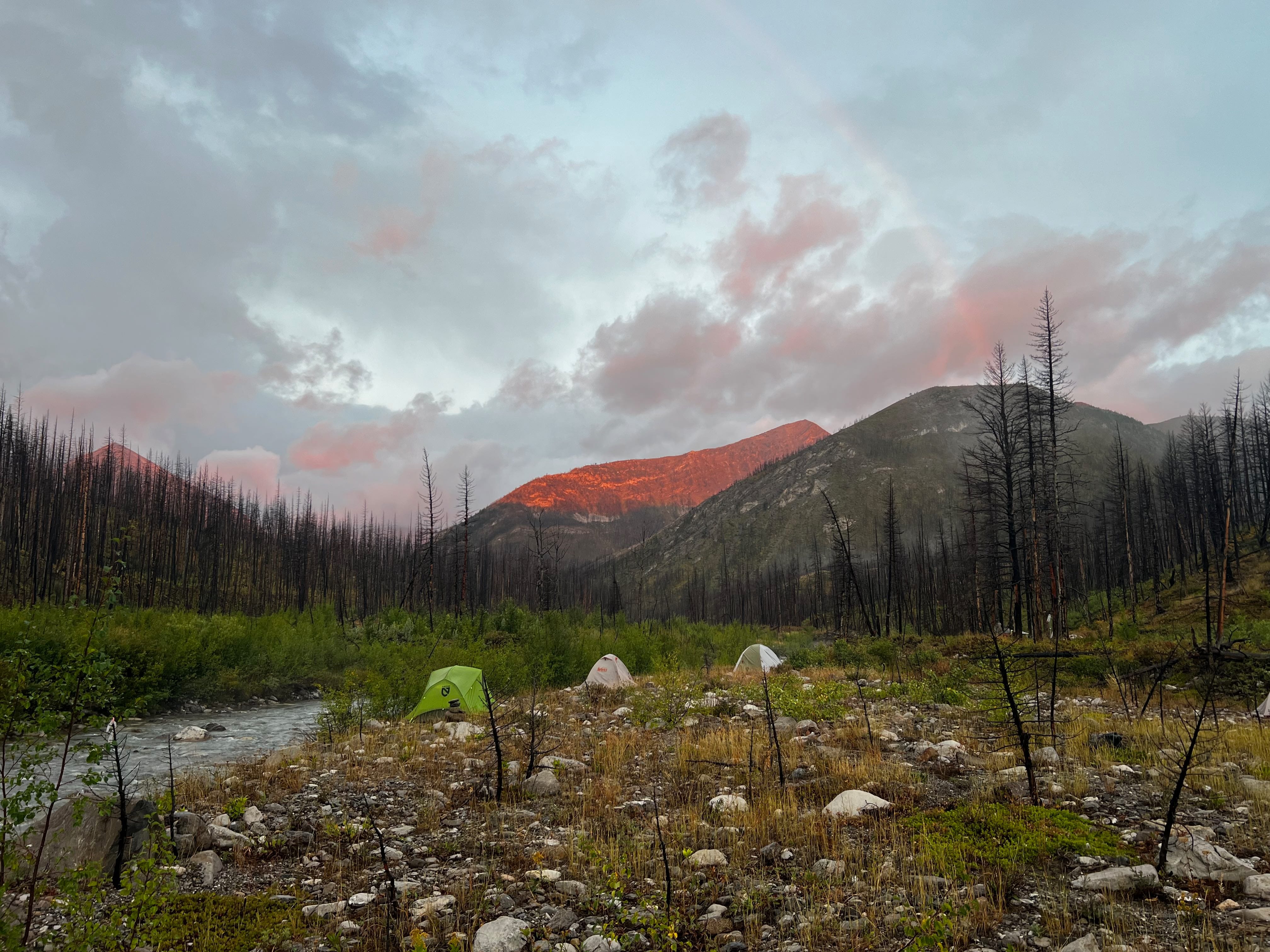
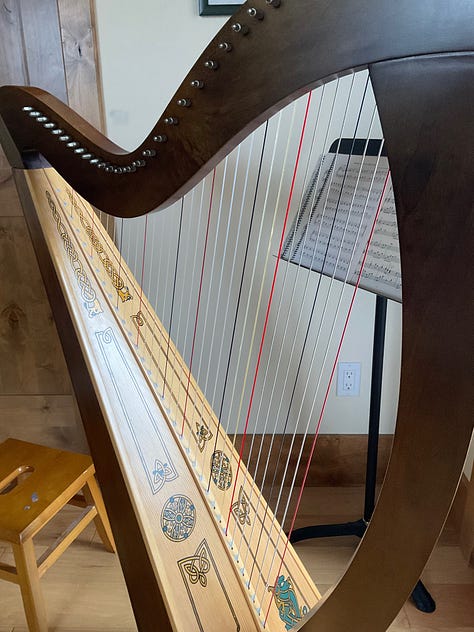
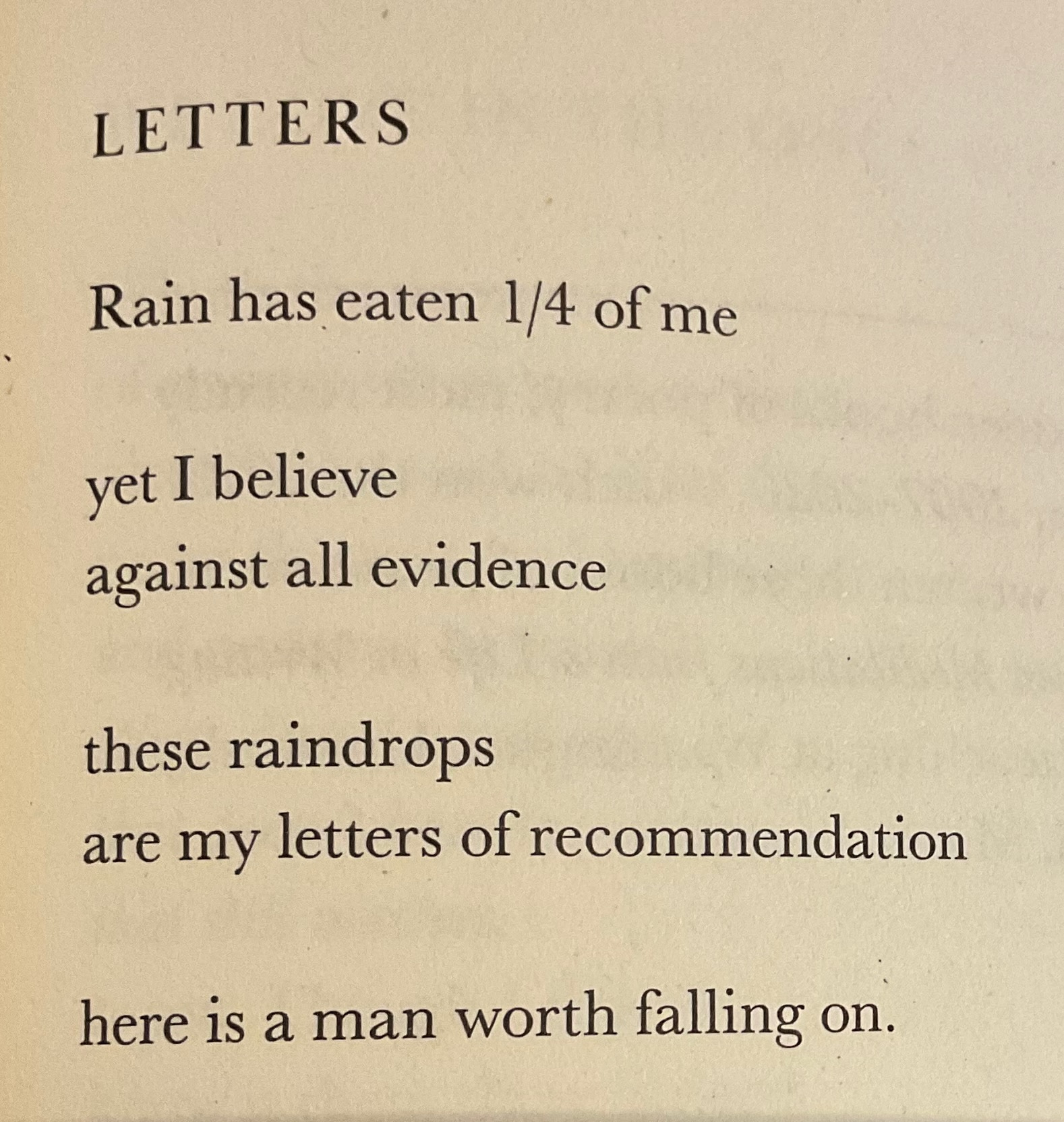
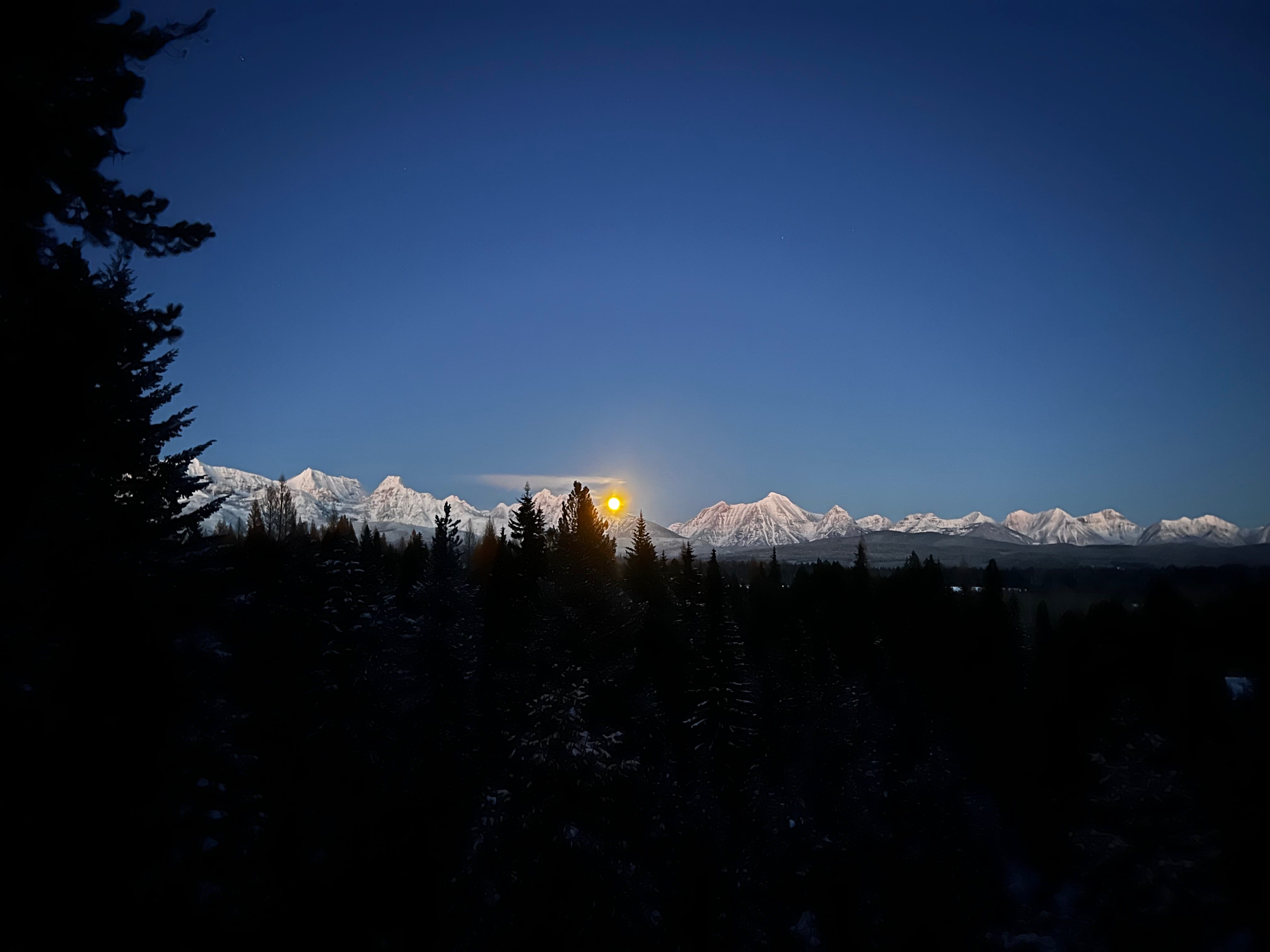
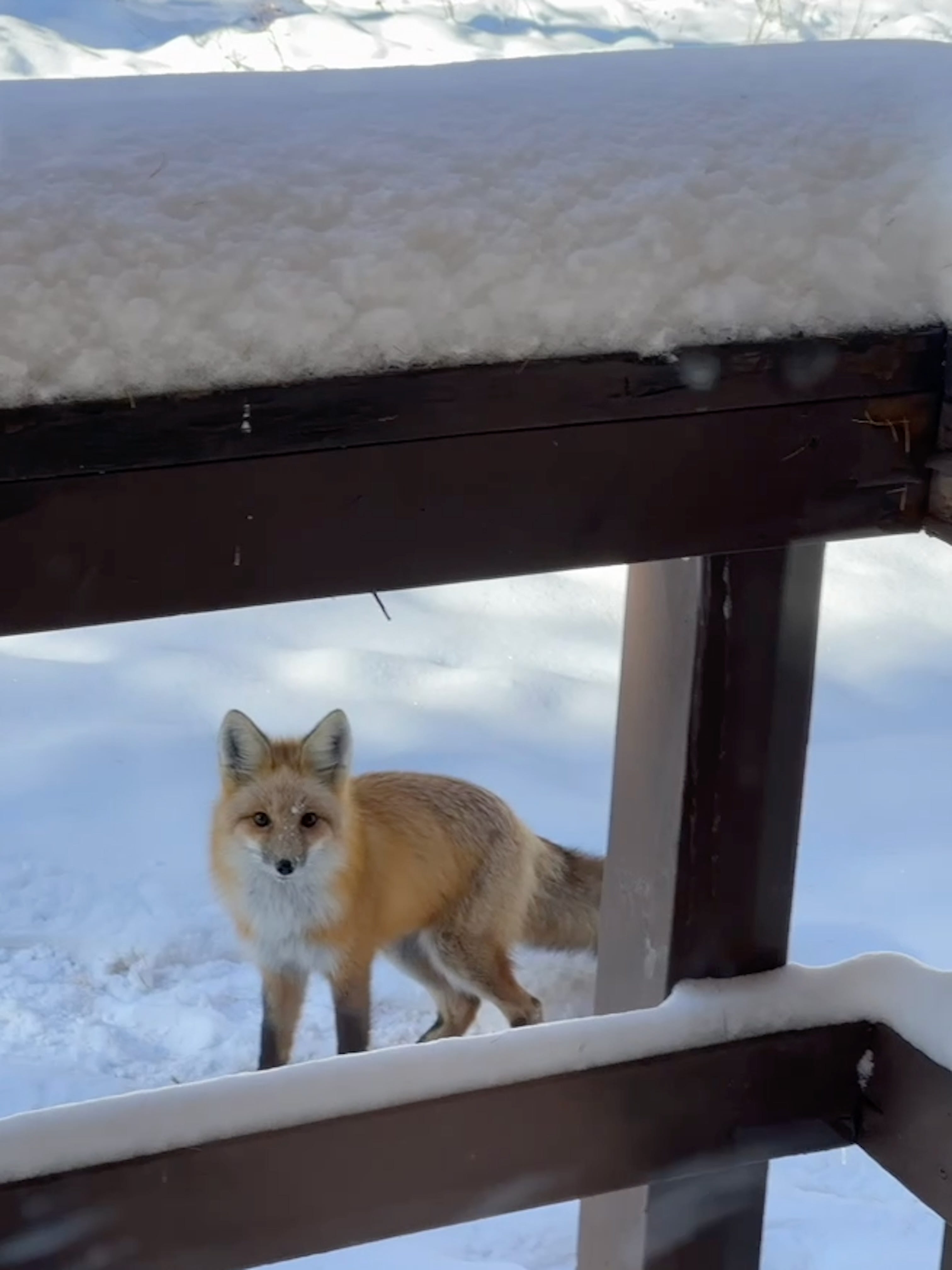
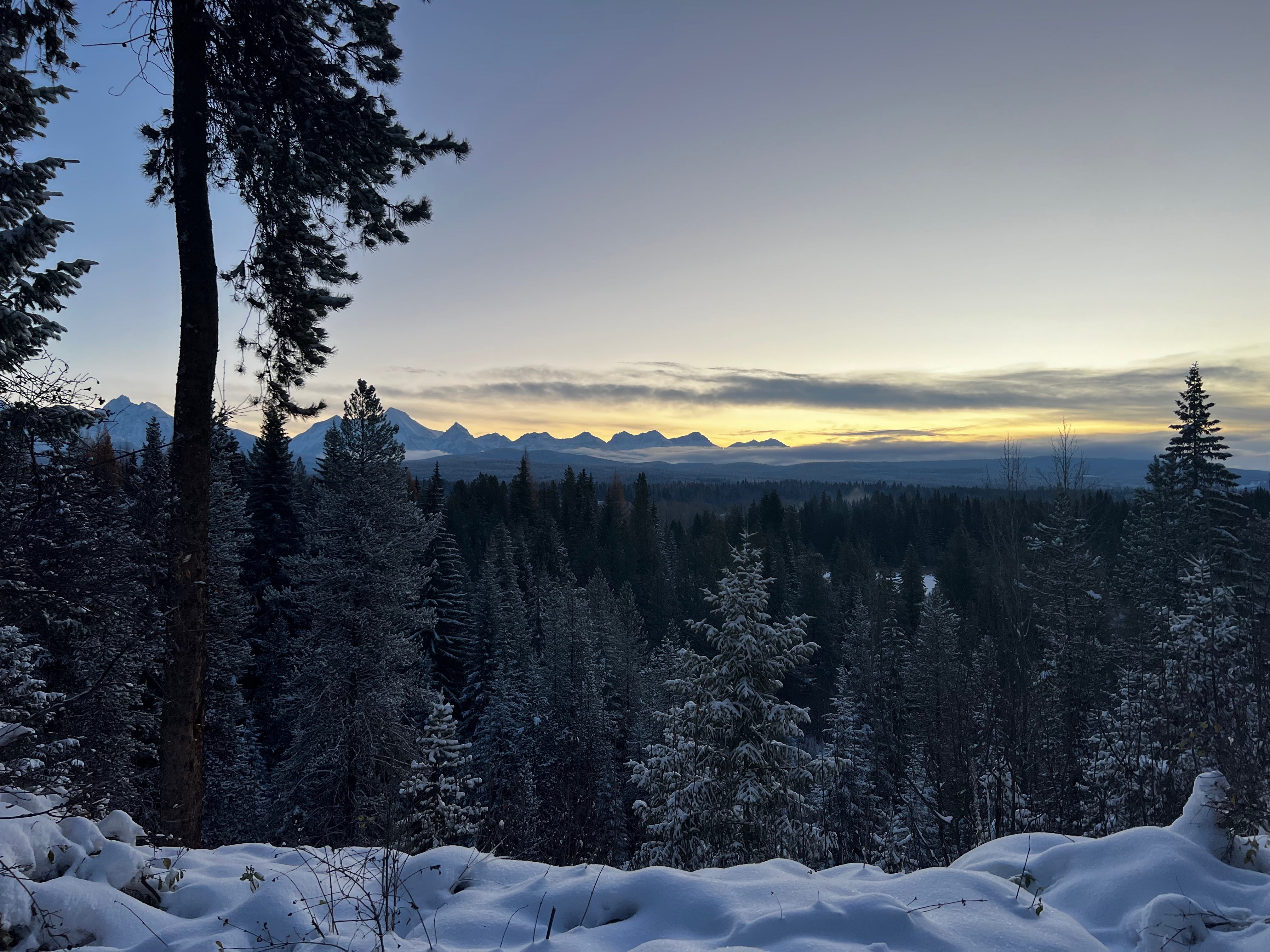
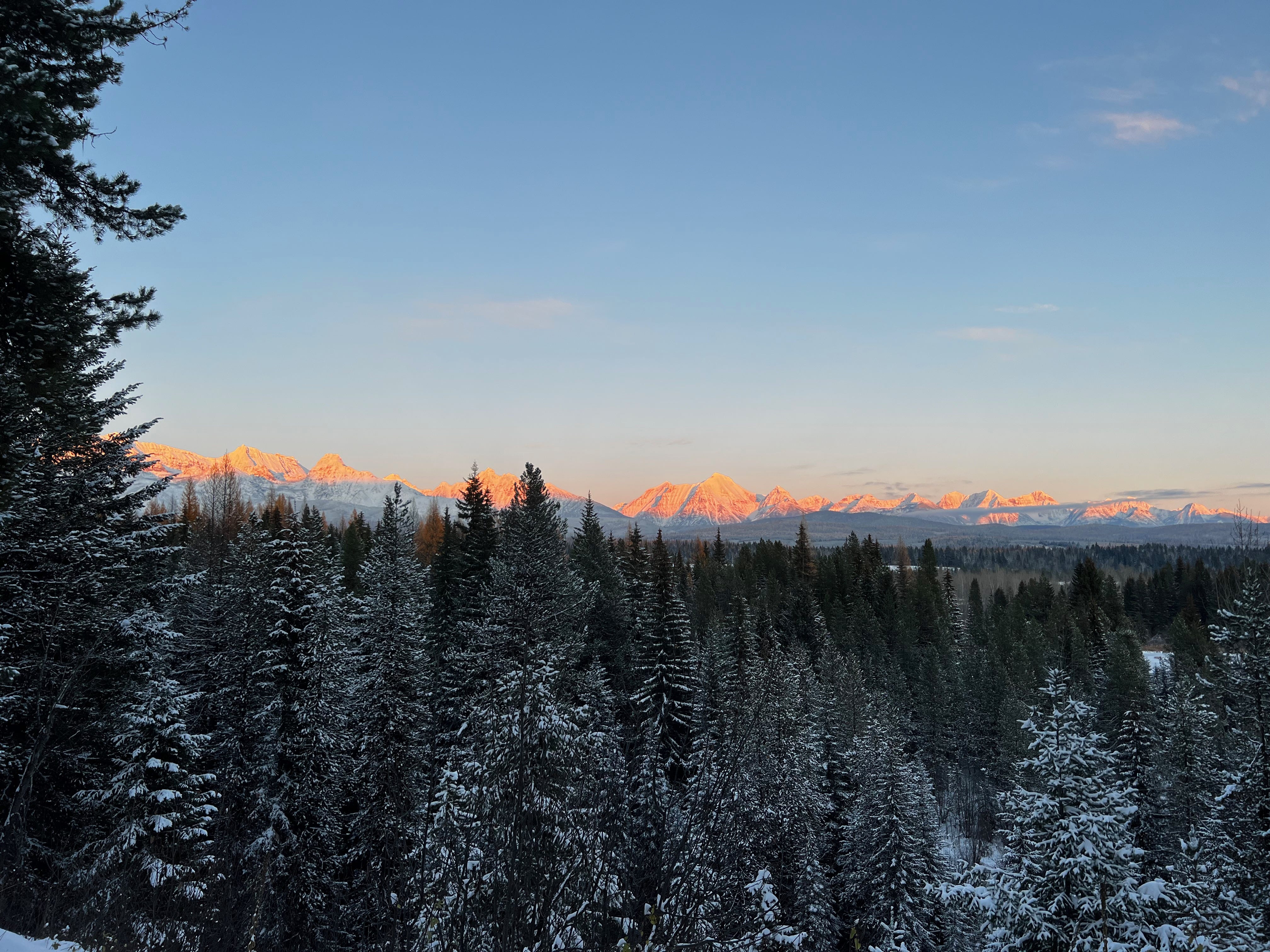
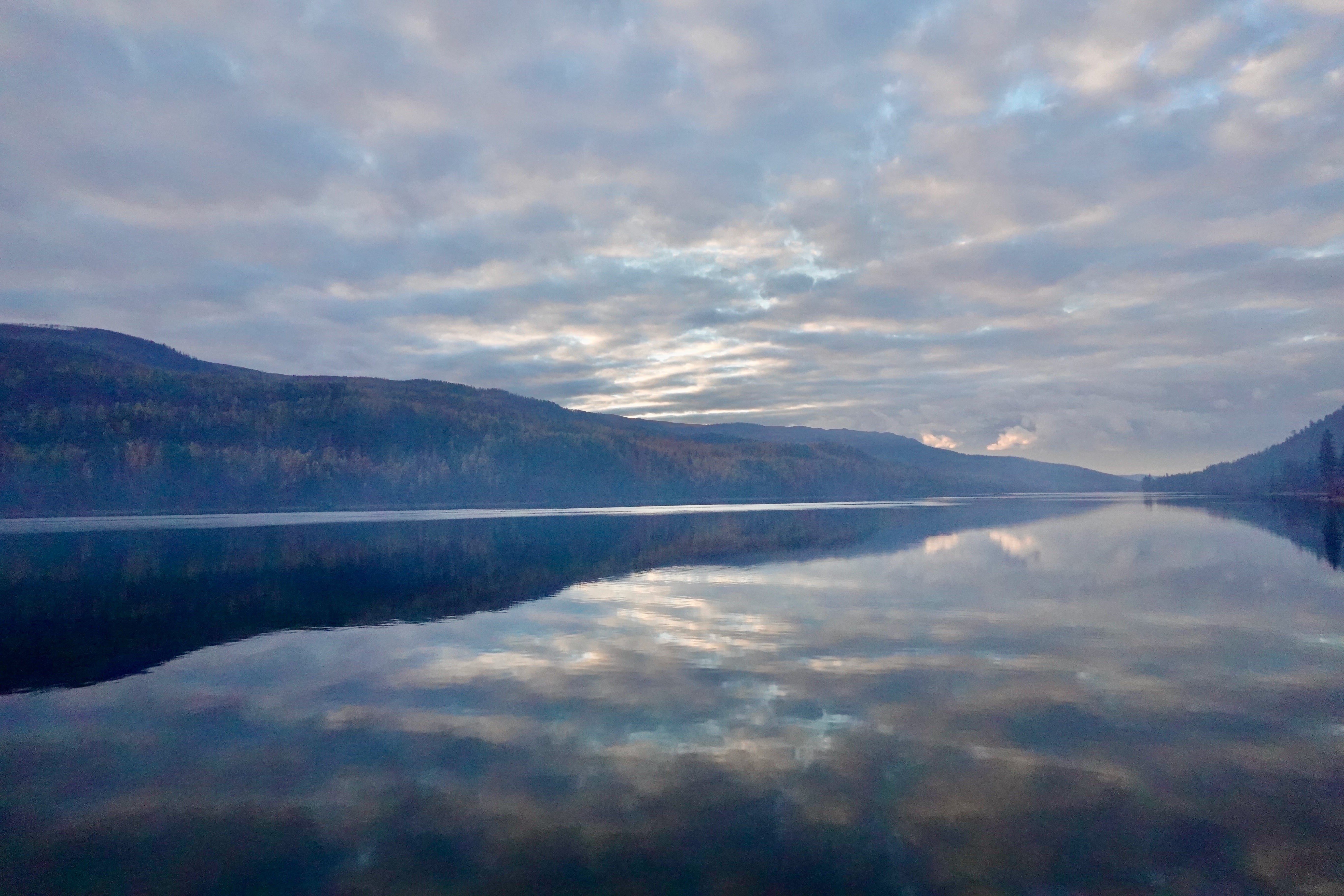
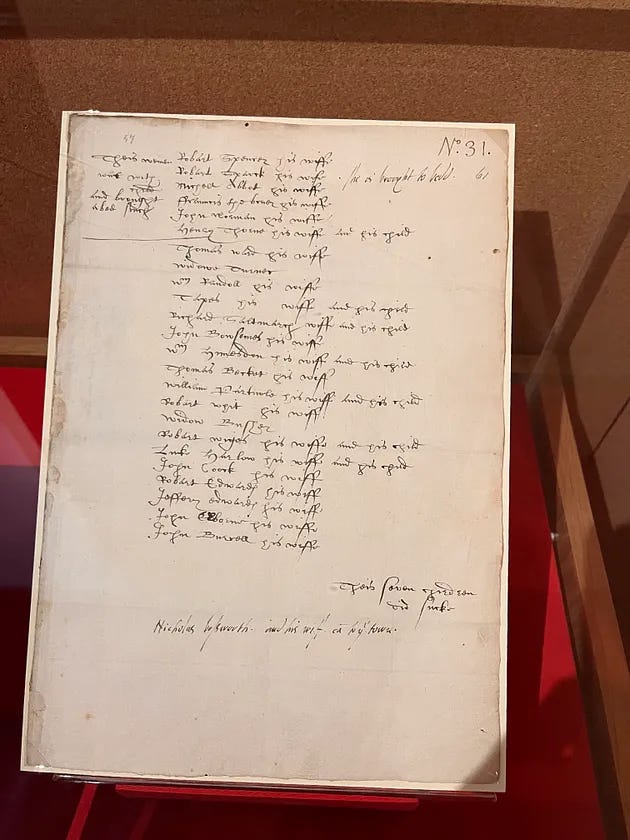
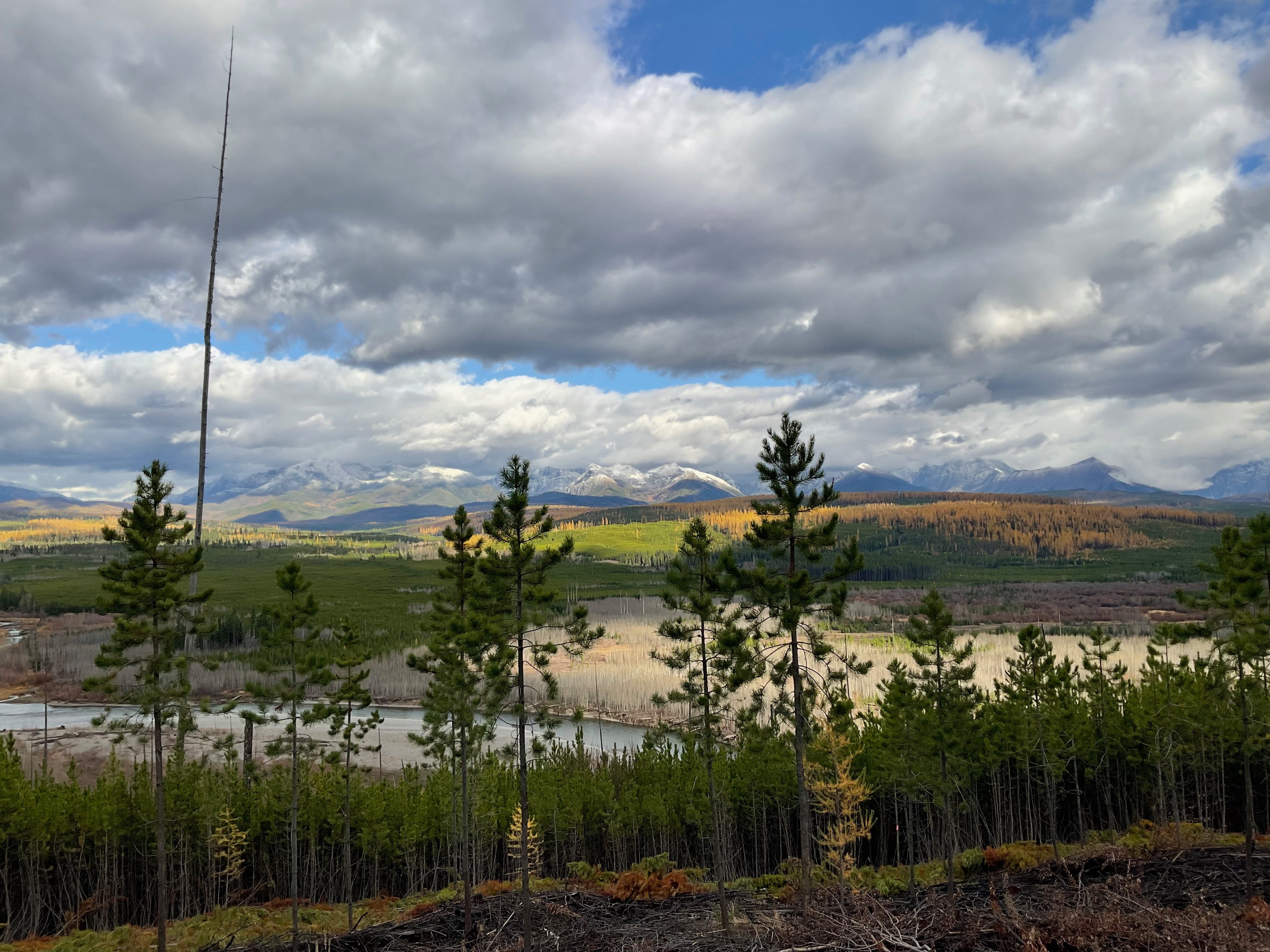

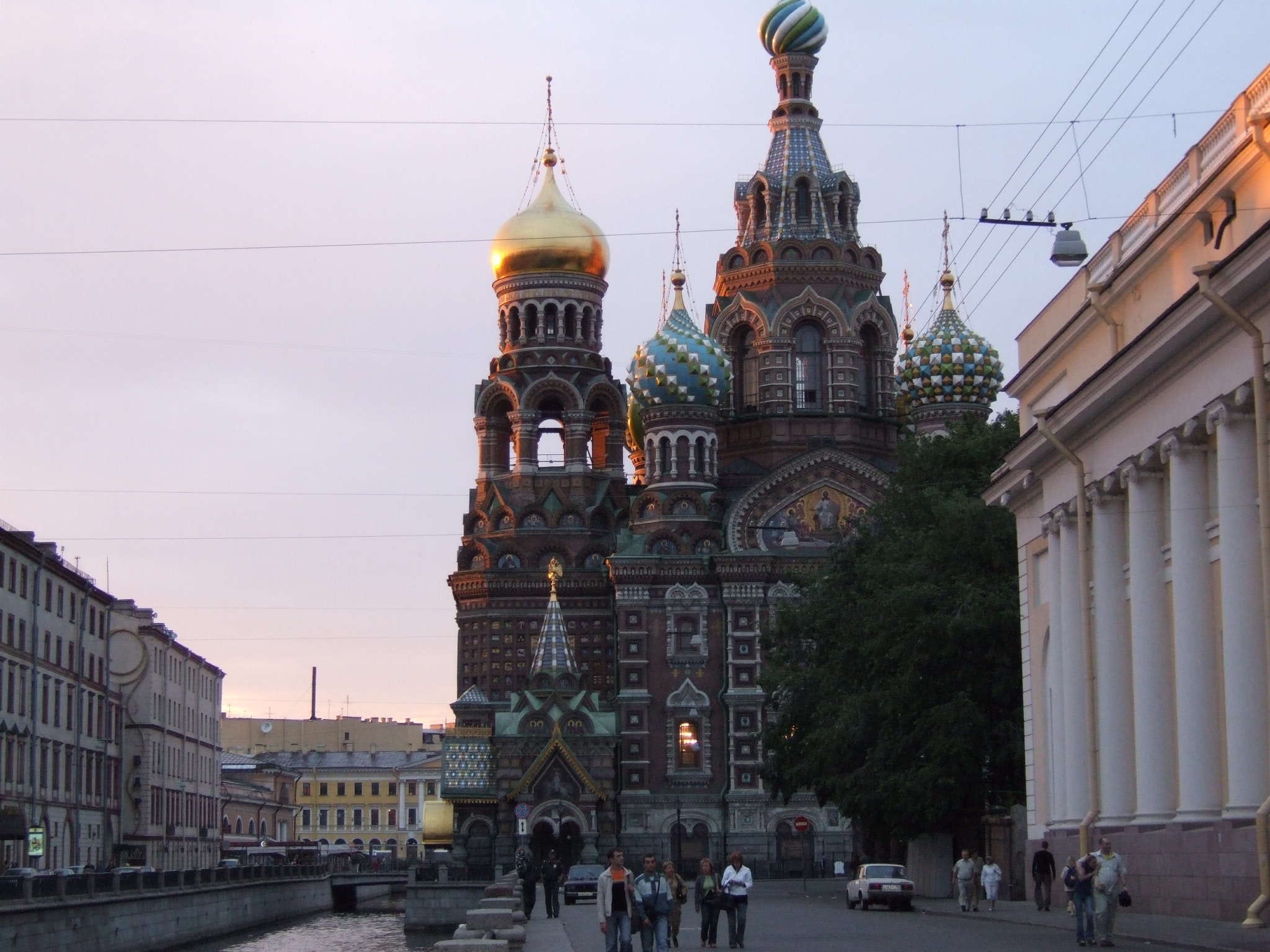
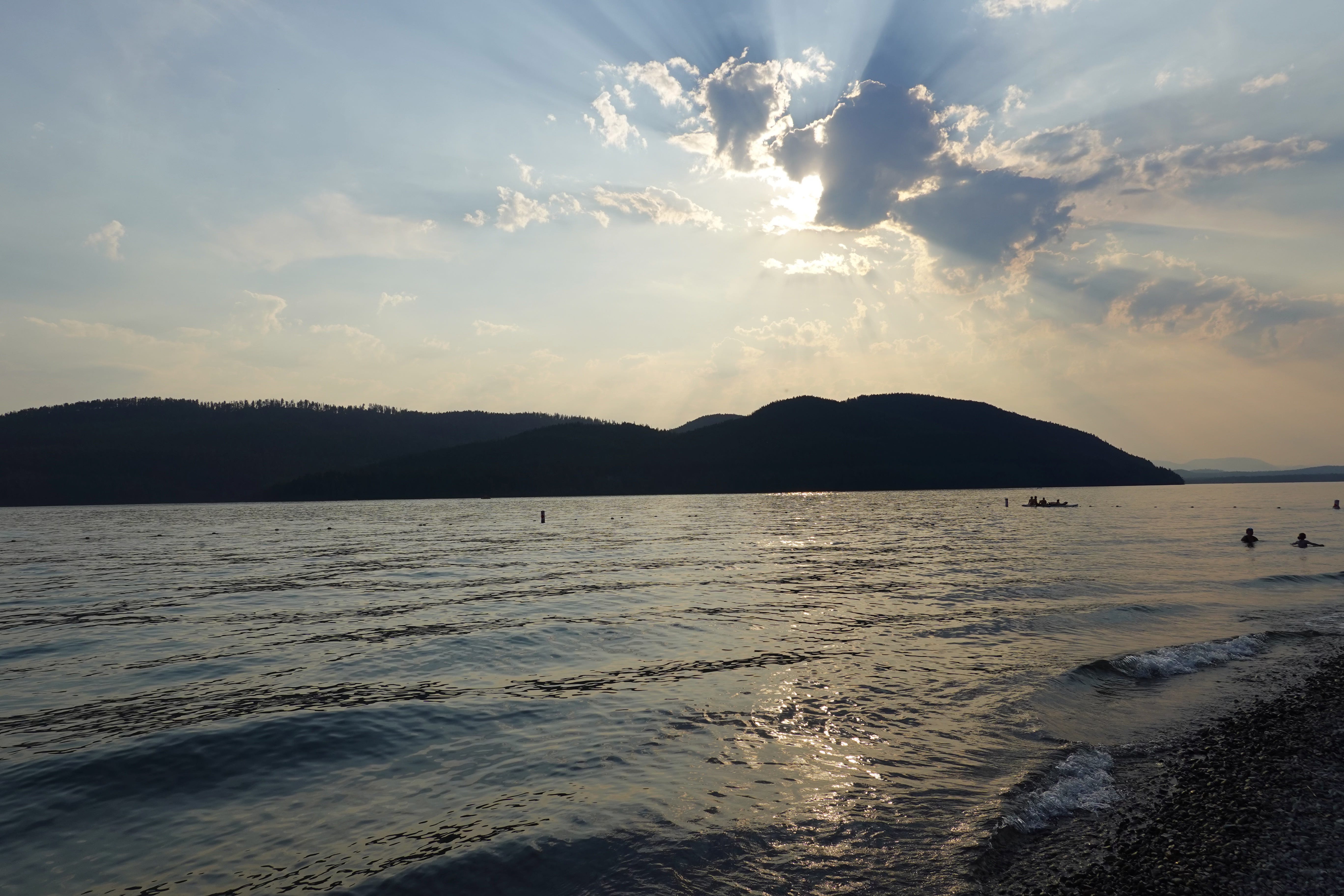


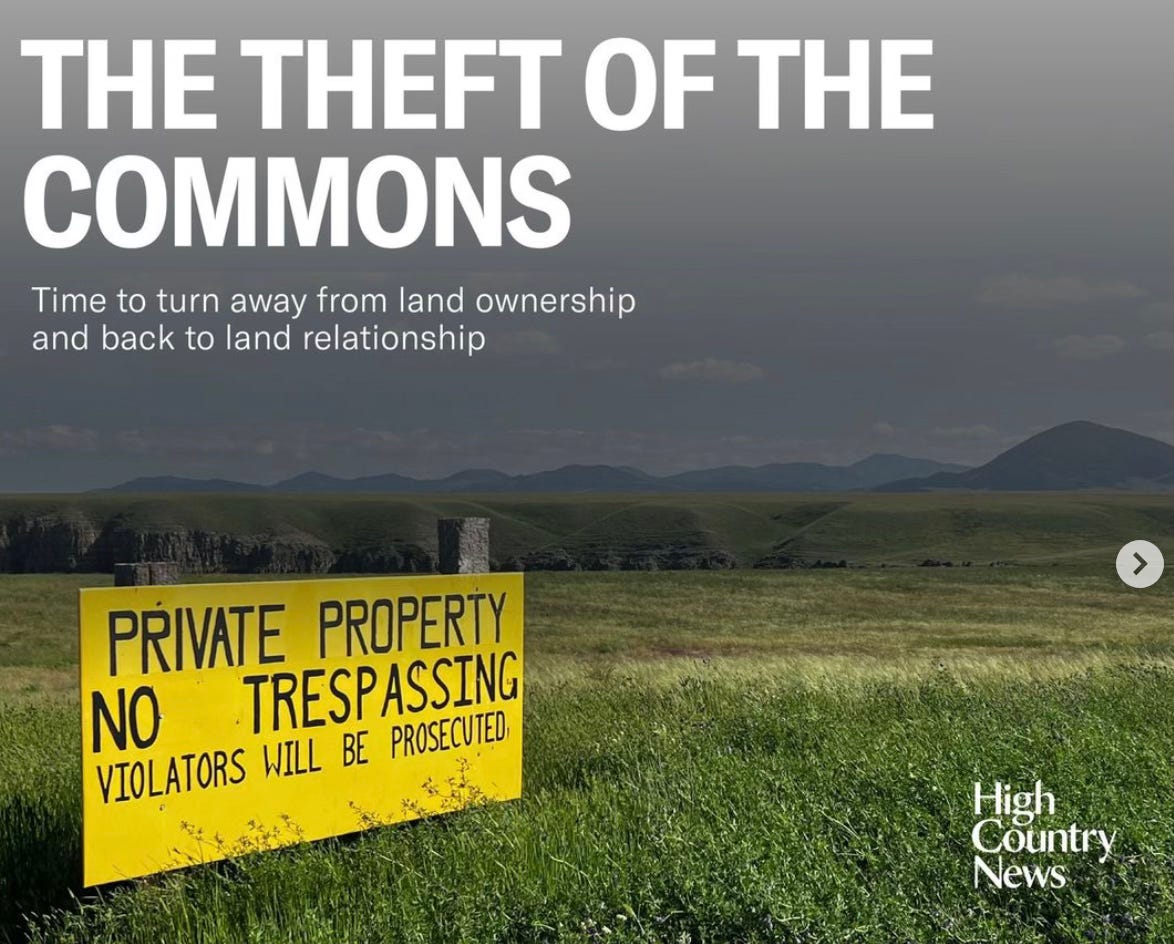
 Antonia Malchik