Cranes and a Lit Festival

Walking composition

“This ground seems unsure   
of itself for its own reasons

and we do not gauge enough of our lives   
by changes in temperature.”

— from “Another Attempt at Rescue,” M.L. Smoker

Last week I attended the first-ever James Welch Native Lit Festival—a literary gathering led and presented entirely by Native writers—and being there reminded me of all the stories that largely don’t make it into mainstream discourse. Of Nick Estes’s Our History Is the Future and Rianne Eisler’s Nurturing Our Humanity and so many other books and thinkers and people chipping away at foundational narratives of what society thinks is possible, or what dominant society thinks matters. Hands down it was the best literary event I have ever attended and there was a period of time some years ago when I attended a lot of them. I have never heard from so many authors so committed both to their craft and to compassion for humanity, so unwilling to cede any more ground to the stories and beliefs and actions that corrupted the core of this country and its self-narratives before it even existed.

Many (all?) of the festival’s talks were live-streamed on Facebook, where you can still view them, which I highly recommend. There were countless powerful moments for me, among them Debra Earling’s story (about half an hour into this one but don’t skip the powerful preceding presentation by Lois Welch) about the time James Welch stood up for her at an awards ceremony, and asked an award committee member for accountability: “Another voice rose up inside of me: James Welch is standing up for you. I never forgot the power of that moment. Stand up for others. Stand up for Native writers.”


I recently finished reading Spin Dictators: The Changing Face of Tyranny in the 21st Century, by Sergei Guriev and Daniel Treisman, a book essentially assigned to me by my father. It’s an in-depth analysis of what the authors call dictatorships that wield power by “spin” rather than terror. While countries like Russia and Hungary provide several case studies, other places, like Peru and specifically Singapore, pointedly demonstrate the kind of thought and sophistication that go into building dictatorships of spin.

The final chapter is one of those “what can we do to counter this threat?” sections that publishers often require of authors writing grim books, though in this case it might be more the authors’ pleas to those in positions of power, as well as pleas to still-empowered citizens of representative democracies. There are a number of specific suggestions, and what was most interesting to me was the number of them that pertained to curtailing the power of wealth: eliminating tax havens as well as certain kinds of corporate subsidies, for example.

It made me think of a question that plagued me since early in reading The Dawn of Everything, which is: How can a society, no matter how large or small, prevent wealth accumulation from translating into power over others?

It was a question I kept wishing The Dawn of Everything authors would answer, but I was left with a number of questions like that along with the (I think) understanding that answering these conundrums wasn’t the purpose of that book. Its purpose was to help dismantle accepted narratives about the structures and evolutions of human societies. It was about showing that we can choose a different kind of society than the one we currently have.

Spin Dictators offers pathways for some of that restructuring. Unfortunately, the question that gnawed me after finishing that book was that their suggestions require in the first place leaders who value democracy above many other considerations and who are uncorrupted by desire to increase their own wealth + power; and in the second, large majorities of voting people who require the same both of their leaders and themselves.

It reminded me of the end of Pankaj Mishra’s Age of Anger, where the only person in position of power that he could muster to counter narratives of popularist hate and nationalism was the current Catholic pope. We are saddled, all these authors seem to be saying, with leaders who are incapable of making choices that threaten their own positions, much less their potential for material gain.


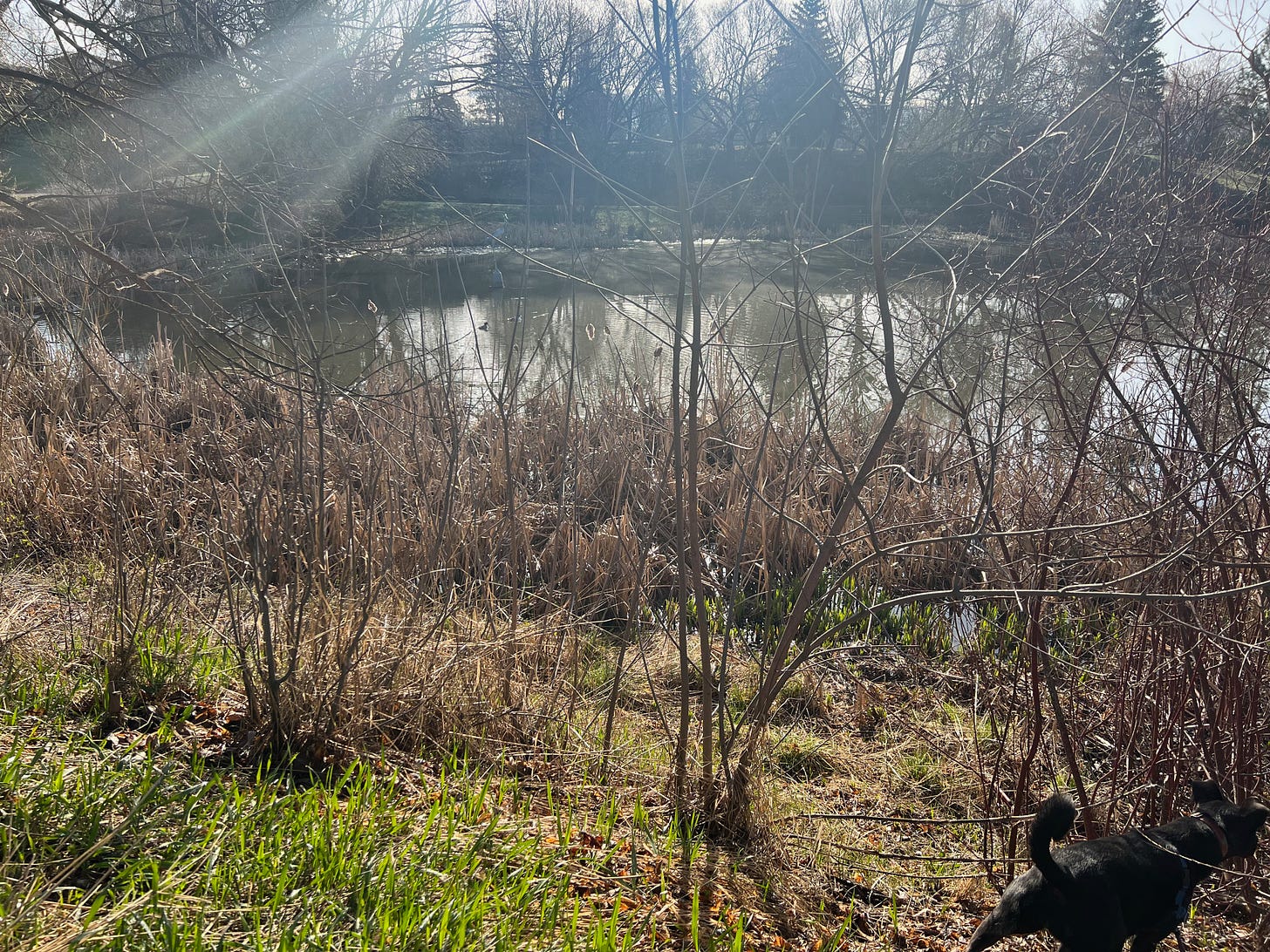
After the literary festival, we went up to my stepdad’s cabin, which he’d built in the mid-1970s with his wife at the time. It’s a place miles from the electric line, no cell phone service, crafted from surrounding lodgepole pines, and in need of some serious foundation work due to a spring that keeps trying to carry it off downhill to the creek. We did some work and visited the creek several times and stared at the Milky Way in the middle of the night because there’s no light pollution there, and in the mornings and evenings listened for the song of the sandhill crane pair that spent their days in a neighboring field. I finally recorded a few seconds of their call (below) as they flew by the final morning we were there. The pair is in the picture up top, if you can spot them among the field grasses.

“I learned from James Welch how to ask the right questions,” Earling ended her talk. When I think on the best lessons I’ve been given, whether from my family or my schoolteachers, from books or from travels, they all come down to that. Find the right questions; find better questions. Be curious about everything, but maybe our own assumptions most of all.


I have finally enabled payments! This will be about the last free “walking composition” post, as those will be for paid subscribers only, but remember you can, if needed, email me the code word “tribble” to enable a paid subscription, no questions asked.

I will be away again this weekend unexpectedly—I got off the waitlist for a volunteer trail crew in the Great Bear Wilderness for the Bob Marshall Wilderness Foundation, which I’m excited about because I’ve wanted to do that for years and my kids are finally old enough for me to leave, even if it’s only one overnight working on the most lightweight project they offer—so won’t immediately be available for troubleshooting subscriptions, but will get on that when I return.


Instead of the usual podcast/video and essay/article list, I’d like to recommend just a few of the authors who spoke at the Native Lit Festival. People will probably have heard of Louise Erdrich, David Treuer (who were both truly amazing), and Tommy Orange (I had to leave before his panel), and of course Chris La Tray (whose guided open mic about James Welch and mentorship was masterful in both laughter and pathos), but how about:

  • DAVID HESKA WANBLI WEIDEN: Author of the thriller novel Winter Counts. Weiden spoke a lot about his work as a lawyer and how his novel was inspired by the federal government’s failure to prosecute crimes perpetrated on Native American reservations.

  • REBECCA ROANHORSE: I read and enjoyed Roanhorse’s epic fantasy Black Sun a couple years ago, and am looking forward to its sequel Fevered Star. Turns out she also has a background in Native Law and worked as a lawyer for a long time. It was super cool to hear her talk about the kind of research she put into things like Mayan shipbuilding practices as background for her fantasy.

  • STERLING HOLYWHITEMOUNTAIN: Pivotal in bringing the James Welch Native Lit Festival to life, HolyWhiteMountain is also an incredible essayist, fiction writer, and speaker. Read his story “Featherweight” in The New Yorker, but also this interview about the festival with Culture Study’s Anne Helen Petersen.

  • SUSAN DEVAN HARNESS: Author of the memoir Bitterroot about being adopted by a white family (Harness is Salish); she spoke quite a bit about transracial adoption and has done extensive academic research into it, informed by her own experience.

  • SASHA LAPOINTE: LaPointe’s debut book Red Paint: The Ancestral Autobiography of a Coast Salish Punk has been widely acclaimed. It’s been sitting on my TBR pile for a while now, but after hearing her speak I’m even more excited to read it.

  • DEBRA MAGPIE EARLING: Author of the novel Perma Red, which is one of those books I reread on a regular basis. It’s being reissued by Milkweed, and Earling has another project coming out about Sacajawea. Perma Red is, I think, among the best novels in the English language.

Give and Take

Walking composition

Just over a minute of birdsong at American Prairie (which recently changed its name from the American Prairie Reserve), including the western meadowlark, one of the loveliest birds I ever hear. This audio pairs with the photo below—the slight rumble of thunder toward the end of the recording comes from the early-morning thunderstorm almost overhead.

“She was no longer seeking the truth, her journey had become a desperate hunt for a turning point.” —Eyes of the Rigel, Roy Jacobsen

This morning, after a few days of a deep funk, I forced myself outside for a long walk alone. I ended up among the trees of an in-town nature preserve that a local artist had left to the city when he passed away.

When I saw the story in the paper several years ago about the acreage he’d left to be used for open space, I was a bit skeptical. Not of his gesture, which was heartfelt, but my town has under 8,000 people and forested public-land mountains and millions of acres of wilderness in several directions. I wasn’t sure we needed more in-town open space. But I’ve found myself on those four acres more frequently than I could have imagined, thinking of the artist and what he must have felt for his community to leave it that land for all to use. And how the city’s parks staff have nurtured the trees and kept the paths and how restful it all is. It’s a respite, even in a place that it feels like it must have no shortage of such things. The traffic is muted and the trees seem to chat to you in a friendly way as you wander around, hoping to avoid bears looking for unattended apples.


Part of the funk came after the local area was inundated for over a week by attendees to an enormous music festival that a local landowner and festival organizer started just a few years ago. It attracts tens of thousands of people, from the counts I’ve heard, far more than our local towns can accommodate right in the middle of the busiest part of tourist season. Last year several downtown restaurants closed because they couldn’t handle the onslaught; this year some coffee shops followed suit. Last year our cell phone service was almost unusable for a week, and while a temporary fix was meant to have been in place, the same happened this year. Downtown gets trashed, and this particular cohort of visitors seems to feel entitled to higher levels of service with lower levels of price. It’s another level of an already unsustainable model of tourism.

These things don’t directly affect me since I don’t work in the service industry and can stay home most of that week. But they directly affect several members of my family in addition to the entire community. By all accounts the organizer is a perfectly decent person—who has failed for several years to work with local communities by asking them how to make this event a benefit for all rather than a drain on the quality of life and even the economy of the area. Like, say, holding it at a different time of year when other business is slower. Nothing we do happens in a vacuum; all our choices and actions affect others, no matter how much one might want to pretend otherwise.

The concert is over, everywhere is still understaffed, housing continues to be astronomically expensive, and everyone everywhere is still just trying to get through each day.


The festival reminded me, somehow, of both the Copper Kings who built Butte—building their own wealth most of all—while destroying its land and many of its people, and (rather randomly) of the cities I’ve been to that have invested millions to host the Olympics only to be left years later with partly-filled hotels and unused stadiums.

It’s such a contrast, these two pieces of land and the people who’ve owned them. One inflicts drain and damage on the community couched in leisure and (supposedly) contributing to the economy. Much of the damage caused by for-profit commodification is done in the name of supposed economic benefit. The other asked little and in the end gave all he had so the rest of us could find solace and peace.

Humanity has watched these cycles, and tried to survive them, for millennia.

How do we resolve these conundrums, slow and maybe stop the cycles? I don’t know, but maybe I’ll meet an answer someday sitting under the aspen and apple trees that someone nurtured throughout his life and then left as a gift to us all to care for in turn.

Bonus photo: Sunset over the Missouri River

Some stuff to read, listen to, or watch:

  • A wonderful, in-depth piece by Tait Sougstad about LandTrust.com, the “Airbnb for ranch lands,” in Montana Free Press. I particularly appreciated the effects on and comparisons with the Block Management hunting program, which opens private property to public hunters without charing them (us) a fortune: “‘The way forward is trying to restore cooperation between hunters and private landowners — helping build relationships,’ he said. Block Management is a good program, he said, but he thinks the ability to sign in to a property without interacting with the owner has led to hunters taking access for granted, and not having a personal stake in maintaining good relationships.”

  • An uplifting 30-minute documentary, Fools & Dreamers: Regenerating a Native Forest, about the work of botanist Hugh Wilson in New Zealand.

  • Jonathan Stalls, whom I interviewed for my book on walking, is coming out with his own walking book, Walk, next month, and was on Talking Headways to talk about it and his #pedestriandignity work on TikTok: “How can I as an artist channel honestly some of the rage that I feel, the absolutely outrageous reality that a pedestrian can’t safely navigate practical spaces?”

  • I got really into this short 5-part series “The Extortion Economy” from MIT Technology Review about computer viruses and ransomware, starting with the cyberattack of Colonial Pipeline in 2021. Really fascinating stuff about how businesslike a lot of hacking companies are and how they function.

  • There have been a number of good episodes on the Futures podcast recently. Isabel Millar talking about artificial intelligence and psychoanalysis went to some very surprising places.

  • Giulio Boccaletti writing “Dancing with water” in Aeon, about humans’ struggle with drought and flood and what we can learn from Japan’s relationship with water. (His book Water: A biography is on my enormous to-read pile for the “water” chapter of No Trespassing.)

  • Longtime readers will know of my passion for mathematics and math education that actually invites people in rather than obscuring the beauty and realities of what math symbolism means. Which is why I enjoyed coming across this 1910 book Calculus Made Easy, by Sylvanus P. Thompson: “The fools who write the textbooks of advanced mathematics—and they are mostly clever fools—seldom take the trouble to show you how easy the calculations are. On the contrary, they seem to desire to impress you with their tremendous cleverness by going about it in the most difficult way.”

Target and Crows

Walking composition with audio

I’m experimenting with the audio feature that Substack now offers. It’s called “podcast” but I’m not going to do a podcast. This is a 43-second recording of dawn birdsong from our recent camping trip—usually it’s surround-sound Swainson’s thrush spiraling trills but I only heard one of those. I’ll try to do similar nature recordings now and then, and maybe record some of an in-town walk here and there, nothing more than a few minutes. Also, possibly, short conversations. Maybe.

Also: A few people have emailed to say that the paid subscription link doesn’t work. It’s not live yet, I’m sorry! I’m going to be offline quite a bit over the next 2-3 weeks, and didn’t want to enable the paid version until I can be available to troubleshoot, etc. August 1 or thereabouts.

“When we were river people
the sun made an alphabet
of light struck trees”
—from “River People—The Lost Watch,” by Gordon Henry Jr.*

Last weekend after getting back from camping—having been eaten alive by tiny gnats but mostly missing out on the roaming black bear and hailstorm that punctuated the next couple days—I went to Target to see if I could find a pair of pajamas for my daughter. This is not my favorite thing to do, go to big box stores, but there comes a certain age with kids where Target is one of the few places that carries comfortable clothes in the right sizes and she needs pajamas.

So I went in there and literally took a step back because it looked like a storm had gone through. Clothes were everywhere, dropped on the floor and slipping off of hangers. I was going to browse the kids’ T-shirt shelf but it looked like every single shirt had been shaken out and dumped in a pile, and I didn’t want to make life any more difficult for the lone employee refolding everything.

I would have thought this was the momentary result of a big sale, but my sister had had to go in there the week before and reported the same.

It’s not like I haven’t seen stores in this kind of condition before, but it still gets me stuck on wondering how and why people behave this way. Why do you hang a set of socks on a hook full of underwear when the sock section is a few steps away? How can you drop a shirt on the floor and not pick it up?

It feels similar to how I (try to) train my household to not leave socks and coffee mugs around, and to always change the toilet paper roll when it’s out, because by not abiding by those few expectations, what you’re doing is, consciously or not, assuming someone else will pick up after you. Pick up after ourselves. How hard, truly, is that?


There is a crow with a broken wing near our yard. A neighbor noticed it when walking their dog. I called around and found that the sole licensed wildlife rehabilitator, Montana Wild Wings Recovery (which is a very cool bird rescue place that does presentations for school field trips and various festivals), only works with birds of prey. So we’ve been taking out a little water dish left over from when we had cats, and some sunflower seeds and oatmeal. I think the magpies are getting most of it.

The crows’ friends sound distressed every time we walk by and there’s little we can do except try to steer clear and not be scary. My daughter has been picking up dropped crow feathers and offering them to the towering Douglas fir back there (as thanks to the aforementioned Montana Wild Wings Recovery she knows that it’s illegal to keep wild bird feathers), I’m not sure with what intention but it can’t hurt and it’s better than my instincts were at that age. (Did I have instincts at that age? I mostly stayed inside reading fantasy novels and grumbled when dragged out hiking—which, considering most of my past few years have been spent writing about and advocating for walking and walkability, is a bit ironic.)

It’s one thing to read about the familial care of the crows, but it’s really amazing to see it in person. They’re working so diligently to protect their injured friend. I hope on some level they know we’re on their side.


Fixating on the disaster people left behind them in Target feels a bit like whistling past a graveyard right now, but in a way it’s not. “Someone else will take care of this” is an assumption that underwrites a lot of our structures. “Not my problem.” “I deserve the service and resources that are required to insulate me from the effects that my actions have on the world around me.” It’s a separation, an undoing of interconnection. A belief either that what we do with our own selves has no effect on anyone else (and that nobody has the right to tell us what to do or to expect more of us), or that our position in society and the web of life is such that we have earned the right to make someone else to pick up after us.

I keep trying to tell myself that maybe Target was packed with harried parents or people who had trouble bending over, and I’m sure there were a few of both. Active compassion at work, trying to pretend that what you’re witnessing isn’t active disregard. We all know, though, that it too often is exactly that. That caring is tiring, responsibility a burden, picking up after yourself a pain.

A large part of our work, I think, is learning that all of those things are instead what can make life begin to feel whole again.


*This poem is in Living Nations, Living Words: an Anthology of First Peoples Poetry, collected by Joy Harjo. A few weeks ago my daughter and I attended a presentation on Little Shell Chippewa Métis history and culture given by Chris La Tray and tribal elder Al Wiseman, co-sponsored by Humanities Montana and the Freeflow Institute (listeners of the Mountain & Prairie podcast will have heard Ed mention Freeflow many times). The entire day felt like one huge insight and tremendous privilege after another. I’m so grateful to all who made it happen, especially Chris La Tray and Al Wiseman. Living Nations, Living Words came as part of the Humanities Montana “Gather Round” package.


Bonus photo: This guy, all in velvet, just waiting for me to go away.

Some stuff to read or listen to:

  • Speaking of Chris La Tray, his essay “Living on the Fringes,” in Whitefish Review Summer/Fall 2022 issue themed “The Vortex,” is worth seeking out. It’s a deft story that moves between policies perpetuating current houselessness and the “Landless Indians” status of the Little Shell Chippewa: “We lost our industry when the buffalo disappeared. We did our best to remake ourselves as farmers, laborers, and sheep and cattle herders. We built settlements along the Milk River, but we weren’t allowed to remain.”

  • Guy Standing on Frontiers of Commoning about the oceans as a “blue commons” was a fantastic overview of the whole concept of commons, and how those in positions of power craft narratives that justify private ownership of the planet’s abundance.

  • I appreciated this Mountain & Prairie interview with Dr. Eric Arzubi, co-founder of Frontier Psychiatry, about his work on mental health in Montana, and what it means when a problem has been ingrained for so long that it’s something more than a “crisis:” “A crisis tends to happen in a limited time. A crisis comes and goes. But in my mind if we’re still calling it a crisis years and years later, it’s a systemic, chronic problem.”

  • Also on Mountain & Prairie, the always delightful and enlightening Betsy Gaines Quammen on public lands, Mormonism, and her book American Zion: Cliven Bundy, God, and Public Lands in the West.

  • Untangled Roots, a short podcast series on Minnesota Public Radio, gives the history of the destruction of St. Paul’s Rondo neighborhood when the I-94 freeway was built. I particularly recommend Episodes 1 and 3, which delve into what “community” means in the face of laws and policies based on racism, and how community is maintained; and Episode 5, which digs into that necessary question of how we can right the wrongs of history. (Hint: an apology is not enough.)

  • Legal writer Josie Duffy Rice on Citations Needed podcast talking about the mystique we award to courts and how deference obscures the fact that the law is just a story (a statement that’s abundantly clear if you study iterations of, say, property law over a couple of centuries). Duffy’s interview starts just after 41 minutes in if you want to skip the pre-interview conversation and banter: “Anything can be law, and anything can be politics, and it’s really hard to draw the line between the two of them.”

  • Speaking of property-law-as-fluid-story, Brian Sawers’s recent essay in The Atlantic on the history of trespass law in the U.S. is a must-read for anyone interested in the subject. As he details, the right to trespass on private or open land was considered fundamental until very recently in American history: “In 1818, and again in 1820, one South Carolina landowner had sued hunters who were ignoring his demand that they leave his land. The state high court sided with the hunters, holding that the right to enter private land was ‘universally exercised’ and noting that merely riding over the soil caused no injury to the landowner.”

  • And on the subject of the commons, several people sent me Eula Biss’s beautiful piece in the New Yorker on the loss of the commons in England, an historical subject with ongoing ramifications that I refer to and have written about frequently. Glad this topic is getting more mainstream attention, and I wouldn’t be surprised to see a book by Biss on the commons and private property come out of that essay.

No Trespassing: Overview

Essay? Kind of.

As promised, following is the full Overview section from my book proposal for No Trespassing: How the Ancient Struggle for Ownership, Private Property, and the Rights of the Commons Will Define Our Future. Some of it will feel slightly outdated (I mostly finalized this document in August 2020)—for example, the recent publication of The Dawn of Everything and books like Nick Estes’s Our History Is the Future give more accessible models for commons-based “ownership” as well as better, Indigenous-centered language for the theft of land that transforms it into private property. I have very lightly edited in a few places to update it, but otherwise left it untouched from the original. One thing I do want to note is that book proposals are written for a very specific audience: book editors and publishers. The “we” and “our” here were used with that audience in mind.

I will begin offering a paid version of this newsletter on or about August 1, 2022 (details at the end of this post), and the installments of this book will be spaced out over a couple of years. There’s a lot of research to do! So many books to read! Rivers to visit! The proposal included a finished Introduction and Chapter 2, but the rest remains to be researched and written. A brief outline of the structure and chapters is here.


No Trespassing book proposal Overview:

            Ownership: the deepest foundation of what we call civilization.

Owning a place can create a sense of belonging, a spiritual investment in a community as well as a financial one; it’s what allowed my homesteader ancestors to feel at home even in a cold, muddy dugout on the Montana prairie. Ownership has a darker side, though: Pursued out of fear or greed, it leads us to believe that we cannot live together equitably, that there will never be enough resources for everybody. Ownership turns land into property, rivers into commodities, people into slaves. It limits our imaginations, restricts what we believe is possible in how we exist on this planet. In the face of our climate crisis—rising sea levels and rising temperatures, plastic pollution that falls as snow in the Rockies or ends up in the fish on our plates, and scarce potable water mixed irrevocably with fracking fluids—our current relationship with ownership may very well be what destroys us.

            But it doesn’t have to. Our paradigm of ownership is based on feelings of scarcity and fear. We want to keep what’s ours, pad our bank accounts and acquire property, build walls and gates, hunker down. Only then, we tell ourselves, will we be safe. Safe from what? Nobody’s quite sure. Losing it all? Ending up homeless and alone? The lawless masses hungry to take what we think is ours? That’s the thing about fear. It devours us but we never quite learn its shape.

No Trespassing will investigate what we are so scared of losing—land, food, health, freedom, agency, survival—and why, and how that knowledge can help us all recreate the world we want, one that is equitable, habitable, and just. It will reveal how the cold, distancing language of economics and property law is only a psychological wall around a concept that can instead be warm and deeply personal. When I consider what’s possible within the framework of “owning,” I turn not to title deeds but to relationship, kinship, health, well-being, community, and connection. What if we could build something that nurtures all of life?

            Most of us think ownership is clear-cut. There are legal guidelines and people to enforce them, with lots of serious-looking paperwork to ensure we always understand who has the rights to what. But that paperwork is essentially a story, the outcome of what unfolds in hypothetical spaces.

            Imagine two people, maybe the only people in existence, facing each other in a flower-covered meadow. One person places a rock between their feet and says, “Everything on this side of the rock is now mine.” Does the other person acquiesce or not? What if one of them has access to fresh water and the other doesn’t? What if one has a weapon and the other doesn’t? Will they fight over the invisible line spilling out from that single stone, or agree on it? Will their descendents seven generations hence feel bound by their choices?            

            How we approach and define ownership has profound implications for our lives, both expected and surprising, from access to clean water and control of personal information, to eminent domain and income inequality. Property lines are the most obvious manifestation of ownership, but they’re still only a powerful legal fiction. They create an imagined reality, telling me that what I do in the space I own, whether it’s a studio apartment or a ten-thousand-acre ranch, won’t have an effect beyond those boundaries. But air and water don’t care about property lines. Our treatment of them as empty neutral spaces is a legacy of outdated legal definitions of ownership, definitions that remain at least two centuries behind scientific knowledge.

            Even the legal walls between what is protected as yours or mine can prove as porous as the property lines we pretend we draw. I might think I own the land my house sits on, but what happens when a natural gas company is given eminent domain to build a pipeline through my yard, and I don’t have the right to stop them from digging? This happens to people in America all the time. In 2016, a family of maple syrup farmers in Pennsylvania lost ninety percent of their mature maple trees after a pipeline company fought for eminent domain over their property and won. There is a phrase I hear in Montana all the time, that “private property is bedrock.” But in reality it’s friable at every turn, more like quicksand than a steadfast foundation. Worldwide, communities battle constantly against mining operations, oil drilling, natural gas pipelines, luxury housing developments, deforestation . . . the legacy of damage and destruction has increased through the twenty-first century, disconcertingly in tandem with the knowledge that continuing our modern way of living is likely to make future human life impossible. Faith in private property’s immovability has become a trick of the light.

            No Trespassing will show how attachment to our homes and ecosystems can instead map a way forward for everyone, the have-nots as well as the haves. We all live on this planet; we’re bound to share with one another. Property rights and property law tend to get dismissed as being the exclusive realm of economists and ideology-driven think tanks. No Trespassing will explore how every aspect of this question, how we shape and separate our world, is instead intensely personal for all of us.

*****

            Some years ago, when we still lived in places far from my home state of Montana, my husband and I came back for a visit to my hometown. We hiked and swam and picked huckleberries. I felt like I would burst with affection for the place, this town ringed by mountains, socked in with gray and fog for months in the winter. Yet I also felt that I would burst with anger: this was a few years before the 2008 financial crash, and all over the mountains and along the lakes land was smashed and trees cut down to make room for massive multi-million-dollar vacation home developments. I felt like something was being stolen from me. Maybe it was my freedom to walk certain hills that were now gated off; maybe it was the newly empty gaps in the stands of lodgepole pine and larch trees; maybe it was the removal of landscapes from where they could benefit everyone, into the realm of that which can only benefit the already enormously privileged.

            My husband and I were partway through a mountain hike and sat down on a rock to look at the view plunging into the valley. It was a beautiful August day, cool but no breeze, the huckleberries ripe and plentiful. I began to cry. “Shouldn’t this beauty,” I said, waving a hand at the entire expanse of the valley, with its towns and roads and farms and undeveloped mountains on all sides, “belong to everyone?”

            I’ve spent years struggling with this feeling. Why does wealthy vacation homeowner development jar me so badly? Why is it almost impossible for a community, especially an underprivileged community, to successfully resist the building of an oil pipeline or coal ash waste pond near clean water sources, and why does their inability to protect the water they depend on feel so deeply unjust? And where does my sense of belonging, of home, fit into the context of a place I love that was seized from people—Blackfeet, Sioux, Crow, Salish, and many more—whose own sense of belonging I can’t even begin to fathom? Is there even any comparison? After all, that muddy dugout that gave my ancestors a sense of belonging on the Montana prairie was built on someone else’s stolen home.

Most people feel a connection to somewhere, a home with deep roots or recently adopted. What shapes our feelings of home, how do ownership and private property rights put those feelings—that connection—at risk, and how much power do we truly have to protect the places we love?

            This isn’t academic for me, though the questions and answers are informed by economics, cultural anthropology, and biology. It’s born out of knowing that Montana, the home I love, would always be at risk, and there was only so much I could do about it. Facing these questions led me to consider what we value about the world around us and how that has changed. We pay attention to the health of the stock market but not the health of a river, when in fact the latter is crucial to our well-being while the former isn’t. Why?

            I am far from alone in grappling with this problem. Oil pipeline and mining companies use the right of eminent domain to despoil people’s homes; chemical companies spill endocrine disruptors into rivers, affecting ecosystems and human health. The land I love, like all land, is subject to the always-shifting legal interpretations of ownership and the priorities of human societies. What happens to it is ultimately the result of a story we tell ourselves about how we should use land, how we can abuse it, and how our relationship to it alters over the eons.

            No Trespassing will draw together history, economics, anthropology, and science to bring readers an understanding of how we’ve come to own this world—how once-shared land became property, for example, but also how possessing knowledge translates to power and how hoarding wealth is no different from hoarding newspapers. This book will demonstrate, using specific real-world examples and Nobel Prize-winning economic theory, how redefining ownership can grant us permission to connect with our world, along with connecting with ourselves and one another, in ways that many yearn for but few are able to satisfy.

            There are other ways to own places, things, and ideas than what a short slice of Western history has shown us is possible. Examples of different forms of ownership and coexistence come from all over the world and from deep within our histories. It is indeed possible to manage our local commons, to share with one another while simultaneously caring for the non-human communities—plant, animal, water, tree—that sustain our lives.

            There is even a name for this other kind of owning. That is, there are legal names, and names born out of hardheaded academic economic studies, but I mean a name we can relate to on a human level and based on mutual respect. It’s called love.

*****

            How we see ourselves, the stories we tell about our society and one another—these, too, just as much as land and minerals, are subject to power imbalances that allow ownership to permeate our lives in often nefarious ways.

            In sixteenth-century Russia, the majority of peasants were enslaved under a system known as serfdom, prohibited from leaving their masters and punished for failing to bring harvest to the landed class who owned it all—the land, the crops, and the people. By the mid-1600s, landowners had total ownership over their serfs, who comprised about four-fifths of the Russian population. A landowner could sell a serf to another farm while keeping the serf’s family, though they had no right to kill them. For most of Russian history, the vast majority of the population was not considered to be fully human, not enough to control their time, their health, their security, their families, their lives, or their work.

Does being human require ownership over oneself—over freedom of movement, of thought, of affection? Or is it innate to us—is humanity a construct or an immobile fact? Philosophers have been debating questions like these for hundreds of years and will still be doing so hundreds of years from now. I doubt anyone reading this lets that debate detract from their own feelings of being human. At least, I hope not.

For slavery to function and to last it has to make people non-human and therefore own-able. When you are in a position of being owned, a feeling of humanity might be hard to retain, and the problem isn’t limited to our common conception of slavery. For women, this is an ongoing struggle reimagined in Margaret Atwood’s 1985 novel The Handmaid’s Tale and its more recent adaptation for television: in Gilead, the post-America country she imagined, women and the babies they bear are once again property, as they have been many times throughout human history.

The power of reproduction has been central to the discussion of women’s bodies as property for as long as civilization has existed. The right to privacy underpinning the 1973 Supreme Court decision Roe v. Wade is contained within a woman’s own body: The majority of the current U.S. Supreme Court now disagrees with this but I, as a woman, have a right to choose what happens within the confines of my own skin, and personally, as the mother of a daughter who will someday be a grown woman, I’ll fight tooth and nail to ensure she has the same right. And I’ll have to fight tooth and nail because there will always be those who seek to remove that right. That question may shift dramatically in the future, though, as medical science is able to keep babies alive ever-earlier in their fetal development. My first baby was born nearly eight weeks early and spent a month in neonatal intensive care, where we talked daily with nurses who’d seen the survivability of premature babies pushed back to unimaginable levels over their careers, who’d worked with 22-week-old preemies weighing barely over a pound, babies who would have died less than a generation earlier. The question of abortion and its battleground in women’s wombs might shift just as dramatically depending on how early a fetus can be removed from its mother and still survive. If women’s bodies were no longer required to bring babies into life, how would our position in society change? And how much more pressing might that make the question of women’s, and everyone’s, right to self-determination and survival?

The right of determining our own humanity and what our lives might look like are being eroded in less obvious ways as data harvesting enabled by algorithms and artificial intelligence grows at breakneck speed. The European Union enforces laws protecting an individual’s ownership of data, while in the U.S. and Canada companies like Facebook and Google own that information and the rights to monetize it. In the U.S., your doctor’s office is required to keep your medical information private, but your searches on WebMD and the Mayo Clinic are fair game. The only reason this situation continues is that data-dependent companies have asserted their rights to our data, and few people have as yet pushed back.

This assertion, this claiming of space or items or people, has happened repeatedly throughout the history of civilization. Data is only the latest frontier, and I don’t use the word “frontier” metaphorically here. The American frontier wasn’t uninhabited land open for anyone’s taking. “Settling” it required invasion, massacres, dehumanization, and outright theft of what rightfully already belonged, in different iterations, to other people.

            It can feel out of place to connect land ownership and the frontier settler mentality with data and the future of digital technology. But I believe this disconnect stems from our inability to imagine the potentials of this technology, both for good and evil. Yaël Eisenstat, an eighteen-year veteran of the CIA, former Global Head of Elections Integrity Ops at Facebook, and current policy advisor at the Center for Humane Technology, has said that unlike previous media and technology developments, the capabilities of current and future digital technology to influence our minds, opinions, and choices is unprecedented. Facebook, she says, knows more about us than the CIA and the FBI ever will, not because of what we specifically post but because it follows our behavior patterns all over the internet. “Attention extraction,” as she called it, is having an incredible and damaging impact on public health. Guillame Chaslot, a former YouTube engineer, explains that the speed with which we can go from watching kitten videos to conspiracy theories is determined by an algorithm that “makes 99.9999% of the choice for you,” with dire consequences for personal well-being and the strength of our social fabric.  

            For children, erosion of privacy can start from before birth, when happy parents post 3-D sonogram images on social media. By the time they turn eighteen and are legally responsible for themselves, so much data about children has been mined and analyzed and stockpiled and sold that their ability to define their online selves is almost nonexistent, even though we have little idea of how this data—owned by profit-driven private companies—will restructure their lives. As our digital age matures along with digital natives born into it, more stories have started to seep out of children seeking to claim ownership over their own stories, images, and online profiles. Recently, Gwyneth Paltrow’s daughter Apple reminded her mother on a public Instagram post that she had agreed not to post pictures of her child without the girl’s permission.  

            In America we tend to give parents extensive ownership over their children’s lives, from religious training to refusing life-saving medical care. Laying their physical and psychological selves open to social media doesn’t seem like such a huge step, but that doesn’t mean it’s just, or that we fully comprehend the consequences.

            In Europe, the “right to be forgotten” law might make parents and social media companies far more cautious about the amount of material they allow online. Europe and America, in the realm of data and the internet, have widely disparate opinions about who gets to own not just their data but their sense of self. Europe’s stance might be considered the data equivalent of the “precautionary principle,” a scientific guideline founded on the idea that we should be extremely cautious about releasing new technology, whether a pesticide or an algorithm, into the public sphere unless we’ve done as much research as possible to ensure it has a minimal potential to harm human life. America has no such precautionary principle, and its legacy with toxic chemicals should be a warning for how we treat the data running through, and in some ways determining, our lives.

Ownership is not just a set of legal precedents. It’s at the heart of how we perceive and relate to one another. Private ownership began with a fundamental shift in how we view our relationship to the rest of life, including other humans. The history of ownership is about the millennia-long fight for liberty—political, economic, intellectual, spiritual, and physical. It was likely born in the advent of agriculture and civilization and is nothing less than the struggle of every human being for the right to live. And it’s not over yet.

*****

            No Trespassing will explore many facets of our relationship to owning, from slavery to the future of data privacy, from water use and contamination to ancient and modern economic systems based on management of the commons. But it circles back, in the end, to land, to the planet and our place in it. No matter how far we dive into the realm of data-driven, online lives, our relationship with nature remains at the heart of these questions. Once upon a time, there was no concept of owning nature anywhere in the world, whether owning an animal or owning an acre, because all people believed that they were part of nature. Nature, in whatever form, was integral to their lives and necessary for their survival.

            Pared down, this perspective simply reflects a biological reality. If you’re reading this, you’re alive. And if you’re alive, it’s thanks to the vast, complex webs of ecosystems we live among. This would be no less true if you pursued the immortality dreams of certain Silicon Valley investors and downloaded your mind onto a computer, jettisoning your flawed and mortal body. That computer would still need energy, materials, and maintenance, all of which is still part of life, comes from life, depends on life. There is no living without it, no escape to some universe where you can finally be free of interconnection.

We have certainly tried, though. We have built a vast system of commodification that relies on the myth that nature can be bought, sold, used up, extracted, poisoned, warped, and destroyed, and it won’t have the slightest effect on us. This myth is the essence of modern ownership. We can only be willing to risk spills from an oil pipeline into a river of clean, fresh water if we fundamentally refuse to believe that that water is necessary for our survival. We can only attempt to own and dominate one another if we deny the biological reality of our interdependence. And as long as corporations’ or individuals’ right to profit is better protected than humans’ right to live, then any freedom we profess to believe in is only a mirage. Ignoring our interdependence in favor of total independence has brought us to the brink of the climate crisis and the future survival of the human species.

But we don’t need to throw all ownership out the window to solve the problem of exploitation. We simply need to rethink it, and part of the purpose of this book is to show how often we’ve done that throughout millennia of developing civilization, and to provide models for the future. Human history is full of systems of shared resources known as commons management, where rights to and limits of use were set and enforced according to the carrying capacity of the area. Fishing, animal grazing, crop allotment—these shifted according to seasons, weather, the health of the ecosystem, and population. Before colonization by the English, Ireland had a rigorous system of tribal land ownership called Brehon laws; in Borneo, the Iban adat system to this day lays down land use rules according to a family’s membership in a village longhouse. Most American states have a department related to fish and animal management, which sets boundaries and quotas for hunting with a long-term (and often flawed) goal of maintaining healthy populations of wildlife.

It is only in systems of mass communal use, like in the Soviet Union’s forced collectivization, and in an unfettered free market, which only knows how to strip-mine a resource, not husband it or respond to its needs for sustainability—that is, only at the extreme poles of ownership—that we find Garrett Hardin’s fabled Tragedy of the Commons. This is hardly a fringe view. Economist Elinor Ostrom, who won the Nobel Prize for Economics in 2009, spent her life studying how community-based commons systems functioned successfully. Her work on the commons, the Nobel committee said, “Challenged the conventional wisdom by demonstrating how local property can be successfully managed by local commons without any regulation by central authorities or privatization.” More recently, Oxford University economist Kate Raworth’s model of “doughnut economics”—the inner circle of the doughnut is where the full spectrum of human needs are met, while the outer layer is the boundary of what the ecosystem can bear—is being adopted by cities like Amsterdam in the Netherlands as a way to restructure their economies toward true sustainability as they emerge from the economic crisis that accompanied the COVID-19 pandemic.

Every aspect of owning and ownership spirals into and out of our relationships with one another. In No Trespassing I will explore the ways in which we erase kinship and relationship in order to manufacture ownership. Kinship is part of being human. We are in fact connected to all life, and this knowledge remains within us no matter how much we try to beat it out of each generation. No Trespassing will walk readers through stories of damage to find equally powerful ones of connection. Both sets of stories are true, but only the hard edges of militant private property rights and their attendant ecological damage are the ones we choose. Which means we can choose to build something else.

            It is possible, in other words, to both imagine and realize a way of ownership that relies less on absolutes and more on local need, scientific data, mutual respect, and an acknowledgment that we all have an equal right to live. And that is the goal of this book. It will go beyond economics to reframe ownership in very personal terms. We have forgotten that we have a right to a sense of belonging in our world. It’s time we remembered and reclaimed that right—not just for ourselves, but for everyone.

The evolution of ownership has transformed human life in profound ways, from the use of DNA to the Homestead Act to Facebook’s algorithms working to predict—and, in a way, to own—your future. The realities of climate change are already upon us, the end result of a system that began with a lie. If we could pretend that we didn’t need nature, then we could control it. By the same token, if we pretend we don’t need one another, then we can disregard and dehumanize and control “the other.” The climate crisis is here, brought to us by fictions we have been desperate to believe in, and no amount of locally grown heirloom tomatoes or lab-grown meat, no number of wind turbines or carbon offsets, will make any difference in the end. We can’t ensure the planet’s ability to sustain us if we don’t learn how to privilege our relationship with the land, our love of this home, and find a way to share it together. To know where this is all going, we’ll have to look deeply at where we’ve been, how we’ve changed, and what is possible. A livable, equitable future demands it of us.


Starting on or around August 1, here is what On the Commons will offer:

Paid subscribers ($6/month discounted to $60/year for an annual subscription and a $100/year “founding member” option):

  • Access to my book-in-progress, No Trespassing: How the Ancient Struggle for Ownership, Private Property, and the Rights of the Commons Will Define Our Future, released chapter-by-chapter on this newsletter.

  • Regular “Walking compositions,” mini-essays mixing ongoing research with my life in Montana, like the time a grizzly bear ate all my sister’s chickens, installing pronghorn-friendly fencing, and elk hunting. Walking compositions include carefully curated lists of writing, podcasts, and videos.

  • Occasional audio offerings: nature recordings, traffic recordings, audio essays.

Free Subscribers:

  • Longform essays related to land, privatization, identity, and the human story.

  • Shorter excerpts from No Trespassing book chapters as they’re released.

REMEMBER: If you want to read but can’t pay, when the time comes email me with the code word “tribble” and I’ll enable a subscription, no explanation needed. Hopefully I can offer that forever.

Thank you for reading On the Commons. This is a public post—please share!

Share

Soil and Dirt

Walking composition

“All of us have to learn how to invent our lives, make them up, imagine them. We need to be taught these skills; we need guides to show us how. If we don’t, our lives get made up for us by other people.” —Ursula K. Le Guin

After over a year of commitment, I have finally completed the last deadline in a massive copy editing project. (For those who are new here, my day job is being a freelance copy editor for K-12 textbook publishers.) I can’t remember the last time I had a contract that went on that long, but I’ve been in this profession for over twenty years and the timelines often blend with one another. I remember discrete events, like the finicky tedium of checking correspondence between textbook lessons and hundreds of Texas and California state standards, and how that changed when Common Core became the norm. Or my first ever ebook textbook project and what an entire fiasco it was. (And about which I pine to share details but had to sign a non-disclosure agreement before working on it.)

My eyes hurt. Every day, I get these stabby eyestrain headaches and people advise me to use Flux and I patiently explain that I can’t when copy editing because it washes out some of the editing marks, and I long for the days of printed page proofs and erasable red pens and know they’re never coming back, and then start poking around thinking about a job in landscaping. Wildland firefighting used to be my mental backup job but I’m getting a little old for that. I read thousands of pages of textbooks for work last year—along with 86 books and who knows how many articles for either research or pleasure. Eyes are a work muscle, too, and it’d be nice to give them a rest for a while. Or at least, pare down the copy editing so I can read things I actually want to.

—-

As longtime readers might remember, last year around this time I was getting a bit obsessive over knapweed, thistles, and soil. In May I wrote about dirt, and it’s once again top of my mind. What composes dirt, and how soil became a commodity and who its commodification impacts.

When I see a sign saying “clean fill wanted” or “topsoil for sale,” I think of how many times Ukraine, with its fertile, rich black earth, has been forced into subjugation as the breadbasket enabling some warmongering autocrat. Historian Timothy Snyder, in a response to German political philosopher Jürgen Habermas in the Frankfurter Allgemeine, wrote that “Like Hitler, and for that matter like Stalin, [Putin] seeks to use Ukrainian foodstuffs as a weapon.”

(The pop-up when you open that link is a standard EU privacy agreement. Clicking “Einverstanden” gets you to the article. It’s well worth reading the whole essay.)

In my essay in May last year, I wrote that “It’s an expensive mistake to assume your dirt contains only dirt,” referring to the folly of using a soil tiller when you don’t know what kind of rubbish or rocks are buried underneath, but it’s also worth thinking about how appropriation (theft) of food and of soil encompasses much more than just the dirt itself.

“Unlike, say, trees, soil isn’t precisely a renewable resource. It’s not something you can extract and then plant again. Pretty much all of our life depends on soil, yet it’s not something we’ve really learned to make. Make up for the lack of, yes, sometimes, but not make, at least not fast or at scale. . . . Soil at its most unmolested contains worlds that we’ve barely begun to understand, microbes and bugs and interlocked roots and mycelial networks that leave researchers wondering where mushrooms end and fungi begin.”

Last year I contemplated and rejected purchasing peat. This year I ordered eight cubic yards of compost from our local composting service. It does give me satisfaction that the compost person drives up with her dump truck and her young daughter, and we scrape out rich black material that came from food scraps and not-so-compostable disposable cups from all over the valley. (Something I learned this year: produce stickers don’t seem to compost at all, and a lot of them end up in the compost pile due to grocery store produce “waste.”) I dump lemon peels and lettuce ends and venison scraps into a bucket every week and it eventually gets returned—to me or someone else—as dirt.

—-

Last year the thistles and knapweed problem in my yard completely overwhelmed me, both physically and mentally. They grow so well and so . . . everywhere. I couldn’t keep up. This year, a friend who retired last year but hates being idle agreed to help out in the garden and holy cow is it a transformed place. It actually looks like a garden instead of a thistle haven where some peas and onions grow and you might find a potato if you’re willing to fight for it. Between him and my dad and stepmother—who had to leave Russia and their jobs and income—it’s actually growing food. Even with a lot of failure baked in, like:

  • All the seedlings we started died and we had to get starts from other people.

  • The beets are definitely struggling and none of us can figure out why. (Low boron might be a culprit, but the advice I’ve found says to add household borax but be careful because it can be poisonous so I’m going to hold off on that. Other possibility is the clay soil; either way, I’m taking advice to get the soil tested.)

  • Every time I marvel at the generosity of nature, at how I stick a few pea seeds in the ground and we get enough peas to feed three families, or how we can’t eat enough lettuce to keep up, or how many apples we’re going to have this year, I remember that there are enormous corporate forces out there working very hard to both privatize and limit the generosity of seeds, and to persuade us that scarcity is a law of nature, rather than of people.

The last few weeks have been intense on a lot of levels. I’ve had a ton of work, my kids’ school year ended, it rained like the dickens, those in power of our country and planet are actually trying to kill us in as many ways as possible, and I’m still trying to contribute to my community in ways that might be useful. And, you know, make dinner and do the laundry.

I’m going to be offline for a little bit, camping in the woods and recalibrating a lot of things. I’ve been trying hard to find . . . not hope or optimism exactly, which don’t seem to be a strong part of my nature, but something else: Reminders of what I’m ready to fight for, and what that looks like.

Bonus photo: Sunrise the other morning was out of this world.

Some things to read or listen to:

  • Season 4 of Threshold, which was on climate change, the steel industry, and COP26, wrapped up with something very close to my heart, which is the stories we tell ourselves about who we are and what is possible: “The way out of our current situation is to actually be better people. And honestly, is that a bad thing? . . . Not only can we live sustainably on the planet, but we can be much nicer people.” (I don’t know why Episode 14, the one quoted here, isn’t on their website, but it was on my podcast app.)

  • Ilana Bean writing in Guernica about her civil engineer mother’s passion for building “safety towns” or “traffic gardens,” miniature street systems that children—and everyone else—can use to learn road rules and how to navigate streets: “For the most part, we don’t actively interact with transportation until we reach the magic age of sixteen, when we’re supposed to learn how to operate a two-ton vehicle and navigate the road within a period of months. My mom tried to disrupt this dynamic.” (I was fascinated by the scene where the author had been hit by a driver and her mother visited the scene, took measurements, and concluded that her daughter’s life was spared due to a small turning radius for the driver: “There’s luck, but there’s also design.” Please come to my town and all the towns.)

  • Charles Marohn, the former engineer and founder of Strong Towns who’s been influential in many pro-transit and walkability circles, was on the Volts podcast talking about politics and the unrealistic expectation that American suburbs will ever again be worth investing in: “You were really getting a measurement of the end result of the suburban experiment, complete individual autonomy and social isolation. . . . It does not take much social isolation to make non-homo sapiens primates completely neurotic.” (And seriously, I don’t say this often but I wish I had a way to encourage David Roberts to read my book. He’s been exploring many of its themes recently, including car-centric culture and social trust.)

  • Life in the Land is a podcast and video project about people living with and in the various lands of Montana. How I said above that I needed to recalibrate and reconnect with “what I’m ready to fight for, and what that looks like”? Just watching the video trailer lifted my heart.

  • A team of writers for MIT Press on artificial intelligence and making kin with machines by drawing from their Lakota, Cree, and Hawaiian heritages: “How do we as Indigenous people reconcile the fully embodied experience of being on the land with the generally disembodied experience of virtual spaces? How do we come to understand this new territory, knit it into our existing understanding of our lives lived in real space, and claim it as our own?”

  • In Sapiens, Bob Holmes interviewed a linguistic anthropologist who created the Kryptonian language for Superman and studies the creation of Elvish and Klingon partly to learn how study of created languages can help revive endangered languages.

Babies and Being Human

Walking composition

“I want a god
as my accomplice . . .

a god
who longs
from jail
for a change
in the order
of things”
—from “Prayer/Oracion,” Francisco X. Alarcón

I don’t think I have ever been so behind in everything I am obligated to do except for the six months to a year after I had a premature baby with delicate health who spent his first month of life in neonatal intensive care. That was such a long time ago I’ve forgotten what it feels like to be so utterly overwhelmed. I keep wanting to write about the garden, and compost and soil, and how the friend who’s helping us transform it from a haven for thistles and knapweed into a place where food grows said that everyone around here has clay soil (true) but you could actually throw pots with ours. I haven’t purely because I’ve been so busy that the ideas just pile up in my head like the walking photos in my phone and the unread magazines in my email inbox.

I am reminded that when my son was born, my doctor had to choose between an emergency C-section for me or one for the young woman who’d come into the emergency room with an ectopic pregnancy because we were both dying and she had to decide which one of us had long enough to make it to different hospital. I’ve always wondered if that woman got the surgery she needed in time.*

Speaking of babies . . . actually, let’s not. There is nothing I can add that hasn’t already been said by someone else, and it’s up to those who actually have power to use it.

—-

A month or so ago I shared a section from No Trespassing, my book on ownership that I will be writing and publishing here on this newsletter over the next couple years. That excerpt was from the summary of the chapter on ownership of people, a subject that I wrote about a bit more expansively in the Overview section. I’ll be sharing the full Overview next month as I prepare to move this newsletter to a paid version,** but it seems like the right time to share a larger snippet:

“Does being human require ownership over oneself—over freedom of movement, of thought, of affection? Or is it innate to us—is humanity a construct or an immobile fact? Philosophers have been debating questions like these for hundreds of years and will still be doing so hundreds of years from now. I doubt anyone reading this lets that debate detract from their own feelings of being human. At least, I hope not.

For slavery to function and to last it has to make people non-human and therefore own-able. When you are in a position of being owned, a feeling of humanity might be hard to retain, and the problem isn’t limited to our common conception of slavery. For women, this is an ongoing struggle reimagined in Margaret Atwood’s 1985 novel The Handmaid’s Tale and its more recent adaptation for television: in Gilead, the post-America country she imagined, women and the babies they bear are once again property, as they have been many times throughout human history.

The power of reproduction has been central to the discussion of women’s bodies as property for as long as civilization has existed. The right to privacy underpinning the 1973 Supreme Court decision Roe v. Wade is contained within a woman’s own body: I, as a woman, have a right to choose what happens within the confines of my own skin, and personally, as the mother of a daughter who will someday be a grown woman, I’ll fight tooth and nail to ensure she has the same right of choice. And I’ll have to fight tooth and nail because there will always be those who seek to remove that right. That question may shift dramatically in the future, though, as medical science is able to keep babies alive ever-earlier in their fetal development.”

(I started writing this proposal in the summer of 2019, and it was turned down by the final publisher my agent submitted it to in January 2021, so these lines aren’t a direct response to current events, just to what anyone could see was coming.)

Those medical advancements are already happening—my 32-week preemie baby shared a NICU with babies as little as 22 weeks and that was 15 years ago—so the question of a woman’s ownership and sovereignty over her own body will actually become more important, as well as transforming focus.

Reading the Supreme Court’s opinion yesterday declaring that the U.S. grants no right to abortion, I was taken with the intensive focus on the Fourteenth Amendment of the Constitution and what seems like pretty forthright language bringing the entire concept of individual liberty up for future debate:

“The underlying theory on which Casey [Planned Parenthood v. Casey, the 1992 Supreme Court case that reaffirmed the right to an abortion] rested—that the Fourteenth Amendment’s Due Process Clause provides substantive, as well as procedural, protection for ‘liberty’—has long been controversial.”

I have no idea whether substantive protection for liberty has long been controversial in legal circles or not, but the focus on it seems understated in conversations about this decision, especially when taken with repeated references to the (absurd) idea that Americans have no rights that weren’t originally enumerated in the original Constitution (as a reminder, when it was written not only was slavery legal but the only people with a right to vote were white landowning men over the age of 21) as well as language given in the next paragraph, that

“In interpreting what is meant by ‘liberty,’ the Court must guard against the natural human tendency to confuse what the Fourteenth Amendment protects with the Court’s own ardent views about the liberty that Americans should enjoy. For this reason, the Court has been ‘reluctant’ to recognize rights that are not mentioned in the Constitution.”

What is meant by “liberty”? This is a conversation every single one of our human societies needs to have, and fast.

One of the questions that keeps me writing about ownership, private property, and the commons is the question of ownership over oneself—what it means, what its parameters are, and why, frankly, it doesn’t seem to exist. Rights, the Supreme Court opinion made clear, apply to property and those who hold it. “‘Cases involving property and contract rights’” have “concrete reliance interests,” whereas cases involving women’s control of our own bodies don’t. And there’s no reason to think that throwing the question of liberty out into a society with massive built-in injustices and power imbalances won’t have much broader implications for everyone.

—-

Does being human require ownership over oneself? It’s a question that would seem to live in philosophy forever, but as I write about in my book proposal, laws are born from the stories we tell one another about how to live together. Laws are stories. Who is considered human is one of those stories that has very real, concrete effects on real people, and those stories change across time.

I recently read Arkady Martine’s science fiction book A Desolation Called Peace, the sequel to A Memory Called Empire, and among its other excellent qualities is forthright grappling with this question of who is considered human. Citizens of the empire Teixcalaan are, but that same empire—modeled I think on the Roman Empire—gets to define who else is considered a person, a human, because Teixcalaan is in control of the galactic story. The Murderbot Diaries similarly have a constant posing of the question “Who is a person?” because in corporate-controlled space, organic-computer constructs like SecUnit are not. The same question came up for Data in the Star Trek: The Next Generation episode “The Measure of a Man.” And in Lois McMaster Bujold’s 1988 book Falling Free, the “quaddies” genetically engineered to serve a galactic corporation are considered property, not people.

Science fiction in general has a talent for making the implications of philosophical questions-turned-laws real and visceral, one of its many strengths when done well.

But you don’t have to be into science fiction to start facing these questions and interrogating accepted narratives. The consequences of values-turned-stories-turned-laws are everywhere—including, in many iterations, contained within our own bodies.

Bonus photo: I’ve been wanting to share this, cross-stitches done by two of my closest and extremely talented friends who know how deeply my family feels the Russian invasion of Ukraine. Sometimes your feelings need to get a little stabby. Thank you guys 🧡

*I came down with a very rare pregnancy condition called HELLP Syndrome, for which the only treatment is delivery. I wrote about it for BuzzFeed several years ago, and another essay for Full Grown People about the time in the NICU, still the most terrifying month of my life.

**There are many new subscribers here—welcome to all of you! And if it’s not your thing, no hard feelings. I mean that truly. This post from January describes a bit more of the book project I’ll be doing when this newsletter shifts to a paid version. “Who Owns the Earth?” an essay published with Aeon in 2016, gives a good overview of the private property vs. the commons question the book project was born from. This first On the Commons post explains more about this newsletter.

For everyone: After a bunch of research and asking helpful others, here are the rates I’ve decided on for the newsletter: $6/month discounted to $60/year for an annual subscription and a $100/year “founding member” option. Walking compositions and book chapters will be subscriber-only, with other regular essays open to everyone. REMEMBER: If you want to read but can’t pay, when the time comes email me with the code word “tribble” and I’ll enable a subscription, no explanation needed. Hopefully I can offer that forever.

—-

Some stuff to read, listen to, or watch:

  • It’s been frustrating how little English-language news there is about Ukraine and Russia. I know this is our reality and media ecosystem and it always happens but still. I did appreciate historian (and author of On Tyranny) Timothy Snyder’s short essay about the misguided thinking that Putin needs compromise and an “off-ramp.”

  • In my recent series on community, I wrote about the importance of trust in Part 3, so appreciated that David Roberts and Chris Hayes highlighted trust in their conversation about politics in America: “Social trust is the coin of the realm without which nothing else is possible—no good media, no good politics, no good policing. And what creates social trust? . . . No one knows. . . . It’s like the mystery juice that makes everything run but no one knows how it works or how to create it or how to stop it from leaching away.” (I don’t usually listen to mainstream podcasts, especially about current events, but this one was worthwhile.)

  • Sherri Spelic, a physical education teacher who writes the Edified Listener blog, sent me this Matthew Cheney essay “Difficult Peace,” which I found incredibly well written and painful to read in part because it was hard to disagree with some of his conclusions about guns in America.

  • Speaking of Sherri Spelic, I keep going back to her recent post with the text of a keynote presentation she gave on kids and resistance in education: “Elementary PE can bring up really awful things for some folks, I know. I regret that but it is a frighteningly common reality: humiliation, physical injury, significant emotional damage. At the same time, it also illustrates a teaching and learning dynamic characterized by deliberate power imbalances, a frequent focus on competition and ranking, and a potentially widespread dismissal of students who do not conform to a specific athletic norm.”

  • Atlas of Conflict Reduction is a fascinating project focused on working with ranchers to coexist with wildlife (like wolves and grizzly bears) that I learned about by chance. The website has an overview of several collaboration stories, and it looks like a book will be coming out next year. It reminded me that I interviewed someone from Blackfoot Challenge—which does similar work—years ago but never managed to get that story placed for publication.

  • Montana recently commemorated 50 years of the Montana constitution, which not only guarantees everyone a “clean and healthful environment” but also a right to privacy. For This and Future Generations is a one-hour documentary about the shaping of that constitution in 1972, which came about in large part due to decades of abuse and corruption from the copper mining industry.

  • A two-part interview on Talking Headways with professor of organizational studies and sociology Jeremy Levine got into a very nuts-and-bolts policy-wonky but crucial conversation about what community means and who gets to define it. Part 2 in particular delved into what a slippery concept “community” can be and how important it is to know what—and who—you’re talking about.

  • Thanks to Lee for sending me “Promised Lands,” an article in Seven Days magazine about landowners in Vermont who open their land to the public hiking. (That is an Issu link, and if you haven’t used Issu before, be patient. It’s a visually appealing but difficult to navigate platform for magazines.)

  • Max Haiven was on Last Born in the Wilderness talking about his book Palm Oil: palm oil, colonialism, and the kinds of human sacrifice required to create, enable, and maintain empire.

  • I thought the “Home and Away” episode of Pondercast was going to be about becoming a refugee, but it was about radical responses to scarce affordable housing. AND Laurie Brown does a fantastic job of summarizing Henry George’s case for a land value tax and how his book Progress & Poverty informed the original Monopoly game, originally called Landlord’s Game and designed to demonstrate the benefits of socialism. Brown explained a vital Georgist point I keep forgetting to mention, which is that property increases in value in large part not due to actions of its “owners” but due to work and investment by the surrounding community. (Economist Kate Raworth wrote a short essay on Aeon explaining the history of the Monopoly game.)

  • Character Count” was also a fun Pondercast—I cannot remember my high school locker combination, but do have a weird superpower of instantly memorizing the number of every hotel room I’ve ever checked into!

Introducing "No Trespassing"

Wandering composition

“The idea of individual, exclusive ownership, not just of what can be carried or occupied, but of the immovable, near-eternal earth, has proved to be the most destructive and creative cultural force in written history.” —Owning the Earth, Andro Linklater

I have a few hundred pages of a fifth-grade reading textbook teacher’s manual left to copy edit, and am trying to get my head around the future of this newsletter post-June. Thank you all for sticking through these ramblings, and providing your own ideas in return!

As I wrote in January, after I finish my current copy editing contract, I’ll be working on a paid version* of On the Commons. The focus will continue to be many of the things I already write about, but as promised I’ll be publishing the chapters from the book I’m writing. To kick off a process that will likely take a couple of years if not more, here are the title and subtitle:

Before shifting to a paid version, I’ll share some excerpts from the Overview section of the original book proposal, but to begin with want to share an even briefer overview known as the “Note on Structure” section (the one part of nonfiction book proposals I always have a hard time getting my head around, aside from the marketing section, which is always hard), lifted from that same proposal. While the proposal itself is over 60 pages and includes an individual summary of each chapter, this section is a briefer version that I hope gives a good overall idea of what I’m working on:

NOTE ON STRUCTURE

A picture containing photo, rug, different, table

Description automatically generated

“Medieval illustration of men harvesting wheat with reaping-hooks, on a calendar page for August. Queen Mary’s Psalter (Ms. Royal 2. B. VII) fol. 78v[1].”


No Trespassing will have an introduction followed by nine chapters looking at different aspects of humanity’s relationship with ownership.

The first section, chapters 1–4, is focused on the forms of ownership that people are most familiar with: land, water, food, and possessions. Chapters 5–6 are about ownership of people, including forms of slavery and a sense of ownership over ourselves. Chapters 7–9, the final section, take the ideas previously presented and look at their applications for our collective futures: what will happen with resources and property boundaries when humans begin to colonize space, how the weight of a growing population will force changes in how we allow or restrict rights of use, and what ownership of information means for creation of a shared human story and understanding going forward.

            The first section details our past and current ownership of land, water, food, and, to put it crudely, stuff. The Introduction presents some of my personal interest in this subject, my love for the Montana landscape along with my own journey to seeing how “land” became “property” over many centuries. Chapter 1 uses my personal struggle with my ancestors’ role in colonizing land that was originally the homeland of several Native nations to introduce the Homestead Act, the Doctrine of Discovery, and Manifest Destiny—ideas created by the powerful in order to take the lands of Indigenous people worldwide. Chapter 2 focuses on ownership of water—questioning how and why corporations have the right to pollute a resource that is necessary for life; and Chapter 3 on what the future of another resource (seeds and food) will be in the face of patented, privately owned, often genetically modified, organisms. Chapter 4 is about hoarding and its role in both income inequality and the sense of scarcity that drives a desire for possession.

            The second section focuses on what ownership means for being human. Chapter 5 is about ownership of people told through a history of serfdom in Russia, modern slavery worldwide, and the ongoing struggle for women’s rights. Chapter 6 is about the future of the data commons. As the parody below shows, many people in the tech world liken data-driven capitalism to medieval feudalism, in which users are the serfs beholden to tech companies playing the role of feudal landholders.

Parody of Queen Mary’s Psalter, one of several found online at sites discussing data harvesting as the new feudalism.

A picture containing text

Description automatically generated

           Section three looks toward the future. Chapter 7 lays out the real-world examples of commons-based systems of ownership that could provide models for the future, and brings to a popular audience the work of Nobel Prize-winning economist Elinor Ostrom, who specialized in studying the commons. Chapter 8 sends us out into space, covering what we’ve already done in terms of exploration and the possibilities of mining, the Outer Space Treaty, and what our science fiction visions of space colonization might look like in practice. Chapter 9 brings the narrative back to the larger human story and where each of us fits into it, and on this planet, in the context of ownership.


I have a backlog of “stuff to read and listen to” to share, but thought I’d leave it at this for now, which seems like enough to read! One of the questions I’m still unsure of is how to publish the chapters. The three-part series on “community” I did recently added up to about 10,000 words, which is what my chapters run (though they should be far more polished than that was!), and it seems like a lot of drop on people all at once. I’d like to make sure that the content remains something to look forward to and have time to discuss, rather than yet another thing added on stressful to-do lists.

Walking compositions and longer essays (which average around 3000 words) will remain the same length.

*I’m digging into Substack’s advice columns and looking at the newsletters I pay for (and asking advice!) to figure out pricing structures. Will share that info on my next post.

What "but" buries

Essay

I’ve been thinking a lot about the word but recently. The weight it carries, and the depth of what it erases. “I’m sorry I lost my temper with you, but I’ve had a long day” is a very different sentence from “I’m sorry I lost my temper with you; I’ve had a long day.” The but deflects. It absolves the speaker of responsibility, instead turning it back on the person being spoken to. While “I’ve had a long day but that’s no excuse for losing my temper with you” gives an opening to reframe and repair.

I use but in my writing all the time. It’s partly just my style, which is shaped (probably wildly out of proportion) by the few years I spent as a Lincoln-Douglas debater in high school. LD debate requires the competitors to prepare for every angle of argument on a subject because you never know in any given tournament which position you’re going to be arguing. Not only does your side change throughout the day, but you might be competing against someone who’s come up with an argument you never heard of. I once debated a guy whose entire case was built around the philosophy of hedonism. I don’t remember the topic, but after winning that round I sought him out to tell him how hard he made me work for it. His approach was novel; it wasn’t in my files of but or and or yet arguments, much less in the bank of quotes from philsophers I’d built up.

In writing, I find, but helps me poke at ideas from as many angles as I can think of. It’s a turnabout, a wondering, an opportunity to essay in an essay. And it serves for so many other words, like instead or please. Like the Lord’s Prayer: And lead us not into temptation; but deliver us from evil.

In can also, though, cover up sloppy thinking or weak arguments. It can forgive sins and gloss over realities we are trying to ignore.

It’s a word that I’ve heard over and over in discourse about American history, used as a way to relieve the speaker of responsibility for considering the genocidal violence of how this country was founded. Most specifically—since this is the culture I come from and the world I live in, the American West and the pioneer/homesteader-colonizers who were ancestors to many of us, including me—it allows people the safety of claiming pride in their heritage while absolving them of the responsibility of asking how that heritage was obtained. “Yes, the way that my family ended up with this land was the result of genocide and theft, but we’ve been taking good care of it for three or four or five generations; we’re part of this land’s history, too, now.”

Statements like this hint at well-intentioned acknowledgement, yet the but is what hides the rest, the deeper understanding, the willingness to grapple with what that genocide and theft meant for the people on the receiving end of it versus those who received its benefits, much less the willingness to face the fact that the descendants of those who were massacred and stolen from are also still here having to live with that history without any escape through but.

It’s something that hit me harder than usual when I was elk hunting last fall in Montana’s Sweetgrass Hills. The rancher (whom I never met) owns something like 30,000 acres—all of it landlocking actual public land—and his written ranch history gives a brief couple of sentences about how the Sweetgrass Hills were (not are, even though the Blackfeet reservation is practically next door) sacred to the Blackfeet Nation. The rancher’s history could, and did, start with his family’s original possession of the land, the taking, the claiming of private ownership. Not, for example, with the 1870 Baker Massacre in which 177 Blackfeet people, including 50 children, were murdered, followed by decades of intentional starvation strategies like the killing of millions of bison by the U.S. government.

The word but makes it easy to pass on only the chosen narratives of those in power.

I don’t personally see how anyone can look that history in the face, really look at it, and still be willing to glide over how one’s family came to be in the possession of land that was taken from others, not that long ago and via unimaginable violence. The immediate violence of genocide like the Baker and Sand Creek Massacres, and the slower violence of treaty violations, forced removals, and outright lies. It was future president James Garfield, remember, who forged Chief Charlo’s signature on a removal agreement in 1872, which was then used to pressure and eventually force the Salish people to relocate from the Bitteroot Valley to the Flathead, where the land they were promised would be theirs in perpetuity was again stolen for railways, timber companies, and forced allotment sales to more white settlers.

The issue seems to be that people looking at this history don’t know how to deal with the feelings evoked by its reality. “I didn’t do it,” is the common response. Didn’t buy or sell enslaved people or steal people’s land. No, you didn’t. Neither did I. Neither did my homesteader ancestors, not directly. That does not mean, however, that we have in any way earned that but; we’re using it to try to pretend that that history doesn’t matter anymore. Things are the way they are and there’s not much we can do about it. You hear this all the time when the subject of “land back” is brought up. Even when some are sympathetic, the feeling is that the land is already redistributed in a different form and to different people. It’s already owned, even public land. There’s no going back.

Henry George had an immense amount to say about the tension of this injustice in his 1879 book Progress & Poverty, calling ownership by wealthy landowners (land hoarders, really), especially among the English aristocracy, “theft from the future.”

“This robbery is not like the robbery of a horse or a sum of money, that ceases with the act. It is a fresh and continuous robbery, that goes on every day and every hour. It is not from the produce of the past that rent is drawn; it is from the produce of the present. . . . Why should we hesitate about making short work of such a system?”

The phrase “private property is bedrock” comes up a great deal in conversations I listen to about public lands, conservation, and American history. But (BUT!) if I let the realities of American history lead me further into the past than the founding myths of the country and back across the Atlantic Ocean, what I find is that this “bedrock,” too, was built out of injustices and theft of land, of the enclosed commons that provide humans with life. One of the reasons that the Scots-Irish (a people who are always trotted out as some kind of epitome of American ideals, particularly when it comes to land ownership; I am one of their descendants, along with millions of others) were so fiercely defensive about land ownership is that those same Scots-Irish spent centuries being repressed and refused land-based self-sufficiency, much less ownership, by the English after their land was stolen and their commons-based systems of management shattered.

“The ‘sacredness of property,’” wrote George,

“has been preached so constantly and effectively, especially by those ‘conservators of ancient barbarism,’ as Voltaire styled the lawyers, that most people look upon the private ownership of land as the very foundation of civilization, and if the resumption of land as common property is suggested, think of it at first blush as a chimerical vagary, which never has and never can be realized, or as a proposition to overturn society from its base and bring about a reversion to barbarism.

“If it were true that land had always been treated as private property, that would not prove the justice or necessity of continuing so to treat it, any more than the universal existence of slavery, which might once have been safely affirmed, would prove the justice or necessity of making property of human flesh and blood. . . .

“But while, were it true, that land had always and everywhere been treated as private property would not prove that it should always be so treated, this is not true. On the contrary, the common right to land has everywhere been primarily recognized, and private ownership has nowhere grown up save as the result of usurpation. The primary and persistent perceptions of mankind are that all have an equal right to land, and the opinion that private property in land is necessary to society is but an offspring of ignorance that cannot look beyond its immediate surroundings—an idea of comparatively modern growth, as artificial and as baseless as that of the right divine of kings.”

Private property is not a bedrock; it’s quicksand. And it’s fiction. It leads too many of us to turn our minds away from the injustices of history. It’s a comfortable narrative that tricks us into thinking that the current state of things is not only right but inevitable.

This is not to pretend that those of us who are colonizer-descended don’t have a relationship with the land. I don’t personally own the land that was given to my homesteader ancestors—a second cousin does, and his son will inherit—nor the land that forms the nearby ranch my mother grew up on. I still feel a connection to both of those spreads in eastern Montana, a love, a kinship. And it’s here where I stumble into opposition to but: I want that feeling of kinship to lead all of us who feel it into even the smallest comprehension of how it compares with the kinship of people who lived with that land for tens of thousands of years and who within a century or so were forced off of it so it could be given to people like my ancestors.

(This is aside from the other side of the story, which has to do with the Homestead Act being a land-speculation pyramid scheme that most benefited railway and timber interests that could game the system.)

Too often, that sense of kinship stops at the borders of one’s own personal history. The acknowledgment ends at the fact: “. . . but my family has been good stewards of this land for five generations,” the but providing cover, erasure, to avoid facing what that reality has meant for others.

With even the very few books I’ve read laying this history open, like Nick Estes’s Our History Is the Future and Blake Watson’s Buying America from the Indians and Mark Charles’s Unsettling Truths, the number of massacres, deceptions, and treaty violations described lead to overwhelming emotional upheaval. I keep thinking about it as if one’s children were taken away. As I have children, and pay more attention to the news than I want to, this is fear I feel in my gut all the time. It’s chilling and visceral and it both has happened—residential schools being just one example, and I think it’s important to remember that, in many of those cases, Indigenous children were taken away to abusive boarding schools in order to force some tribal nations to open their reservations up to white settlement—and is happening. One need only glance at the news out of Ukraine to see history repeating itself. It wouldn’t matter if someone came back in 50 years, or 150, and said, “But we took really good care of them.” That but would not, does not, matter. It wouldn’t for the theft of children and it doesn’t for land.

This history existed, and it seems to be an enormous task for settler-descended Americans to learn about it without feeling like acknowledgment harms them (us) personally in some way. Even the most well-intentioned leap too quickly to the but to avoid looking more deeply into how we got here. Too many of us seem to lack even a modicum of courage, much less a willingess to let the people who have been most harmed lead the conversation and set expectations for future relationships. Fear—of what I’m not sure, but my guess is that it has to do with fear of losing what you have—leads us to the but and away from the harder conversations.

I have a photo above my desk of my homesteader ancestors—them on one side and my Russian grandparents on the other. I carry pride in both of those family branches. Understanding how that tall, clear-eyed Danish-German brood ended up with thousands of acres in eastern Montana doesn’t threaten them (they’re dead), and it certainly doesn’t threaten me or my children.

And if someone like Ninian Stuart, owner and laird—now steward of a land trust, instead, by his own choice—of a Scottish estate used for centuries as a royal summer escape, can question the roots of his own ownership, and seek to change it, so can we all. “How can you own a hill?” Stuart mused in an interview with Scotland Outdoors. “Actually, I belong to that hill, really, far more than that hill, or this forest, could ever belong to a person. We belong to this.”

“Land owning has come with power and privilege, and from money, past or present. In terms of Falkland Estate, if we look up there, there is the Temple of Decision, which was built in 1850 by Margaret Onesipherus Bruce, who built this house. Their money came from her uncle from the East India Company. . . . In terms of my family, the Second Marquess of Bute mortgaged all of his estates and created Cardiff Docks. And Cardiff Docks became the biggest coal exporting port in the world. . . . Onesipherus Tyndall came from a slaveowning family, a slave-trading family, in Bristol. When you go back, there are these past truamas and challenges which is probably associated with anywhere. There is something around acknowledging that. . . . If we’re going to become a fair society and to tap into the skills that people have, then that needs to change. . . .

“There’s something of moving from the family tree to a more resilient forest of community.”

“The biggest challenge,” he said, “is the revolution of ownership,” and that’s without even having mentioned the injustices inflicted on Scottish people themselves, for centuries up to and beyond the Highland Clearances that landed so many in North America.

Because that’s another thing about but: By using it to shut out the past, we also get to ignore the realities that drove people out of Europe in the first place. We risk repeating the history that absolutist land ownership and land-hoarding led life there to be so impossible for so many. Beyond risk—we’re already in the midst of its beginnings.

Henry George didn’t write Progress & Poverty in response to modern truth and reconciliation commissions or to address how we teach history in U.S. schools. He wrote it at a time when the Irish Potato Famine was very recent history, within a hundred years of the American Revolution and Adam Smith’s treatise on free markets, and when voting rights in Britain still had requirements of property ownership (as well as still being limited to men). He wrote it at a time when he could see the effects of land ownership and its relationship to power, how it devalued labor and forced vast numbers of ordinary people into subservience. How absolutely and absurdly unjust it was, and is, to take the very means of life and lock it up in the ownership of a few.

Instead of using but to erase history or deflect responsibility, we could use it as an opening, or a different kind of ownership—to say yes, this history is part of me and how I got there, too. To welcome the hard conversations and even the different values they might force us to consider. I don’t know how to solve the problems the saturate our lives; all I know is that we can’t get anywhere by pretending they have no foundation.

Grief

Walking composition

“Who would censor kids just learning to be servants of empire?” —A Memory Called Empire, Arkady Martine

Over the past couple of weeks I’ve probably read the phrase “students listen respectfully to others” a hundred times. A thousand, give or take, over the last year. It’s in the textbooks I’m copy editing as part of the social-emotional learning thread.

The well of grief every time I read that phrase is vast, like a caldera.

—-

I was reading Jack Forbes’s slim book Columbus and Other Cannibals last week and marked a number of pages, spare insights into a culture that has rot at its roots, or a twist in its center, or corruption at its core, whatever metaphor you want to choose. Insights like:

“The fear of evil, in other words, should be understood as being based on no mythical character (Satan), but rather upon the European’s justified fear of his own kind.”

Fear without room for grief, without space and time and commonality to acknowledge what, and who, has been lost.

—-

A nation should stop in grief. A society should stop in grief. A community should stop in grief. We should stop in grief. The system we live in hardly allows ordinary people to stop for anything, grief perhaps least of all.

Grief should haunt us. I think it does, actually, especially the more one tries to ignore it, especially the more outside pressure tries to force it into ignorance, into forgetting, into not mattering.

“The real test of a spiritual path,” wrote Forbes,

“is not to see how many monuments result, or how many converts are obtained, or how many prayers are repeated over and over again by imitative voices, but rather the test is: How do people who follow that path behave?

I keep putting my hands in the dirt, working in the garden to do something against the despair of the reality that will not be ignored. I push peas into the soil, and it does feel better. But a pea is not a child; a fresh raspberry is not balm for a broken parent.

“Listen respectfully to others.” Especially in grief, for which there are many metaphors, all of which serve to deflect a little from the truth, the realness, of loss. A nation, a society, a community, should stop all else and walk with that.

Walks and Music

Walking composition

“When it comes to creating deep and lasting social and ecological behaviour change, the most effective approach is precisely to connect with people’s values and identity, not with their pockets and budget.” —Doughnut Economics, Kate Raworth

On a walk the other day I saw an osprey circling the pond pictured above. It was magnificent, circling over and over looking for food. I’m not sure what it was hoping for—this is a biomimicry pond that soon will have floating islands used to filter water while also hosting nesting ducks and the turtles who hang out on the islands next to tiny fences meant to keep them from getting to the duck eggs. Last fall I saw three muskrats swimming around, but have never seen them since.

I’ve never seen an osprey that close. Actually, I thought it was a juvenile eagle until a friend walked by and corrected me and then we talked about math education. A few minutes later a woman walking a couple of dogs emerged from the riverbank and asked us if the osprey had caught anything yet (no, it was just circling around looking magnificent). Heading down the path, I ran into one of our city councilors walking a dog and we ended up talking about Russia and Ukraine and the future of our own democracy, and they said they’d love to organize some kind of talk or forum to help people locally make sense of what all of this means for us.

Dammit, I thought, walking on with the terrible mood I’d had left behind somewhere on the path, walking really does build community!

Bonus photo: a friend sent me this screenshot. Pretty much where my head is these days.

—-

Last night I did something I haven’t done in several years. In fact, I haven’t done it in so long that my kids have no memory of me ever doing it: I played my harp.

Before you run away with inflated ideas of my musical abilities, let me specify that I do not play music well. I learned piano and flute as a kid, but we moved around a lot so my access to good teaching was haphazard and I never developed a reliable practice routine probably until I had a baby and toddler and realized I really wanted to bring music back into my life. I’d taken harp lessons in college and ended up buying a used folk harp from a colleague of my teacher’s; I’ve have kept it despite my lack of playing it. So I “play” three instruments but probably only really can play three songs on each and don’t read music very well.

But I’m a stickler for my kids practicing music. Not in a Tiger Mom kind of way, more of a “5-15 minutes a day to build the habit and so you can see improvement” kind of way. And I wouldn’t make them do it if they didn’t obviously enjoy being able to play. There’s a tremendous feeling of accomplishment when you get past that point where you’re just practicing notes to being able to play songs, and even more the point where your mind-hand connection becomes unconscious. It’s something I want my kids to have because I know that being able to play an instrument or sing is one of the things that can bring us lifelong joy.

Sitting down at my harp with its too-old strings and slightly rusted pegs (from when we lived in Australia by the beach and everything we owned got salt water damage) is something that I’ve wanted to start doing again for years and there’s no excuse for why it hasn’t happened. Yesterday after practicing piano my daughter reminded me that I keep saying I should, just ten minutes a day, and so I shut down my editing work and did it.

It sounded awful. One of the excuses I use for not playing is that folk harps like mine go out of tune really fast, especially with these old strings I’ve got, and I have to tune it before and during playing. So instead of tuning it I just played a random Celtic song twice through and then tuned it and it was still off but I played some scales and another song and twenty minutes later felt realigned with a far better perspective on life that is something like what I get from focusing on geological rather than human time but also from walking in nature and it reminded me that life needs to include music and nature and time to wander and it’s part of what always feels so wrong and stressful is that we get less and less time for those things.

And I remembered that’s why I never built a good meditation practice or went to therapy. Because I had writing and music and walking and they have always been enough.

—-

I love walking. I need to remind myself of that more often. I don’t often turn to my own book unless I need to look up a quote, but there’s a short essay I wrote for High Country News a couple years ago that I sometimes read to remember that the things I believe about walking’s capacities are real (also, the artwork they commissioned for it is incredible):

“Walking a thousand miles a year hasn’t given me a tidy list for how to live a good and effective life that I could stick up on the refrigerator. But it’s kept the promise contained in the Latin phrase solvitur ambulando, or ‘it is solved by walking.’”

Somehow, both walking and music tap into something that’s longer and deeper than the span of our immediate human lives, and especially our immediate human concerns. Walking never gives answers, I say to people often; but it is always an answer.

But so, I had to remind myself this week, is music. The coming years look to be challenging on every level of life and we’re going to need both. I suppose it’s time to finally get some new strings.

—-

Bonus bonus photo: I took a brief copy editing break to organize these property/ownership/commons-related TBR stacks into loose categories. I think I need more on tech/data resources, though I have a lot of articles about data and ownership. Unfortunately, I now need to add materials from the wretched Matthew Hale, the 17th-century jurist cited several times by Samuel Alito in his draft Roe opinion—Hale had two women executed for witchcraft and explicitly stated that marital rape was impossible because a woman, once married, gave consent for intercourse for the rest of her married life. Hale’s opinion has been used for centuries to justify women’s lack of right to—ownership of—their own bodies.

Some stuff to read or listen to:

  • It took me ages to get to, but the 6-part series on cereal grains from Farmerama was well worth the wait. This is quickly becoming one of my favorite podcasts. Episode 1 starts with what bread is and then explores the long history of grains; subsequent episodes focus on farming, baking, milling, and what is lost in the industrial food system. (This series is two years old, so you have to scroll down the Farmerama podcast page to find the Cereal 1-6 episodes.)

  • Shannon Mattern’s essay in Places Journal on “Fugitive Libraries” was fascinating: “Racist obstructionists wanted to be sure nothing worked: the Klan showed up to protest integrated libraries, police harassed whites who visited formerly Black branches, and administrators closed white libraries rather than provide service to all. In a few cities, library officials ordered ‘stand-up integration,’ removing all tables and chairs to prevent interracial bodily encounters. That history resonates a half century later when branch libraries face closure or service cuts.”

  • A piece from Indian Country Today with an overview of the recently released report on U.S. Boarding Schools from the Department of the Interior. Not much meat to the article, though there are a number of understated statistics, but it’s an important step and I hope much more will come from it—a reckoning with some of America’s history to begin with: “Approximately 53 different schools had been identified with marked or unmarked burial sites. The department expects the number to increase as the investigation continues.”

  • Marcello Rossi writing in Undark on the efforts to create “green steel.” “There remain a number of serious challenges to confront. Chief among them is the massive expansion in renewable energy infrastructure that an industry-wide shift to these new methods would entail . . . the world would need up to three times the currently installed solar and wind energy sources to electrify the existing primary steel production.”

  • Beatrice Adler-Bolton (host of the Death Panel podcast) on Last Born in the Wilderness with some of the most articulate eloquence I’ve yet heard on how much damage chosen societal structures (specifically responses to a pandemic, or lack thereof) do to people with disabilities. For those who’d prefer to read, she also did an interview with Democracy: “If we want to live with COVID without it controlling our lives, then we need to make some really strategic and specific decisions about what protections we think we need in order to live with COVID. And to do that, we need to listen to the most vulnerable, not the David Leonhardts, not the Leana Wens, not the Monica Gandhis, not the Emily Osters, but the people who are working in the food services industry, people who work in nursing homes, people who are medically vulnerable in all kinds of workplaces.”

  • Botanist Erin Zimmerman posted a chapter excerpt from her forthcoming natural history book Unrooted, which is about “the methods we use to find, describe, name, and classify new species of plants” intertwined with her own journey as a woman and mother in science. From the excerpt: “Institutions with herbaria arrange exchanges of material for study by researchers, creating a global lending library whose ability to answer questions is increasingly valuable as we try to understand the causes and knock-on effects of the changes we see in the world around us. Dusty old cabinets of brittle brown plants have never been so cutting edge.”

  • I published a short piece on embodiment for Medium, where I’ll be publishing four health-related essays a month through the end of July. I’m hoping to get through more on embodiment, and a series on locomotion research and walking robots.