Walking composition
Good news! I’ve finally finished the first messy, painful 10,000-word draft of the first full chapter of No Trespassing, on land ownership. After several attempts to structure it around the ranch in eastern Montana where my mother grew up, I came at it from a different direction—starting with a paper I’ve been wanting to share with you all for over a year studying intergenerational economic mobility in Florence, Italy, from 1427 to 2011.
Now begins the messy, painful process of overhauls, edits, and revisions. This isn’t an easy process for me. I have a particular kind of work ethic—a quintessential Taurus personality if you prefer that framing. I like deadlines and assignments and really prefer working with an editor who can both collaborate and push back. Doing this book project without one feels like walking on thin air a lot of the time. Or onto the narrow bridge over the abyss out of Khazad-dûm. I don’t like heights. Or having flaming Balrogs in hot pursuit.
But whether on my own or under contract, a book is always a sustained slog with moments of piercing joy. Thank you all for continuing to walk this path with me. It’s you who ensure those moments of joy come more often, and find their way into this space.
5% of last quarter’s On the Commons revenue was given to the People’s Food Sovereignty Program. This quarter’s 5% will be given to Messengers for Health.

Audio version. Apologies for my voice being a little shaky. I was so cold!
When I was fifteen, I had my first major experience of culture shock. My family had just left the Soviet Union, where we’d been living in Moscow for several months. We exited the country as we’d arrived, by train and nerve-wracking encounters with Soviet customs and border patrol. There is a woman somewhere on this planet who lives in my memory standing forever at the door to the train car, weeping as she watched the customs officers carry away the violin she’d been playing.
Back in Helsinki, Finland, outside of the Iron Curtain, I had a minor meltdown brought on by the ice water and cloth napkins in a restaurant. To this day I can feel the strangeness of it, leaving a country where sometimes there were sausages in the supermarket and mostly there weren’t, and my younger sister and I quickly learned to find the growing line whenever we smelled bread; to one where ice water and cloth napkins, much less restaurants people ate in and customs officers who didn’t confiscate everything of value, were considered normal.
The real culture shock came a few days later. My younger sister and I were sent to stay with our oldest sister, who was at college, while our parents moved our life back to Montana. One day we two younger ones went for a walk to a grocery store and found ourselves wandering around the aisles confused and weirded out, unsure how to think about all that food we were looking at, all that choice.
When I was thinking about writing this, my mind kept trying to insert the word “abundance” in that line rather than “choice.” There’s so much! Look at all those cereal boxes! All those varieties of sliced meats! All that bread and you don’t even have to stand in line for it!
During the time we lived in the Soviet Union, my sister and I didn’t go to school. We had Russian lessons most mornings for two or three hours, and then wandered the city on our own. We often ended up outside a metro station, where people sold trinkets or Bazooka gum from small tables, and babushkas sold roasted syemechki, sunflower seeds, wrapped in newspaper cones, and there was a marozhonoye stand that sold soft, almost tasteless ice cream in soft, almost tasteless cones. When I had some kopeks in my pocket, I’d buy sunflower seeds, or fresh bread if we happened to come across a sidewalk kiosk that was selling some. There wasn’t much else to spend money on.
It was surreal to walk the aisles of an American grocery store again and see the stocked shelves. I was too young to understand that experience fully, or to understand that choice has little relationship to abundance, especially if the choice is a mirage created by advertising, packaging, and small tweaks in sugar and salt content. All I could say was that something felt wrong. All that choice, and yet all I saw was emptiness.
Hunting season is almost wrapping up here for me. I haven’t been out that much and haven’t yet brought anything home, but no matter what my hunting seasons look like, they always make me think a lot about abundance.
Last week I was out in a new-to-me spot that a friend introduced me to. I didn’t see a single deer except for a buck we passed on the drive in, which I waffled too long on stopping for until he ran off, but I got to spend a couple of hours watching a flock of chickadees being busy and at least another hour watching a tree’s respiration mist off of its trunk into shafts of sunlight, which I’ve never really observed before. Like some kind of avant-garde film except it’s life, not a movie, right there in front of you: a tree, breathing.
Like the woods around here often are, it was utterly silent. Soaking into that lack of noise is indescribable. To sit by a big boulder surrounded by tiny spikes of juniper moss, an occasional raven call overhead, and falling larch needles that sound like the lightest, gentlest rain. Trees exhaling into the last of autumn’s sunlight.
And I saw something that for the first time in my hunting years made me wish I had someone next to me to share with, just for a few moments: a squirrel digging up a mushroom and running across the forest floor to take it up a tree. A squirshroom in action! (For anyone new here or who missed that post, an explanation of squirshrooms is in the post about my Master Naturalist course.) I’d never heard about squirrels’ mushroom habits until a couple months ago and suddenly they’re everywhere.
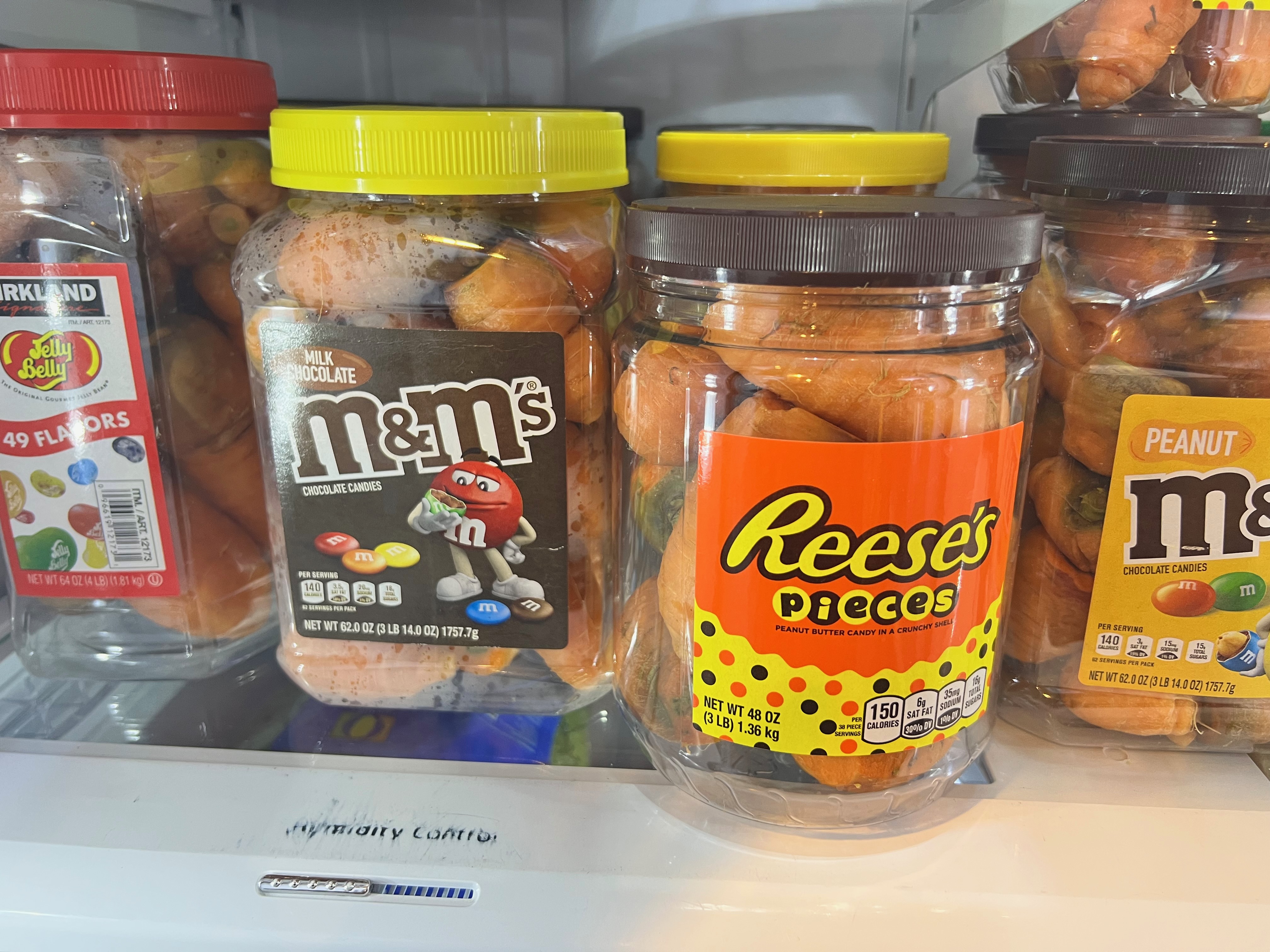
Hunting season usually caps off my frantic finishing-of-garden-tasks with a break of snowfall in between. It hasn’t been snowing enough here—when locals complain about the snow, my reminder is that without it we don’t have rivers, or water to drink, and it’s not all about our human comfort or desires anyway—and I’m behind in my gardening tasks. We finally got the carrots stored away, and I’m about finished with the potatoes that my spouse dug up. I hope to have more luck with them this year after losing most of last year’s potatoes to winter’s deep freeze-thaw cycle.
A kind person in town—a subscriber here!—let a friend and me pick as many apples as we could manage from her trees, and I spent many hours peeling and coring and slicing, with my dad’s help before he went back to Russia, and now have many servings of dried apple stored away for when winter starts to get serious—same for peaches, skinned and pitted and sitting in the freezer next to the huckleberries, which I made a concerted effort to pick far more of this year, along with a few grouse whortleberries, all of which I’m trying not to break out too early. And the jars of chokecherry jelly, which are a complete pain to achieve because there’s no easy shortcut to processing chokecherries, but which, come January, will evoke summer with more heady mustiness and memories than even the most perfect peach.
All of these things, the hunting included, take time, patience, community efforts, intact ecosystems, clean water, attention, and care. They also take human lives free of violence, oppression, and inequality. They take a kind of unquantifiable abundance and richness that can only be destroyed, never replaced, by aisles of cereal boxes and flavored yogurt and sliced lunch meats and all that is required to create and maintain the systems that make those full, empty grocery store shelves possible.
A couple days ago I was watching sunrise over the train yard in the early morning, and a long set of cars with double-stacked containers labeled Amazon Prime rolled past. I’d be preaching to the choir here to go on about the pointlessness and waste that consumption represents. About all that’s bent and broken in this world to force it into temporary consumer “choices” loaded into those containers.
I could quote from many books to illustrate that point. From Amitav Ghosh’s The Nutmeg’s Curse or Edward Posnett’s Strange Harvests (which I really liked and think about a lot) on what happens to abundance when cannibal capitalism turns its sights on commodification; or from Abdullah Öcalan’s The Sociology of Freedom, on the 5000-year history of the powerful requisitioning “surplus” labor, resources, and time for its own purposes of accumulation long before capitalism came onto the scene to streamline the process. Or from one of the many articles I’ve read and podcasts I’ve listened to recently on seed-saving and food sovereignty.
Instead, I wonder if you could quote from your own life. Find the spaces in your memories, or in today, where abundance feels real, or what you’ve consciously turned away from because you know it’s a false replacement. What you wish you could change, what you’ve found intractable when trying.
No matter how much we read or study, it’s never a replacement for lived experience.
The train cars reminded me of that feeling long ago, walking around a grocery store full of what was called food and feeling confused, unsatisfied, and, I realized many years later, sad and lost. The realities of life in the Soviet Union are nothing to romanticize—starting with the lack of food and expanding quickly to lack of anything like true freedom—but our particular life there had elements that I missed when they were gone: time to wander and to learn, time for long and aimless walks, time to eat sunflower seeds and watch the river, time to think about what it means to be a person, and what it means to be free.
After all that, please feel free to engage in some good-natured ribbing over this evidence of how much candy we went through during the first couple years of Covid. This is NOT all my kids’ doing. There’s a reason I avoid those aisles at Costco, especially the jelly beans, but at least the empty containers are great for carrot storage.
 Antonia Malchik