Walking composition
My Threadable reading circle of identity and belonging in science fiction and fantasy short stories is wrapping up, capped by my two favorite stories among selections: Sofia Samatar’s “The Red Thread” in her collection Tender, and Kai Minosh Pyle’s “How to Survive the Apocalypse for Native Girls” in the anthology Love After the End: An Anthology of Two-Spirit and Indigiqueer Speculative Fiction. (I’ll post a full list of the stories in the Research & Resources section.)
Samatar was recommended to me by Stefanie, a subscriber here, and I had so much fun reading the short story collection Tender that I ordered her novel A Stranger in Olondria. “The Red Thread” is a spare story set in a future that might or might not be post-apocalyptic but definitely isn’t the world we live in. It hints at a clash between those devoted to a borderless, mobile world, and those who fight for something more fixed—neither, though, clear about who gets to belong where. “Belonging, Fox. It hurts,” wrote the main character to her lost friend. Samatar is one of the best fiction writers I’ve been introduced to in a very long time. Thanks, Stefanie!
I can honestly say that I’d read a full book by any one of the writers in Love After the End, they were all so good. And they break the genre out of its decades-old stifled mold. “These stories include a relationship with the land that isn’t common in science fiction stories,” one reviewer wrote of the anthology. “They assume a greater responsibility for protecting the Earth than I’m used to from a dystopia.”
I chose Pyle’s “How to Survive the Apocalypse for Native Girls” because of the difficult—to me—way they write about kinship and acceptance. “You always gotta ask yourself,” said one character, “who is being excluded here?” If we could make our worlds, our communities, from scratch, what would we choose to guide us, and how? This story was a little gutting for me, and compelling, and I would love to find some interviews with the author about it because it poses some very difficult questions. In the meantime, I’ll be reading more of their work.
5% of last quarter’s On the Commons revenue was given to the People’s Food Sovereignty Program. This quarter’s 5% will be given to Messengers for Health.
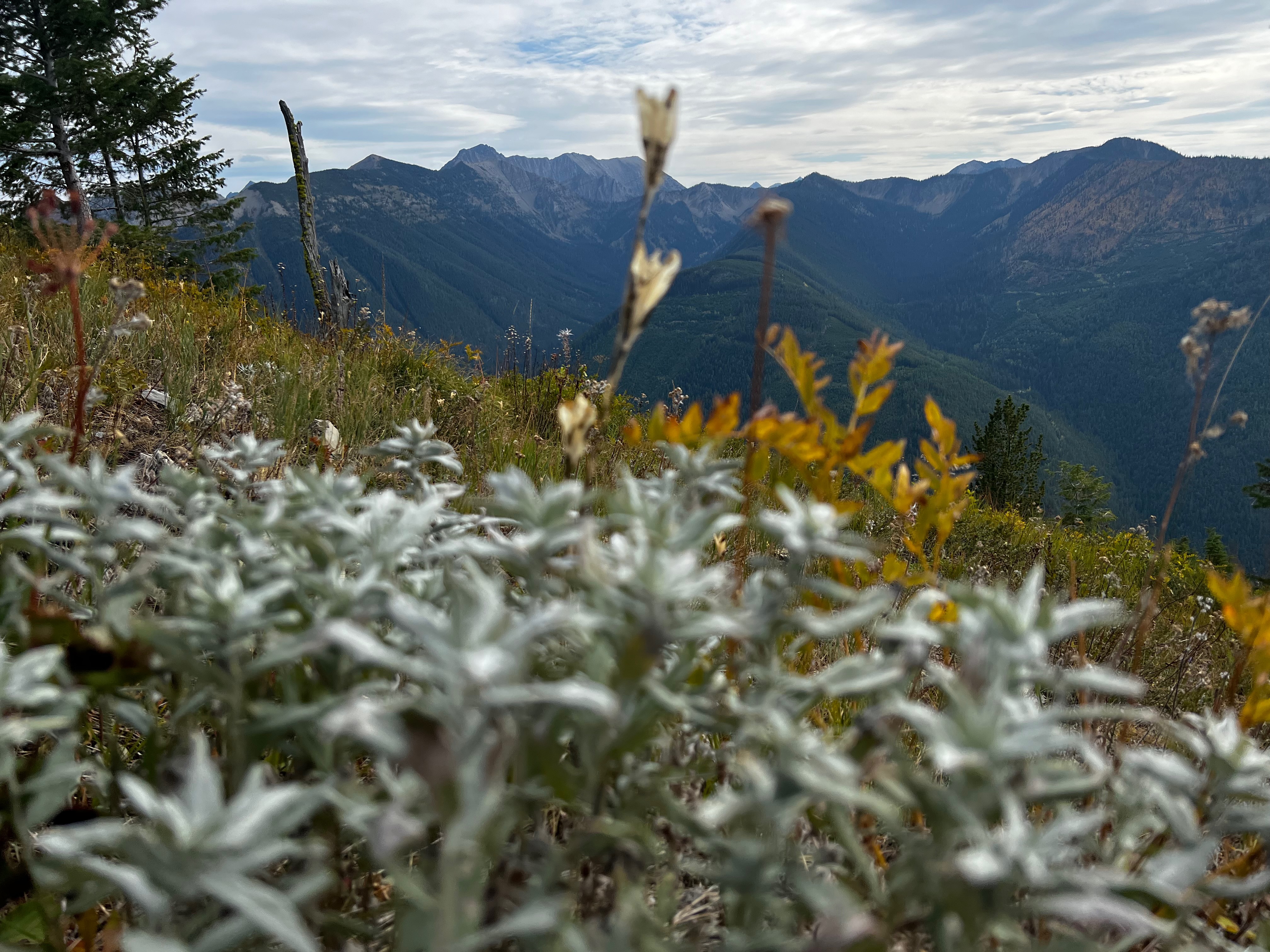
I went away to a Forest Service cabin earlier this week and caught up on a lot of offline work and also a lot of offline-self. Usually when I do this, the work gets many hours of determined focus. It still did, but I also spent probably two hours a day, maybe more, just sitting by the river. That’s it. Sitting. Listening. Or hearing maybe. Listening indicates more intention than I want to imply. Every time I thought, “I should go back to the cabin and get some work done,” the river’s flow and ripple answered: “But why?” I watched a dipper play and eat at the edge of a sheltered pool near the shore for a whole hour. I took a video of him but he made me laugh so much I couldn’t hold my phone still.
There were some mice at the cabin. At least, I used to think they were mice. Every time I’ve stayed there, they started racing around the ceiling over the bed after it got dark. But this time I had left my tea strainer on top of the cooler out on the porch—so as not to attract any mice inside, though I should have known better than to leave any food attractants outside—and when I went out in the morning the strainer was gone. Packrat, I thought. Probably. I’ve never seen mice droppings inside this particular cabin, and the droppings outside are larger than regular mice would leave. And I’ve never known a mouse to steal a tea strainer.
I moved the cooler further away and used coffee filters for my tea, and that night listened to the animal scurry around the ceiling and through the walls when I went to sleep. I got up later to watch Moon make Her way across the mostly overcast midnight sky, and the next day went back and soaked in the river again, both physically and metaphorically, letting the rippling water run through my mind and wash out all the detritus that’s been piling up, refreshing some old channels and carving out new ones.
I wondered what you’d find besides my tea strainer if you scouted out the packrat, how many shiny little moments of people’s lives are holed up somewhere. If they, too, sat by the river and left less tangible shiny moments behind.
The Master Naturalist course I’ve been taking finished the week before I went to the cabin. It was more intensive than I was prepared for, but packed with interesting information, and more importantly, provided a way to do exactly what I’d taken it for: to better get to know this land and all the beings I live among. We learned birds, tracking, macroinvertebrates (I’ve written about them before, but I do love caddisflies so much, one of my favorite creatures, and I got to see many of them), and plants. We talked about the Swan Valley’s ecology and long history of human relationship, and the difficult task of widening the window of tolerance for people living among realities like grizzly bears and long winters.
And I learned that squirrels dig up mushrooms and then place them on tree branches to dry for later consumption. I decided to call them squirshrooms. Squirrel mushrooms! Come on, isn’t that the coolest thing you’ve ever heard?
It’s been decades since I did anything like “school,” and many years since I worked 9-5 hours in an office. Sitting for two hours in the mornings watching slideshows devoted to learning about genus and species and the like was pretty taxing. And I know myself well enough to know that I don’t learn science well via lectures or even reading. Things stick in my brain or don’t. The only way for me to get them to stick better is to get my hands involved. I only really learn by doing, which I think is true of more people than realize it about themselves.
Lack of embodied, hands-on learning is one of the things that bugs me most about modern education, especially when it comes to math and science. It’s why I co-created and help run a math games program for third-graders, because too many people think they’re “bad at math” when in reality our most natural way to learn math—through our hands and eyes and experiencing the world—is taken from us at a far too young age.
Science is prone to this, too. I remember how disappointed I was when my son was in 5th grade and looking forward to learning science in earnest, only to find that it started with drills on how to set out objectives, form hypotheses, run experiments, and properly keep a lab notebook.
There are reasons those methods are important, but for most of us laypeople science should always start with getting muddy. It should end that way, too.
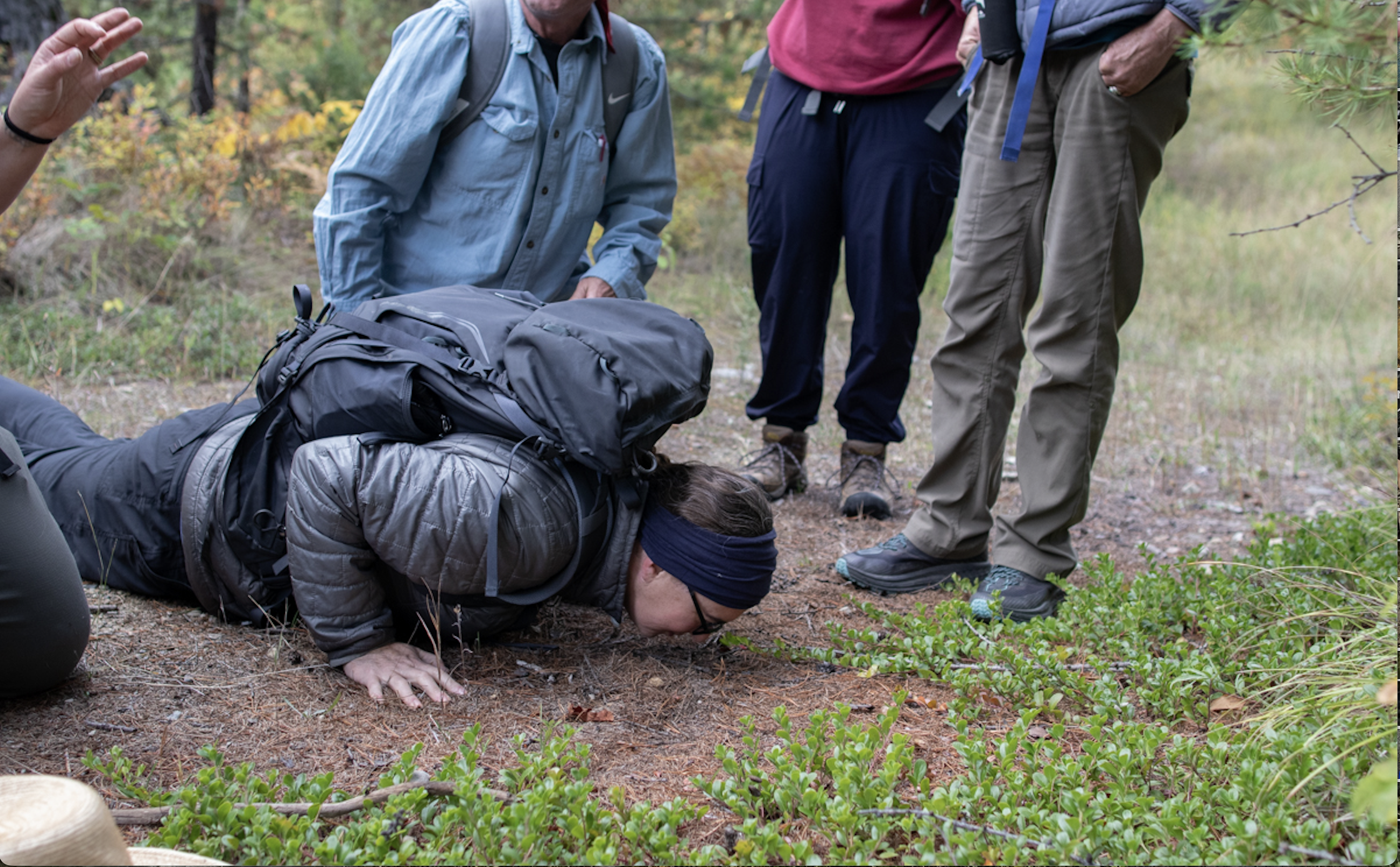
In fact, that goes for all learning. Even all creativity. That there is a picture of me smelling mountain lion pee. I kept going back for more because I couldn’t quite shape words around what it smelled like. The two sensory details that get overlooked in most writing are smell, and the feel of the air. “How would you describe it?” I kept asking the leader of our course as I went back down to smell again. “It’s almost skunky but not quite, almost a metallic undertone . . .”
“Funky,” she finally said. It is. It is funky. Like skunk, but also a trace of the iron smell of blood.
You wouldn’t know this if you didn’t get your nose down into it.
Like everything else in the dominant culture, science teaching has to tick some boxes to be considered acceptable. Learning classifications, species, differences in habits and characteristics in a very specific, head-centered way—people have to do it because that’s what’s accepted and rewarded, and for practicing scientists it’s necessary.
For me, maybe for most of us, true learning happens through experience. I can learn all those classifications, but they’ll only stay in my memory if I relate them first to being in the world: smells, sounds, embodied experiences. I learn backwards, in a way, and I wouldn’t be surprised to find that a lot of other people do, too. The couple hours a day we spent in the classroom won’t stick in my head, but the subtle sign of a mountain lion marking will because I’ll remember the smell of that urine and everything that was associated with learning it.
That’s what science always was to begin with, a way of further exploring and understanding the world we live in. It was, and should be, about curiosity and care and love for a place enough to know it really, really well—with an understanding that our own human lives depended on the health of the rest of the living world. Abdullah Öcalan (the former Kurdistan Workers’ Party leader and a Turkish political prisoner since 1999) wrote about this a bit in his book The Sociology of Freedom:
“The sole purpose of knowledge and science was to ensure society’s continued existence and provide it with protection and nourishment. . . . The profound severing of science from society, and from women in particular, also meant its detachment from life and the environment. . . . In social nature science was understood as divine,”
a reality that he wrote of as being coopted and corrupted by civilization’s monopolization of power and surplus.
When we gave our final presentations at the Master Naturalist course, I started mine by talking about this idea of “widening the window of tolerance,” which is a phrase I’ve often heard in wildlife conservation. While teaching tolerance is necessary, I don’t think it’s sufficient to the task. If the rest of life’s only chance at survival is determined by what certain humans will tolerate, a truly thriving world will continue to diminish.
What’s needed are more relationships with science that do what this course did: rebuild a sense of humans as part of life, integral to it. This sense hasn’t disappeared, as most of us here know; it’s just diminished and damaged. The more energy we put into re-enlivening human beings and human understanding, the less need we’ll have to rely on the narrowing allowances given solely by tolerance.
Science can still do what it originally did: infuse each of us with a sense of belonging to the world we live in.
Over the six days of the course, we hiked miles. We walked through a marsh and a fen. Some of you have probably walked on fens but I haven’t. It was amazing, disconcerting, like being on a paddleboard but it’s the entire ground that’s wobbling. We waded rivers and got down in the dirt.
We found prints of mink and muskrat and spent ages unraveling a story of tracks in a muddy field: grizzly—two, we realized—wolf, mountain lion, coyote, raven. All of us dancing around the tracks from one grassy tussock to another trying not to step on them, kneeling in the mud to measure lion tracks pressed into moss-covered mud and determine whether the canine prints were wolf or domestic dog; speculate on where the animals had gone and what they’d done while they were there.
Watching caddisflies scurry part way out of their shells to scoop in more material, and then standing in the river to spot more of their little casings stuck to rocks. Smelling the grapefruit-pine scent of grand firs, which I’ll always associate now with their flat needles and that one curvy, rutted mountain road that made several of us carsick.
These things will stick with me in a way that learning from a book or talk never would. They lingered with me for days, long enough to bring them up to the cabin, where I applied some of the new knowledge, along with things I already knew, to a place I’ve come to love for many reasons. For the time and peace it gives me, for its ability to bring me back to myself, for the river and moonlight, for memories and associations. For the packrat and her possession of my tea strainer.
Most of all for the place itself. For the fact that it exists, whether or not I ever get to go there. For the river that I can hear in my head right now, whose sound and feel I’ve come to know in all her seasons, who will continue to flow, I hope, long after I’m gone. And for all the life thriving around her, whose existence isn’t dependent on my detailed knowledge but might be dependent on all of our understanding that, just as they’re part of the river, we’re part of them.
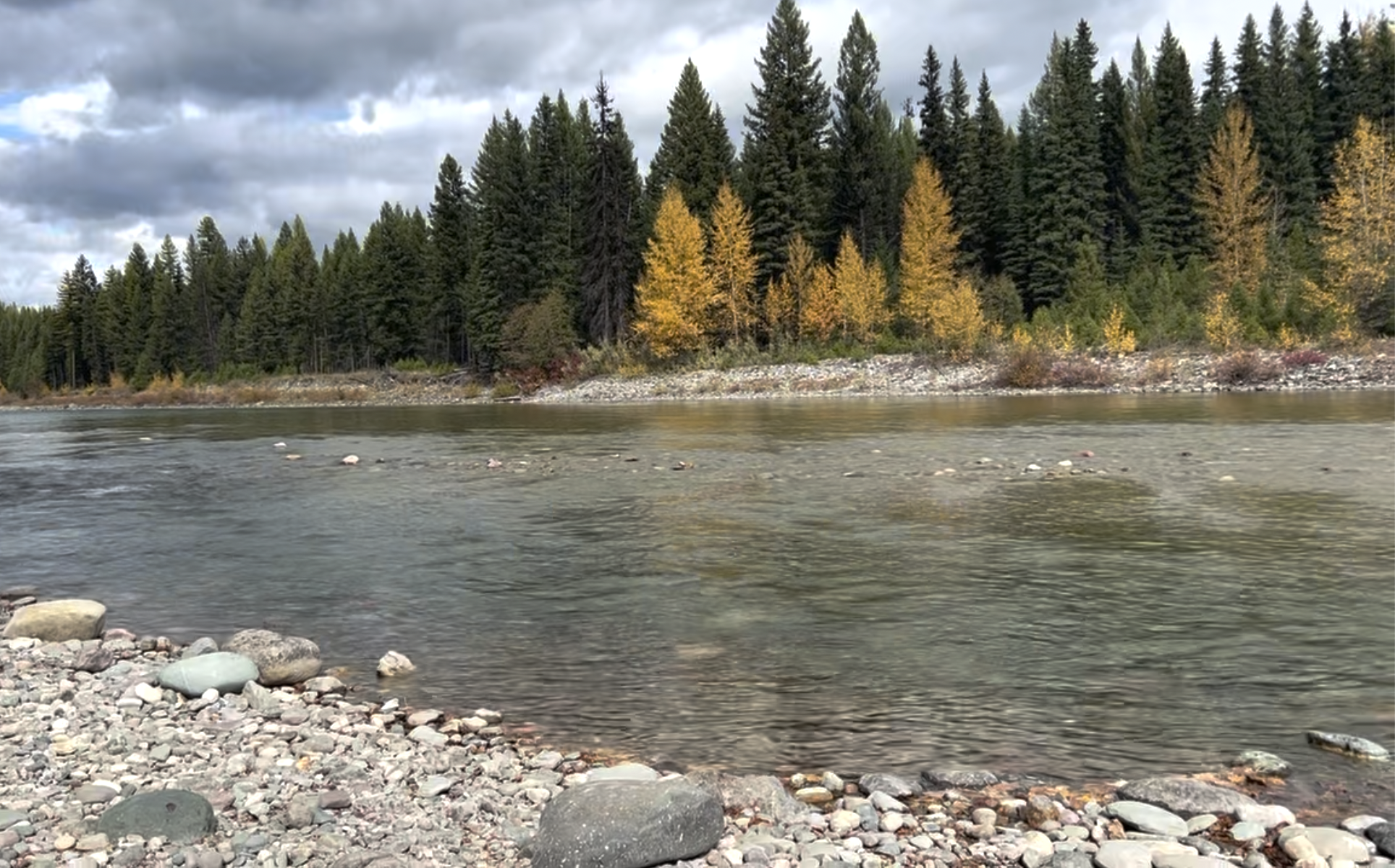
I let my phone record for about 25 minutes as I sat by the river earlier this week. It’s just a recording of running water. I think there’s a bird in there somewhere, and some wind sounds because I didn’t bring down my fuzzy windscreen that I usually use to filter the wind in recordings. But if you need a bit of peace in your day and want to let this play while you do things, or do nothing, it’s here. The photo is right from where my phone and I were sitting.
 Antonia Malchik