Walking composition
The most recent science fiction short story selection posted to my Threadable reading circle is N.K. Jemisin’s “Cloud Dragon Skies” from her collection How Long ’Til Black Future Month?
The theme for this reading circle has been identity and belonging in science fiction and fantasy. The previous story, Nnedi Okorafor’s “Excerpt from the Book of Phoenix,” gets to a question I never stop asking: what does it mean to be free? In this story, if you could see the world around you clearly and it horrified you (maybe you do), what would you do to change it, or escape? Join the reading circle and/or download the Threadable app if you’d like to join and comment. (For iOS only at the moment.)
5% of On the Commons revenue this quarter will be given to People’s Food Sovereignty Program. Last quarter’s 5% went to All Nations Health Center.
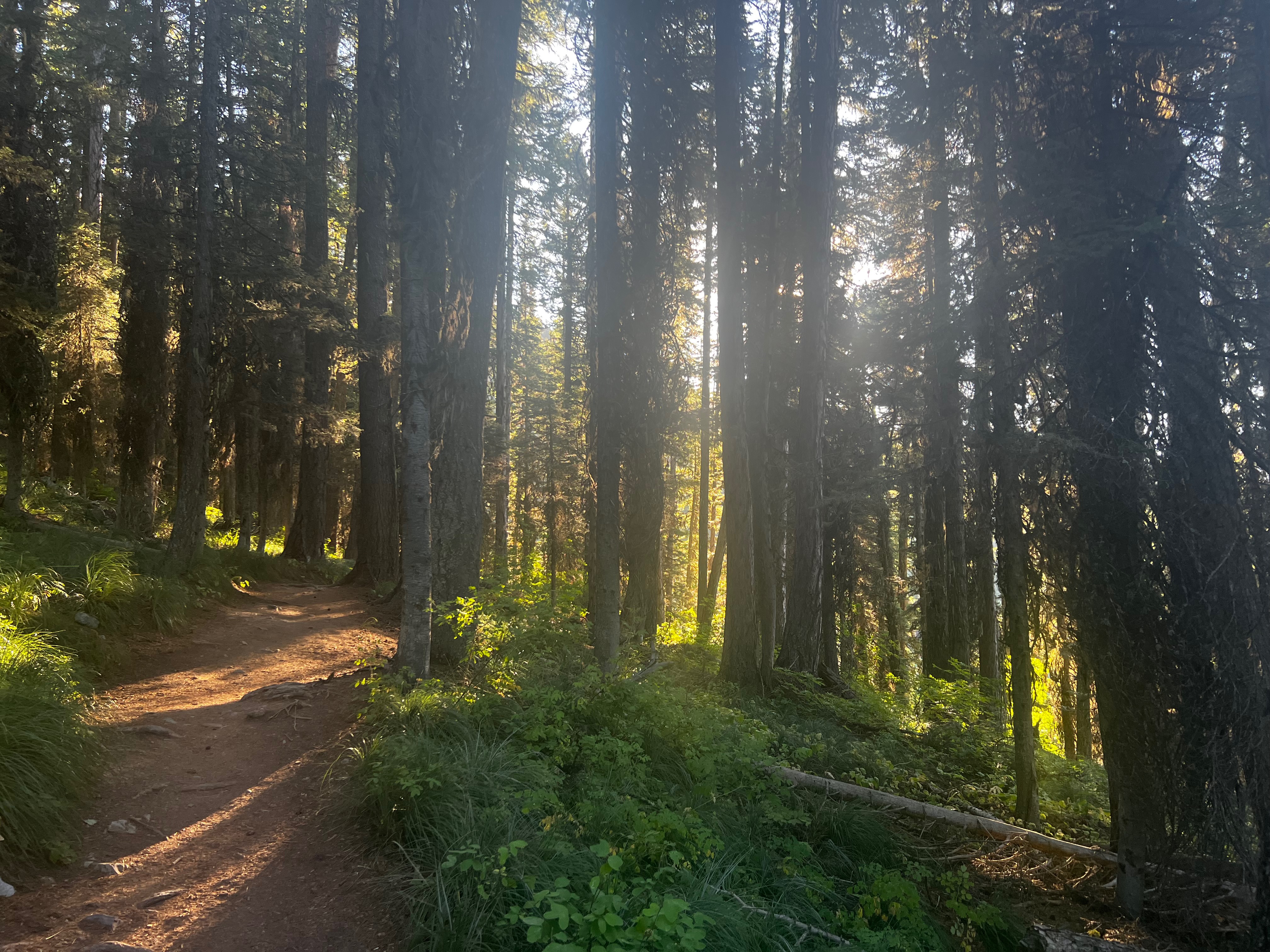
Last week I went on a long walk around town, which I do often. It’s one of the things that keeps me from succumbing completely to the Eastern European-flavored fatalism I’m prone to. Sometimes I think I talk about walking too much, more often that I don’t talk about it enough but then, I wrote a whole book and most of what I could write about walking I’ve already written elsewhere. What more is there to say about it but that I’ve never found it go wrong as a response to pretty much anything? And that everyone should be able to walk wherever they need or want to go?
This walk took me by some of the chokecherry trees I rely on for making jelly every year; the chokecherries are already turning that particular shade of bright pie cherry-red that precedes their near-black ripeness. The huckleberries, too, ripened earlier than usual.
There’s a short space in my life between planting the last of the garden after early-June or late-May frosts, and preparing for winter. I like this seasonality. You might say the entire calendar of my being revolves around it: when I take my younger kid to our secret spot in the woods in July to eat as many huckleberries as they want for an hour, and a few weeks later when I’m picking huckleberries at higher altitudes and in greater quantities for the freezer. When I make chokecherry jelly and when the freestone peaches from Washington come in—freestone are the easiest to skin and freeze—and canning tomatoes and drying mint and planning for hunting season and looking for plums to make into fruit leather and taking the truck out for firewood.
It’s a time of year when I start making work for myself, as I put it to a friend last year. Work that doesn’t end until January, sometimes March, when I finish dehydrating and powdering the garlic put by in September. I don’t have to do any of it. But I like living this way, by seasons, and having opportunities to nurture relationship with the land I live among along with the acute annual reminders of how quickly things are changing.
Maybe because Montana summers are always so short, or because I grew up in a household where pickling things and making jam and eating from the garden and the woods was the norm, August has always felt like a time of preservation. A slow-time, bejeweled-time, not like wearable jewels but like the way sunlight looks through a jar of rhubarb syrup. Bee time and hoverfly time, watching them among the borage and oregano and radishes I let go to flower. Bird time and berry time, picking pecked-at strawberries and thinking of some small bird nabbing a bite in the early morning, its feet rustling lightly in the straw.

On this walk around town, I ended up eating handfuls of serviceberries and thinking of Robin Wall Kimmerer, whose essay on serviceberries and kinship a reader sent me ages ago. It’s one of her pieces of writing I’ve returned to over and over, an essay that is itself a gift, about manufactured scarcity and what people have to do to deny the realities of abundance:
“When we speak of these not as things or products or commodities, but as gifts, the whole relationship changes. I can’t help but gaze at them, cupped like jewels in my hand, and breathe out my gratitude.
In the presence of such gifts, gratitude is the intuitive first response. The gratitude flows toward our plant elders and radiates to the rain, to the sunshine, to the improbability of bushes spangled with morsels of sweetness in a world that can be bitter.”
Though Kimmerer writes about what can be made with serviceberries, acts of creation and care that keep the gift flowing to birds and other humans—pies, jams—these berries are something I have particular affinity for because I don’t do anything with them, not even gather them for the freezer. I just eat them, or watch sparrows eating them out of the tree in my yard. It’s a richness that I can’t imagine any monetary wealth being able to replace, to feel the gratitude that comes with a mind-wandering walk and handfuls of berries so sweet that they’re like self-contained jam and so abundant that, even as they’re now drying up, the trees look barely touched by either humans or birds. Serviceberries are a world I want us all to have, a world I want to help rebuild.
August is when my personal year really starts. The tension of relentlessly long days starts to ease enough that I can once again light a candle in the dark when I do my early morning writing, and see the stars and Moon before going to sleep at night. I’ve missed them.
It’s a season when my hands are busy and my attention is drawn constantly to the changes each day as chokecherries ripen, and huckleberries are ready to gather further up the mountains, when the potatoes suddenly need burying—like, two weeks ago—and somehow we don’t yet have wildfire smoke even though there is more than one fire burning nearby and yesterday evening, while eating a dinner of sandwiches on the rocky beach, we watched helicopters dropping water on a fire at the far end of the lake. An hour later two tanker planes flew down to the water, scooped up, and headed off somewhere further north where a recent lightning storm started several fire complexes.
I could mark the start of my year with an equinox, or the turn of spring weather or the onset of summer. Or when the larches put out their first soft, fresh needles. Or when the new-green climbs visibly up the slopes of the ski hill and reaches the lingering patches of snow. I could mark it from when my kid’s huckleberry-grazing starts or when the tree swallows start nesting.
But these all feel like the ends of my old year. My new one starts when my spouse looks in the fridge and says there’s nothing to eat and I say there’s borscht and he says, “Borscht isn’t food.”
That’s when I feel the internal calendar of my year shift, a new one beginning with something that feels ancestral, or even primal: looking at the short season of growth and ripening that has barely begun, and the long months of dark and cold ahead and thinking, “How will I feed everyone?” When my fingers are often sticky and always stained—from beets, or huckleberries, or just plain dirt—and I’m fueled by what most people would probably think is too much borscht and the pen and paper on my desk start to look a little like foreign countries for a while. Places I enjoy learning about and meandering around in but not something that has anything to do with my everyday life.
Do we all have our seasons? Mine are formed around the growth of things, of ripening and harvest, preservation for the near future, around the first snow and Moon’s waxing and waning, of ice on the river and larch needles turning orange and the donning and shedding of layers with the temperature. These things will change. Drastically, soul-breakingly, unjustly. All the more reason to attend to them as we can.
One of my closer friends has the unenviable job of cleaning up oil spills on rivers. She’s been working on the Yellowstone River for the last month after a train derailment dumped molten sulphur and asphalt binder into the river. She and her crew have been working fifteen-hour days throughout July, in the heat of eastern Montana. It sounds, I told her, like literal hell. As angry as I am about a world where that kind of thing can happen to a river, I’m also glad there are people like her who care enough to do a good job of that kind of work.
Over the weekend when she was finally home for a couple of days I made several dozen cookies for her and her crew and took them over to her house. It rained hard while I was baking and the kitchen smelled of cinnamon—for the snickerdoodles—and I thought, maybe this will dampen the two nearby fires before they get unmanageably big. I also thought, what an incredible thing it is to live in a world with cinnamon. Cinnamon exists. And rivers, and serviceberries, and people who care about all of it.
What’s beautiful about growing, foraging, hunting, and preserving food is that it’s not static and it’s not permanent. It’s for enjoyment and sustenance in the near future. It’s part of the very real abundance that “the economy” tries to hide.
And it’s part of our relationships to one another. Very little of the jam I make gets consumed in my house. I give most of it away, to be opened maybe in the dead of winter when the taste of fresh berries can remind someone that the year begins again. That the world is still full of gifts, and that we can be generous to one another, too.
What kinds of fragrance might linger with each of us from something we harvested long ago? What are you putting away this season for future you?
For me, today, it’s the liquid slowing of time as the morning sky lightens away from starlight, the two brand-new spotted fawns and their relatives nibbling grass all over my yard, the shift of air rustling a nearby mountain ash tree, the magpie staring at me from the other side of the screen, and a handful of berries.
I haven’t done this in a while, a list of listen/read stuff. I’m heading out on a trail crew in the Badger-Two Medicine in a couple of weeks—fires and smoke permitting—and might just leave your inboxes alone until after that, when the chokecherries are ripening, and wanted to pass on some heartening or beautiful or interesting things in case you’re in need of them:
Robin Wall Kimmerer’s “The Serviceberry” was in Emergence Magazine. In some ways, it has become the only essay I ever want to read: “In a gift economy, wealth is understood as having enough to share, and the practice for dealing with abundance is to give it away. In fact, status is determined not by how much one accumulates, but by how much one gives away. The currency in a gift economy is relationship, which is expressed as gratitude, as interdependence and the ongoing cycles of reciprocity. . . . Hoarding won’t save us either. All flourishing is mutual.”
Thomas Linzey on Frontiers of Commoning talking about the growing legal Rights of Nature efforts and his years of working in conventional environmental law, realizing that he could win all the awards in the world without truly accomplishing anything environmentally beneficial: “When we say the word ‘community,’ I think we mean more than just the two-legged people that are moving in the community. When we say community, we also mean the biosphere and the ecosystems and all that kind of stuff. That seems to be a little far for some people to go. They still see community as the human community and then nature as the nature community. But I think we’re getting there.”
Leah Penniman, author of Black Earth Wisdom and Farming While Black and co-founder of Soul Fire Farm, also on Frontiers of Commoning: “Our final area of work, I affectionately term rabble rousing. Where the laws are frankly quite unjust to the earth and to the people who care for the earth. You know, farm workers don’t have a fair shake. Black farmers have lost a lot of land and continue to do so. Indigenous folks need land back. People are not getting the food that they need that’s culturally appropriate and healthy and on and on. And so we’re working on policy and institution building and trying to through storytelling, through speaking and writing, to mobilize the public to really see how important these issues are.” (For some reason I can only link to the transcripts of Frontiers of Commoning right now, but these two episodes are recent and should show up in whatever podcast app you use. For those who use podcast apps.)
Six minutes of paper-making using an 800-year-old process.
Tenants’ unions and uprooting the power of private equity in U.S. rental housing on Building Local Power. What would you do if you didn’t have to worry about rent? “Come here, children. Let me read to you because I can do that at night. I’m not worried about these bills anymore.”
In Noēma, an exploration of “deep-time sickness” afflicting people still living, it seems, in the geological moments of an earthquake: “Rather than a pathological individual condition or a culture-bound form of expression, we might see being tocado as an emergent form through which bodies, histories, legislations and earths come into relation. Deep time, in Mexico City, is resolutely present if you are compelled to notice.”
An excerpt from a new book by Margaret Killjoy of the black metal band Feminazgûl: “When I work to share cultural values, I want people to know where I’m coming from, so they can make up their own mind about whether or not I’m to be trusted. To me, this is one of the cornerstones of anti-authoritarian cultural work.”
Just for fun: In June I recorded me and my younger kid making pancakes on a camping trip. There’s nothing significant here, just a small soundscape in the early morning as I mixed batter, made tea and coffee, and we talked huckleberries.
 Antonia Malchik